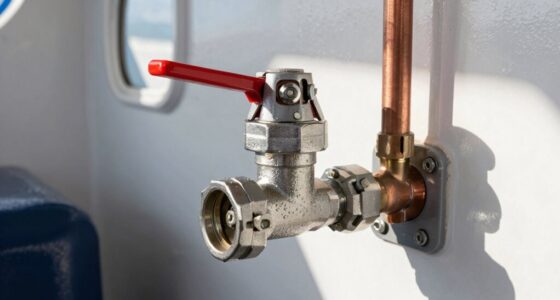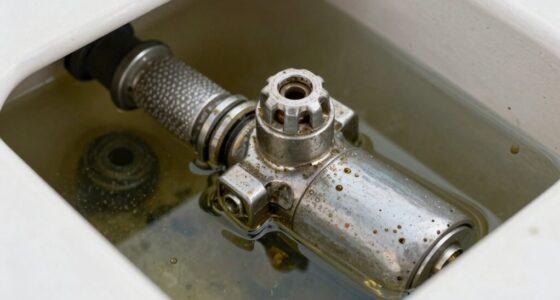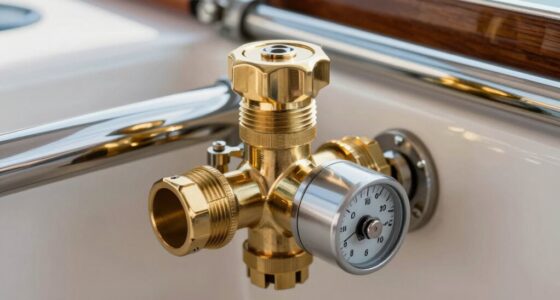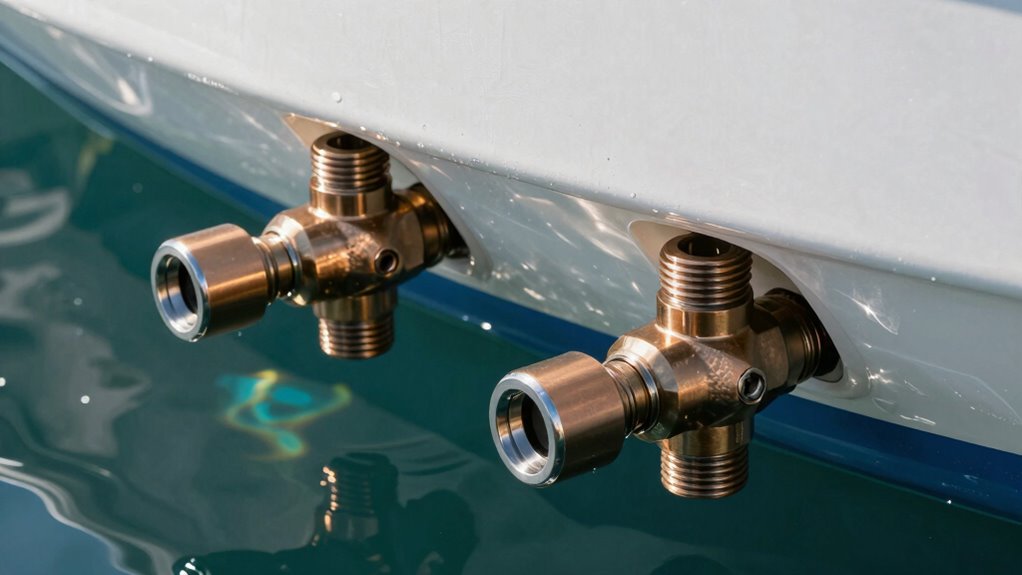

Regularly inspecting your seacocks and through-hulls is vital to keep your boat safe and seaworthy. Look for signs of corrosion, cracks, leaks, or damage that could lead to serious issues like flooding or failure. Operate fittings to guarantee they move smoothly, and replace any faulty parts promptly. Proper maintenance prevents costly repairs and keeps everything functioning properly. Stay vigilant—if you keep up with inspections, you’ll be better prepared to spot potential problems before they become emergencies.

Get sports gear delivered free with Prime
- Fast, free delivery on millions of items
- Prime Video, Amazon Music and more included
- Member-only deals all year
Key Takeaways
- Regularly inspect seacocks and through-hulls for corrosion, cracks, leaks, and damage to ensure seaworthiness.
- Operate fittings periodically to verify smooth function and proper sealing, preventing leaks during use.
- Check clamps, fasteners, and gaskets for signs of deterioration or moisture buildup, replacing as needed.
- Address any cracks, corrosion, or leaks immediately and seek professional help for severe or complex damage.
- Maintain fittings with marine-grade lubricants and follow proper repair procedures to ensure safety and longevity.
Why Regular Seacock and Through-Hull Inspections Are Critical for Your Boat’s Safety
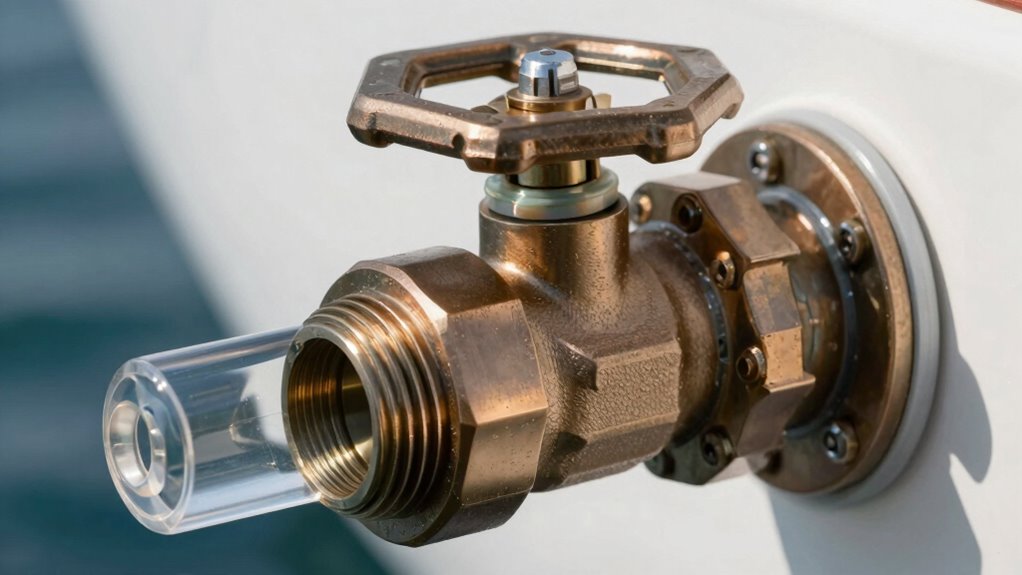
Have you ever considered how vital regular inspections of your seacocks and through-hulls are to your boat’s safety? Failing to maintain these essential components can lead to leaks, flooding, and costly repairs. Regular inspections ensure your boat meets marine regulations and helps prevent accidents that could void your boat insurance coverage. Marine authorities require specific checks to confirm your vessel’s seaworthiness, and neglecting them may result in fines or insurance claims being denied. By routinely inspecting and maintaining your seacocks and through-hulls, you protect your vessel, your crew, and your investment. Staying proactive not only keeps you compliant but also reduces the risk of unexpected failures, giving you peace of mind during every voyage. Additionally, understanding the Free Floating principles of proper inspection techniques can significantly enhance your maintenance routine and help identify potential issues early. Moreover, incorporating corrosion prevention strategies into your maintenance can extend the lifespan of these critical components and prevent deterioration that might otherwise go unnoticed. Regularly applying marine-grade coatings can further shield your seacocks and through-hulls from corrosive marine environments, ensuring longevity and optimal performance.
How to Inspect Your Seacocks and Through-Hulls: A Simple Step-by-Step Guide
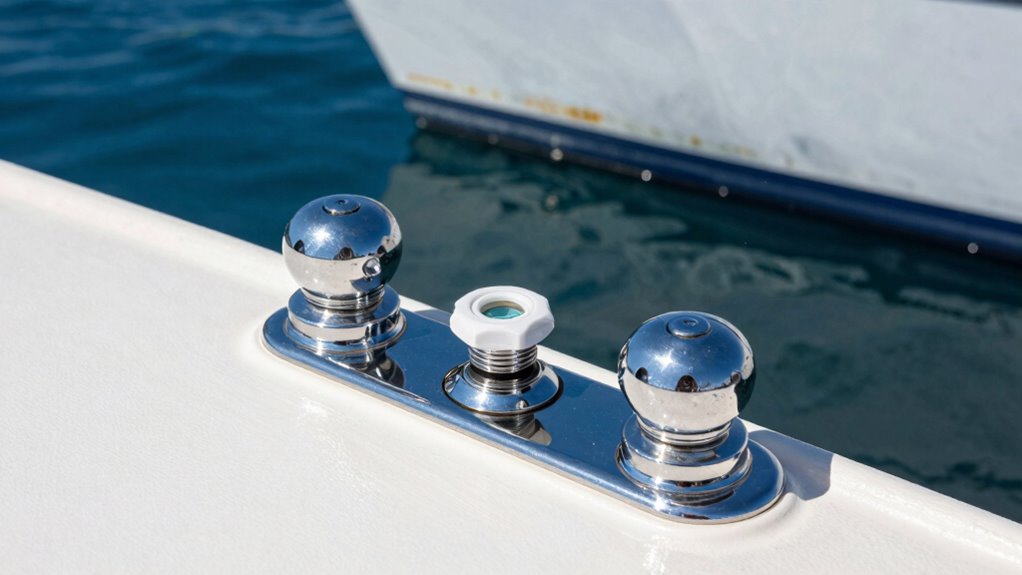
Inspecting your seacocks and through-hulls is a straightforward process that helps guarantee your boat’s safety and seaworthiness. Begin by gathering an inspection checklist to verify nothing gets overlooked. Visually examine each seacock and through-hull for signs of corrosion, cracks, or corrosion. Operate the seacocks to confirm they turn smoothly and shut tightly. Check for leaks around fittings and gaskets, paying close attention to areas prone to moisture buildup. Assure all clamps and fasteners are secure. Confirm that your seacocks are fully functioning and free of obstruction. Regular inspection is crucial for marine safety, preventing emergencies at sea. Staying informed about proper maintenance techniques can extend the lifespan of your marine fixtures and ensure reliable performance. It’s also important to understand the inspection intervals recommended by manufacturers to maintain optimal safety standards. Follow this simple guide consistently to maintain ideal condition and avoid costly repairs, keeping your vessel safe and seaworthy.
Signs of Wear, Corrosion, or Damage to Watch For
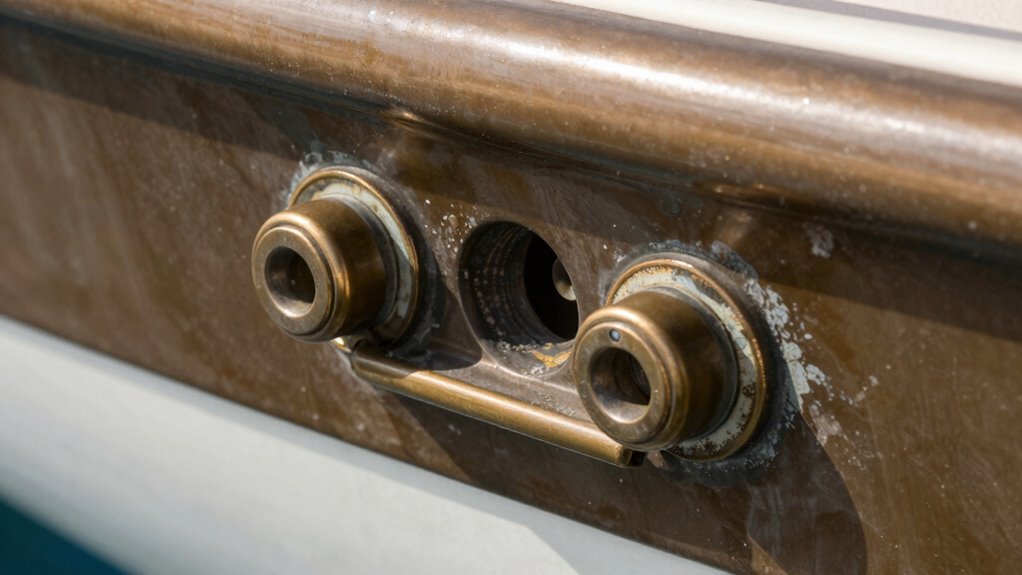
You should be alert for signs of wear, corrosion, or damage whenever you check your seacocks and through-hulls, as these issues can compromise your boat’s safety. Look for corrosion patches around the fittings, which indicate deterioration and potential leaks. Inspect the metal surfaces for pitting or discoloration, signs of ongoing corrosion. Also, examine the seams and joints for cracking seams, which can weaken the hull’s integrity. Cracks or splits in the material may not be immediately obvious but can develop over time, leading to leaks or failure. Any signs of corrosion, cracking, or damage should be addressed promptly to prevent more serious issues. Regular inspections help ensure your through-hulls remain secure and reliable, keeping your boat safe on the water. Being aware of prognosis and recovery factors can also guide timely maintenance to prevent costly repairs. Additionally, understanding material deterioration can aid in choosing appropriate preventive measures to extend the lifespan of your fittings. Recognizing early warning signs can significantly improve maintenance strategies and help prolong the durability of your boat’s fittings. Incorporating preventive maintenance into your routine can further reduce the risk of unexpected failures. Moreover, understanding corrosion processes can help you select better protective coatings or materials to enhance longevity.
How to Repair or Replace Faulty Through-Hulls Safely
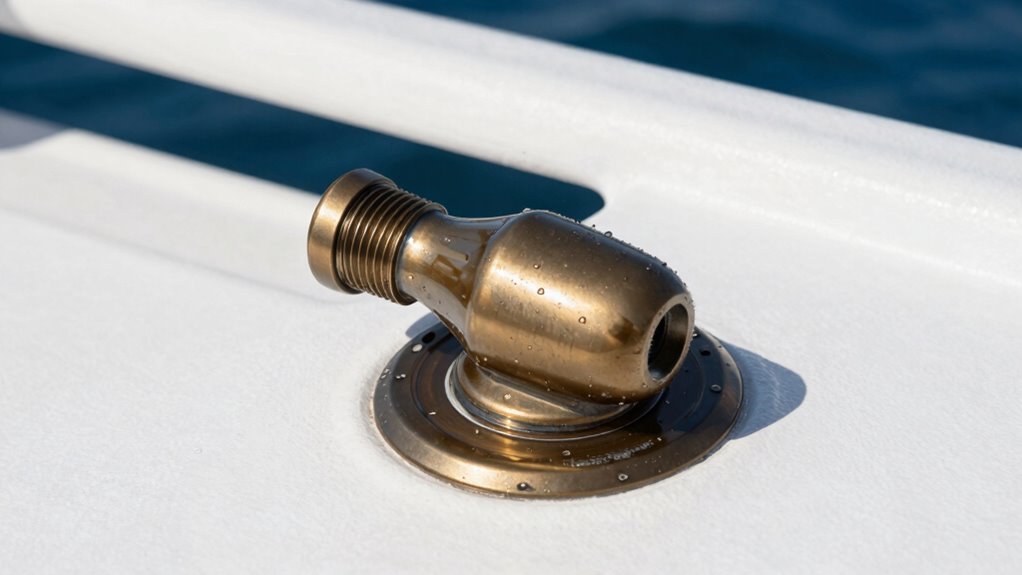
When repairing or replacing faulty through-hulls, safety must be your top priority. Begin by carefully planning the process, ensuring the boat is stable and secure. Before starting, check the seacock lubrication to ensure the valve operates smoothly, which helps prevent accidental leaks. When removing or installing through hulls, pay attention to through hull material selection; choosing the right material—such as bronze or High-Density Polyethylene—ensures durability and corrosion resistance. Use proper tools and follow manufacturer instructions to avoid damaging the hull or creating leaks. Always test the new installation thoroughly before putting the boat back into service. If you’re unsure about any step, consulting a professional is the safest approach. Properly maintaining your seacocks can extend their lifespan and prevent future issues. Regular inspections and routine maintenance are key to catching potential problems early and ensuring reliable operation. Additionally, understanding the energetic alignment of your vessel and its components can help in diagnosing issues and enhancing overall safety. Taking the time to understand the material compatibility of different components can further prevent corrosion and leaks. Incorporating proper installation techniques is crucial for long-term durability and safety. Prioritize safety to keep your boat seaworthy and your crew safe.
Preventative Maintenance Tips for Long-Term Reliability
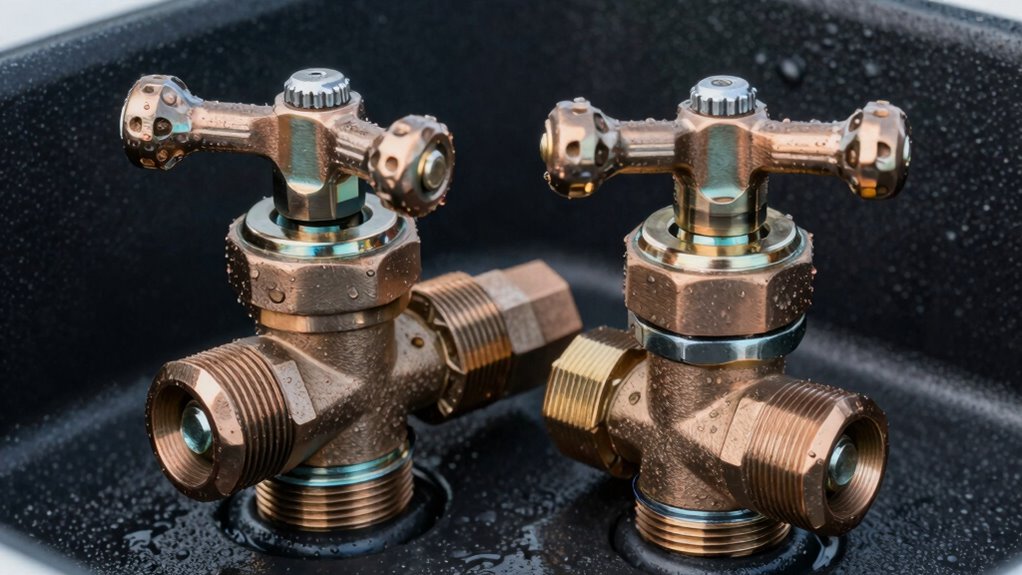
Regular preventative maintenance is essential to ensure the long-term reliability of your boat’s seacock and through-hull systems. To combat marine corrosion, regularly inspect for signs of rust or pitting around fittings. Keep valves functioning smoothly by applying proper lubrication, preventing seizing or sticking. Additionally, consider these maintenance practices:
- Visualize a clean, corrosion-free surface, free from algae or debris that can trap moisture.
- Imagine turning your valves smoothly, thanks to proper lubrication, avoiding sudden stiff movements.
- Picture periodic inspections revealing tight, secure fittings that resist leaks and marine corrosion.
- Remember to use appropriate marine-grade lubricants to protect against harsh saltwater conditions and prolong component lifespan.
- Conduct regular system inspections to identify potential issues early and maintain optimal performance.
- Regularly removing marine debris from fittings helps prevent buildup that can accelerate corrosion and impede operation.
- Ensure that fittings are properly sealed and secured, reducing the risk of leaks and water intrusion that can lead to corrosion.
- Maintaining these practices consistently will extend the life of your seacock and through-hull components, saving you time and money on repairs.
When to Call a Marine Professional for Seacock and Through-Hull Repairs
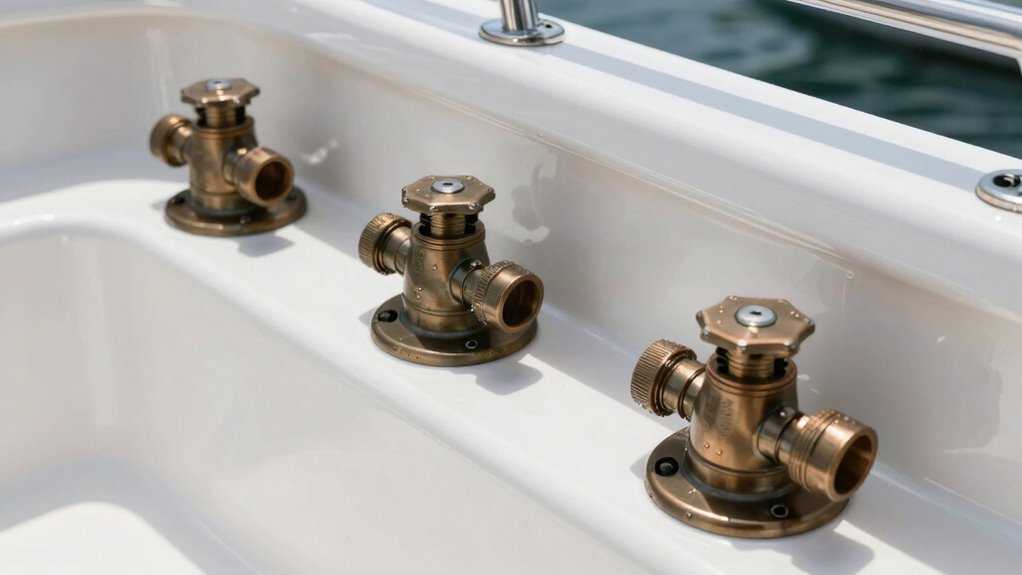
If you notice cracks, corrosion, or leaks around your seacocks or through-hulls, it’s a clear sign you need expert help. Ignoring these issues can lead to serious water intrusion and damage. When in doubt, calling a marine professional guarantees the repairs are handled safely and correctly. Proper maintenance of components like through-hull fittings can prevent costly repairs later on. Regular inspections are crucial for maintaining marine security and ensuring the integrity of all fittings. Additionally, understanding the market trends in marine components can help boat owners make informed decisions about upgrades and replacements.
Signs of Urgent Damage
Cracks, corrosion, or any signs of leakage around your seacock or through-hull indicate urgent damage that requires immediate attention. These issues often point to marine corrosion, weakening the structure, or valve malfunction, risking flooding or sinking. You should call a marine professional if you notice:
- Cracks or splits in the hull or fitting, compromising integrity
- Significant corrosion spots, especially where metal contacts water
- Persistent leaks or water seeping around the seacock or through-hull
These signs suggest the damage is severe enough to threaten your vessel’s safety. Ignoring them could lead to catastrophic failure. When in doubt, it’s best to seek expert help promptly to prevent further damage and ensure your boat stays seaworthy.
When to Seek Expert Help
Knowing when to call a marine professional can be crucial for maintaining your vessel’s safety. If you notice persistent leaks, corrosion, or difficulty operating seacocks and through-hulls, it’s time to seek expert help. DIY repairs may not suffice for complex issues, especially if they involve structural damage or compromised integrity. Ensuring proper repairs can impact your marine insurance claims and your boat registration status, so professional assessments are essential. Additionally, if you’re unsure about the severity of damage or how to safely perform repairs, consulting a marine specialist is the best choice. They can provide a thorough inspection, proper repairs, and help you meet legal requirements, keeping your vessel safe and compliant on the water.
Frequently Asked Questions
How Often Should I Schedule Seacock and Through-Hull Inspections?
You should schedule seacock and through-hull inspections at least once a year as part of your maintenance schedule. Regular checks are essential for marine safety, helping you spot corrosion, leaks, or damage early. If your boat is used frequently or in harsh conditions, consider more frequent inspections. Staying proactive ensures your seacocks and through-hulls function properly, preventing costly repairs and maintaining your vessel’s safety on the water.
Can I Inspect Through-Hulls Without Lifting the Boat?
Imagine lowering your boat lift and peering through a clear window beneath the waterline—that’s how you do an underwater inspection of your through-hulls. While it’s challenging to inspect thoroughly without lifting, you can use divers or underwater cameras for a visual check. However, for a complete assessment, a boat lift makes it easier, safe, and more effective to verify your through-hulls are in top condition.
What Tools Are Necessary for Inspecting Seacocks and Through-Hulls?
To inspect seacocks and through-hulls, you’ll need a basic inspection checklist and maintenance tools like screwdrivers, wrenches, and pliers. A flashlight helps you see clearly, and a mirror can assist in hard-to-reach spots. You might also want a marine-grade lubricant for maintenance. These tools allow you to thoroughly check for corrosion, leaks, and proper operation without lifting the boat, ensuring your hull stays secure.
Are There Different Types of Through-Hulls Requiring Unique Maintenance?
Yes, different through-hull types require unique maintenance. For example, metal ones may corrode and need regular inspections, while plastic ones are more resistant but can crack. Material considerations guide your maintenance routine, ensuring you use appropriate lubricants and sealants. Installation best practices involve proper sealing and secure fittings, which help prevent leaks. Regularly check each type based on its material and design to keep your boat safe and in top condition.
How Can I Prevent Corrosion on Seacocks in Saltwater Environments?
Did you know that saltwater causes corrosion on seacocks up to 10 times faster than freshwater? To prevent this, you should regularly clean and lubricate your seacocks, using corrosion prevention treatments specifically designed for saltwater environments. Rinsing with fresh water after each use and applying anti-corrosion coatings can also help. These steps keep your seacocks functioning smoothly and extend their lifespan considerably.
Conclusion
Regularly inspecting your seacocks and through-hulls is like tending to the heart of your boat—neglect and corrosion can cause a sudden failure. Think of it as giving your vessel a health check; a small effort now prevents big problems later. I once ignored a tiny crack, only to face a costly emergency. Keep up with maintenance, and your boat will stay seaworthy, ready to carry you safely through every adventure.
Fall Picks
fall essentials
As an affiliate, we earn on qualifying purchases.