
To size a fuse correctly, first determine your wire’s ampacity based on its gauge, insulation, and environment. Select a fuse rated slightly above your load’s maximum current but below the wire’s capacity, typically about 125% of the load current. This guarantees the fuse will protect the wire from overheating without causing unnecessary trips. For detailed steps on accurately sizing your fuse for safety and efficiency, keep exploring the essential guidelines.

Get sports gear delivered free with Prime
- Fast, free delivery on millions of items
- Prime Video, Amazon Music and more included
- Member-only deals all year
Key Takeaways
- Determine the wire’s ampacity using its gauge, insulation, and environmental conditions to understand safe current limits.
- Select a fuse rating slightly above the maximum expected load to prevent nuisance trips but below wire’s critical current.
- Ensure fuse type and characteristics (fast-acting or slow-blow) match the circuit’s load and fault conditions.
- Verify fuse placement close to the power source for quick fault interruption and proper system protection.
- Regularly test and inspect the fuse and wiring to confirm proper operation and prevent overload or damage.
Popular right now

Roborock Robot Vacuum and Mop with LiDAR Navigation and 10,000 Pa Suction

Apple AirPods Pro 3 Wireless Earbuds with Active Noise Cancellation

Breville Barista Pro Espresso Machine with Grinder, Brushed Stainless Steel
As an affiliate, we earn on qualifying purchases.
Fundamentals of Fuse Sizing: How Fuses Protect Your Wiring
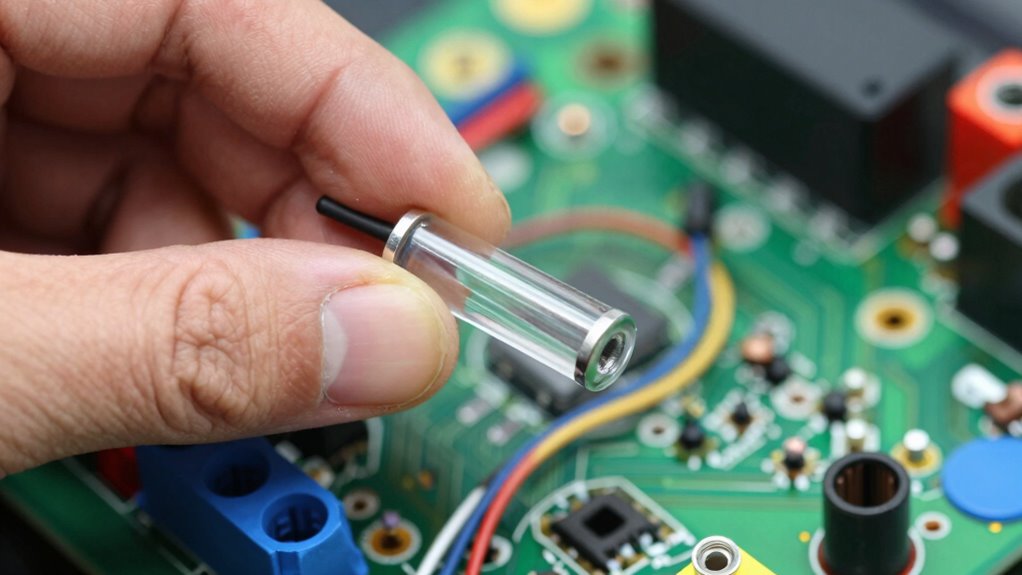
Fuses are essential safety devices that protect your wiring from damage caused by overloads and short circuits. The materials used in fuses, such as glass, ceramic, or plastic enclosures with metal strips, determine their durability and effectiveness. Choosing the right fuse materials guarantees the fuse can handle electrical stresses without premature failure, which directly impacts fuse longevity. A properly sized fuse will interrupt excessive current quickly, preventing damage to your wiring and connected devices. When selecting a fuse, consider both its material quality and its rated current to match your wiring’s capacity. This balance ensures reliable protection while avoiding unnecessary replacements. Proper material selection in fuse design enhances their ability to withstand electrical stresses, leading to longer-lasting and more reliable performance. Ultimately, understanding fuse materials helps you select options that last longer and perform better, keeping your electrical system safe over time.
How to Determine Your Wire’s Ampacity and Current Rating
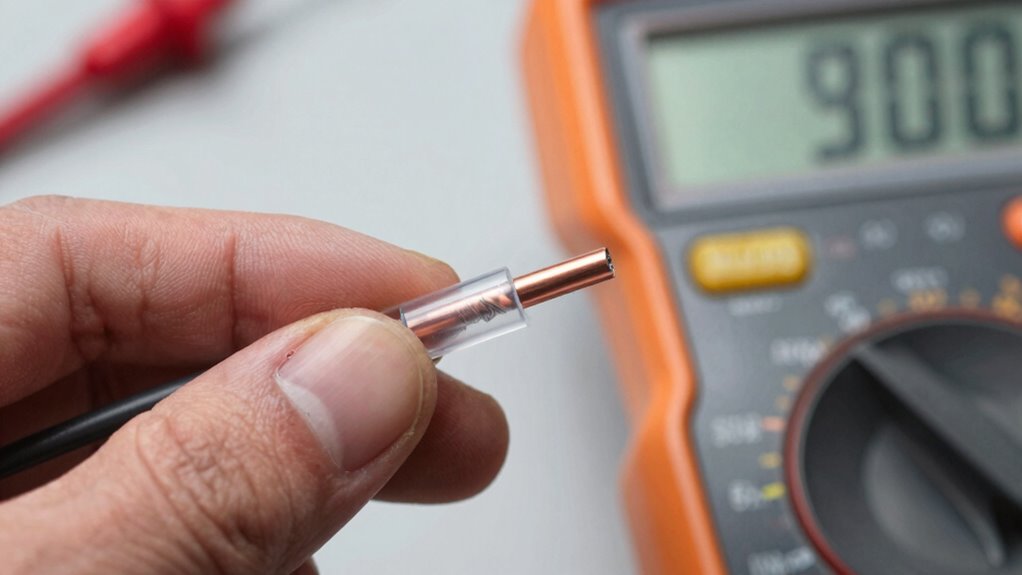
Understanding your wire’s ampacity and current rating is key to selecting the right fuse for your electrical system. Ampacity depends on the wire gauge, which determines how much current the wire can safely carry without overheating. Thinner wires have lower ampacities, while thicker wires can handle more current. To find your wire’s ampacity, check standard wire gauge charts that list maximum current ratings. Additionally, consider the thermal capacity of the insulation and surrounding environment, as heat buildup affects how much current the wire can handle safely. wire gauge plays a crucial role in determining safe current levels. Never rely solely on the wire gauge; always verify its thermal capacity and ensure the current rating aligns with your load requirements. Properly identifying these factors helps you choose a fuse that protects your wiring without nuisance trips or damage. Being aware of ambient temperature and how it influences heat dissipation is also essential for accurate fuse sizing.
Calculating the Correct Fuse Size for Your Load and Wiring
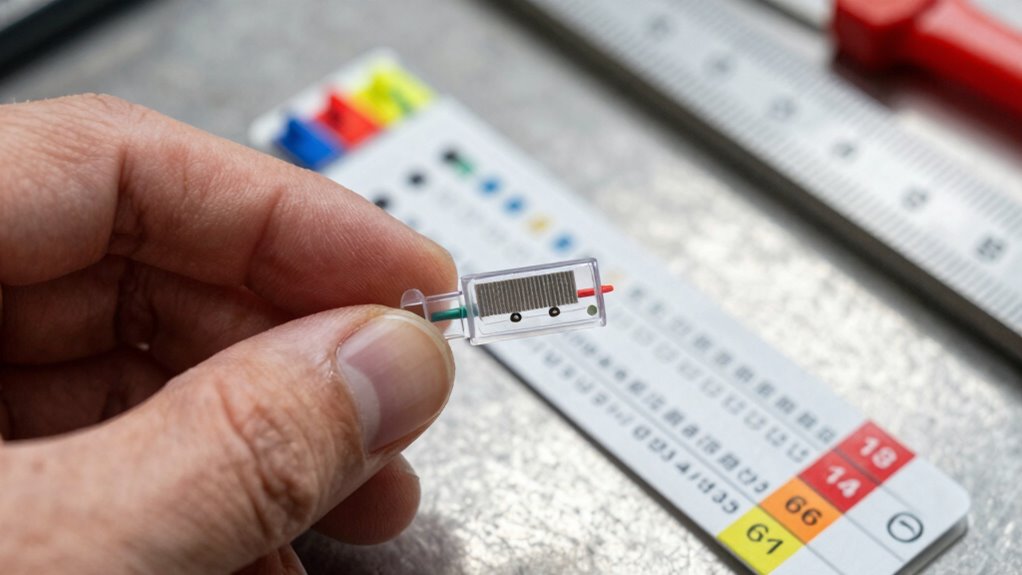
To properly size a fuse for your electrical system, you need to match it to both your load’s current draw and your wiring’s capacity. First, determine your load’s maximum current and select a fuse rated slightly above that value. Consider fuse materials like ceramic or glass, which influence durability and response time. Overcurrent protection relies on choosing a fuse that trips before damaging the wiring or components. Use this table as a guide:
| Load Current | Recommended Fuse Size |
|---|---|
| Up to 10A | 10A |
| 10A–20A | 20A |
| Over 20A | 25A–30A |
Proper sizing prevents nuisance blows while protecting your wiring from excessive current. Additionally, understanding fuse characteristics can help you select the most appropriate type for your application. Always verify your wire’s ampacity to ensure compatibility, and consider circuit protection devices to achieve a comprehensive safety setup. Knowing the importance of correct fuse sizing ensures your system remains both safe and efficient.
Ensuring Safety and Code Compliance When Sizing Fuses
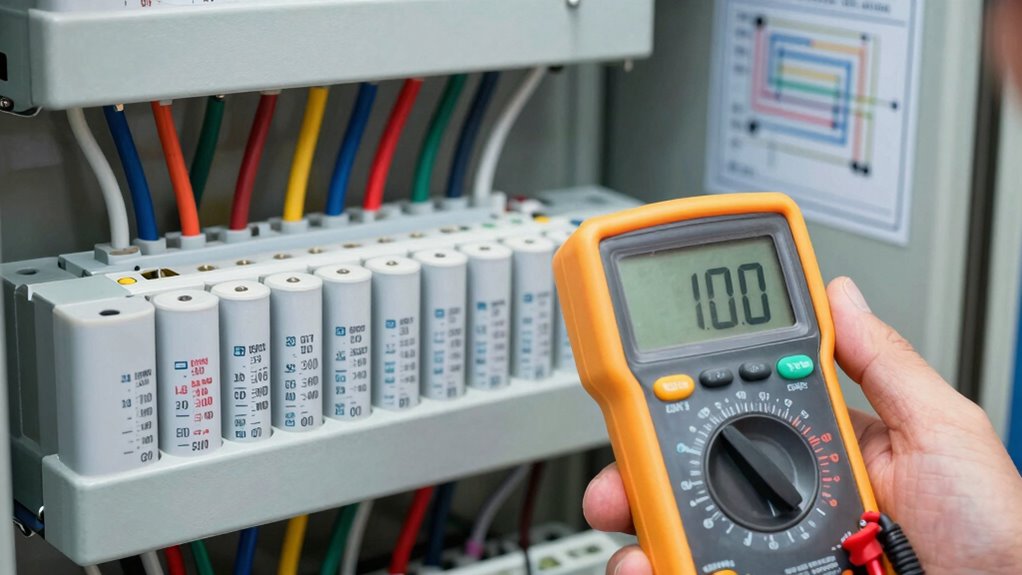
To guarantee safety and code compliance, you need to understand proper fuse ratings and follow electrical standards. Matching wire sizes and fuse ratings prevents hazards and keeps your system reliable. Always verify your setup aligns with local codes before finalizing your fuse selection. Using appropriately rated fuses for electric bikes and other devices ensures optimal performance and safety. Properly matching fuse ratings can also help prevent unnecessary damage to equipment and reduce the risk of electrical fires. Additionally, considering regional electrical standards ensures that your system adheres to the appropriate safety regulations. Being aware of circuit protection guidelines is essential for maintaining safety in electrical systems. Understanding overcurrent protection principles can further enhance your system’s safety and compliance.
Understand Proper Ratings
Have you ever wondered how choosing the right fuse rating can prevent electrical hazards and keep your system compliant with safety codes? To do this, you need to understand proper ratings. Start by considering the fuse material, which influences how it responds to electrical surges and heat. Different materials have specific current and voltage ratings, so selecting the right one guarantees reliable protection. Additionally, fuse color coding helps you quickly identify the correct rating at a glance, reducing the risk of mistakes. Always check that the fuse’s rated current and voltage match your system’s requirements. Proper ratings prevent nuisance blows and ensure the fuse will act promptly during overloads or short circuits, safeguarding your wiring and equipment effectively. Remember that selecting a fuse with the appropriate rating and specifications is essential for both safety and system reliability. Understanding the fire resistance properties of fuse materials can also help enhance safety in your electrical setup.
Follow Electrical Codes
Are you confident that your fuse selection complies with all safety regulations? Following electrical codes is essential to ensure your setup remains safe and reliable. These codes specify the correct fuse ratings based on wire size and load, preventing hazards like overheating or fire. When sizing a fuse, consider existing equipment like circuit breakers that protect against power surges and overloads. Proper adherence not only safeguards your wiring but also keeps you within legal standards. Always consult the National Electrical Code (NEC) or local regulations to confirm your fuse choices meet required safety standards, ensuring your electrical system remains safe, efficient, and compliant. Additionally, understanding fuse ratings is crucial for selecting the appropriate protection for your wiring, as they are based on established electrical safety standards.
Match Wire Sizes
Matching wire sizes to fuse ratings is essential for maintaining safety and ensuring code compliance. You must select a wire gauge that can handle the expected current without overheating, aligning with the conductor’s capacity. Using a wire that’s too thin for the fuse rating can cause excessive heat and potential failure, while an oversized wire may not provide proper protection. Always verify the wire gauge matches the fuse’s rated current and the conductor capacity specified by electrical codes. Proper matching prevents electrical fires, equipment damage, and safety hazards. When sizing a fuse, double-check that the wire gauge supports the intended load, ensuring the fuse will blow before the wire sustains damage. Additionally, understanding conductor capacity is crucial for making informed sizing decisions. Knowing the ampacity of conductors helps prevent overloading and ensures your system stays within safe limits. Implementing correct sizing practices also promotes system reliability and compliance with safety standards. Considering electrical code requirements ensures that your setup adheres to local safety regulations. This careful approach keeps your system safe, reliable, and compliant with standards.
Choosing the Right Fuse Type and Its Key Characteristics
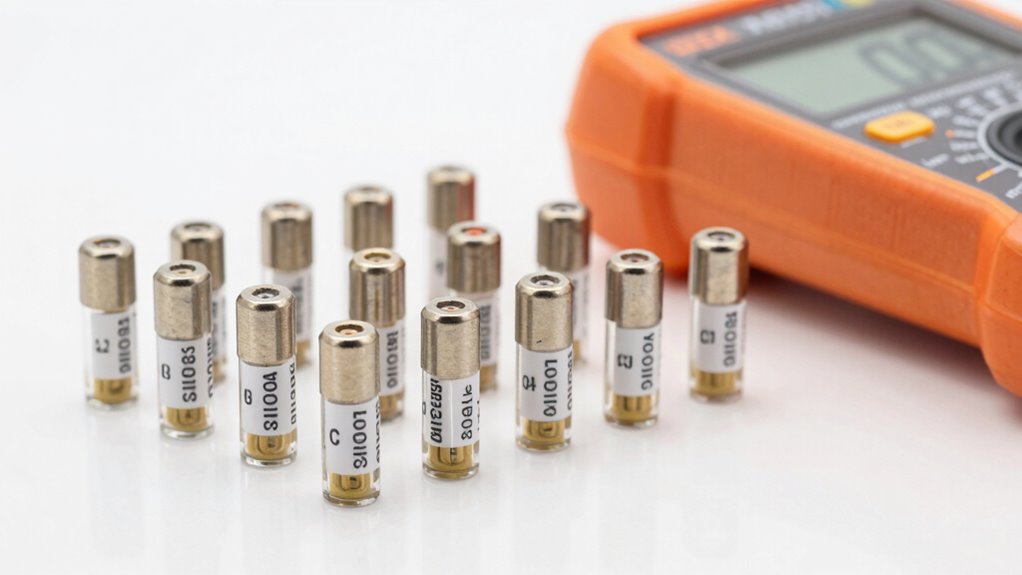
Choosing the right fuse type is essential for ensuring both safety and proper circuit protection. Different fuse types—like slow-blow, fast-acting, or semiconductor fuses—respond differently to overloads. To select the correct one, consider these key points:
- Understand fuse blowout behavior: fast-acting fuses protect against short circuits, while slow-blow fuses handle temporary surges.
- Check fuse ratings carefully to match your circuit’s current and voltage.
- Know the environment: high-temperature areas may require specialized fuses.
- Match the fuse type to your load characteristics for reliable protection without nuisance fuse blowouts.
- Be aware of fuse standards and classifications to ensure compatibility and safety compliance.
Installing and Testing Your Fuse for Reliable Protection
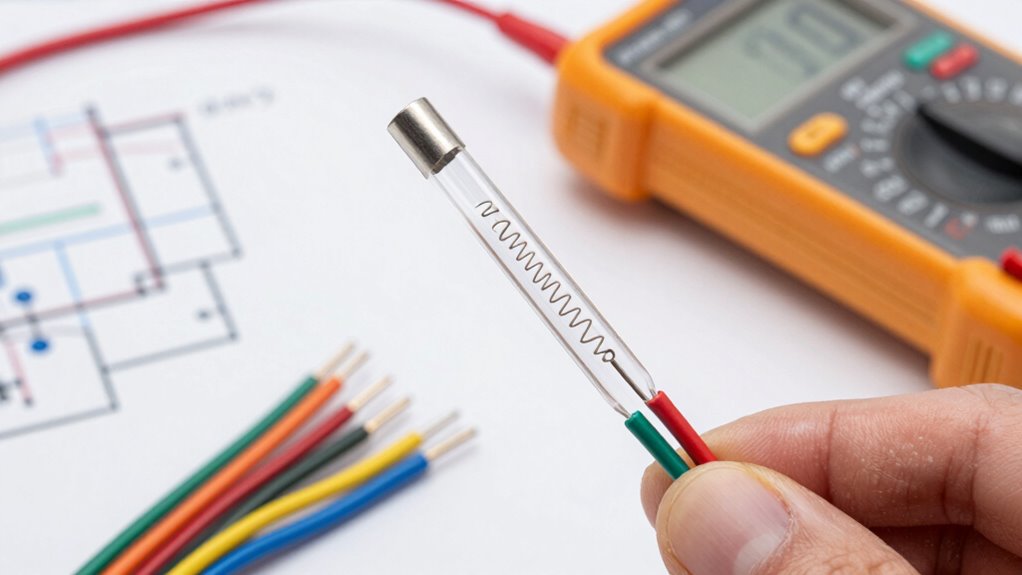
You should carefully install your fuse in the correct position to guarantee proper protection. Once installed, test the fuse for continuity to confirm it’s functioning properly. Additionally, consider air quality factors in your system to prevent issues related to dust or contaminants that can affect electrical components. Finally, double-check the system to make sure everything is safe and working reliably before powering it up. Remember to choose a fuse with the correct amperage rating to prevent electrical issues.
Proper Fuse Placement
Proper fuse placement is essential for guaranteeing reliable protection of your electrical system. To do this effectively, consider these key steps:
- Install the fuse as close as possible to the power source to quickly disconnect faulty circuits.
- Match the fuse color to its rated current, making it easier to identify and verify correct placement.
- Use fuses from reputable fuse manufacturers to ensure quality and consistency.
- Place the fuse in a well-ventilated, accessible location for easy inspection and replacement.
Always verify that the fuse’s current rating aligns with your wiring and load requirements. Proper placement prevents unnecessary power interruptions and ensures your fuse functions correctly when needed.
Testing Fuse Continuity
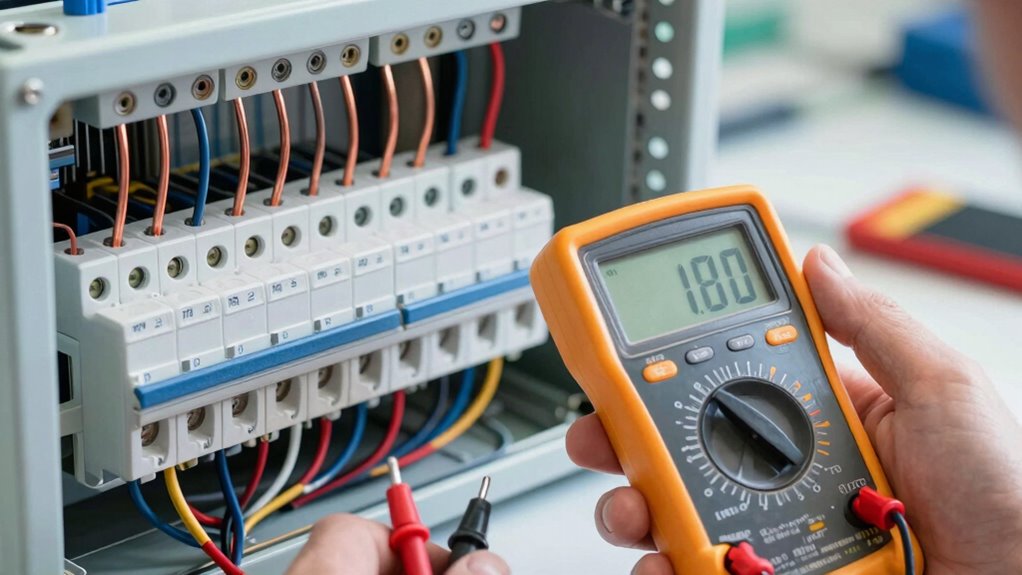
Testing fuse continuity is a vital step to guarantee your fuse provides reliable protection. Before testing, ensure you understand the fuse materials, as different types—like glass, ceramic, or blade fuses—may require specific testing methods. Use a multimeter set to the continuity or resistance mode to check if the fuse is intact. If the multimeter beeps or shows a low resistance reading, your fuse is good. Confirm the fuse’s color coding matches its amperage rating, which helps verify you’re testing the correct fuse. A blown fuse will show no continuity, indicating it needs replacement. Always disconnect power before testing to avoid shocks. Proper testing ensures your fuse functions correctly, preventing electrical issues and protecting your wiring effectively.
Confirming System Safety
Once you’ve confirmed that your fuse is intact and functioning correctly, the next step is to guarantee the system’s overall safety by installing the fuse properly and verifying its operation. Beware of fuse myths and safety misconceptions that can lead to improper installation. To ensure reliable protection:
- Double-check the fuse’s rating matches your wire and system needs.
- Use the correct fuse holder or block, securely fitted.
- Power the system and observe if the fuse blows under fault conditions.
- Test continuity after installation to confirm proper connection.
Avoid safety misconceptions like believing a blown fuse means system failure; instead, see it as protection. Proper installation and testing eliminate risks, confirming that your fuse effectively safeguards your wiring and equipment.
Troubleshooting Common Fuse and Wiring Issues
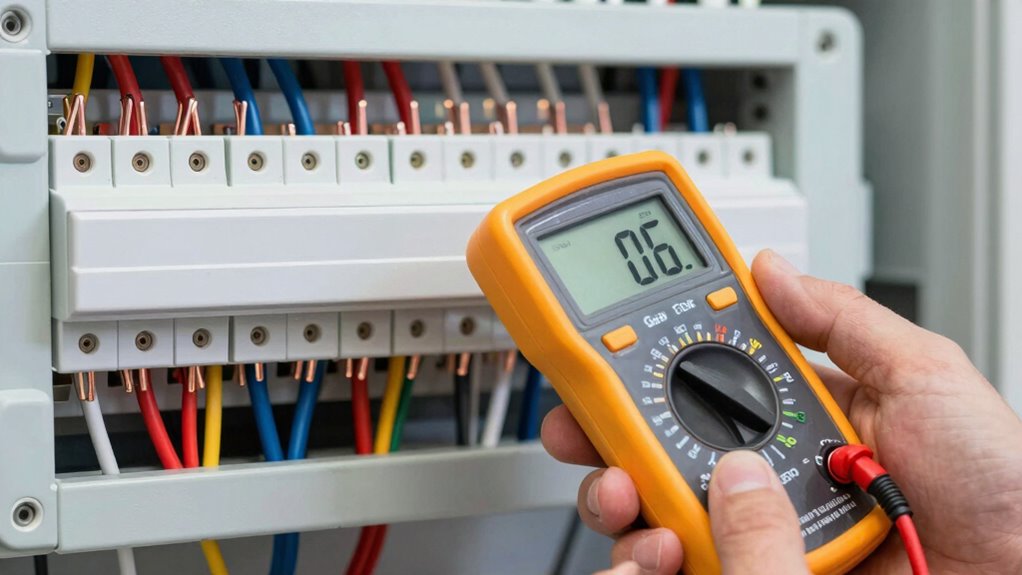
When a fuse blows or wiring issues occur, it’s important to identify the root cause quickly to prevent further damage or safety hazards. Fuse failure often results from wiring degradation, which causes increased resistance and overheating. To troubleshoot effectively, check for signs of wear like discoloration or melting on wires and connectors. Use this table to guide your diagnosis:
| Issue | Possible Cause |
|---|---|
| Fuse blowing repeatedly | Wiring degradation or short circuit |
| Overheating wires | Excessive current or poor connections |
| Intermittent failure | Loose connections or damaged fuse |
Address wiring degradation promptly by replacing damaged wires and ensuring proper connections. Correctly sizing and inspecting your wiring prevents fuse failure and maintains system safety.
Frequently Asked Questions
Can I Use a Fuse With a Higher Rating Than My Wire’s Ampacity?
You shouldn’t use a fuse with a higher rating than your wire’s ampacity because fuse ratings need to match wire sizing. If you choose a fuse that’s too high, it won’t protect the wire properly, risking overheating or fire. Always select a fuse rating that aligns with your wire’s ampacity to guarantee safe and effective protection. Proper fuse sizing is essential for preventing damage and maintaining safety in your electrical system.
How Often Should I Inspect or Replace Fuses in My System?
You should inspect your fuses regularly, ideally every few months, to guarantee proper fuse maintenance. Follow an inspection schedule that fits your system’s usage and environment. Replace any blown or damaged fuses immediately to prevent electrical issues. Regular inspections help identify corrosion or wear, ensuring your system stays protected. Staying diligent with fuse maintenance and adhering to a consistent inspection schedule keeps your system safe and functioning at its best.
What Are the Signs of an Incorrectly Sized Fuse?
You might notice a fuse blowing frequently or wiring damage, which indicates an incorrectly sized fuse. If the fuse blows too often, it’s likely too small, failing to protect the circuit properly. Conversely, if it rarely blows, it might be too large, risking damage to wiring or components. Always check for signs of overheating or burn marks, as these are clear signs the fuse isn’t providing adequate protection.
Is It Safe to Bypass a Fuse for Higher Protection?
It’s not safe to bypass a fuse for higher protection. Doing a fuse bypass removes an essential safety feature designed to prevent electrical overloads and fires. Skipping this step jeopardizes your safety considerations and can cause equipment damage or harm. Always use the correctly rated fuse to protect your wiring and devices. If protection seems inadequate, consult an electrician rather than risking dangerous fuse bypasses.
How Do Environmental Factors Affect Fuse Performance and Sizing?
Don’t underestimate how environmental factors impact fuse performance and sizing. High temperatures can cause fuses to blow prematurely, risking costly damage, while low temperatures may delay their response. Humidity impacts the fuse’s insulating properties, potentially leading to shorts or failures. You must consider temperature effects and humidity impact when selecting and installing fuses, ensuring they’re rated properly for your environment. Otherwise, you risk inadequate protection and costly failures.
Conclusion
Choosing the right fuse isn’t just about matching numbers—it’s about safeguarding your wires and preventing hazards. While a correctly sized fuse ensures safety, an ill-fitting one can cause damage or failure. Remember, precision protects both your equipment and your peace of mind. By understanding the balance between current and wire capacity, you turn a simple component into a reliable safeguard—demonstrating that sometimes, the smallest details make the biggest difference.