
LED flickering on your boat often results from unstable power supplies, wiring issues, or incompatible fixtures. Fluctuations in voltage, poor connections, corrosion, or low-quality lights can all cause flickering. To fix this, check your wiring, verify your power source is stable, and choose marine-grade, compatible LEDs. If flickering persists, it’s best to consult a marine electrician. Keep going to discover more tips to keep your boat’s lighting steady.
Key Takeaways
- Power supply fluctuations and unstable voltage cause LED flickering on boats.
- Wiring issues like corrosion, loose connections, or poor grounding disrupt electrical stability.
- Low-quality or incompatible LED fixtures are prone to flickering, especially in marine environments.
- Moisture ingress and inadequate waterproofing lead to wiring corrosion and flickering.
- Regular inspection, using marine-grade components, and professional troubleshooting help prevent and fix flickering.

YETOR Waterproof Connectors 2 Wire,16AWG Male Female Plug LED Connector with 2Pin Waterproof Connectors,IP68 20CM Extension Cable for Car,Truck,Boat,Indoor/Outdoor LED Strip Lights.(5Pairs)
- Connector Type: 2-pin male and female
- Waterproof Rating: IP68 waterproof
- Wire Gauge: 16AWG
As an affiliate, we earn on qualifying purchases.
As an affiliate, we earn on qualifying purchases.
What Causes LED Flickering on Boats?
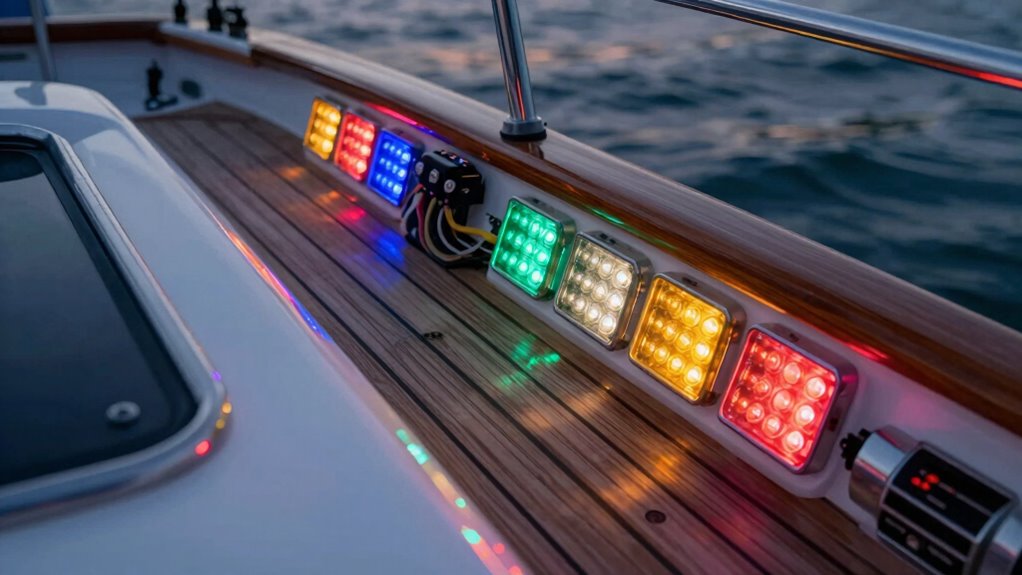
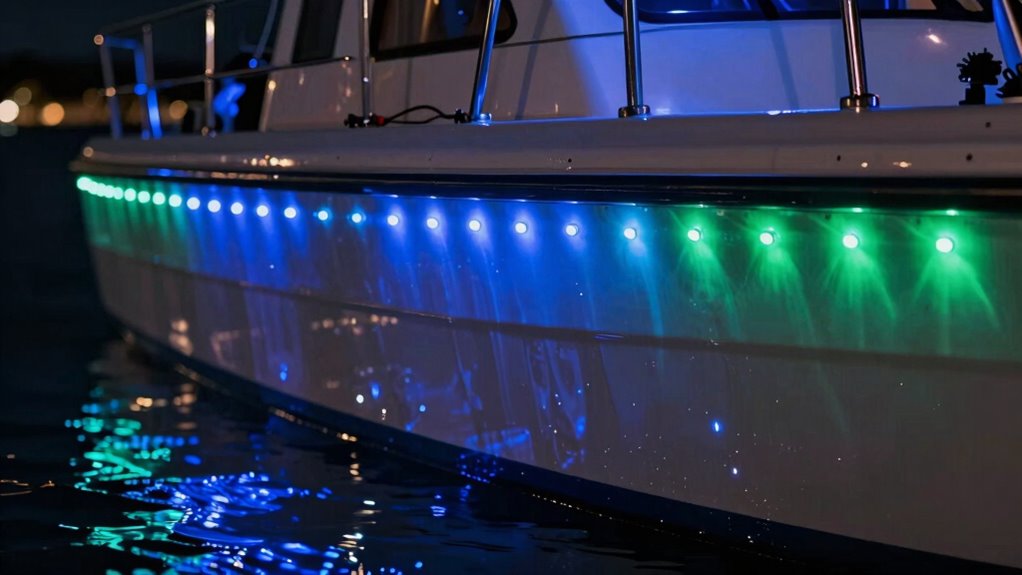
Have you ever noticed your boat’s LED lights flickering unexpectedly? It’s often caused by issues with marine waterproofing, which protects your wiring from moisture and corrosion. When waterproofing isn’t adequate, moisture can seep in and disrupt electrical connections, leading to flickering. Additionally, the variety of LED color options you choose can impact flickering; some colors are more sensitive to voltage fluctuations or wiring inconsistencies. Poorly sealed connections or damaged waterproofing can expose components to water, causing unstable power flow. Even if your LEDs are high-quality, inadequate marine waterproofing can still lead to flickering problems. To prevent this, ensure your wiring is properly sealed, and opt for marine-grade waterproof connectors. Proper waterproofing techniques and maintenance are key to keeping your LED lighting steady and vibrant. Regular inspection and waterproofing maintenance can help identify vulnerabilities before they cause flickering issues. Using appropriate wiring materials can also enhance the reliability of your LED setup in challenging marine environments.

EDGELEC 30pcs 12 Volt 5mm Yellow Flicker LED Lights Emitting Diodes (Candle Flickering Lights) Pre Wired 7.9 inch DC 12v LED Light Clear Lens Small LED Lamps
- Lifespan: Over 20,000 hours
- Number of LEDs: 30 pieces
- LED Size: 5mm
As an affiliate, we earn on qualifying purchases.
As an affiliate, we earn on qualifying purchases.
How Power Fluctuations Lead to Flickering
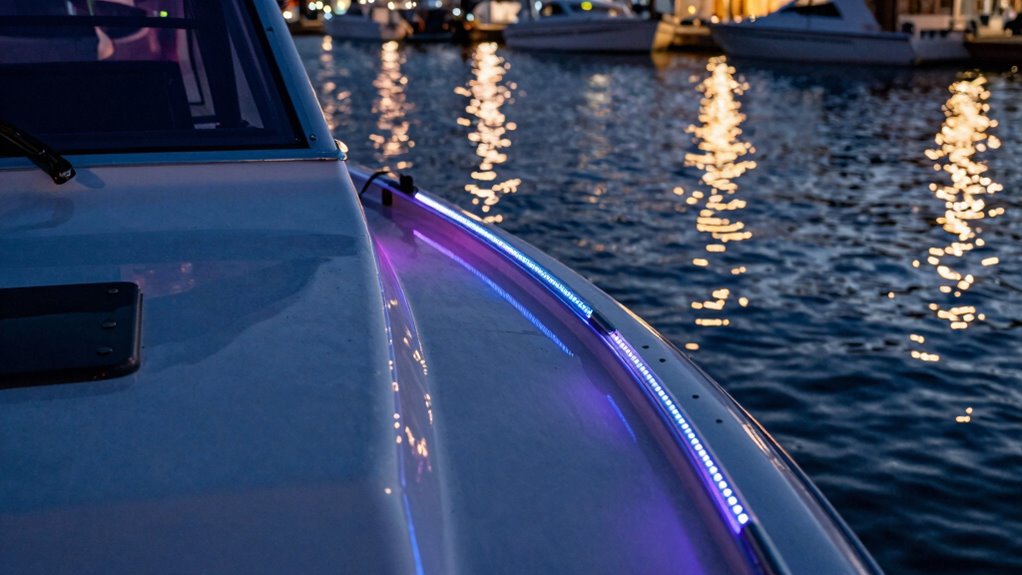
When your boat’s power supply isn’t stable, you’ll notice the LEDs flickering. Voltage dips and surges caused by fluctuating power levels are common culprits. Issues with the alternator and battery can also create these unpredictable fluctuations, leading to flickering lights. Ensuring a consistent power source and understanding the power fluctuation causes can help mitigate these flickering issues. Additionally, Free Floating systems can contribute to unstable power distribution, further affecting LED performance. Implementing proper grounding and voltage regulation techniques can significantly reduce the occurrence of flickering lights. Moreover, selecting marine-grade electrical components designed to withstand harsh conditions can enhance overall power stability and LED longevity.
Voltage Dips and Surges
Voltage dips and surges occur when the electrical supply experiences sudden drops or spikes in voltage, which can directly cause LED flickering on boats. Voltage dips happen when the power supply drops below its normal level, often caused by heavy electrical loads or unstable connections. Electrical surges, on the other hand, involve brief spikes in voltage that can overload LED circuits. These fluctuations disrupt the consistent current LEDs need to operate smoothly, leading to flickering. Voltage fluctuations are especially prevalent in marine environments where power sources can be unstable or affected by external factors like passing ships or electrical faults. To prevent flickering caused by voltage dips and surges, you should consider installing surge protectors, voltage regulators, or filtering devices designed for marine use. Electrical stability is crucial for maintaining consistent LED performance and avoiding flickering issues. Implementing power conditioning devices can further enhance overall electrical stability and protect your lighting systems. Additionally, regular inspection and maintenance of your electrical connections can help minimize the risk of power fluctuations impacting your LED lights. Recognizing power quality issues early can prevent costly damage and ensure reliable operation of your marine lighting.
Alternator and Battery Issues
Alternator and battery issues are common causes of LED flickering on boats because fluctuating power output directly affects the stability of your lighting system. When your marine battery isn’t holding a steady charge or your alternator isn’t functioning properly, voltage levels can drop or spike, causing LEDs to flicker. Regular alternator maintenance ensures your charging system provides consistent power. A weak marine battery can also fail to supply stable voltage, leading to flickering. Check the following:
| Issue | Solution |
|---|---|
| Failing alternator | Perform alternator maintenance or replace |
| Old marine battery | Replace with a new, fully charged battery |
Keeping these components in top shape helps prevent flicker and keeps your boat’s lighting steady. Proper wiring safety practices also play a crucial role in ensuring consistent power delivery and preventing electrical issues that can cause flickering. Additionally, inspecting connection integrity can help identify loose or corroded wires that contribute to voltage fluctuations. It is also beneficial to monitor voltage stability regularly to catch potential problems early, ensuring a reliable electrical system while on the water. Regularly testing electrical components can further help in diagnosing issues before they affect your lighting system.

ULITECO Boat Courtesy Lights, IP68 Waterproof Boat Interior Lights, Marine Navigation Stern Courtesy Night Fishing Lighting, Stainless Steel Marine LED Lighting for Pontoon Bass Sailboat(4PCS Blue)
- High Brightness LEDs: Energy-efficient, high-intensity illumination
- Durable Stainless Steel: Corrosion-resistant, crash-proof construction
- IP68 Waterproof: Full sealing for marine environments
As an affiliate, we earn on qualifying purchases.
As an affiliate, we earn on qualifying purchases.
Are Wiring Problems Making Your LEDs Flicker?
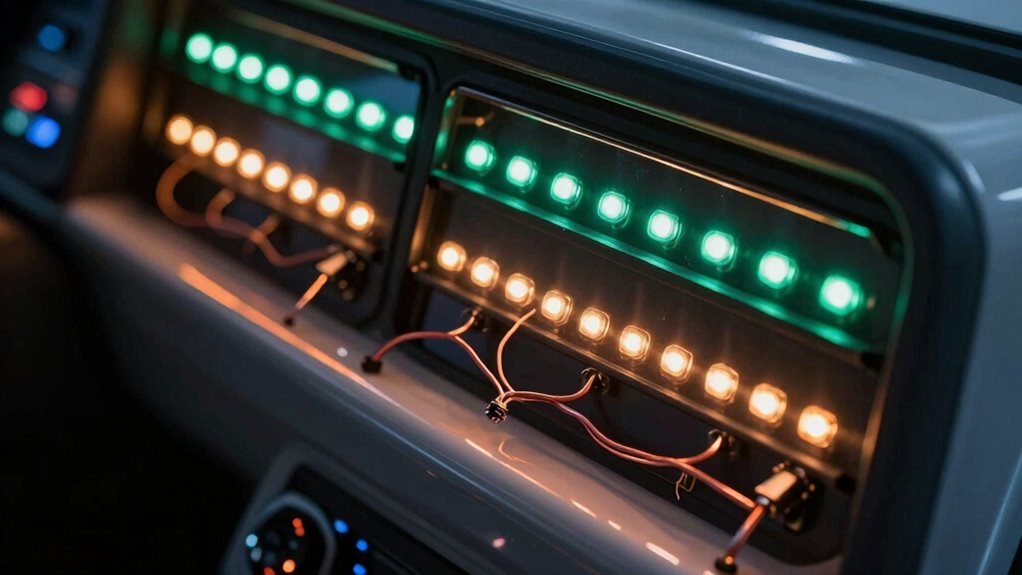
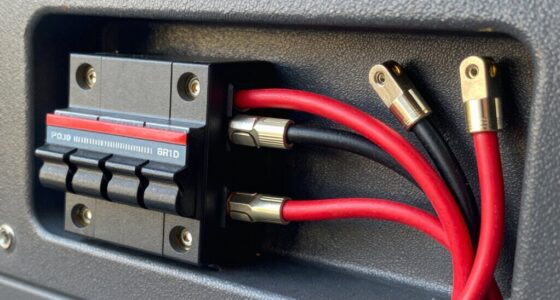
Wiring issues are a common culprit behind flickering LEDs on boats. Poor marine wiring or loose connections can cause inconsistent power flow, leading to flickering. Faulty electrical grounding is another frequent problem; if your LED fixtures aren’t properly grounded, they won’t receive a stable current. Check for corrosion or damage in your wiring, especially around connections and terminals. Ensure all wires are tightly connected and adequately insulated. A poorly grounded system can create voltage fluctuations, making LEDs flicker or dim unexpectedly. Remember, maintaining good electrical grounding and clean, secure marine wiring is essential for stable LED operation on your boat. Additionally, extension cord standards can help ensure your wiring setup is safe and reliable. Proper use of marine-grade wiring is also crucial to prevent corrosion and ensure long-term stability. Regularly inspecting and replacing damaged wiring components can further prevent flickering issues and keep your boat’s lighting system functioning smoothly. To further enhance electrical stability, consider installing a voltage regulator to help maintain consistent power levels.

Boat Voltage Regulator Rectifier with Plug 830179T1 854515T2 883072T2
- Compatible Models: Fits Mercury outboard 2000-2005
- Part Numbers: 830179T1, 830179T2, 854515T2, 883072T1, 883072T2, and more
- OEM Design: Direct fit, meets or exceeds OEM standards
As an affiliate, we earn on qualifying purchases.
As an affiliate, we earn on qualifying purchases.
Why Poor-Quality or Incompatible LED Fixtures Cause Issues
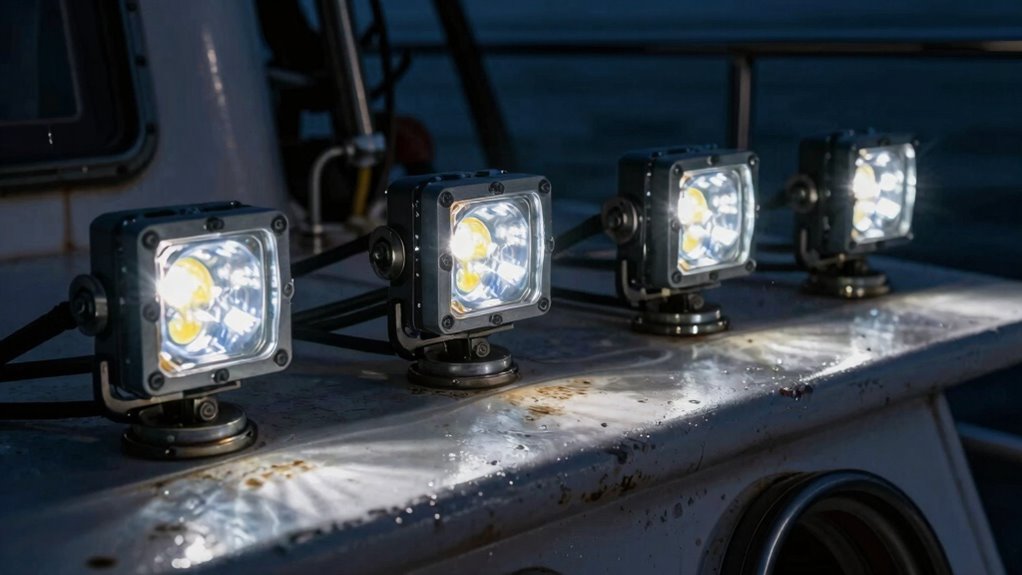
Poor-quality or incompatible LED fixtures are often the root cause of flickering issues on boats because they can’t handle the electrical demands or voltage fluctuations of your marine system. Cheap fixtures may lack proper circuitry or build quality, leading to inconsistent illumination. Fixture compatibility is vital; using LEDs not designed for your boat’s voltage or dimming system can cause flickering or failure. Consider this table:
| Issue | Cause |
|---|---|
| Flickering LEDs | Poor-quality fixtures |
| Inconsistent brightness | Fixture incompatibility |
| Rapid fixture failure | Subpar build or mismatched specs |
| Dimming problems | Incompatible dimming controls |
| Short lifespan | Low-grade components |
Choosing quality fixtures that match your marine system’s requirements ensures stable, flicker-free lighting.
How to Troubleshoot and Fix LED Flickering Step by Step
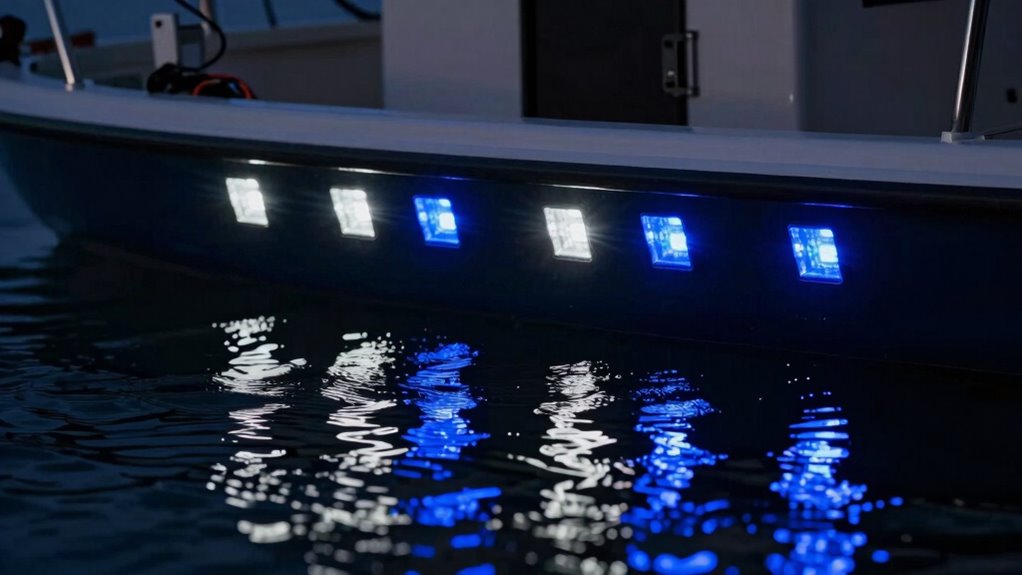
When your boat’s LED lights start flickering, it’s often a sign that something isn’t quite right with the fixtures or the electrical setup. To troubleshoot, start by checking your power supply. Confirm it provides consistent voltage and isn’t fluctuating. Next, verify fixture compatibility—make sure your LEDs are designed for marine use and match your voltage requirements.
Flickering boat LED lights often signal wiring issues or incompatible fixtures.
Here’s what to do:
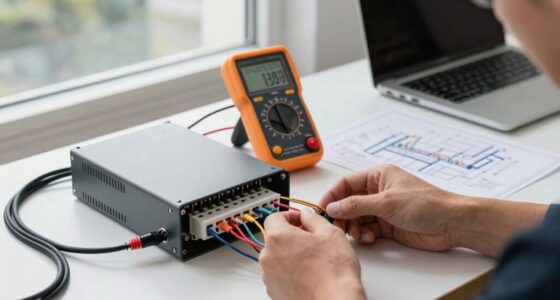
- Test the power supply with a multimeter for voltage stability
- Inspect wiring connections for corrosion or loose contacts
- Confirm your LED fixtures are compatible with your system
- Swap flickering LEDs with known good ones to identify faulty units
Following these steps helps identify whether the issue is power-related or fixture compatibility, guiding you toward a proper fix.
Choosing Marine LED Lights That Won’t Flicker
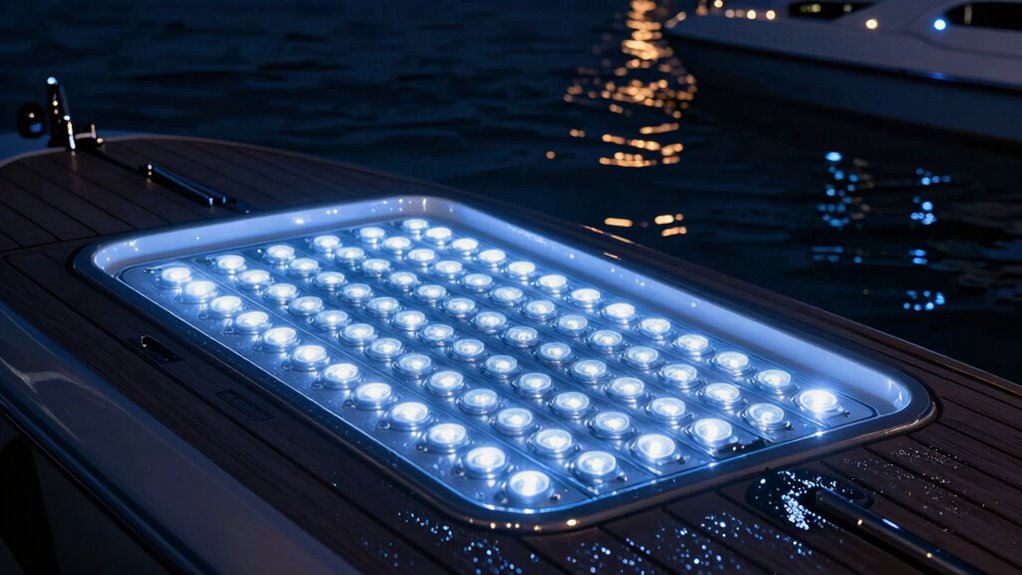
To guarantee your marine LED lights stay steady and flicker-free, it’s vital to choose fixtures specifically designed for marine environments. Marine lighting is built to withstand moisture, vibrations, and temperature fluctuations, reducing the risk of flickering. When selecting LED fixtures, make sure they are compatible with your boat’s electrical system, especially if you use dimmers or variable power sources. Fixture compatibility is essential; incompatible lights may cause flicker or damage over time. Look for high-quality marine-grade LEDs with proper waterproof ratings and secure fittings. Avoid generic or low-quality options, as they often lack the necessary resilience and may not work well with your boat’s wiring. Investing in the right marine lighting ensures long-lasting, flicker-free illumination during your voyages.
Tips to Prevent LED Flickering on Your Boat
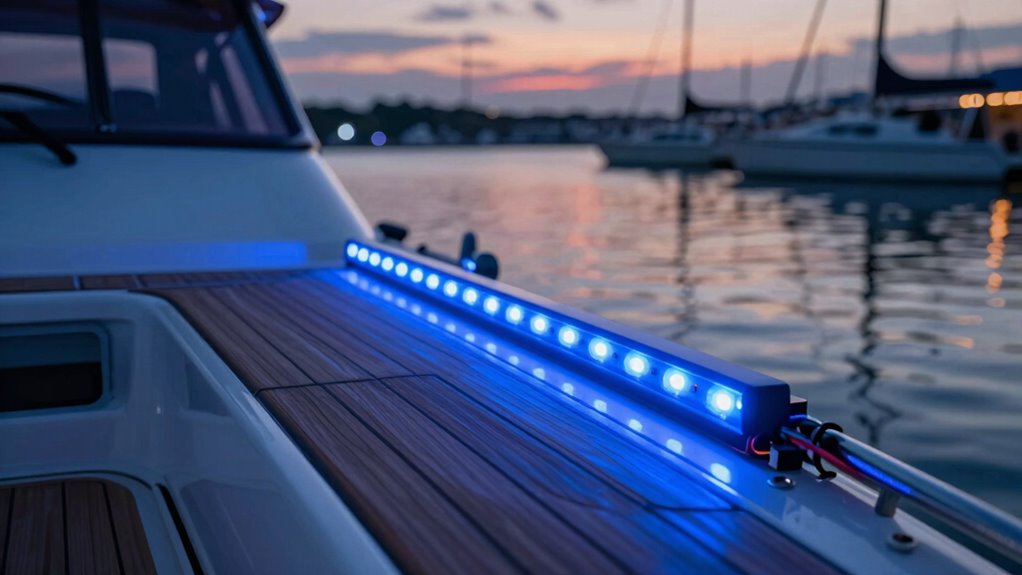
To prevent LED flickering on your boat, start by using quality wiring to guarantee a stable power supply. Installing a proper dimmer can also help maintain consistent brightness without causing flicker. These simple steps make a noticeable difference in keeping your LEDs steady and reliable.
Use Quality Wiring
Ensuring you use high-quality wiring is essential for preventing LED flickering on your boat. Good marine wiring ensures consistent power delivery and reduces interference that causes flickering. When selecting wiring, prioritize durable, corrosion-resistant materials designed for marine environments. Proper wiring helps with effective power management, preventing voltage drops that can lead to unstable LED performance.
To improve your setup, consider these tips:
- Use marine-grade wiring that resists moisture and corrosion
- Keep wiring connections tight and secure
- Avoid long, tangled runs that increase resistance
- Regularly inspect and replace worn or damaged wires
Install Proper Dimmer
Installing the right dimmer switch is essential for preventing LED flickering on your boat. First, verify the dimmer is compatible with LED lighting, as incompatible switches can cause flickering or damage. Check the dimmer’s specifications and look for labels indicating LED compatibility. Follow the installation guidelines carefully—wire it correctly according to your boat’s electrical system, making sure to match the dimmer’s input and output terminals properly. Using a compatible dimmer switch designed specifically for LED fixtures helps maintain consistent brightness and prevents flickering issues. Additionally, avoid cheap or generic dimmers that aren’t rated for marine use, as they may not handle the vibration and moisture conditions on your boat. Proper installation and compatible dimmer choice are key to smooth, flicker-free lighting.
When to Call a Marine Electrician for LED Issues
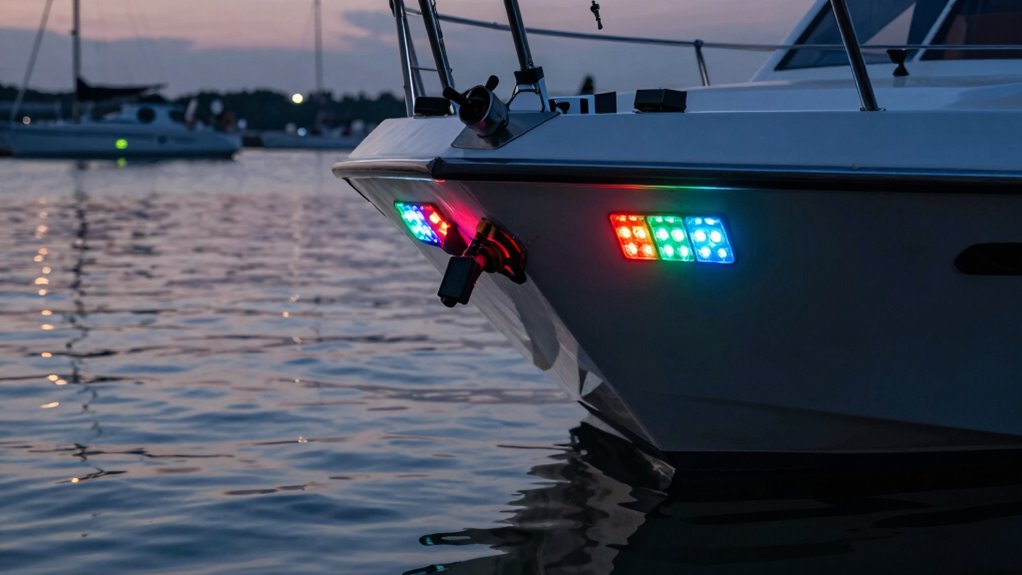
If your boat’s LED lights start flickering or behaving unpredictably, it’s a clear sign that professional help may be needed. Ignoring the issue can compromise marine safety and lead to further electrical problems. Call a marine electrician if you notice:
- Persistent flickering despite adjusting connections
- Signs of corrosion or damaged wiring
- Unusual power surges or outages
- Your LED setup lacks proper electrical certification
A licensed marine electrician ensures your system meets safety standards and adheres to electrical certifications. They can diagnose complex issues, prevent future flickering, and keep your boat’s lighting reliable. Don’t risk safety or damage—trust a professional to handle LED problems that go beyond simple fixes. Properly maintained lighting is essential for both navigation and marine safety.
Frequently Asked Questions
Can Temperature Changes Affect LED Flickering on Boats?
Yes, temperature fluctuations can affect LED stability on boats. When temperatures change, the internal components of LEDs may expand or contract, causing flickering. Extreme heat can degrade the LED’s internal parts, while cold temperatures might reduce performance. To prevent flickering, make certain your boat’s LED lights are rated for marine environments and consider installing temperature regulation or insulation to maintain consistent operating conditions.
Does Battery Age Impact LED Stability on Marine Vessels?
Battery aging is like a fading engine—its ability to provide stable power diminishes over time. As your marine vessel’s battery ages, it can cause electrical instability, leading to LED flickering. This happens because the battery struggles to supply consistent voltage, which affects LED performance. Regular maintenance and timely replacement help make certain your boat’s electrical system remains steady, preventing flicker and keeping your lighting bright and reliable on the water.
Are Specific Marine Environments More Prone to LED Flickering?
Yes, certain marine environments are more prone to LED flickering. If your boat’s marine wiring isn’t properly installed or maintained, it can cause inconsistent power delivery, leading to flickering. Additionally, lower-quality LEDs may not handle the harsh conditions well, increasing flicker chances. You should upgrade to high-quality LEDs and verify your marine wiring is secure and properly grounded to minimize flickering issues.
How Does Marine Corrosion Influence LED Performance?
Did you know that marine corrosion can reduce LED lifespan by up to 50%? Corrosion effects on your boat’s electrical system can cause flickering or dimming, as corrosion disrupts connections and introduces electrical interference. This interference hampers LED performance, leading to inconsistent lighting. Regular inspection and maintenance of electrical contacts and applying corrosion-resistant coatings help minimize these effects, ensuring your LEDs stay bright and reliable in harsh marine environments.
Can Software or Electronic Control Systems Cause LED Flicker?
Yes, software interference or control system glitches can cause LED flicker. When your boat’s electronic control systems malfunction or experience glitches, they send inconsistent signals to the LEDs, leading to flickering. You should check for software updates, verify the control system is functioning properly, and look for any interference or loose connections that might disrupt communication. Regular maintenance and troubleshooting can help prevent flickering caused by these electronic issues.
Conclusion
Understanding the causes of LED flickering helps you troubleshoot effectively and enjoy consistent, bright lighting on your boat. Remember, using high-quality, compatible fixtures and maintaining stable power sources can markedly reduce flickering. Did you know that marine LED lighting can last up to 50,000 hours? Taking proactive steps ensures your lights stay steady, saving you time and money. If issues persist, don’t hesitate to consult a marine electrician for expert help.