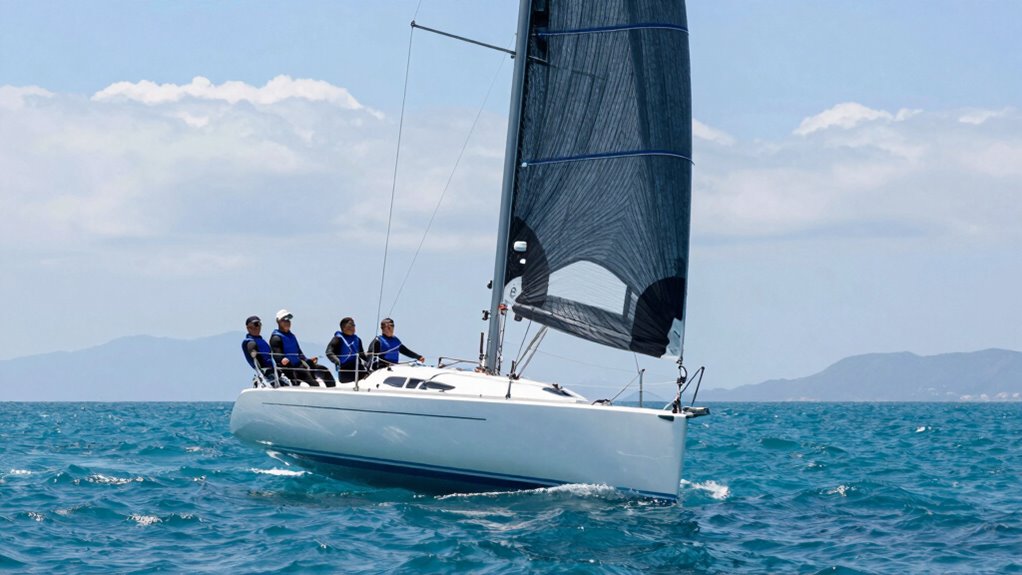

To hold your boat’s position without anchoring, use wind, currents, and boat handling skills. Adjust sails and engine power to counteract drifting forces. Turn into the wind or current to control movement, and use tacking or jibing in windy conditions to stay on station. Continuously monitor environmental cues like water ripples and debris. Properly combining these techniques helps you maintain your desired position, and more tips are available if you keep exploring deeper strategies.

Get sports gear delivered free — and shop member deals
- Fast, free delivery on millions of items
- Access to Prime Big Deal Days deals on October 6–7
- Prime Video, Amazon Music and more included
Key Takeaways
- Use sail trim and engine adjustments to counteract wind and current drift proactively.
- Turn into the wind or water flow to stabilize your position naturally.
- Employ alternative methods like mooring to fixed points or securing to a dock or buoy.
- Monitor environmental cues such as ripples, debris, and water color for real-time current awareness.
- Plan ahead with weather forecasts to anticipate shifts and adjust your position accordingly.
As an affiliate, we earn on qualifying purchases.
How Wind and Currents Affect Your Boat’s Position
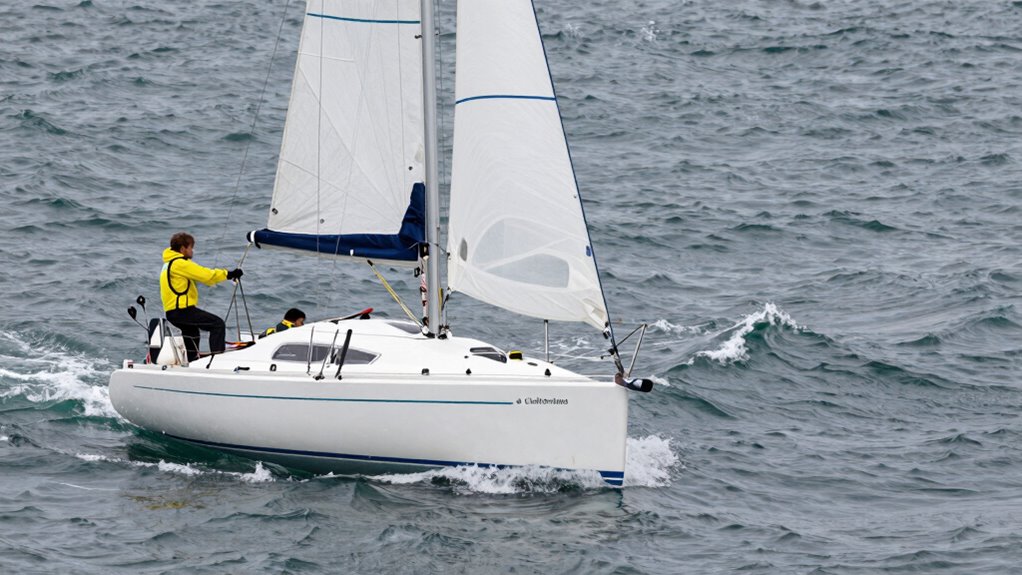
Wind and currents can substantially shift your boat’s position if you don’t anchor properly. Weather patterns play a big role, as strong winds can push your boat off course quickly, especially if they’re unpredictable or changing rapidly. Knowing the tide schedules helps you anticipate how water movement will affect your boat; rising or falling tides can create currents that drift you away from your intended spot. When planning, check local weather reports and tide charts to understand these influences. Even calm-looking conditions can change suddenly, so stay alert. Adjust your position proactively, especially during changing weather. Recognizing how wind and currents interact with tide schedules allows you to better manage your boat’s position without an anchor, reducing the risk of drifting into hazards or off your desired location.
As an affiliate, we earn on qualifying purchases.
How to Read Wind and Water Currents to Stay Put

Understanding how to read wind and water currents is essential for maintaining your position without anchoring. In marine navigation, environmental awareness helps you identify subtle signs of current flow, such as changes in water surface patterns or debris drift. Watch the water’s surface for ripples and streaks that indicate current direction. Notice how nearby boats are drifting—this offers clues about water movement. Pay attention to wind-driven ripples, as they often align with water currents, affecting your boat’s position. Recognizing these signs allows you to adjust your boat’s orientation and drift accordingly. Additionally, environmental cues such as changes in water color or temperature can provide further insight into current flow. Developing environmental awareness by interpreting these cues enables you to stay put more effectively, conserving energy and avoiding unnecessary movement or repositioning.
As an affiliate, we earn on qualifying purchases.
How to Pick the Best Tactics for Holding Your Boat in Various Conditions

Choosing the right tactics to hold your boat in various conditions requires evaluating the environment and adapting your approach accordingly. Your goal is to maintain a secure position without anchoring, using methods suited to current, wind, and available resources. Consider these tactics:
- Use dock lines effectively when near docks or piers
- Attach to mooring buoys designed for your boat size
- Adjust line tension to accommodate changing water levels
- Combine multiple lines for stability
- Avoid relying solely on one method; diversify your approach
water current indicator for boats
As an affiliate, we earn on qualifying purchases.
As an affiliate, we earn on qualifying purchases.
How to Use Sails and Engines to Maintain Your Position
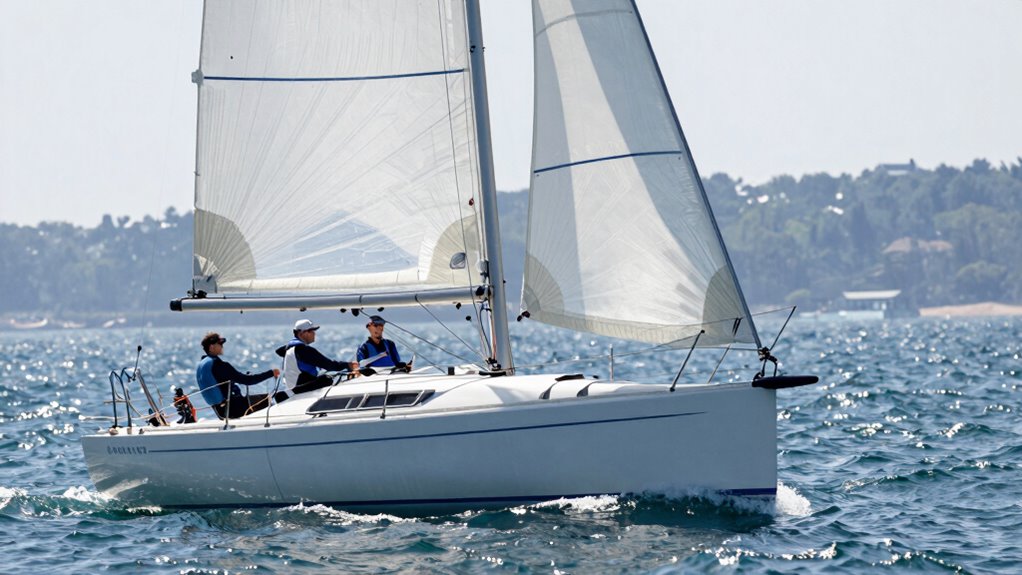
To hold your position, you need to adjust your sail trim accurately to optimize wind efficiency. Using your engines strategically can help counteract drift when wind conditions shift unexpectedly. Keep a close eye on wind and current patterns to make timely adjustments and stay steady in your spot. Regularly monitoring your home climate control system can also assist in maintaining a comfortable environment despite changing conditions. Additionally, understanding wall art trends such as digital frames and interactive murals can inspire creative ways to enhance your space when stationary.
Adjust Sail Trim Precisely
Adjusting sail trim precisely is key to maintaining your position without anchoring, especially when you want to stay steady in changing conditions. Accurate sail trim allows you to maximize wind power and reduce unwanted drift, making marine navigation more effective. Use weather forecasting to anticipate shifts and adjust your sails proactively. Focus on:
- Fine-tuning sail angles to current wind directions
- Monitoring telltales for ideal airflow
- Adjusting sheets smoothly for responsive control
- Balancing sail power with current effects
- Regularly reviewing weather updates for sail adjustments
Proper sail trim also involves understanding how airflow dynamics influence your vessel’s movement, enabling more precise control. Recognizing the effect of wind shifts helps in adjusting sails ahead of time, minimizing drift and maintaining your desired position.
Use Engines Strategically
When you need to hold your position without anchoring, using engines strategically alongside your sails gives you greater control. By carefully adjusting engine power, you can counteract drifting caused by wind or currents, maintaining a steady position. Always prioritize marine safety by monitoring engine temperatures and fuel levels, ensuring reliable operation. Use your navigation tools—like GPS or chart plotters—to verify your position constantly and make precise engine adjustments. Combining sail trim with engine control allows you to fine-tune your station-keeping, especially in variable conditions. Remember, smooth and deliberate engine maneuvers help prevent sudden shifts that could compromise stability or safety. Properly integrating engines into your navigation strategy ensures you stay secure without relying solely on anchors, making your vessel more adaptable and responsive. Being aware of engine load management can further optimize your control and efficiency during station-keeping. Additionally, understanding dynamic positioning techniques can enhance your ability to maintain position in challenging environments. Incorporating advanced control systems can also help automate and refine your station-keeping efforts, especially in complex situations.
Monitor Wind and Currents
How can you effectively maintain your position amid changing wind and current conditions? The key is actively monitoring wind and currents through reliable weather forecasting and marine navigation tools. Stay alert to real-time data to adjust your sails or engines promptly. Use these strategies:
- Continuously check weather updates for wind shifts
- Use marine navigation instruments to track current patterns
- Adjust sail trim based on wind direction changes
- Engage engines when currents threaten your position
- Plan ahead with weather forecasts to anticipate shifts
- Understanding projector contrast ratios can help in assessing how environmental conditions might affect visibility and image quality in different lighting scenarios.
Steering Techniques for Precise Control in Challenging Conditions
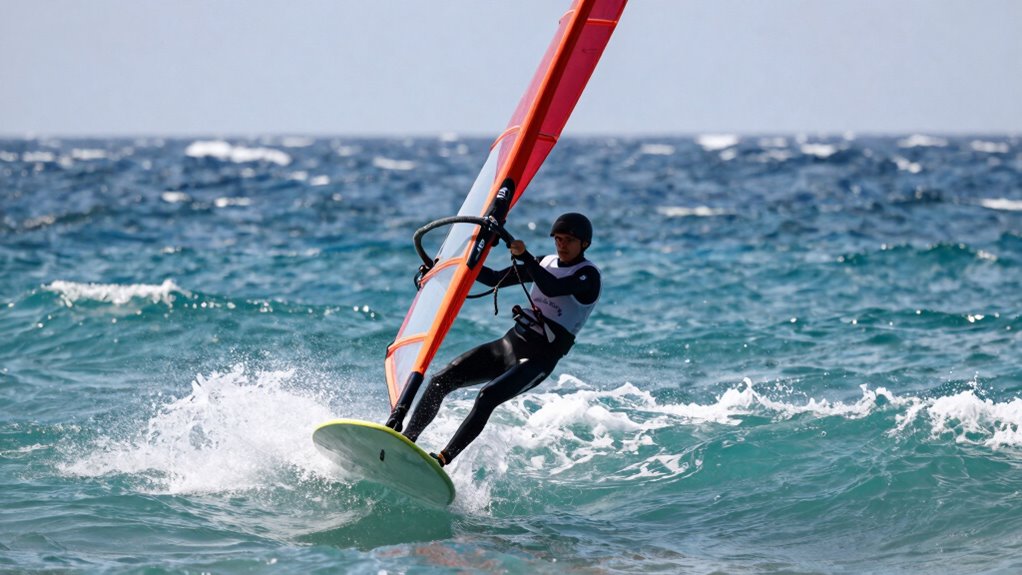
Mastering steering techniques is essential when holding a position without anchoring, especially in challenging conditions. Precise steering helps you maintain navigation safety and boat stability amid wind and currents. To achieve this, steer smoothly and anticipate changes in wind or current direction, making small adjustments to keep your vessel on course. Use your helm confidently, avoiding abrupt movements that could destabilize the boat. Pay close attention to your surroundings and constantly monitor your vessel’s response. In tricky conditions, it’s better to make gradual, controlled turns rather than sharp corrections. This approach minimizes unnecessary movement, preserves stability, and keeps your position steady. Steering adjustments are crucial for adapting to changing conditions effectively. Effective steering ensures you stay on target without overreacting, maintaining safety and control in even the most difficult scenarios.
Adjusting Thrust and Sails to Reduce Drift Effectively
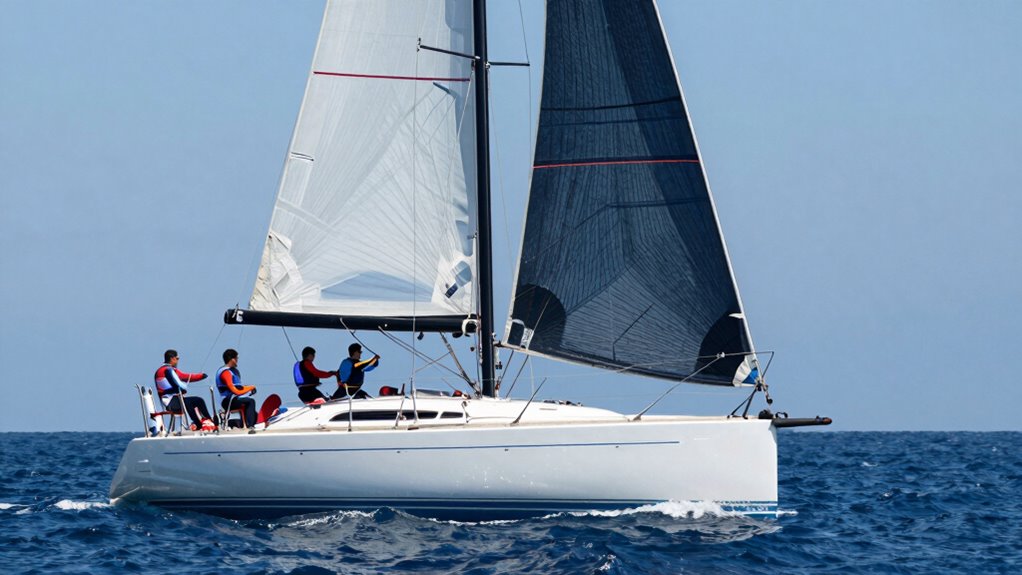
Adjusting your thrust and sails is essential for effectively reducing drift and maintaining your intended position. By fine-tuning your propulsion and sail trim, you can counteract current and wind effects during marine navigation. Proper adjustments help you stay steady without anchoring, ensuring safety procedures are followed and minimizing the risk of unintentional movement. Focus on these key strategies:
Adjust thrust and sail trim to counteract currents and winds for precise vessel control.
- Increase or decrease thrust based on current direction
- Trim sails to ideal angles for flow control
- Use engine power to counteract drift tendencies
- Monitor environmental conditions continuously
- Coordinate with crew for swift sail adjustments
- Regularly evaluate and troubleshoot alert signals to ensure your vessel’s systems are functioning correctly
Understanding effective home soundproofing tips can help if you need to reduce noise disturbances during your voyage, especially in noisy environments. Additionally, being aware of water flow patterns can enhance your ability to manage drift effectively. Recognizing marine navigation principles further supports your capacity to adapt to changing conditions and maintain control.
Implementing these tactics helps you maintain control, improves safety, and guarantees precise positioning even in challenging conditions. Regularly evaluating and adjusting thrust and sails keeps your vessel aligned with your navigation goals.
Using Tacking and Jibing to Keep Your Boat in Place in Windy Conditions

In windy conditions, using tacking and jibing effectively allows you to maintain your position without anchoring. Proper ballast management keeps your boat stable during maneuvers, preventing unwanted drift. As you execute a tack or jibe, coordinate closely with your crew to ensure smooth, timely actions, minimizing drift caused by sudden shifts. Communicate clearly to synchronize sail adjustments and weight shifts, helping to hold your position. Maintain consistent speed and heading through precise maneuvers, leveraging the boat’s momentum for stability. By managing ballast effectively and working seamlessly with your crew, you can use tacking and jibing as a dynamic method to stay in place, even in challenging wind conditions, without relying on anchors. Understanding sail trim and its impact on boat movement further enhances your ability to control position during these maneuvers. Additionally, developing a keen awareness of wind patterns and currents can significantly improve your wind management strategies, allowing for more precise control. Improving your knowledge of current effects can help anticipate shifts that influence your boat’s position during maneuvers, and being aware of pressure changes can further optimize your responses to shifting conditions.
What to Do When Your Boat Starts Drifting or Loses Control

When your boat starts drifting or loses control, the first step is to adjust your line tension to regain stability. Keep an eye on the wind and current, using their forces to help steer or slow your movement. By managing these factors carefully, you can maintain your position without anchoring.
Adjust Your Line Tension
If your boat starts drifting or loses control, the first step is to immediately check and tighten your line tension. Proper line tension helps maintain control and prevents excessive line slack, which can cause instability. Adjust your line tension by removing any slack and ensuring the line is taut but not overly tight. This improves responsiveness and keeps your boat in position. – Keep the line snug to eliminate slack – Avoid over-tightening, which can cause strain – Regularly monitor line tension during drifting – Use a winch or cleat to secure tension quickly – Adjust gradually to avoid sudden shifts in boat movement. Maintaining appropriate line tension ensures your boat stays responsive to wind and current changes. Proper tension reduces drifting and helps you hold your position more effectively, even when conditions change unexpectedly. Additionally, utilizing POS/receipt printers and consumer tech settings can help track and monitor your adjustments for consistent control. Keeping an eye on cultural artifacts used in traditional Indonesian decor can inspire a harmonious and culturally rich environment aboard your boat. Regularly inspecting your lines and equipment maintenance can also prevent unexpected slack or failure during critical moments. Moreover, adopting a methodical approach in your line adjustments can further improve your overall control.
Use Wind and Currents
Have you ever noticed how wind and currents can suddenly shift your boat’s position? In marine navigation, understanding how to use these natural forces is essential when your boat starts drifting or loses control. Instead of fighting the movement, adjust your course by turning into the wind or current to regain control. Keep an eye on weather forecasting reports, which can predict shifts in wind and water flow, helping you plan ahead. Use your boat’s steering and speed to work with the environment, not against it. By reading the water and weather conditions accurately, you can leverage wind and currents to hold your position without anchoring. This approach requires awareness, skill, and proactive adjustments to stay steady on the water.
Safety Tips for Holding Position Without Anchoring
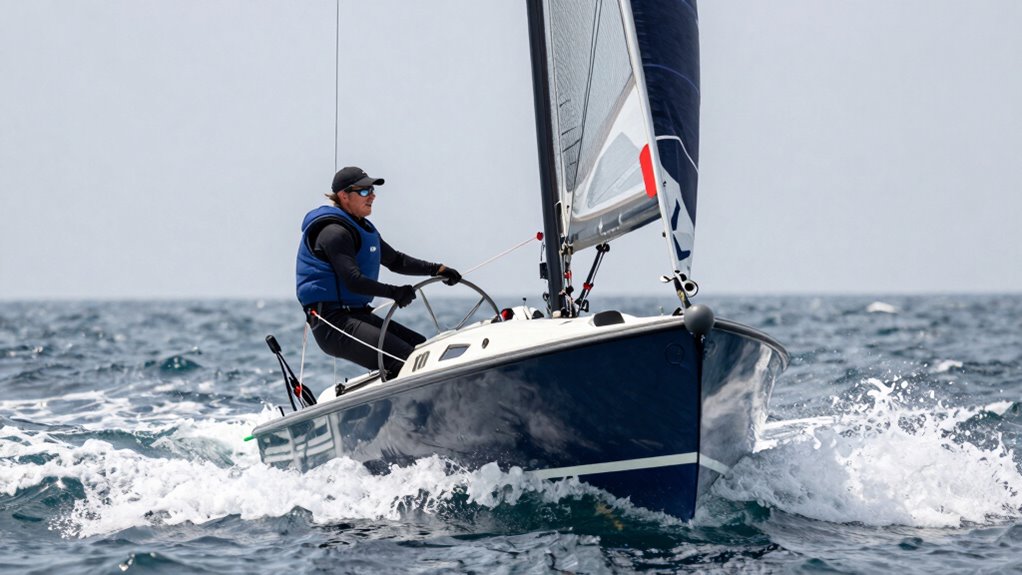
Maintaining a secure position without anchoring requires vigilance and proper technique. Safety is essential to avoid drifting into sensitive marine ecology areas or causing damage to your boat. Regular boat maintenance guarantees your vessel responds predictably to wind and current changes, reducing risks. Always monitor your surroundings, including nearby boats and obstacles. Use active navigation tools and double-check your lines or mooring gear. Communicate clearly with crew members to coordinate movements. Avoid holding position in areas with strong currents or busy traffic. Be prepared to adjust your position promptly if conditions change. Remember, responsible boat handling preserves marine ecology and minimizes environmental impact. Staying alert and prepared helps you hold position safely without anchoring, protecting both your vessel and the environment.
When and Why to Consider Alternative Position-Holding Methods

You should consider alternative position-holding methods when conditions make anchoring unsafe or impractical. These methods can offer greater flexibility, reduce environmental impact, and improve safety in certain situations. Understanding when and why to use them helps you choose the best approach for your specific circumstances.
Situations Requiring Alternatives
There are situations where relying solely on traditional anchoring methods isn’t practical or even possible. In such cases, marine navigation requires you to consider anchoring alternatives to maintain your position safely. These scenarios include strong currents, rocky or uneven seabeds, crowded anchorages, shallow waters, or sensitive environments where anchoring could cause damage. Using alternative methods ensures you stay secure without risking damage or losing control.
Some common situations include:
- Navigating near reefs or rocky bottoms
- Operating in shallow waters
- Dealing with unpredictable or shifting currents
- Avoiding crowded or environmentally protected areas
- Handling rough weather conditions
Recognizing these situations helps you decide when to implement marine navigation strategies beyond traditional anchoring, ensuring safety and compliance with environmental guidelines.
Benefits of Non-Anchor Methods
When traditional anchoring isn’t suitable, switching to non-anchor methods offers significant benefits that enhance safety and environmental responsibility. These methods reduce the anchoring disadvantages, such as seabed damage and habitat disturbance. They also lessen environmental impacts, especially in sensitive areas where anchors can cause long-term harm. Using wind and current management techniques helps you maintain position without disrupting the ecosystem.
| Benefits | Details |
|---|---|
| Eco-friendliness | Minimizes seabed damage and habitat disruption |
| Safety | Less risk of anchor failure or dragging |
| Cost-effectiveness | Reduces equipment and maintenance costs |
| Flexibility | Easier to adjust position quickly |
| Regulatory Compliance | Meets environmental regulations more easily |
Frequently Asked Questions
How Can I Predict Sudden Changes in Wind and Current?
To predict sudden changes in wind and current, rely on weather forecasting and tide charts. Check weather reports regularly for updates on wind shifts or storms. Tide charts help you anticipate current changes based on tide levels. Keep a close eye on the sky and water conditions, and stay informed through marine weather apps or radio updates. Being prepared and aware allows you to react quickly to unexpected weather and water movements.
What Equipment Options Exist for Non-Anchoring Position Holding?
You can choose equipment like drogues, sea anchors, or stern anchors for non-anchoring position holding. Focus on drift calculation to determine the right gear based on current and wind conditions. Select equipment that provides enough resistance to counteract drift, ensuring stability. Properly sizing and deploying your gear helps you maintain your position effectively, giving you control even when anchoring isn’t an option.
How Do Boat Size and Shape Influence Drift Management?
You’re in the thick of it, so your boat’s size and shape really matter. Larger boats with deep hulls resist drift better, while sleek, flat-bottomed vessels respond quicker to wind and current changes. Use navigation charts to understand how your boat’s hull influences its movement, allowing you to plan your position adjustments proactively. Adjust your techniques accordingly, keeping control even when conditions try to throw you off course.
Can Crew Weight Distribution Help Maintain Position?
Yes, crew weight distribution can help you maintain position. By adjusting how crew members are balanced across the boat, you create a more stable platform, counteracting drift caused by wind or current. Keep weight low and evenly spread to improve stability, and shift crew as needed to respond to changing conditions. This dynamic distribution helps you stay on station more effectively without anchoring, giving you better control and responsiveness.
What Are the Best Practices for Emergency Drift Control?
Think of emergency drift control like steering a boat through a sudden storm. You should act quickly, using tide awareness and visual cues to gauge your drift. Adjust your sails or engine power accordingly, and communicate clearly with your crew. Stay alert for changes in current or wind, and keep a close eye on landmarks. Prompt, decisive actions help you regain control and prevent drifting off course.
Conclusion
Mastering wind and current management is like being a seasoned sailor steering the Age of Sail—you adapt, read the waters, and use your tools wisely. By understanding how to hold your position without anchoring, you’ll stay in control even when the seas get rough. Remember, patience and practice are your best allies—think of it as tuning your ship’s rigging for a smoother voyage. With these skills, you’ll confidently hold your spot like a true maritime explorer.
Evergreen bestsellers Picks
bestsellers
As an affiliate, we earn on qualifying purchases.