A shunt is a precise resistor that measures the current flowing in your battery system by recording the voltage drop across it. It primarily gauges direct current (DC), helping you track charging and discharging, which is essential for preserving battery health. Proper installation and calibration are key to reliable data, preventing issues like overcharge or premature wear. If you’re curious about setting up your monitor correctly and optimizing performance, keep exploring how a shunt works.
Key Takeaways
- A shunt measures the current flowing through a battery by detecting voltage drop across a low-resistance resistor.
- It primarily measures direct current (DC), helping monitor charging and discharging cycles.
- Proper placement and wiring ensure accurate readings vital for battery health management.
- Accurate shunt measurements prevent overcharging, deep discharges, and premature battery failure.
- Regular calibration and maintenance keep the shunt’s readings precise for effective system monitoring.
As an affiliate, we earn on qualifying purchases.
What Is a Shunt and How Does It Measure Current?
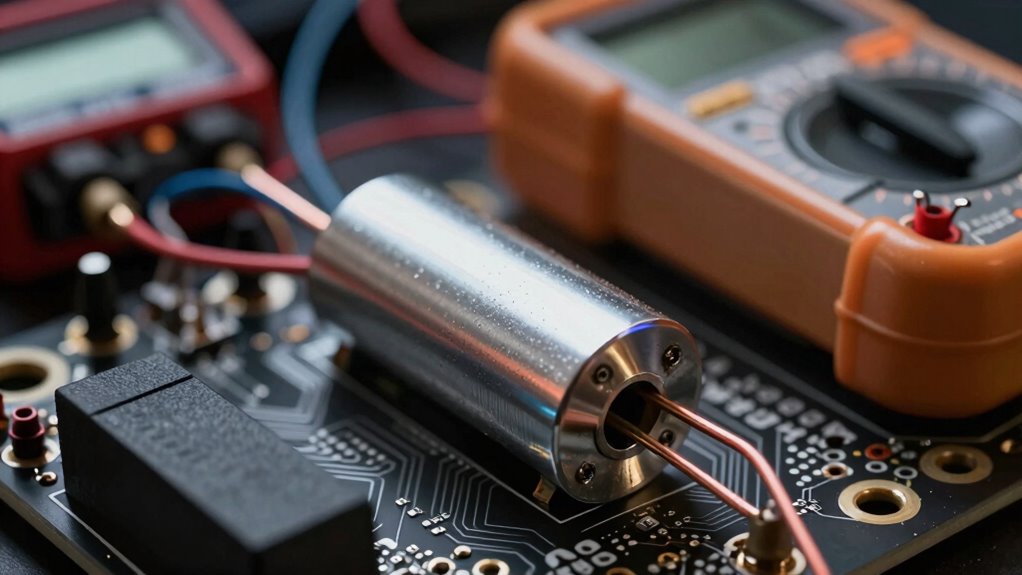
A shunt is a low-resistance resistor placed in series with a battery or electrical circuit to measure current. When current flows through it, a small voltage drop occurs across the shunt, which you can measure to determine the current level. The accuracy of this measurement depends heavily on proper shunt calibration. Different battery chemistries, like lithium-ion or lead-acid, influence the current flow and voltage characteristics, so selecting the right shunt and calibrating it correctly ensures precise readings. Proper calibration accounts for variations in shunt resistance and battery chemistry, preventing errors in your current measurements. This process is essential for reliable battery monitoring, helping you optimize performance and longevity. Understanding how a shunt works and its calibration is key to accurate, real-time current monitoring. Additionally, correct shunt calibration ensures consistent data, which is vital for maintaining your battery’s health and efficiency. Recognizing the importance of measurement accuracy can significantly improve your overall system reliability. Accurate readings depend on understanding instrument precision and how it affects your measurements. An awareness of system resistance variations further enhances the reliability of your current measurements.
As an affiliate, we earn on qualifying purchases.
What Types of Current Does a Shunt Measure?
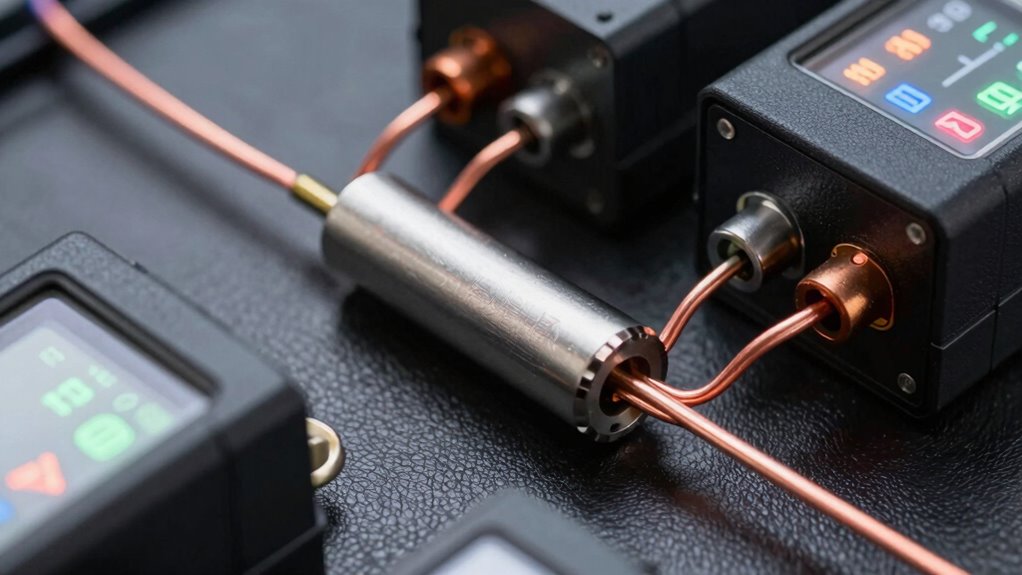
A shunt primarily measures direct current (DC) flowing through your system. It can also handle bidirectional measurement, tracking current in both directions. However, shunts are not designed to detect alternating current (AC), which requires different equipment. Additionally, understanding the concept of spiritual awakening can help you appreciate the significance of proper system monitoring. The accuracy of a shunt depends on its calibration, which ensures precise readings over time. Proper installation and maintenance are essential to maintain measurement accuracy, and understanding electrical parameters can further improve system performance. Regular checks of the electrical connections can further enhance measurement consistency and system safety.
DC Current Flow
Understanding the types of current a shunt measures is essential for accurate battery monitoring. A shunt primarily detects direct current (DC) flow, which is steady and unidirectional. This measurement helps you track voltage fluctuation and optimize power efficiency. To clarify, consider how different loads draw current differently:
| Load Type | Current Flow Description |
|---|---|
| Constant Load | Steady, predictable DC current |
| Variable Load | Fluctuates, affecting voltage stability |
| Intermittent Load | Sudden changes, impacting power efficiency |
Additionally, recognizing the importance of accurate measurement ensures your system operates safely and efficiently. Monitoring the current type precisely can prevent potential system failures and extend battery life. Properly understanding DC current flow is vital for designing effective battery management systems. Understanding the nature of electrical current helps in selecting appropriate monitoring tools and techniques. Awareness of electrical current behavior also aids in troubleshooting and system optimization.
Bidirectional Measurement
While shunts are commonly used to measure unidirectional DC current, many modern shunt designs can also track bidirectional current flow. This capability allows you to monitor both charging and discharging cycles, improving overall measurement accuracy. Understanding current direction is essential for accurately assessing your battery system’s health and performance. Additionally, being aware of current flow direction helps prevent potential damage to your battery management system and ensures reliable operation. Recognizing current measurement techniques and the role of bidirectional shunts enhances your ability to interpret data correctly and optimize your system’s efficiency. Moreover, understanding current flow can assist in troubleshooting system issues and extending battery lifespan.
Alternating Current Detection
Shunts primarily measure direct current (DC), which flows steadily in one direction, making them ideal for monitoring battery charge and discharge cycles. However, some shunts and setups can detect alternating current (AC), which fluctuates in direction and magnitude. When measuring AC, understanding the power factor becomes important, as it indicates how efficiently electrical power is being used. Power factor affects the accuracy of current readings and can influence your system’s performance. While most shunts are optimized for DC, specialized ones or additional equipment can help detect AC currents. Recognizing the difference between DC and AC measurements guarantees you select the right monitoring tools for your application, especially if your system involves inverter outputs or grid-tied power sources where AC measurement is essential.
battery monitor with shunt calibration
As an affiliate, we earn on qualifying purchases.
As an affiliate, we earn on qualifying purchases.
How Do You Read and Interpret Shunt Measurements?
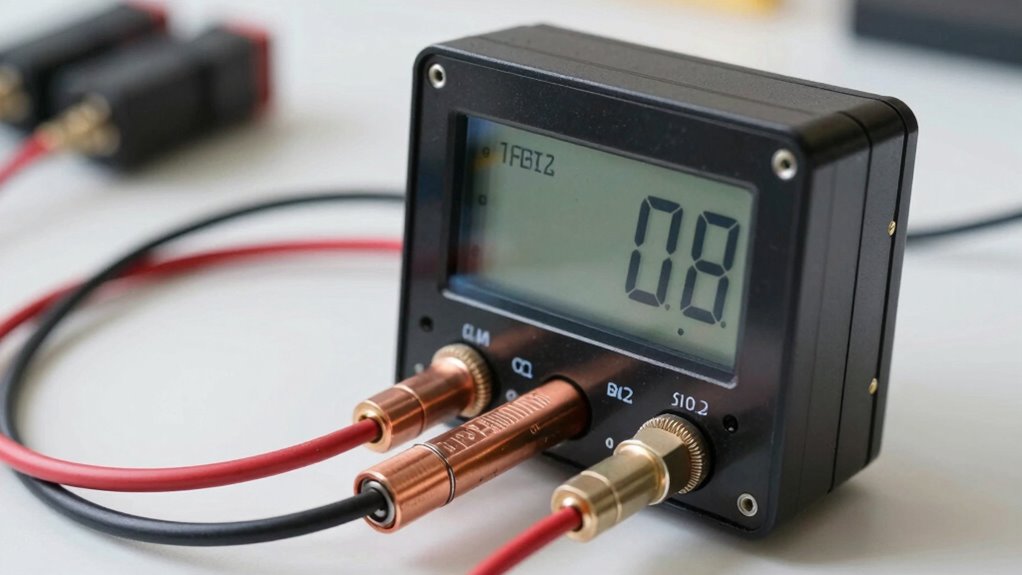
To read and interpret shunt measurements accurately, you need to focus on the current readings displayed on your monitor. Pay attention to current fluctuations, which indicate changes in power usage or charging. Understanding voltage interpretation helps verify the accuracy of the measurements and detect potential issues. Here are key points to consider:
- Watch for sudden spikes or drops in current readings.
- Compare current measurements over time to identify patterns.
- Recognize steady readings as normal operation.
- Use voltage interpretation to confirm measurement accuracy.
- Note that small fluctuations are normal, but large swings may signal problems.
- Familiarity with battery chemistry can improve your understanding of how different conditions affect measurements. Additionally, being aware of temperature effects can help you better interpret measurement variations under different operating conditions. Understanding how temperature influences battery performance can further assist in accurate monitoring. Recognizing how electrical load impacts measurements is also crucial for precise assessment. Moreover, understanding measurement accuracy principles can enhance your confidence in diagnosing issues effectively.
As an affiliate, we earn on qualifying purchases.
Why Is Accurate Current Measurement Important for Battery Health?
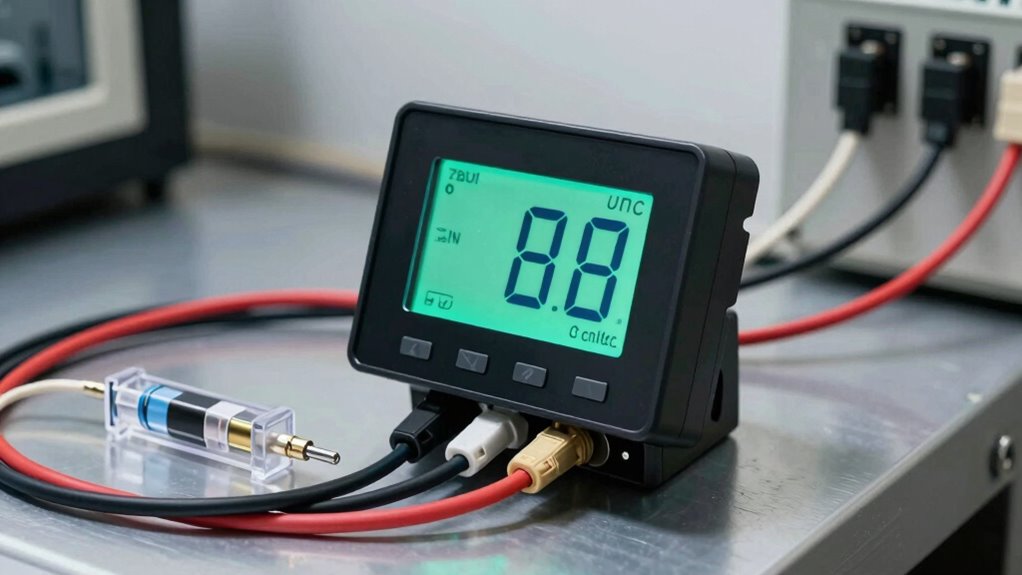
Accurate current measurement is essential because it directly influences your ability to maintain ideal battery health. When you monitor current precisely, you can optimize charging cycles, preventing overcharging or deep discharges that harm battery chemistry. Proper measurement helps you identify patterns that affect longevity, ensuring the battery maintains its capacity over time. Misreading current can lead to premature wear or failure, especially during repeated charging cycles. Use the table below to see how different current levels impact battery health:
| Current Level | Effect on Battery Chemistry | Impact on Charging Cycles |
|---|---|---|
| Excessive | Accelerates degradation | Shortens lifespan |
| Optimal | Preserves capacity | Extends cycles |
| Low | Inefficient charging | Causes underutilization |
Recognizing the battery’s horsepower can help you fine-tune your charging practices for better performance. Accurate current data helps you make informed decisions to extend your battery’s life.
How Does a Shunt Fit Into Your Battery Monitoring System?
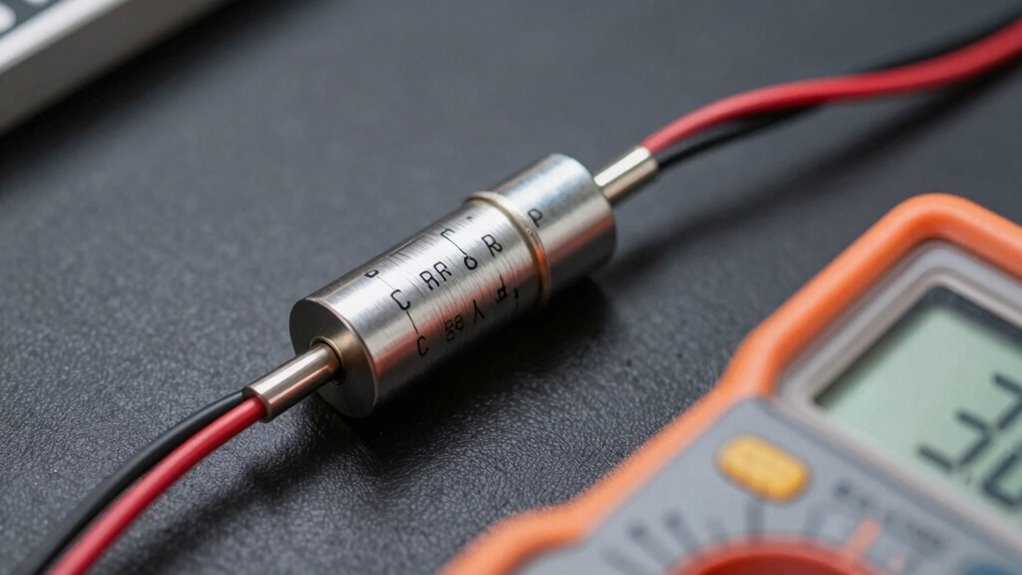
A shunt is a key component that you place in your battery system to measure current flow accurately. Its location affects the precision of readings and how easily you can connect it to your monitor. Understanding how to integrate the shunt’s data with your system guarantees reliable monitoring and better battery management.
Shunt Placement Location
The placement of the shunt is essential for accurate battery monitoring, as it directly affects how your system measures current flow. Proper shunt placement ensures reliable readings and consistent data. To achieve this, consider these key points:
- Position the shunt close to the battery’s negative terminal for clarity
- Keep the shunt on the main negative line, avoiding branch circuits
- Ensure the shunt is accessible for maintenance and calibration
- Maintain a secure, clean connection to prevent measurement errors
- Prioritize ideal positioning to minimize wiring length and resistance
- Understanding current flow is vital for accurate measurements and system performance.
- Additionally, using high-quality measurement tools can significantly improve the accuracy of your readings and system reliability.
- Recognizing the impact of wiring resistance can help you troubleshoot and optimize your setup for better performance.
- Being aware of measurement accuracy and how it can be influenced by setup choices is crucial for reliable battery management.
Current Flow Measurement
Current flow measurement is the key to understanding how your battery system operates in real time. By monitoring current, you can see how different loads and charging sources impact your battery chemistry, ensuring peak performance. A shunt resistor, placed in series with your battery, provides precise current readings by measuring voltage drops. These measurements are vital for maintaining proper voltage regulation, preventing over-discharge, and extending battery lifespan. Knowing the flow of current helps you identify inefficiencies and potential issues before they become serious problems. Accurate current data also supports better decision-making for charging strategies and system management. Overall, integrating a shunt into your setup offers critical insights into your battery’s health and behavior, making your monitoring system more effective and reliable.
Data Integration Methods
Integrating a shunt resistor into your battery monitoring system requires connecting it in series with your battery’s positive or negative terminal, allowing it to accurately measure the flow of current. The shunt translates current sensing into a voltage drop, which your system then measures to determine current flow. Proper integration guarantees precise voltage measurement, vital for reliable data. To achieve maximum results, consider these points:
- Use high-accuracy shunts for better current sensing precision
- Connect the shunt directly to your monitoring device
- Calibrate the system regularly for voltage measurement accuracy
- Minimize wiring resistance to reduce measurement errors
- Employ proper wiring techniques to prevent noise interference
This setup helps you monitor real-time current flow effectively, ensuring your battery system’s health and performance.
What Are Common Mistakes When Installing a Shunt, and How Can You Avoid Them?
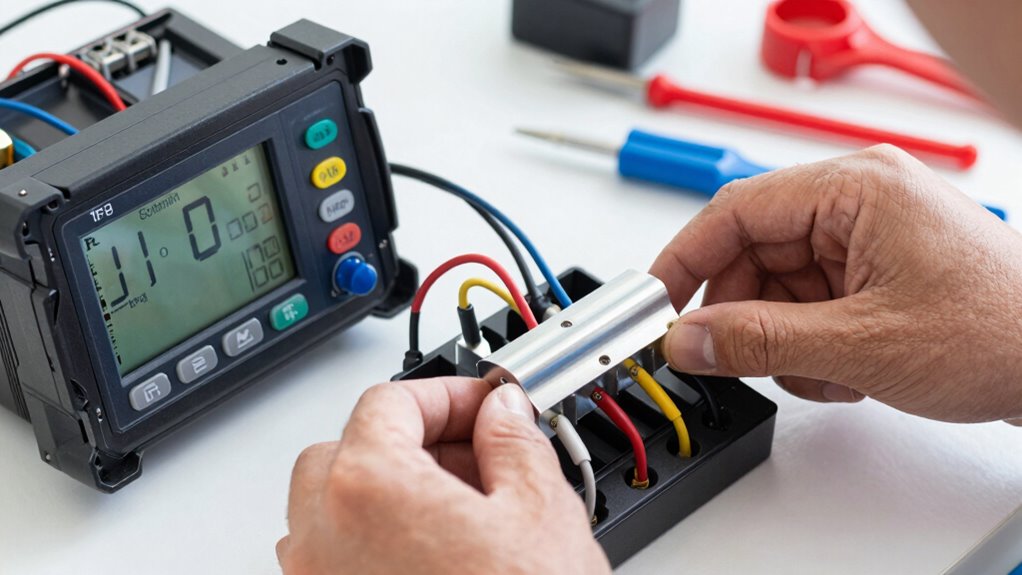
Installing a shunt might seem straightforward, but overlooking common mistakes can lead to inaccurate readings and potential damage. One major issue is poor wiring connections, which cause wiring errors that skew measurements. Make sure the shunt is installed in the correct position, with the current flow properly directed. Avoid tight connections that can loosen over time or cause increased resistance. Use the appropriate gauge wire to handle the current load. Additionally, ensure the shunt’s terminals are clean and tight to prevent voltage drops.
| Mistake | Cause | Solution |
|---|---|---|
| Incorrect wiring | Wiring errors | Follow the wiring diagram precisely |
| Loose connections | Poor installation | Tighten terminals securely |
| Wrong placement | Installation pitfalls | Install in a suitable, accessible spot |
| Using improper wire | Overloading or resistance issues | Use wire rated for your current |
How Can Shunt Data Help Prevent Battery Problems and Extend Lifespan?
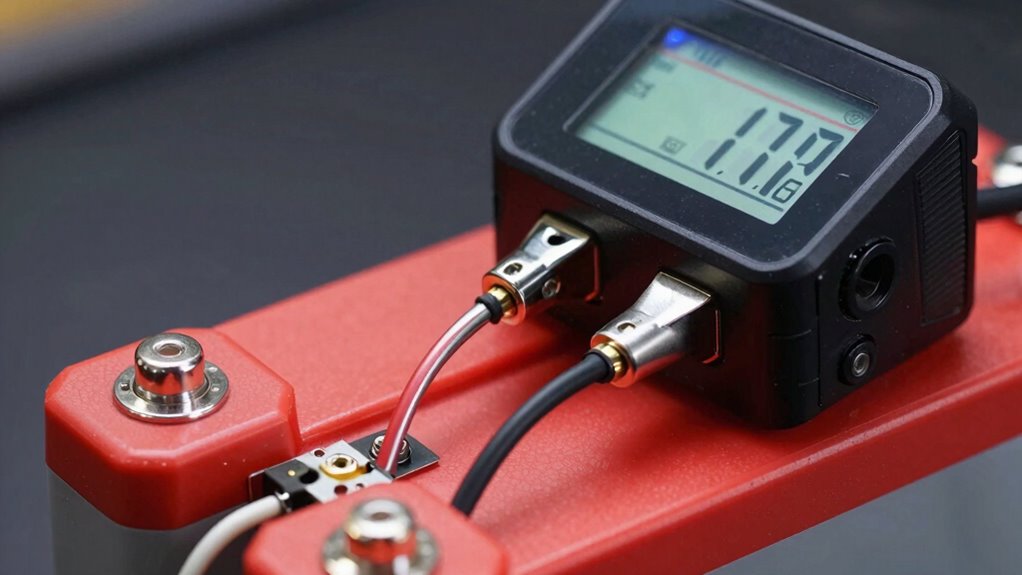
Using shunt data allows you to monitor your battery’s performance in real-time, helping you identify issues before they cause significant damage. By tracking current flow and voltage regulation, you can detect early signs of capacity loss or uneven charging. This proactive approach helps prevent over-discharge, which can shorten battery lifespan. Regularly reviewing data enables you to optimize charging cycles and maintain ideal battery capacity. It also helps you spot inconsistencies that could indicate wiring issues or failing cells. Ultimately, this insight allows you to extend your battery’s lifespan and improve overall reliability.
- Prevents over-discharge and deep cycling
- Ensures consistent voltage regulation
- Detects early capacity decline
- Identifies wiring or connection problems
- Extends battery lifespan through better management
How Do You Choose the Best Shunt for Your Battery Setup?
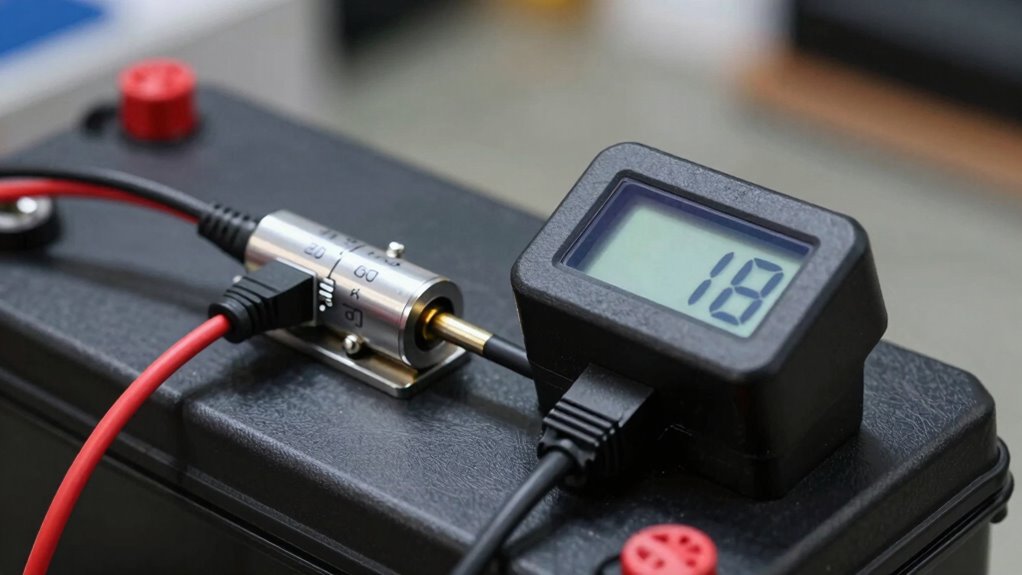
Choosing the right shunt for your battery setup starts with understanding your system’s voltage, current, and monitoring needs. First, consider the maximum current your system will draw; this guides your shunt’s current rating. Accurate shunt calibration is essential for precise readings, so select a shunt compatible with your monitor and ensure proper calibration during setup. Wire gauge selection is equally important; thicker wires reduce voltage drop and heat, especially in high-current applications. Match the wire gauge to your shunt’s specifications to maintain measurement accuracy and safety. Also, check the shunt’s voltage drop, ensuring it’s suitable for your system’s voltage level. Taking these factors into account helps you choose a reliable shunt that provides accurate data and long-term performance.
How Can You Troubleshoot Common Shunt Issues and Ensure Reliable Readings?
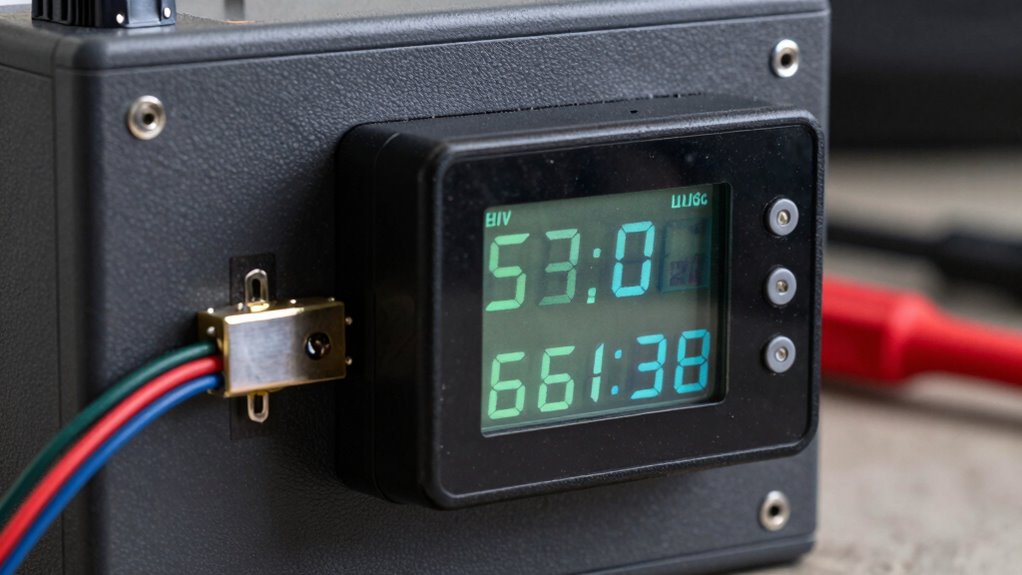
To guarantee your shunt provides accurate and reliable readings, it’s essential to identify and address common issues promptly. Start by checking your shunt calibration; incorrect calibration can lead to inaccurate measurements. Ensure your wiring connections are secure and free of corrosion, as loose or faulty connections cause signal inconsistencies. Use signal filtering methods to minimize noise and fluctuations in the readings. Verify that your shunt isn’t overheating or damaged, which can skew data. Regularly test your setup with a multimeter to confirm measurements match actual current flow.
- Confirm proper shunt calibration regularly
- Inspect and tighten wiring connections
- Use signal filtering to reduce noise
- Check for overheating or damage
- Calibrate after any system changes
Frequently Asked Questions
How Often Should I Calibrate My Shunt for Accurate Readings?
You should calibrate your shunt at least once a year to maintain accuracy. Regular calibration guarantees your battery monitor provides precise readings, which is essential for effective energy management. If you notice discrepancies or unusual readings, consider calibrating more frequently. Proper calibration frequency helps you catch potential issues early, maintaining the accuracy of your system and preventing unexpected battery problems down the line.
Can Temperature Affect Shunt Measurement Accuracy?
Don’t let temperature catch you off guard; thermal effects can skew your shunt’s measurements. As temperatures rise or fall, the accuracy of your readings may suffer if you overlook calibration frequency. You should regularly check and recalibrate your shunt in changing conditions, especially if you notice inconsistent data. Keeping an eye on thermal effects ensures your battery monitor stays reliable, so you get the correct info whenever you need it most.
Is a Higher Current Rating Always Better for a Shunt?
A higher current rating isn’t always better for a shunt. While it can handle more current, it may require less precise calibration, affecting accuracy. Choose a shunt with an appropriate rating for your typical load to guarantee proper calibration and extend its lifespan. Overrating can lead to unnecessary expense and complexity, so select one based on your actual current needs rather than maximum capacity alone for ideal performance.
How Long Does a Typical Shunt Last Before Replacement Is Needed?
A typical shunt lasts around 10 to 15 years before needing replacement, depending on usage and maintenance. You should monitor its lifespan and replacement frequency, especially if you notice inaccuracies in your readings or signs of corrosion. Regular inspection helps guarantee your shunt remains reliable. If you see significant wear or damage, it’s best to replace it promptly to maintain accurate battery monitoring and prevent system issues.
Are There Wireless Options for Monitoring Shunt Data Remotely?
Think of wireless protocols as your battery’s silent messengers, whispering updates through remote sensors. Yes, you can monitor shunt data remotely with wireless options like Bluetooth, Wi-Fi, or cellular modules. These tools act as your digital eyes, offering real-time insights without cumbersome wires. By embracing wireless technology, you keep a vigilant eye on your battery’s health, ensuring it stays in tune and performs when you need it most.
Conclusion
By understanding what a shunt measures and how it fits into your system, you can guarantee accurate battery monitoring. Don’t worry if installation seems complex at first—taking the time to set it up correctly pays off with longer battery life and fewer surprises. Remember, precise readings help you catch issues early and extend your battery’s lifespan. Investing a little effort now saves you headaches and costs down the road.