
TL;DR
Marine cooler storage containers are insulated boxes built to hold food, drinks, bait, or other supplies cold aboard boats, where sun, salt spray, vibration, and tight spaces shape what works. Compare interior dimensions, lid access, insulation, drainage, and tie-down options, then pack the cooler cold and keep it shaded and closed. Ice retention varies with the cooler, weather, ice, and how often you open it.
A cooler that fits neatly in your garage can become a slippery obstacle the moment your boat hits chop. A lid may bump a seat, a drain may sit out of reach, and a full chest can crowd the walkway you need to move around safely.

Get sports gear delivered free with Prime
- Fast, free delivery on millions of items
- Prime Video, Amazon Music and more included
- Member-only deals all year
Marine cooler storage containers are insulated boxes designed to keep food, drinks, bait, or other supplies cold aboard boats. Their job is shaped by sun, salt spray, vibration, and limited space, so the right choice depends on more than capacity or a promise about how long ice lasts.
This guide walks you through choosing a size, comparing portable and built-in designs, judging marine-ready features, packing for better cooling, and keeping the container clean. You’ll be better prepared to pick a cooler that works with your boat and your trip, whether you’re carrying lunch for two or supplies for a long day on the water.
Measure the cooler’s footprint, interior, and lid clearance against the actual spot aboard your boat.
Compare interior dimensions as well as quart or liter capacity, since ice and packaging reduce usable room.
Look for corrosion-resistant hardware, a secure lid, and tie-down options that suit your boat’s movement.
Pre-chill the cooler and contents, use ice or cold packs, keep the box shaded when possible, and limit openings.
Rinse, wash, dry, and inspect the drain, gasket, hinges, and latches after each trip.
Choose a Size That Leaves Room to Move
Marine cooler storage containers come in many sizes, but the right one is the largest you can use without blocking seating, walkways, or access to equipment. Start with the people aboard and the trip length, then check where the cooler will sit and how much room its open lid needs. A box that technically fits under a bench may be useless if the lid cannot swing up.
Capacity in quarts or liters gives you a starting point, not a packing plan. Ice, food packaging, and irregular supplies all take up room, and a tall, narrow container may hold different items than a wide, shallow one with the same advertised capacity. Measure the interior and compare it with what you plan to bring: drink bottles, lunch containers, bait tubs, or a bag of ice.
For example, two anglers taking drinks, sandwiches, and bait might prefer a compact cooler they can secure beside a seat. A family carrying food for a full day may need more space, but a bulky chest that forces people to step around it can make the boat harder to use. Mark the available footprint with tape and test the lid clearance before buying.
Think about weight, too. Ice and supplies add up quickly, so a large cooler can become awkward to carry down a dock or lift aboard. Match capacity to your actual load, and remember that a well-placed, manageable cooler can serve you better than extra space you rarely use.
Popular right now

Vitamix Touch & Go Advance 32-Ounce Bar Blender, White

Ninja CREAMi 7-in-1 Ice Cream Maker, NC301

KitchenAid Artisan 5-Qt Tilt-Head Stand Mixer, KSM150PS, Almond Cream
As an affiliate, we earn on qualifying purchases.
Compare Portable and Built-In Coolers Before You Buy
Portable coolers are easier to move and clean, while built-in units can free deck space and stay fixed in place. Your boat layout and how you use the cooler should decide between them. Before you compare features, consider where each type will sit, who needs to reach it, and whether you’ll use it away from the boat.
| Choice | Works well when | Check before buying |
|---|---|---|
| Portable chest | You want to move it between the boat, dock, and car | Weight when full, tie-down points, and space for the lid to open |
| Built-in box | You want a fixed spot that preserves deck room | Opening dimensions, lid access, drainage, and installation fit |
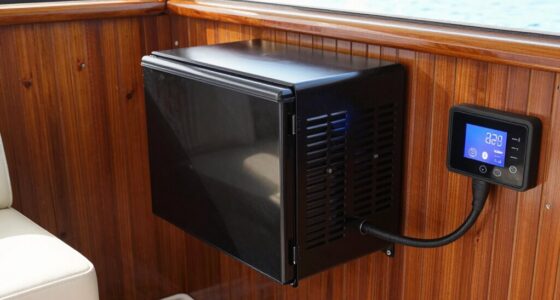
| Powered cooler | You want powered cooling instead of relying on ice | Power supply, available space, and the unit’s operating needs |
Imagine a small fishing boat with one open bench. A portable cooler can move to the dock when you unload the catch, but it needs tie-downs so it does not slide across the deck. On a larger boat, a built-in box may keep the walkway clear, provided its lid opens without hitting a seat or rail.
Powered coolers and refrigerators offer another option, but they rely on a suitable power source. A passive insulated chest does not. Choose for your boat and routine: a portable box may be more useful if you often carry supplies ashore, while a built-in unit may suit a fixed galley or storage area.
Check These Features for Sun, Salt, and Rough Water
Marine cooler storage containers need a design that suits exposure and movement aboard a boat. Look for UV-resistant plastic, corrosion-resistant hardware, sturdy hinges, and latches that hold the lid shut. Sun can fade or weaken some plastics over time, while salt and moisture can corrode exposed metal parts. These features can help with those conditions, but a marine label alone does not tell you how a specific cooler will perform; inspect the materials and follow the maker’s care instructions.
Secure placement matters as much as rugged construction. Non-slip feet, tie-down points, or a mounting system can help prevent the cooler from sliding or tipping as the boat moves. A cooler shifting under way can block a passage or spill its contents, even if the box itself remains intact. For example, a heavy chest may feel stable at the dock, then shift when the boat turns. Plan how you’ll secure it before loading it with ice and food.
Insulation and lid fit shape how much cooling the box can maintain. Thick foam slows heat moving through the walls, and a well-sealed lid limits warm air entering each time the boat rocks or the lid is shut. But thicker insulation often adds bulk and weight, which can make a cooler harder to fit or carry. A loose seal, frequent opening, or gaps in insulation can reduce cooling regardless of the advertised ice-retention period. If you can, inspect the gasket and latch in person, and check whether replacement parts are available.
Some models add fish rulers, cup holders, removable baskets, or cutting-board lids. These can improve how the cooler works aboard: a basket keeps sandwiches above meltwater, for instance, while a ruler can help on a fishing trip. Consider whether an accessory solves a task you actually have, since extra fittings can add cost or take up useful surface area. Cooling, secure placement, and useful access deserve more attention than accessories you may rarely use.
Pack Your Cooler in Five Steps to Keep Supplies Cold
To pack a marine cooler well, start with cold contents, add enough ice or cold packs, protect food from water and bait, and keep the lid shut as much as you can. A cooler slows heat transfer; it does not actively chill warm supplies. Starting with cold contents leaves the ice to maintain a low temperature instead of spending its capacity cooling warm bottles and food.
- Pre-chill the cooler. If practical, bring its temperature down before loading it. A warm box absorbs cooling energy from the ice, so pre-chilling can preserve more of that energy for the trip.
- Chill the food and drinks. Put cold items in rather than relying on ice to cool warm bottles or containers after you leave. This is especially useful for drinks, which can add a significant heat load when packed at room temperature.
- Pack with a plan. Keep ready-to-eat food sealed and separate from raw items. Use containers that won’t leak if the boat rocks. Grouping items also makes it easier to find what you need quickly and close the lid again.
- Set it in shade when possible. Direct sun warms the exterior, so a shaded spot can reduce heat reaching the contents. Leave enough room around the cooler for safe access and do not cover vents on powered models.
- Limit lid openings. Put frequently used drinks where you can reach them, then close the lid promptly. Every opening exchanges some cool air for warmer air, so fewer, shorter openings help the ice last longer.
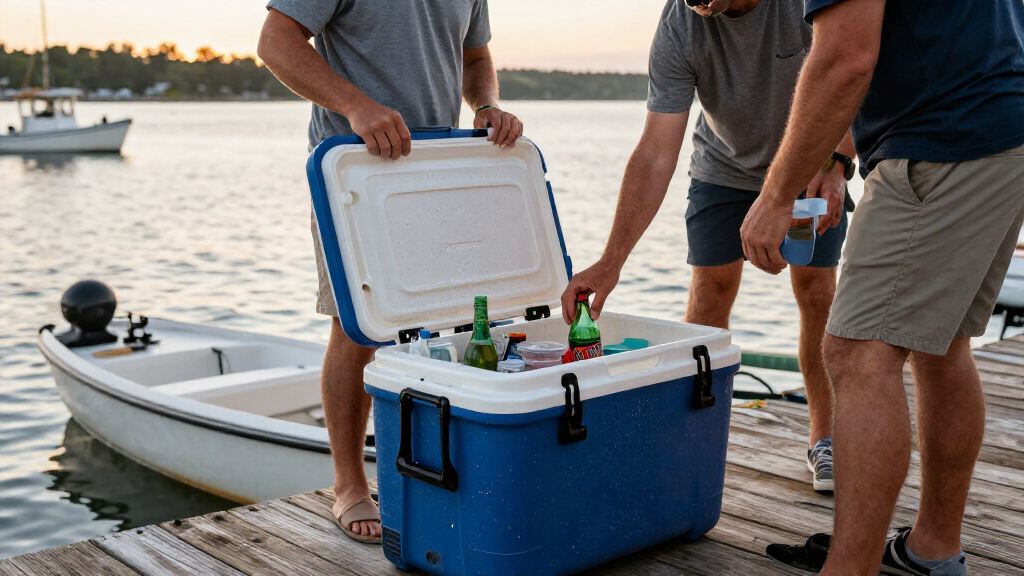
On a hot afternoon, a group that opens one cooler for every drink lets warm air spill inside again and again. A small separate drink cooler can reduce those openings when space and carrying capacity allow, though it means carrying and securing another box. A basket may also keep lunch away from meltwater.
If safe food storage matters for your trip, use a thermometer and follow food-safety guidance for the foods you carry. Ice-retention claims vary by conditions: starting temperature, ice quantity, outside heat, shade, and opening frequency all affect results. A cooler is a tool for managing temperature, not a guarantee that food stays safe regardless of how you use it.
Use the Drain and Clean the Cooler After Every Trip
A drain plug makes it easier to empty meltwater and wash the interior, but you should check that it seals securely and sits somewhere you can reach. Meltwater is useful for keeping some contents cold, but it can soak food packaging or mix with bait residue if items are not sealed. On a built-in box, an awkward drain can turn a simple rinse into a job involving a sponge, bucket, and cramped reach. Check both the drain’s location and how its plug closes before settling on a design.
After a trip, empty the cooler and rinse out crumbs, fish residue, or spilled drinks. Wash the inside with mild soap, then dry it fully before you close the lid for storage. Drying helps keep odors from lingering; trapped moisture in a closed box can make it smell stale when you open it next weekend. Cleaning promptly also makes dried residue easier to remove and helps keep the cooler ready for food use.
For example, if you used the cooler for bait, rinse it promptly and wash it separately from the box you use for lunch. A dedicated bait or catch cooler can make cleanup simpler and help keep food separate. That matters on a fishing day when slime, seawater, and ice all end up in the same container.
While cleaning, inspect the drain, gasket, hinges, and latches. Clear debris from the seal, check that the latch holds, and look for wear or corrosion. A clogged drain or damaged gasket can make the next trip harder to manage and may let warm air or water in. Care needs vary, so use the manufacturer’s instructions for cleaning products and storage. A few minutes at the dock can make the next launch easier and help you spot a problem before a full cooler goes aboard.
Spend More on Durability Only If Your Trips Need It
A rotomolded cooler may suit frequent boat use when rugged construction and insulation rank high on your list. Its sturdier build can be appealing for repeated loading, rough handling, and regular exposure. The tradeoff is that the same heavy construction can make the cooler harder to lift, move, or fit in a tight boat space, and it often costs more. That may be a poor fit if you only take an occasional short trip and need an easy-to-carry box.
Consider a weekend outing in mild weather. A lighter, less expensive cooler may be easier to lift from car to dock, especially if one person handles it. Compare that with a fishing crew that uses the same cooler several times a week, secures it on deck, and relies on it for catch or food; added durability may matter more to that crew because wear and the cost of a failure accumulate over frequent trips.
Compare the full design and your habits, not one construction label or an ice-retention claim. Check the lid seal, insulation, handles, latch, and tie-down options. A tough shell does not compensate for a poor seal or a cooler that cannot be secured where you need it. Performance claims such as “keeps ice for several days” depend on conditions, including how much ice you use, the surrounding heat, shade, starting temperature, and how often the lid opens.
A useful way to decide is to ask how often the cooler will go aboard, how far you must carry it, and what a failure would mean on your trip. If you regularly carry important food or catch in hot weather, sturdiness and cooling may justify the added cost and weight. If ease of carrying and price matter more, a simpler cooler can be the better match.
Frequently Asked Questions
What size marine cooler do I need?
Start with the number of people, trip length, and supplies, then check the available space aboard. Compare interior dimensions with your food, bottles, and ice, since advertised capacity does not account for awkward shapes or packaging.
How long will a marine cooler keep ice?
There is no single duration that applies to every trip. Insulation, lid seal, ice quantity, shade, weather, and how often you open the cooler all affect how long ice lasts.
Are marine coolers waterproof?
Some resist splashes or rain, but that does not mean they are watertight or safe to submerge. Check the product’s stated rating and close the drain and seals as directed.
What makes a marine cooler different from a regular cooler?
Marine models commonly emphasize UV-resistant materials, corrosion-resistant hardware, secure mounting, and features suited to boats. Differences vary by model, so inspect the construction and listed features rather than relying on the label alone.
Should I choose a portable or built-in cooler?
A portable cooler is easier to move, clean, and take off the boat. A built-in unit can save deck space and remain in place, but check that it fits the opening and that you can reach the lid and drain.
Can I use the same cooler for fish or bait and food?
You can, if you clean it thoroughly and use it appropriately, but a separate cooler for bait or catch can make cleanup easier. Keeping food sealed and apart from bait also helps prevent odor and cross-contamination.
Conclusion
Choose a cooler that fits your boat, holds the supplies you actually carry, and stays secure where you plan to use it. Then pre-chill it, pack it with care, and keep the lid closed when you can.
A good cooler should feel like a steady part of the boat, not a box you have to fight around. Make room for it before you make room for ice.