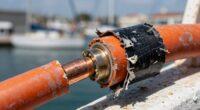
Proper crimping of marine terminals ensures strong, corrosion-resistant connections that prevent failures in harsh conditions. You need to select the right terminals and tools, prepare wires carefully, and use the correct crimping technique with consistent force. Inspect and test each connection for durability, and maintain your tools regularly. Mastering these techniques can greatly improve your system’s reliability and longevity—if you continue, you’ll gain all the essential tips to achieve perfect, fail-proof crimping.
Key Takeaways
- Use marine-specific wire strippers and properly strip wires to prevent damage and ensure a secure crimp.
- Select the correct terminal type and size compatible with wire gauge for optimal contact.
- Apply appropriate crimping force with calibrated tools to ensure corrosion-resistant, durable connections.
- Fully insert the wire into the terminal and verify proper seating before crimping.
- Regularly inspect, test, and maintain tools and connections to ensure long-term reliability in harsh marine environments.

Sopoby Crimping Tool For Heat Shrink Connectors with 300PCS Marine Grade Heat Shrink Wire Connectors – Tinned Red Copper – Electrical Crimping Tool – AWG 22-10 Electrical Ring Fork Spade Splice
PROFESSIONAL CRIMPING TOOL: This hand crimper has efficient ratcheting mechanism and professional grade crimping die for proper rock-solid…
As an affiliate, we earn on qualifying purchases.
As an affiliate, we earn on qualifying purchases.
Why Proper Crimping Is Essential for Marine Electrical Reliability
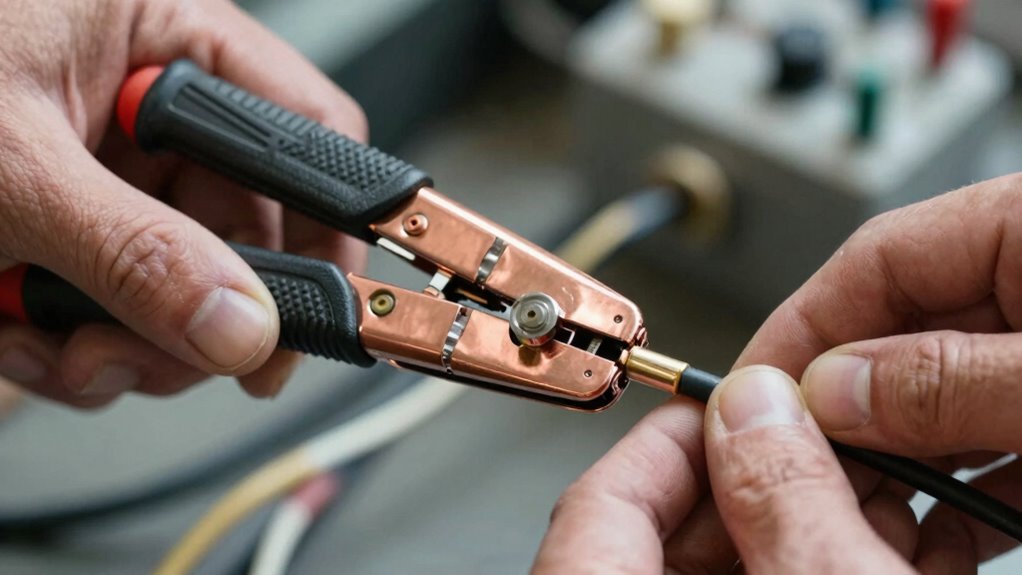
Proper crimping is essential because it guarantees a secure, corrosion-resistant connection that can withstand the harsh marine environment. In marine settings, exposure to saltwater and humidity accelerates corrosion, which can compromise electrical conductivity. A well-made crimp ensures a tight, consistent connection that resists moisture intrusion and prevents electrical failures. If the crimp is too loose, it creates gaps where corrosion can develop, reducing conductivity and risking shorts or power loss. Conversely, an overly tight crimp can damage the terminal or wire, impairing electrical flow. Proper crimping technique ensures the connection remains reliable over time, maintaining ideal electrical conductivity. This durability is crucial for safety, performance, and longevity of marine electrical systems in challenging environments. Additionally, using the correct tools and techniques helps prevent damaging the wire strands or the terminal, further enhancing connection integrity. Employing proper measurement tools can also help verify that the crimp has been executed correctly, ensuring long-term reliability. Recognizing the importance of marine-specific materials can also contribute to better corrosion resistance and overall system durability. Regular inspection and maintenance further prevent failures and extend the lifespan of your marine electrical connections. Incorporating proper piercing techniques in crimping processes can also enhance the overall reliability of the connection.
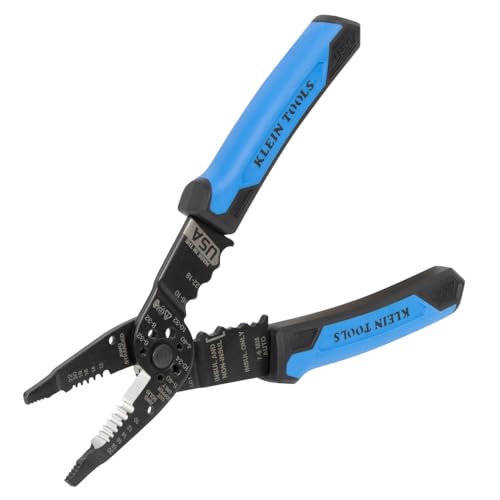
Klein Tools 1025 Long Nose Multi-Purpose Wire Stripper, Made in USA Professional Electrician Tools, Crimping Tool, Cable Stripper for 10-20 AWG Solid, 12-22 AWG Stranded Wire
PROFESSIONAL WIRE STRIPPER: Precision wire stripper tool cuts and strips 10-20 AWG solid and 12-22 AWG stranded wire…
As an affiliate, we earn on qualifying purchases.
As an affiliate, we earn on qualifying purchases.
How to Choose the Right Marine Terminals and Crimping Tools

Choosing the right marine terminals and crimping tools is essential for guaranteeing reliable electrical connections in harsh marine environments. First, consider the various marine terminal types, such as ring, spade, butt, and fork terminals, and select those suited for your specific application. Each type offers different advantages regarding ease of connection and durability. Next, evaluate crimping tool features; look for tools with precise, adjustable dies that match your terminal sizes and assure consistent, secure crimps. A good crimping tool should offer high leverage, durability, and compatibility with various terminal types. Proper selection ensures a solid connection resistant to corrosion, vibration, and moisture, which are common in marine settings. Additionally, understanding the contrast ratio of your components can help ensure the electrical connections maintain clarity and performance over time. Using high-quality marine-grade materials in your terminals further enhances resistance to the harsh marine environment, extending the lifespan of your electrical system. Considering the physical properties of your crimped connections can also help prevent failures in demanding conditions. Conducting a thorough inspection of your connections after crimping can identify potential issues early, preventing future failures. Incorporating professional crimping techniques can significantly improve the reliability of your connections in demanding conditions. Choosing the right components sets the foundation for a long-lasting, reliable electrical system.

Sanuke 120Pcs Wire Lugs Battery Cable Lugs Marine Grade Wire Lug with Heat Shrink Set 60Pcs Heavy Duty Tinned Copper Tubular Ring Terminals Tinned Closed Battery Cable End Crimp Connectors AWG 8 6 4 2
☆『What You Get』In this set, we offer 60 pcs 12 size of AWG 2 4 6 8 ring…
As an affiliate, we earn on qualifying purchases.
As an affiliate, we earn on qualifying purchases.
How to Prepare Wires and Terminals for a Strong Marine Connection
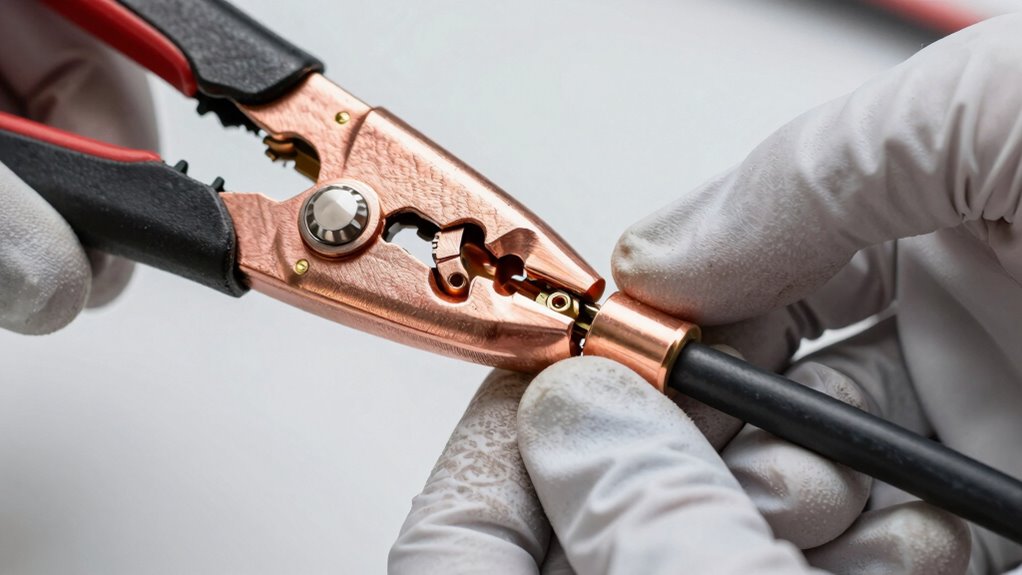
Before crimping your marine terminals, it’s important to prepare the wires properly. Start by stripping the marine wiring to the correct length, exposing enough conductor to ensure a solid connection without excess. Use a wire stripper designed for marine cables to prevent damage. Next, inspect your terminal selection to ensure compatibility with your wire gauge and marine environment. Choose terminals that resist corrosion and are rated for marine use. Keep the wire strands tight and free of frays to guarantee a reliable connection. Proper preparation minimizes resistance and prevents future failures. When you’re ready, insert the prepared wire into the terminal, ensuring full contact before moving on to crimping. This careful prep sets the foundation for a durable, corrosion-resistant marine wiring connection.

Kuject Crimping Tool Kit, 340 PCS Heat Shrink Wire Connectors(AWG22–10), 3-in-1 Adjustable Wire Stripper and Wire Crimper Kit for Automotive, Marine, and Electrical Repairs
ALL-IN-ONE PORTABLE KIT:Kuject’s exclusive case organizes the wire stripper, crimping tool, and 340 PCS marine-grade heat shrink connectors….
As an affiliate, we earn on qualifying purchases.
As an affiliate, we earn on qualifying purchases.
Step-by-Step Instructions for Proper Marine Crimping
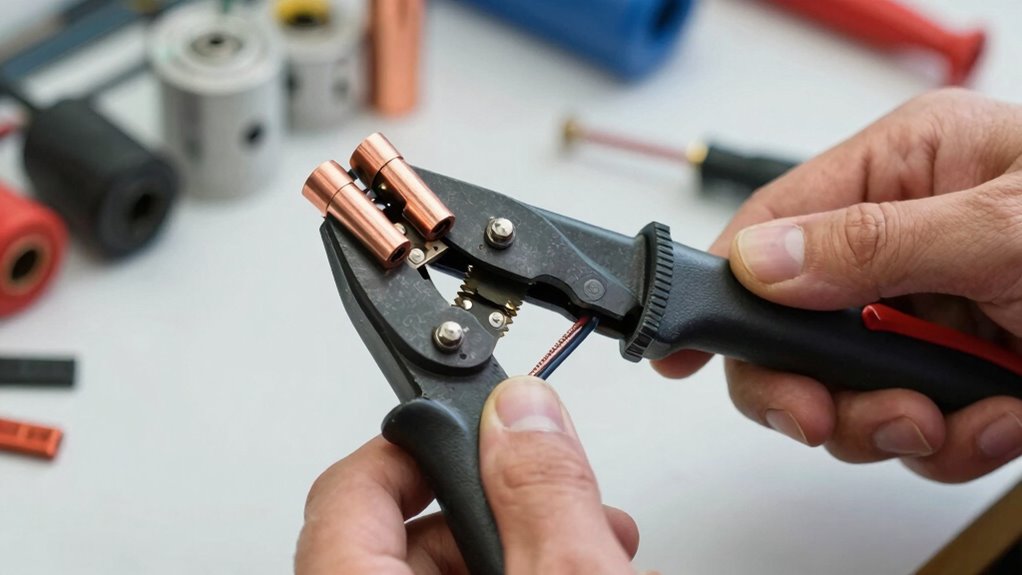
To guarantee a solid marine connection, start by preparing your materials and selecting the right terminal. Next, carefully insert the wire so it’s fully seated in the terminal before crimping. A proper crimping technique ensures a secure connection that resists corrosion and mechanical stress. Properly wire stripping is essential to prevent insulation damage and ensure optimal contact. Additionally, choosing the correct crimping tools designed for marine terminals helps achieve consistent results. Using high-quality marine-grade connectors can significantly improve the longevity and reliability of your connections. Finally, apply the correct amount of force to create a secure, reliable connection without damaging the wire or terminal. Ensure you verify the lubricant specifications to prevent corrosion and ensure long-term durability of the connection.
Prepare Your Materials
Making certain you have all the necessary materials ready is crucial for a smooth crimping process. Gather marine terminals, wire strippers, crimping tools, marine adhesives, and electrical insulation. Verify your wires are clean and free of corrosion. Use marine adhesives to secure connections and protect against moisture. Check that your crimping tool matches the terminal size for a secure fit. Proper electrical insulation prevents shorts and enhances durability. Organizing your materials for efficiency ensures a more streamlined workflow. Here’s a quick overview:
| Material | Purpose |
|---|---|
| Marine terminals | Connect wires securely |
| Wire strippers | Remove insulation cleanly |
| Crimping tools | Ensure proper terminal compression |
| Marine adhesives | Seal connections against moisture |
| Electrical insulation | Protect against shorts and corrosion |
Ensuring that your connections are properly crimped minimizes the risk of connection failures and extends the lifespan of your marine wiring. Proper preparation and understanding of marine electrical systems can greatly improve the reliability of your setup. Additionally, paying attention to correct terminal selection is essential for achieving optimal electrical contact and preventing future issues. Familiarizing yourself with marine wiring standards can further enhance the safety and performance of your electrical system. Preparing these ensures reliable, long-lasting marine connections.
Properly Insert Wires
Properly inserting wires into marine terminals is a critical step to guarantee a secure and reliable connection. First, ensure you’ve selected the correct wire gauge based on your project’s requirements. Next, strip the insulation carefully, exposing just enough wire—usually about 1/8 inch—so it fits snugly without excess. Properly following these steps can help prevent connection failures and ensure optimal performance:
- Insert the stripped wire into the terminal, making sure no insulation is inside the crimp area.
- Verify the wire’s gauge matches the terminal’s specifications for a proper fit.
- Confirm the wire is seated fully and evenly without any loose strands or insulation under the terminal.
- Managing heat buildup during crimping is essential to prevent damage to the wire and ensure a strong connection.
- Using the correct tools and techniques helps maintain crimp integrity and prevents future failures.
- Always inspect the crimped connection visually to confirm a secure and proper fit, which is vital for marine safety and durability.
Apply Correct Crimping Force
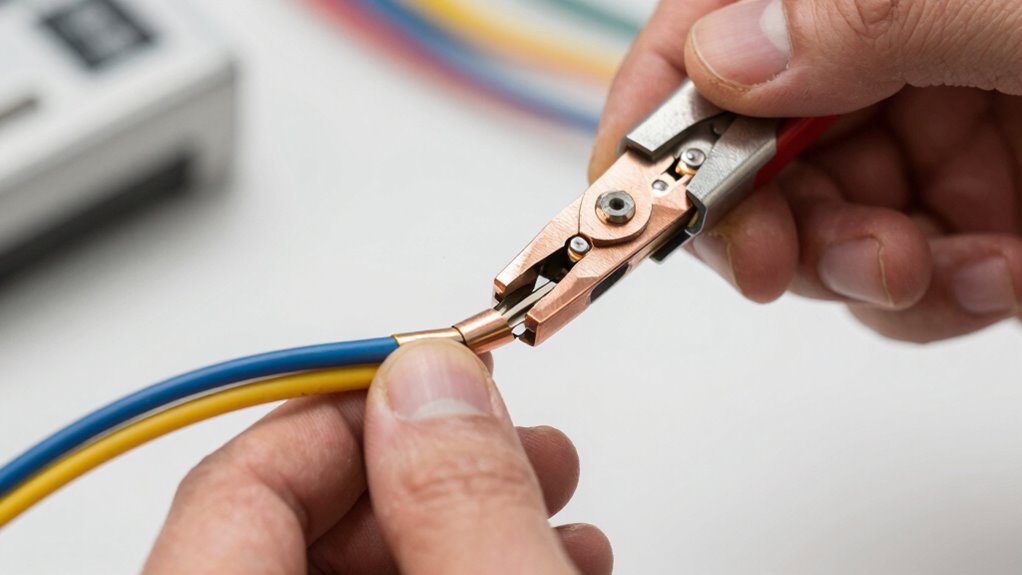
Applying the correct crimping force is essential for a secure and reliable connection. If you apply too much force, you risk damaging the terminal or wire, which can cause failures over time. Too little force results in a loose connection that may corrode or disconnect. To get it right, choose the proper terminal for your wire and application, as terminal selection impacts the necessary crimping force. Once selected, use a quality crimping tool calibrated for that terminal size. Firmly squeeze the tool in one smooth motion, applying consistent pressure until the crimp is secure. Always follow the manufacturer’s recommended crimping force to guarantee the best results. Proper crimping force guarantees a strong, durable connection that withstands marine conditions.
Common Crimping Mistakes and How to Avoid Them
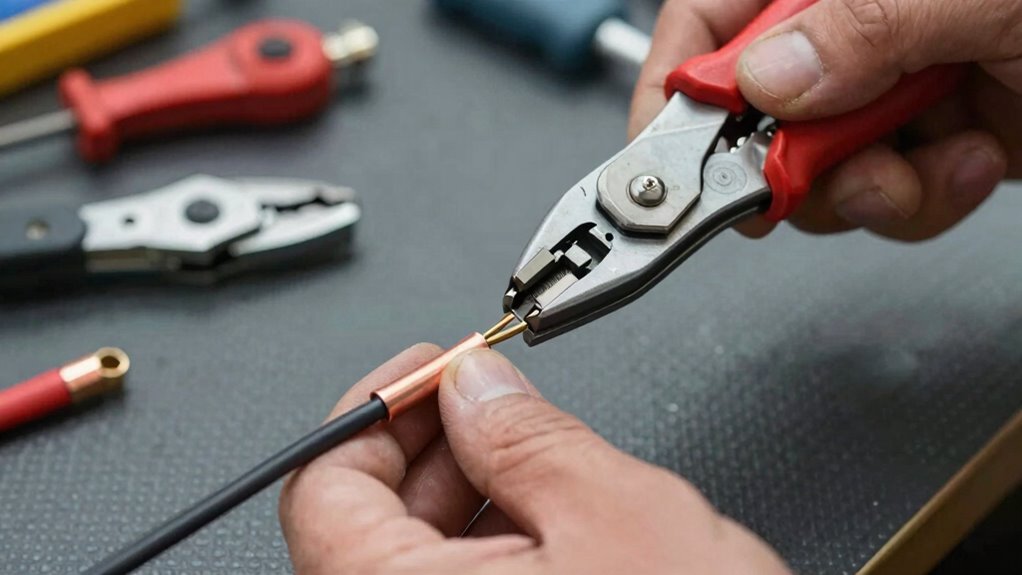
One of the most common mistakes in crimping marine terminals is using the wrong tool or not preparing it properly, which can lead to weak or unreliable connections. This often results in crimping errors and issues with terminal compatibility. To avoid these pitfalls:
- Use the correct crimping tool designed for your terminal size and type.
- Ensure your tool is properly calibrated and in good condition.
- Double-check that the terminal is compatible with your wire gauge before crimping.
Failing to follow these steps can cause poor electrical contact or damage to the terminal. Recognizing and preventing these mistakes guarantees a secure, durable connection that withstands marine conditions. Proper preparation and choosing the right tools are essential for avoiding crimping errors and ensuring terminal compatibility.
How to Test and Inspect Your Marine Crimp for Durability
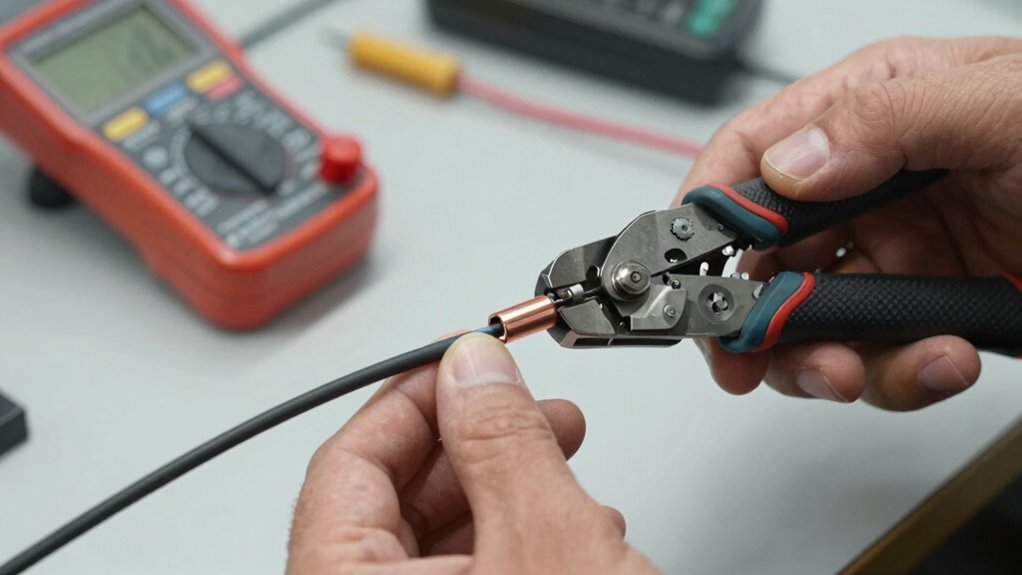
Ever wondered if your marine crimp will hold up under harsh conditions? To test its durability, start by inspecting the marine terminal materials for any signs of damage or corrosion. Gently tug on the crimp to confirm it’s securely attached; it shouldn’t slip or loosen. Next, check the electrical insulation—confirm it’s properly compressed around the wire without any gaps, which helps prevent moisture intrusion and electrical faults. Use a crimping gauge or tester to verify the pressure applied during crimping meets manufacturer specifications. If possible, perform a pull test or vibration simulation to see how well the connection withstands stress. Regular inspection and testing are vital to guarantee your marine crimp remains reliable, especially in demanding environments.
Tips for Maintaining Your Crimping Tools for Consistent Results

To guarantee your crimping tools deliver consistent results, regular maintenance is essential. Proper care ensures accurate tool calibration and reliable crimps. First, regularly check and calibrate your tools to maintain proper pressure and alignment—this keeps crimps uniform. Second, clean your tools after each use, removing dirt and corrosion that can affect performance. Third, use appropriate storage techniques, like keeping tools in a dry, organized box to prevent damage and rust. Proper storage minimizes wear and preserves calibration. By following these steps, you’ll extend your tools’ lifespan and ensure every crimp meets quality standards. Consistent maintenance is a simple yet vital way to prevent failures and achieve professional, reliable marine terminal connections.
Troubleshooting Poor Crimps and Repairing Faulty Connections
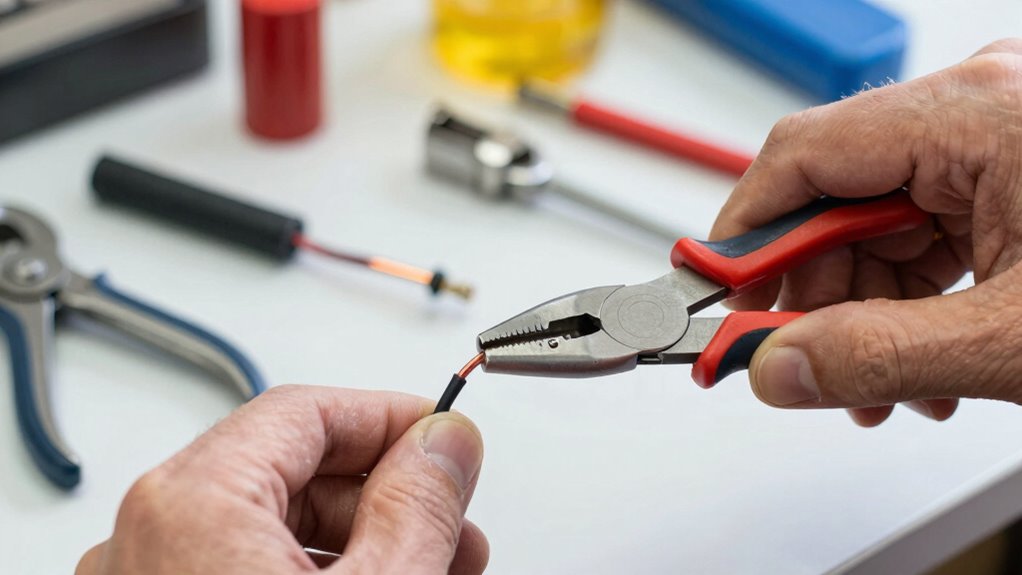
When you notice a crimped connection isn’t holding or the terminal feels loose, it’s essential to troubleshoot the issue promptly. First, check if the marine insulation around the wire is stripped correctly, exposing enough conductor for a solid crimp. Poor insulation removal can cause insufficient contact, reducing electrical conductivity. Inspect the crimp to see if it’s properly compressed; a loose or uneven crimp indicates it wasn’t formed correctly. If the connection is faulty, cut back the wire to healthy, uninsulated copper and re-crimp with the right tool. Ensure the terminal is snug and that the crimp compresses both the wire and the marine insulation properly. Good electrical conductivity depends on a secure, corrosion-resistant connection free of loose strands or damaged insulation.
Best Practices for Long-Term Corrosion Resistance in Marine Crimping
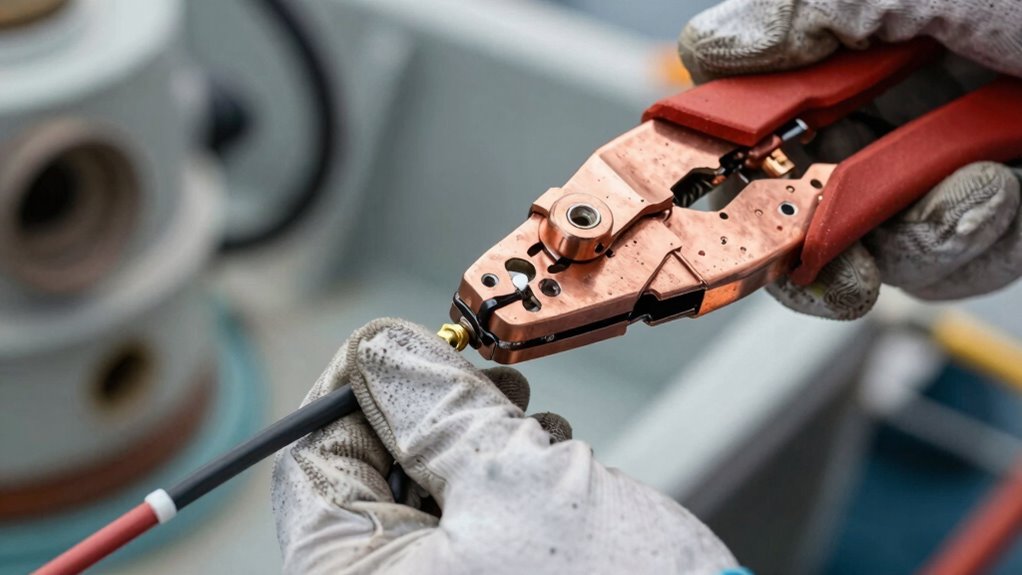
Ensuring your marine crimp connections resist corrosion over time requires adopting specific best practices. First, apply a marine paint or sealant around the crimp area to create a barrier against saltwater. Second, choose terminals made from corrosion-resistant materials like tinned copper or marine-grade stainless steel. Third, regularly inspect and reapply protective coatings to maintain saltwater resistance and prevent rust. Additionally, keep connections clean and dry before crimping, and use dielectric grease to enhance long-term corrosion resistance. Properly crimped and protected terminals ensure your wiring remains reliable despite harsh marine conditions. By following these steps, you greatly extend the lifespan of your marine electrical system and prevent costly failures caused by corrosion.
Frequently Asked Questions
What Are the Best Storage Practices for Marine Crimping Tools?
You should store marine crimping tools in a clean, dry environment to prevent rust and corrosion. Regular tool maintenance, like cleaning and lubricating, keeps them in top condition. Keep them in a designated toolbox or storage case, avoiding damp or humid areas. Proper storage environments help maintain tool integrity, ensuring reliable performance during critical crimping tasks. Always check tools before use to ensure they’re well-maintained and ready.
How Often Should Marine Crimping Tools Be Calibrated?
You should calibrate your marine crimping tools at least once a year to guarantee optimal tool accuracy. Regular calibration helps catch any deviations that could compromise your crimps, preventing failures and ensuring reliable connections. If you use the tools frequently or work in harsh environments, consider calibrating more often. Maintaining proper calibration frequency is essential for consistent, high-quality crimps and long-lasting marine electrical systems.
Are There Specific Environmental Conditions That Affect Crimping Quality?
Think of your crimping process as sailing through unpredictable waters; environmental conditions like moisture and salt spray can threaten your connection’s integrity. High humidity and exposure to moisture increase corrosion susceptibility, weakening the terminals over time. To guarantee a strong, reliable connection, you need to protect your crimps from moisture effects and corrosion. Proper sealing and choosing corrosion-resistant materials help keep your marine electrical system seaworthy, even in harsh conditions.
Can Home Users Safely Perform Marine Terminal Crimping?
Yes, you can safely perform marine terminal crimping at home if you follow proper DIY safety protocols and use professional tools. Make sure to wear protective gear, work in a well-ventilated area, and handle tools carefully. Using the right professional crimping tools guarantees a secure connection, preventing failures. Take your time, follow instructions closely, and avoid rushing to ensure a safe and effective crimping process.
What Safety Precautions Should Be Followed During Crimping?
Imagine you’re crimping a marine terminal when a sudden spark occurs. To prevent accidents, always follow electrical safety protocols and wear proper PPE like insulated gloves and safety glasses. Confirm the work area is dry, and disconnect power before starting. Keep tools in good condition and double-check connections. These precautions reduce risks, protect you, and ensure a secure, reliable connection every time you crimp.
Conclusion
By mastering proper crimping techniques, you guarantee your marine connections are reliable and corrosion-resistant, even in harsh conditions. Some might think it takes special skills or expensive tools, but with the right guidance and practice, anyone can do it right. Don’t compromise on safety or longevity—invest a little time now, and enjoy worry-free, durable electrical connections on your vessel for years to come.