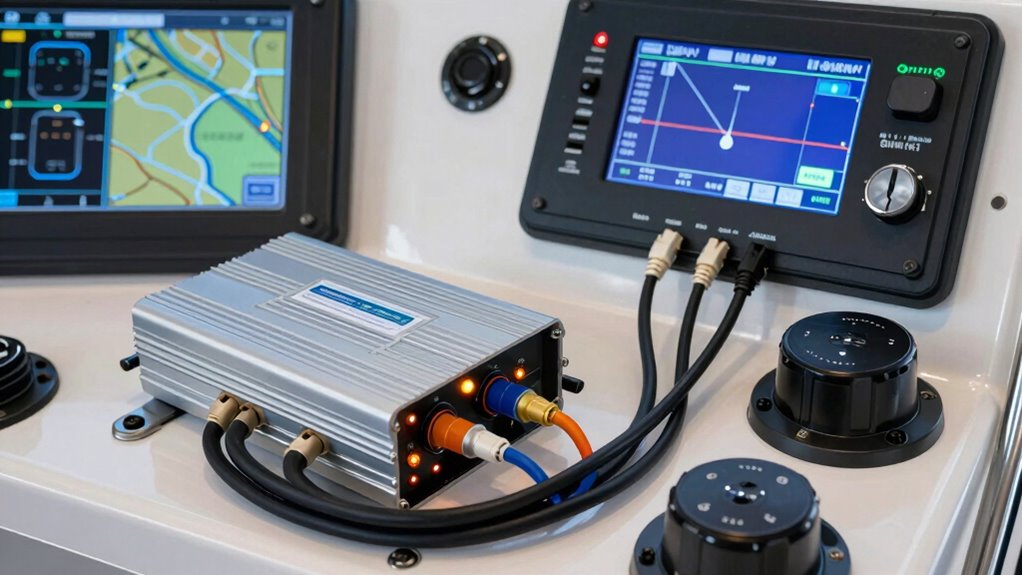

A boat inverter converts your 12V DC power into 120V AC, letting you run small electronics like phones, LED lights, and tablets safely onboard. Avoid powering high-starting appliances such as air conditioners or large power tools, as they can overload or damage your inverter. Proper connection and safety precautions are essential for reliable operation. To guarantee your system’s efficiency and lifespan, understanding what works best is crucial—keep exploring to learn more.
Key Takeaways
- Small electronics like phones, tablets, and LED lights are suitable for boat inverters within their wattage limits.
- Avoid powering high-starting, inductive, or large appliances such as air conditioners and power tools.
- Use pure sine wave inverters for sensitive devices to minimize power fluctuations and protect electronics.
- Ensure inverter capacity matches the total wattage of connected devices to prevent overloads and shutdowns.
- Proper wiring, ventilation, and battery maintenance are essential for safe operation and inverter longevity.
What Is a Boat Inverter and How Does It Work?
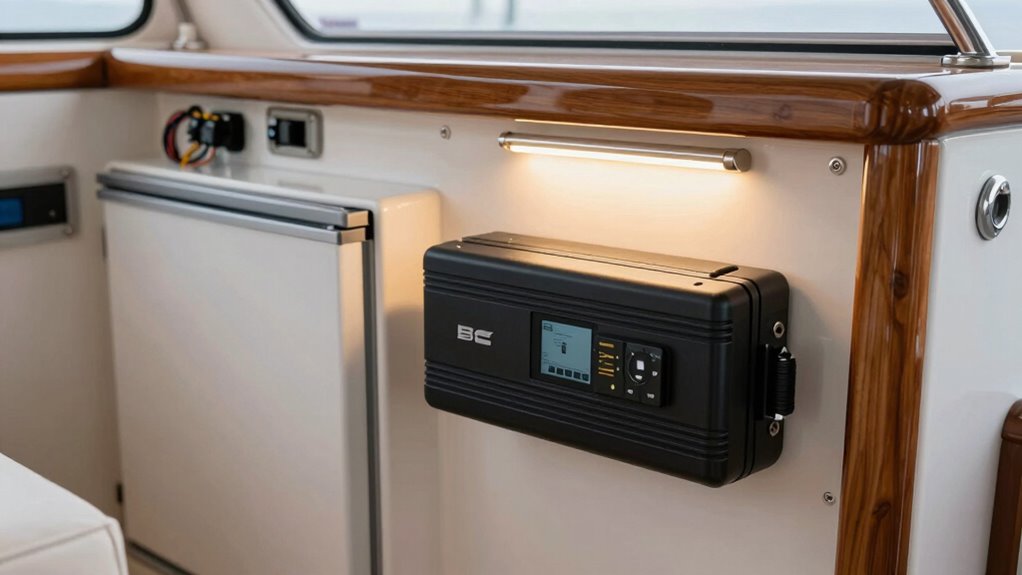
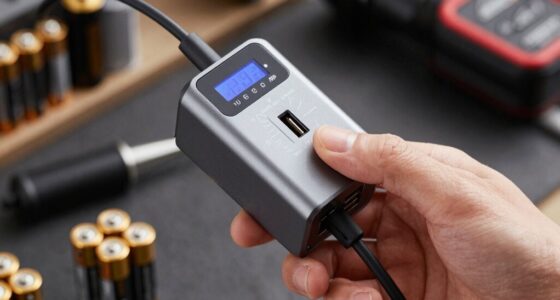
A boat inverter is a device that converts the boat’s 12-volt DC power from the batteries into 120-volt AC power, which is what most household appliances use. This process relies on advanced inverter technology, enabling you to run everything from small chargers to larger devices onboard. In marine electrical systems, inverters are essential for providing AC power without needing shore connections or generators. They work by converting the direct current (DC) stored in your batteries into alternating current (AC), making it compatible with standard appliances. Modern inverters are designed to handle various loads efficiently, ensuring your devices operate smoothly. Understanding how inverter technology integrates into marine electrical systems helps you better manage power needs during your boat trips. Proper installation and maintenance of your inverter are crucial for safety and optimal performance, especially when managing different power loads on board. Additionally, recognizing the capabilities of your inverter ensures you can select the right unit for your specific power requirements. Being aware of inverter surge capacity can prevent overloads and protect your devices during startup or heavy use.
How Do I Choose the Right Inverter Size for My Boat?
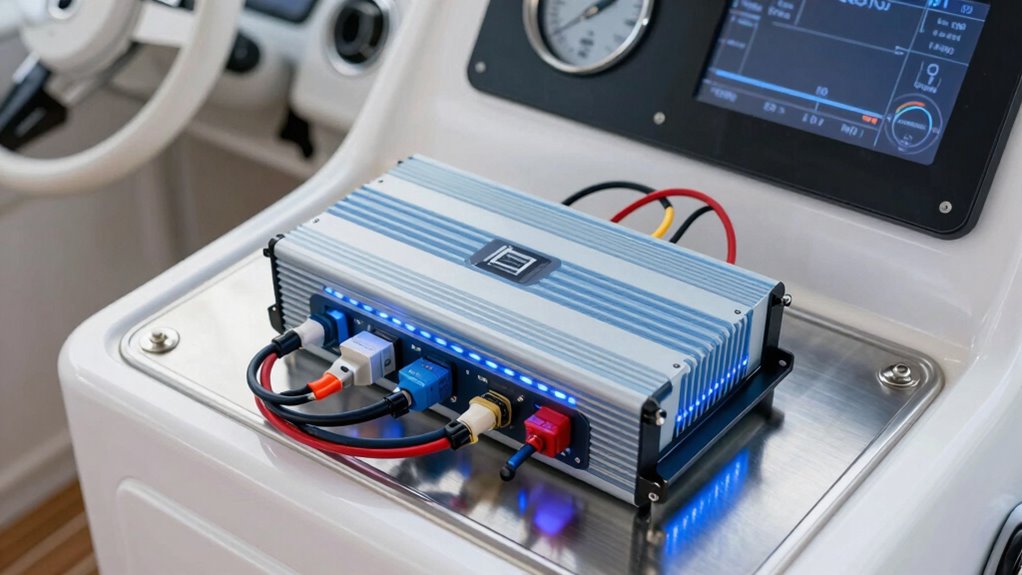
To select the appropriate inverter size, you need to evaluate your power requirements by listing all devices you’ll operate and their wattage. Keep in mind that inverter efficiency can vary, so choosing one that matches your usage guarantees maximum performance. Additionally, understanding halal traditions and how they influence device use can help you select equipment that complies with your lifestyle. When considering power management, it’s important to account for startup surges and continuous load to ensure your system operates reliably. Properly assessing battery capacity and runtime expectations will help prevent unexpected power loss during your outings. Recognizing safety precautions related to inverter installation and operation is crucial to prevent hazards and ensure safe usage. Being aware of inverter types can further assist you in selecting the best option for your boat’s specific needs. By understanding these factors, you’ll find an inverter that safely and effectively powers your boat.
Power Needs Assessment
Choosing the right inverter size for your boat starts with evaluating your power needs carefully. Begin by gauging your battery capacity to ensure it can handle the load without draining too quickly. List all devices and appliances you plan to run, noting their power consumption in watts. Add up the total wattage to determine your peak power requirements. Remember, some devices draw more power at startup, so factor in surge power. Consider how long you’ll run each device and the capacity of your batteries to avoid frequent recharging. This assessment helps you select an inverter that provides enough continuous power without overloading your system. Conducting a thorough power needs assessment can further optimize your inverter selection process. Incorporating a comprehensive power analysis ensures your system is balanced for both efficiency and longevity. Properly sizing your inverter not only safeguards your equipment but also enhances overall system efficiency, making your boating experience smoother and more reliable. Additionally, understanding peak power demands helps prevent system overloads during initial device startup.
Inverter Efficiency Factors
Understanding inverter efficiency is crucial when selecting the right size for your boat because it directly impacts how much power your system wastes and how long your batteries last. Higher efficiency means less energy lost as heat, which reduces inverter heat buildup and keeps your system running smoothly. Battery efficiency also plays a role; the more efficient your batteries are at storing and delivering power, the better your overall system performs. When choosing an inverter, look for models with high efficiency ratings—ideally above 90%—to minimize energy loss. Keep in mind that a larger inverter isn’t always better; an oversized unit can generate unnecessary inverter heat and waste power. Proper sizing ensures maximum performance, longer battery life, and reduced heat issues on your boat.
What Appliances and Devices Can I Power With a Boat Inverter?
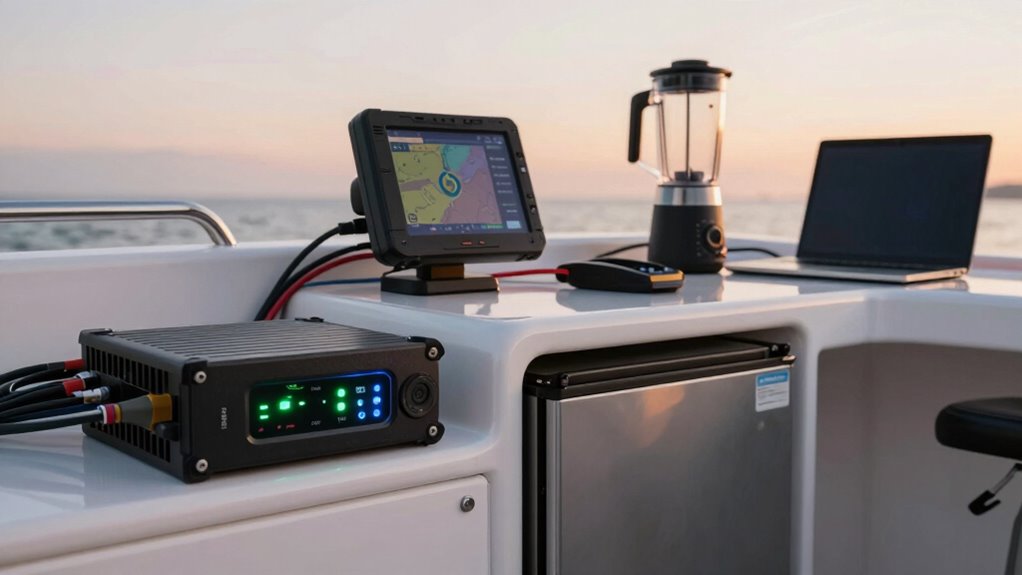
You can power small electronics like phones, tablets, and LED lights with your boat inverter easily. Just make sure not to overload sensitive devices, which could cause damage or shut down. Staying within recommended limits helps keep everything running smoothly. Additionally, using high-quality solar charge controllers can optimize energy efficiency and protect your batteries from overcharging. Properly managing your inverter’s power capacity ensures safe operation and prevents potential electrical issues. Being aware of your electrical load is essential to avoid unexpected power disruptions and to maintain reliable operation. Understanding electrical system fundamentals can further enhance your ability to troubleshoot and prevent issues proactively. Incorporating proper wiring techniques is also crucial to ensure safety and efficiency in your setup.
Powering Small Electronics Effectively
A boat inverter allows you to power small electronics directly from your vessel’s electrical system, making it convenient to use devices without relying on shore power or batteries. To do this effectively, keep in mind that your inverter’s noise level can impact your comfort, especially in quiet environments. Choosing a quiet inverter minimizes disruptions and enhances your experience onboard. Proper battery maintenance is vital because small electronics draw steady power, which can drain your batteries if not managed properly. Ensure your batteries are regularly checked and charged to prevent performance issues. Additionally, understanding power management is essential to prevent overloading your inverter and protect your batteries. Research supports the importance of reliable measurement tools to monitor electrical loads and ensure safe operation. Maintaining a balanced electrical system helps to optimize inverter performance and prolong battery life. Using appropriate wiring and connections is crucial to ensure safety and efficiency when powering multiple devices. Implementing verification procedures based on evidence can help confirm that your setup is functioning optimally and safely. By selecting the right inverter and maintaining your batteries well, you can confidently power smartphones, tablets, GPS units, and small appliances, making your time on the water more enjoyable and efficient.
Avoid Overloading Sensitive Devices
While boat inverters are great for powering small electronics, they aren’t suitable for all sensitive devices. Many delicate electronics, like medical equipment or high-end cameras, require sensitive device protection to prevent damage from power fluctuations. Overloading your inverter can lead to inverter overload prevention issues, causing shutdowns or damage. To avoid this, always check the power ratings of your devices and ensure they stay within the inverter’s capacity. Using a surge protector or a pure sine wave inverter helps deliver cleaner power, reducing risks for sensitive electronics. Never push your inverter beyond its limits, as overloads can harm both the inverter and your devices. Properly sizing and managing your power load is key to safeguarding your sensitive devices onboard. Additionally, understanding cybersecurity risks related to onboard electronics and communication systems can help protect your boat’s digital infrastructure from potential threats. Moreover, selecting an inverter with adequate watt-hour capacity ensures consistent power supply for your essential electronics without risking overloads. Ensuring your inverter’s power quality is consistent can also help prevent damage to sensitive electronics. Being aware of electrical noise that can interfere with sensitive devices is also crucial for maintaining proper operation.
Which Devices Should I Avoid Powering With an Inverter?
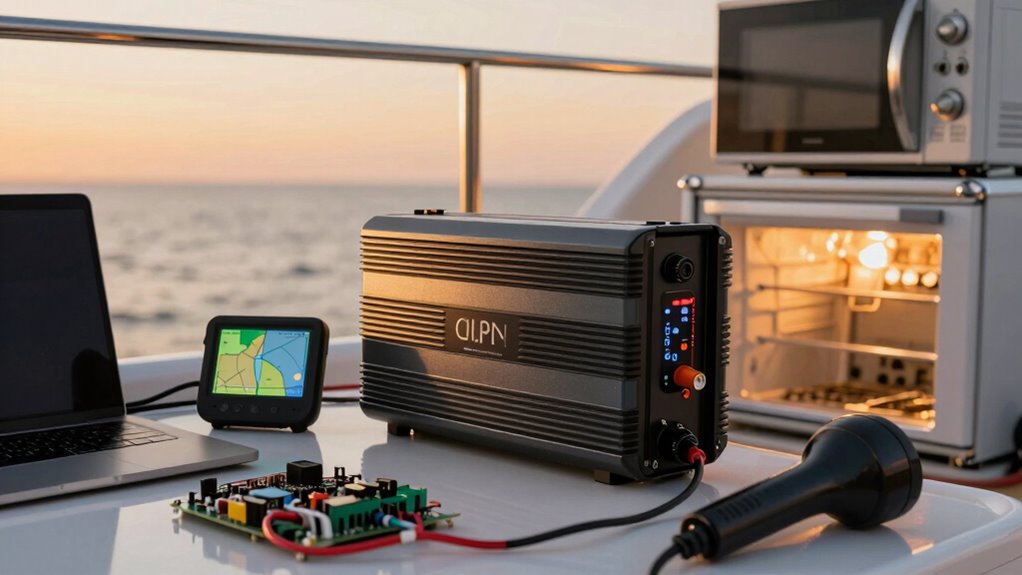
Certain devices can cause problems or even damage your inverter if you try to power them. To guarantee inverter safety and protect your marine battery, avoid these devices:
Avoid powering high-starting, inductive, or unstable devices to protect your inverter and marine battery.
- High-Starting Power Appliances – Devices like air conditioners or large power tools draw excessive current, risking inverter overload.
- Inductive Loads – Motors and compressors can cause voltage spikes that damage your inverter.
- Unstable Power Devices – Cheaper or poorly built electronics, such as old microwaves or gaming consoles, may have power surges that harm your inverter.
Steering clear of these devices helps preserve your inverter and marine battery life. Always check your inverter’s capacity before powering any equipment, and avoid forcing it to handle loads beyond its limits. Proper use ensures safe, reliable operation on your boat.
How Do I Connect and Use a Boat Inverter Safely?
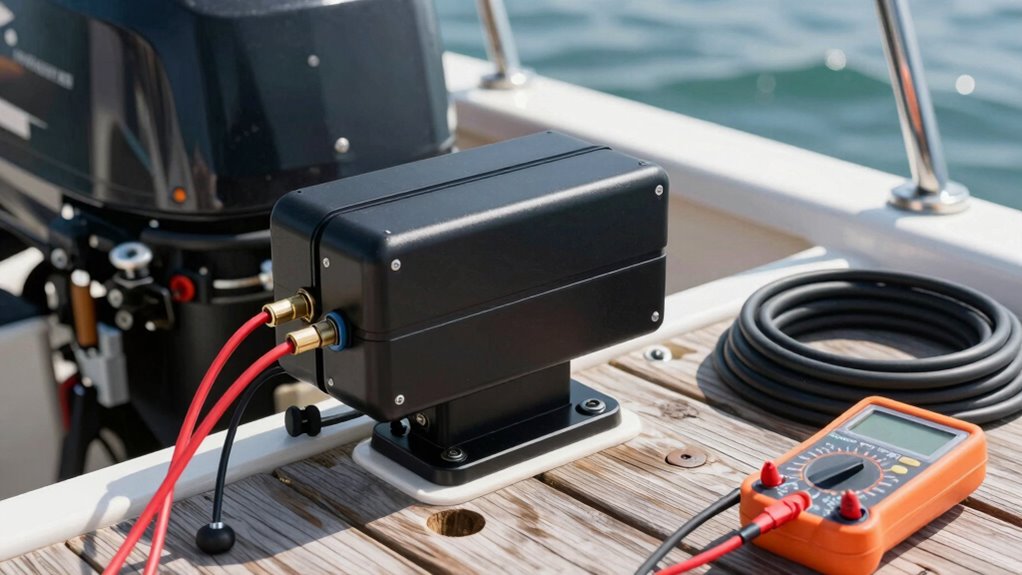
Connecting and using a boat inverter safely starts with understanding how to properly set up the system and handle it during operation. Always guarantee your marine battery is fully charged and compatible with your inverter. Before connecting, double-check the inverter safety instructions to prevent sparks or shorts. Use quality cables and secure connections to avoid accidental disconnections. Keep flammable materials away and operate the inverter in a dry, ventilated area. Follow this simple chart to keep your setup safe and reliable:
| Safety Step | Action |
|---|---|
| Proper Wiring | Use correct gauge cables |
| Battery Handling | Avoid short circuits |
| Ventilation | Prevent overheating |
What Factors Affect My Inverter’s Performance and Longevity?
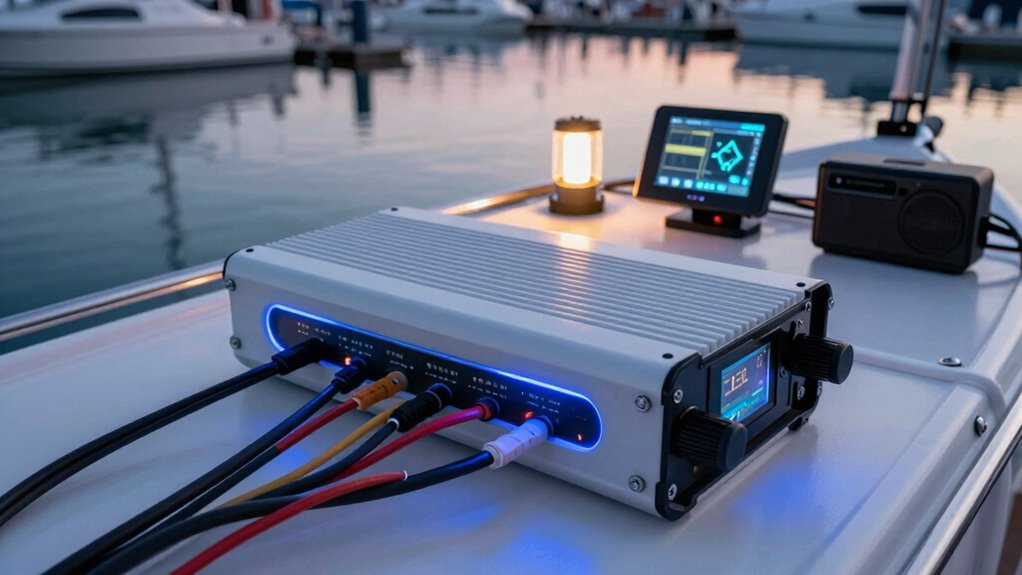
Your inverter’s performance and longevity depend largely on how well you maintain and operate it. Several factors influence its durability:
- Battery Maintenance – Keep batteries charged and clean to prevent voltage drops and reduce strain on the inverter.
- Inverter Cooling – Ensure proper ventilation and cooling to prevent overheating, which can damage internal components.
- Proper Load Management – Avoid exceeding the inverter’s capacity; running too many devices at once can cause overheating and wear.
Regularly check and maintain your batteries, making sure they stay in good condition. Keep your inverter cool by providing adequate ventilation and cleaning cooling fans or vents as needed. Staying mindful of these factors helps extend your inverter’s life and keeps it running efficiently.
How Can I Troubleshoot Common Inverter Problems?
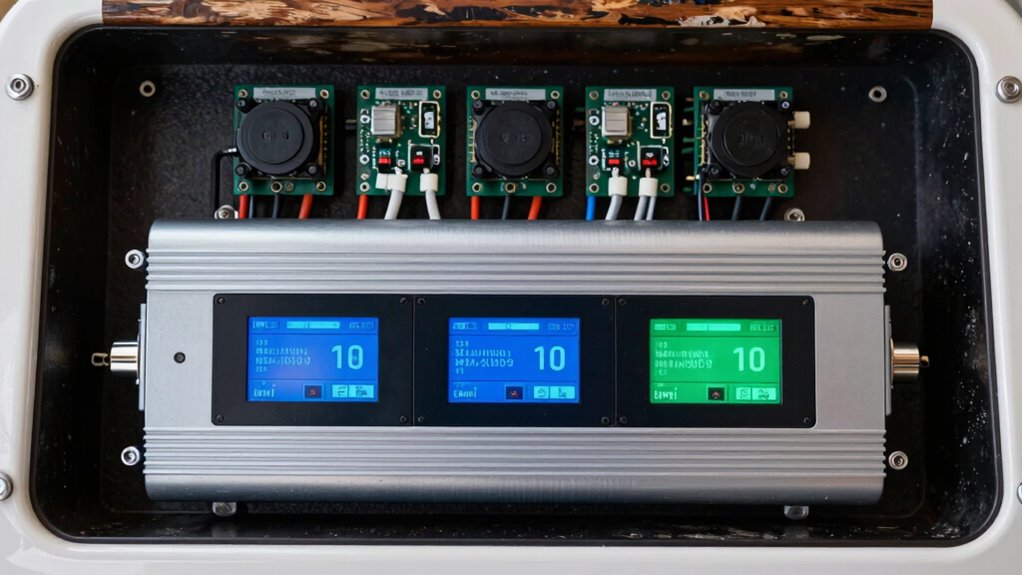
Maintaining your inverter’s performance involves more than just proper operation; it also means knowing how to identify and fix common issues when they arise. Start with battery maintenance, ensuring your batteries are fully charged and terminals are clean and secure. Low or faulty batteries can cause inverter problems like shutdowns or poor power output. For inverter troubleshooting, check for error messages or indicator lights that signal specific issues. Reset the inverter if necessary, and inspect connections for corrosion or damage. If the inverter still doesn’t operate correctly, verify the input voltage and ensure the load isn’t exceeding its capacity. Regularly maintaining batteries and staying attentive to warning signs can help prevent major problems and keep your inverter running smoothly.
Tips to Maximize Your Boat Inverter’s Efficiency and Lifespan
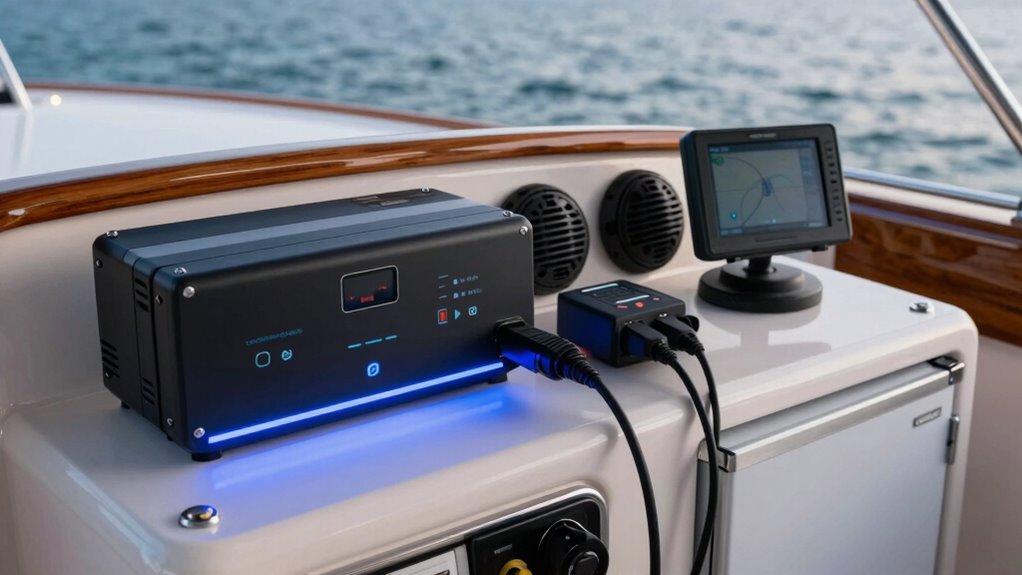
To get the most out of your boat inverter, focus on optimizing its efficiency and extending its lifespan through proper usage and regular care. Effective battery management ensures your inverter runs smoothly and prevents unnecessary strain. Regular inverter maintenance, like cleaning vents and checking connections, keeps it operating efficiently. Here are three tips to help you:
Maximize your boat inverter’s lifespan with proper care, battery management, and regular maintenance.
- Monitor your battery levels closely and avoid deep discharges.
- Schedule routine inverter inspections to identify potential issues early.
- Keep vents and cooling fans clean to prevent overheating.
FAQs About Boat Inverters: What You Need to Know
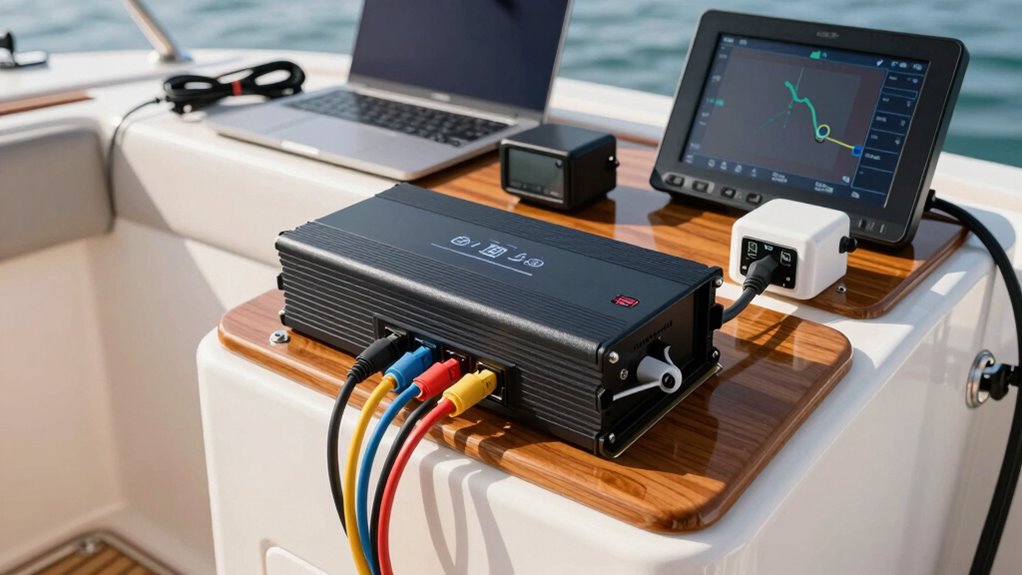
Are you wondering how to choose the right boat inverter or guarantee it works safely and efficiently? Many boaters ask about integrating marine solar systems and maintaining batteries properly. It’s essential to select an inverter that matches your power needs and ensures compatibility with your marine solar setup. Proper battery maintenance is vital; keep batteries charged, clean, and balanced to prevent issues. When considering FAQs, remember that safety features like overload protection and proper ventilation protect both your equipment and crew. Additionally, understand the inverter’s capacity to handle your common loads, and always follow manufacturer guidelines for installation and use. Asking these questions helps you make an informed decision, ensuring your inverter runs smoothly and lasts longer, giving you peace of mind on the water.
Frequently Asked Questions
Can a Boat Inverter Run Sensitive Electronic Equipment Safely?
Yes, your boat inverter can run sensitive electronic equipment safely if it’s compatible with your solar setup and has adequate battery capacity. Make certain the inverter provides pure sine wave output, which is gentle on delicate devices. Check that your batteries can supply enough power without dropping voltage or causing instability. Properly matching inverter specs with your solar system and battery capacity helps protect sensitive electronics and keeps everything running smoothly.
How Long Can I Run Appliances on My Boat Inverter Continuously?
You can run appliances on your boat inverter continuously for several hours, depending on your battery capacity and inverter efficiency. If your battery has a high capacity, you’ll get longer run times. Keep in mind, higher inverter efficiency means less energy loss, so you get more use out of your power. To avoid draining your batteries, monitor your usage and consider turning off appliances when not needed.
Is It Necessary to Install a Transfer Switch With My Boat Inverter?
You should install a transfer switch with your boat inverter to guarantee installation safety and seamless power switching. It prevents back-feeding from the inverter into your boat’s main electrical system, protecting you and your equipment. A transfer switch also simplifies operation, giving you control over power sources. Without it, you risk electrical hazards, so investing in one enhances safety and ensures reliable power management on your boat.
What Maintenance Does a Boat Inverter Require for Optimal Performance?
You should regularly check your boat inverter’s battery connections and make certain they’re clean and tight to prevent performance issues. Keep an eye on the cooling system, making sure vents and fans are clear of debris to avoid overheating. Additionally, inspect the inverter for corrosion and monitor its display for any error messages. Proper maintenance like these keeps your inverter running efficiently and extends its lifespan on the water.
Are There Specific Brands or Models Recommended for Marine Use?
You should look for marine grade inverters from reputable brands like Victron, Magnum, or Xantrex. These companies specialize in durable, reliable marine inverters designed to withstand the harsh conditions at sea. When choosing, prioritize models with good reviews, proper wattage, and features suited to your needs. Investing in trusted brands ensures safety, longevity, and peak performance, helping you power your boat efficiently without worries.
Conclusion
Think of your boat inverter as the heart of your vessel’s power, pulsing life into your adventures. When you choose wisely and care for it, it keeps your journey smooth and safe—like a steady captain guiding through calm waters. Respect its limits, avoid risky devices, and maintain it well. With this harmony, your boat’s energy flows effortlessly, turning every voyage into a memorable, worry-free voyage across the vast, open sea.