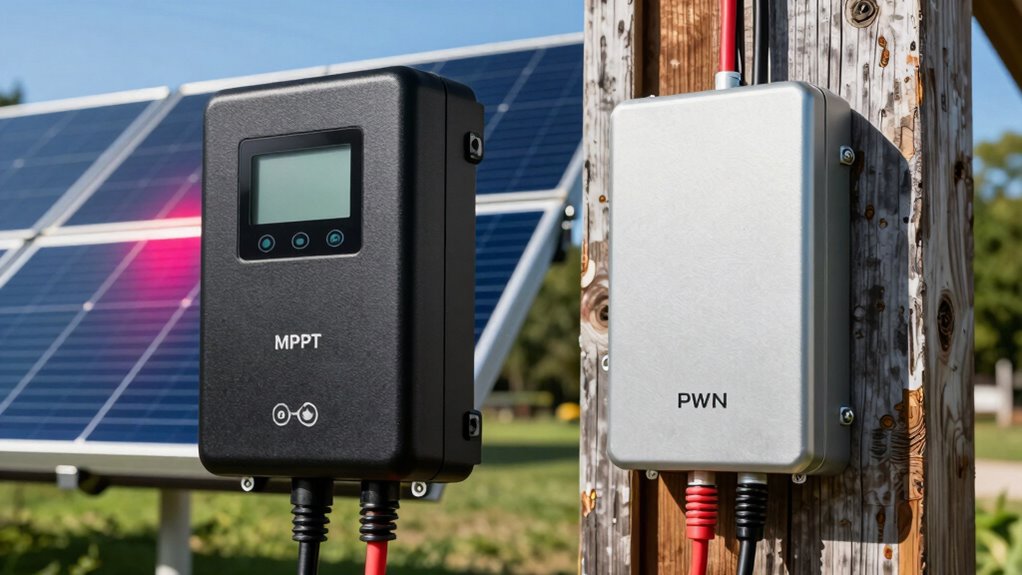

Choosing between MPPT and PWM controllers depends on your system size, budget, and efficiency goals. MPPT models are more efficient and ideal for larger or high-voltage setups, though they cost more and require some technical skill. PWM controllers are simpler and better suited for small systems with basic needs. Understanding the differences can help you select the best option for your setup—stay tuned to learn more about making the right choice.
Key Takeaways
- MPPT controllers are more efficient and ideal for large, high-voltage systems, while PWM controllers suit small, simple setups.
- The choice depends on system size, budget, and performance goals, with MPPT offering better long-term energy gains.
- MPPT units adapt better to variable weather and fluctuating input voltages, maximizing power extraction.
- PWM controllers are easier to install and cost-effective for basic applications but less efficient overall.
- Proper compatibility with batteries and inverters is essential to prevent overcharging and ensure system safety.

LiTime 3000W Pure Sine Wave Inverter 12V DC to 120V AC Converter with Remote Control, Surge 6000W, Built-in 4 AC Outlets, USB Port, Type-C Port for Home, RV, Camping, Off-Grid, Solar Power
New Upgraded: Experience the next level of power efficiency with the New-Upgrade LiTime 3000W Pure Sine Wave Inverter....
As an affiliate, we earn on qualifying purchases.
What Are MPPT and PWM Solar Charge Controllers and How Do They Work?
Have you ever wondered how solar panels efficiently charge your batteries? The answer lies in the type of solar charge controller you use. MPPT (Maximum Power Point Tracking) controllers optimize power transfer by constantly adjusting to the panel’s voltage and current, ensuring better battery maintenance and higher efficiency. PWM (Pulse Width Modulation) controllers, on the other hand, work by gradually reducing power to the batteries when they’re full, which is simpler but less efficient. Both controllers must be compatible with your inverter to ensure seamless operation. Proper system compatibility guarantees your system runs smoothly and prevents issues like overcharging or inefficient power flow. Additionally, solar system components should be considered to maximize overall performance. Properly matching your components ensures the system operates safely and efficiently. Efficient energy transfer is crucial for maximizing your solar system’s performance. Moreover, understanding charge controller types can help you select the best option for your specific needs. Selecting the appropriate component compatibility ensures your solar setup functions optimally and extends its lifespan.

Renogy REGO 3000W Pure Sine Wave Inverter Charger w/LCD Display 12V DC to 120V AC Built-in Bluetooth 4-Stage Charging
【Powerful Output 】The REGO 12V 3000W inverter charger provides 3000W continuous pure sine wave AC output and peak...
As an affiliate, we earn on qualifying purchases.
When Should You Use MPPT or PWM? Practical Use Cases
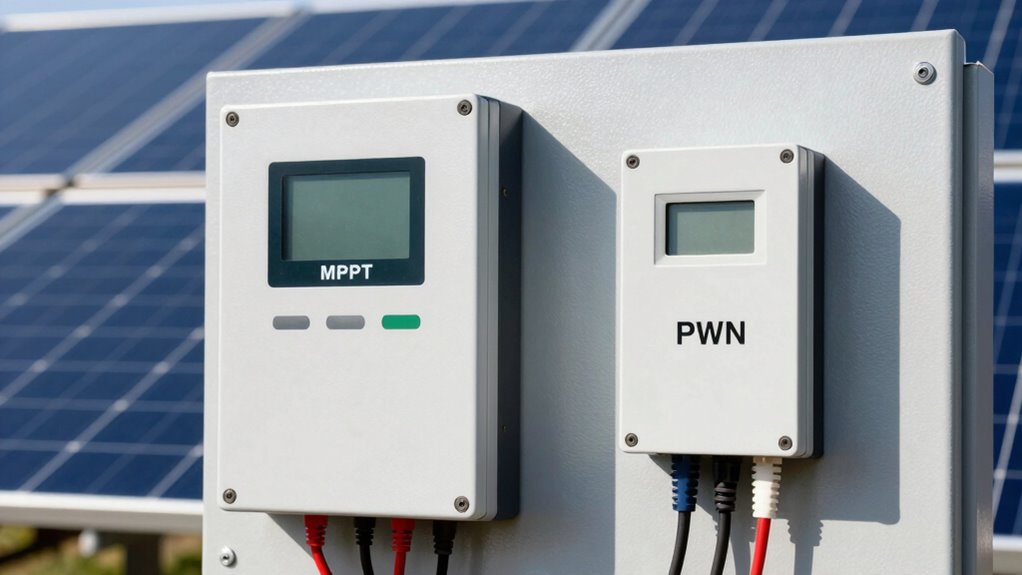
Choosing between MPPT and PWM controllers depends on your specific solar setup and energy needs. If you have a high-voltage solar array, an MPPT controller is ideal because it maximizes power transfer and is compatible with a wider range of battery types. MPPT controllers are better suited for larger systems where efficiency gains justify the higher cost and installation complexity. Conversely, if your system is small or simple, a PWM controller offers straightforward battery compatibility and is easier to install. PWM units are typically affordable and reliable for basic applications, but they’re less efficient with mismatched voltages. Consider your battery compatibility and how much effort you want to invest in installation when choosing the right controller for your setup. Additionally, understanding solar power system components can help optimize your overall setup and efficiency, especially in relation to system voltage compatibility. For optimal performance, selecting a battery inverter generator that matches your system’s energy output can further enhance efficiency and reliability.

Ampinvt 3000W Peak 9000W Pure Sine Wave Power Inverter Charger,DC 12V to 120V AC for Home RV Camper with LCD Display,Low Frequency Power Inverter
This Pure Sine Wave Inverter is a combination of an inverter, battery charger and AC auto-transfer switch. High...
As an affiliate, we earn on qualifying purchases.
How Do MPPT and PWM Compare in Efficiency, Cost, and Performance?
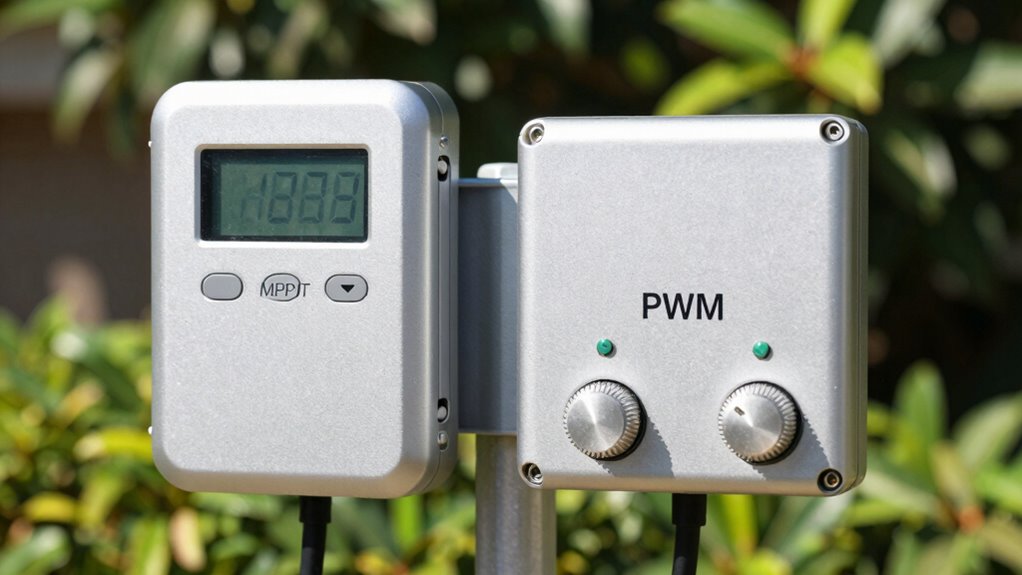
MPPT controllers generally outperform PWM units in efficiency because they continuously track the maximum power point of your solar panels and adjust their operation accordingly. This means they extract more energy, especially in low-light or variable conditions. When comparing cost and performance, consider:
- Efficiency: MPPT systems convert more sunlight into usable power, often 20-30% better than PWM.
- Battery Compatibility: MPPT chargers work well with higher voltage batteries, optimizing charging rates.
- Installation Complexity: MPPT units are more complex to install and set up, requiring knowledge of wiring and voltage matching.
- Cost: MPPT controllers tend to be pricier upfront, but their higher efficiency can save money over time through better energy harvest.
Additionally, MPPT controllers are especially advantageous in free-floating setups where maximizing energy capture is crucial for efficiency and sustainability. They are also beneficial in variable weather conditions, where their ability to adapt to changing sunlight levels helps maintain optimal performance. Moreover, MPPT controllers are designed to handle fluctuating input voltages more effectively, further enhancing their performance in diverse environments.

VEVOR Pure Sine Wave Inverter Charger, 3000 Watt, DC 24V to AC 120V Power Inverter with LCD Display, Remote Control, Solar Inverter for Off-Grid Solar RV Boat Home, Compatible with Various Batteries
3000W Pure Sine Wave Inverter: Our inverter charger provides reliable, uninterrupted power for devices such as refrigerators and...
As an affiliate, we earn on qualifying purchases.
Which Controller Is Better for Your System Size and Budget?

Deciding which controller suits your system size and budget depends on your specific energy needs and financial constraints. If you have a small to medium system with basic energy demands, a PWM controller may be be more affordable and easier to install, especially since it’s generally less complex in terms of installation. However, if your system involves larger batteries or requires better battery compatibility, an MPPT controller could be a smarter investment despite a higher upfront cost. MPPT units are more efficient with larger systems and can optimize power output, but they tend to be more complex to install. Consider your system size, desired performance, and budget to determine whether a simpler PWM or a more advanced MPPT controller aligns best with your needs. Additionally, understanding controller efficiency can help you make a more informed decision, while also evaluating the long-term savings associated with higher efficiency models. Recognizing system compatibility is crucial to ensure your chosen controller integrates seamlessly with your existing components. Moreover, assessing installation complexity can influence your choice based on your technical expertise and available resources.
How to Choose the Right Solar Charge Controller for Your Needs
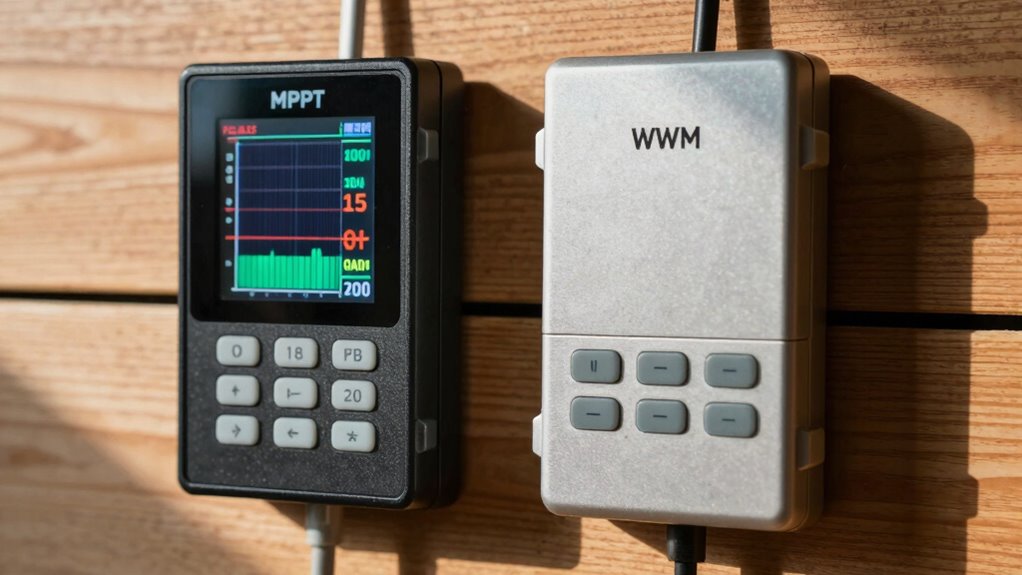
Selecting the right solar charge controller involves evaluating your system’s specific requirements and understanding the differences between available options. First, consider your battery maintenance needs—some controllers offer advanced features to prolong battery life. Second, assess your system integration, ensuring the controller matches your panels and batteries. Third, evaluate your power capacity to prevent overloads. Fourth, decide between MPPT and PWM based on efficiency and budget constraints. An MPPT controller maximizes energy harvest, ideal for cold climates and larger systems, while PWM suits smaller setups with simpler needs. Additionally, luxury lifestyle products can include high-end solar solutions that combine functionality with aesthetic appeal. To make the most informed decision, it’s important to understand the core differences between MPPT and PWM controllers and how they impact your system’s performance. Understanding the energy conversion process can help you optimize your system’s efficiency and longevity. Recognizing the significance of measurement accuracy in system components helps ensure reliable operation and long-term durability. By understanding these factors, you can choose a controller that optimizes battery health, seamlessly integrates with your system, and aligns with your energy goals.
Frequently Asked Questions
Can I Upgrade From PWM to MPPT Later?
Yes, you can upgrade from PWM to MPPT later, but you should check controller compatibility first. Many MPPT controllers are designed to work with existing systems, making upgrades smoother. Keep in mind, MPPT controllers tend to be more expensive, so consider cost considerations before switching. Upgrading can boost your system’s efficiency, but make certain your current wiring and components support the new controller for a seamless changeover.
How Do Temperature Variations Affect Both Controllers?
Temperature variations can dramatically impact your controller’s efficiency, like a rollercoaster ride for your system’s performance. Higher temperatures usually reduce the efficiency of both controllers, but MPPT controllers handle temperature effects better, maintaining ideal power transfer. PWM controllers, however, suffer more from temperature fluctuations, causing potential energy loss. To maximize your solar setup, consider how temperature effects influence each controller’s efficiency and choose one that adapts well to your environment.
Are Some Brands More Reliable Than Others?
Some brands are definitely more reliable than others, thanks to their reputation for quality and customer satisfaction. You should look for brands with strong reputation and extensive warranty coverage, which shows confidence in their products. Reliable brands often use better components and offer better customer support, reducing your chances of issues. Do your research, read reviews, and compare warranty options to guarantee you choose a solar controller that lasts and performs well.
What Maintenance Do MPPT and PWM Controllers Require?
Like a well-oiled machine, your solar controllers need regular care. You should check wiring connections for corrosion or looseness to guarantee smooth operation, as wiring requirements vary between MPPT and PWM controllers. Keep the controller’s environment clean and dry to enhance durability, and periodically inspect for firmware updates. Proper maintenance keeps both types running efficiently, extending their lifespan and ensuring your solar system performs at its best.
Do Controllers Impact Overall System Lifespan?
Yes, controllers impact your system’s lifespan through their durability and quality. A high-quality controller from a reputable brand is built to last longer, reducing the risk of failure and protecting your investment. When you choose a durable, well-reviewed controller, it guarantees consistent performance and minimizes maintenance, ultimately extending your solar system’s overall lifespan. Prioritize brand reputation and build quality to maximize your system’s longevity.
Conclusion
Choosing between MPPT and PWM controllers depends on your system size, budget, and energy needs. Did you know that MPPT controllers can be up to 30% more efficient than PWM, especially in colder climates or with higher voltage panels? By understanding these differences, you can optimize your solar setup and save more energy long-term. Make an informed choice, and you’ll enjoy better performance and greater savings from your solar investment.