
To wire your trolling motor safely, start by selecting a circuit breaker with an amp rating matching your motor’s needs, typically found in the manufacturer’s guidelines. Use the correct wire gauge—usually 8 AWG for 30-55 lbs and 4 AWG for 80+ lbs motors—to prevent voltage drop. Route wires securely, avoiding sharp bends and potential damage. Make solid, insulated connections at the battery and motor terminals, then test everything to guarantee proper flow and safety. Continue for detailed tips on each step.
Key Takeaways
- Select a circuit breaker with an amp rating matching the motor’s specifications and ensure it trips correctly under overload conditions.
- Use appropriately gauged marine-grade wire (e.g., 8-4 AWG) based on motor power and cable length to minimize voltage drop.
- Route wires in organized, direct paths, avoiding sharp bends, crossings, and potential damage zones, securing them with clips or zip ties.
- Connect the positive cable to the battery’s positive terminal and motor, then do the same with the negative cable, ensuring secure, insulated connections.
- Regularly inspect wiring, terminals, and fuses for corrosion or damage, and verify the circuit breaker trips properly for safe operation.

RED WOLF 60Amp Circuit Breaker for Boat Trolling Motor Marine ATV Trailer Vehicles Stereo Audio Electronic Battery Solar System Inline Fuse with Manual Reset Switch Waterproof DC 12V-48V
Protect your system: using as circuit breaker and battery Disconnect, allows to charge or maintain the battery without…
As an affiliate, we earn on qualifying purchases.
As an affiliate, we earn on qualifying purchases.
Why Proper Wiring Is Critical for Trolling Motor Safety and Performance
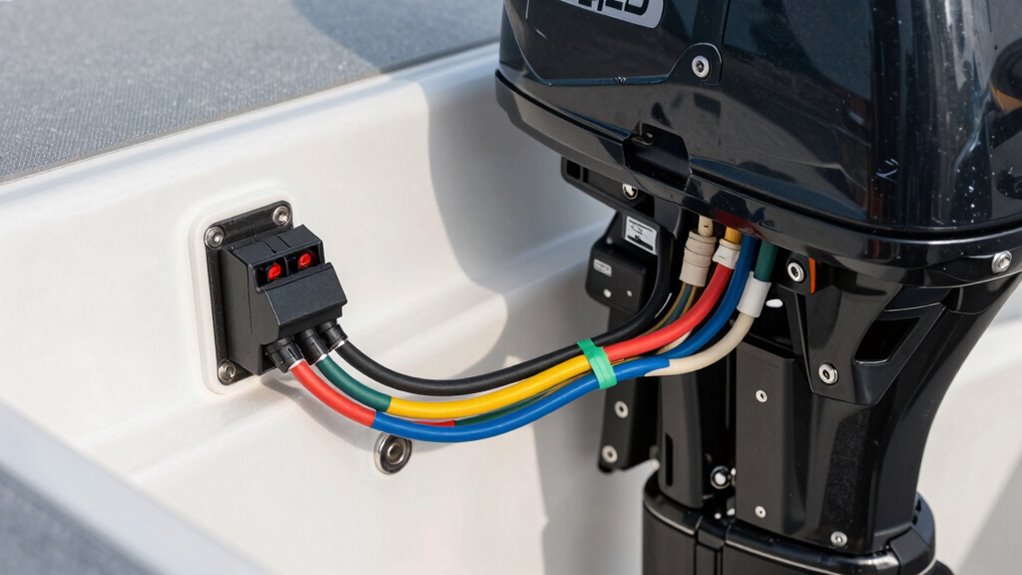
Proper wiring is essential for ensuring your trolling motor operates safely and efficiently. Good grounding safety prevents electrical faults that could cause shocks or damage. When wiring, make sure the ground wire is securely connected to a proper grounding point, reducing the risk of short circuits. Wire insulation plays a vital role in protecting the wiring from moisture, corrosion, and abrasion, which are common in marine environments. Insulation prevents accidental contact with other wires or metal parts, avoiding shorts and potential fires. Using high-quality, marine-grade wire insulation ensures durability and safety over time. Proper wiring practices help maintain consistent power flow, optimize motor performance, and protect you and your boat from electrical hazards. Additionally, selecting the appropriate wire gauge is crucial for handling the electrical load and preventing overheating. Ensuring proper circuit protection with the correct fuse or breaker size also safeguards against electrical overloads and potential damage. Regular inspection of wiring connections and insulation integrity is vital to detect early signs of wear or damage, especially in marine environments, where exposure to water and harsh conditions can compromise wiring integrity.

8 Gauge Marine Wire 8 AWG 10ft Duplex Marine Grade Wire Tinned Copper Oxygen-Free Insulated Red& Black Electrical Cable for Boat/Automotive/RV/Camper/Trailer
High Quality:Our marine electrical wire is made of tinned copper to make sure good conductivity,Anti-corrosion, high durability,flexibility,stability for…
As an affiliate, we earn on qualifying purchases.
As an affiliate, we earn on qualifying purchases.
How to Choose the Right Circuit Breaker for Your Trolling Motor
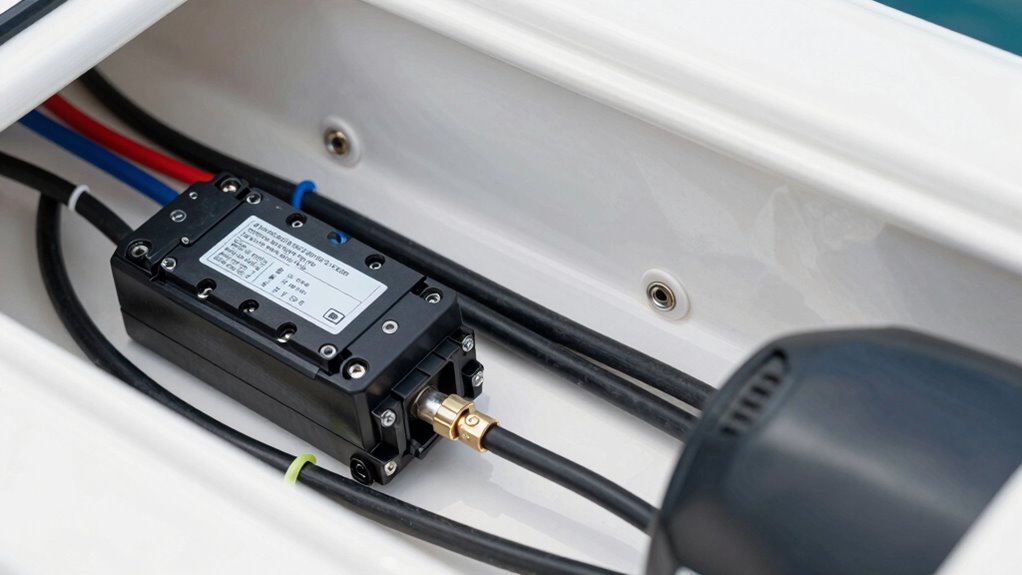
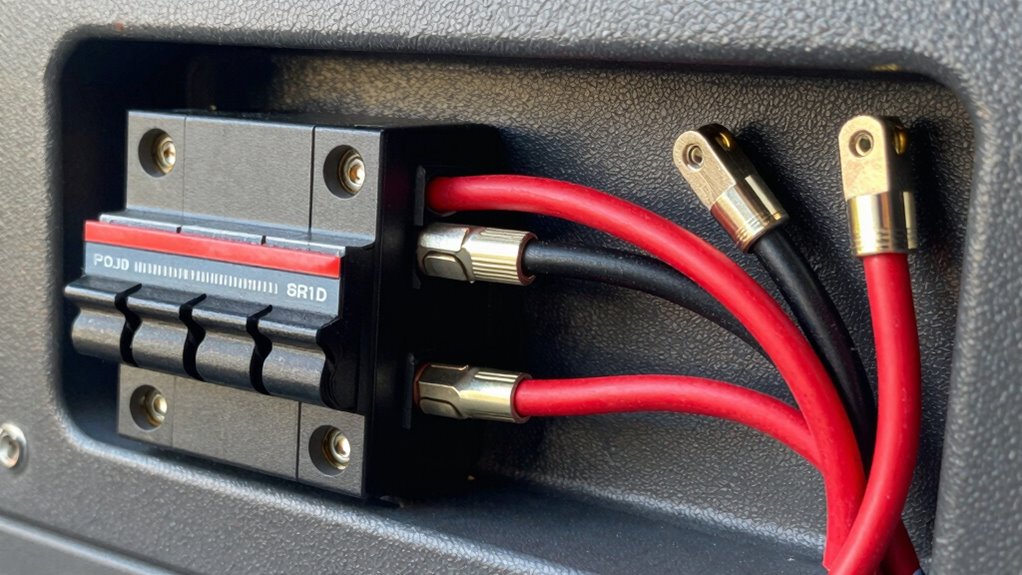
Choosing the right circuit breaker for your trolling motor is essential to protect your boat’s electrical system from overloads and short circuits. If you have a wireless control system, verify the breaker can handle the additional power demands without false trips. A properly rated breaker prevents damage to your motor and battery, supporting effective battery maintenance by avoiding unnecessary drain or overheating. Match the breaker’s amp rating to your motor’s specifications, considering peak startup currents. Using an underrated breaker risks nuisance trips, while an oversized one may fail to protect your wiring. Regularly inspect and test the breaker to ensure it functions correctly. Proper breaker selection and maintenance are key to ensuring safe and reliable operation. This way, your trolling motor stays protected, reliable, and ready for safe operation on the water. Additionally, understanding electrical system fundamentals can help prevent potential issues before they arise. Ensuring that your wiring system adheres to electrical safety standards can further reduce the risk of electrical failures or hazards. Regularly consulting manufacturer guidelines can also help maintain optimal safety and performance. Being familiar with electrical safety practices is also crucial to prevent accidents and ensure long-term durability of your setup.

Saysurey 13 Pcs 10 Gauge 30ft Duplex Tinned Copper Marine Wire, 12v-24v 8 Gauge 2 Wire Trolling Motor Plug and 12v-48v 60amp Circuit Breaker and 4 Awg 3/8 Ring Marine Grade Copper Wires Lugs for Boat
Marine Accessories Set: our marine accessories set Include 1 Roll 30ft/9.14m tinned copper electrical cable, 1pcs 8 gauge…
As an affiliate, we earn on qualifying purchases.
As an affiliate, we earn on qualifying purchases.
What Wire Gauge Do You Need for Your Trolling Motor Size?
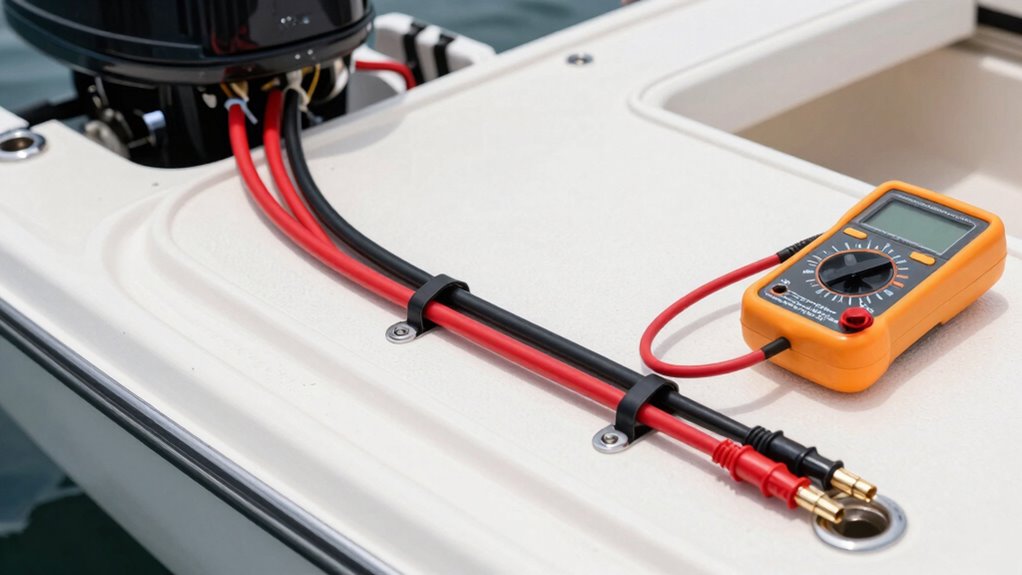
Your trolling motor’s power and length directly influence the wire gauge you need. Longer cables require thicker wire to prevent voltage drop and ensure proper performance. Knowing your motor size helps you select the right gauge for safe and efficient wiring. Additionally, considering electrical safety standards and how they relate to your wiring choices is crucial for safe operation. Proper wire insulation also plays a significant role in protecting your setup from environmental damage and electrical faults. Being aware of wire gauge charts can help you make more accurate wiring decisions based on your specific motor specifications, ensuring compliance with electrical codes and optimal safety.
Motor Power and Length
When selecting the right wire gauge for your trolling motor, you need to think about both the motor’s power and the length of the cable run. Higher-powered motors, like those for larger boats, draw more current, requiring thicker wire to prevent voltage drop. Trolling motor types also influence wire needs; a variable-speed model may need different gauge considerations than a basic one. Using marine batteries ensures reliable power, but the gauge must match the motor’s demands to avoid overheating. Here’s a quick guide:
| Motor Power | Recommended Gauge |
|---|---|
| 30-55 lbs | 8 AWG |
| 55-80 lbs | 6 AWG |
| 80+ lbs | 4 AWG |
| Longer distances | Thicker gauge recommended |
Additionally, considering proper wire routing helps prevent chafing and electrical issues, ensuring safe and efficient operation. Proper wire gauge selection is essential for maintaining electrical safety and performance. Selecting the correct wire gauge based on both power requirements and distance considerations can help prevent voltage loss and potential hazards. To ensure optimal performance, always consult manufacturer guidelines and wire gauge charts when sizing your wiring. Choosing the correct gauge keeps your trolling motor running smoothly and safely.
Wire Length Considerations
Longer cable runs require thicker wire to minimize voltage drop and guarantee your trolling motor performs reliably. When considering wire length, keep in mind that longer distances increase resistance, which can reduce power and lead to poor motor performance. To compensate, choose a heavier gauge wire suited for your motor’s size and the length of your wire routing. Proper wire routing helps prevent unnecessary length, reducing voltage loss. If your wire routing involves crossing long distances or sharp turns, opt for a thicker gauge to maintain ideal power flow. Always measure your total wire length carefully, and avoid unnecessary slack that could cause tangles or damage. Selecting the right wire gauge based on wire length ensures your trolling motor runs smoothly and safely. Additionally, understanding bank SWIFT/BIC codes can help ensure secure and accurate electrical connections when wiring components.

OURU 72PCS Stainless Steel Cable Clamp,Rubber Coated Cushioned Insulated Cable Clamps Assortment Kit-Metal Wire Clamps,Cable Clips,Pipe Clamps
72PCS Cable Clamps Assortment Kit —The stainless steel cable clamps assorted box including 3 different sizes,24pcs 1/4’’(6mm),24pcs 3/8’’(10mm),24pcs…
As an affiliate, we earn on qualifying purchases.
As an affiliate, we earn on qualifying purchases.
How to Connect the Battery and Trolling Motor Correctly
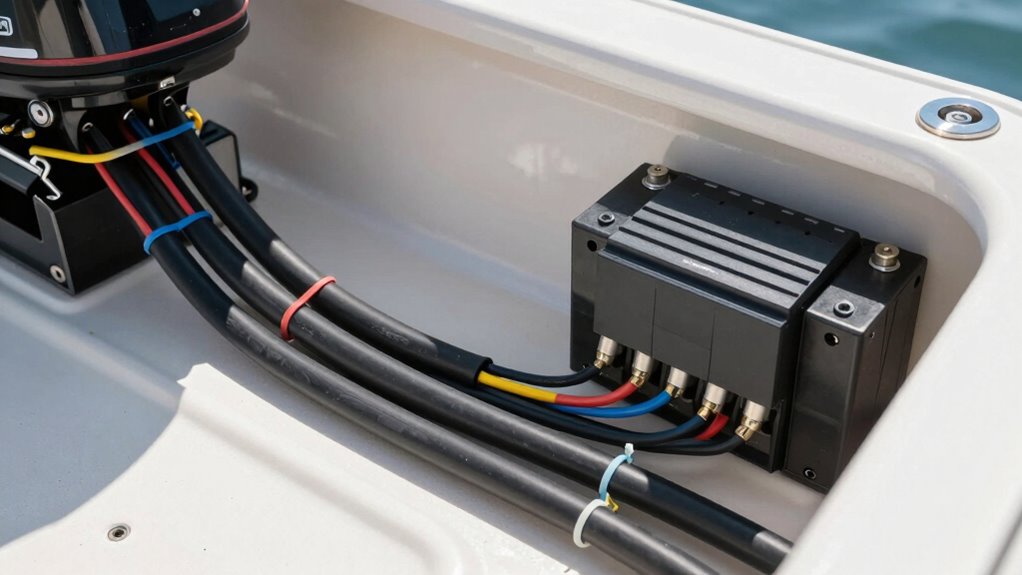
To guarantee your trolling motor works safely and efficiently, you need to connect the battery properly. Pay attention to proper battery placement, making sure it’s secure and easily accessible. Then, connect the cables correctly, use secure terminals, and install fuses to protect your system. Additionally, always wear appropriate safety gear when working with electrical components to prevent accidents. Proper wire gauge selection is essential to handle the current load and avoid overheating. Ensuring your system incorporates Free Floating wiring techniques can help prevent tangling and damage, contributing to a more reliable setup. Remember that using the correct electrical connections ensures a reliable and safe setup.
Proper Battery Placement
Proper battery placement is essential for guaranteeing your trolling motor functions safely and efficiently. You should position the battery close enough to the motor to minimize cable length, reducing voltage drop and improving performance. Place the battery on a stable, dry surface that prevents movement and protects it from water or excessive heat. Additionally, consider charger compatibility; the battery should be easily accessible for regular charging without disconnecting cables or moving the boat. Avoid placing the battery near sharp edges or areas prone to corrosion. Proper placement not only enhances safety but also prolongs the battery’s lifespan. Take your time to find a secure, well-ventilated spot that supports ideal electrical connections and ensures smooth operation of your trolling motor. Ensuring proper work-life harmony during maintenance can help prevent stress and promote safety. Remember that good cable management practices are key to preventing damage and ensuring reliable operation of your trolling motor. Proper battery securement is also crucial to prevent accidental disconnection or damage during transit or operation.
Correct Cable Connections
Connecting your battery and trolling motor correctly guarantees safe operation and peak performance. Start by ensuring the cable insulation is intact and free of damage to prevent shorts or sparks. Use high-quality terminal connectors designed for marine use, as they provide a secure and corrosion-resistant connection. Attach the positive cable to the battery’s positive terminal, then connect it to the motor’s positive terminal, ensuring the connector is tightly secured. Repeat this process with the negative cable, connecting it from the battery’s negative terminal to the motor’s negative terminal. Double-check all connections to confirm they’re snug and properly insulated. Properly connected cables minimize power loss and reduce the risk of electrical issues. Taking the time to verify all connections can help prevent electrical failures and ensure reliable operation. Ensuring your wiring is protected from environmental factors can help prevent corrosion and damage.
Secure Terminals and Fuses
Make certain your terminals are securely attached and protected with the right fuses to prevent electrical issues. Proper terminal connections ensure a stable, reliable flow of power between your battery and trolling motor. Use high-quality connectors and tighten them firmly to avoid loose connections that can cause sparks or voltage drops. When it comes to fuse selection, choose a fuse rated slightly above your motor’s maximum current draw to protect your wiring without unnecessary interruptions. Confirm that your fuse holder is compatible with your fuse type and size. Regularly inspect all terminal connections and fuses for corrosion or damage, replacing them if needed. Properly secured terminals and correctly selected fuses are essential for safe, efficient operation of your trolling motor.
Routing and Securing Wires to Prevent Damage and Interference
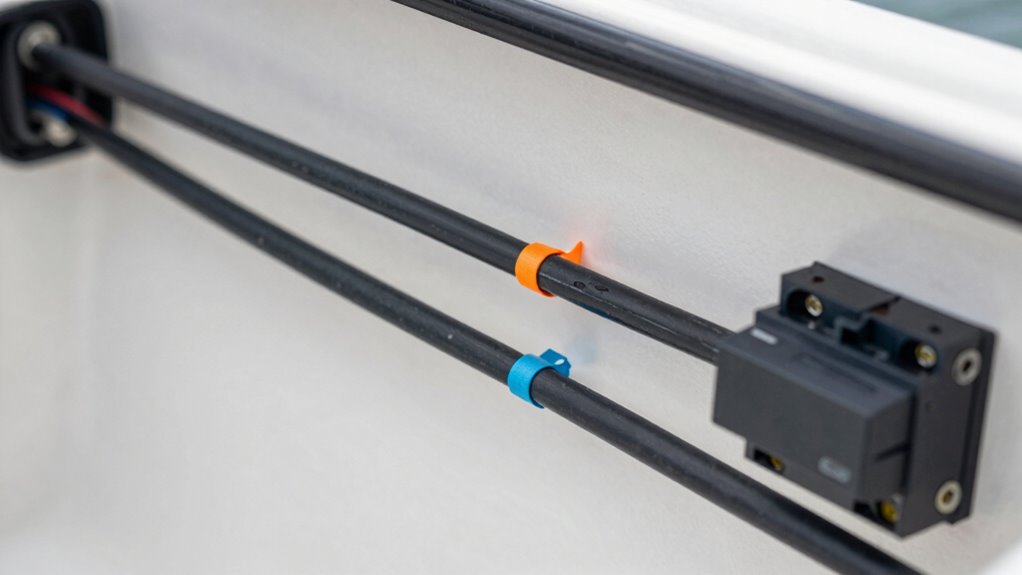
To keep your trolling motor functioning smoothly, it’s essential to route and secure the wires carefully to prevent damage and interference. Proper cable management ensures your wires stay protected and organized. First, avoid sharp edges that could cut through wire insulation by using grommets or protective tubing. Second, follow a clean, direct path to minimize tangles and movement. Third, secure wires with zip ties or clips at regular intervals to prevent sagging or accidental pulling. Fourth, keep wiring away from moving parts or areas with excessive vibration. This approach reduces wear and prevents interference with other boat components. Proper routing and securing not only protect your wires but also make troubleshooting easier in the future.
How to Test Your Wiring Before Going Out on the Water
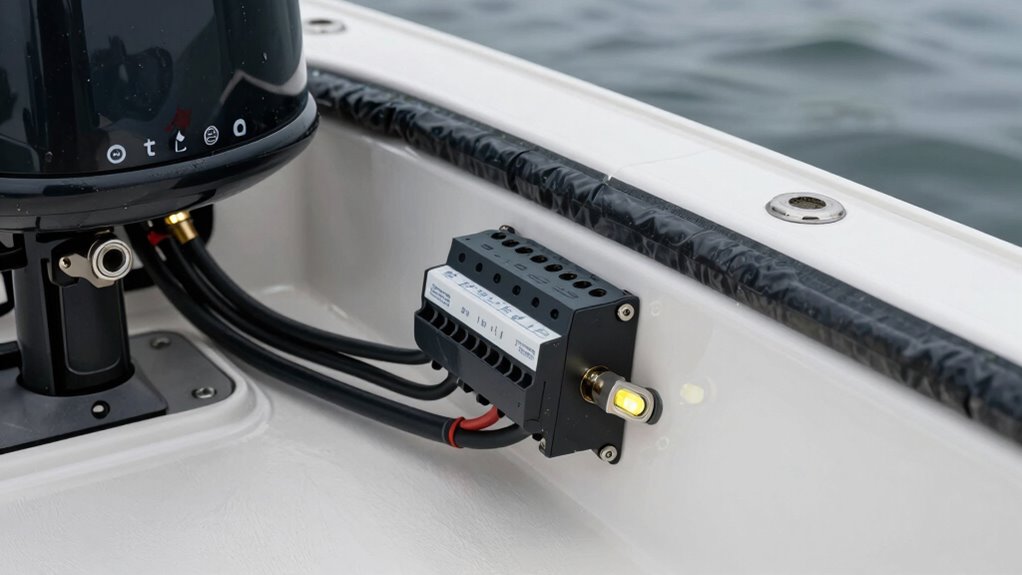
Before heading out on the water, it’s crucial to test your wiring to guarantee everything functions properly. Start by checking your battery safety; ensure all connections are tight, secure, and free of corrosion. Use a multimeter to verify the voltage at the battery and the trolling motor, confirming consistent power flow. Inspect your wiring for any signs of wear or damage that could cause shorts or failures. Make sure your circuit breaker trips correctly to prevent overloads. Proper testing helps prevent electrical issues that could leave you stranded. Additionally, clean and apply corrosion prevention products on terminals to prolong wiring life. Confirming your wiring setup before hitting the water ensures safe, reliable operation and peace of mind during your fishing trip.
Common Wiring Mistakes and How to Avoid Them
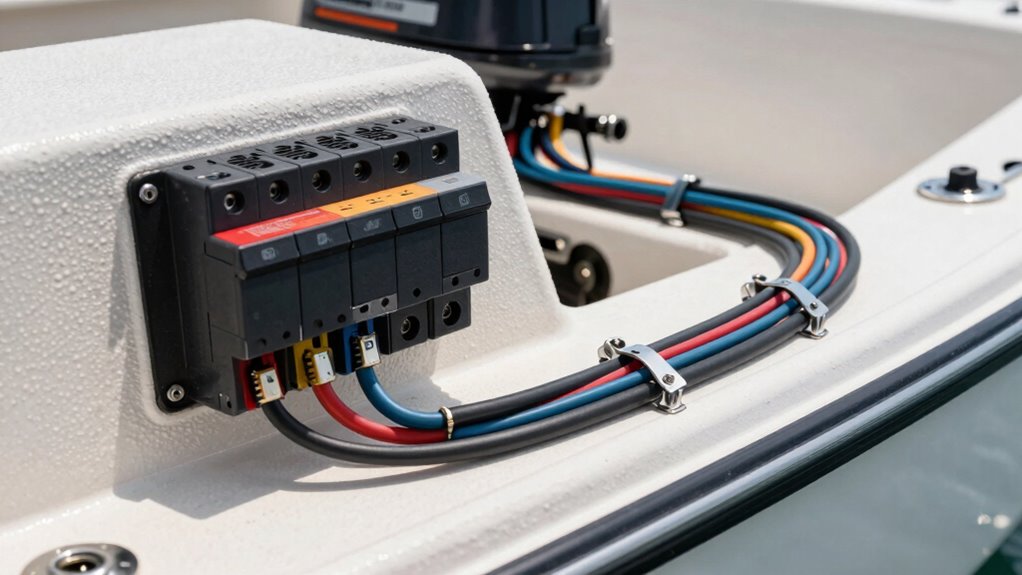
One of the most common wiring mistakes is using the wrong gauge wire for your setup, which can lead to voltage drops or overheating. To avoid issues, watch out for these mistakes:
Using the correct wire gauge prevents voltage drops and overheating.
- Incorrect grounding, which causes poor electrical flow and potential damage.
- Loose connections that increase resistance and can lead to intermittent power loss.
- Failing to secure wires properly, risking disconnections while on the water.
- Using damaged or frayed wires, which compromise safety and performance.
Always double-check your grounding points, ensure all connections are tight, and inspect wires for damage. Proper routing and secure connections prevent common issues that could otherwise cause your trolling motor to fail or pose safety risks.
Troubleshooting Wiring Issues for Long-Term Reliability
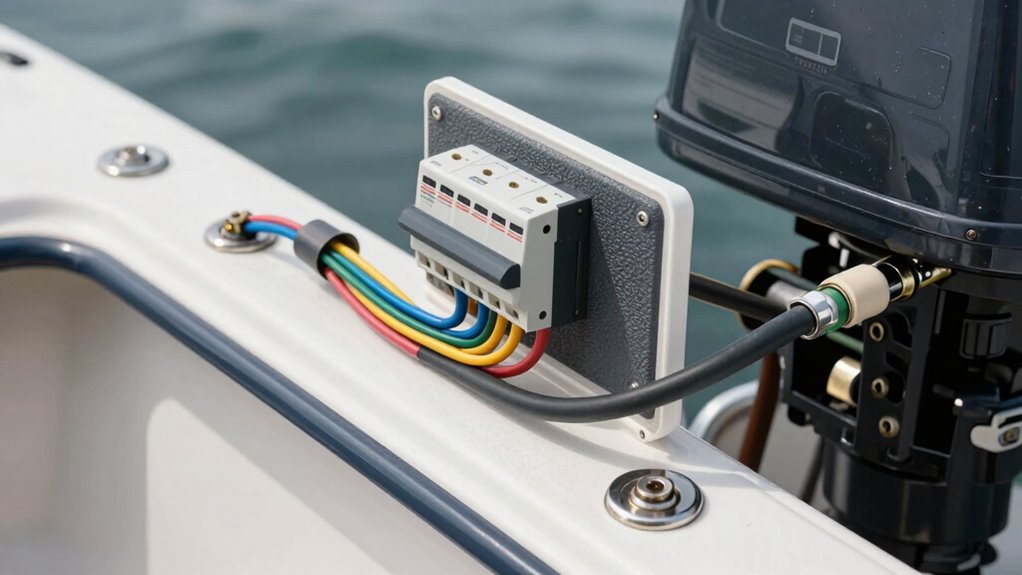
Regularly inspecting your wiring connections helps prevent long-term issues that can compromise your trolling motor’s performance. In marine electronics, loose or corroded connections can lead to voltage drops, reduced power, and eventual failure. To guarantee long-term reliability, perform routine electrical troubleshooting by checking all terminals, connectors, and wiring for corrosion, wear, or damage. Use a multimeter to test voltage and continuity, identifying any weak points. Keep wiring neatly routed and secured to minimize movement and physical stress. Replace any damaged cables promptly. Properly maintaining your wiring system helps avoid unexpected failures and extends your trolling motor’s lifespan. Consistent inspections and troubleshooting are essential steps for reliable, trouble-free operation on the water.
Frequently Asked Questions
Can I Wire a Trolling Motor Without Professional Help?
Yes, you can attempt DIY wiring for your trolling motor, but it’s not recommended without professional assistance. Handling electrical connections involves risks like shorts or damage if done improperly. If you have experience with electrical work, follow safety guidelines carefully. Otherwise, it’s best to seek professional help to guarantee safe, reliable wiring, proper breaker size, gauge, and routing, preventing potential hazards and ensuring your trolling motor functions correctly.
How Often Should I Inspect My Trolling Motor Wiring?
You should inspect your trolling motor wiring at least once a season, or more often if you frequently use your boat. Studies show that wire corrosion and voltage drops are common issues that can cause performance problems. Regular inspections help catch corrosion or loose connections early, ensuring peak power flow and preventing potential damage. Check for corrosion, secure connections, and signs of wear, especially around connectors and terminals.
What Safety Gear Is Recommended When Wiring a Trolling Motor?
When wiring your trolling motor, you should wear insulated gloves and safety goggles to protect against electrical shocks and sparks. Guarantee grounding safety by properly grounding the motor and checking for good electrical insulation on all wires. Using insulated tools helps prevent accidental shorts. Always work in a dry area, and disconnect power before starting. Following these safety measures minimizes risks and keeps your wiring process safe and effective.
Are Waterproof Connectors Necessary for Trolling Motor Wiring?
Waterproof connectors are essential for trolling motor wiring because they guarantee waterproofing and enhance wiring durability. Using these connectors prevents water from causing corrosion and electrical issues, especially in wet environments. They provide a secure, weather-resistant connection that lasts longer and reduces maintenance. Installing waterproof connectors is a smart step to protect your wiring and keep your trolling motor functioning reliably, no matter the fishing conditions.
How Do Temperature Changes Affect Trolling Motor Wiring Performance?
Temperature changes can substantially impact your trolling motor wiring, as fluctuations cause wire insulation to expand and contract, potentially leading to cracks or damage. This affects performance and increases the risk of corrosion. To prevent issues, make sure your wiring is rated for varying temperatures, and use corrosion prevention measures like waterproof connectors. Proper routing and insulation help maintain reliable performance, even with seasonal or daily temperature shifts.
Conclusion
Getting your trolling motor wiring right isn’t just about safety—it’s about ensuring smooth, trouble-free fishing trips. When you take the time to choose the right breaker, gauge your wiring properly, and secure everything neatly, you’ll likely find yourself on the water more often, enjoying peaceful mornings and unexpected catches. Coincidences happen when your gear works perfectly—so follow these tips, and your setup might just become the best part of your day, every time.