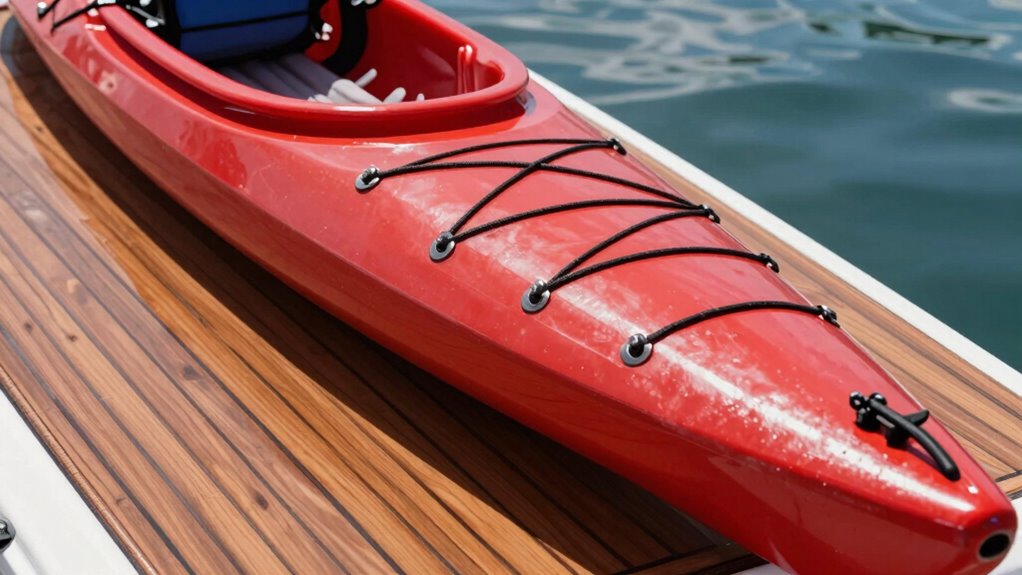

To secure your kayak on a boat without damage, use high-quality straps and proper attachment points, ensuring even pressure distribution. Place padding around hull edges and corners to prevent scratches and warping, and keep the kayak flat and centered for balance. Regularly check and tighten all straps during transit to prevent shifting. Avoid over-tightening or attaching straps to non-load-bearing areas. Want to learn more about perfect securing techniques? Keep going to master safe kayak transport on your boat.
Key Takeaways
- Use high-quality, load-rated straps attached to secure anchor points to prevent slipping or shifting during transit.
- Properly center and evenly distribute the kayak on the boat to maintain balance and reduce movement.
- Incorporate padding or foam blocks around contact points to protect against scratches and warping.
- Regularly inspect and tighten straps during the trip to ensure the kayak remains securely fastened.
- Avoid over-tightening straps to prevent damage while ensuring the kayak stays firmly in place.
kayak tie-down straps for boat transport
As an affiliate, we earn on qualifying purchases.
As an affiliate, we earn on qualifying purchases.
Why Securing Your Kayak Properly on a Boat Is Crucial
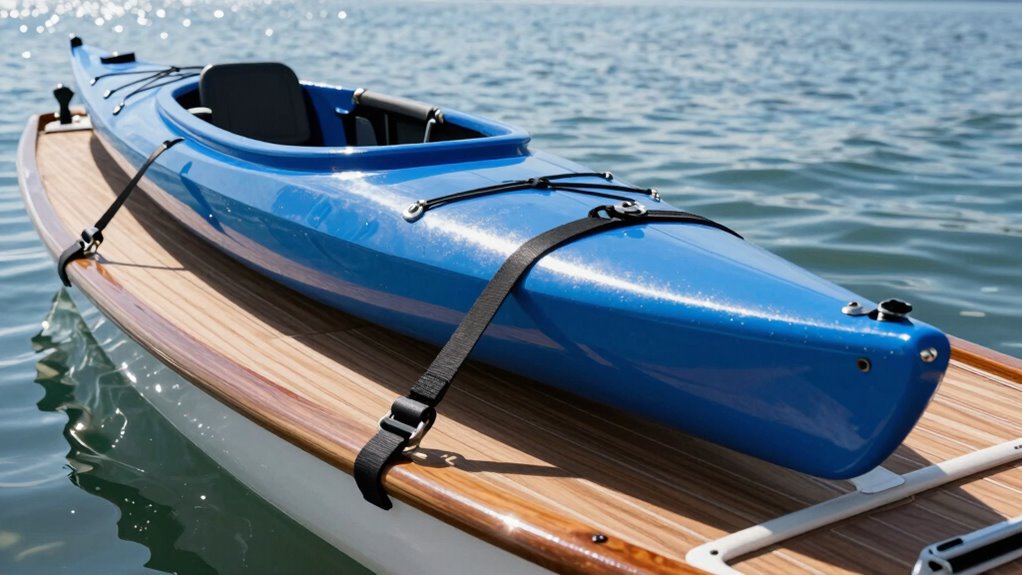
Securing your kayak properly on a boat is essential to prevent accidents and damage during transit. Weather conditions can change suddenly, and strong winds or choppy waters might cause your kayak to shift or fall overboard if it’s not secured correctly. Proper kayak maintenance before transport guarantees straps and tie-downs are in good condition, preventing breakage that could lead to accidents. When you secure your kayak firmly, you reduce the risk of it bouncing or sliding during movement, which can damage both the kayak and your boat. Additionally, a well-secured kayak minimizes the chance of losing it overboard, saving you time and money. Ensuring your kayak is correctly balanced helps maintain stability during transit and protects your gear. Using proper tie-down techniques can further ensure all straps stay tight and secure throughout the journey. Incorporating auditory feedback techniques can help you double-check that all tie-downs are properly tightened, further reducing risks. Regularly inspecting your gear and adjusting straps as needed can prevent shifting during transit, especially under changing conditions. Paying attention to transportation safety guidelines ensures a safer experience on the water and prolongs the lifespan of your equipment. Taking these precautions keeps your gear safe and ensures a smoother, worry-free journey to your next adventure.
As an affiliate, we earn on qualifying purchases.
How to Secure Your Kayak on a Boat in 5 Easy Steps
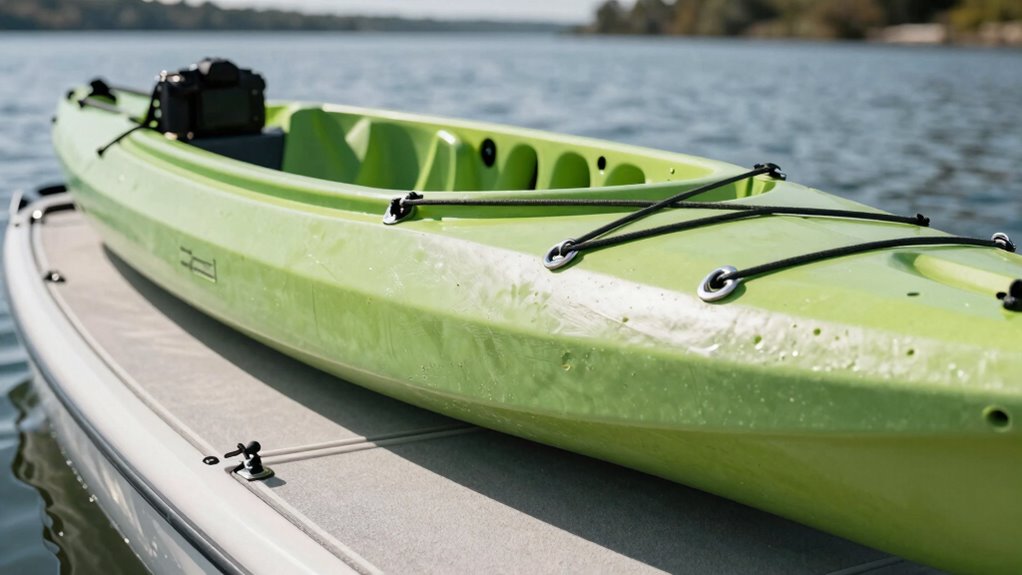
To keep your kayak secure on a boat, start by using proper straps that hold it firmly in place. Make sure you position the kayak correctly to prevent shifting during transit. Additionally, choosing high-quality car protection accessories can provide extra stability and safety during transport. Regularly inspecting your securing methods can prevent potential damage caused by heat buffering or other environmental factors. Incorporating golf heritage knowledge about careful handling and preservation can remind you to treat your equipment with care, minimizing risks during transport. Paying attention to monetization tips can help you budget for quality gear and accessories that enhance safety. Finally, check the security consistently to ensure everything stays tight and safe. safety precautions can further minimize the risk of damage during transport.
Use Proper Straps
Using proper straps is essential to keep your kayak stable and safe during transport. Make certain the straps are tight enough to maintain proper strap tension without over-tightening, which could damage your kayak. Secure the straps to strong anchor points on your boat, such as dedicated tie-down spots or reinforced sections. Proper tension prevents the kayak from shifting or bouncing, reducing the risk of damage. Use multiple straps if necessary to evenly distribute pressure and secure the kayak firmly in place. Double-check that the straps are snug but not overly tight, and that they’re not rubbing against sharp edges. proper strap tension is crucial for safe transport and preventing damage. Regular inspection of your straps and anchor points is also important to ensure ongoing safety throughout your trip, especially considering the market trends and insights that can influence your overall safety and security. Additionally, being aware of vetted safety practices can further enhance your confidence in securing your kayak effectively. It’s also helpful to familiarize yourself with safety protocols to adapt to different transport conditions and ensure your kayak remains secure during transit.
Position Kayak Correctly
Wondering how to guarantee your kayak stays put during transport? The key is positioning it correctly. Start by placing your kayak flat on the boat’s deck, ensuring it’s centered to promote even boat weight distribution. Secure the kayak on the sides or atop your vehicle’s roof racks, making sure it’s stable and not shifting side to side. Pay attention to your kayak paddle placement—store paddles separately or securely strapped to prevent movement. Adjust straps so the kayak is tightly held down without excessive pressure that could cause damage. Proper positioning prevents unnecessary movement during transit, reducing the risk of accidents. Additionally, inspecting your securing equipment before departure can help identify any potential issues. Checking your vehicle’s load capacity can prevent overloading and ensure safe transport. To further enhance stability, consider the appropriate tie-down techniques that are recommended for your type of vehicle and kayak. Ensuring your vehicle’s suspension system is in good condition can also contribute to a smoother ride. Remember to check home decor organization tips to keep your gear tidy and accessible. Keep the kayak balanced and secure, and your trip will be smoother and safer from start to finish.
Check Security Regularly
Regularly inspecting your kayak’s straps and mounting points during your trip is essential to guarantee everything stays secure. Consistent kayak maintenance ensures that straps remain tight and mounting points are intact, preventing unexpected shifts or damage. During boat storage, check for signs of wear or corrosion that could compromise security. Tighten loose straps and replace any frayed or damaged components immediately. Additionally, understanding regional flavors and chicory/coffee insights can inspire you to customize your gear for specific environments or conditions. Incorporating proper safety equipment into your routine can further enhance your security measures. Regularly reviewing bike generator efficiency can help you optimize your energy output when powering small devices, ensuring your setup remains reliable. By monitoring your kayak’s setup frequently, you reduce the risk of accidents and prolong the equipment’s lifespan. Remember, secure kayaking gear not only protects your kayak but also keeps your entire trip safe and hassle-free. Make this a routine part of your journey to maintain ideal security and avoid costly repairs or mishaps caused by overlooked issues.
high-quality kayak securing straps
As an affiliate, we earn on qualifying purchases.
As an affiliate, we earn on qualifying purchases.
Choosing the Best Equipment for Kayak Transport
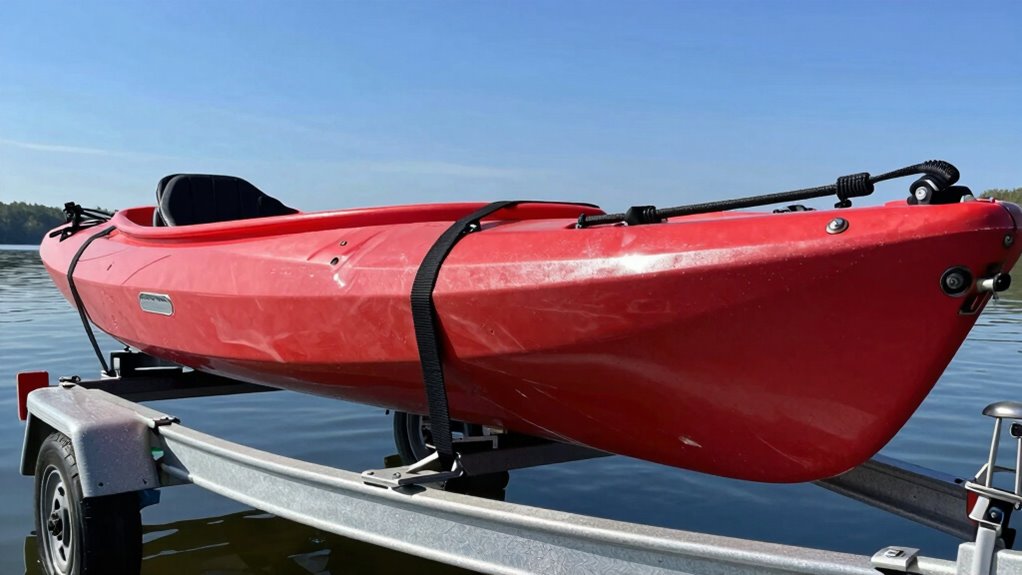
Choosing the right equipment for kayak transport is crucial to guarantee your boat stays secure and undamaged during travel. Start by selecting quality kayak accessories designed for stability and protection, like padded straps, foam blocks, or specialized cradles. These accessories help distribute weight evenly and prevent scratches or dents. Additionally, consider effective boat storage solutions, such as roof racks or trailer mounts, that are compatible with your vehicle and kayak size. Make sure the equipment is sturdy and easy to install, so you can quickly secure your kayak before hitting the road. Properly chosen accessories and storage options not only safeguard your kayak but also make the transport process smoother and stress-free. Invest in reliable gear to enjoy a safe, damage-free journey every time.
As an affiliate, we earn on qualifying purchases.
Common Mistakes When Tying Down Your Kayak (and How to Avoid Them)
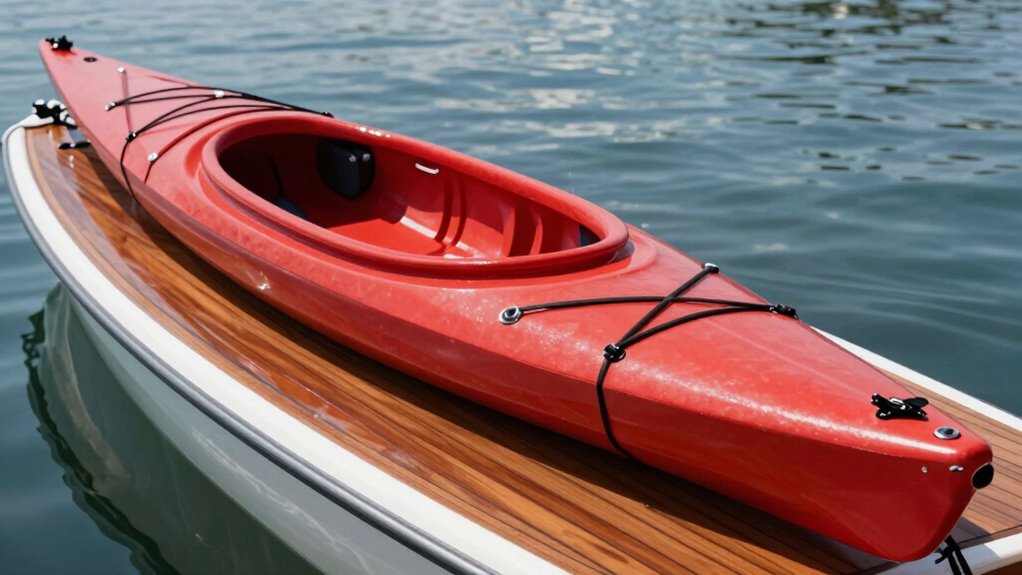
One common mistake when tying down your kayak is using inadequate or improperly placed straps, which can cause instability or damage during transit. Make sure your kayak accessories, like straps and padding, are secure and correctly positioned. Avoid attaching straps to boat anchor points that aren’t designed for load-bearing, as this can lead to slippage or damage. Properly distribute pressure to prevent warping or scratches. Here’s a visual to help:
| Mistake | Correct Practice |
|---|---|
| Using weak straps | Use high-quality, load-rated straps |
| Attaching to wrong anchor points | Use designated boat anchor points |
| Not tightening straps enough | Ensure straps are snug but not overly tight |
| Failing to pad contact areas | Add padding to prevent scratches |
| Unequal strap tension | Balance tension for stability |
Avoid these errors to keep your kayak secure and damage-free during transport.
Tips to Protect Your Kayak and Boat During Transit
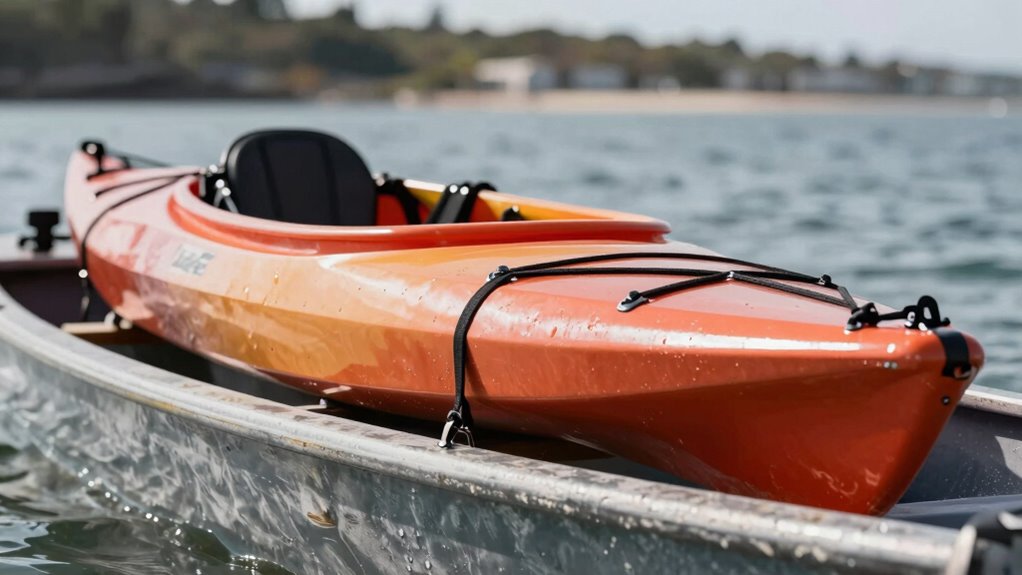
To keep your kayak and boat safe during transit, focus on proper securing techniques to prevent movement. Adding protective padding helps cushion them against bumps and vibrations. These simple steps can make a big difference in avoiding damage while on the road.
Proper Securing Techniques
Securing your kayak and boat properly is essential to prevent damage and guarantee safety during transit. Focus on proper kayak storage by placing straps and tie-downs at key points to keep your kayak stable. When handling your boat, ensure it’s centered and balanced on the vehicle or trailer, avoiding uneven weight distribution. Use high-quality ratchet straps or cam buckles to tighten the kayak securely without over-tightening, which could cause damage. Always check that the kayak is firmly held in place and that no movement occurs during transit. Keep your boat handling smooth by avoiding sudden stops or sharp turns that could loosen your straps. Proper securing techniques protect your kayak from shifting or falling, reducing the risk of damage and ensuring a safe journey.
Use Protective Padding
Using protective padding is a smart way to shield your kayak and boat from scratches, dents, and other damage during transit. Foam padding acts as a cushion, absorbing impact and preventing direct contact with hard surfaces or straps. Wrap your kayak with foam padding at key contact points, like the hull, edges, and corners, to reduce the risk of damage. Secure the padding firmly so it stays in place during transport. Impact protection ensures that any sudden jolts or bumps won’t transfer force directly to your boat’s surface. This simple step can save you from costly repairs and preserve your kayak’s condition. Always double-check that the padding is snug and covers all vulnerable areas before hitting the road.
Troubleshooting Your Kayak Securing System and Making Adjustments
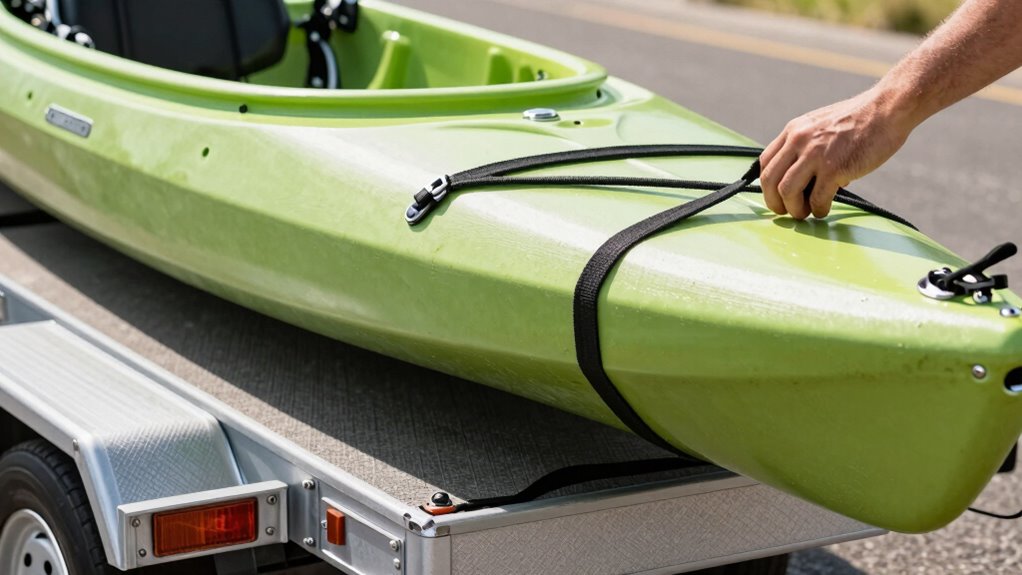
When your kayak isn’t staying firmly in place during transport, it’s essential to identify and fix the issues with your securing system. Start by checking your anchor points; ensure they’re sturdy and properly attached. Adjust the tie down tension—if it’s too loose, your kayak can shift, but if it’s too tight, it could cause damage. Inspect the straps for wear or damage and replace them if necessary. Make sure the kayak’s hull is evenly supported and not leaning to one side. Confirm that foam padding or protective gear isn’t interfering with the straps. Finally, test your setup by gently shaking the kayak to see if it moves; if it does, re-tighten and reposition your straps.
- Verify anchor points are secure
- Adjust tie down tension for proper snugness
- Replace worn straps or padding
- Check for even support on the hull
- Test stability before hitting the road
Frequently Asked Questions
How Do Weather Conditions Affect Kayak Securing Methods?
Weather conditions profoundly impact your kayak securing methods. Strong wind impact can cause your kayak to shift or become loose, so you need robust straps and tie-downs. Rain effects may make surfaces slippery, increasing the risk of slipping or damaging your kayak during securing. Always check weather forecasts before transport, tighten straps securely, and use additional padding if needed to prevent damage from changing weather conditions.
Can I Transport Multiple Kayaks Simultaneously?
You can transport multiple kayaks at once by using specialized rack systems designed for stability. For example, if you load two kayaks on a roof rack, make certain you secure them with proper tie-down techniques like cross straps and bow and stern lines. This prevents shifting during transit and protects your kayaks from damage. Always double-check that each kayak is tightly secured before hitting the road, especially in adverse weather conditions.
What Are the Signs of a Secured Kayak During Transit?
You’ll know your kayak is secured during transit if it doesn’t shift or rattle. Check for proper kayak padding to protect it from bumps, and confirm strap tension is firm but not overly tight to prevent damage. Look for even pressure on all contact points, and verify that straps are snug and knots are tight. When these signs are present, you can confidently say your kayak is safely secured.
How Often Should I Check Kayak Straps During a Trip?
Think of your kayak straps like a trusted friend holding your gear tight—you want to verify them regularly. During your trip, inspect your strapping techniques and kayak padding every 30 to 60 minutes, especially on rough roads. This guarantees everything stays secure and prevents damage. A quick glance can save you from surprises, just like a friend catching a fall before it happens. Stay vigilant, and your kayak will arrive safely.
Are There Specific Storage Considerations for Different Kayak Materials?
When it comes to kayak storage, you need to take into account material considerations. For plastic kayaks, store them in a cool, shaded area to prevent warping from UV rays. Fiberglass kayaks require careful handling to avoid cracks, so keep them padded and off rough surfaces. Inflatable kayaks should be stored in a dry, ventilated space, away from sharp objects. Proper storage protects your kayak’s integrity and extends its lifespan.
Conclusion
Think of securing your kayak like steering a ship through choppy seas—you want steady hands and a clear path. When you lock it down properly, it’s like anchoring in calm waters, ensuring a smooth voyage. Avoid common mistakes, choose the right gear, and make adjustments as needed. With each secure tie, you’re guiding your boat safely home, ready for the next adventure. Stay vigilant, and your kayak will arrive safe and sound, ready to glide once more.