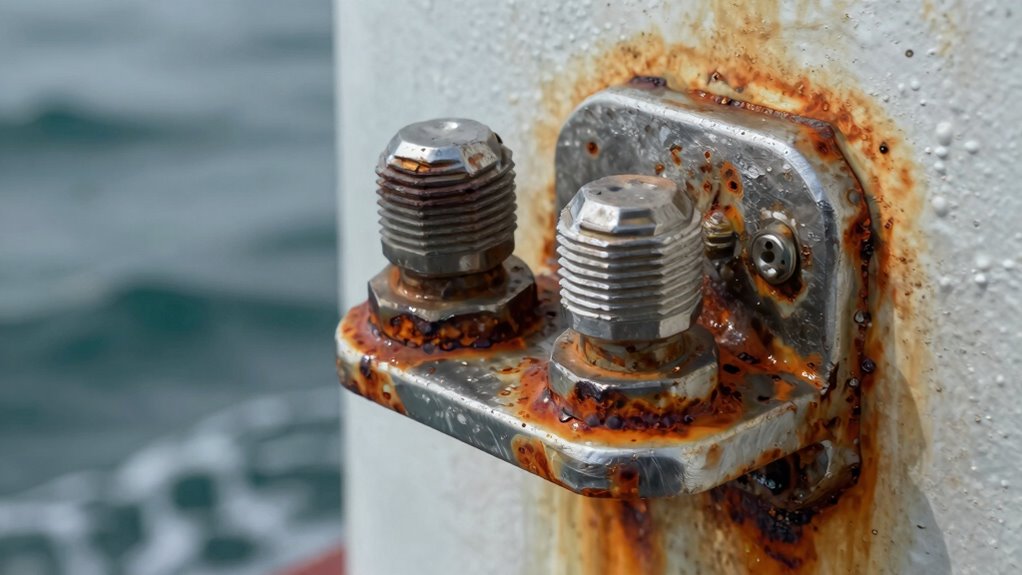
Stainless steel isn’t entirely rustproof in marine environments due to exposure to saltwater, humidity, and galvanic reactions with other metals. Factors like chlorides cause pitting and localized corrosion, especially when protective coatings get damaged. Proper maintenance, using resistant grades like 316 stainless steel, and avoiding dissimilar metals help reduce rusting. To keep your marine hardware in top condition, understanding how corrosion occurs and the best prevention practices can make a big difference.
Key Takeaways
- Stainless steel resists rust but can still corrode in harsh marine environments due to saltwater and humidity.
- Not all stainless steel grades are equally resistant; materials like 316 offer better corrosion protection.
- Galvanic reactions between dissimilar metals accelerate corrosion and rust formation on marine hardware.
- Protective coatings and regular maintenance are essential to prevent and control rust on stainless steel components.
- Alternative materials like titanium or bronze, combined with proper protective measures, can enhance marine hardware durability.

Pyntrax Bimini Top Deck Hinge – 316 Stainless Steel Marine Hardware with Quick-Release Pin & Ring – Easy Install Boat Bimini Top Parts for Pontoon, Fishing & Ski Boats (4 Pack)
【Precise Fit & Complete Hardware Kit】 Engineered with exact dimensions of 2.24" x 0.67" x 1.38" and 1.58"…
As an affiliate, we earn on qualifying purchases.
As an affiliate, we earn on qualifying purchases.
Is Stainless Steel Rustproof for Marine Use?
Stainless steel is often considered a corrosion-resistant material, but it’s not entirely rustproof when used in marine environments. The salty, humid conditions of the marine environment challenge the material’s resistance. While stainless steel offers good corrosion resistance, its effectiveness depends on material compatibility with marine conditions. Not all stainless steel grades perform equally; some are better suited for harsh environments, while others may corrode more quickly. You need to select the right grade, like 316 stainless steel, which contains molybdenum for added resistance. Even then, regular maintenance and cleaning are essential to prevent corrosion. Corrosion resistance is a vital factor to consider when selecting stainless steel for marine hardware, as understanding the specific demands of your marine environment helps you choose the right stainless steel type, ensuring durability and longevity of your hardware. Additionally, proper surface treatments can further enhance resistance to corrosion in marine settings.

Outmate Marine Grade 316 Stainless Steel Carabiners -2.76 inch Heavy Duty, Durable & Rust-Free Clips for Gym, Swing, Dog Leashes, Hammocks, Keychains, and More(316 M7,Pack of 6)
HEAVY DUTY & DURABLE: Crafted from marine grade 316 stainless steel, these carabiners are designed to withstand rust,…
As an affiliate, we earn on qualifying purchases.
As an affiliate, we earn on qualifying purchases.
What Causes Corrosion in Marine Stainless Steel?
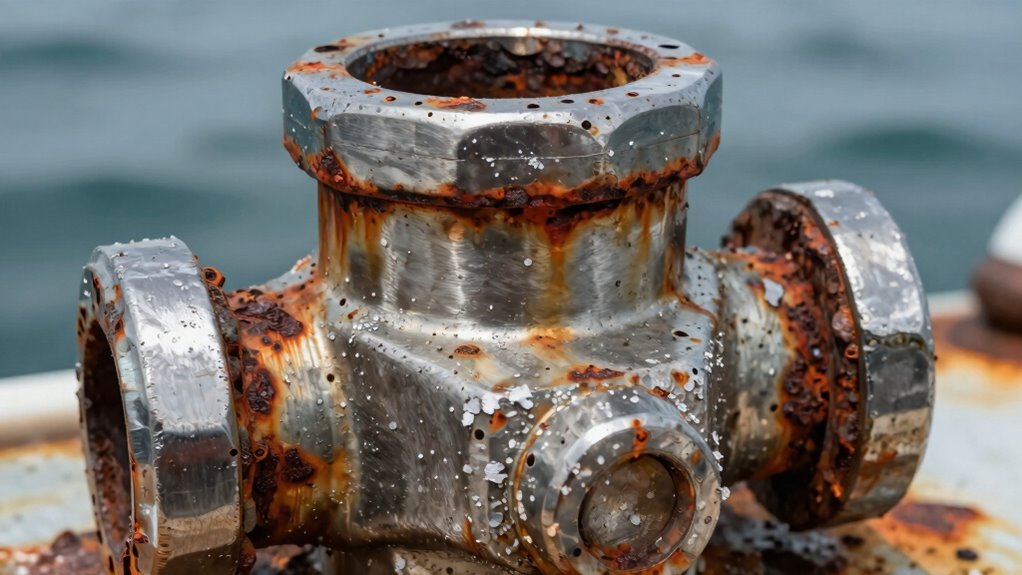
While stainless steel generally resists rust, marine environments introduce specific factors that can still cause corrosion. One major cause is galvanic reactions, which occur when stainless steel contacts dissimilar metals in saltwater, creating an electrical current that accelerates corrosion. Pitting corrosion is another concern; tiny, localized holes form on the surface, often triggered by chlorides in saltwater attacking the protective chromium oxide layer. These pits can expand quickly, weakening the material over time. Additionally, if protective coatings are damaged or compromised, the exposed steel becomes vulnerable to these corrosive processes. Recognizing the importance of material selection and compatibility can help prevent some of these issues. Proper corrosion resistance treatments and protective coatings can significantly extend the lifespan of stainless steel components in harsh environments. Understanding these mechanisms helps you recognize that, despite its resilience, stainless steel isn’t completely immune to marine corrosion. Regular inspections and maintenance practices are essential to minimize these risks.
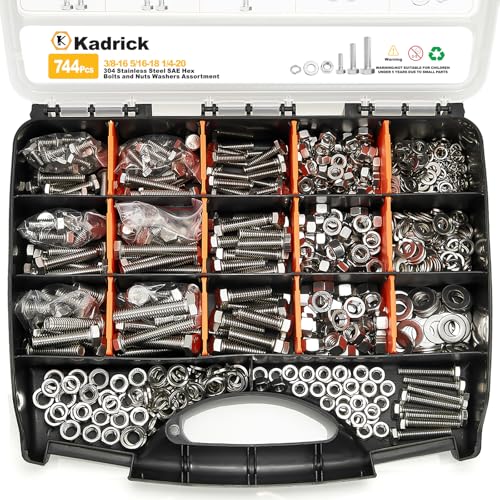
Kadrick 744Pcs 18-8(304) Stainless Steel Hex Bolts Assortment,1/4-20 5/16-18 3/8-16 Heavy Duty Bolts and Nuts Kit, Assorted SAE Bolts Nuts Flat&Lock Washers,Lenth Form 1/2''-2''
Comprehensive 744-Piece Set: The Kadrick 744-piece bolt assortment includes a variety of 186 heavy-duty bolts, along with hex…
As an affiliate, we earn on qualifying purchases.
As an affiliate, we earn on qualifying purchases.
Which Factors Speed Up Rusting in Saltwater?
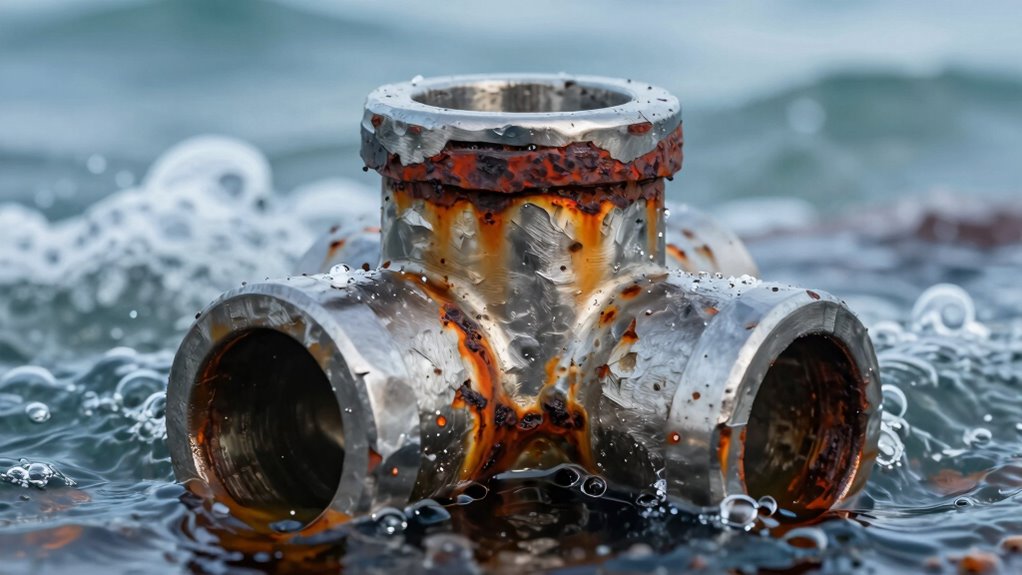
Several factors can accelerate rusting in saltwater, making marine corrosion more severe. Galvanic reactions occur when different metals come into contact, creating electrical currents that speed up oxidation. For example, attaching dissimilar metals without proper insulation promotes corrosion. Pollution buildup, such as oil, chemicals, or organic matter, also plays a significant role. These contaminants trap moisture and create a localized environment that fosters rust. Additionally, higher temperatures and increased salinity can intensify corrosion rates. The presence of oxygen, combined with these factors, further accelerates rust formation. Understanding how galvanic reactions and pollution buildup influence corrosion helps you take better preventative measures, ensuring your marine hardware lasts longer and maintains its strength despite harsh saltwater conditions. Proper exfoliation of surfaces can also help remove corrosive deposits and protect metal integrity. Regular maintenance and the use of corrosion-resistant alloys are essential in corrosion prevention strategies to extend the lifespan of marine equipment. Moreover, employing protective coatings can serve as an additional barrier against corrosive elements, further enhancing durability. Recognizing the importance of metal compatibility can help prevent galvanic corrosion from occurring in the first place. To further combat corrosion, selecting materials with inherent corrosion resistance can significantly reduce long-term maintenance efforts.

Marine 31 Stainless Steel Liquid Sealant | Clear Finish for Enhanced Protection | Prevents Water Spots & Streaks | Easy Application | M31-630 | 16 fl. oz.
FOR METAL SURFACES: Stainless steel liquid sealant works on stainless steel, chrome, aluminum clear coated surfaces and diamond…
As an affiliate, we earn on qualifying purchases.
As an affiliate, we earn on qualifying purchases.
How Can You Maintain Your Marine Stainless Steel Hardware?
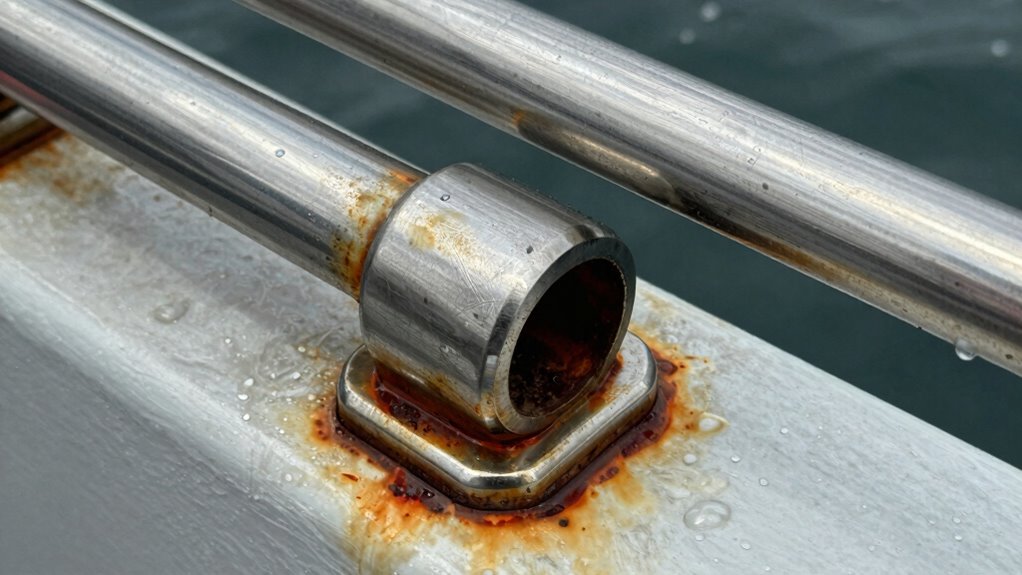
To keep your marine stainless steel hardware in top shape, you need to follow effective corrosion prevention strategies and regular maintenance practices. Consistently cleaning and inspecting your hardware helps catch issues early and prevents rust from forming. By staying proactive, you can extend the lifespan of your equipment and make certain it performs reliably. Additionally, understanding the filtration/suction basics can help in selecting the right cleaning tools and methods to protect your hardware from corrosive elements. Incorporating corrosion-resistant materials into your maintenance routine can further enhance durability and prevent deterioration over time. Recognizing the importance of marine environment factors can also guide you in customizing your care routine to combat specific sources of corrosion. Being aware of global chaos incidents like outages underscores the need for backup plans and resilient materials to ensure continued performance. Proper metal finishing techniques are essential in creating protective barriers against harsh marine conditions.
Corrosion Prevention Strategies
Maintaining your marine stainless steel hardware to resist corrosion requires regular care and proactive measures. One effective strategy is to prevent galvanic corrosion by ensuring dissimilar metals are isolated with non-conductive materials. Using zinc or other sacrificial anodes can also help protect stainless steel from corrosive elements. Applying protective coatings, such as specialized marine-grade paints or sealants, creates a barrier against moisture and salt exposure, considerably reducing corrosion risks. Regularly inspecting and repairing damaged coatings keeps your hardware protected. Additionally, avoiding contact with corrosive substances or environments when possible can extend the lifespan of your stainless steel. Incorporating balanced hardware, which distributes stress evenly, can further reduce corrosion-related wear. By combining these preventative measures, you can maintain the integrity of your marine hardware and minimize the effects of corrosion over time.
Regular Maintenance Practices
Regular upkeep of your marine stainless steel hardware helps prevent corrosion and extends its lifespan. To do this effectively, follow these practices:
- Regularly clean your hardware with fresh water to remove salt and debris, reducing the risk of galvanic corrosion.
- Inspect for signs of corrosion or damage, addressing issues early before they worsen.
- Apply protective coatings designed for marine environments to shield against moisture and salt exposure.
- Avoid direct contact between dissimilar metals, which can accelerate galvanic corrosion, by using insulators or compatible materials.
- Conduct periodic appliance maintenance plans to ensure all components are functioning properly and to catch potential issues early.
- Be aware of corrosion-resistant materials and consider upgrading parts that are prone to corrosion for better longevity.
- Recognize the importance of preventative maintenance in minimizing long-term damage and safeguarding your hardware investment. Proper corrosion management techniques can significantly extend the service life of your stainless steel hardware. Additionally, understanding the corrosion process helps in implementing effective strategies to combat deterioration.
Consistent maintenance keeps your hardware in top condition, minimizes corrosion risks, and guarantees your stainless steel remains as corrosion-resistant as possible.
What Are the Best Alternatives to Stainless Steel for Marine Hardware?
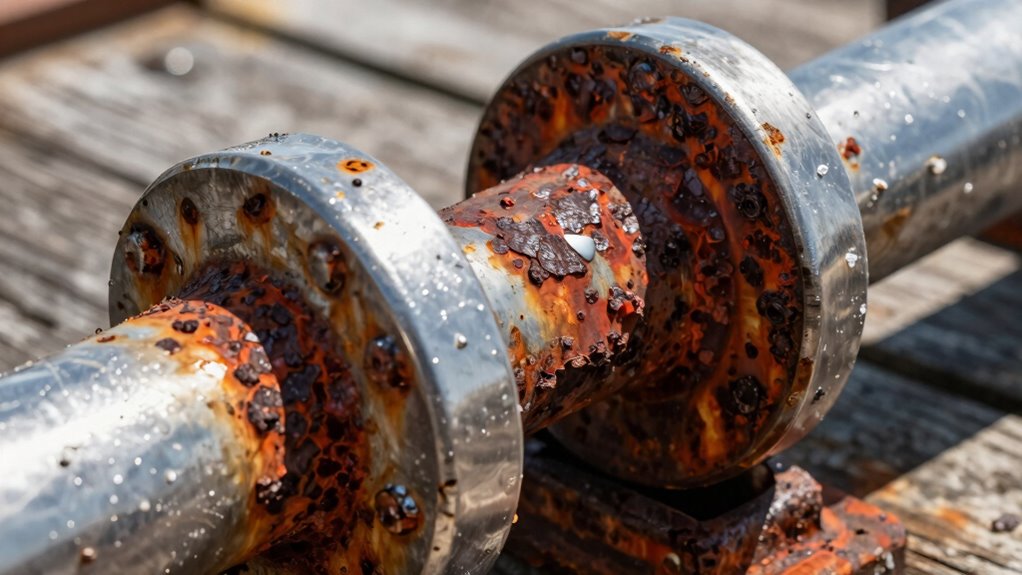
If stainless steel doesn’t meet your needs for marine hardware, several other materials can offer excellent corrosion resistance and durability. You might consider alternative alloys like titanium or bronze, which resist corrosion in harsh environments. Marine coatings also provide a protective barrier, extending the lifespan of hardware made from less resistant materials. Here’s a quick comparison:
| Material | Key Benefits |
|---|---|
| Titanium | Highly corrosion-resistant, lightweight |
| Bronze | Good seawater corrosion resistance |
| Aluminum alloys | Lightweight, often coated for extra protection |
These options, combined with specialized marine coatings, help you choose hardware that withstands marine conditions better than standard stainless steel.
How Do You Spot and Treat Corrosion on Marine Gear?
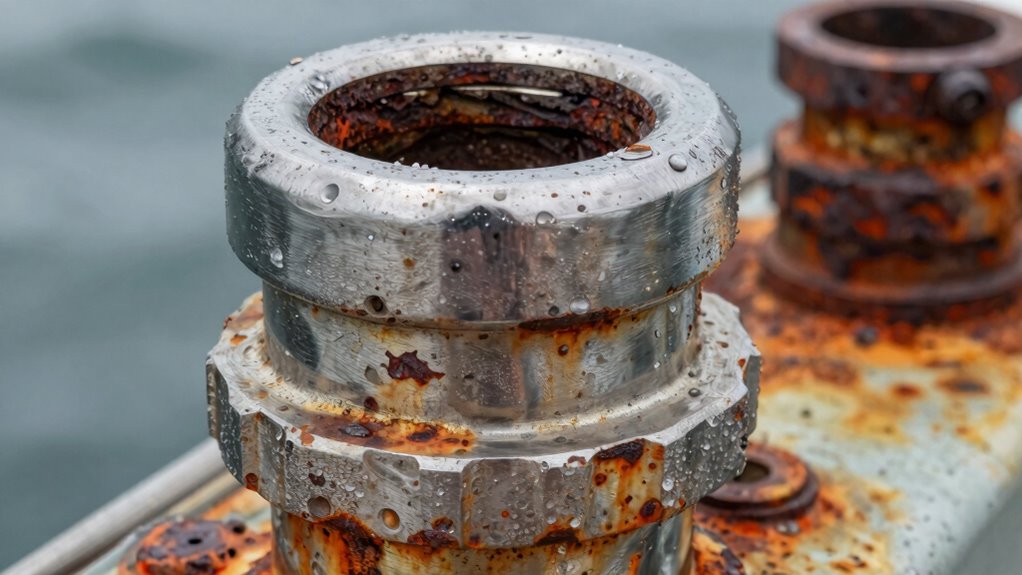
Corrosion on marine gear can often be identified through visible signs like rust, discoloration, or pitting on metal surfaces. To spot issues quickly, check for uneven textures or faded finishes that suggest deterioration. Sound vibrations are believed to enhance cellular regeneration and overall health, which can be impacted by corrosion. Treating corrosion involves cleaning and protective measures to preserve your hardware design’s integrity. Keep these steps in mind:
- Inspect regularly, especially in high-moisture areas of your marine ecosystem.
- Use a wire brush or abrasive pad to remove surface rust.
- Apply corrosion inhibitors or protective coatings designed for marine environments.
- Replace severely corroded parts to prevent further damage and maintain hardware strength.
- Understanding the early warning signs of corrosion can help you address issues before they become severe.
Frequently Asked Questions
Are All Grades of Stainless Steel Equally Resistant to Marine Corrosion?
Not all grades of stainless steel offer the same marine corrosion resistance. You should look for marine-grade stainless steel, like 316, which is specifically designed for harsh environments. In a stainless comparison, 316 outperforms lower grades such as 304 because it contains molybdenum, enhancing its resistance to saltwater and corrosion. So, choosing the right grade is vital for durability and longevity in marine conditions.
How Does Temperature Fluctuation Affect Stainless Steel Corrosion Rates?
Sure, temperature fluctuations might seem harmless, but they actually speed up corrosion because of thermal expansion and contraction. As stainless steel heats and cools, it creates tiny cracks that let oxygen attack, reducing oxidation resistance. Ironically, your stainless steel hardware isn’t immune to this dance of heat and cold. So, keep an eye on temperature changes, or you might just find your stainless steel more vulnerable than you thought.
Can Coatings or Sealants Prevent Rust on Marine Stainless Steel?
Yes, coatings and sealants can help prevent rust on marine stainless steel by providing a protective barrier against moisture and salt. Applying high-quality protective coatings enhances sealant effectiveness, reducing corrosion risks. Regular maintenance and reapplication ensure these barriers remain intact. While they don’t make stainless steel completely rustproof, proper coatings substantially extend its lifespan in harsh marine environments, keeping your hardware looking and functioning like new.
What Are the Environmental Impacts of Using Alternative Materials?
Using eco-friendly materials can reduce environmental impacts, but you should consider their biodiversity impacts and sustainability. These alternatives often have lower carbon footprints and fewer toxic chemicals, helping protect marine ecosystems. However, some materials may still affect local biodiversity if not sourced responsibly or if they degrade into harmful substances. You need to weigh the environmental benefits against potential ecological risks to choose the most sustainable option for marine hardware.
How Long Does Stainless Steel Typically Last in Harsh Marine Environments?
Stainless steel in harsh marine environments typically lasts 10 to 30 years, but this depends on conditions like marine growth and pitting corrosion. You’ll notice that aggressive saltwater and biological buildup accelerate deterioration. Regular cleaning and choosing the right grade of stainless steel can extend its lifespan. Keep in mind, even the best stainless steel isn’t immune to corrosion, so proactive maintenance is key to ensuring longevity.
Conclusion
Think of your marine hardware as a brave ship sailing through treacherous waters. Even the strongest steel can face storms—corrosion just waits for the right conditions to strike. Staying vigilant, maintaining your gear, and choosing the right materials are your navigational tools. With care, you’ll keep your vessel’s armor shining and seaworthy, steering clear of rust’s hidden reefs. Your commitment turns your boat into a steadfast vessel, ready to conquer any ocean adventure.