
TL;DR
Marine waterproof Bluetooth speakers are made for wet, exposed conditions, but the word “marine” alone does not certify protection from water, salt, sun, or corrosion. Check the IP rating and the manufacturer’s stated salt and UV resistance, then match the speaker’s mounting, power, sound coverage, and controls to your boat.
A speaker can survive a splash and still struggle with a season of salt spray, baking sun, and boat vibration. That difference matters when you want music on deck without turning a relaxing afternoon into a search for a replacement.

Get sports gear delivered free with Prime
- Fast, free delivery on millions of items
- Prime Video, Amazon Music and more included
- Member-only deals all year
Marine waterproof Bluetooth speakers are built for boating, but “marine” is not one universal certification. In this guide, you’ll learn how to read water ratings, compare portable and installed models, plan for sound and battery life, and care for a speaker after a salty day. You’ll also see where a regular waterproof speaker may be enough—and where repeated exposure calls for more specific protection.
Check the IP rating and separate claims for salt, UV, vibration, and corrosion; “marine” alone is not a universal certification.
Choose portable or fixed speakers based on how you use the boat, and verify mounting dimensions, wiring, and power for installed models.
Plan for open-air sound loss, engine noise, Bluetooth obstacles, and battery runtime at your usual listening volume.
Keep salt residue off the speaker when the manufacturer permits rinsing, dry it before charging, and inspect seals and connectors regularly.
What Marine Speakers Are Built to Handle
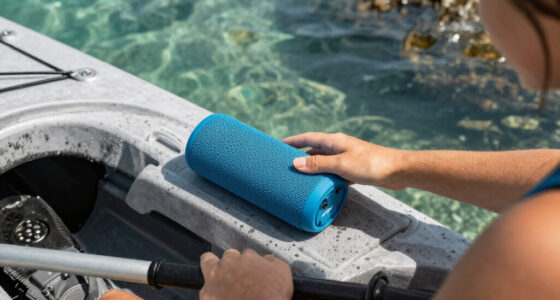
Marine Bluetooth speakers are speakers intended for boats and other wet, exposed places, with designs that may address water, salt spray, sunlight, vibration, and temperature changes. The exact protections depend on the model, so the label “marine” can’t tell you by itself how a speaker will hold up on your boat. Read the product specifications for the conditions the manufacturer actually names.
Think of those protections as layers in a rain jacket: a waterproof outer shell helps in a downpour, but it doesn’t tell you how well the cuffs, seams, and zipper handle wear. In the same way, a water resistance claim says little about UV exposure or metal corrosion unless the manufacturer addresses those points too. For example, a portable speaker used for occasional freshwater trips faces a different workload than one fixed beside a saltwater helm all summer.
Compared with ordinary portable speakers, marine-oriented products may use materials and construction better suited to a boat’s conditions. Still, a marine label is not proof of every protection you need. Look for specific statements about salt, UV, vibration, and corrosion, and check whether the model is portable or intended for permanent installation.
That detail helps you match the purchase to your real routine. If the speaker lives in a dry cabin between weekend outings, your needs differ from those of a unit mounted on an open console. The first useful question is not “Is it marine?” but “What exposure does the manufacturer say it handles?”
Popular right now

Ninja Foodi Smart Dual Heat Air Fry Oven, 13-in-1, Silver, SP351

Vitamix 5-Speed Immersion Blender, 625-Watt, Stainless Steel/Black

KitchenAid Classic Series 4.5-Quart Tilt-Head Stand Mixer, Onyx Black
As an affiliate, we earn on qualifying purchases.
Read the IP Rating Before Trusting a Waterproof Claim
An IP rating describes tested protection against specific kinds of water or dust exposure; it does not certify a speaker for every marine condition. IPX7 generally means a device can withstand temporary immersion under specified test conditions, while IPX5 and IPX6 describe resistance to water jets at defined pressures. The “X” means the rating does not state dust protection.
That distinction matters if a speaker takes a wave over the bow. An IPX7 rating gives useful information about a defined immersion test, but it does not mean you can leave the speaker underwater or assume its charging port resists salt corrosion. Salt, sunlight, and aging seals are separate concerns. As [1] notes, buyers should look beyond the “marine” label and check the specifications.
Picture a speaker clipped near the stern on a small boat: spray hits the casing, sun warms the controls, and a wet hand reaches for the volume button. The IP rating helps you judge one part of that scene—water exposure—while the manufacturer’s notes on UV and corrosion help with the rest. For a mounted speaker, confirm that the rating applies to the complete unit and the installation conditions.
IPX7 is not a promise of unlimited marine protection. Check the rated test conditions and the manufacturer’s instructions, especially for saltwater use and charging.
Use ratings as evidence, not as a shortcut. If the listing gives only a vague waterproof claim with no rating or care guidance, you have less information to judge how it will perform after repeated trips.
Choose a Portable Speaker or a Fixed Installation
Portable speakers suit flexible listening, while fixed marine speakers suit planned, mounted coverage. A portable model can move from the cockpit to the beach, while an installed unit can stay put and connect with the boat’s audio system. The right choice depends on how often you use it, where you want sound, and whether you’re ready to check mounting and wiring details.
Say you take a small fishing boat out on weekends and want music only during lunch at anchor. A portable speaker may be easy to stow and recharge at home. On a larger boat where people gather in different seating areas, several installed speakers can spread sound more evenly, though they need proper cutout dimensions, mounting depth, wiring, and a compatible power setup.
Fixed models are not all wired the same way. Some are passive and need an amplifier or stereo; powered models include amplification. Portable speakers don’t need a boat amplifier, but you should still check charging options and advertised battery runtime. Actual battery life can change with volume, Bluetooth connection, and features such as lighting or hands-free calling.
Installation is part of the buying decision, not an afterthought. Before ordering a mounted unit, measure the cutout and depth, inspect the wiring route, and check that the boat’s power system matches the speaker’s requirements. A speaker that sounds right on paper can become a frustrating project if it doesn’t fit the console.
Recent models may add USB-C charging, app controls, longer advertised runtimes, or multi-speaker pairing. These features vary by product, and synchronized playback may work only with compatible speakers from the same brand or family. Verify compatibility with the manufacturer before you plan a whole-boat setup.
Get Clear Sound Across an Open, Noisy Boat
Clear boat audio depends on speaker placement, coverage, and noise as much as on the product’s headline volume. Open air doesn’t reflect sound like a living room, and engine noise can swallow quiet music. Speaker size, sensitivity, distance, and the number of speakers all affect how loud and clear the music seems where you sit.
For example, one small speaker tucked under a seat may sound pleasant at the helm but disappear at the bow once the engine starts. Moving it into the open can help, but you’ll want to secure it where it won’t slide or block movement. On a larger boat, multiple compatible speakers may distribute sound more evenly than one loud unit in a corner.
Bluetooth reliability also depends on the boat’s layout. A short, unobstructed distance between your phone and speaker tends to work better than placing the phone below deck behind metal surfaces. Rated range is only a guide; people, obstacles, and interference can reduce it. If you need playback from the helm, test the connection from the helm rather than relying on the advertised range alone.
Check for auxiliary inputs, USB playback, or integration with the boat stereo if Bluetooth alone doesn’t fit your routine. Controls matter too: large buttons and clear indicators are easier to use on a moving boat, especially when your hands are wet. Keep the phone and speaker controls within safe reach so you don’t have to lean across the cockpit while underway.
Set the volume so your crew can still hear each other, alarms, and nearby vessels. A clear conversation is part of good boat awareness.
Use This Five-Step Check Before You Buy
A quick five-step check can reveal whether a speaker fits your boat and routine. Compare its documented protections, installation needs, power, coverage, and care instructions before you commit. Each step answers a practical question that a product photo or catchy listing title can leave unanswered.
- Match exposure: Decide whether the speaker will face occasional splashes or repeated salt spray, sun, and vibration. Look for manufacturer statements that match those conditions.
- Read the rating: Check the IP rating and what it covers. Treat IPX7 as a defined temporary immersion test, not a blanket marine guarantee.
- Confirm the fit: For installed speakers, compare cutout size, mounting depth, wiring, and boat power requirements. For portable models, check where you’ll secure and store them.
- Plan for sound and power: Think about seating layout, engine noise, Bluetooth distance, battery runtime, and whether you need an amplifier or stereo connection.
- Check daily use: Look at button size, status indicators, charging instructions, covered connectors, and cleaning guidance.
Imagine two choices for a family’s open runabout: one speaker has an attractive long battery claim but no clear salt guidance; the other gives a shorter estimate and specific care instructions for salt residue. If the speaker will spend the day near the stern, the second listing gives you more to judge. You can still choose the first, but you’ll know which questions to ask before relying on it.
Advertised runtime is an estimate, not a promise for every outing. High volume and extra features can draw more power, so leave a buffer for the return trip if you rely on a portable speaker. For a fixed installation, ask a qualified installer if you’re unsure about the boat’s wiring or electrical load.
For beginners handling wiring or cutting a mounting opening, professional marine audio installation can help prevent damage to the boat and its electrical system. The best plan balances sound and convenience with a setup you can use safely.
Rinse Off Salt and Protect the Charging Port
Freshwater rinsing, careful drying, and regular inspection help limit salt buildup, when the manufacturer permits those steps. Salt residue can cling to connectors and metal parts, while wet charging ports can cause damage even on water-resistant speakers. Follow the model’s care instructions rather than assuming its water rating makes every cleaning method safe.
After a breezy afternoon on the water, you might see a pale film on the speaker grille or around a connector cover. If the manual allows it, rinse away salt with fresh water, then dry the unit before charging. Keep port covers closed during use and look for cracked seals, loose covers, or corrosion before the next trip.
Water resistance can decline as a speaker ages or gets damaged. A drop against the deck or a worn seal can change how well it handles exposure, even if the model once passed a test. Store the speaker out of harsh sun when you’re not using it, and don’t charge it while the port is wet unless the manufacturer specifically says the model supports that.
Care also protects sound and usability. Salt on buttons can make them sticky; residue around the grille can dull a speaker’s appearance. A short rinse and dry routine after saltwater outings is easier than waiting until connectors look rough or buttons stop responding.
These habits won’t make an ordinary speaker marine-grade or repair damaged seals. They do help you get more from the protections your model actually has and spot trouble before the next outing.
Frequently Asked Questions
What does “marine grade” mean for a Bluetooth speaker?
“Marine grade” has no single meaning that applies to every speaker. It usually signals a design intended for marine conditions, but the specific water, UV, salt, and corrosion protections vary. Read the product documentation to see which conditions the manufacturer addresses.
Can I use a regular waterproof Bluetooth speaker on a boat?
Often, yes, for occasional use. A regular waterproof model may suit a speaker that you bring aboard for a short outing and store afterward. If it will stay mounted or face frequent sun, salt spray, and vibration, a marine-oriented model with specific protection claims may fit better.
Is an IPX7 speaker safe to use on a boat?
IPX7 describes temporary immersion under specified test conditions. It does not by itself prove resistance to salt, sunlight, corrosion, or continuous submersion. Check the manufacturer’s instructions and other protection claims before exposing it to regular marine use.
Can I charge a waterproof speaker while it is wet?
Usually, dry the speaker before charging. Water in a charging port can damage the unit even when its casing has a water resistance rating. Follow the model’s instructions and check that the port and cover are dry.
How many speakers do I need on my boat?
The right number depends on boat size, seating, and noise. One portable speaker may work for a small boat or a single seating area, while a larger layout may need multiple speakers for even coverage. Placement can matter as much as the count, so consider where people sit and how engine noise changes what they hear.
Will Bluetooth work across the whole boat?
Not always; obstacles can reduce Bluetooth range. Metal structures, people, and the boat’s layout may weaken the connection between your phone and speaker. Check the rated range, then test from the location where you’ll actually control the music.
Do installed marine speakers need an amplifier?
Some installed speakers need an amplifier or stereo, while powered models include amplification. Portable models do not need a boat amplifier. Check the speaker type, wiring, and boat power requirements before installing a fixed system.
Can I pair marine speakers from different brands?
Phones can commonly pair with Bluetooth speakers, but synchronized playback across speakers depends on the models. Multi-speaker pairing may work only within a particular brand or product family. Check compatibility details with the manufacturer before buying speakers for a shared setup.
Conclusion
Match the speaker’s documented protections to the exposure your boat actually creates. Check water, salt, and UV claims; confirm the fit and power; and think about where people will listen before you choose a model. Those few checks can spare you a speaker that looks rugged at the dock but struggles after repeated days in sun and spray.
After each saltwater trip, follow the care instructions, dry the unit before charging, and keep the volume low enough for the crew to hear the water around them. Good boat audio should add a soundtrack to the day without taking you out of it.