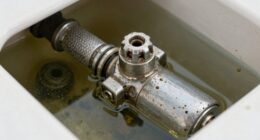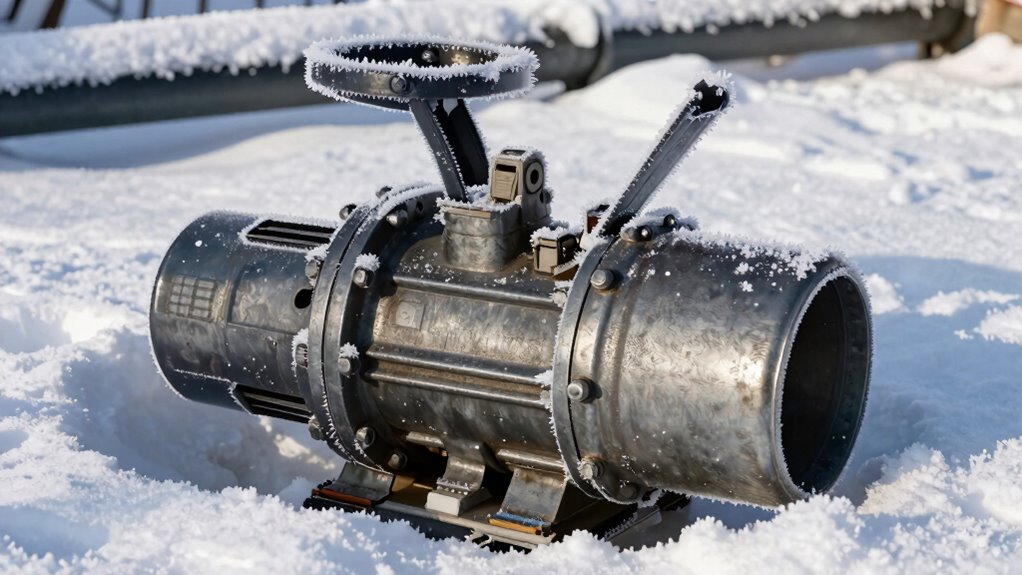

To avoid cracked housings, you need to drain all water from your pump and pipes before winter, then store it in a dry, sheltered spot. Insulate pipes with foam or reflective materials and consider using heat tapes or heaters to keep temperatures above freezing. Make sure to seal gaps and protect vulnerable areas. If you’re unsure about proper winterization steps, you’ll discover effective methods to protect your pump from damage.
Key Takeaways
- Drain all water from the pump housing and hoses to prevent ice formation and expansion.
- Insulate the pump and pipes with foam or reflective insulation to maintain temperature and reduce freezing risk.
- Seal gaps around pipes and fittings with weatherproof caulk or tape to prevent cold air entry.
- Use thermostatically controlled heaters or heat tapes to keep the pump above freezing temperatures.
- Regularly inspect and maintain the system during cold spells to identify and address potential freeze damage early.

Upgrade RV Winterizing Kit with Bypass Valve – RV Antifreeze Pump Kit-Allows You to Use Boat/RV Water Pump to Fill Pipes With Antifreeze-Camper Winterization Kit (RV Winterizing Kit)
【Upgrade RV Winterizing Kit】Installs directly onto your RV water pump for hands-free antifreeze transfer, eliminating messy manual pouring….
As an affiliate, we earn on qualifying purchases.
As an affiliate, we earn on qualifying purchases.
Why Freezing Temperatures Can Crack Your Pump Housing
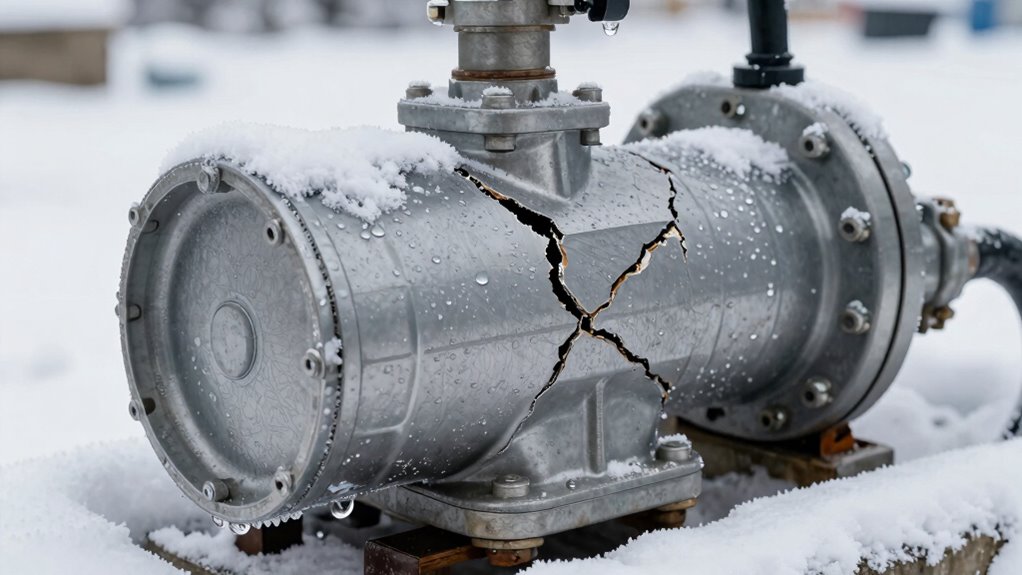
Freezing temperatures can cause serious damage to your pump housing because water inside the unit expands as it turns to ice. This expansion exerts pressure on the pump’s pipes and housing, leading to potential cracks and structural weakening. When water freezes, it expands, exerting pressure on the pump’s pipes and housing. This process, known as pipe expansion, can create cracks and weaken the structure. Conversely, during warmer periods, water contracts as it melts, which can cause movement and stress within the housing if it’s already damaged. If you don’t take precautions, the repeated cycle of water expansion and contraction can lead to cracks and leaks. The vulnerability increases if your pump housing isn’t designed to withstand freezing conditions. Understanding water’s physical changes and how they impact your pump is key to winterizing it properly to prevent costly repairs. Additionally, using insulation or heat sources can help mitigate the effects of freezing water and protect your equipment. Recognizing potential damage mechanisms can further enhance your winterization strategies, especially since material resilience varies among different pump housings. Being aware of proper winterization techniques is essential for maintaining your equipment’s integrity during cold weather.
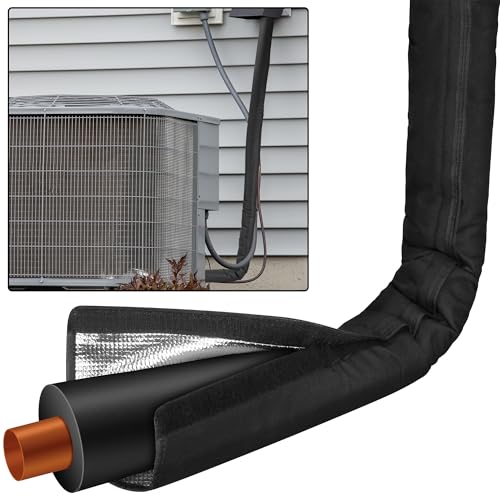
HVAC Copper Pipe Insulation Cover, 72''x10.2'' Outdoor Mini Split AC Heating System Line Foam Tube Protector Sleeve, Flexible Insulation Wrap for Central Air Conditioner and Heat Pump, Black 1PCS
Waterproof, Dustproof, Wind-Resistant, Sunlight-Resistant, Snow-Resistant
As an affiliate, we earn on qualifying purchases.
As an affiliate, we earn on qualifying purchases.
How to Drain and Store Your Pump to Prevent Freezing Damage
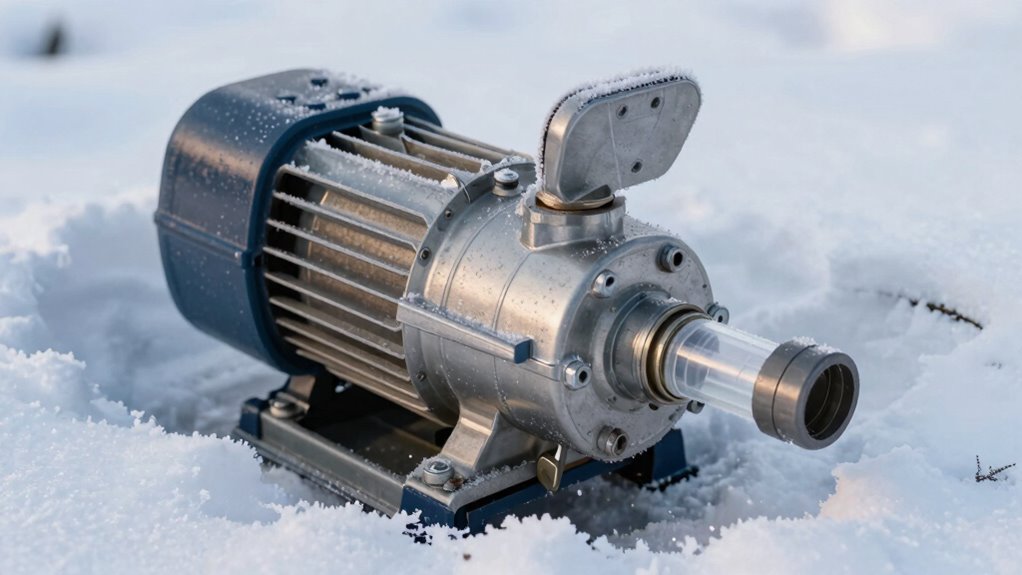
To protect your pump from damage during colder months, it’s important to properly drain and store it before freezing temperatures arrive. Start by shutting off the power and disconnecting the pump from the water source. Next, drain all water from the pump housing and hoses to prevent ice formation. During pump storage, ensure the unit is completely dry and stored in a cool, dry place away from freezing conditions. Performing this winter maintenance step reduces the risk of cracked housings caused by frozen water expanding inside. Take extra care to remove any residual water from the pump’s internal components. Regular gear maintenance and proper drainage are essential to keep your pump in good condition, so it’s ready to operate smoothly when warm weather returns. Additionally, using digital frames or interactive murals to track your maintenance schedule can help ensure nothing is overlooked. Implementing a winterization checklist can further streamline the process and prevent overlooked steps. To further prevent damage, consider inspecting pump seals for wear and replacing them if necessary before storage.
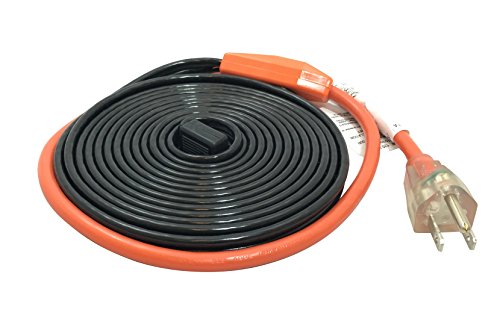
Frost King HC12A Automatic Electric Heat Kit Heating Cables, 12-Feet, Black, Ft
Size: 9-13 Feet.9-13 Feet, 120V, 7 Watts per foot
As an affiliate, we earn on qualifying purchases.
As an affiliate, we earn on qualifying purchases.
Insulate Your Pump and Pipes to Keep Cold Out
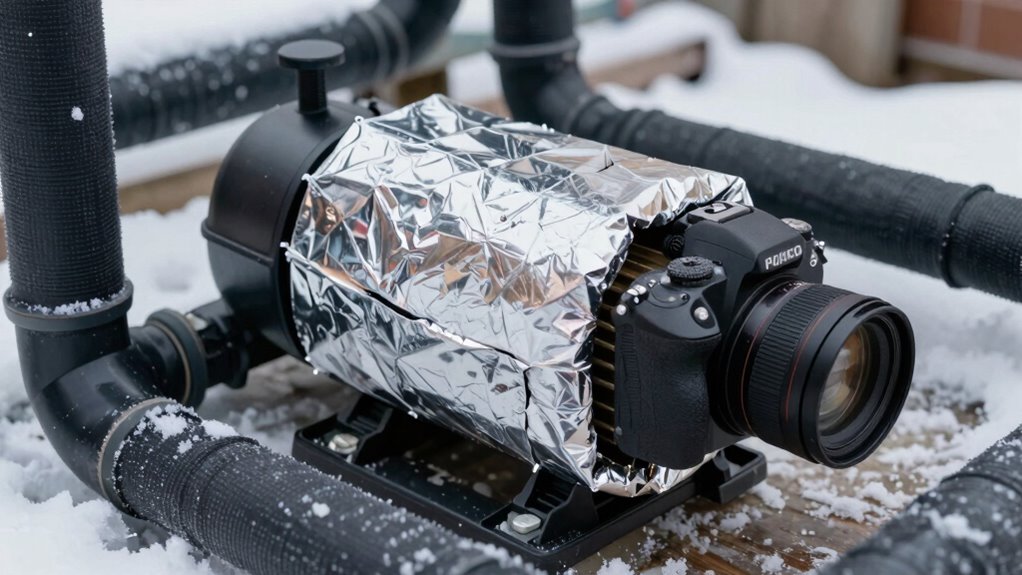
To keep your pump and pipes safe from freezing, you should use proper insulation materials that are designed for cold weather. Make sure to seal all gaps around the pipes to prevent cold air from sneaking in. Proper insulation and sealing are key to maintaining a warm, functional system during winter. Additionally, consider installing a smart thermostat to better monitor and control your home’s temperature, reducing the risk of freezing issues. Using insulation techniques tailored for plumbing can further enhance protection against cold temperatures.
Use Proper Insulation Materials
Insulating your pump and pipes with proper materials is essential to prevent heat loss and protect against freezing temperatures. Effective insulation installation depends on choosing the right material selection to guarantee durability and efficiency. Here are three key options:
- Foam pipe insulation: Easy to install and provides excellent thermal protection for exposed pipes.
- Reflective insulation: Reflects heat back into the system, reducing heat loss and increasing energy efficiency.
- Rigid foam boards: Ideal for larger areas, offering high insulation value and protection against cold air infiltration.
When selecting materials, consider their R-value, ease of installation, and resistance to moisture. Proper insulation not only keeps your system warm but also prolongs its lifespan by preventing cracks caused by freezing. Additionally, understanding the thermal performance of each insulation type can help optimize your winterization efforts. Choosing the right insulation material is vital for ensuring your pump remains protected during harsh winter conditions. For optimal results, ensure that the moisture resistance of your insulation material matches your climate conditions.
Seal All Pipe Gaps
Sealing all gaps around your pipes is essential to prevent cold air from sneaking in and causing freezing issues. Pipe gap sealing guarantees your pump and pipes stay warm, reducing the risk of cracks and damage. Use weatherproof tape, foam insulation, or caulk to close any openings. Check your winterizing checklist to ensure every gap is sealed tightly. Properly early detection of issues can help prevent more serious damage later on. Ensuring your sealing methods are weatherproofed can further enhance protection against harsh winter conditions. Additionally, understanding insulation techniques can improve your overall winterization effectiveness. Incorporating proper DIY tools such as caulking guns and insulation cutters can make the sealing process more efficient and secure.
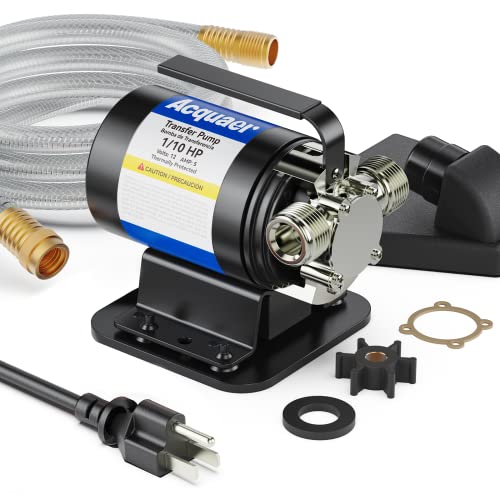
Acquaer Portable Electric Utility Water Transfer Pump 1/10 HP with Suction Hose Kit, Low Suction Water Removal for Water Beds, Pools, Rain Barrel, Aquariums, RV
【POWERFUL WATER TRANSFER PUMP】: Voltage:115V/60Hz; Horse Power:1/10HP; Power Cord Length:6ft. Electric transfer pump can transfer water up to…
As an affiliate, we earn on qualifying purchases.
As an affiliate, we earn on qualifying purchases.
Use Heaters and Enclosures to Protect Your Pump
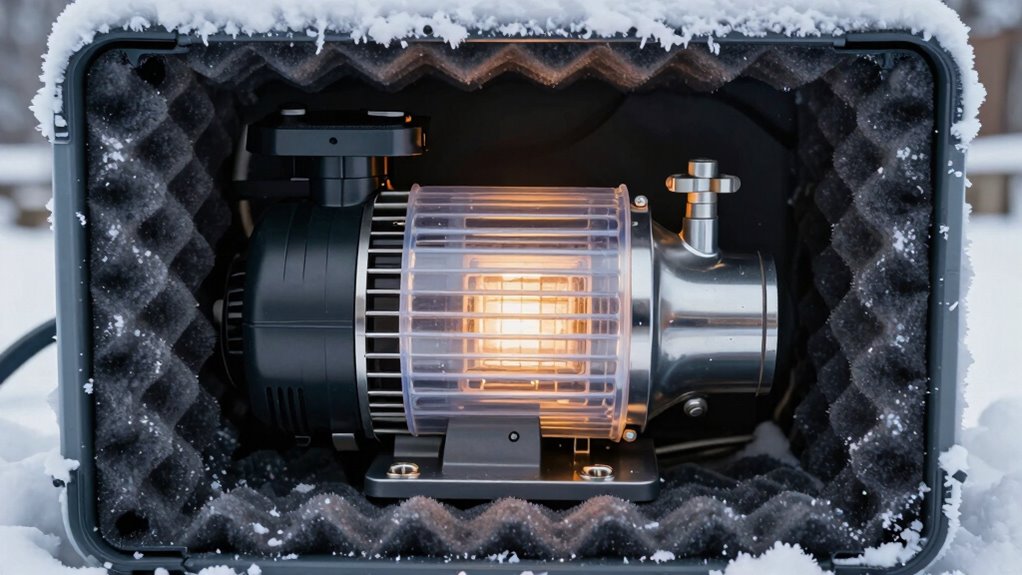
Using heaters and enclosures is essential to protect your freshwater pump during winter. They prevent freezing and reduce the risk of cracked housings. To guarantee effective protection, consider these key steps:
- Install heater enclosures around your pump to provide insulation and shield it from harsh elements.
- Use pump insulation materials to wrap and insulate vulnerable areas, maintaining consistent temperature.
- Set thermostats on heaters to keep the pump above freezing temperatures, even during cold spells.
- Regularly inspect your outdoor equipment to ensure that your winterization measures remain effective and intact.
- When selecting a battery inverter generator for backup power, ensure it has sufficient watt-hours capacity to support your heater systems during power outages. Properly maintaining your pump components can also help prevent failures caused by winter conditions.
- Understanding the history of golf can help you appreciate the importance of protecting your equipment in all conditions, including winter. Additionally, choosing the right pump materials can enhance durability and resistance to freeze-thaw cycles.
These measures keep your pump functioning smoothly and extend its lifespan. Properly chosen heater enclosures and effective pump insulation create a barrier against winter’s worst, saving you time and costly repairs later. Keep your pump protected and operational year-round with these simple, proactive strategies.
Common Mistakes When Winterizing Your Pump
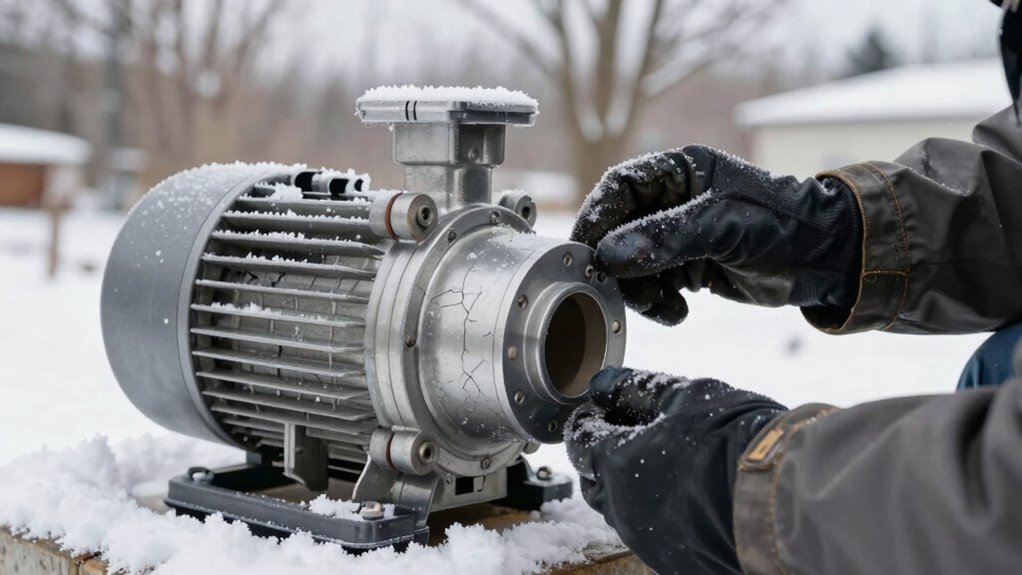
Many people make common mistakes when winterizing their freshwater pumps, which can lead to costly damage or failure. One mistake is neglecting proper pump maintenance before cold weather arrives, leaving residual water that can freeze and crack the housing. Another error is rushing through winter preparation without thoroughly draining or bypassing the system, increasing the risk of ice damage. Some overlook inspecting seals and fittings, which can cause leaks when temperatures drop. Using inadequate or improper winterization products can also harm the pump or invalidate warranties. To avoid these mistakes, take your time with pump maintenance, double-check drainage, and guarantee all components are protected from freezing. Proper winter preparation is essential to keep your pump functioning reliably through the cold season.
Troubleshooting Pump Problems After a Cold Snap
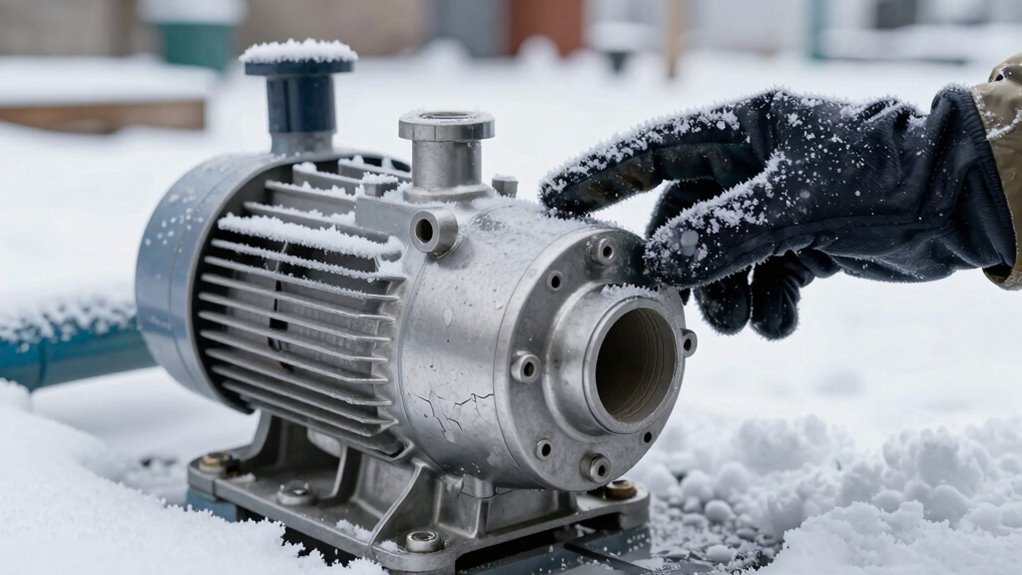
After a cold snap, your pump may show signs of freeze damage or fail to operate correctly. You need to identify these issues early and check for cracked or frozen components. Taking steps to prevent future freezes can save you time and money down the road.
Identifying Freeze Damage Signs
When a cold snap hits, your pump could have sustained freeze damage that’s not immediately obvious. To identify signs, start by inspecting the pump housing for cracks or leaks, often caused by frozen water expanding inside. Next, check the pipe insulation around the outdoor storage area; damaged or missing insulation suggests the pump was exposed to freezing temperatures. Finally, listen for unusual noises or vibrations when you run the pump—these can indicate internal damage from ice expansion. If you notice any of these signs, it’s essential to address the issue promptly before further damage occurs. Proper winterization, including adequate pipe insulation and outdoor storage practices, helps prevent these problems and keeps your pump in good shape.
Preventing Future Freezes
Are you taking the right steps to prevent your pump from freezing in future cold weather? Start by guaranteeing your pump is properly insulated with quality pump insulation. This creates a barrier against cold temperatures that can lead to frozen pipes. Check for any gaps or weaknesses in your insulation and seal them to maintain consistent warmth. Additionally, keep the area around your pump heated or use a heat tape if necessary. Regularly inspect your system during cold spells for signs of temperature drops. Installing a thermostat-controlled heater can also help prevent freezing. By taking these precautions, you reduce the risk of frozen pipes and avoid costly damage caused by a frozen pump. Proper winterization ensures your pump stays functional throughout winter.
Frequently Asked Questions
How Often Should I Inspect My Pump During Winter?
You should inspect your pump weekly during winter to guarantee proper pump maintenance. Use an inspection checklist to look for cracks, leaks, or signs of freezing. Check hoses and fittings for damage, and make sure the pump housing is intact. Regular inspections help prevent frozen or cracked housings, saving you costly repairs. Staying vigilant during winter keeps your pump in good condition and ready for use when warmer temperatures arrive.
Can I Use Household Antifreeze in My Pump?
Using household antifreeze in your pump isn’t recommended. Like trying to fit a square peg in a round hole, household antifreeze often isn’t compatible with your pump’s materials and can cause damage or corrosion. Opt for specialized RV or marine antifreeze, which is designed for plumbing systems. Always check antifreeze compatibility to guarantee it protects your pump without risking cracks or leaks during winter.
What Signs Indicate My Pump Has Been Damaged by Freezing?
You’ll notice frost damage if your pump housing is cracked or shows signs of ice expansion. Look for visible cracks, leaks, or moisture around the unit. If the pump makes unusual noises or fails to operate, it could be due to pipe cracking caused by freezing. These signs indicate your pump has been affected by cold temperatures, and immediate inspection can prevent further damage.
Are There Specific Pump Types More Vulnerable to Cold Damage?
Some pump types are more vulnerable to cold damage, especially those made from plastic or lightweight materials. These materials tend to crack more easily when exposed to freezing temperatures. To protect your pump, use effective insulation methods like foam wraps or heating tapes. Cast iron or stainless steel pumps are generally more resistant, but regardless of material, proper winterization is essential to prevent freezing damage.
How Does Outdoor Placement Affect Winterization Strategies?
Outdoor placement influences your winterization strategies considerably. When you place a pump outdoors, consider outdoor placement considerations like exposure to freezing temperatures, moisture, and wind. To protect your pump, implement winterization location strategies such as insulating pipes, draining water lines, and using outdoor-specific covers. These steps ensure your pump resists cracking, prevents damage, and remains functional through harsh winter conditions. Proper planning keeps your pump safe and avoids costly repairs come spring.
Conclusion
Don’t let winter’s icy grip turn your pump into a cracked relic. By properly draining, insulating, and protecting your pump, you’re not just avoiding damage—you’re safeguarding your investment for years to come. Think of winterizing as giving your pump a warm coat against the cold. Stay proactive, follow these tips, and guarantee your pump keeps running smoothly when spring finally thaws the frost. After all, isn’t peace of mind worth a little effort now?