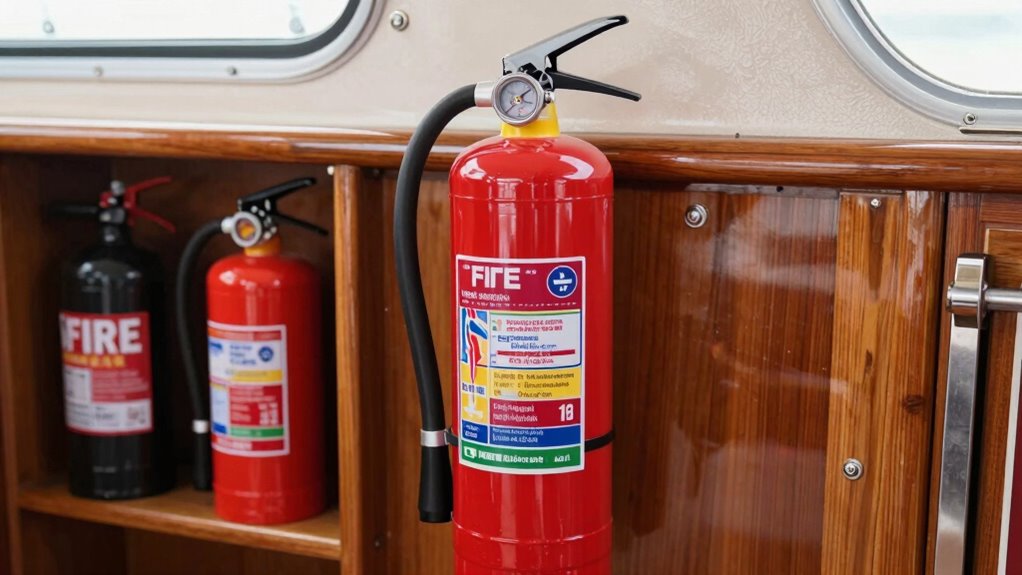
To keep your boat safe, choose marine-grade fire extinguishers with appropriate classes like ABC or BC for electrical, fuel, or general fires. Mount them near key areas like the engine or galley in secure, accessible spots, making certain visibility. Regularly check pressure gauges, look for damage, and make sure mounting brackets are secure. Using extinguishers properly involves aiming at the base of the fire with steady motion. If you want to guarantee safety, understanding these essentials is vital—more tips await you.
Key Takeaways
- Use marine-grade fire extinguishers rated ABC or BC, designed to resist corrosion from saltwater and humidity.
- Place extinguishers near engines, galley, and high-risk areas, mounted securely for quick access during emergencies.
- Regularly inspect pressure gauges, check for damage, and ensure no obstructions to maintain readiness.
- Select appropriate extinguisher size and type based on fire class, vessel size, and safety standards.
- Train crew to aim at the fire’s base, use steady sweeping motions, and practice extinguisher operation regularly.

First Alert Marine1 Fire Extinguisher, UL Rated 1-A:10-B:C, White, FE1A10GR with Metal Bracket Bundle
First Alert's Marine1 Fire Extinguisher is UL rated 1-A: 10-B: C; it features durable all-metal construction with a…
As an affiliate, we earn on qualifying purchases.
As an affiliate, we earn on qualifying purchases.
Why Fire Safety Matters on Your Boat
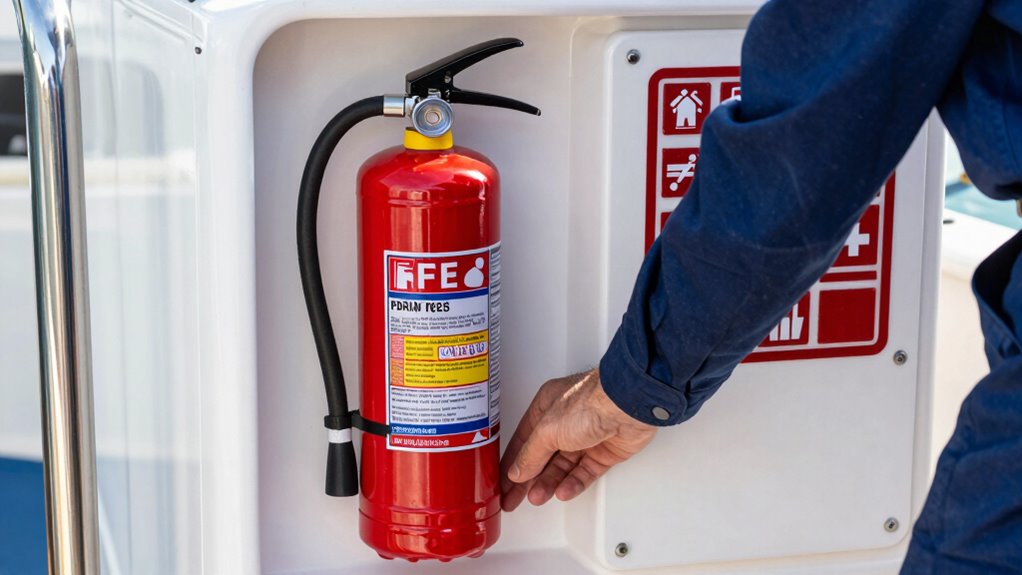
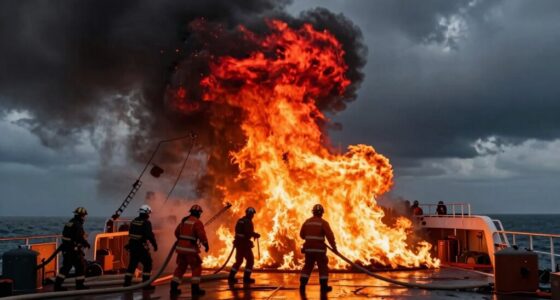
Fire safety is essential on your boat because fires can escalate quickly and pose serious risks to everyone onboard. Understanding fire safety regulations helps guarantee you’re prepared and compliant, reducing the chance of accidents. According to fire incident statistics, marine fires often result in injuries, property damage, and even loss of life, highlighting the importance of proactive safety measures. Having proper fire prevention protocols and knowing how to respond can make the difference between a manageable situation and a disaster. Staying informed about safety standards and maintaining equipment not only protects your crew and guests but also ensures compliance with legal requirements. Prioritizing fire safety on your boat minimizes risks, safeguards lives, and keeps your voyage smooth and secure. Proper fire extinguisher placement and routine checks are crucial components of an effective fire safety plan. Regularly updating your knowledge about fire safety regulations can help you adapt to new standards and improve emergency preparedness. Additionally, understanding fire incident statistics can motivate proactive safety practices to prevent future incidents and help develop effective fire prevention protocols. Being aware of the types of fire extinguishers suitable for marine environments further enhances your safety readiness.
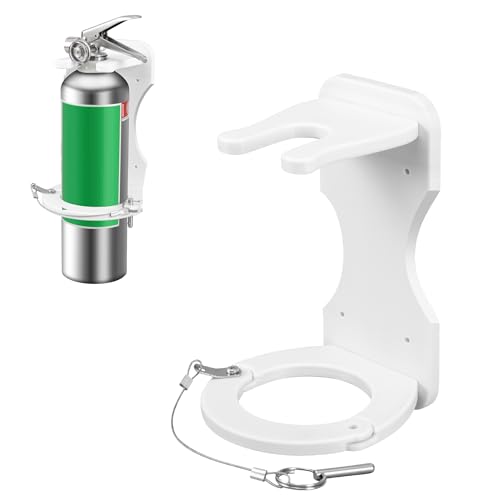
Boat Nylon Fire Extinguisher Bracket,Mounting Bracket with Quick Release Pin,Fire Extinguisher Brackets Compatible with Fire Extinguishers (White)
【HIGH QUALITY】Boat fire extinguisher bracket made of high – quality, corrosion – resistant materials,this fire extinguisher bracket is…
As an affiliate, we earn on qualifying purchases.
As an affiliate, we earn on qualifying purchases.
What Fire Extinguisher Types Are Best for Marine Use
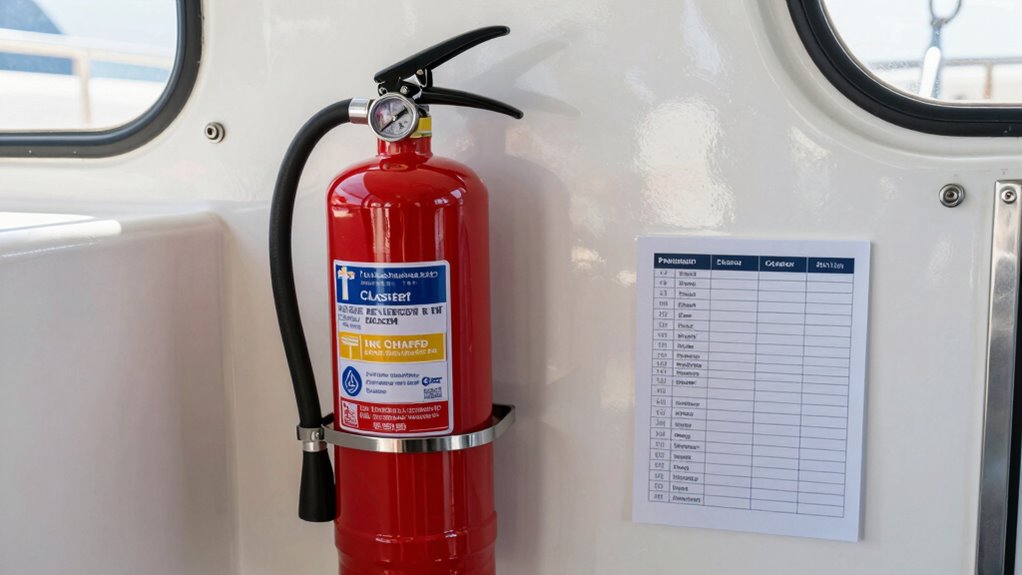
Choosing the right fire extinguisher for your boat means focusing on marine-grade options designed to withstand harsh conditions. You’ll want to contemplate suitable fire suppressant agents that effectively combat different types of fires onboard. Let’s explore which extinguisher types and agents are best suited for marine use. Additionally, selecting extinguishers with marine-grade durability ensures they remain reliable in the challenging environment at sea.
Marine-Grade Extinguisher Types
When selecting a fire extinguisher for your boat, it is vital to choose those designed specifically for marine environments, as they are built to withstand harsh conditions like humidity and saltwater exposure. Marine-grade extinguishers are constructed using marine grade alloys and corrosion-resistant materials, guaranteeing durability and reliability over time. These extinguishers resist rust and deterioration, making them suitable for the salty, humid atmosphere on boats. Look for models that feature sturdy casings and fittings made from stainless steel or other corrosion-resistant substances. This corrosion resistance enhances their longevity and effectiveness during emergencies. Marine-grade extinguishers are typically available in ABC and BC ratings, providing versatile protection for various onboard fire hazards. Investing in the right type ensures safety and compliance during your boating adventures. Proper maintenance and regular inspections are essential to ensure your extinguisher remains functional when needed most. Additionally, selecting extinguishers with marine-specific features can further improve their performance in challenging conditions. Understanding the horsepower of electric dirt bikes can help you choose the right bike for your off-road adventures.
Suitable Fire Suppressant Agents
Selecting the right fire suppressant agent is key to guaranteeing effective fire suppression on your boat. Marine fire extinguishers use specific chemical agents suited for different fires. For fuel or electrical fires, dry chemical agents like ABC powder are versatile. Foam suppressants are excellent for flammable liquids, forming a barrier to cut off oxygen. Consider these options:
| Agent Type | Best Use |
|---|---|
| Dry Chemical | Electrical, combustible materials |
| Foam Suppressants | Flammable liquids like gasoline |
| CO2 | Electrical fires, sensitive equipment |
| Wet Chemical | Kitchen fires, grease fires |
| Water | Class A fires (solids) |
Choosing the appropriate agent guarantees safety and effective fire control on your boat. Understanding digital content and research can also help in selecting the right safety equipment and procedures. Additionally, familiarizing yourself with fire safety guidelines ensures you are prepared for various marine fire scenarios. Moreover, knowing the types of fire extinguishers suitable for marine environments can improve your response effectiveness during emergencies. Being aware of marine-specific hazards can further enhance your preparedness and safety measures while at sea. Regularly practicing fire drills is also essential to ensure everyone on board is familiar with emergency procedures.

5PCS 100 PSI Pressure Gauge for Portable Water Fire Extinguishers Compatible with Amerex, Ansul, Badger, Stainless Steel Water Fire Extinguisher Replacement Part, 1/8" NPT Thread, Red Dial
Widely Applicable: This pressure gauge for portable water fire extinguishers is compatible with Amerex, Ansul, Badger, and most…
As an affiliate, we earn on qualifying purchases.
As an affiliate, we earn on qualifying purchases.
How to Choose the Right Fire Extinguisher for Your Boat
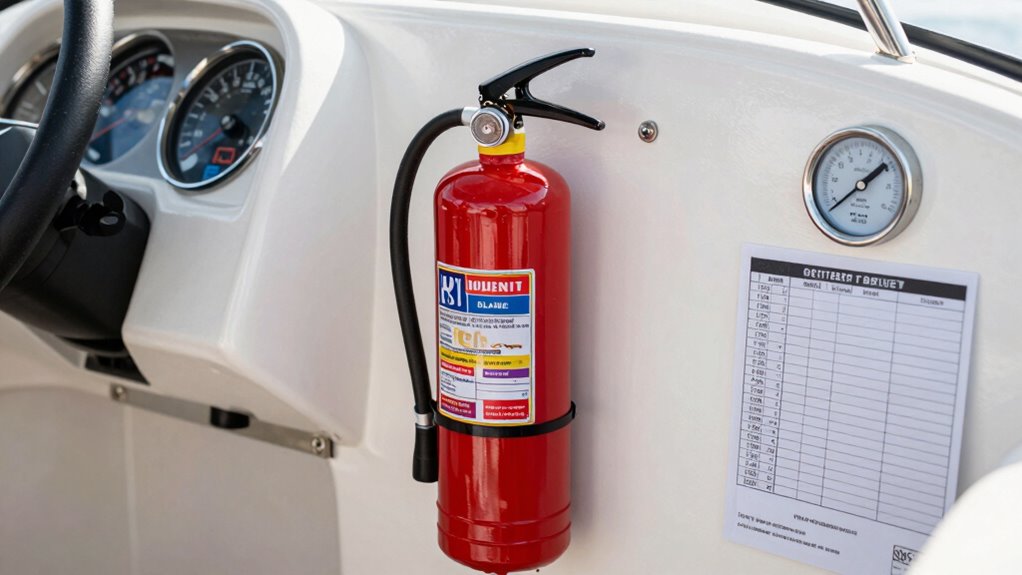
Finding the right fire extinguisher for your boat begins with understanding the types available and their specific uses. First, consider fire extinguisher sizing; a larger unit isn’t always better if it’s too heavy to handle quickly. You need a size that’s manageable yet effective for your vessel’s size. Check the fire extinguisher labels carefully—they indicate the fire classes it’s suitable for, ensuring you select one that targets boat-related fires, like electrical or fuel fires. Also, verify the extinguishers meet maritime safety standards. Remember, having the correct size and clearly labeled extinguisher makes it easier to respond swiftly in an emergency. Always choose a fire extinguisher that fits your boat’s needs, so you’re prepared without unnecessary bulk.
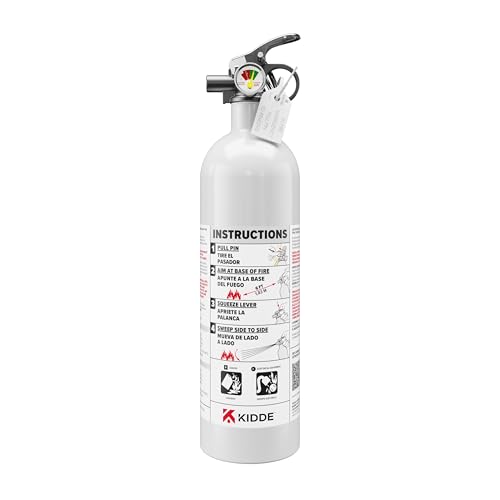
Kidde Fire Extinguisher for Boats, Single-Use 5BC
Combats Marine Fires: Stop basic fires common to boats: flammable liquids and gases (Class B) & electrical equipment…
As an affiliate, we earn on qualifying purchases.
As an affiliate, we earn on qualifying purchases.
Where to Place Fire Extinguishers on Your Boat
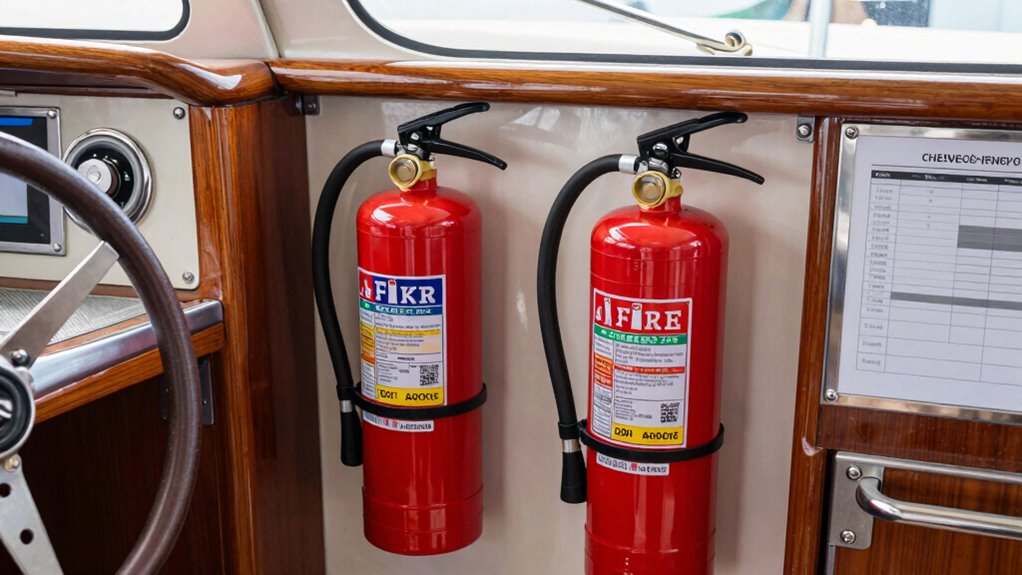
You need to place fire extinguishers where you’ll easily see and reach them in an emergency. Focus on locations near fire-prone areas like the engine or galley. Make sure they’re securely mounted so they won’t fall or get lost during rough seas. Additionally, ensure your fire protection equipment includes appropriate accessories like remote car covers or gear upgrades to maintain their effectiveness.
Accessible and Visible Locations
Where should fire extinguishers be placed on your boat to guarantee quick access during an emergency? They need to be in accessible, visible locations that allow immediate use. Proper placement guarantees you can respond swiftly without searching or obstacles. Use clear fire safety signage to mark extinguisher locations, so everyone knows where they are. Position extinguishers near high-risk areas like the engine or galley, but also in common pathways for easy reach. Consider placement near emergency escape routes, so you can evacuate quickly if needed. Avoid hiding extinguishers behind doors or clutter. Regularly check that they’re visible, unobstructed, and easy to grab in a panic. Proper placement maximizes safety and ensures your fire safety equipment is effective when it matters most. Additionally, home safety tips can help you maintain a secure environment onboard and on land. Ensuring your fire extinguishers are compliant with safety regulations will further enhance your preparedness. Regularly reviewing your fire safety plan ensures everyone onboard knows what to do in an emergency.
Near Fire-Prone Areas
Placing fire extinguishers near fire-prone areas on your boat guarantees quick access during an emergency. Focus on high-risk zones like the engine room, galley, and electrical panels, where fires are more likely to start. Use fire-resistant materials around these areas to slow the spread of flames and give you more time to respond. Install extinguishers close enough for immediate reach but away from potential heat sources to prevent damage. Consider integrating your fire alarm system with extinguisher placement; alarms can alert you early, prompting quick action. Position extinguishers where they are visible and easily accessible, ensuring you don’t have to search or navigate obstacles during a crisis. Proper placement minimizes delays and maximizes safety on your boat. Ensuring safe placement is essential for effective fire safety management in marine environments. Additionally, regularly inspecting fire extinguishers ensures they are in working condition when needed most.
Secure Mounting Methods
Secure mounting methods are essential to guarantee fire extinguishers remain accessible and effective during emergencies. Proper mounting prevents movement and damage, ensuring quick access when needed. Use sturdy mounting brackets designed for marine environments to keep your extinguisher secure. Security straps add an extra layer of safety, preventing accidental dislodging in rough seas. Position fire extinguishers near exits, galley, engine, and engine room for quick reach. Ensure each unit is mounted at a height that’s easy to grab, not too high or low. Regularly check the mounting brackets and security straps for wear or looseness. Keep fire extinguishers in designated, visible locations to avoid delay during emergencies. Proper cabling solutions and mounting guarantee safety, readiness, and quick response when it counts most. Additionally, selecting the right mounting materials ensures durability and resistance to marine conditions. Using marine-grade hardware further enhances the longevity and security of your fire extinguishers in harsh environments.
How to Check and Maintain Your Fire Extinguishers
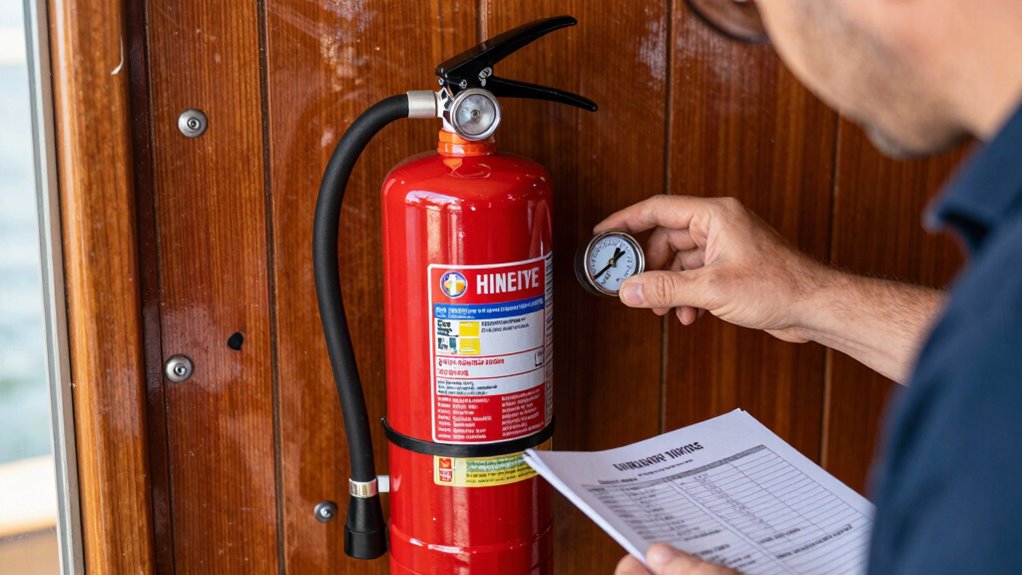
Regularly inspecting your fire extinguishers is essential to guarantee they will work effectively when needed. Check the pressure gauge to ensure it’s in the operable zone, and look for any signs of damage or corrosion. For rechargeable extinguishers, perform battery maintenance as recommended, especially in models with electronic components. Different fire extinguisher types require specific checks; for example, Dry Chemical extinguishers need the nozzle clear, while CO2 types should be free of leaks. Use this quick reference:
| Fire Extinguisher Type | Maintenance Tips |
|---|---|
| Dry Chemical | Check for clogs, weigh for powder loss |
| CO2 | Inspect for leaks, ensure valve works |
| Foam | Confirm no cracks, pressure gauge OK |
| Wet Chemical | Keep nozzle clear, check seal |
| ABC Powder | Regularly shake to prevent packing |
Perform these checks monthly to ensure safety.
Tips for Using Fire Extinguishers Safely at Sea
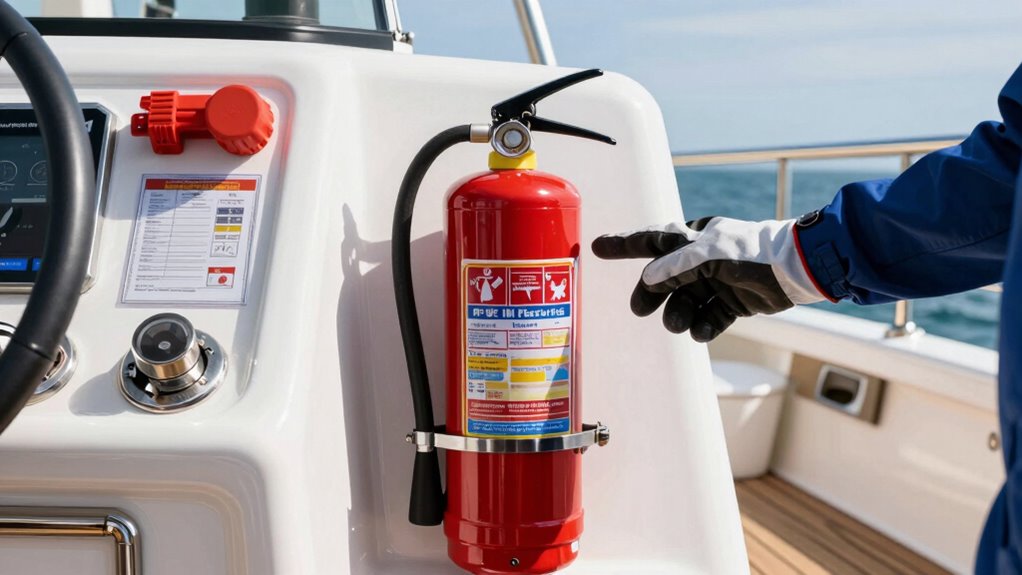
Using a fire extinguisher at sea requires quick thinking and proper technique to effectively suppress a fire and ensure your safety. Proper fire extinguisher training helps you respond confidently in emergencies. Remember these tips:
Quick thinking and proper technique are vital for safely using a fire extinguisher at sea.
- Always aim at the base of the fire, not the flames, for maximum effectiveness.
- Use a steady, sweeping motion to cover the fire evenly.
- Keep your back to an exit, so you can retreat quickly if needed.
- Regularly practice with fire extinguishers to maintain emergency preparedness and stay familiar with their operation.
Staying calm and confident during a fire makes a difference. Proper training and preparation are key to safely controlling fires at sea and protecting yourself and your crew.
Common Fire Safety Mistakes Boat Owners Should Avoid

Even with proper fire extinguisher techniques, many boat owners make avoidable mistakes that can worsen a fire or hinder your response. One common fire safety mistake is believing fire extinguisher myths, like thinking you only need one type or that they last forever. In reality, different fires require specific classes of extinguishers, and regular checks are essential. Ignoring boat fire statistics reveals that many fires start due to improper storage or neglecting maintenance. Failing to inspect or replace extinguishers can leave you unprepared when seconds count. Another mistake is using the wrong extinguisher for a fire, which can make the situation worse. Avoid these pitfalls by staying informed, checking your equipment regularly, and understanding the facts versus myths about fire safety on your boat.
Frequently Asked Questions
How Often Should I Replace My Boat’s Fire Extinguishers?
You should replace your boat’s fire extinguishers every 6 years or sooner if they show signs of damage or corrosion. Regularly check their inspection frequency—monthly visual inspections help make certain they’re in good condition. Follow maintenance tips like keeping extinguishers in accessible locations and ensuring pressure gauges are in the operable range. Proper maintenance guarantees your fire extinguishers work effectively when needed, keeping you and your boat safe.
Are There Specific Fire Extinguisher Sizes Recommended for Different Boat Types?
Like choosing the right horse for a race, selecting the proper extinguisher size depends on your boat’s size and extinguisher capacity. Smaller boats, like dinghies, typically need 1-pound extinguishers, while larger vessels require 10- to 20-pound units for effective fire suppression. Always match your boat size with the appropriate extinguisher capacity to guarantee safety and compliance, preventing a small flame from becoming a big disaster.
Can I Use a Household Fire Extinguisher on My Boat?
You shouldn’t use a household fire extinguisher on your boat because household safety standards and extinguisher ratings differ from marine requirements. Household extinguishers may not be designed to handle the unique fire risks on boats, such as fuel or electrical fires. Marine fire extinguishers are specially rated for such hazards. Always choose an extinguisher with the appropriate ratings for boat safety, ensuring it’s suitable for marine use and easily accessible during emergencies.
What Are the Legal Requirements for Fire Safety on Recreational Boats?
Picture yourself on a sunny day, enjoying smooth sailing, when suddenly, a fire erupts. You must follow fire safety regulations to guarantee boating compliance, which require you to have the appropriate fire extinguishers on board, properly maintained and accessible. Laws vary by state and vessel size, but generally, you need a rated fire extinguisher for Class B and C fires. Staying compliant keeps everyone safe and your boat legal.
How Do I Properly Dispose of Expired or Damaged Fire Extinguishers?
You should never throw expired or damaged fire extinguishers in the trash. Instead, follow proper disposal procedures by contacting your local waste management or fire department for guidance. Many areas offer recycling options for extinguishers, especially if they contain recyclable materials like aluminum or steel. Make sure to discharge the extinguisher completely and remove any pressurized contents before recycling or disposal to stay safe and environmentally responsible.
Conclusion
Think of your fire extinguisher as the lighthouse guiding you through stormy seas — a beacon of safety amid chaos. Regular checks and proper placement keep this symbol of hope ready to shine bright when needed. By staying vigilant, you’re not just protecting your boat; you’re safeguarding the life raft of your loved ones. Embrace these essentials, and let your preparedness be the steady anchor that keeps everyone safe, no matter how rough the waters get.