
Carbon monoxide on boats is a silent, deadly risk caused by poor ventilation, leaks, or blocked exhaust systems that trap fumes. To stay safe, regularly check and maintain your engine, vents, and exhaust pipes, and install CO detectors near sleeping areas. Recognizing symptoms and acting fast can save lives. Keep everything unobstructed and guarantee proper airflow. Want to learn how to better prevent and respond to CO dangers onboard? Keep exploring for essential tips.
Key Takeaways
- Properly vent engine exhaust and regularly inspect vents to prevent dangerous CO buildup onboard.
- Install and maintain reliable CO detectors near sleeping areas and living spaces for early warning.
- Keep ventilation pathways unobstructed and position exhaust outlets away from passenger zones.
- Recognize symptoms of CO poisoning quickly and ventilate the boat immediately if suspected.
- Conduct routine safety drills, crew education, and equipment checks to prevent silent CO hazards.

MTI Industries 62-541-MARINE-WT Detector Marine Co Alarm White
Brand: Mti Industries
As an affiliate, we earn on qualifying purchases.
As an affiliate, we earn on qualifying purchases.
What Causes Carbon Monoxide Buildup on Boats?
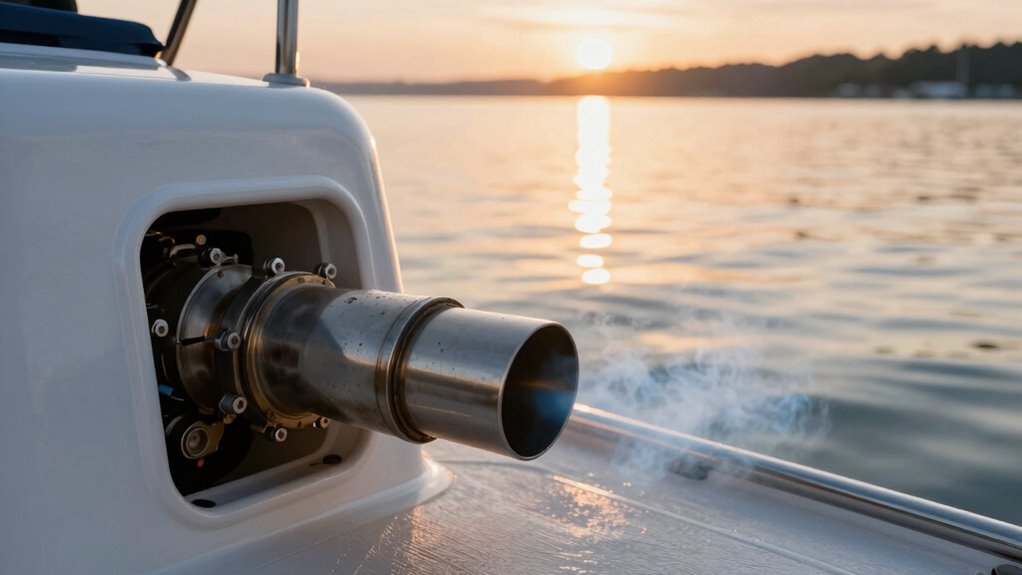
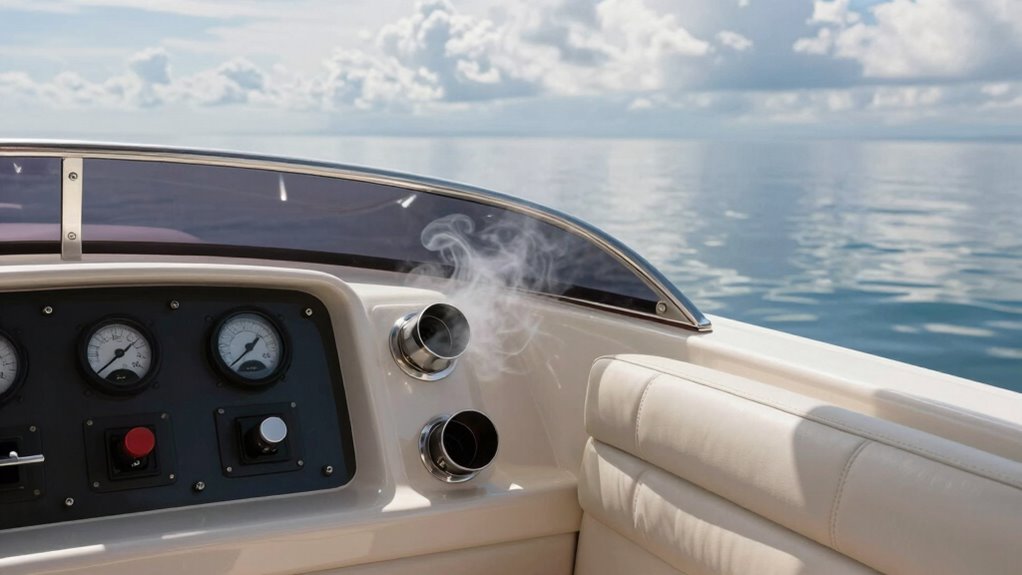
Carbon monoxide (CO) buildup on boats mainly occurs when exhaust gases from engines and generators are not properly vented. When engine exhaust isn’t directed away safely, CO can accumulate in enclosed or poorly ventilated areas. You might unknowingly expose yourself to dangerous levels if ventilation pathways aren’t clear or functioning correctly. Blocked or inadequate vents trap engine exhaust, allowing CO to linger near living or working spaces. Even small leaks in exhaust systems can lead to dangerous buildup over time. Properly maintained ventilation pathways are essential for dispersing engine fumes safely into the atmosphere. Ensuring these pathways are clear and functioning correctly reduces your risk of CO accumulation and keeps everyone onboard safer. Regular inspections of exhaust systems and ventilation routes are crucial steps in prevention. Effective ventilation is vital for reducing the risk of harmful CO buildup, especially in confined spaces where it can accumulate unnoticed. Maintaining exhaust system integrity and keeping vents unobstructed are key to preventing dangerous CO levels. Additionally, understanding ventilation principles helps in designing and maintaining systems that effectively prevent CO buildup. Implementing routine maintenance checks further enhances safety by identifying potential issues early before they lead to hazardous situations.
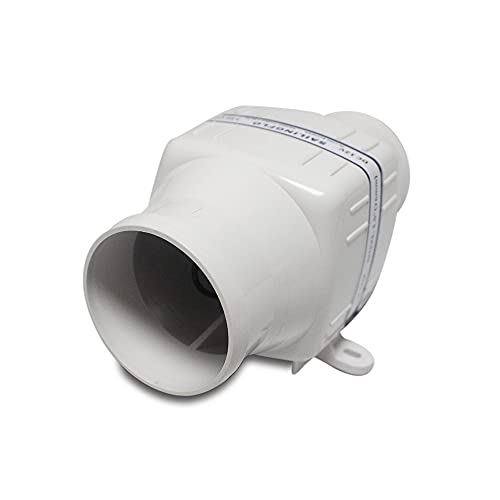
SAILINGFLO 3" In-line Marine Bilge Air Blower 12V 130CFM Centrifugal Bilge Fan (3")
Built-in mounting feet allows easy vertical or horizontal installation
As an affiliate, we earn on qualifying purchases.
As an affiliate, we earn on qualifying purchases.
How to Recognize the Signs of CO Poisoning Quickly
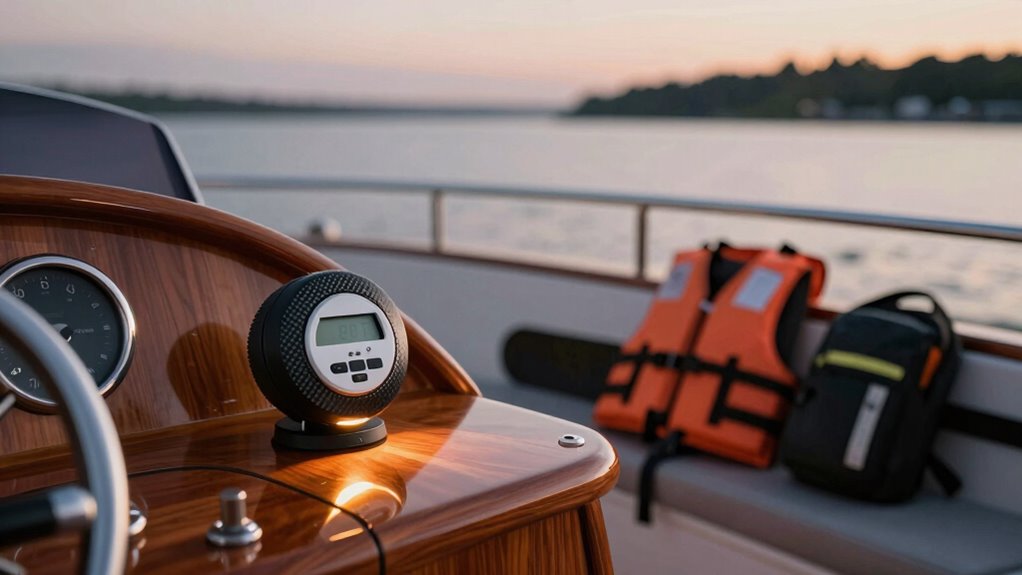
Since CO can build up silently in poorly ventilated areas, it’s vital to recognize the early signs of poisoning before it becomes life-threatening. Symptoms like headache, dizziness, nausea, shortness of breath, and confusion are key indicators of CO exposure. If you notice these signs while on your boat, immediately suspect CO poisoning. Quick symptom recognition can save lives, so don’t ignore subtle changes in how you or your crew feel. If CO poisoning is suspected, initiate emergency response by moving everyone to fresh air right away. Call for medical help and stay alert for worsening symptoms. Acting swiftly can prevent serious health consequences and guarantee everyone’s safety. Remember, early detection and prompt action are your best defenses against CO dangers onboard. Additionally, understanding air quality and ensuring proper ventilation can significantly reduce the risk of CO buildup in enclosed spaces. Proper maintenance of onboard ventilation systems is also crucial for keeping carbon monoxide levels safe. Regular checks and cleanings help prevent dangerous accumulations of CO and ensure safe operation. Incorporating CO detectors into your safety equipment provides an essential alert system to warn you before dangerous levels are reached. Being aware of ventilation effectiveness can further help prevent dangerous CO concentrations from developing over time.
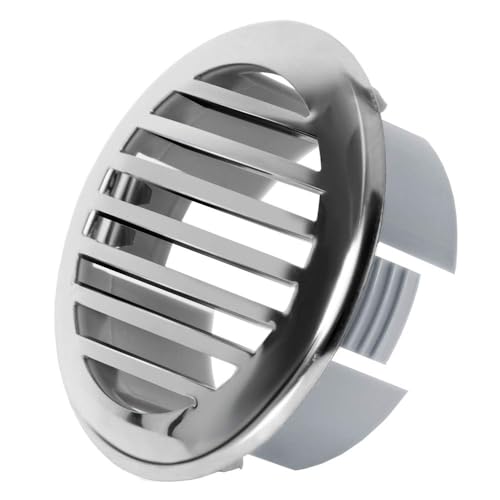
KUAFU 3'' Round Air Vent Cover Hood for Marine Boat Swim Platform Deck 304 Stainless Steel Chrome Grill Grille Domed Louvered
FITMENT – Vent covers are suitable for a variety of scenarios, including all home wall vents, air conditioning…
As an affiliate, we earn on qualifying purchases.
As an affiliate, we earn on qualifying purchases.
Essential Safety Equipment for Detecting CO Risks
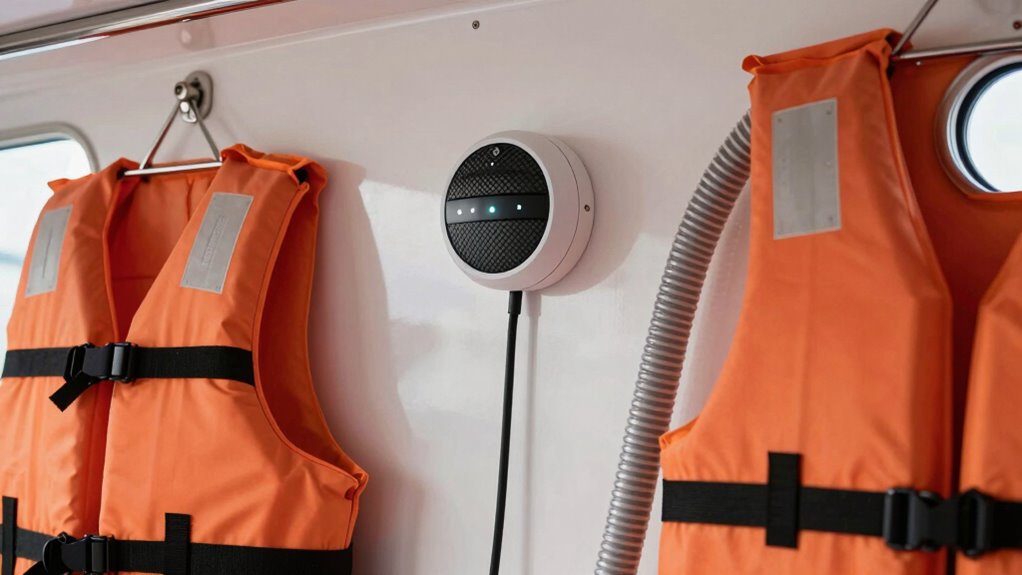
To stay safe from carbon monoxide, you need reliable detection equipment on your boat. Choosing the right CO detector types and placing them correctly is vital, and regular maintenance keeps them working properly. Proper placement can ensure early detection of CO buildup, especially in areas where air circulation is limited, reducing the risk of poisoning. Incorporating modern safety features such as digital displays and alarm integrations can further enhance your protection. Additionally, understanding essential safety tips for portable oil radiators can help prevent accidental CO exposure from auxiliary heating sources on board. Implementing smart home safety technology, like integrated alarm systems, can also provide real-time alerts to ensure prompt response in emergencies. Being aware of common causes of CO buildup on boats can help you take preemptive measures to avoid dangerous situations.
CO Detectors Types
Choosing the right CO detector is essential for ensuring safety on your boat, as these devices alert you promptly to dangerous levels of carbon monoxide. There are different types of CO detectors to consider for marine electronics, each suited to specific needs:
- Standalone Detectors – Compact, battery-powered units that provide immediate alerts without relying on other systems.
- Hardwired Detectors – Integrated into your boat’s electrical system, offering continuous monitoring and backup power.
- Combination Detectors – These include CO detection and smoke or gas sensors, enhancing safety protocols in one device. Integrating marine electronics with your CO detector can improve overall safety and system coordination.
Selecting the appropriate type guarantees reliable detection and swift response, helping you prevent CO poisoning. Always prioritize marine electronics designed for boating conditions and follow safety protocols to keep everyone safe onboard. Understanding marine electronics is crucial for maintaining safety in diverse boating environments. Additionally, choosing detectors with features like marine-specific certifications ensures they are built to withstand the unique conditions at sea. Properly maintaining your CO detection system is also essential for ongoing safety and reliability during your voyages.
Proper Placement Tips
Proper placement of your CO detector is essential for guaranteeing it can effectively alert you to dangerous levels of carbon monoxide. Position your detector near sleeping areas and away from marine ventilation sources that could cause false alarms. Avoid placing it directly above or beside cooking appliances or vents, as these can lead to inaccurate readings. Mount the detector at least a few inches below the ceiling, since CO tends to rise, but also ensure it’s not blocked by furniture or other obstructions. Proper co detector placement ensures it can quickly detect CO buildup from engine exhaust or other sources, giving you ample warning to respond. Regularly check that vents are unobstructed to allow proper circulation, reducing CO risk on your boat. Additionally, understanding vetted safety equipment can help you select the most reliable detectors for your vessel. Proper maintenance and testing of your CO detector are also crucial to ensure it functions correctly when needed. Ensuring your boat has appropriate ventilation practices can further reduce the risk of dangerous CO accumulation. Remember that CO detection zones should be well-defined to optimize safety measures onboard.
Regular Maintenance Importance
Regular maintenance of your CO detector is essential for guaranteeing it functions correctly when you need it most. Regular checks prevent false alarms and ensure reliable detection of CO risks. First, inspect your fuel system for leaks or blockages that could produce dangerous emissions. Next, test your CO detector monthly to confirm it’s working properly. Finally, keep up with battery maintenance by replacing batteries at least once a year or when the device signals low power. Visualize your fuel system: hoses, vents, and connections, all clean and secure. Think of your battery as the heartbeat of your detector—fresh batteries keep it alert. By staying proactive, you ensure your safety equipment is ready to protect you from silent CO dangers on your boat.

X-Sense Carbon Monoxide Detector Alarm with Digital LCD Display, Replaceable Battery CO Alarm Detector with Peak Value Memory, XC01-R
Flexible Installation: Wall-mounted or free-standing; easy to take while traveling
As an affiliate, we earn on qualifying purchases.
As an affiliate, we earn on qualifying purchases.
Proper Ventilation Techniques to Keep Your Boat Safe
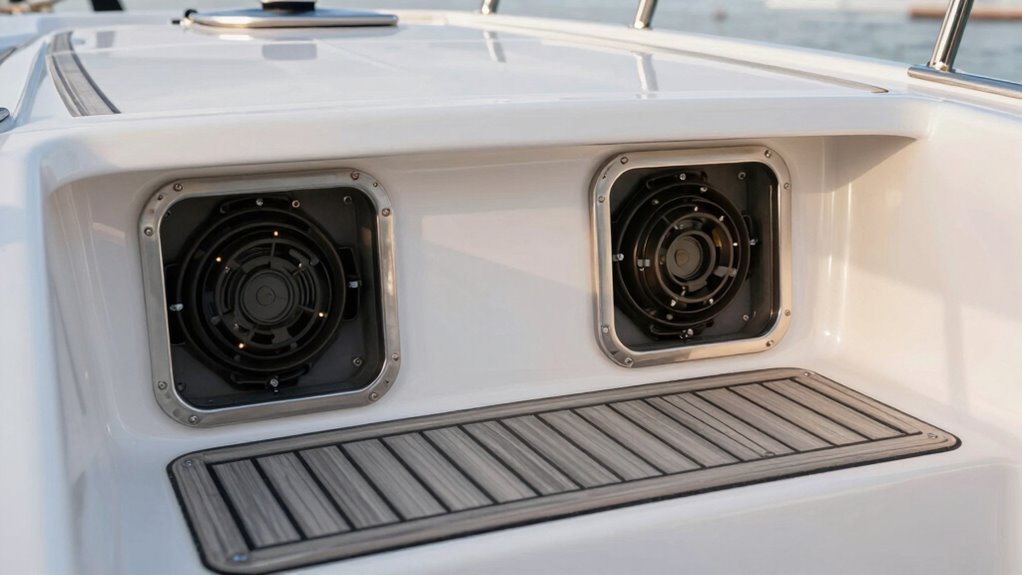
To keep your boat safe from carbon monoxide buildup, you need to focus on proper ventilation placement in key areas. Regularly checking your ventilation systems guarantees they work effectively and prevent dangerous leaks. By staying vigilant with these techniques, you can greatly reduce the risk of CO exposure onboard.
Proper Ventilation Placement
Effective ventilation is essential for preventing the buildup of carbon monoxide on your boat. Proper ventilation placement ensures maximum air circulation and maximizes the effectiveness of your ventilation systems. To do this, position intake vents low and near potential sources of CO, like the engine compartment. Exhaust vents should be high and away from living areas to carry away dangerous fumes. Imagine these key points:
- Place intake vents near the waterline to draw in fresh air.
- Position exhaust outlets on the highest points to release CO effectively.
- Avoid blocking vents with gear or furniture to maintain consistent airflow.
Regular System Checks
Since proper ventilation is essential for preventing carbon monoxide buildup, you should routinely check your boat’s ventilation system to confirm it’s functioning correctly. Regular system checks help ensure that marine insulation isn’t blocking airflow and that vents remain unobstructed. Inspect the ventilation ducts and fans for any damage or debris, especially around boat furniture that might shift and block airflow pathways. Maintain clean, clear vents to promote proper circulation, and test exhaust fans to verify they’re operating efficiently. Don’t forget to examine the integrity of marine insulation, as worn or damaged insulation can hinder proper ventilation. Routine checks reduce the risk of carbon monoxide accumulation, keeping your boat safe for everyone onboard. Staying vigilant with these inspections is a simple, effective way to prevent silent dangers.
Maintaining Engines and Exhaust Systems for Safety

Regularly inspecting and maintaining your boat’s engines and exhaust systems is essential for preventing dangerous carbon monoxide buildup. When your engine runs smoothly, it reduces the risk of exhaust leaks that can release CO into the boat’s interior. To ensure safety, focus on these key areas:
Regular boat engine checks prevent dangerous carbon monoxide buildup and ensure safety.
- Check exhaust hoses for cracks or corrosion, especially near the engine and transom.
- Inspect the exhaust outlet for blockages or corrosion that might cause leaks.
- Maintain proper marine navigation and boat anchoring practices, ensuring your engine’s exhaust is directed away from enclosed areas and passenger zones.
Positioning Equipment to Minimize CO Exposure
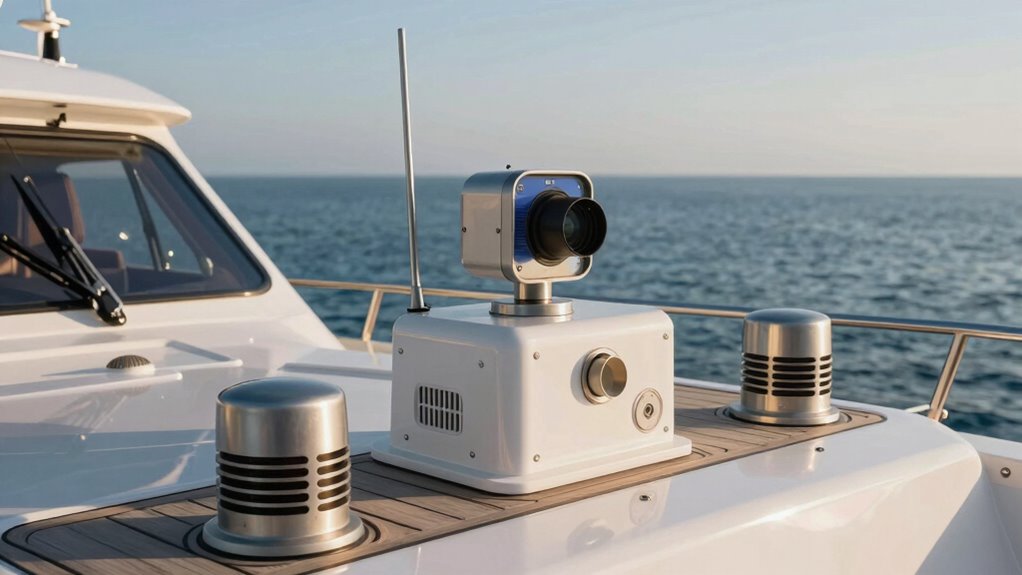
To reduce your risk of carbon monoxide exposure on a boat, you need to carefully position your equipment and passenger areas. Proper equipment positioning is essential—place exhaust vents and engines away from seating and sleeping zones. Use effective ventilation strategies by installing fans or vents that promote airflow and disperse any CO build-up. Keep vents clear of obstructions, and ensure that exhaust pipes extend away from enclosed areas. Avoid placing fuel-powered equipment directly next to passenger spaces, especially in enclosed or semi-enclosed areas. Regularly check ventilation systems to confirm they’re working efficiently. By thoughtfully positioning your equipment and implementing proper ventilation strategies, you considerably lower the chance of CO accumulating where you and your passengers spend time.
Immediate Steps to Take If You Suspect CO Poisoning
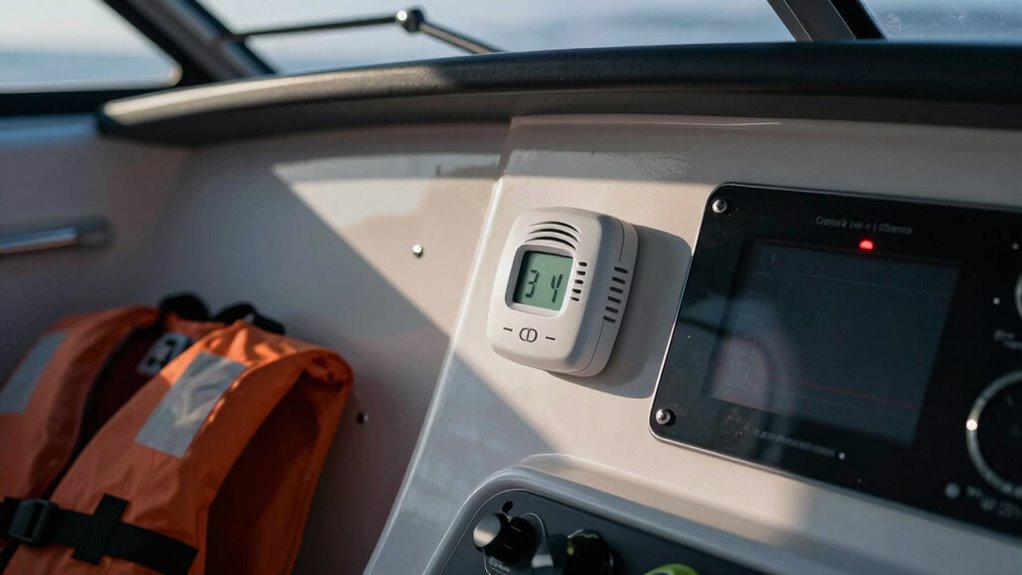
If you suspect someone has been exposed to carbon monoxide on your boat, act quickly to protect everyone’s safety. Recognize that common carbon monoxide sources include engine exhaust or gas-powered appliances. Immediately prioritize venting the boat to disperse the gas.
- Open all boat windows and hatches to improve boat ventilation, creating a flow of fresh air.
- Move the affected person to an area with fresh air, avoiding further exposure.
- Call emergency services right away and inform them of suspected CO poisoning.
Tips for Educating Your Crew on CO Safety
Educating your crew about carbon monoxide safety is essential for preventing tragedies on your boat. Effective crew training ensures everyone understands the risks and follows safety protocols. Make safety briefings a routine part of your trips, emphasizing CO awareness and response actions. Use clear visuals and demonstrations to reinforce key points. To organize your training, consider this approach:
| Training Focus | Implementation Ideas |
|---|---|
| Recognizing Symptoms | Share common signs of CO poisoning |
| Safety Protocols | Practice emergency procedures together |
| Equipment Usage | Demonstrate CO detector operation |
Consistent education builds a safety-conscious crew, reducing the risk of CO incidents. Keep training interactive and straightforward, so everyone stays alert and prepared.
Frequently Asked Questions About Boat CO Safety

Many boat owners have questions about carbon monoxide safety, and for good reason. You might wonder how to detect CO leaks or prevent exposure. Here are common concerns:
- How do marine alarms alert me to CO buildup?
- What role do ventilation systems play in CO prevention?
- How often should I test safety equipment?
Marine alarms are essential—they sound an alert if CO levels become dangerous, giving you time to react. Proper ventilation systems help disperse CO and prevent accumulation, especially near exhaust outlets and sleeping areas. Regularly testing your alarms and maintaining ventilation ensures safety. Understanding these measures allows you to keep your crew protected from silent risks and enjoy your time on the water with confidence.
Frequently Asked Questions
Can Carbon Monoxide Accumulate Even When the Engine Is Off?
Yes, carbon monoxide can accumulate even when the engine is off. If your boat’s exhaust system leaks or vents improperly, CO can build up in enclosed or poorly ventilated areas. You might not see or smell it, but it can still pose a danger. Always guarantee proper ventilation, regularly inspect exhaust systems, and never ignore signs of CO buildup, even when the engine is not running.
Are Portable CO Detectors Reliable on Boats?
Did you know that portable CO detectors are 85% reliable in detecting dangerous levels? Yes, they can be effective on boats, but be aware they may sometimes produce false alarms. Always choose a high-quality detector, test it regularly, and keep it away from direct sunlight or moisture. Relying solely on portable detectors isn’t enough; guarantee proper ventilation and maintenance to keep everyone safe from carbon monoxide risks.
How Often Should CO Safety Equipment Be Inspected?
You should inspect your CO safety equipment at least once a month and before each trip. Regular inspection schedules help guarantee your detectors and alarms are functioning properly, preventing potential hazards. Perform routine equipment maintenance by cleaning sensors and replacing batteries or units as recommended by the manufacturer. Staying diligent with inspections and maintenance keeps you protected from carbon monoxide risks while on the water, giving you peace of mind during your boating adventures.
What Are the Legal Requirements for CO Detectors on Boats?
Like a watchdog guarding your boat, CO detectors are essential for safety. You must conform with legal requirements that mandate installing approved detectors meeting specific standards. These standards ensure your device accurately detects carbon monoxide levels. Check your local regulations, as laws can vary, but generally, having a functioning CO detector is a legal requirement on certain vessels, especially those with enclosed cabins. Stay compliant and protect yourself and your crew.
Can Weather COnditions Affect CO Buildup and Detection?
Weather impact can influence carbon monoxide buildup and detection on your boat. High humidity, rain, or fog may cause detection challenges by affecting sensor accuracy or diluting CO levels, making it harder for alarms to trigger promptly. Wind can also disperse CO, reducing concentration and delaying detection. Stay vigilant during extreme weather, regularly check your detectors, and make certain they are properly maintained to keep you safe regardless of weather conditions.
Conclusion
Remember, a calm boat in clear waters can hide silent danger beneath the surface. While the sun sets beautifully, carbon monoxide quietly lingers, unseen and deadly. Stay vigilant, use your safety gear, and keep ventilation tight. Because while you enjoy the waves and the breeze, it’s the unseen threat that you must prevent—turning a peaceful day on the water into a safe, memorable adventure. Stay alert, stay safe.