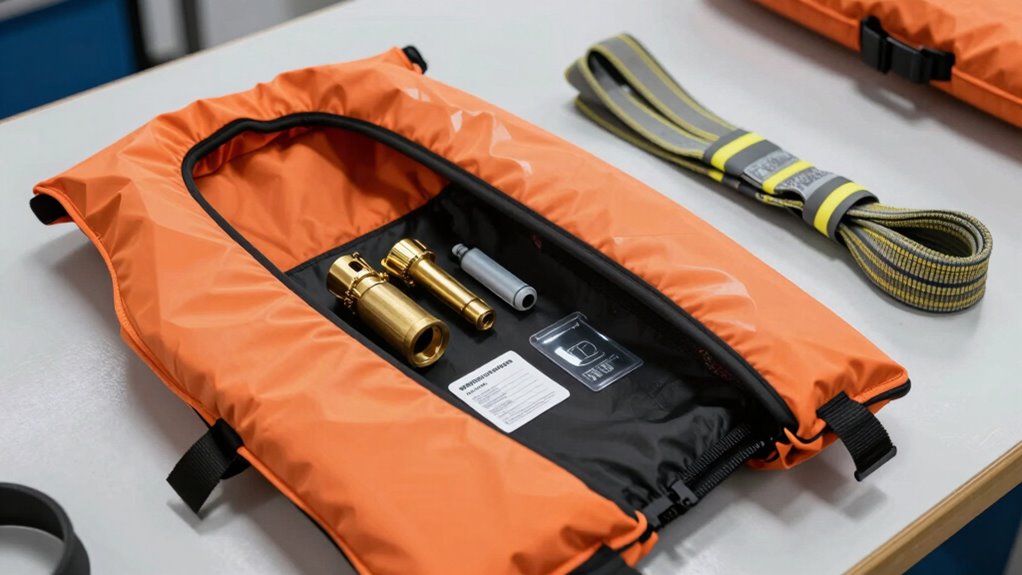

To care for your inflatable PFD, regularly inspect it for tears, punctures, or fabric damage, and check the inflator mechanism and CO2 cartridge for proper condition. After use, re-arm the device by replacing the CO2 cylinder and testing the inflation system. Store it in a cool, dry, shaded area away from sunlight, chemicals, and extreme temperatures, ensuring it’s fully deflated and dry. Proper maintenance keeps your PFD ready; learn more about each step to stay safe.
Key Takeaways
- Regularly inspect for tears, damage, corrosion, and material deterioration, ensuring seam integrity and inflation components are secure.
- Follow manufacturer guidelines to re-arm the CO2 cylinder, replace it if spent or damaged, and test deployment for readiness.
- Store in a cool, dry, shaded environment away from sunlight, chemicals, and extreme temperatures to prevent material degradation.
- Fully deflate and dry the PFD before storage, using breathable containers and storing upright to prevent mold and fabric damage.
- Replace the PFD if signs of wear, leaks, mold, or malfunctioning inflation mechanisms are detected, ensuring safety and reliability.

24G Co2 Cartridge Cylinder for Life Vest, Accessory for C02 PFD Rearming Kit, for Auto/Manual Inflating Life Jacket, for Adult, Used for Fishing, Surfing, Sea/Ocean Activities 2Pack
Reliable & Effective:Designed for inflatable lifejackets, belts, and other life-saving equipment, our CO₂ cartridges ensure your safety gear…
As an affiliate, we earn on qualifying purchases.
As an affiliate, we earn on qualifying purchases.
How Inflatable PFDs Keep You Safe on the Water
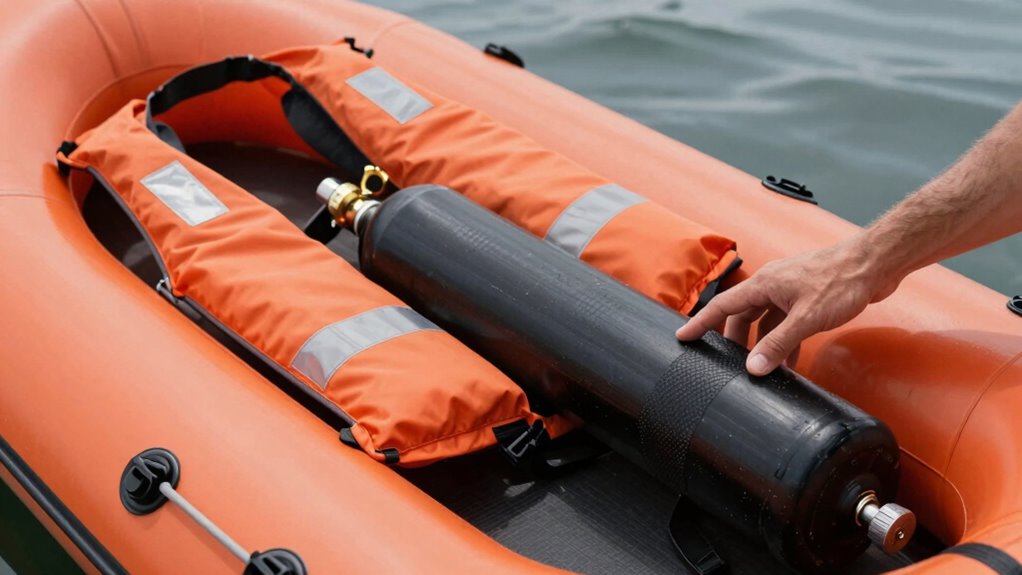
Have you ever wondered how inflatable PFDs provide reliable safety on the water? They play an essential role in marine safety by keeping you afloat during emergencies. When you fall into the water unexpectedly, these devices quickly activate to support your head and torso, helping you stay above the surface. Their inflatable design offers comfort and mobility, allowing you to move freely while remaining protected. In water rescue situations, inflatable PFDs are indispensable because they increase your chances of being seen and rescued. Their bright colors and buoyant features make a significant difference in survival odds. Proper maintenance, such as inspection and re-arming, is crucial to ensure they function correctly when needed. Regular storage and care routines help maintain their reliability over time. Understanding the different types of inflatable PFDs can help you select the best one for your activities. Additionally, being aware of inflatable PFD features can help you make more informed safety choices. Choosing an inflatable PFD with automatic inflation mechanisms ensures quick activation in emergencies. By ensuring you stay afloat and reducing fatigue, inflatable PFDs are a key safety tool for any water activity, giving you peace of mind on the water.

CO2 Rearming Kit Cylinder Cartridge Tank for Automatic/Manual Inflatable Life Jacket Lifejacket Life Vest Waist Pack Belt Lifesaving PFD 24 Gram
1.Fits various size inflatable lifejackets with 24 gram CO2 cylinder with 1/2” thread cylinder.
As an affiliate, we earn on qualifying purchases.
As an affiliate, we earn on qualifying purchases.
Why Regular Inspection of Your Inflatable PFD Is Essential
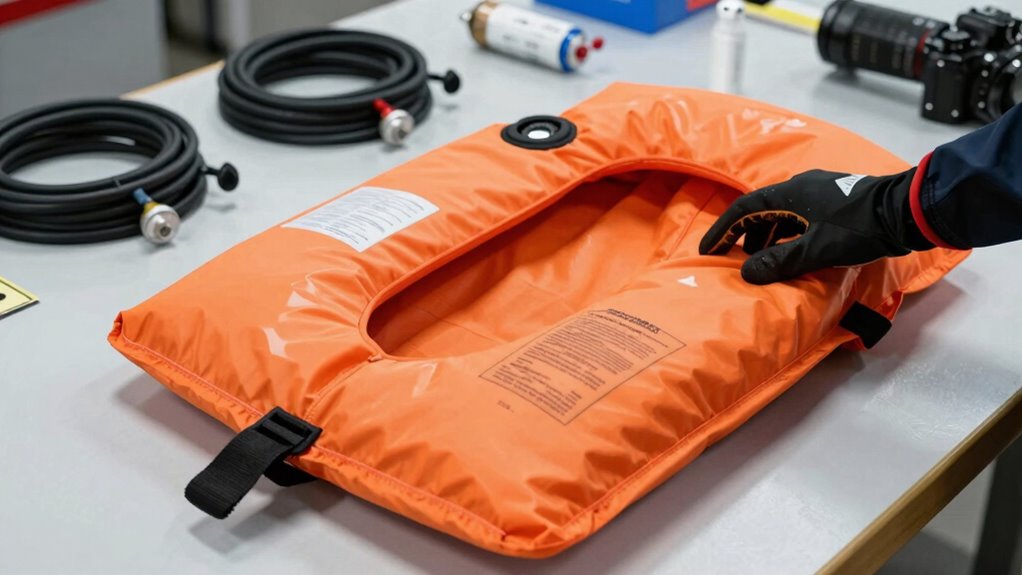
Ensuring your inflatable PFD functions properly each time you use it starts with regular inspections. Marine safety depends on it, as even small issues can compromise performance. Check for tears or punctures in the waterproof materials that protect the inflation mechanism. Ensure the oral inflation tube and CO2 cylinder are secure and undamaged. Look for signs of mold or deterioration in the fabric. Confirm that the activation cord moves freely and that the device holds air properly. Regular inspections help identify potential problems early, ensuring your PFD will deploy correctly when needed. Additionally, verifying that the inflation system is functioning properly can prevent unexpected failures during an emergency. Performing routine maintenance and following manufacturer guidelines can extend the lifespan of your safety gear. Keeping the storage environment dry and cool helps prevent material deterioration over time. Regularly testing the air retention capacity can help ensure the PFD remains reliable in critical moments. Remember, a well-maintained inflatable PFD provides reliable protection, giving you peace of mind on the water. Stay proactive to keep your safety gear in top condition, and always verify that your equipment complies with lifevest safety standards.

Mustang Survival MD201603191 M.I.T. 100 Automatic Inflatable PFD – Admiral Gray
Exclusive Membrane Inflatable Technology (M.I.T.) creates a lightweight, flexible fit
As an affiliate, we earn on qualifying purchases.
As an affiliate, we earn on qualifying purchases.
How to Re-Arm Your Inflatable PFD After Use
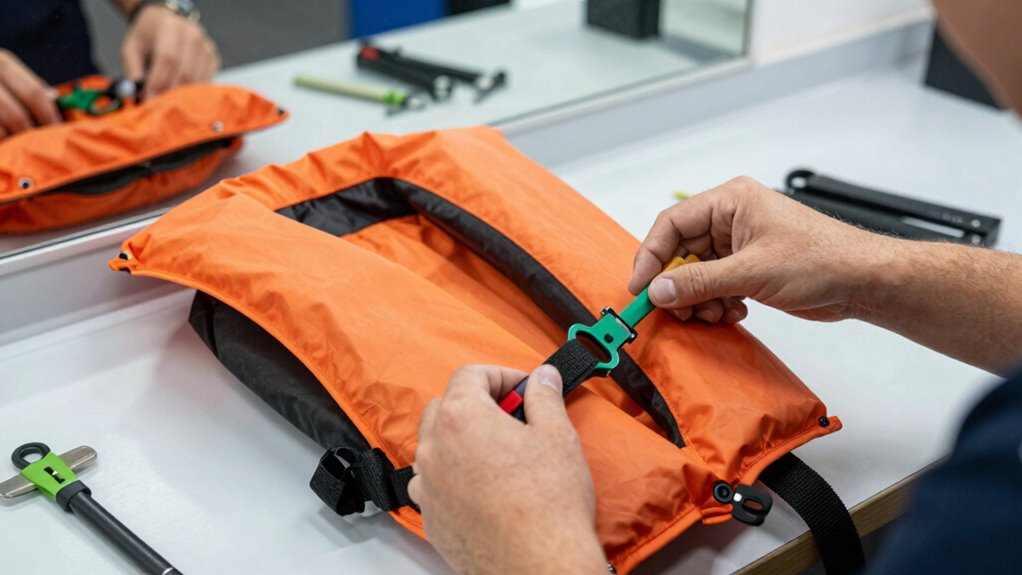
After using your inflatable PFD, you need to re-arm it properly. Start by checking the gas cartridge status and replace or refill the CO2 cylinder if necessary. Then, test and confirm the deployment to guarantee it’s ready for your next outing. Additionally, inspecting the inflatable PFD’s inflation mechanism regularly helps ensure reliable performance when needed. Being aware of dream symbolism related to time can also remind you of the importance of timely maintenance and safety checks to prevent unexpected issues. Incorporating preventive maintenance routines can extend the lifespan of your PFD and improve overall safety. Conducting routine safety inspections periodically is essential to catch potential defects early and maintain peak readiness.
Check Gas Cartridge Status
Wondering if your inflatable PFD’s gas cartridge still has enough pressure? Checking the status of your gas cartridge is vital before re-arming. A proper inspection ensures the inflation mechanism will deploy correctly in an emergency.
- Look for signs of corrosion or rust on the cartridge
- Ensure the cartridge is securely seated in the inflation mechanism
- Check the pressure gauge, if available, for adequate PSI
- Listen for any hissing sounds indicating leaks
- Confirm the date of the last gas refill or replacement
- Remember that safety equipment like inflatable PFDs should be regularly maintained and inspected to ensure reliable performance.
- Understanding narcissistic traits in your safety equipment can help identify potential issues with the device’s integrity.
- Regular maintenance routines include verifying the gas pressure to prevent unexpected failures during an emergency.
- Additionally, familiarize yourself with manufacturer rearming procedures to ensure proper handling and safety.
- Always handle the gas cartridge with care to prevent damage that could compromise its integrity and safety during deployment.
Replace or Refill CO2 Cylinder
When your inflatable PFD has been deployed, you’ll need to replace or refill the CO2 cylinder to prepare it for future use. First, remove the spent CO2 cylinder from the inflation mechanism. Ensure you handle it carefully, checking for any damage or leaks. If refilling, take the cylinder to a qualified provider and follow their instructions for refilling. If replacing, insert a new, approved CO2 cylinder into the inflation mechanism, making sure it’s securely threaded and seated properly. Always double-check that the cylinder is compatible with your PFD model. Proper re-arming ensures your inflatable PFD functions correctly when needed. It’s also important to inspect the inflation system for any damage or debris before storing or using the vest again. You should also store the PFD properly in a cool, dry place away from direct sunlight to prevent damage to the materials. Additionally, regularly reviewing manufacturer guidelines helps to maintain inflatable PFD safety and ensure reliable performance. To further ensure safety, familiarize yourself with the manufacturer’s maintenance instructions for your specific vest.
Test and Confirm Deployment
Once you’ve replaced or refilled the CO2 cylinder, it is essential to test and confirm that your inflatable PFD deploys properly. This involves performing deployment testing to ensure the device activates correctly when triggered. Start by inspecting the inflation mechanism and verifying the trigger confirmation process. Conduct a manual test in a safe environment to simulate deployment, making sure the PFD inflates fully and quickly. Check for any leaks or damage that could hinder performance. Confirm the activation button or pull cord functions smoothly. Regularly testing your PFD’s deployment helps you catch issues early, ensuring reliable performance when it truly matters. Proper testing guarantees your inflatable PFD will protect you effectively in an emergency. Additionally, deployment testing should be part of your routine maintenance to ensure ongoing reliability. Performing these tests periodically helps identify potential issues before an emergency occurs, ensuring safety. Incorporating visual inspections into your routine can help detect signs of wear or damage that might not be apparent during functional tests. Conducting material integrity checks further enhances confidence that your PFD remains dependable over time. Regularly consulting manufacturer guidelines and maintenance recommendations can also ensure you follow best practices for safety and performance.

Large Capacity Inflatable Boat Canoeing Storage Bag Carrying Bag Pouch Foldable Storage Bag Organizer in Gray(gray)
USAGE OCCASION — Suitable for kayaks, gas boats, fishing boats, rubber boats, etc.
As an affiliate, we earn on qualifying purchases.
As an affiliate, we earn on qualifying purchases.
Inspecting Your Inflatable PFD for Damage and Wear
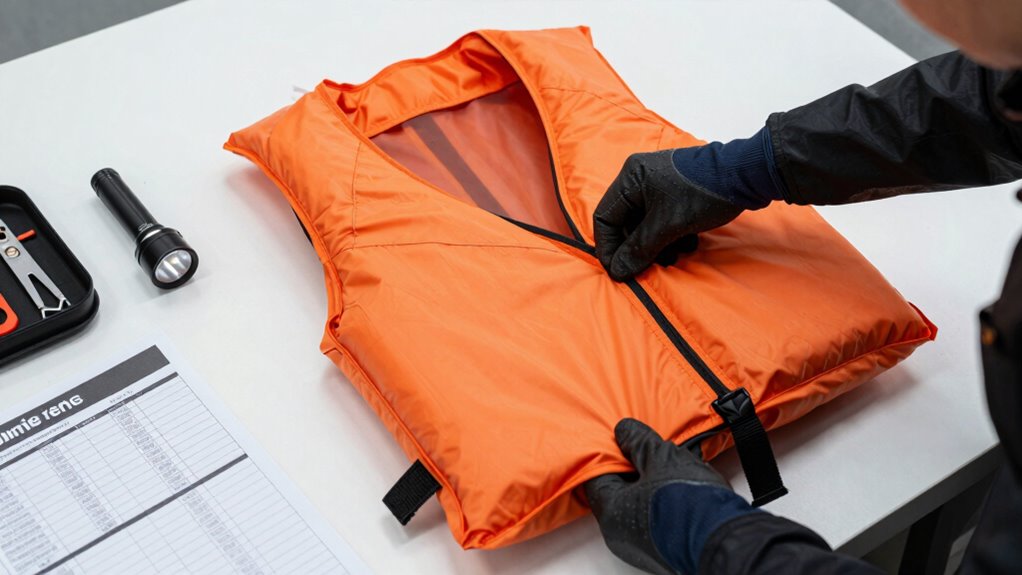
Regularly inspecting your inflatable PFD for damage and wear is essential to guarantee it functions properly in an emergency. Check for signs of material degradation, such as cracks, discoloration, or brittleness, which can compromise the PFD’s effectiveness. Examine seam integrity closely—look for fraying, separation, or broken stitches that could cause leaks or failure during inflation. Ensure that the fabric remains intact and free of punctures or tears. It’s also important to look for any corrosion or damage to the inflator mechanism. Address any issues immediately; a damaged PFD may not deploy correctly when needed. Regular inspections help you catch problems early, ensuring your life-saving device remains reliable and ready for use.
Storing Your Inflatable PFD for Long-Term Safety

To keep your inflatable PFD in good shape, store it in a cool, dry place away from direct sunlight. Before putting it away, inspect it thoroughly to catch any damage or wear. Proper storage helps make sure your PFD remains reliable when you need it most.
Store in Cool, Dry Place
Storing your inflatable PFD in a cool, dry place helps prevent damage and guarantees it functions properly when needed. Climate considerations play a crucial role in maintaining the device’s longevity, as excessive heat or humidity can degrade materials over time. Additionally, storing it properly reduces environmental impact by preventing mold, corrosion, and material breakdown. To ensure ideal storage, keep your PFD away from direct heat sources and moisture. Consider these tips:
- Choose a climate-controlled storage area
- Avoid areas prone to temperature fluctuations
- Keep it away from chemicals or solvents
- Use a breathable storage bag or container
- Store it upright to prevent deformation
Proper storage safeguards your safety gear, extends its lifespan, and minimizes environmental harm.
Keep Away From Sunlight
Exposure to direct sunlight can considerably weaken your inflatable PFD’s materials over time, making it less reliable in an emergency. Sunlight damage from UV exposure accelerates deterioration of the fabric and the bladder, reducing its effectiveness. To guarantee your PFD remains in top condition, store it in a cool, shaded area away from sunlight. Avoid leaving your inflatable PFD in places where it’s exposed to prolonged UV exposure, such as car interiors or open decks. UV rays break down the materials, causing cracks and weakening seams. Proper storage minimizes sunlight damage, preserving the integrity of your PFD. Always check the storage environment before placing your PFD away, and remember that even brief exposure to sunlight can impact its longevity and reliability when you need it most.
Inspect Regularly Before Storage
Regularly inspecting your inflatable PFD before storing it is essential to guarantee it remains reliable when you need it most. Proper storage preparation and seasonal maintenance help prevent damage and assure optimal performance. Before storing, check for leaks, tears, or corrosion on the inflation mechanism. Ensure the bladder is fully deflated and dry to prevent mold or mildew. Examine the packaging and straps for wear, replacing any damaged parts. Conduct a visual inspection of the CO2 cylinder if present. Regular inspections also include testing the oral inflation valve. By performing these checks, you catch potential issues early and maintain the PFD’s integrity. Remember, consistent seasonal maintenance and careful storage preparation keep your inflatable PFD in top condition, ready for immediate use when needed.
Common Mistakes to Avoid When Caring for Your Inflatable PFD
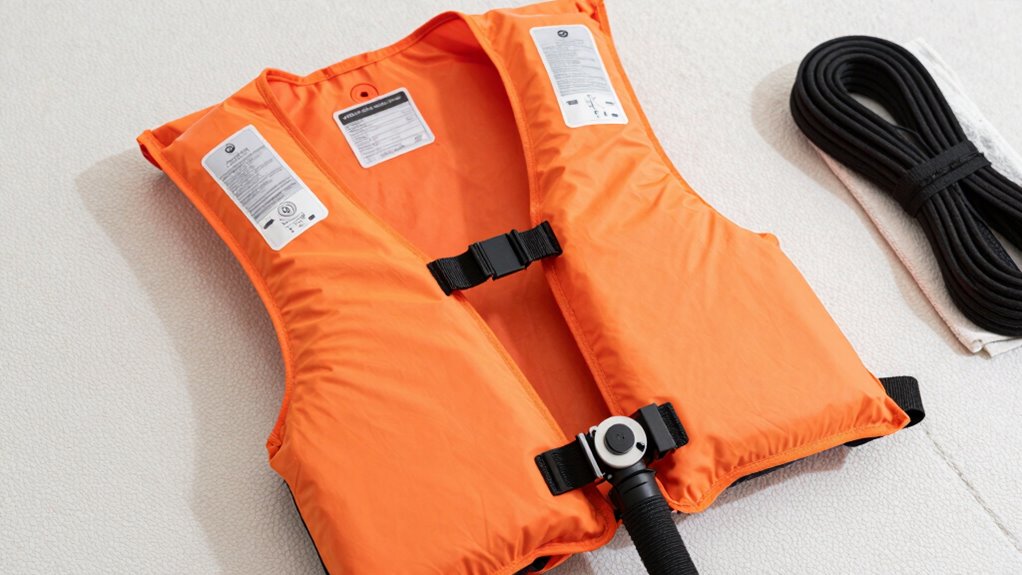
To keep your inflatable PFD functioning properly, it’s crucial to avoid common mistakes that can compromise its safety and durability. One mistake is neglecting proper cleaning; dirt, salt, and debris can damage the fabric and inflate mechanism over time. Always clean your PFD with fresh water and gentle soap after use, and let it dry completely before storage. Another mistake is incorrect packing—storing the PFD tightly compressed or in a cramped space can damage the bladder and reduce its effectiveness. Always follow the manufacturer’s instructions for proper packing, ensuring it’s stored flat or loosely rolled. Avoid exposing your PFD to direct sunlight or extreme temperatures during storage, as this can weaken materials and compromise performance. Proper care ensures your PFD remains reliable when you need it most.
Knowing When to Replace Your Inflatable PFD or Seek Professional Help
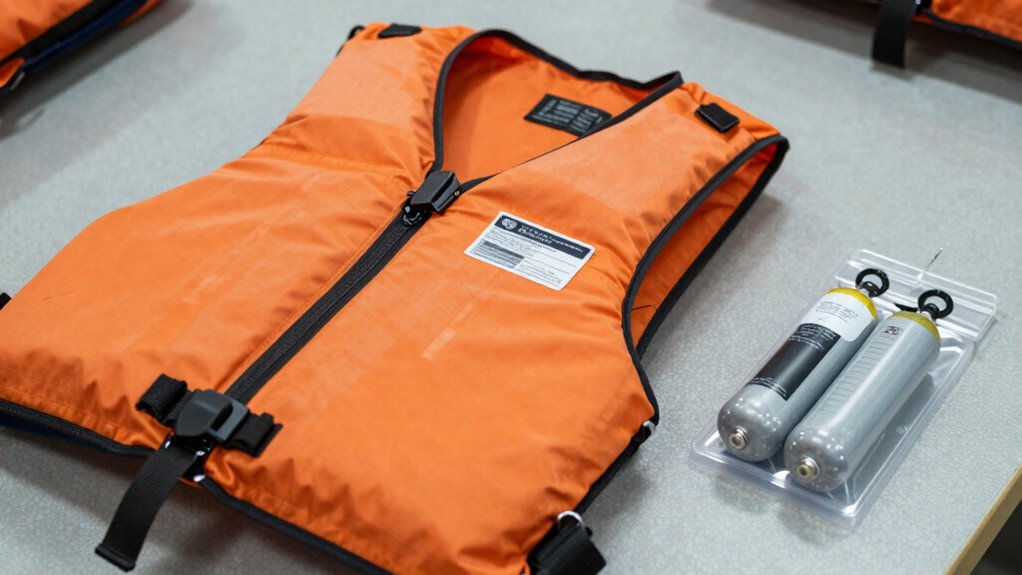
Knowing when to replace your inflatable PFD or seek professional help is essential to ensuring your safety on the water. Always check the expiration date on your device, as materials degrade over time and can compromise functionality. If the PFD shows signs of wear, such as tears, mold, or leaks, it’s time for a professional replacement. Additionally, if the inflation mechanism fails or the device no longer inflates properly, don’t attempt to fix it yourself—seek professional assistance. Regular inspections are crucial, but after a certain period, even well-maintained PFDs should be replaced.
Frequently Asked Questions
How Often Should I Re-Arm My Inflatable PFD?
You should re-arm your inflatable PFD after each use or at least once a year, whichever comes first. Follow your inspection schedule closely, checking for damage or leaks, and make certain you adhere to proper storage precautions when not in use. Regular re-arming guarantees your PFD functions correctly when needed, so make it a habit to re-arm promptly and store it in a cool, dry place to maintain its integrity.
What Tools Are Needed for Re-Arming an Inflatable PFD?
To re-arm your inflatable PFD, you’ll need a few tools: a valve replacement kit, which includes a new valve to guarantee proper sealing, and an inflation canister to provide the necessary pressurized gas. Make sure you also have scissors or a knife for any adjustments. Carefully follow the manufacturer’s instructions to replace the valve and insert the inflation canister, ensuring everything is secure before testing the device.
Can I Repair Minor Damage to My Inflatable PFD at Home?
You can perform DIY repairs on minor damage to your inflatable PFD, but only if you’re confident and have the right tools. Carefully inspect the damage during PFD maintenance, and if it’s small, you might patch tears or holes with recommended repair kits. However, for safety and reliability, always follow manufacturer instructions and consider professional repair for anything beyond minor fixes. Safety should always come first.
How Do Temperature Changes Affect Inflatable PFD Storage?
Temperature fluctuations can affect your inflatable PFD if you don’t store it properly. Extreme heat can cause the gas inside to expand, potentially damaging the device, while cold temperatures may weaken the materials or cause the gas to contract. To guarantee safety, store your PFD in a cool, dry place with stable temperature conditions, away from direct sunlight and heat sources. Proper storage preserves its functionality and longevity.
Are There Specific Cleaning Agents Recommended for Inflatable PFDS?
Think of your inflatable PFDs as delicate gear that needs gentle care. Use mild cleaning agents like soap and water, avoiding harsh chemicals that can damage the fabric or inflate mechanism. A soft cloth or sponge works best for cleaning, ensuring you don’t puncture or degrade the material. After washing, rinse thoroughly, air dry away from direct sunlight, and store properly. This keeps your inflatable PFDs reliable and ready when you need them most.
Conclusion
So, keep up with your inflatable PFD’s care routine—re-arm it, inspect it, and store it properly—because nothing says “water safety hero” like a well-maintained vest. Ignore these tips, and you might just end up flailing in the water, waving your deflated friend around. Remember, a little attention now prevents big trouble later. After all, who wouldn’t want to be the captain of their own safety ship, right?