When choosing between searchlights and floodlights for safety, consider your specific needs. Searchlights are safer for long-distance, focused illumination because they minimize light spillage and glare, reducing risks like glare blindness. Floodlights are better for broad area coverage but can cause glare if misaimed. Proper setup, aiming away from roads, and regular maintenance make either option safer. Keep exploring the details to make the best choice for your environment.

Get sports gear delivered free — and shop member deals
- Fast, free delivery on millions of items
- Access to Prime Big Deal Days deals on October 6–7
- Prime Video, Amazon Music and more included
Key Takeaways
- Searchlights are safer for targeted long-distance illumination, reducing light spillage and minimizing glare in specific areas.
- Floodlights are safer for broad area coverage, as they evenly illuminate large spaces and prevent dark spots effectively.
- Proper aiming and shielding of both lights enhance safety by minimizing glare and preventing light pollution.
- Using energy-efficient LED floodlights reduces environmental impact and safety risks associated with excessive brightness.
- Regular maintenance and compliance with lighting standards ensure both types operate safely and effectively in their intended settings.
LED outdoor floodlights for security
As an affiliate, we earn on qualifying purchases.
As an affiliate, we earn on qualifying purchases.
What Are Searchlights and Floodlights?
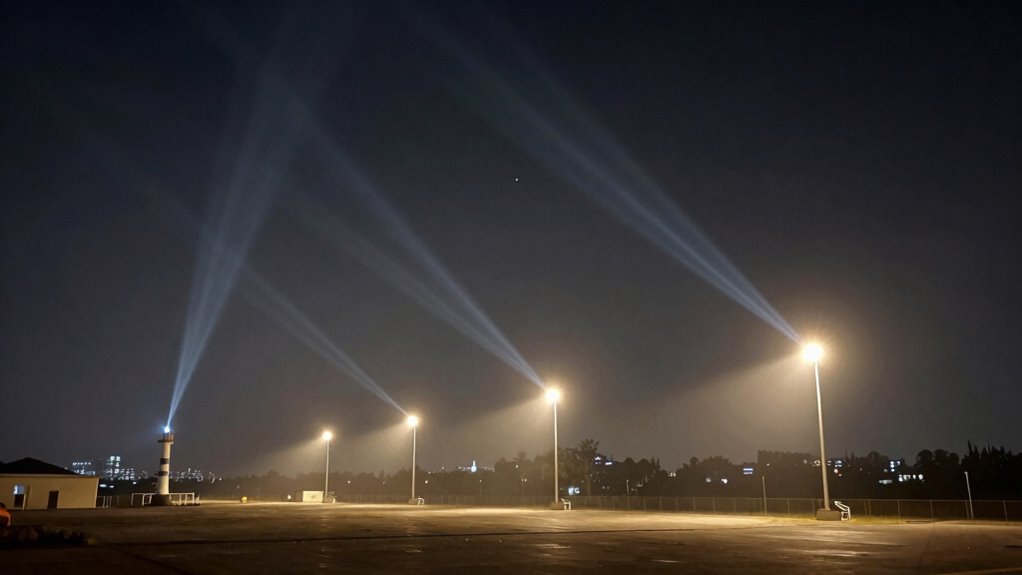
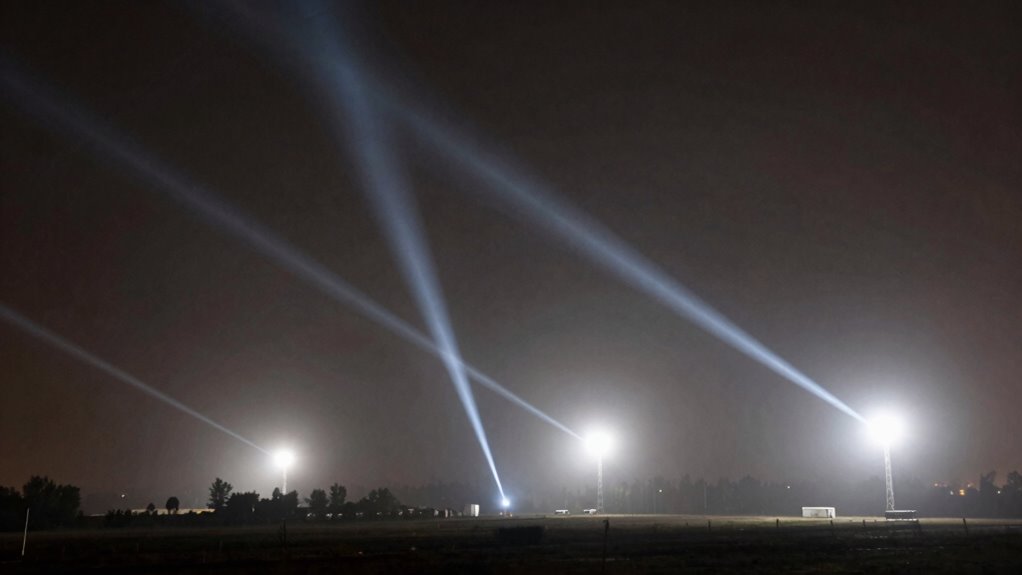
Searchlights and floodlights are both powerful lighting tools, but they serve different purposes and have distinct features. Searchlights utilize advanced lighting technology to produce a focused, intense beam of light that can be directed over long distances. They are ideal for highlighting specific objects or areas from afar. Additionally, searchlights are often used in searchlight applications such as maritime navigation or outdoor events. They are also useful in security and rescue operations where precise illumination is critical. Searchlights typically have a higher energy consumption due to their high-intensity beams, but modern lighting technology has improved efficiency through innovative lighting design. The design of searchlights often involves beam angle adjustment to optimize their long-range focus. Floodlights, on the other hand, emit broad, wide-angle illumination, covering large spaces with a softer, more dispersed light. When choosing between them, consider energy consumption—searchlights often use more energy due to their high-intensity beams, but modern lighting technology has improved efficiency. Floodlights tend to be more energy-efficient for widespread illumination. Understanding these differences helps you select the right lighting for your specific needs, especially when considering lighting efficiency and application.
long-distance searchlights for outdoor safety
As an affiliate, we earn on qualifying purchases.
As an affiliate, we earn on qualifying purchases.
How Do Searchlights and Floodlights Differ in Design and Function?
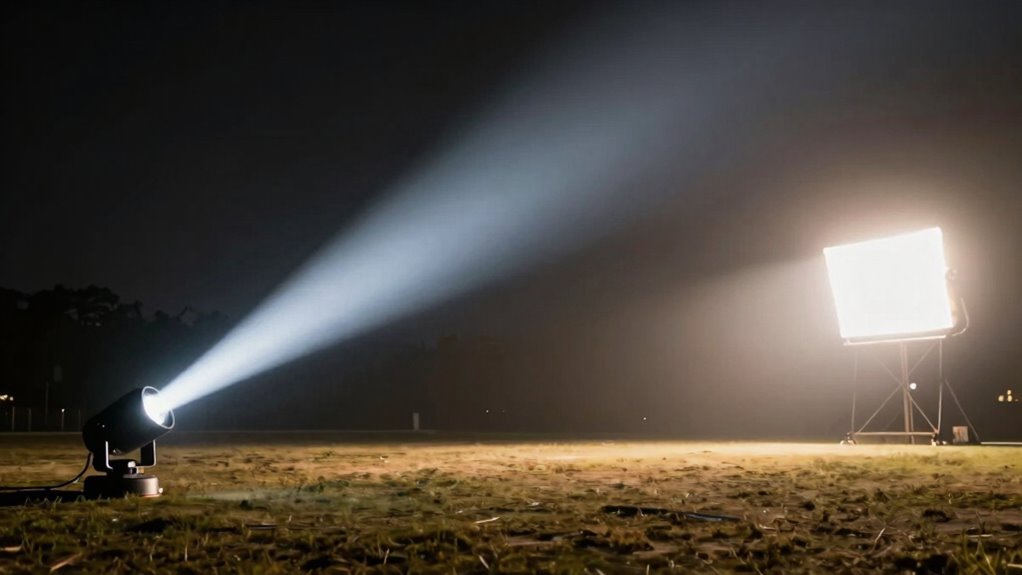
Searchlights focus their beam into a narrow, intense point, while floodlights spread light broadly over a wide area. Their designs also differ in mobility, with searchlights built for easy movement and floodlights fixed or stationary. Additionally, they vary in power and brightness, affecting how far and how vividly they illuminate. Understanding their differences helps determine which lighting type is safer in various situations. Recognizing the light distribution patterns is essential for selecting the appropriate lighting to ensure safety and effectiveness. Moreover, the beam control capabilities of each type influence how well they can be directed away from sensitive areas, reducing potential hazards.
Light Focus and Spread
While both searchlights and floodlights emit powerful beams, they are designed to differ markedly in how they focus and spread light. Searchlights concentrate light into a narrow, intense beam, maximizing light intensity and range with minimal energy waste. Floodlights, on the other hand, distribute light broadly, covering larger areas but with less focus, which can reduce energy efficiency. The design of each influences their effectiveness in different situations. For example, a searchlight’s focused beam is ideal for long-distance illumination, while floodlights excel at evenly lighting wide spaces. Here’s a comparison:
| Feature | Searchlights | Floodlights | Key Difference |
|---|---|---|---|
| Light Focus | Narrow, concentrated beam | Wide, dispersed light | Focus vs. spread |
| Light Intensity | High at a distance | Moderate across a broad area | Intensity vs. coverage |
| Energy Efficiency | Higher for specific targets | Lower due to broader spread | Focused vs. diffuse energy use |
Design for Mobility
The design of searchlights and floodlights reflects their different functions and mobility needs. Searchlights are built for portability, featuring lightweight frames, adjustable mounts, and compact sizes that enable quick setup and movement. They often incorporate adaptive lighting controls, allowing you to focus or widen the beam as needed. Floodlights, on the other hand, are designed for stability and broad coverage, typically fixed in place or mounted on sturdy structures. Their design emphasizes energy efficiency through features like motion sensors or dimming options, reducing power consumption during extended use. Both types prioritize durability but differ in weight, size, and mounting options, aligning their design with specific operational requirements. This focus on mobility and adaptive lighting ensures each device performs excellently in its intended environment.
Power and Brightness
Because of their different purposes, searchlights and floodlights vary considerably in power and brightness. Searchlights deliver intense, focused beams, making them highly powerful for long-distance illumination. They typically use high-intensity bulbs, providing maximum brightness with relatively low energy efficiency. Floodlights, on the other hand, spread light over a wide area, offering moderate to high brightness but generally consuming more energy for broader coverage. When choosing between them, consider energy efficiency—searchlights tend to be more efficient for pinpoint illumination, while floodlights require more power for extensive lighting. Installation considerations also play a role; searchlights need precise positioning for maximum effect, whereas floodlights are easier to install for broad, ambient lighting. Both types offer different advantages depending on your lighting needs and energy priorities. Energy consumption is an important factor to consider when selecting the right lighting solution for your space. Additionally, understanding the design and function of each can help you make more informed decisions based on your specific requirements. For example, the lighting technology used in these fixtures can significantly impact their performance and energy use.
energy-efficient floodlights for large areas
As an affiliate, we earn on qualifying purchases.
As an affiliate, we earn on qualifying purchases.
When Is a Searchlight Safer Than a Floodlight?
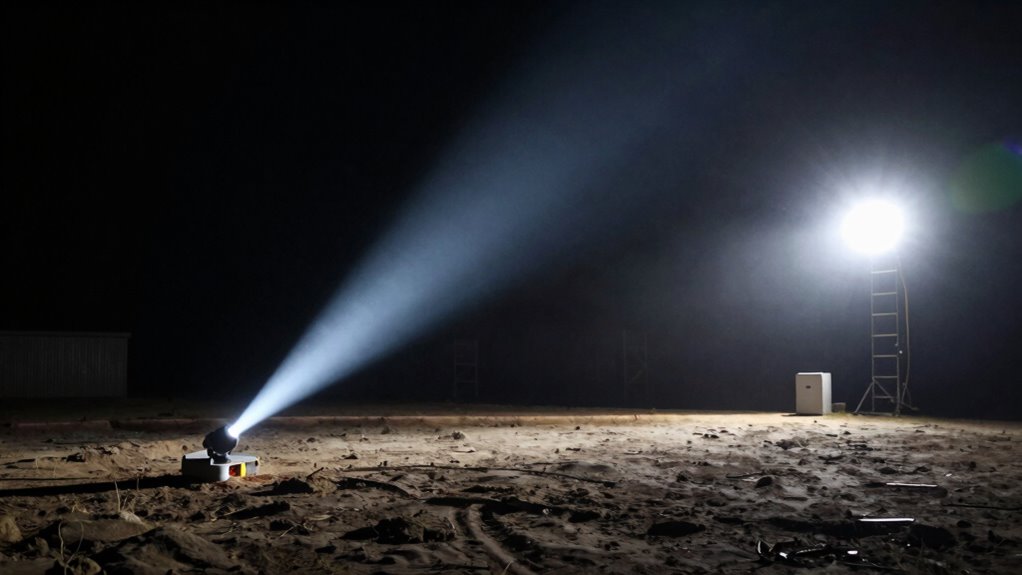
When safety and security are your top priorities, a searchlight’s focused beam can provide better control and identification. Its precision helps you monitor specific areas without unnecessary light spillage, reducing risks. In situations requiring careful observation, a searchlight often proves safer than a floodlight. Additionally, understanding mental health prognosis can inform how to approach safety measures in different scenarios. A searchlight’s ability to target a specific area also minimizes light pollution, which can be distracting or disorienting in certain environments. Moreover, the targeted illumination of a searchlight can help prevent visual distraction, allowing for clearer focus and safer decision-making. Employing appropriate lighting techniques ensures that safety is maximized while minimizing potential negative effects on the surrounding environment. Using the correct lighting also supports energy efficiency, making safety measures both effective and environmentally conscious.
Precision in Focus
A searchlight’s focused beam offers a distinct advantage when precise illumination is necessary, especially in situations where safety depends on accurate targeting. Unlike floodlights, which scatter light widely, it minimizes light pollution by directing light exactly where it’s needed. This targeted approach reduces unnecessary glare and spillage, making it safer for nearby environments and sensitive areas. Additionally, because a searchlight concentrates its energy into a narrow beam, it’s more energy-efficient—using less power to achieve the same level of precision. When accuracy is critical, especially in search-and-rescue operations or detailed inspections, a searchlight’s focused illumination ensures you avoid wasting energy and prevent unnecessary light pollution. Proper light distribution is essential for maximizing safety and efficiency in various applications. Furthermore, using a focused beam reduces the risk of blinding or distracting others, which is crucial for maintaining safety in crowded or sensitive settings.
Security and Safety
Have you ever considered how a searchlight can enhance safety more effectively than a floodlight? A searchlight’s focused beam can quickly illuminate specific areas or intruders, improving security without flooding the entire space with light. This targeted illumination can deter unwanted activity while maintaining lighting aesthetics, as it minimizes unnecessary light spillage. Additionally, searchlights tend to consume less energy when used strategically, making them a cost-effective safety tool. Floodlights, while bright, can sometimes create blind spots or overly expose areas, reducing safety. When precision matters—like monitoring a narrow entryway or a specific object—a searchlight provides better control and security. Overall, in scenarios requiring focused safety measures, a searchlight’s targeted beam enhances security more reliably than a floodlight.
focused searchlights for security and rescue
As an affiliate, we earn on qualifying purchases.
As an affiliate, we earn on qualifying purchases.
In Which Situations Are Floodlights the Safer Choice?
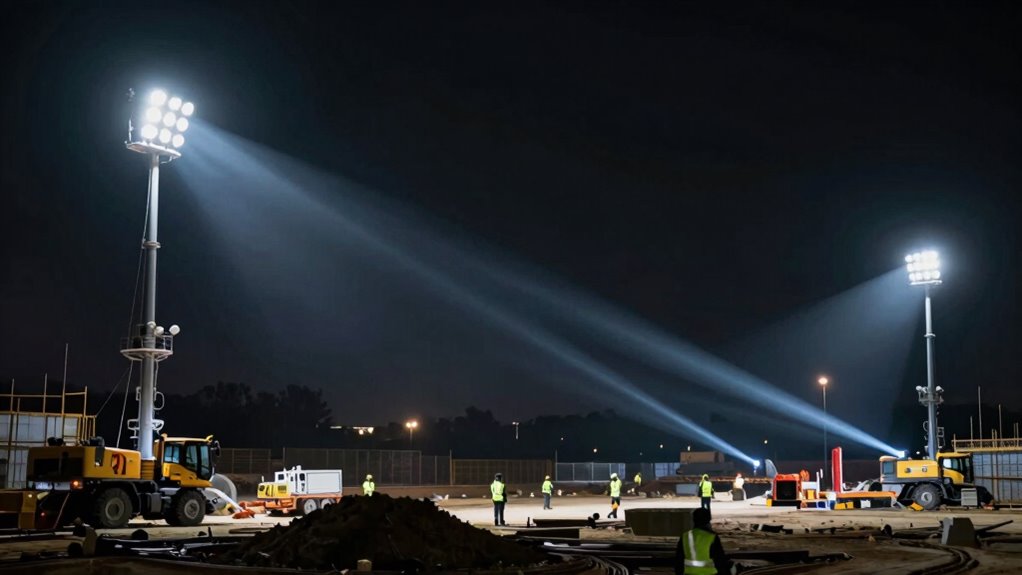
Floodlights are often the safer choice in situations that require broad, consistent illumination over large areas. They provide even coverage, reducing dark spots and minimizing accidents or security breaches. When considering solar efficiency, floodlights tend to be more effective for large spaces because they can be designed to maximize energy use with motion sensors or timers, reducing overall energy consumption. This setup can also be integrated with energy-efficient lighting technologies to further enhance sustainability. This makes them more sustainable and cost-effective in the long run, especially for outdoor security or sports fields. Additionally, floodlights’ wide beam spreads light efficiently without the need for multiple units, lowering maintenance and operational risks. If your priority is consistent, wide-area lighting with ideal solar efficiency and minimized energy use, floodlights are the safer, smarter choice. Furthermore, electric power generation with bike generators can be integrated into solar-powered lighting systems to enhance energy sustainability and reduce reliance on traditional electricity sources. Incorporating performance parts like high-efficiency floodlights can further improve the effectiveness of outdoor lighting setups. Proper installation practices are essential to ensure optimal performance and safety in large-scale lighting applications.
What Are the Main Safety Risks of Using Searchlights?
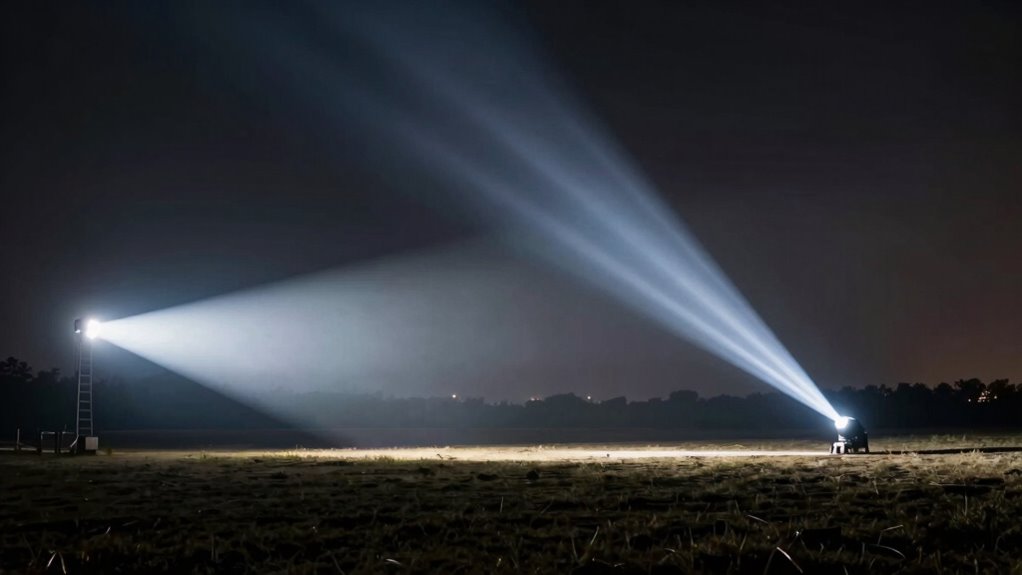
While floodlights excel in providing broad and stable illumination, searchlights introduce specific safety risks that you need to consider. One major concern is light pollution; the intense, focused beam can disturb nearby residents or wildlife if not properly directed. Additionally, searchlights often consume significant energy, leading to higher energy costs and increased environmental impact. The powerful beam can also cause glare, impairing vision for drivers or pedestrians, which raises safety hazards. If misused or aimed incorrectly, searchlights can create distractions or even temporary blindness, increasing the risk of accidents. Moreover, light pollution mitigation is essential to prevent unnecessary disturbance to the environment and community. Proper beam control can significantly reduce these risks. Using advanced beam adjustment technology can further enhance safety and reduce potential hazards. Implementing safety protocols when operating searchlights is crucial to minimize these risks and ensure responsible use. Consequently, while effective for pinpoint illumination, you must be cautious about their potential to contribute to light pollution, demand higher energy, and compromise safety if not handled responsibly.
What Safety Concerns Come With Floodlights?
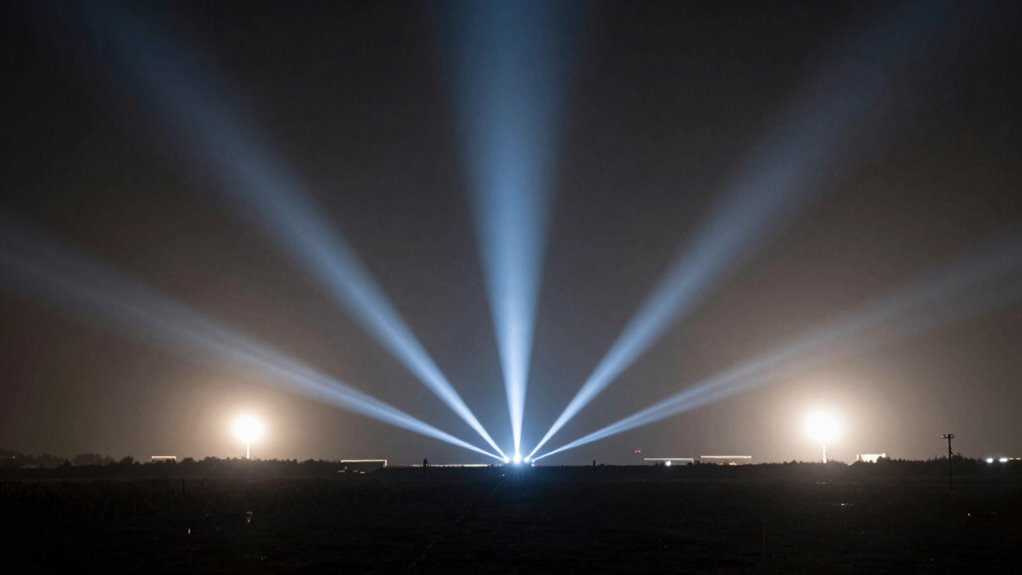
Floodlights can cause glare that blinds or distract people, leading to accidents or discomfort. They also contribute to light pollution, which affects nearby residents and wildlife. Additionally, bright floodlights might reveal security vulnerabilities or attract unwanted attention, posing safety risks. Proper installation and shielding are essential to mitigate these hazards light spill. To ensure safety, it is important to consider lighting design principles when installing floodlights to minimize these issues.
Glare and Light Pollution
Because bright, unshielded lights can scatter into the night sky, they often create significant glare that hampers visibility and safety. This glare can cause discomfort, disorientation, and even accidents, especially for drivers and pedestrians. Additionally, floodlights contribute to light pollution, disrupting local ecosystems and obscuring stars. To mitigate these issues, effective glare management is essential. Proper shielding, directional lighting, and dimming controls help reduce unnecessary light spill. Here’s a breakdown of common factors influencing glare and light pollution:
| Factor | Impact | Mitigation Strategies |
|---|---|---|
| Light Directionality | Excessive spill into the sky | Use shields and proper aiming |
| Intensity Levels | Higher brightness increases glare | Dim lights during off-peak hours |
| Shielding Quality | Poor shields allow more light escape | Upgrade to full cutoff fixtures |
| Surrounding Environment | Reflective surfaces amplify glare | Use matte finishes and barriers |
| Local Regulations | Limits on light pollution enforcement | Follow community lighting codes |
Potential Security Risks
Bright, unshielded floodlights can considerably improve visibility, but they also introduce potential security risks if not properly managed. One major concern is unauthorized access, as bright lights can reveal vulnerabilities around your property, making it easier for intruders to spot entry points or hide in shadows. Additionally, floodlights pose electrical hazards if installed improperly or maintained poorly; exposed wiring or faulty connections can lead to shocks or fires. Overly bright or poorly directed lights may also cause glare, impairing your vision or alerting intruders to your presence. To minimize these risks, ensure floodlights are properly protected, securely installed, and regularly maintained. Managing light direction and intensity helps balance security benefits with safety concerns, reducing the chance of unwanted incidents.
How Can You Choose the Safer Lighting Option for Your Needs?
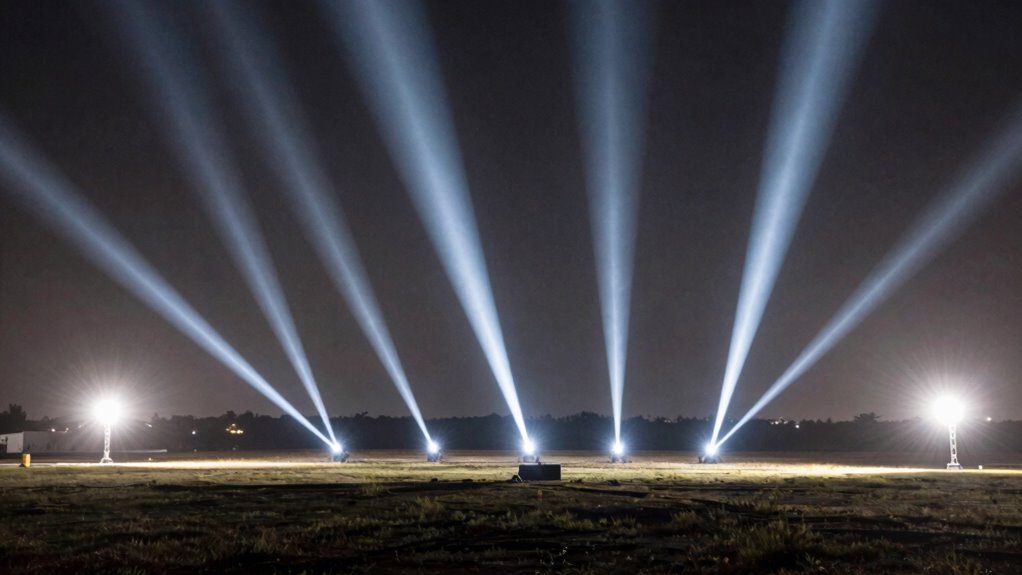
Choosing the safest lighting option for your needs requires careful consideration of how each type impacts visibility and safety. Think about lighting aesthetics—do you want a subtle glow or a bright, focused beam? Floodlights provide broad, even illumination, making them ideal for security without overwhelming the area. Searchlights create intense, directional beams, which can be more distracting or blinding if misused. Assess energy efficiency as well; floodlights often consume less power, especially modern LED models, while searchlights tend to use more energy due to their high-intensity beams. Ultimately, your choice depends on balancing visibility, safety, and aesthetics. Consider your specific environment and security needs to select the option that minimizes risks while enhancing overall safety.
Tips for Using Searchlights and Floodlights Safely
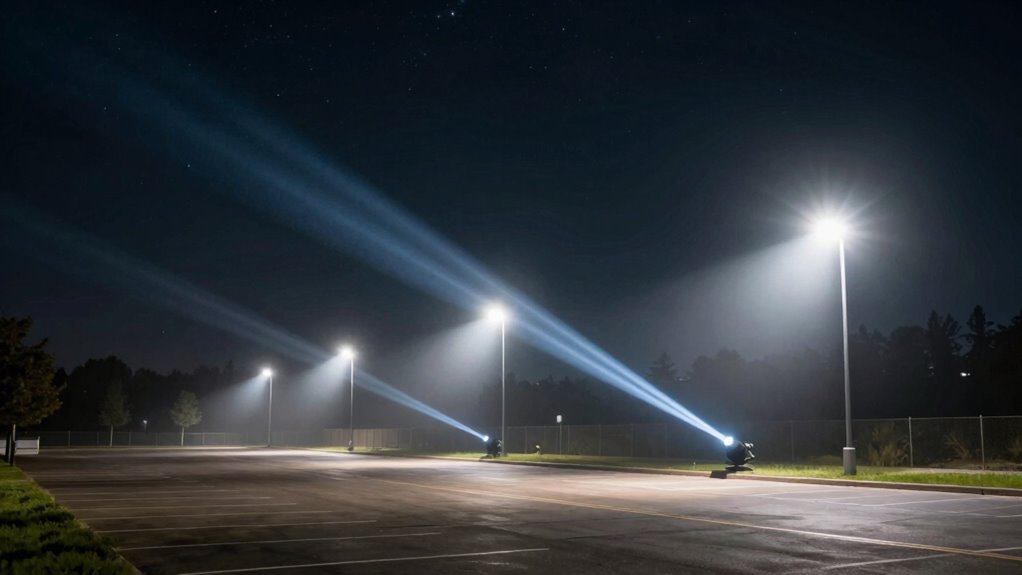
To guarantee safe use of searchlights and floodlights, always position them correctly and aim them away from drivers or pedestrians to prevent blinding or distracting others. Follow lighting standards to ensure proper illumination without causing glare. Use portable illuminators with adjustable angles for better control. Keep the lights stable to avoid sudden movements that could surprise others. Regularly inspect your equipment for damage or malfunction. When selecting floodlights, choose those with appropriate brightness levels for your space.
| Tip | Benefit |
|---|---|
| Aim lights away from roadways | Prevents blinding drivers and pedestrians |
| Use adjustable portable illuminators | Enhances control and safety |
| Follow lighting standards | Ensures compliance and safety |
| Regularly inspect equipment | Maintains safe operation |
Common Mistakes That Can Compromise Lighting Safety
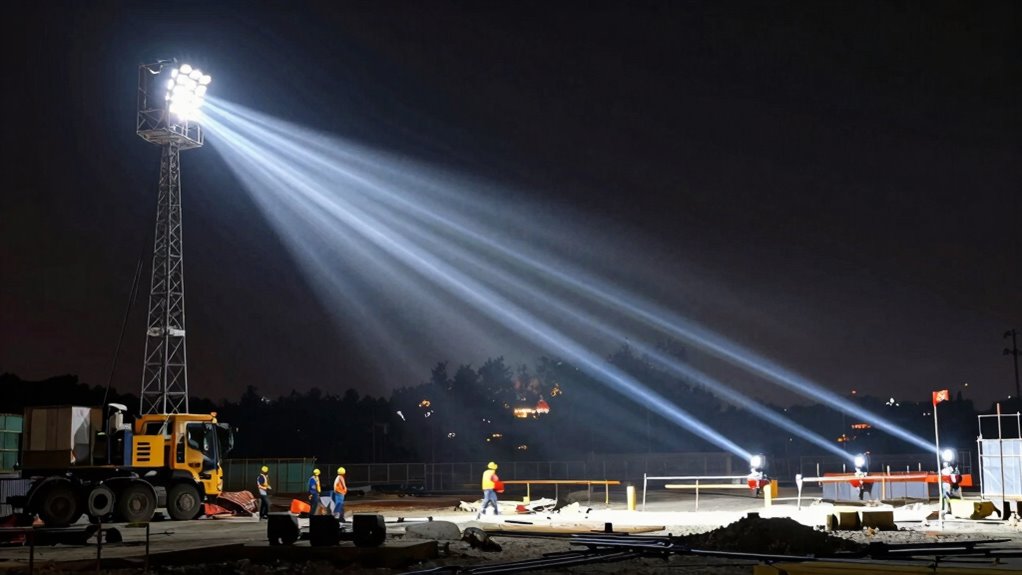
One common mistake that can compromise lighting safety is misaiming searchlights or floodlights, which can cause glare or blind drivers and pedestrians. Poor lighting maintenance can lead to misaligned fixtures, increasing risks during nighttime or adverse weather conditions. Regular inspections ensure lights are properly aimed and functioning correctly. Additionally, neglecting emergency preparedness can leave you unready to address sudden lighting failures or electrical issues, creating hazards during critical moments. Failing to promptly repair or replace faulty lighting not only jeopardizes safety but also violates safety regulations. To avoid these mistakes, schedule routine lighting maintenance and develop contingency plans for emergencies. Properly maintained and well-aimed lighting enhances visibility, reduces accidents, and keeps everyone safer.
Final Tips: When to Prioritize Safety With Searchlights or Floodlights
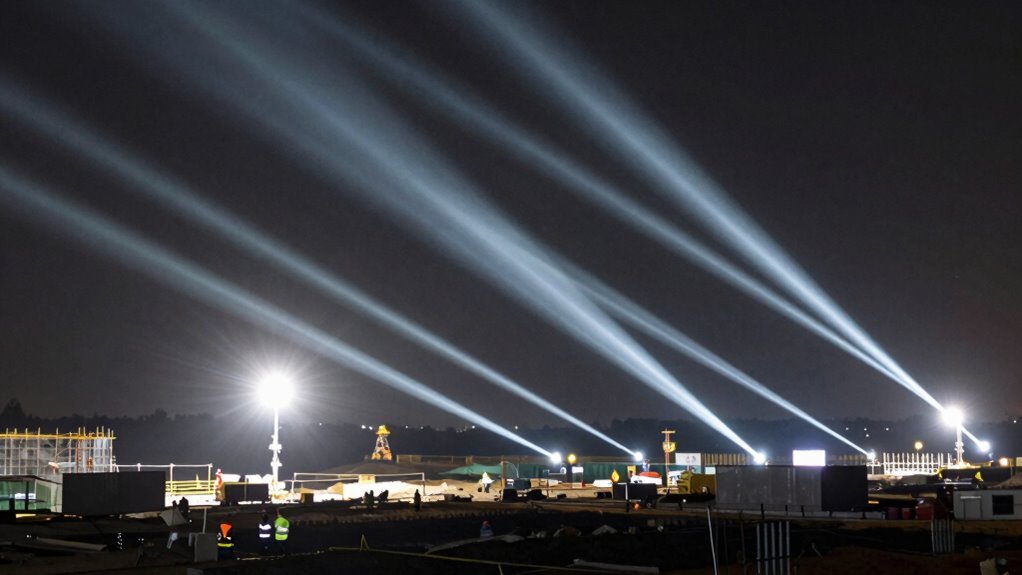
Maintaining proper lighting is essential, especially when unexpected issues or changing conditions arise. When safety is a priority, consider using searchlights for quick, focused illumination in emergencies or when precise visibility is needed. Floodlights are better suited for broad coverage during ongoing surveillance or large-area lighting, offering consistent safety without constant adjustments. Keep energy efficiency in mind; searchlights often consume more power but provide intense, targeted light. Floodlights tend to be more energy-efficient for long-term, widespread coverage. Cost considerations also matter—searchlights may have higher initial costs but are useful for short-term safety boosts, while floodlights offer more economical, continuous safety. Choose based on your specific safety needs, balancing energy use, budget, and the situation’s urgency.
Frequently Asked Questions
Are There Legal Restrictions on Using Powerful Searchlights in Residential Areas?
Yes, there are legal restrictions on using powerful searchlights in residential areas. You need to take into account local laws that regulate light pollution, as excessive or poorly directed light can disturb neighbors and violate ordinances. Always check with your city or homeowner’s association before operating high-intensity searchlights, and ensure your usage doesn’t cause unnecessary light pollution, which can lead to fines or other penalties.
How Do Weather Conditions Affect the Safety of Floodlights and Searchlights?
Weather conditions considerably impact the safety of floodlights and searchlights. Rain, fog, or snow reduce visibility safety, making it harder to see and be seen. Strong winds can cause lights to sway or break, increasing hazards. During adverse weather, you should lower light intensity or turn them off to prevent glare or accidents. Always consider weather impact to maintain safety and avoid blinding others or creating dangerous situations.
Can Improper Installation Increase Safety Risks of These Lighting Types?
Improper installation can substantially increase safety risks for your lighting. Did you know that poor setup accounts for over 30% of accidents involving floodlights and searchlights? Without proper installation safety, you risk accidental glare that blinds drivers or pedestrians, leading to potential injuries. Always guarantee correct mounting and wiring to prevent these hazards, and consider professional help to minimize risks and keep your lighting safe and effective.
Are There Eco-Friendly Options for Safer Outdoor Lighting?
Yes, you can choose eco-friendly outdoor lighting options that are safer. Solar alternatives provide sustainable illumination without increasing energy bills, making them a smart choice. Additionally, opting for energy-efficient fixtures reduces environmental impact and minimizes light pollution. By selecting solar-powered lights and energy-efficient fixtures, you create a safer outdoor environment that’s environmentally friendly and cost-effective, helping you protect both your property and the planet.
How Often Should Maintenance Be Performed to Ensure Safety?
Did you know that proper lighting maintenance minimizes accidents by up to 70%? You should perform regular safety inspections and lighting maintenance at least twice a year, especially before peak usage seasons. This ensures all fixtures are functioning correctly, bulbs are replaced promptly, and wiring is secure. Consistent upkeep helps you avoid hazards, prolongs the lifespan of your outdoor lighting, and keeps your property safe for everyone.
Conclusion
Choosing between searchlights and floodlights is like steering a delicate dance—each step must be carefully timed and executed. By understanding their differences and safety risks, you become the choreographer of your own illumination symphony. Remember, the right light can be your guiding star or a blazing inferno—so prioritize safety, stay vigilant, and let your choices shine as brightly as your intentions. When in doubt, steer towards caution; your safety is the true spotlight.
NFL season / tailgating Picks
team gear
As an affiliate, we earn on qualifying purchases.