A bow thruster helps you make precise lateral movements, especially in tight spots or during docking, when you need quick, controlled side thrusts. However, relying too much on it can hide your true handling skills and mask underlying weaknesses in steering or responsiveness. Overuse can cause equipment wear and reduce your confidence in manual control. To handle your boat effectively, balance thruster use with proper seamanship—continue exploring to learn how to improve your skills without overdependence.
Key Takeaways
- Bow thrusters assist with precise lateral movement during docking, reducing reliance on engine power in tight spaces.
- Overusing thrusters can conceal poor steering skills and lead to equipment wear, hiding underlying handling deficiencies.
- Effective docking balances thruster use with manual rudder techniques to develop true vessel control.
- Relying solely on thrusters may prevent skill development and mask navigation or environmental challenges.
- Proper training emphasizes mastering rudder and throttle control to ensure safe, confident docking without overdependence on thrusters.

Lewmar 140TT 2.2kw Gen. 2 Bow Thruster -12V
Great Product
As an affiliate, we earn on qualifying purchases.
As an affiliate, we earn on qualifying purchases.
What Is a Bow Thruster and How Does It Work?
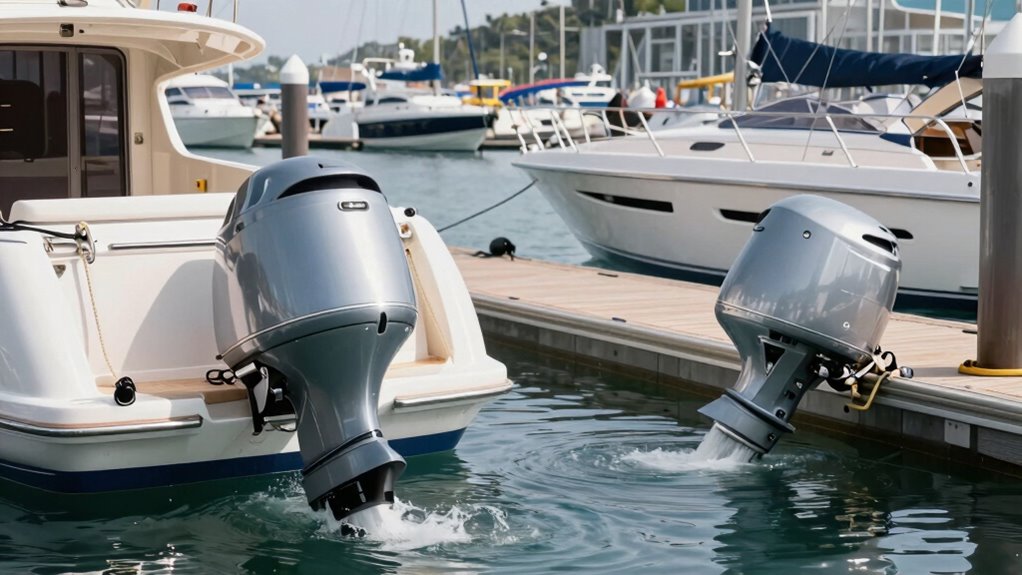
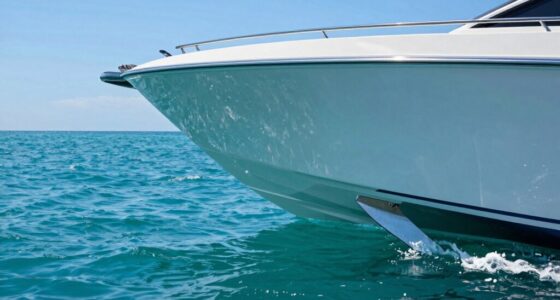
Have you ever wondered how ships maneuver precisely in tight spaces or when docking? That’s where a bow thruster comes in. The bow thruster is a transverse propeller mounted at the front of the vessel, helping you steer laterally. Its propeller design is specialized to generate sideways thrust, making tight turns easier. The bow thruster operates through hydraulic systems, which power the propeller independently from the main engines. These systems control the flow of hydraulic fluid to the thruster, allowing you to activate it quickly and precisely. This setup gives you better control in crowded ports or when steering narrow channels. By understanding how the propeller design and hydraulic systems work together, you can appreciate how a bow thruster enhances maneuverability and simplifies docking procedures, much like the ways in which maritime technology advancements improve navigation and safety at sea. Additionally, modern hydraulic systems are engineered for reliability, which ensures consistent performance during critical maneuvers. Reliable hydraulic systems are crucial for maintaining maneuverability in challenging conditions, and employing advanced control systems can further optimize vessel handling. Furthermore, the integration of digital controls allows for more precise and responsive maneuvering, making docking even safer and more efficient.

B & S Marine Anodes Bow Thruster ZINC VETUS BP1185
New
As an affiliate, we earn on qualifying purchases.
As an affiliate, we earn on qualifying purchases.
When Should You Use a Bow Thruster for Better Maneuvering?
You should deploy a bow thruster whenever you need to make precise lateral movements, especially in tight or congested spaces. During bridge guidance, a bow thruster helps you maneuver smoothly without relying solely on engine power, reducing stress on your engine maintenance. It’s particularly useful when docking or steering through narrow channels, where small adjustments make a big difference. Using the thruster at the right moments can help you keep better control, avoid collisions, and reduce the risk of damage. Additionally, understanding proper thruster usage can prevent unnecessary wear and improve overall vessel handling. Proper thruster techniques can also enhance safety during complex maneuvers. However, don’t overuse it, as excessive reliance can mask poor handling skills or lead to unnecessary wear. Knowing when to activate your bow thruster ensures safer, more efficient maneuvering without compromising your vessel’s engine health. Being aware of thruster maintenance and proper operation can extend its lifespan and ensure reliable performance when needed most.

Lewmar 110TT Boat Thruster Kit 1.5 W, Single 5-Blade Propeller, 1.5kW 2.0 HP 12-Volt Motor with Joystick Control, 7-Meter Cable, Thrust Tunnel, Fuse and Holder
EVERYTHING YOU NEED— This bow thruster has what you need to safely dock your boat. The kit includes…
As an affiliate, we earn on qualifying purchases.
As an affiliate, we earn on qualifying purchases.
How to Use Your Bow Thruster Safely During Docking?
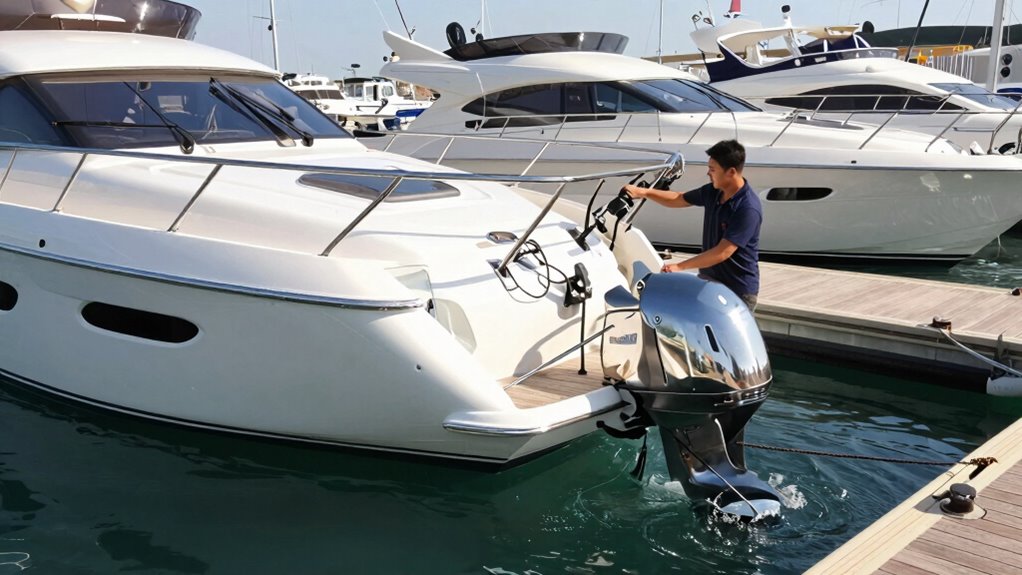
To use your bow thruster safely during docking, it’s essential to coordinate its activation carefully with your engine controls and steering. Before docking, ensure your boat’s maintenance is up to date, especially the thruster’s electrical connections. Regular engine diagnostics help identify any issues that could affect maneuverability. When approaching the dock, use gentle, deliberate movements—avoid sudden bursts of power. Communicate with crew if possible, so everyone’s prepared. Keep a close eye on the surroundings and avoid over-reliance on the thruster; it’s a tool to assist, not replace good seamanship. Proper boat maintenance and engine diagnostics guarantee your thruster functions reliably, reducing risks during critical docking moments. Being aware of seasonal weather conditions can also influence your docking strategy and thruster use. Additionally, understanding the impact of wind and current helps in planning safer, more controlled docking maneuvers. Practicing regular boat handling drills can improve your confidence and reaction time during docking. Developing a comprehensive docking plan that accounts for all environmental factors helps prevent accidents and keeps docking smooth and safe. Incorporating pre-docking checks into your routine can further ensure all systems, including the thruster, are ready for use when needed.

Vetus BPSE2 Bow Thruster Panel W/Buttons & Time Lapse
Function: Controls Vetus bow or stern thrusters using simple push‑button operation Time-Lapse Feature: Built-in delay when reversing thruster…
As an affiliate, we earn on qualifying purchases.
As an affiliate, we earn on qualifying purchases.
Common Mistakes When Relying on Your Bow Thruster
Relying too heavily on your bow thruster can lead to common mistakes that compromise safe maneuvering. Overconfidence may cause you to ignore navigation hazards or neglect regular maintenance routines, risking sudden failures. Misjudging your boat’s response or overusing the thruster can also lead to poor handling and accidents. Here’s a breakdown of mistakes to watch for:
| Mistake | Consequence | Solution |
|---|---|---|
| Overusing the thruster | Hiding poor steering skills | Practice manual control |
| Ignoring navigation hazards | Collisions or grounding | Always scan surroundings |
| Skipping maintenance routines | Thruster failure during critical moments | Regular checks and servicing |
| Relying solely on thrusters | Reduced situational awareness | Develop extensive skills |
Signs You’re Overusing Your Bow Thruster and Hiding Poor Skills?
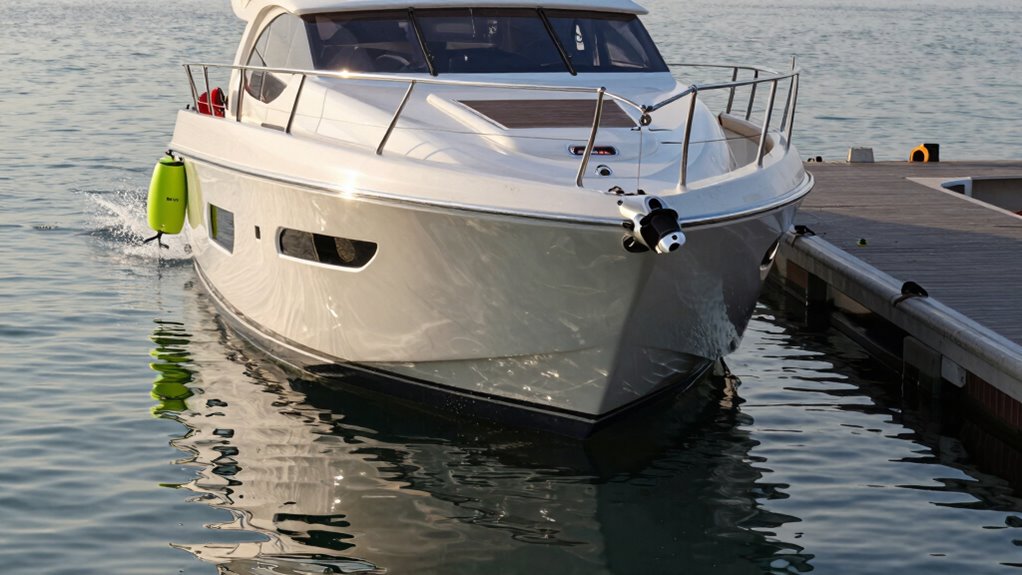
If you find yourself constantly relying on your bow thruster, it could be a sign you’re not mastering basic maneuver skills. Overusing it may hide gaps in your overall handling abilities and lead to poor boat control. Recognizing these signs early helps you develop better techniques and become a more confident mariner. Developing proper steering skills is essential for safe and efficient navigation, especially when you want to reduce dependence on thrusters. Improving your sailing techniques can help you rely less on mechanical aids and enhance your overall seamanship. Focusing on boat control techniques allows you to handle your vessel more effectively without overreliance on electronic aids.
Relying Too Much On Thruster
Overusing your bow thruster can mask underlying piloting weaknesses and lead to poor maneuvering skills. Relying heavily on the thruster reduces your need for manual finesse, making you dependent on equipment rather than developing precise control. When you overuse it, you might think you’re managing docking or guiding effectively, but in reality, you’re masking gaps in your seamanship. This dependence prevents you from honing essential skills like timing, throttle control, and spatial awareness. Over time, your ability to handle the boat without constant thruster support diminishes, leading to difficulty when thrusters aren’t available or when conditions change. To improve, balance thruster use with manual maneuvering, focusing on developing your skills rather than hiding weaknesses behind equipment reliance.
Ignoring Basic Maneuver Skills
When you depend heavily on your bow thruster, you might not realize it’s concealing gaps in your basic maneuvering skills. Overusing it can lead to a false sense of confidence, making you neglect essential crew training and equipment maintenance. Signs include:
- Struggling with precise docking without thruster assistance
- Relying solely on thrusters instead of mastering helm and prop control
- Failing to anticipate vessel responses during tight maneuvers
This overreliance hampers your ability to handle the boat smoothly in situations where thrusters aren’t available or effective. Improving basic skills involves solid crew training and regular equipment checks. Recognizing these signs ensures you don’t mask poor technique with thruster dependence, leading to safer, more competent navigation. Additionally, understanding your vessel’s handling characteristics can help you develop better manual control skills and reduce dependence on thrusters.
When Not to Use a Bow Thruster and Why Overreliance Can Be Risky?
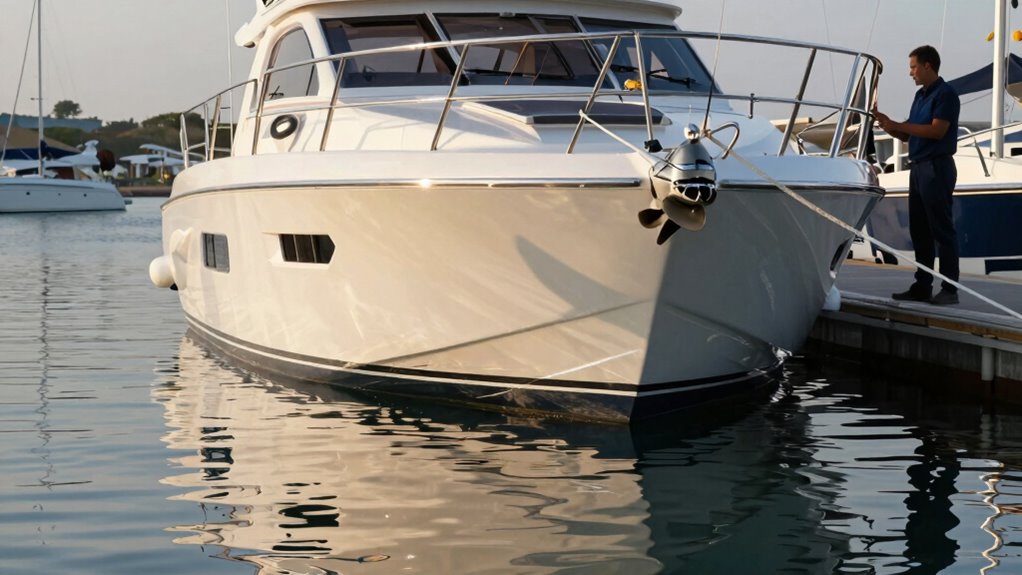
Relying too much on a bow thruster can cause equipment damage and mask your true docking skills. Overuse may lead to costly repairs and prevent you from developing better maneuvering techniques. Knowing when to avoid using it is key to safe and effective boat handling. Additionally, understanding and practicing proper boat handling skills can promote confidence and safety without overdependence on mechanical aids like thrusters support vs boundaries.
Overusing Can Damage Equipment
Using a bow thruster excessively or inappropriately can lead to costly damage to your equipment. Overusing it puts stress on components, risking breakdowns and costly repairs. To protect your thruster’s longevity and guarantee smooth equipment maintenance, avoid relying on it for every maneuver. Instead, consider alternative techniques or manual handling when possible.
- Constant use accelerates wear and tear, reducing the thruster’s lifespan.
- Overloading the system can cause overheating and damage internal parts.
- Relying heavily on the thruster can mask underlying docking issues, leading to improper handling and increased risk of damage to hull or gear.
Being mindful of when and how you operate your thruster helps maintain ideal performance and avoids unnecessary expenses.
Reduces Crew Skill Development
Overusing a bow thruster can hinder your crew’s ability to develop essential docking and maneuvering skills. Relying too much on it reduces opportunities for skill development, making your crew less confident and adaptable in tight situations. When team members aren’t practicing manual techniques, they miss chances to refine their crew skill and judgment. To illustrate, consider this table:
| No Thruster Use | Manual Skill Development | Crew Confidence |
|---|---|---|
| Encouraged | Improved with practice | Increased |
| Discouraged | Skills may weaken | Confidence drops |
| Balanced | Maintains proficiency | Steady growth |
Ignoring this balance risks creating a crew overly dependent on thrusters, which can be dangerous if equipment fails or conditions change unexpectedly.
Masks Poor Docking Technique
Although bow thrusters can make docking easier, there are situations where their use can mask poor technique and lead to risky decisions. Relying heavily on them might cause you to overlook fundamental skills like precise steering and understanding your boat’s handling. Overdependence can also hide issues with marine electronics or boat maintenance, giving a false sense of control. When you use a bow thruster as a crutch, you might ignore:
- Developing proper maneuvering skills
- Recognizing subtle boat responses
- Maintaining your boat’s systems effectively
This masks areas needing improvement, increasing the risk of accidents. It’s essential to remember that bow thrusters are tools, not substitutes for good technique. Regular practice and proper boat maintenance ensure safety and prevent reliance on electronic aids.
Tips to Improve Your Boat Handling Without Overusing the Thruster
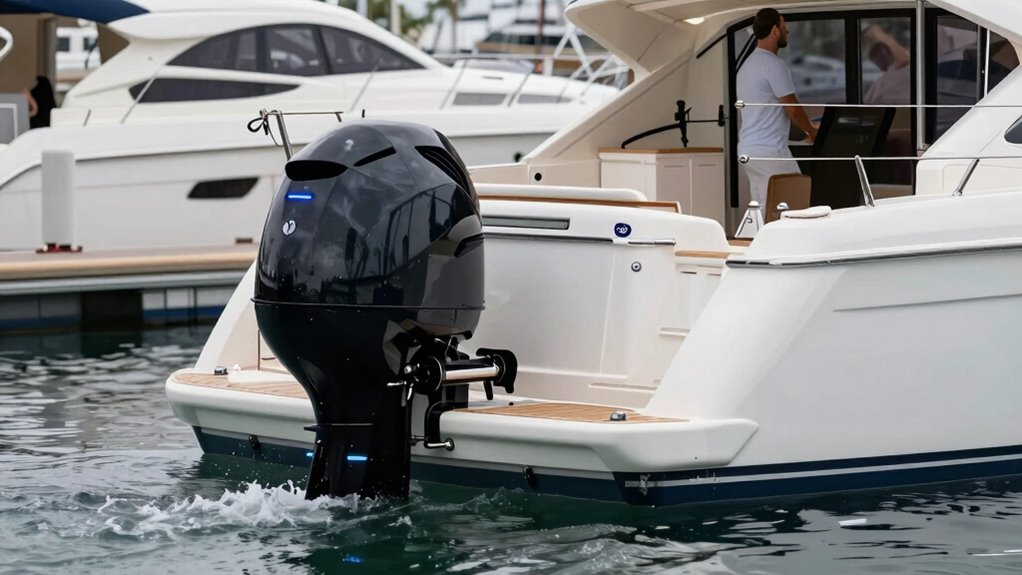
To handle your boat more efficiently, focus on mastering your helm techniques and understanding your vessel’s responsiveness. Effective navigation planning helps you anticipate obstacles and choose ideal routes, reducing reliance on thrusters. Stay weather-aware, as wind and current conditions influence your boat’s movement and handling. By adjusting your steering early and smoothly, you can maintain better control without overusing the thruster. Practice slow, deliberate maneuvers to build confidence and feel for your boat’s response. Use your engine and rudder effectively before resorting to thrusters, conserving battery life and avoiding unnecessary wear. Incorporating molecular-scale insights into your boat handling approach can enhance your understanding of vessel dynamics at a fundamental level. Developing these skills allows you to handle your boat more intuitively, making docking and maneuvering safer and more efficient without overdependence on thrusters.
Is Your Bow Thruster Helping or Hiding Handling Issues?
Relying too much on your bow thruster can hide underlying handling issues, making you less aware of your skills. If you use it to correct every maneuver, you might mask deficiencies that need attention. Consider whether your thruster truly improves your docking or if you’re just overdependent on it. Recognizing the signs of Free Floating can help you develop better boat control without overreliance. Paying attention to your boat’s response in different conditions can also reveal handling strengths and weaknesses that need improvement. Developing a good understanding of your boat’s wall surfaces and finishes can assist in achieving better control during docking, especially when maneuvering in tight spaces. Practicing manual control techniques and understanding how your boat interacts with various hydrodynamic factors will further enhance your docking skills without overdependence on the thruster. Additionally, becoming familiar with your boat’s maneuvering characteristics allows for more intuitive and precise handling in diverse situations.
Masking Handling Deficiencies
A bow thruster can make docking and maneuvering easier, but it might also hide underlying handling issues if relied upon excessively. When you depend too much on it, your skills may not improve, and problems with boat maintenance or engine diagnostics can go unnoticed. This can lead to a false sense of control, preventing you from addressing root causes of handling deficiencies.
Be aware of these signs:
- You struggle with basic maneuvering without thrusters
- You rarely perform boat maintenance checks
- Engine diagnostics reveal underlying mechanical issues
Using a bow thruster as a crutch can mask problems that need attention. Regularly practicing handling skills and inspecting your boat ensures you don’t overlook important maintenance or engine diagnostics that could improve overall control.
Overreliance on Equipment
Using a bow thruster can make docking and maneuvering easier, but overdependence on it might hide underlying handling issues. Relying heavily on equipment dependency can lead you to neglect essential skills, making you less attentive to boat behavior and environmental cues. When you depend too much on the thruster, you might not develop the finesse needed for precise control, especially in challenging conditions. This skill neglect can cause problems if the thruster fails or isn’t available. Overreliance can create a false sense of security, reducing your awareness of wind, current, and boat response. To maintain good seamanship, balance your use of equipment with ongoing skill development, ensuring you understand traditional handling techniques alongside modern aids. Developing fundamental skills is crucial for safe and effective boat handling in all scenarios. Additionally, understanding boat responsiveness can help you better anticipate how your vessel will react in different situations.
Assessing True Docking Skills
Have you truly mastered your boat’s handling skills, or are you leaning too much on your bow thruster? To assess your real docking ability, focus on your rudder techniques and how you adapt to weather considerations. Try these approaches: – Practice precise rudder movements to control your boat smoothly without thrusters. – Test your skills in various weather conditions to see if you can handle wind and currents confidently. – Observe whether your boat responds predictably or if you rely on thrusters to correct course. If you find yourself frequently adjusting with thrusters, you might be hiding handling weaknesses. True skill comes from understanding your boat’s behavior and mastering rudder control, especially in challenging weather. This awareness helps you use the thruster effectively, not as a crutch. Additionally, understanding the capabilities and limitations of robot mower multi-unit setups can improve your overall yard management, just as mastering boat dynamics enhances your sailing confidence. Developing a comprehensive understanding of boat dynamics is essential for confident docking and maneuvering.
How to Develop Better Docking Skills Without Relying on the Thruster
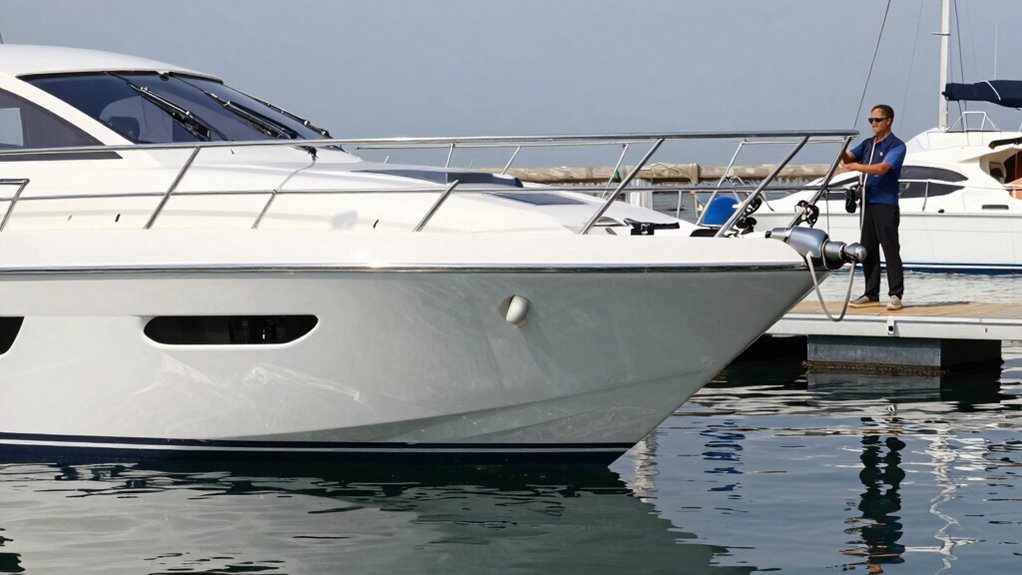
Developing better docking skills without relying on the thruster requires mastering boat control and understanding the environment around you. Regular boat maintenance ensures your vessel responds predictably, making manual maneuvers more reliable. Study navigation charts to familiarize yourself with water depths, obstructions, and current patterns near docks. Practice precise steering, throttle control, and slow-speed handling in open water before approaching docking areas. Focus on smooth, deliberate movements rather than quick adjustments. Observing your surroundings and anticipating boat responses help build confidence and accuracy. By honing your skills and understanding the environment, you reduce dependence on thrusters and improve overall docking finesse. This approach enhances safety and efficiency, especially when thrusters are unavailable or unsuitable for certain conditions.
Balancing Bow Thruster Use With Good Seamanship for Safe Boating
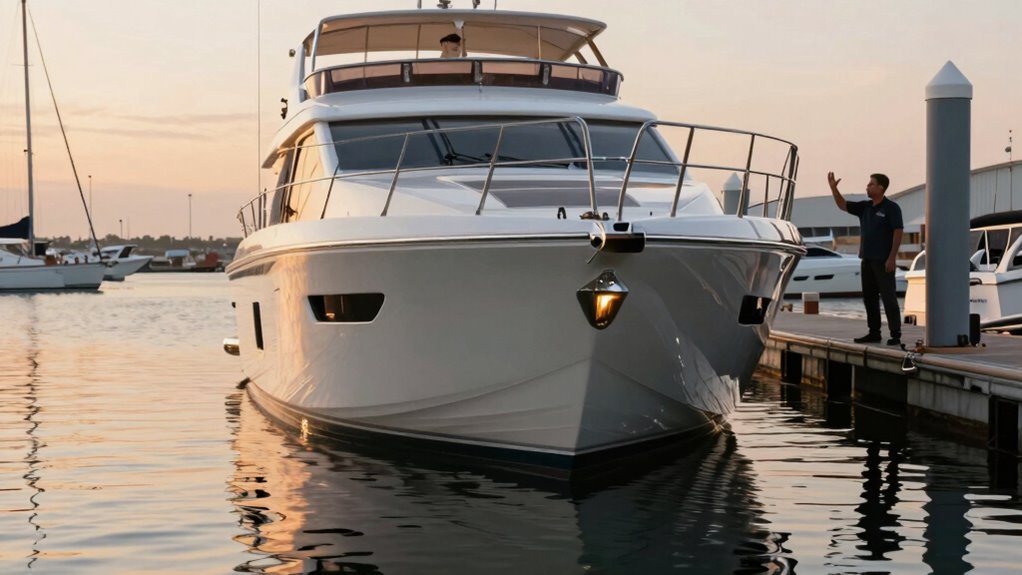
Balancing bow thruster use with good seamanship is essential for safe and efficient boating. Relying solely on the thruster can mask underlying skills and compromise marine safety. To maintain this balance:
- Use the thruster as a supplementary tool, not a crutch, to enhance maneuvering.
- Regularly check and maintain equipment to guarantee reliable operation and prevent failures.
- Practice fundamental seamanship skills like line handling and steering to develop confidence and reduce dependence on mechanical aids.
Frequently Asked Questions
Can a Bow Thruster Damage My Boat’s Hull or Propellers?
Yes, a bow thruster can damage your boat’s hull or propellers if not used carefully. If you push too hard or hit an obstacle, it risks hull damage or propeller risks like entanglement or impact. Always operate your bow thruster smoothly and be mindful of nearby objects to prevent costly repairs. Proper maintenance and cautious handling reduce the chances of damage when docking or maneuvering.
How Does Weather Affect the Effectiveness of a Bow Thruster?
Weather considerably affects your bow thruster’s effectiveness. Wind influence can push your boat off course, making thrusters less precise, while strong gusts challenge your control. Wave impact also reduces efficiency, as rough seas cause vibrations and instability. In such conditions, rely more on your engine and other controls, and use your thruster cautiously. Adjust your approach and be prepared for decreased responsiveness during adverse weather to dock safely.
Are Bow Thrusters Useful for Sailing Vessels or Only Motorboats?
Bow thrusters are mainly beneficial for motorboats, offering quick, precise maneuvering in tight spots. For sailing vessels, they provide some advantages, like aiding docking or handling in strong winds, but they’re less essential since sailors rely more on sails and skillful steering. If you own a sailing vessel, a bow thruster can be a helpful addition for docking convenience, but it’s not as critical as it is for motorboats.
What Maintenance Is Required to Keep a Bow Thruster Operational?
Imagine your bow thruster humming smoothly, ready to assist. To keep it that way, you need regular electrical inspections to detect faults early, preventing surprises. Also, guarantee propeller lubrication is maintained to avoid corrosion and friction. Check the thruster’s housing for debris, and keep the wiring clean and secure. Proper maintenance guarantees your bow thruster’s reliable performance, making docking safer and smoother every time.
Is It Possible to Retrofit a Bow Thruster on an Older Boat?
Yes, you can retrofit a bow thruster on an older boat, but you should consider retrofit challenges like existing hull structure, space limitations, and power supply. It often requires significant modifications, so be aware of potential costs and complexity. Budget considerations are vital, as installing a bow thruster can be expensive and time-consuming. Consulting with professionals helps guarantee compatibility and safety, making the upgrade worthwhile.
Conclusion
Relying solely on your bow thruster might seem like a quick fix, but it can hide underlying boat handling skills. True mastery comes from understanding when and how to use it wisely. By developing your seamanship, you’ll navigate confidently and safely, even without crutches. Remember, a skilled captain trusts their instincts and practice—proving that good handling isn’t just about tools, but about confidence and experience behind the wheel.