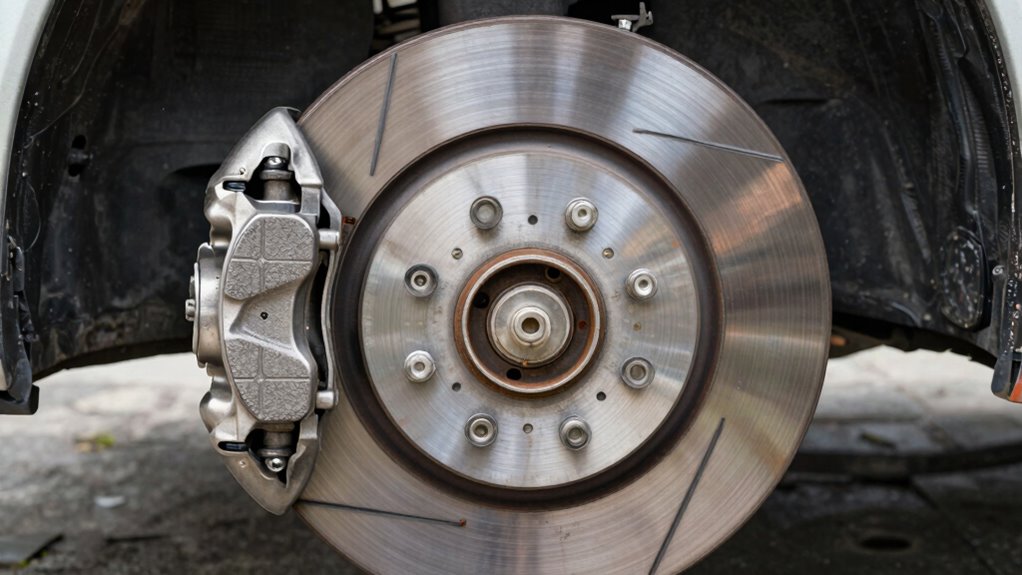

To keep your trailer disc brakes reliable, regularly inspect for wear, corrosion, and leaks. Check brake pads, rotors, and calipers for uneven wear, scoring, or warping, and address issues promptly. Maintain proper brake fluid levels and ensure components are properly lubricated. Watch for signs like squealing, vibrations, or reduced stopping power. Staying proactive with maintenance prevents costly repairs and unsafe situations. Continue exploring key tips to make certain your trailer brakes stay in top condition.
Key Takeaways
- Regularly inspect brake pads, rotors, and calipers for uneven wear, corrosion, or damage to ensure proper function.
- Check and maintain brake fluid levels to prevent moisture buildup, contamination, and brake failure.
- Listen for unusual noises or vibrations during braking, which may indicate worn components or rotor warping.
- Resurface or replace damaged rotors and worn pads promptly to maintain braking efficiency and safety.
- Prevent corrosion by keeping brake components clean, lubricated, and protected with corrosion-resistant materials.

Disc Brake Pad Kit 10k 12k Replacement for Dexter K71-180-00 Hydraulic Trailer Axle Brake Pads 4Pcs
Replacement Part Number: K71-180-00. This kit will replace the old, worn down brake pads on one axle of…
As an affiliate, we earn on qualifying purchases.
As an affiliate, we earn on qualifying purchases.
Why Proper Trailer Disc Brake Maintenance Matters
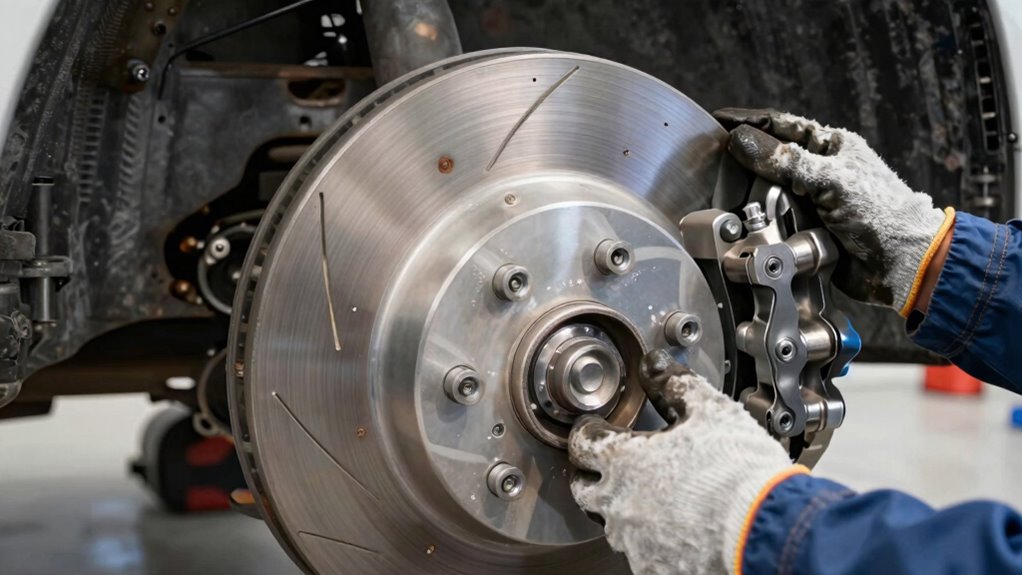
Proper trailer disc brake maintenance is essential for ensuring safety and reliability on the road. If you neglect it, brake fluid can become contaminated or low, reducing braking efficiency and risking accidents. Regularly checking and replacing brake fluid prevents moisture buildup, which can cause corrosion inside the system. Rotor corrosion is another common issue that can impair braking performance; moisture and dirt can eat away at the rotor surface, leading to uneven wear or failure. Keeping your brakes clean and well-maintained helps prevent these problems, ensuring smooth operation when you need it most. Proper maintenance not only extends the lifespan of your disc brakes but also keeps you safe by ensuring responsive, reliable stopping power every time you hit the brakes. Additionally, inspecting storage and backup gear can help prevent the buildup of debris and moisture that contribute to corrosion and system failure. Regular inspections of brake components can identify early signs of wear and tear, further supporting safe operation. Using quality brake lubricants during maintenance also helps protect internal parts from friction damage and corrosion. Incorporating corrosion prevention techniques into your routine can further enhance the durability of your brake system and reduce long-term repair costs. To optimize performance, consider routinely inspecting the brake fluid system for leaks or damage, which is crucial for maintaining brake efficiency.
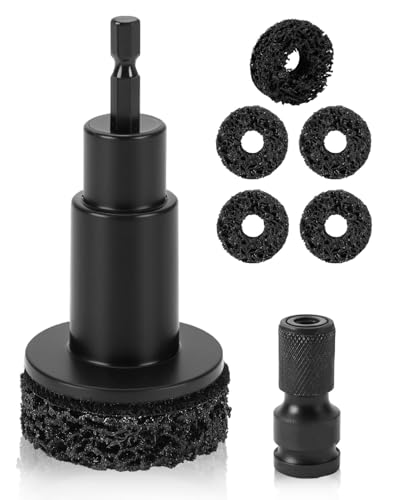
eFuncar Brake Rotor Resurfacing Tool Kit, Wheel Hub Rust Removal Tool for Cars & Trucks, Wheel Stud Cleaner Fits 1/2" Impact Wrenches & Drills with 5 Abrasive Pads
Powerful Rust Removal Performance: This brake rotor resurfacing tool delivers industrial-grade cleaning for brake rotors, wheel hubs, and…
As an affiliate, we earn on qualifying purchases.
As an affiliate, we earn on qualifying purchases.
How Trailer Disc Brakes Work: A Quick Overview
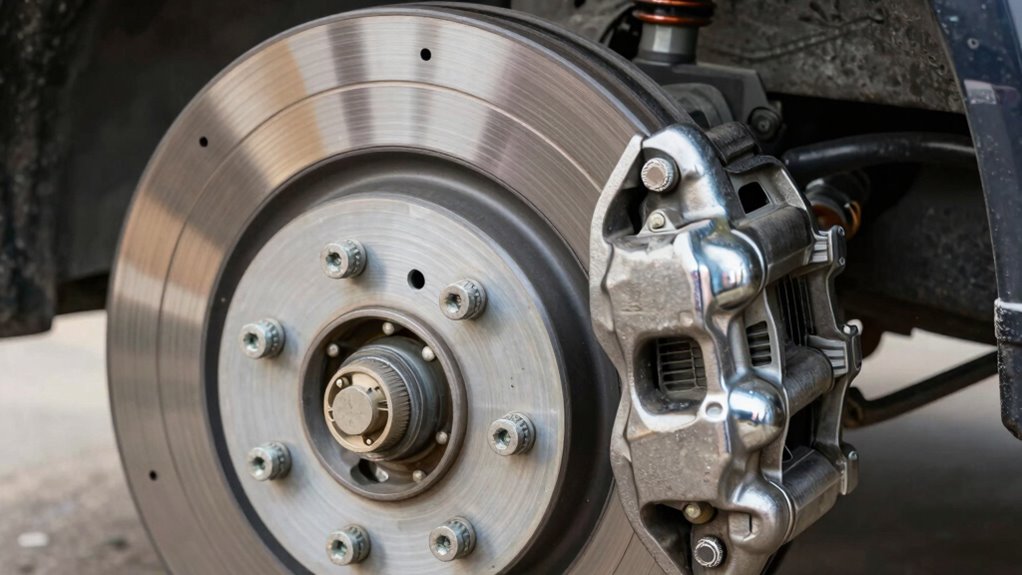
Trailer disc brakes operate by using hydraulic pressure to press brake pads against a rotating rotor attached to the wheel. When you apply the brake, hydraulic fluid pushes the caliper pistons, forcing the brake pads to clamp onto the rotor. The materials of your brake pads—such as ceramic or organic—affect braking performance and noise levels. As the rotor spins, effective rotor cooling methods—like ventilation or finned designs—help dissipate heat, preventing brake fade and damage. The contact between brake pads and rotor converts kinetic energy into heat, slowing your trailer. Properly selected brake pad materials and efficient cooling methods ensure reliable braking performance, especially during prolonged use or heavy loads. Additionally, regular inspection of cooling mechanisms can prevent overheating issues that compromise braking efficiency. Ensuring the correct installation of components is crucial for consistent brake operation and safety. Understanding these basics helps you maintain and troubleshoot your trailer disc brakes effectively, and requirements traceability can assist in diagnosing issues by tracking component specifications and maintenance history. Regular maintenance routines and monitoring brake system performance contribute to safer towing experiences and extend the lifespan of your braking components. Maintaining proper brake fluid levels also plays a vital role in ensuring reliable hydraulic operation and preventing brake failure.

KAIWEETS Brake Fluid Tester Pen with Corrosion Resistance Probe, High-Precision Brake Fluid Moisture Tester with Data Hold Function, Buzzer Alarm, 3 Colors Backlight, Calibrated for DOT3, DOT4, DOT5.1
Durable and Corrosion-Resistant : Featuring a corrosion-resistant probe, this brake fluid tester is designed for long-lasting performance. The…
As an affiliate, we earn on qualifying purchases.
As an affiliate, we earn on qualifying purchases.
How to Inspect Your Trailer Disc Brakes for Wear and Damage
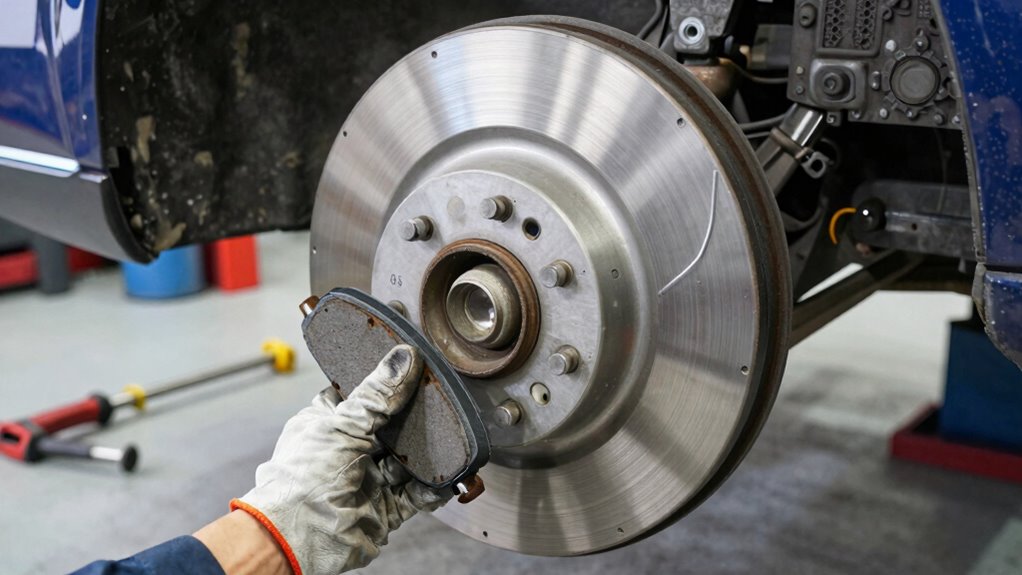
Regularly inspecting your trailer disc brakes helps guarantee they function safely and effectively. Start by checking the brake pads for uneven pad wear or thinning, which indicates they may need replacing. If the pads are worn down close to the backing plate, it’s time for new ones. Next, examine the rotor surface for signs of damage, such as grooves, cracks, or warping. Rotor damage can compromise braking performance and should be addressed immediately. Look for discoloration or hot spots that suggest excessive heat buildup. Also, listen for abnormal noises during braking, which can signal pad or rotor issues. Performing these inspections routinely ensures early detection of wear and damage, helping you maintain ideal braking performance and avoid costly repairs. Routine brake inspections are essential for ensuring optimal safety and preventing unexpected failures. Additionally, understanding regional brake styles and their typical issues can help you better identify specific problems related to your trailer’s design and usage. Being aware of brake material types can also influence maintenance strategies and repair decisions. Incorporating manufacturer guidelines into your inspection routine can further enhance your ability to spot issues early. Furthermore, familiarizing yourself with common brake problems can help you diagnose issues more efficiently and prevent breakdowns.

Permatex 24125 Ceramic Extreme Brake Parts Lubricant, 8 oz., Pack of 1
100% synthetic formula with ceramic solids forming a premium quality brake lubricant
As an affiliate, we earn on qualifying purchases.
As an affiliate, we earn on qualifying purchases.
Essential Maintenance Tasks to Keep Your Trailer Brakes in Top Shape
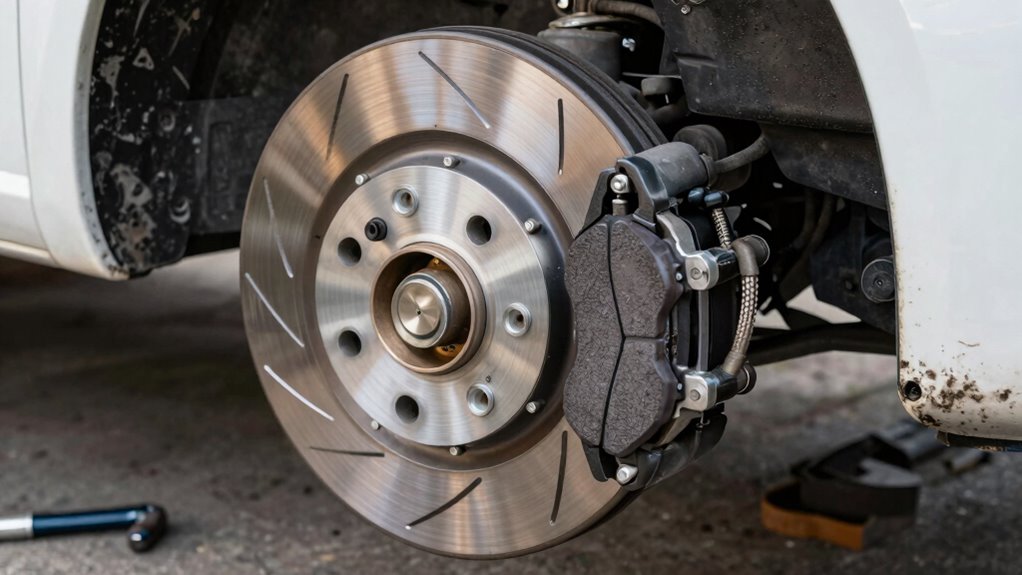
To keep your trailer brakes working smoothly, you need to stay on top of essential maintenance tasks. Regular inspections help you spot issues early, while proper lubrication guarantees parts move freely. Additionally, correct brake adjustments are key to maintaining stopping power and safety. Ensuring you understand brake system basics can help you troubleshoot issues more effectively.
Regular Brake Inspections
Performing regular brake inspections is essential for ensuring your trailer’s disc brakes stay in ideal condition. During inspections, check the brake fluid level and look for leaks or contamination, as low or dirty brake fluid can impair braking performance. Examine the rotors for signs of corrosion or uneven wear, which can cause pulsation and reduce stopping power. Also, inspect the calipers and pads for proper alignment and excessive wear. Address any corrosion on the rotors promptly, since it can lead to rotor damage if left unchecked. Regular inspections help you catch issues early, preventing costly repairs and ensuring safe towing. Additionally, maintaining the correct oil for airless sprayers can improve the efficiency of your equipment when applying brake components or related lubricants. Using sound healing techniques to stay calm during inspections can help maintain focus and reduce stress. Incorporating personality assessment tools like the 16PF can provide insights into your approach to maintenance routines, helping you stay organized and thorough. By maintaining a routine, you keep your trailer brakes reliable and extend their lifespan, giving you peace of mind on every trip. Regularly checking the body jewelry measurements and materials can also prevent unnecessary issues during maintenance, ensuring everything remains in proper condition.
Proper Brake Lubrication
After inspecting your trailer’s brakes and addressing any issues, maintaining proper lubrication is key to keeping everything functioning smoothly. Proper brake lubrication prevents metal-to-metal contact, reduces wear, and minimizes noise. Use the right lubrication techniques by applying brake grease to specific contact points, such as caliper slides and contact surfaces, following manufacturer recommendations. Avoid over-lubricating, as excess grease can attract dirt and debris, which may cause brake malfunction. Make sure to clean old or contaminated lubricant before applying fresh brake lubrication. Regularly inspecting and maintaining lubrication ensures your disc brakes operate efficiently and last longer. Incorporating proper lubrication techniques and following manufacturer guidelines can help prevent common issues and extend your brake system’s lifespan. Additionally, selecting appropriate lubricants designed specifically for brake components can further enhance performance and durability. Using quality lubricant can also reduce the need for frequent reapplication and improve overall brake function. Staying aware of excess lubrication practices can prevent unintended issues such as contamination or degraded performance. Keep your trailer brakes in top shape by sticking to proper lubrication practices and addressing any lubrication issues promptly. Incorporating cybersecurity strategies in your maintenance routines can help protect your equipment from potential vulnerabilities.
Brake Adjustment Techniques
Regular brake adjustments are essential to guarantee your trailer’s braking system functions effectively and safely. To perform a proper brake adjustment, start by inspecting the disc brakes and ensuring the pads are correctly aligned. Proper pad alignment allows for even contact with the rotor, preventing uneven wear and reducing noise. Use a wrench to loosen the caliper bolts, then gently push or slide the pads to achieve the correct clearance—typically a small gap between the pads and rotor. Tighten the bolts securely while maintaining the proper alignment. Regularly checking and adjusting the brake system helps ensure responsive braking and extends the lifespan of your brake components. Additionally, understanding the Rhythm Failure can help you recognize signs of brake system issues early. Remember, precise brake adjustment is key to safe towing and maximum brake performance. Performing routine maintenance on your disc brakes can also help prevent common problems before they develop, including checking for corrosion or debris that may impede proper operation. Incorporating proper tool use ensures your adjustments are accurate and safe.
Common Problems With Trailer Disc Brakes and How to Troubleshoot Them
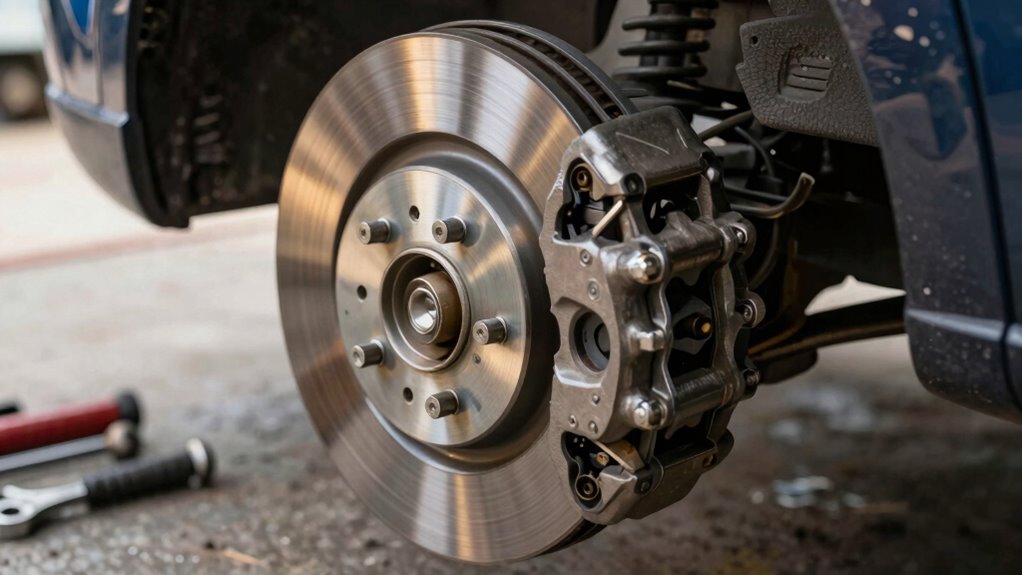
Troubleshooting trailer disc brakes can save you time and prevent further damage, but understanding common problems is essential. One frequent issue is brake pad squeal, which often indicates worn or contaminated pads. It can also result from excessive clearances or lack of lubrication on the caliper slides. Another problem is rotor warping, which causes vibrations during braking. Warped rotors can be a result of overheating or uneven wear, leading to pulsing brake action. If you notice squealing or pulsing, inspect the pads for wear and the rotors for warping or scoring. Address these issues promptly by replacing worn components or resurfacing the rotors. Regular inspections help catch problems early, ensuring your trailer’s brakes remain reliable and effective.
How to Fix or Replace Faulty Brake Components
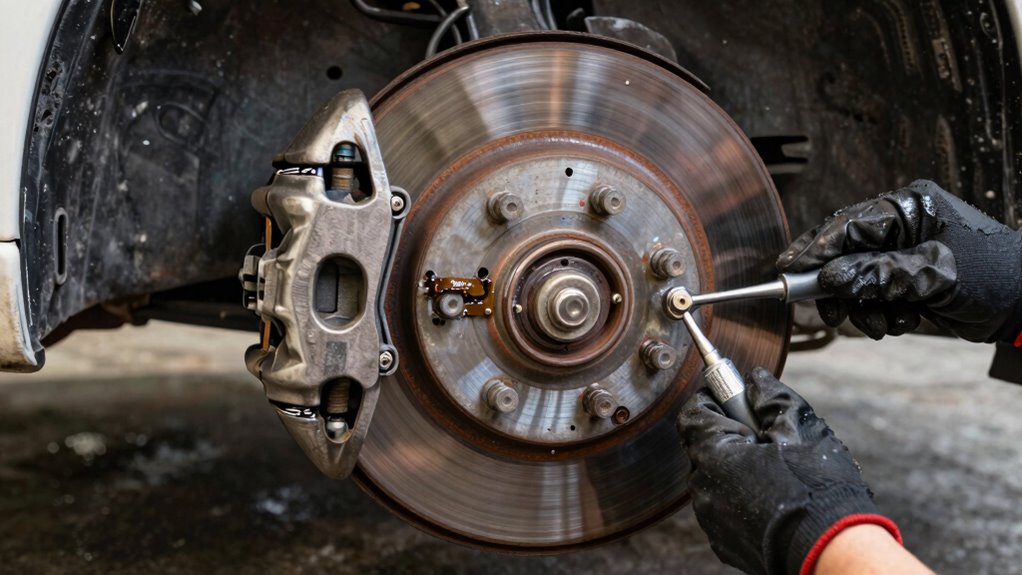
When you notice brake issues, it’s important to diagnose the problem accurately before replacing any parts. You’ll need to identify faulty components, remove and replace them properly, and then test the brakes to verify they work correctly. This process helps keep your trailer safe and reliable on the road.
Diagnosing Brake Issues
Have you noticed your trailer’s brakes feeling less responsive or making strange noises? These signs often point to issues like brake noise or uneven pad wear. To diagnose, start by inspecting the brake pads for visible wear or damage. Listen for squealing or grinding sounds, which indicate pad wear or debris. Check for uneven rotor surfaces, as warping can cause vibration and noise. Use a flashlight to look for cracks or leaks in the caliper. If you find thin pads or irregular rotor surface, it’s time to act.
| Symptom | Possible Cause |
|---|---|
| Brake noise | Worn pads, debris, or rotor warping |
| Reduced response | Air in the system or worn pads |
| Vibration or squeal | Uneven rotor or pad wear |
| Soft pedal | Air in lines or caliper issues |
Replacing Brake Components
Replacing faulty trailer brake components is a straightforward process that guarantees your brakes function safely and effectively. Start by removing the wheel and caliper to access the brake assembly. If the brake pads are worn or damaged, perform a brake pad replacement, ensuring you use compatible parts. Inspect the rotor for scoring or warping; if needed, resurface the rotor or replace it entirely. Rotor resurfacing smooths out uneven surfaces and extends rotor life, but replacement is necessary if the damage is severe. Always clean the components thoroughly before reassembling. Properly torque bolts to manufacturer specifications. Regularly inspecting and replacing worn brake pads and resurfacing or replacing rotors helps maintain ideal braking performance and safety on the road.
Testing Brake Functionality
To guarantee your trailer’s brakes are functioning properly, it’s essential to perform regular tests and inspections. Start by checking the brake fluid level; low fluid can impair brake performance. With the trailer securely parked, gently apply the brakes to feel for smooth, consistent engagement. Listen for any unusual noises that could indicate worn brake pads or damaged components. Examine the brake pads visually for thinning or uneven wear, and look for signs of brake fluid leaks around the caliper. If braking feels weak or inconsistent, consider replacing the brake pads or flushing and refilling the brake fluid. Proper testing ensures your trailer’s braking system remains reliable, preventing accidents and costly repairs down the line. Always follow manufacturer guidelines for specific testing procedures.
Signs You Need to Replace Your Trailer Disc Brakes and When to Seek Help
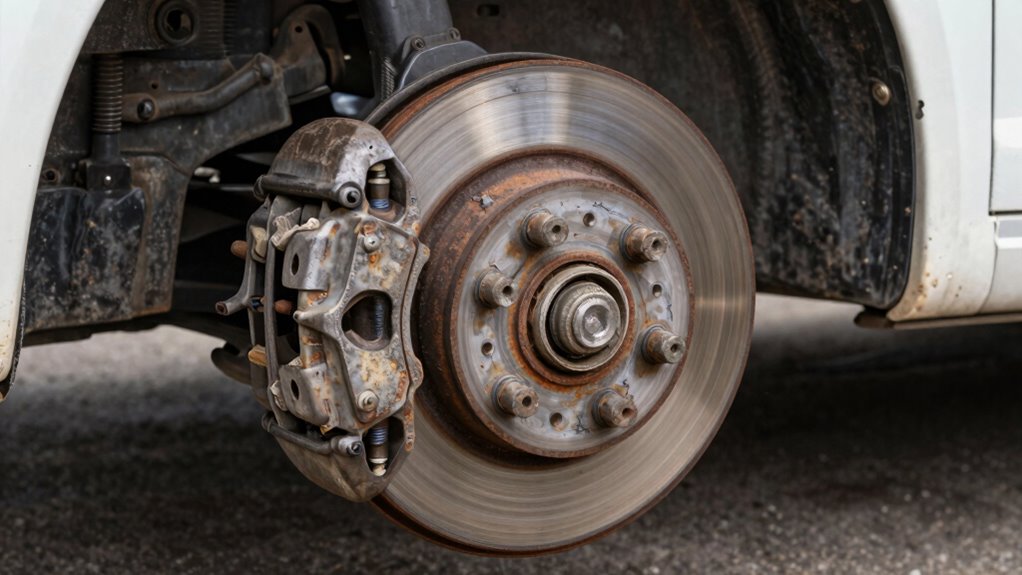
Your trailer disc brakes will show warning signs when they need replacing, so it’s important to stay alert. If you notice squealing or grinding noises during braking, it’s a clear sign you need brake pad replacement. Reduced braking efficiency, longer stopping distances, or vibrations in the brake pedal also indicate issues. If the rotor surface becomes uneven or heavily scored, rotor resurfacing might be necessary, but persistent problems suggest it’s time for professional help. Don’t ignore warning signs like increased heat or a burning smell, as they can signal severe wear. Regular inspections and prompt attention to these signs help prevent more costly repairs and ensure your safety on the road. Seek help from a mechanic when you notice these symptoms to keep your trailer’s braking system in top shape.
Tips to Extend the Lifespan of Your Trailer Disc Brakes and Prevent Issues
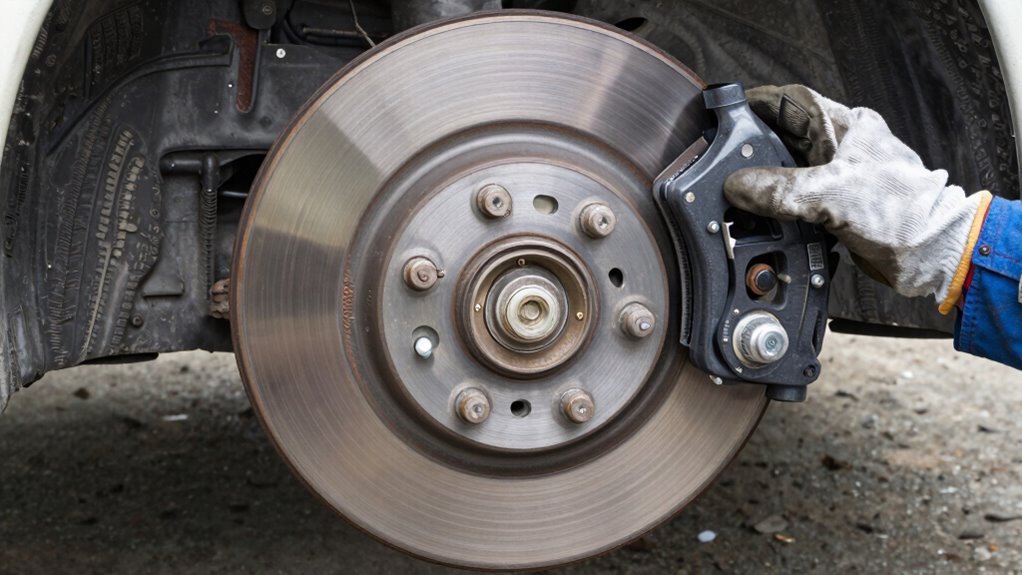
Regular maintenance and mindful driving habits are key to extending the lifespan of your trailer disc brakes. Regularly inspect brake pad wear to catch early signs of thinning pads, preventing uneven braking and damage. Keep an eye on rotor corrosion, especially if you store your trailer outdoors; rust can impair brake function and cause uneven rotor surfaces. To minimize brake pad wear, avoid riding the brakes downhill and use engine braking when possible. Keeping your brakes clean and free from debris also helps prevent corrosion buildup. Ensure the brake system is properly lubricated and all components are in good condition. By staying proactive with inspections and gentle driving, you can reduce costly repairs and extend the effective life of your trailer disc brakes.
Frequently Asked Questions
How Often Should I Replace My Trailer Disc Brake Pads?
You should replace your trailer disc brake pads when you notice brake wear reaching about 3mm thickness or if you hear squealing noises. Regular pad replacement depends on your usage, but generally, check them every 10,000 to 15,000 miles. Keep an eye on brake wear signs, and don’t disregard uneven or excessive wear, as it can compromise braking performance and safety. Proper maintenance ensures reliable braking when you need it most.
Can I Upgrade to High-Performance Brake Components?
Yes, you can upgrade to high-performance brake components, but you need to verify brake component compatibility first. Not all parts fit every trailer, so confirm your new performance upgrade options are compatible with your existing system. Upgrading can improve stopping power and heat dissipation, especially for heavy or high-speed loads. Consult your trailer’s manufacturer or a professional to select the best components that match your needs and ensure safe operation.
What Safety Precautions Are Necessary During Brake Maintenance?
It’s wise to treat brake maintenance with respect, as safety depends on it. Always wear gloves and eye protection, and work in a well-ventilated area. Before starting, confirm the brake fluid is at proper levels and avoid inhaling fumes. When replacing brake pads, double-check that everything is correctly installed and secure. Handling brake components carefully helps prevent accidents and ensures your trailer’s brakes function reliably, keeping you safe on the road.
Are There Specific Brands Recommended for Trailer Disc Brakes?
When choosing trailer disc brakes, you should look for brand recommendations that prioritize quality assurance. Brands like Kodiak, Centric, and ACDelco are trusted for their durability and reliable performance. You can trust these reputable brands because they undergo strict quality checks, ensuring your trailer’s braking system remains effective and safe. Investing in well-known brands helps prevent common problems and extends the lifespan of your trailer disc brakes.
How Do Environmental Factors Affect Trailer Disc Brake Longevity?
Did you know that corrosion causes up to 70% of trailer brake failures? Environmental factors like rain, snow, and humidity can markedly impact your trailer disc brake longevity. To combat this, prioritize corrosion prevention by applying protective coatings and regularly inspecting for rust. Weather impact accelerates wear, so storing your trailer in sheltered areas and performing routine maintenance helps ensure your brakes stay effective longer.
Conclusion
Proper maintenance keeps your trailer disc brakes reliable, preventing costly repairs and dangerous breakdowns. Think of your brakes as the heartbeat of your trailer—vital yet delicate. When neglected, they can fail you when you need them most, like a sudden storm on a quiet road. Stay vigilant with regular checks and timely repairs, and you’ll enjoy smooth, safe journeys, turning potential disasters into peace of mind on every trip.