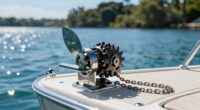
For most buyers seeking an electric boat lift winch, I’d start with the Extreme Max Boat Lift Boss: its integrated design and 7,500 lb capacity make it the most lift-focused option in this group. The Megaflint 6,000 lb winch is a stronger fit for buyers who need reversible operation, while the Nilight 3,500 lb portable winch suits lighter-duty trailer use and portability. The main tradeoff is between a purpose-built lift system and more adaptable trailer winches, with capacity, mounting, and power needs shaping the choice. A winch’s stated pull rating also does not, by itself, confirm suitability for a particular boat lift. Read on for the full breakdown and the checks I’d make before choosing.

Get sports gear delivered free with Prime
- Fast, free delivery on millions of items
- Prime Video, Amazon Music and more included
- Member-only deals all year
Complete the kit


Key Takeaways
- Extreme Max is the most lift-oriented pick: its integrated format and 7,500 lb capacity distinguish it from the portable, trailer-focused models.
- Capacity figures are not directly interchangeable: the Megaflint’s 6,000 lb rolling capacity and other pull ratings describe different operating conditions, so match the manufacturer’s specifications to your lift setup.
- Reversibility matters for controlled movement: Megaflint’s reversible operation separates it from options where the listing does not establish that same capability.
- Portable trailer winches favor flexibility over lift integration: Nilight, Bravex, and MF are more relevant when trailer positioning or movable installation is the main job.
- Power and mounting can decide the purchase: the Dutton-Lainson StrongArm SA9015AC’s AC designation sets it apart from the 12V DC options, so confirm power access and intended use before ordering.
| Nilight 12V Portable Electric Boat Trailer Winch, 3,500 lb |  | Best for Portable, Multi-Mode Use | Voltage: 12V DC | Gear reduction ratio: 265:1 | Maximum boat size: 18 ft | VIEW ON AMAZON | See Our Full Breakdown |
| Extreme Max Boat Lift Boss Integrated Winch, 12/24V, 7,500 lb Capacity |  | Best for Permanent Boat Lifts | Voltage: 12/24V | Working capacity: 7,500 lb | Line pull: 3,500 lb | VIEW ON AMAZON | See Our Full Breakdown |
| Bravex Electric Boat Trailer Winch with Remote Control |  | Best for Synthetic-Rope Trailer Pulling | Straight pull capacity: 3,500 lb | Rolling pull capacity: 10,500 lb | Rope material: Dyneema synthetic rope | VIEW ON AMAZON | See Our Full Breakdown |
| Megaflint 12V Reversible Electric Trailer Winch, 6,000 lb Rolling Capacity |  | Best for Simple Corded Operation | Voltage: 12V | Pulling capacity: 2,000 lb | Rolling capacity: 6,000 lb | VIEW ON AMAZON | See Our Full Breakdown |
| MF 12V DC Electric Boat Trailer Winch, 3,500 lb Rated Pull |  | Best Marine-Ready Trailer Package | Voltage: 12V DC | Marine-grade working pull: 8,750 lb | Rolling-condition pull: 10,500 lb | VIEW ON AMAZON | See Our Full Breakdown |
| Dutton-Lainson StrongArm SA9015AC Electric Winch |  | Best for Stationary 120V Installations | Brand: Dutton-Lainson | Model: SA9015AC | Power: 120V AC; grounded outlet required | VIEW ON AMAZON | See Our Full Breakdown |
| boat lift winch electric | Voltage | Controls | Rope material |
|---|---|---|---|
| Nilight 12V Portable Electric | 12V DC | Wireless remote, wired remote, and hand crank | — |
| Extreme Max Boat Lift Boss Int | 12/24V | — | — |
| Bravex Electric Boat Trailer W | — | Wireless remote, wired remote, and manual crank | Dyneema synthetic rope |
| Megaflint 12V Reversible Elect | 12V | — | Dyneema synthetic fiber |
| MF 12V DC Electric Boat Traile | 12V DC | Wireless and wired remotes; hand crank included | Dyneema polyethylene fiber |
| Dutton-Lainson StrongArm SA901 | — | — | — |
More Details on Our Top Picks
Nilight 12V Portable Electric Boat Trailer Winch, 3,500 lb
The Nilight suits boaters who want a portable trailer winch rather than a permanent lift drive. Its tool-free plate slides into a 2-inch hitch receiver, making it easier to move between compatible setups than the 120 lb Extreme Max Boat Lift Boss, which is built as an integrated lift unit. Wireless and wired remotes provide powered control, while the hand crank offers a backup if electrical power is unavailable. Power-in, power-out, and freewheel modes add flexibility when loading or releasing the line.
The 34 ft galvanized cable is useful for longer reaches, but this is not a high-capacity substitute for a dedicated lift system: Nilight states a maximum boat size of 18 ft and boat weight of 5,000 lb, and pull strength falls as the incline steepens. I would shortlist it for portable trailer work, not for buyers seeking an installed lift motor.
Pros:- Tool-free mounting plate fits a 2-inch hitch receiver.
- Wireless remote, wired remote, and hand crank provide several control options.
- 34 ft galvanized steel cable and hook are included.
- Power-in, power-out, and freewheel operation allow different loading and release methods.
Cons:- Stated capacity is limited to boats up to 18 ft and 5,000 lb.
- Available pulling force decreases as the incline increases.
Best for: Boaters with a compatible 2-inch hitch receiver who want a portable winch with remote controls and a manual backup.
Not ideal for: Owners of permanent boat lifts or boats beyond the stated 18 ft and 5,000 lb limits; its portable trailer format and incline-sensitive pull are a poor match.
- Voltage:12V DC
- Gear reduction ratio:265:1
- Maximum boat size:18 ft
- Maximum boat weight:5,000 lb
- Cable:34 ft galvanized steel
- Controls:Wireless remote, wired remote, and hand crank
- Mounting:Tool-free slide-on plate for 2-inch hitch receiver
Our verdict“Choose the Nilight for portable hitch-mounted trailer work with multiple control options, but skip it for a fixed lift installation or heavier boats.”
Extreme Max Boat Lift Boss Integrated Winch, 12/24V, 7,500 lb Capacity
The Boat Lift Boss is the clearest fit here for an installed lift: it combines the winch and motor drive in one unit instead of relying on a portable hitch-mounted trailer format like the Nilight. Its 7,500 lb working capacity and larger gearhead target lift use, while the spiral-cut drum is designed to guide cable neatly and reduce stacking or slipping. A maximum line speed of 2 ft per minute prioritizes controlled lifting over fast retrieval.
This setup has a different scale and commitment from the Bravex trailer winch: at 120 lb, it is a substantial fixed-installation unit, not a compact tool to move between trailers. The electronics module is field-upgradable, and a pigtail is provided for an optional pendant, but that controller is not included. I would favor it for a dedicated lift where integrated drive hardware matters more than portability.
Pros:- Integrates the winch and motor drive for a dedicated lift installation.
- 7,500 lb working capacity and 3,500 lb line pull are specified.
- Spiral-cut drum and self-tightening cable attachment are designed for controlled cable handling.
- Field-upgradable electronics module supports service updates.
Cons:- At 120 lb, it is far less portable than the Nilight or Bravex trailer winches.
- Pendant controller is optional rather than included.
- Maximum line speed is 2 ft per minute, so lifting is deliberate rather than quick.
Best for: Owners installing or replacing a powered boat-lift drive who need an integrated unit with a stated 7,500 lb working capacity.
Not ideal for: Boaters seeking a portable trailer winch or a ready-to-operate package with a pendant included; this unit weighs 120 lb and its pendant controller is optional.
- Voltage:12/24V
- Working capacity:7,500 lb
- Line pull:3,500 lb
- Maximum line speed:2 ft per minute
- Drum cable capacity:Up to 12 ft on the first layer
- Electronics housing:ABS; field-upgradable module
- Controller connection:Pigtail for optional pendant controller
- Weight:120 lb
Our verdict“Pick the Boat Lift Boss for a substantial fixed lift installation, not for portable trailering or a package that includes its pendant control.”
Bravex Electric Boat Trailer Winch with Remote Control
The Bravex is a trailer-focused choice for buyers who prefer Dyneema synthetic rope to the Nilight’s galvanized steel cable. The rope is lighter to handle, while the included wireless remote, wired remote, and manual crank give it several ways to operate. Its automatic brake is designed to help stop the load from slipping, and the stated noise level is under 75 dB. Like the MF 12V DC Electric Boat Trailer Winch, it lists a 3,500 lb straight pull alongside larger rolling-condition figures, so those higher numbers should not be mistaken for a constant pull rating on every ramp.
The Bravex fits standard 2-inch hitch receivers, putting it in the portable trailer category rather than the fixed-installation category occupied by the Extreme Max Boat Lift Boss. Its main tradeoff is rope care: synthetic line needs regular inspection and eventual replacement, and pulling capacity falls on steeper inclines. I’d choose it when lighter line matters more than a steel cable’s different handling and maintenance profile.
Pros:- Dyneema synthetic rope is lightweight and designed to be hand-friendly.
- Wireless remote, wired remote, and manual crank are included.
- Automatic brake is designed to help prevent load slippage.
- Fits standard 2-inch hitch receivers.
Cons:- Synthetic rope is consumable and needs regular inspection and replacement.
- Pull capacity decreases on steeper inclines.
- The 3,500 lb straight-pull figure is lower than its rolling-pull figure, so setup conditions affect suitability.
Best for: Trailer owners who want a portable 2-inch hitch-compatible winch with lightweight synthetic rope and multiple control methods.
Not ideal for: Buyers who prefer steel cable or need a fixed boat-lift motor; the Dyneema rope requires inspection and replacement, and this is a trailer winch.
- Straight pull capacity:3,500 lb
- Rolling pull capacity:10,500 lb
- Rope material:Dyneema synthetic rope
- Controls:Wireless remote, wired remote, and manual crank
- Braking:Automatic brake
- Noise level:Under 75 dB
- Hitch compatibility:Standard 2-inch hitch receivers
Our verdict“Choose Bravex for portable trailer pulling with synthetic rope and flexible controls, provided you are prepared to inspect the line and account for ramp angle.”
Megaflint 12V Reversible Electric Trailer Winch, 6,000 lb Rolling Capacity
The Megaflint keeps control straightforward: a corded rocker-switch remote on a 16 ft power cord handles operation, with no wireless remote listed. Its 12V design supports power-in, power-out, and freewheel, and manual operation adds a way to work the winch without powered drive. Compared with the Nilight, it trades wireless control and a longer stated cable for a simpler corded setup and a Dyneema synthetic rope. The low-noise design may also suit users who want to limit operating noise around a launch area.
Capacity figures need careful reading: Megaflint lists a 2,000 lb pulling capacity, 5,000 lb marine capacity, and 6,000 lb rolling capacity, as well as a 5,000 lb maximum boat weight. Those figures are not interchangeable. I would shortlist it for a compatible 12V trailer setup where corded control is acceptable, but not for buyers who need wireless operation or a fixed lift drive like the Extreme Max Boat Lift Boss.
Pros:- Power-in, power-out, and freewheel modes support different loading and release tasks.
- Dyneema synthetic rope is flexible and lightweight.
- Corded rocker-switch remote has a 16 ft power cord.
- Designed for low-noise operation.
Cons:- Listed pulling capacity is 2,000 lb, below the 3,500 lb line-pull figures for Nilight and MF.
- Powered operation requires a 12V supply.
- Corded control does not provide the wireless option included with Nilight and Bravex.
Best for: Owners of 12V trailer setups who prefer a corded rocker switch, synthetic rope, and reversible powered operation.
Not ideal for: Boaters who need wireless controls, higher stated pulling capacity, or an integrated permanent lift drive; its listed pulling capacity is 2,000 lb and it requires 12V power.
- Voltage:12V
- Pulling capacity:2,000 lb
- Rolling capacity:6,000 lb
- Marine capacity:5,000 lb
- Maximum boat weight:5,000 lb
- Rope material:Dyneema synthetic fiber
- Remote:Corded rocker switch
- Power cord:16 ft
Our verdict“Choose Megaflint for a 12V trailer setup with corded controls and synthetic rope, but compare the 2,000 lb pulling figure carefully against your loading conditions.”
MF 12V DC Electric Boat Trailer Winch, 3,500 lb Rated Pull
The MF pairs a 3,500 lb rated line pull with a marine-oriented package: a sealed plug, automatic brake, Dyneema rope, mounting plate, and both wired and wireless remotes. A hand crank backup adds a manual option, while power-in, power-out, and freewheel modes make it more flexible than a basic powered-only unit. Compared with the Megaflint, MF includes wireless control and a hand crank; compared with the Nilight, it swaps galvanized steel cable for synthetic rope and lists a higher maximum boat weight.
MF states marine-grade working pull of 8,750 lb and rolling-condition pull of 10,500 lb, but those are distinct operating conditions, not the same as the 3,500 lb rated line pull. Pull strength also drops on steeper inclines. At 25.9 lb and 12V DC, it remains a portable trailer winch rather than a permanent lift motor like the Extreme Max Boat Lift Boss. I’d favor it when the bundled controls and marine-use details matter more than fixed lift integration.
Pros:- Includes wireless and wired remotes plus a hand crank.
- Sealed plug and automatic brake are designed for marine use and controlled operation.
- Dyneema rope is lightweight and designed for high strength.
- Power-in, power-out, and freewheel modes provide operating flexibility.
Cons:- Pull capacity decreases on steeper inclines.
- Requires a 12V DC power source for powered operation.
- The 8,750 lb marine-grade working pull and 10,500 lb rolling figure differ from the 3,500 lb rated line pull and require careful interpretation.
Best for: Trailer owners seeking a 12V winch with synthetic rope, marine-use details, wireless and wired remotes, and a manual backup.
Not ideal for: Owners of permanent boat lifts or buyers without a 12V DC source; its portable trailer format and incline-sensitive pull may not suit those needs.
- Voltage:12V DC
- Marine-grade working pull:8,750 lb
- Rolling-condition pull:10,500 lb
- Gear reduction ratio:265:1
- Supported boat length:Up to 18 ft
- Controls:Wireless and wired remotes; hand crank included
- Rope material:Dyneema polyethylene fiber
Our verdict“Choose MF for a feature-rich portable trailer winch with marine-oriented details and manual backup, not for an integrated fixed lift installation.”
Dutton-Lainson StrongArm SA9015AC Electric Winch
I’d choose the StrongArm SA9015AC when a boat lift is installed near a grounded outlet and a fixed, corded setup is preferable to a 12V system. Its 2,700-pound dead-weight capacity, included 25-foot aircraft cable, and wired remote make it a ready-to-mount option without needing a separate battery. Compared with the Extreme Max Boat Lift Boss, it has a lower stated capacity and lacks that model’s 12/24V setup; its advantage is straightforward AC power for a stationary installation.
The tradeoff is its short 3-minute duty cycle: each run must be followed by 15 minutes of cooling, so repeated adjustments can take time. I’d also rule it out for remote docks without grounded 120V power. It is a more fixed-in-place choice than the Nilight 12V Portable Electric Boat Trailer Winch, not a portable alternative for field use.
Pros:- 2,700-pound dead-weight capacity for compatible stationary lifting tasks
- Runs from a grounded 120V outlet, avoiding a dedicated 12V battery setup
- Includes 25 feet of aircraft cable with hook installed
- Wired remote has a 10-foot cord for operating from a short distance
Cons:- Requires a 15-minute cool-down after each 3-minute run
- Stationary mounting and grounded outlet requirement limit portability and installation options
- Lower stated capacity than the 7,500-pound Extreme Max Boat Lift Boss
Best for: Boat owners with a stationary lift near a grounded 120V outlet who want an included wired remote and cable rather than a 12V battery setup.
Not ideal for: Owners of remote docks without grounded AC power, or anyone needing frequent, extended winch operation or portable field use.
- Brand:Dutton-Lainson
- Model:SA9015AC
- Power:120V AC; grounded outlet required
- Capacity:2,700 lb dead weight
- Cable:7/32 in x 25 ft aircraft cable with hook
- Remote:Wired, 10-foot cord
- Duty cycle:3 minutes running, followed by 15 minutes cooling
- Mounting:Stationary
- Item weight:30–32 lb (listed figures vary)
Our verdict“Choose this fixed AC winch for a compatible boat lift close to grounded 120V power, but skip it if you need portable operation or longer run periods.”

How We Picked
I ranked these six products by how clearly their stated design, capacity, power source, and controls fit an electric boat-lift job—not by a single capacity number. I gave more weight to a lift-oriented format and usable capacity information, then considered installation flexibility, control features, and whether the listed power arrangement suits common dock or trailer setups. A high rating alone does not prove that a winch can safely handle a particular boat, lift geometry, or load.
That logic puts the Extreme Max Boat Lift Boss first for its integrated lift focus, while the Megaflint earns a strong place for its stated rolling capacity and reversible operation. Portable and trailer-focused models rank lower for fixed-lift use, though they may be better fits for their intended jobs. I treat unclear specifications as a reason to verify fit with the manufacturer rather than assume a feature or application.
| boat lift winch electric | Controls | Rope material |
|---|---|---|
| Nilight 12V Portable Electric | Wireless remote, wired remote, and hand crank | — |
| Extreme Max Boat Lift Boss Int | — | — |
| Bravex Electric Boat Trailer W | Wireless remote, wired remote, and manual crank | Dyneema synthetic rope |
| Megaflint 12V Reversible Elect | — | Dyneema synthetic fiber |
| MF 12V DC Electric Boat Traile | Wireless and wired remotes; hand crank included | Dyneema polyethylene fiber |
| Dutton-Lainson StrongArm SA901 | — | — |
Factors to Consider When Choosing Boat Lift Winch Electric
Before choosing a winch, I’d match it to the full lifting system rather than shop by the product title or largest printed number. These checks help separate a true lift replacement from a trailer winch that may not suit a fixed installation.
Match the Rating to the Actual Lift Load
Start with the boat’s loaded weight, including fuel, batteries, gear, and any accessories that stay aboard. Then check the lift maker’s guidance for required winch capacity and the load imposed by the lift’s cable and pulley arrangement. A winch’s advertised pull rating may apply to a particular layer of cable or operating condition, so it is not automatically the same as the weight it can raise in your setup. Ask the manufacturer how the rating applies to vertical lifting before treating it as a match. Avoid choosing a model whose capacity only barely covers a guessed boat weight. A safety margin is useful, but it does not replace compatibility with the lift structure and drive system.
Check Lift Compatibility, Not Just Mounting Space
A trailer winch and an integrated boat-lift winch can share a general purpose without sharing the right mounting points or operating arrangement. Check the existing winch plate, shaft or cable connection, fasteners, and available clearance before buying. Also confirm whether your lift needs a replacement drive, a complete integrated unit, or a winch that connects to existing hardware. Adapters may be possible, but they can add installation work and introduce fit questions that the product listing does not answer. If the lift brand or model is known, use its compatibility information or ask the manufacturer. This step often matters more than choosing between two similar capacity figures.
Choose Power Around the Dock or Trailer
Decide where the winch will operate and what electrical supply is available there. A 12V DC model may suit a battery-powered setup, but cable length, battery condition, and wiring quality affect how practical that arrangement is. An AC model such as the Dutton-Lainson StrongArm SA9015AC calls for a suitable AC supply, which can be convenient where power is already available but less workable at a remote dock. Do not assume a product includes the power source, wiring, or connectors you need; verify the package details. Long or undersized wiring can cause poor performance, so follow the maker’s installation guidance. Power planning should happen before purchase, not after the winch is mounted.
Treat Controls and Reversibility as Safety Features
Remote controls can make it easier to operate a winch while staying where you can see the boat and lift, but check the remote’s range, connection type, and included accessories. Reversible operation is useful when the winch must raise and lower the load under power; it is not the same as having a safe braking or holding system. Confirm how the winch holds the load when stopped and whether it is approved for the intended lifting task. A control feature should not be treated as a substitute for watching the lift or following its operating procedure. If more than one person uses the equipment, prioritize controls and instructions that are clear to every operator. Verify any safety or holding claims in the manufacturer’s documentation.
Compare Portability With Permanent Installation
Portable trailer winches are attractive when one winch may serve more than one trailer or when storage matters. That flexibility can come with repeated setup, less convenient access to power, and mounting hardware that does not suit a fixed lift. An integrated lift unit is usually a more direct fit for a permanent dock installation, but it can be less adaptable if you change boats or equipment. Think about how often the winch will move, who will install it, and whether it must stay outdoors. Check weather protection and maintenance instructions rather than assuming an electric model is suited to constant exposure. Paying for integration makes more sense when the winch will remain dedicated to one compatible lift.
Budget for Installation and Ongoing Care
The winch itself is only one part of a working system: wiring, mounting, cable or strap condition, and any required lift hardware can affect the total effort. Before ordering, identify which accessories are included and which are sold separately. Follow the manufacturer’s inspection schedule for cable, connections, fasteners, and corrosion, especially in a wet or salty setting. A model that appears simple to install may still require electrical or structural work beyond a typical DIY job. Paying more can make sense for a better-matched integrated system or features that solve a real operating need. It is poor value to pay for capacity or controls that your lift cannot use safely.
Frequently Asked Questions
Can I use a boat trailer winch on a fixed boat lift?
Not automatically. Trailer winches are often designed around pulling a boat onto a trailer, while a fixed lift may need a winch that fits a particular drive, cable path, and mounting plate. Confirm the product maker’s approved applications and compare them with your lift’s manual. Check whether the winch can hold and lower the load as required, not just pull it. If compatibility is unclear, ask both the winch and lift manufacturers before installing it.
How much winch capacity do I need for my boat?
Begin with the boat’s fully loaded weight, not its dry weight, and include gear and equipment that remain aboard during lifting. The correct winch rating also depends on the lift design, pulley arrangement, cable layers, and manufacturer requirements. A stated rolling or pulling capacity may not describe the same load as vertical lifting. Use the lift maker’s sizing guidance and ask how the winch rating is measured. Do not rely on a capacity number alone when the intended use is unclear.
Is a 12V winch better than an AC electric winch for a dock?
Neither power type is universally better; the right choice depends on what supply you have at the dock and how the winch will be used. A 12V DC model can work with a suitable battery system, but battery condition and wiring need attention. An AC model can suit a location with an appropriate, safely installed outlet, but it is less convenient where mains power is unavailable. Confirm voltage, current requirements, cord or wiring needs, and what is included. Follow local electrical rules and the manufacturer’s installation directions.
Does a reversible winch mean it can safely lower a boat?
Reversibility means the motor can operate in both directions, but that alone does not confirm safe load control. Check the manufacturer’s information for braking, load holding, and approved lifting use. A winch that can unwind under power may still need a compatible lift system and specific operating procedures. Never assume the motor or remote will hold a suspended boat securely when stopped. If the documentation does not clearly address lowering and holding, ask the manufacturer before use.
What should I verify before replacing my existing lift winch?
Record the lift make and model, existing winch specifications, mounting dimensions, cable or shaft connection, and available power. Compare those details with the replacement’s compatibility information rather than relying on a similar capacity rating. Check whether the new unit includes required mounting hardware, controls, and electrical components. Also confirm how the replacement handles raising, lowering, and holding the load. When any connection or rating is uncertain, get written guidance from the lift or winch manufacturer before installation.
Conclusion
For a fixed lift, I’d choose the Extreme Max Boat Lift Boss as the best overall pick because its integrated format and stated capacity make it the clearest lift-focused option here. The Nilight 3,500 lb is my best value-style choice for buyers who need a portable, lighter-duty trailer winch, while the Megaflint 6,000 lb is the better match when reversible operation is a priority. For a buyer who wants a more lift-specific setup and has confirmed compatibility, Extreme Max is also the premium-leaning choice in this lineup. Beginners should favor the option whose mounting, controls, power, and intended use are easiest to verify against their lift manual—not simply the largest rating. For a specific AC-powered installation, consider the Dutton-Lainson StrongArm SA9015AC; for remote operation, compare the Bravex model’s included controls and verified capacity with your actual needs. Before choosing any of them, confirm the load rating, lift compatibility, and electrical requirements with the manufacturer.