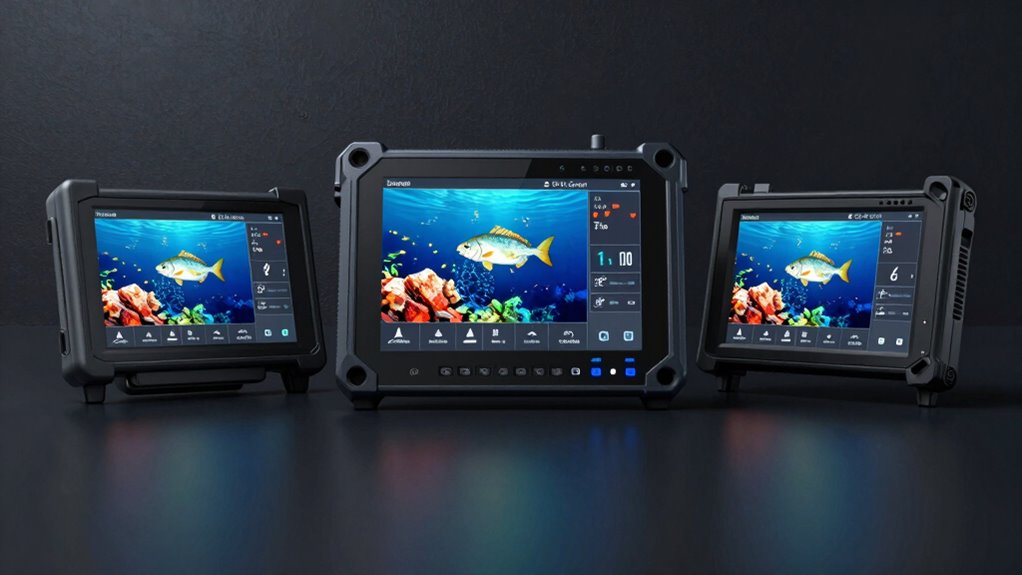

For buyers comparing a fish finder networking system, the key choice is not just screen size: it is how much sonar, charting, and boat integration you need—and whether you already have a compatible transducer. My strongest all-around pick is the Humminbird XPLORE 10-Inch for its broad sonar suite, large interface, included regional charts, and support for Ethernet and NMEA 2000 connections. The XPLORE GPS Fish Finder with MEGA Side Imaging+ models offer a similar connected foundation, while the HELIX 5 CHIRP GPS G3 is the simpler, more self-contained route for anglers who want GPS and sonar without a large control head.

Get sports gear delivered free with Prime
- Fast, free delivery on millions of items
- Prime Video, Amazon Music and more included
- Member-only deals all year
The tradeoff is clear across this lineup: the XPLORE units add screen area, advanced imaging, and networking, but they are control head only and need a separately sourced transducer. The HELIX models include a transducer and mounting hardware, but have smaller displays and fewer listed network connections. I rank these options by their usefulness as part of a working system, the clarity of their sonar and charting offer, and how much extra equipment a buyer must supply.
Complete the kit


Key Takeaways
- The XPLORE 10-inch control heads lead for connected setups, with Bluetooth, high-speed Ethernet, and NMEA 2000 listed on the models that specify those connections.
- All three XPLORE listings omit a transducer, so buyers must match and obtain one separately before the sonar package is complete.
- The HELIX 5 CHIRP GPS G3 includes a transducer, GPS Basemap, and AutoChart Live, making it the most ready-to-install choice in this group.
- Choose the HELIX 5 CHIRP DI GPS G3 over the standard G3 when Down Imaging matters more than keeping the sonar package simple.
- XPLORE model listings overlap heavily; compare the exact included chart card, connection details, and included accessories rather than assuming each listing is a different networking platform.
| Humminbird XPLORE 10-Inch GPS Fish Finder, Control Head Only |  | Best Overall for a Connected, Large-Screen Setup | Display: 10-inch TFT touchscreen and keypad | Sonar: MEGA Side Imaging+, MEGA Down Imaging+, Dual Spectrum CHIRP | GPS and charts: Built-in GPS; LakeMaster and CoastMaster VX charts | VIEW ON AMAZON | See Our Full Breakdown |
| Humminbird XPLORE GPS Fish Finder with MEGA Side Imaging+ and HD Touchscreen |  | Best for Boat-System Integration | Display: 10-inch touchscreen and keypad | Sonar: MEGA Side Imaging+, MEGA Down Imaging+, Dual Spectrum CHIRP | Imaging coverage: Side range up to 200 feet per side; down coverage to 200 feet | VIEW ON AMAZON | See Our Full Breakdown |
| Humminbird XPLORE GPS Fish Finder with MEGA Side Imaging+ and 10-Inch Touchscreen |  | Best XPLORE Option for Broad Sonar and Mapping | Display: 10-inch TFT touchscreen and keypad | Sonar: MEGA Side Imaging+, MEGA Down Imaging+, Dual Spectrum CHIRP | GPS and maps: Humminbird Basemap, LakeMaster and CoastMaster VX charts | VIEW ON AMAZON | See Our Full Breakdown |
| Humminbird HELIX 5 CHIRP DI GPS G3 Fish Finder |  | Best Compact Pick for Down Imaging | Display: 5-inch TFT color | Sonar: CHIRP Down Imaging and Dual Spectrum CHIRP | GPS: Internal GPS with Humminbird Basemap | VIEW ON AMAZON | See Our Full Breakdown |
| Humminbird HELIX 5 CHIRP GPS G3 Fish Finder |  | Best Ready-to-Install Value | Display: 5-inch color TFT | Sonar: Dual Spectrum CHIRP, wide and narrow modes | GPS maps: Basemap for 10,000+ lakes and continental US coastlines | VIEW ON AMAZON | See Our Full Breakdown |
| fish finder networking system | Display | Sonar | Transducer | Mapping |
|---|---|---|---|---|
| Humminbird XPLORE 10-Inch GPS | 10-inch TFT touchscreen and keypad | MEGA Side Imaging+, MEGA Down Imaging+, Dual Spectrum CHIRP | Not included | — |
| Humminbird XPLORE GPS Fish Fin | 10-inch touchscreen and keypad | MEGA Side Imaging+, MEGA Down Imaging+, Dual Spectrum CHIRP | Not included | AutoChart Live; eight hours of built-in recording |
| Humminbird XPLORE GPS Fish Fin | 10-inch TFT touchscreen and keypad | MEGA Side Imaging+, MEGA Down Imaging+, Dual Spectrum CHIRP | Not included | AutoChart Live; eight hours of built-in recording |
| Humminbird HELIX 5 CHIRP DI GP | 5-inch TFT color | CHIRP Down Imaging and Dual Spectrum CHIRP | — | AutoChart Live; eight hours of built-in recording |
| Humminbird HELIX 5 CHIRP GPS G | 5-inch color TFT | Dual Spectrum CHIRP, wide and narrow modes | XNT 9 HW T transom-mount transducer | AutoChart Live; eight hours of built-in recording |
More Details on Our Top Picks
Humminbird XPLORE 10-Inch GPS Fish Finder, Control Head Only
I rank this XPLORE first because it combines the strongest stated networking case in the group with a large display and a broad sonar package. MEGA Side Imaging+, MEGA Down Imaging+, and Dual Spectrum CHIRP give the operator several ways to inspect structure and locate fish, while the 10-inch touchscreen and keypad offer a practical choice of controls. Built-in GPS, LakeMaster and CoastMaster VX charts, waypoint management, and compatibility with NMEA 2000 and One-Boat Network products make it the clearest fit here for a boat-electronics system meant to grow.
Compared with the HELIX 5 models, the XPLORE presents more information on screen and adds imaging types and stated system compatibility. That advantage carries a setup cost in equipment, not a price: the control head does not include a transducer, so this is not the easiest ready-to-run pick for someone starting from scratch. AutoChart Live recording is also limited to eight hours of built-in storage, which may constrain anglers who want to keep extensive custom maps on the unit.
The supplied details describe this as a control head with charts and networking support, but do not list Ethernet for this specific item as clearly as another XPLORE listing does. I would verify the exact model’s ports and compatibility before planning a multi-display network. For a buyer who already knows the transducer and boat accessories they need, it is the most balanced large-screen choice here.
Pros:- 10-inch touchscreen plus keypad gives two ways to operate the display.
- MEGA Side Imaging+, MEGA Down Imaging+, and Dual Spectrum CHIRP cover multiple sonar views.
- Includes GPS with LakeMaster and CoastMaster VX charts for the US and Canada.
- Lists NMEA 2000 and One-Boat Network compatibility.
Cons:- Transducer is not included, so sonar hardware must be obtained separately.
- Built-in AutoChart Live recording is limited to eight hours.
- Confirm exact connection details for a planned multi-display installation.
Best for: Anglers planning a large-screen system around compatible Humminbird, Minn Kota, or Cannon equipment, and who can source the right transducer separately.
Not ideal for: First-time buyers who want an included transducer or a simple, self-contained installation.
- Display:10-inch TFT touchscreen and keypad
- Sonar:MEGA Side Imaging+, MEGA Down Imaging+, Dual Spectrum CHIRP
- GPS and charts:Built-in GPS; LakeMaster and CoastMaster VX charts
- Maximum measuring depth:200 feet
- Networking:NMEA 2000 and One-Boat Network compatibility
- Included components:Control head, power adapter, unit cover, mounting bracket
- Transducer:Not included
- Warranty:Three years with registration
Our verdict“I would choose this XPLORE when a large display and stated network compatibility matter more than an all-in-one box.”
Humminbird XPLORE GPS Fish Finder with MEGA Side Imaging+ and HD Touchscreen
This XPLORE listing is my pick for buyers who want the connectivity details spelled out alongside advanced sonar. It pairs a 10-inch touchscreen and keypad with MEGA Side Imaging+, MEGA Down Imaging+, and Dual Spectrum CHIRP, then adds built-in GPS, Basemap coverage, and LakeMaster and CoastMaster VX charts. Its listed Bluetooth, high-speed Ethernet, and NMEA 2000 connections give a buyer clearer information for planning links to compatible electronics than the first XPLORE listing provides.
Compared with the HELIX 5 units, this model is far more oriented toward a larger boat system: it is designed to work with compatible Minn Kota trolling motors and Cannon products, and its wide display is better suited to viewing charts beside sonar information. Compared with the other XPLORE listings, its stated 200-foot side range and down coverage help define the imaging capability, though those figures do not remove the need to choose a compatible transducer.
The main drawback is substantial for anyone treating this as a complete fish finder package: no transducer is included. It also shares the XPLORE family’s eight-hour AutoChart Live recording limit. I would put it ahead of the other XPLORE options when clearly documented network connections are central to the purchase, but buyers should confirm the exact contents and chart card before ordering because the listings overlap.
Pros:- Lists Bluetooth, high-speed Ethernet, and NMEA 2000 connectivity.
- Combines three sonar technologies with GPS and regional chart coverage.
- Supports compatible Minn Kota and Cannon equipment.
- Touchscreen and keypad allow flexible control.
Cons:- Control head only; transducer must be sourced separately.
- AutoChart Live has eight hours of built-in recording.
- The listing overlaps with other XPLORE variants, so package details need checking.
Best for: Boat owners connecting a fish finder with compatible trolling-motor, engine, or other marine electronics and who can select a separate transducer.
Not ideal for: Anglers looking for an included transducer, minimal setup decisions, or a compact unit for a small console.
- Display:10-inch touchscreen and keypad
- Sonar:MEGA Side Imaging+, MEGA Down Imaging+, Dual Spectrum CHIRP
- Imaging coverage:Side range up to 200 feet per side; down coverage to 200 feet
- GPS and maps:Built-in GPS, Humminbird Basemap, LakeMaster and CoastMaster VX
- Connectivity:Bluetooth, high-speed Ethernet, NMEA 2000
- Mapping:AutoChart Live; eight hours of built-in recording
- Compatibility:Compatible Minn Kota trolling motors and Cannon products
- Transducer:Not included
Our verdict“I favor this XPLORE listing when transparent network connection details are a higher priority than an included transducer.”
Humminbird XPLORE GPS Fish Finder with MEGA Side Imaging+ and 10-Inch Touchscreen
This XPLORE is another strong fit for buyers who want an advanced sonar display with charts already included. Its MEGA Side Imaging+, MEGA Down Imaging+, and Dual Spectrum CHIRP cover side views, bottom detail, and fish detection, while the 10-inch screen provides more room for chart and sonar pages than either HELIX 5. It also lists Humminbird Basemap, LakeMaster and CoastMaster VX charts, AutoChart Live, Bluetooth, Ethernet, and NMEA 2000, creating a capable base for a compatible network.
I rank it just behind the XPLORE model with the more explicit side-range and down-coverage figures because its description emphasizes the overall feature set rather than those particular imaging limits. Against the XPLORE 10-Inch pick, it appears very close on core hardware and system role; the supplied details do not establish a major capability difference. A buyer should compare the exact model number, included chart card, and connections instead of assuming these listings represent distinct sonar generations.
Like its XPLORE siblings, this model is control head only. That separation is useful if you are matching a transducer to an existing installation, but it makes the purchase less convenient for a new setup. The eight-hour AutoChart Live recording allowance is another limit for anglers who frequently create custom maps. I see it as a good choice when the listed chart and connection bundle matches the boat plan, rather than as an automatic upgrade over the other XPLORE entries.
Pros:- Combines side imaging, down imaging, and CHIRP sonar.
- Includes GPS, Basemap, LakeMaster, and CoastMaster VX chart coverage.
- Lists Bluetooth, high-speed Ethernet, and NMEA 2000.
- Large display pairs chart navigation with several sonar views.
Cons:- No transducer is included.
- AutoChart Live built-in recording is limited to eight hours.
- Core features overlap with the other XPLORE listings, so exact package details matter.
Best for: Anglers who want a 10-inch Humminbird display with multiple imaging modes, regional charts, and listed Ethernet and NMEA 2000 connections.
Not ideal for: Buyers who need a transducer in the box or expect a clear distinction from the other XPLORE control-head listings.
- Display:10-inch TFT touchscreen and keypad
- Sonar:MEGA Side Imaging+, MEGA Down Imaging+, Dual Spectrum CHIRP
- GPS and maps:Humminbird Basemap, LakeMaster and CoastMaster VX charts
- Maximum measuring depth:200 feet
- Connectivity:Bluetooth, high-speed Ethernet, NMEA 2000
- Mapping:AutoChart Live; eight hours of built-in recording
- Weight:4.8 pounds
- Transducer:Not included
Our verdict“I would select this XPLORE when its specific chart and connection package fits the boat, while checking the close sibling listings before deciding.”
Humminbird HELIX 5 CHIRP DI GPS G3 Fish Finder
The HELIX 5 CHIRP DI GPS G3 earns its place by adding CHIRP Down Imaging to a compact, included-hardware package. Dual Spectrum CHIRP offers wide and narrow search modes, while Down Imaging adds a more defined view beneath the boat. GPS with Humminbird Basemap and AutoChart Live gives it useful navigation and mapping functions without requiring a 10-inch console opening or a separate transducer purchase.
Compared with the standard HELIX 5 GPS G3, this version gives more emphasis to downward structure detail. Compared with XPLORE, it lacks the large display and listed Ethernet, Bluetooth, and NMEA 2000 connections, so I would not choose it as the foundation for a growing multi-device boat network. Its appeal is a compact sonar-and-GPS unit that arrives with the transducer and mounting hardware needed for its core job.
AutoChart Live stores only eight hours of mapping internally, and premium chart expansion may require compatible chart products or SD cards. The supplied dimensions are unusually large for a 5-inch display, so I would check the mounting space against the actual unit before planning a tight console fit. For small boats and anglers who value Down Imaging more than network expansion, it is the most distinctive HELIX choice here.
Pros:- Adds CHIRP Down Imaging to Dual Spectrum CHIRP sonar.
- Includes GPS, Humminbird Basemap, and AutoChart Live.
- Transducer, power cable, mounting hardware, and bracket are included.
- Keypad controls suit operation in varied weather.
Cons:- Built-in AutoChart Live recording is limited to eight hours.
- Expanded charting may require separate compatible charts or SD cards.
- No Ethernet or NMEA 2000 connection is specified in the supplied details.
Best for: Small-boat anglers who want Down Imaging, GPS, and an included transducer in a compact control-head class.
Not ideal for: Buyers building a connected multi-display system or seeking the larger XPLORE screen and stated network ports.
- Display:5-inch TFT color
- Sonar:CHIRP Down Imaging and Dual Spectrum CHIRP
- GPS:Internal GPS with Humminbird Basemap
- Mapping:AutoChart Live; eight hours of built-in recording
- Controls:Keypad
- Included transducer:XNT 9 HW DI T transom-mount transducer
- Mounting:Bail mount with included mounting hardware
- Warranty:One year
Our verdict“I recommend this HELIX when compact Down Imaging and included sonar hardware matter more than advanced networking.”
Humminbird HELIX 5 CHIRP GPS G3 Fish Finder
This standard HELIX 5 is the simplest complete package in the lineup. It combines Dual Spectrum CHIRP sonar, built-in GPS with Humminbird Basemap coverage, and AutoChart Live in a 5-inch color display with keypad controls. The package includes a transom-mount transducer, power cable, and mounting hardware, so buyers can plan around a defined sonar setup rather than sourcing the central sensor separately.
Compared with the HELIX 5 CHIRP DI, this version gives up Down Imaging but retains wide and narrow CHIRP search modes and the same broad role as a compact GPS fish finder. That makes it a better fit for someone prioritizing the basic fish-finding and navigation package over extra structure views. Compared with XPLORE, it is much less suited to a networked boat build: no Ethernet, NMEA 2000, or One-Boat Network compatibility is specified here, and its screen is considerably smaller.
The built-in AutoChart Live limit is eight hours, and premium chart support may mean buying compatible charts or cards separately. I would not mistake its GPS and mapping features for a full marine-network hub. Its strength is a straightforward installation bundle with useful core tools, while its ceiling is lower for buyers who want advanced imaging or to connect multiple devices.
Pros:- Includes Dual Spectrum CHIRP with wide and narrow search modes.
- GPS Basemap covers more than 10,000 lakes and US coastlines.
- AutoChart Live records depth contours, bottom hardness, and vegetation.
- Transducer, power cable, and mounting hardware are included.
Cons:- AutoChart Live recording is limited to eight hours.
- Premium chart compatibility may require separate chart products or cards.
- No networking connections are specified in the supplied product details.
Best for: Anglers who want a compact GPS fish finder with a transducer and mounting parts included, without planning a broader electronics network.
Not ideal for: Buyers who need Down Imaging, a large display, or specified connections to other marine electronics.
- Display:5-inch color TFT
- Sonar:Dual Spectrum CHIRP, wide and narrow modes
- GPS maps:Basemap for 10,000+ lakes and continental US coastlines
- Mapping:AutoChart Live; eight hours of built-in recording
- Transducer:XNT 9 HW T transom-mount transducer
- Included hardware:Power cable, mounting hardware, gimbal bracket
- Weight:2.1 pounds
- Warranty:One year
Our verdict“I would choose this HELIX for a capable, compact GPS-and-sonar package, not as the center of an expandable fish finder network.”

How We Picked
I ranked these fish finders around their value as parts of a networked fishing setup, rather than treating screen size or a long feature list as the only measure. I looked at the stated sonar tools, GPS and chart coverage, mapping functions, listed connections, and the equipment included in each package. That matters because a control head with advanced imaging can still require a separate transducer, while a smaller unit that includes one may be closer to a usable installation.
I also weighed the difference between standalone capability and system growth. XPLORE models list compatibility with One-Boat Network equipment, and specified listings include Ethernet and NMEA 2000 support. The HELIX units make a more modest proposition: built-in GPS, Humminbird Basemap, AutoChart Live, and included transducers, with no comparable networking connections specified in the supplied details. I did not assume unlisted capabilities.
Finally, I separated products by practical role. The XPLORE 10-inch units rank ahead for buyers building around a large display and compatible boat electronics; the HELIX 5 CHIRP DI earns a place for added downward detail at a compact size; and the standard HELIX 5 GPS G3 suits buyers who prioritize a straightforward package. Since the three XPLORE entries share many core details, their order reflects the clarity and breadth of the specifications supplied, not a claim that their underlying hardware is different.
| fish finder networking system | Sonar | Transducer | Warranty |
|---|---|---|---|
| Humminbird XPLORE 10-Inch GPS | MEGA Side Imaging+, MEGA Down Imaging+, Dual Spectrum CHIRP | Not included | Three years with registration |
| Humminbird XPLORE GPS Fish Fin | MEGA Side Imaging+, MEGA Down Imaging+, Dual Spectrum CHIRP | Not included | — |
| Humminbird XPLORE GPS Fish Fin | MEGA Side Imaging+, MEGA Down Imaging+, Dual Spectrum CHIRP | Not included | — |
| Humminbird HELIX 5 CHIRP DI GP | CHIRP Down Imaging and Dual Spectrum CHIRP | — | One year |
| Humminbird HELIX 5 CHIRP GPS G | Dual Spectrum CHIRP, wide and narrow modes | XNT 9 HW T transom-mount transducer | One year |
Factors to Consider When Choosing Fish Finder Networking System
A useful fish finder network starts with matching the control head, sonar sensor, maps, and boat electronics to the way you fish. I would make those decisions before comparing screen sizes alone.Start with the network you actually need
For a single display with GPS and sonar, a HELIX 5 may cover the core job, but the product details here do not list advanced network ports for either HELIX. If you want a fish finder to share information or connect with other compatible equipment, the XPLORE listings are the better starting point because they specify NMEA 2000, and some explicitly list high-speed Ethernet and Bluetooth. Match those connections to the devices already on your boat; network names alone do not confirm that every accessory will connect or share every data type.
Treat the transducer as part of the system
The three XPLORE entries are control heads without a transducer. That can suit an owner replacing a display or selecting a sensor for a particular installation, but a new system needs the correct compatible transducer added to the plan. Both HELIX 5 listings include transducers and mounting parts, which makes their core sonar packages easier to scope. Before buying, check transducer compatibility, mounting position, cable routing, and the sonar views you want to use.
Choose imaging for your fishing style
Dual Spectrum CHIRP is the shared starting point for locating fish, with the HELIX 5 GPS G3 offering wide and narrow search modes. The HELIX 5 CHIRP DI adds Down Imaging, while XPLORE brings both side and down imaging alongside CHIRP. Side imaging is useful for searching structure away from the boat; down imaging focuses on the area below. Those extra views make XPLORE more capable on paper, but they also mean more setup choices and a separate transducer requirement.
Check charts and custom mapping limits
The HELIX 5 GPS G3 lists Basemap coverage for more than 10,000 lakes and US coastlines, while XPLORE includes LakeMaster and CoastMaster VX charts for the US and Canada. AutoChart Live appears across the lineup, but the supplied products limit built-in recording to eight hours. Anglers who map frequently should decide whether that storage allowance suits their routine and whether compatible chart products or cards are needed for extra detail or longer-term use.
Plan the display around the console
A 10-inch XPLORE gives more room to read charts and sonar at once and offers touchscreen operation alongside keypad controls. That can help when using several views, but the larger control head needs more mounting space and is a separate component from the transducer. A 5-inch HELIX is easier to fit in a compact installation and relies on keypad controls. Measure the usable console area and consider viewing distance before choosing the screen that looks best on a specification sheet.
Compare XPLORE listings by exact package
The three XPLORE listings share a 10-inch display class, advanced sonar, GPS, regional charts, and the absence of an included transducer. The stated details are not identical: one calls out NMEA 2000 and One-Boat Network compatibility, another lists Bluetooth, high-speed Ethernet, and NMEA 2000 plus imaging coverage figures, and a third gives a similar connection list with a different emphasis. I would confirm the exact model number, chart card, ports, and included accessories with the seller before designing a connected installation.
Frequently Asked Questions
What makes a fish finder a networking system?
A network-capable fish finder can connect to compatible marine equipment and exchange supported information through connections such as Ethernet or NMEA 2000. Among these picks, XPLORE models list network connections and compatibility with selected Minn Kota and Cannon products, while the supplied HELIX 5 details focus on built-in sonar, GPS, and mapping. Check the connection requirements of every device in your planned setup; a compatible port does not mean every feature is shared between all products.
Do the Humminbird XPLORE models include a transducer?
No. Each XPLORE model in this comparison is described as a control head only, without a transducer. Buyers need to identify and obtain a compatible transducer separately before using its sonar functions. Both HELIX 5 models include a transducer, which makes them more straightforward choices for buyers who want the main sonar hardware in the package.
Which option is best for a small boat?
The HELIX 5 CHIRP GPS G3 is the most straightforward compact choice because it combines a 5-inch display, GPS, CHIRP sonar, and an included transducer. Choose the HELIX 5 CHIRP DI GPS G3 if Down Imaging is worth the added sonar capability to you. XPLORE provides a larger screen and broader listed networking features, but its 10-inch control head and separately sourced transducer may not suit a small, simple installation.
Which model offers the most sonar views?
The XPLORE models combine MEGA Side Imaging+, MEGA Down Imaging+, and Dual Spectrum CHIRP, giving them the widest stated mix of sonar views in this group. The HELIX 5 CHIRP DI adds Down Imaging to Dual Spectrum CHIRP, while the standard HELIX 5 uses Dual Spectrum CHIRP. The XPLORE advantage is paired with a separate transducer purchase, so confirm the sensor supports the sonar features you intend to use.
Can these fish finders create custom maps?
All five listings include AutoChart Live, which records mapping information, but each specifies just eight hours of built-in recording. The HELIX 5 GPS G3 description names depth contours, bottom hardness, and vegetation as recorded details. Buyers who want to keep extensive custom maps should check compatible chart products or cards and confirm how mapping data can be stored or expanded on their chosen unit.
Conclusion
For a connected boat setup with a large display, I would start with the Humminbird XPLORE 10-Inch; choose the XPLORE listing with clearly specified Ethernet, Bluetooth, and NMEA 2000 if port details are your main decision point. For a compact boat and added downward structure detail, the HELIX 5 CHIRP DI GPS G3 is the better fit. If you want a simpler GPS-and-sonar package with the transducer already included, pick the HELIX 5 CHIRP GPS G3. Across all three XPLORE listings, verify the precise package and source a compatible transducer before purchase; across the HELIX pair, accept the smaller screen and more limited specified networking in exchange for a more complete core installation.
Halloween Picks
halloween
As an affiliate, we earn on qualifying purchases.