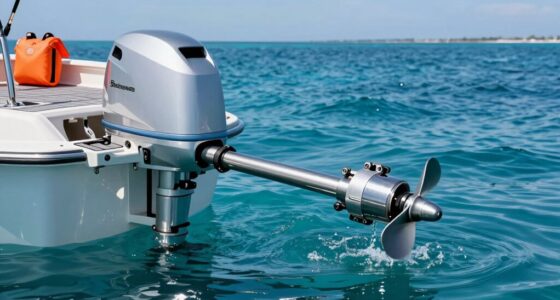
Shopping for a marine lithium battery 24V 100Ah means balancing usable 25.6V power with boat fit, cold-weather behavior, monitoring, and the battery management system. My overall pick is the LiTime Group 31+ Mini for its compact format and Bluetooth status checks, while the Dyness AR2.5 is a strong choice for buyers who value a stated smart BMS and broad bank expansion. The SUPER EMPOWER offers a clearly specified low-temperature charging cutoff and a lighter listed weight than several conventional-size options.

Get sports gear delivered free with Prime
- Fast, free delivery on millions of items
- Prime Video, Amazon Music and more included
- Member-only deals all year
These are not interchangeable batteries just because they share a 100Ah capacity. The LiTime Mini has a notably different footprint but may be too tall for some sealed Group 31 boxes; the other LiTime lacks Bluetooth and needs more installation space. DUMFUME lists a minimum charging temperature of 5°C or higher, while SUPER EMPOWER and Dyness specify low-temperature protection. I rank the options by how clearly their supplied specifications support marine use, installation decisions, and practical system planning—not by claims that they can start an engine. None of these is intended for engine starting.
Complete the kit



Key Takeaways
- Choose the LiTime Group 31+ Mini if a compact footprint and Bluetooth monitoring matter more than fitting a standard sealed Group 31 box.
- The Dyness AR2.5 pairs a 100A smart BMS and low-temperature protection with stated expansion up to a 4P2S bank.
- SUPER EMPOWER specifies a 0°C charging cutoff and −20°C discharge protection, useful details for planning around cold conditions.
- The standard-size LiTime and DUMFUME offer 100Ah capacity but require more room than the Group 31+ Mini; DUMFUME lists a 5°C minimum temperature.
- All five are deep-cycle storage batteries, not cranking batteries; confirm your motor’s current draw, charger compatibility, and compartment dimensions before choosing.
| LiTime 24V 100Ah Group 31+ LiFePO4 Lithium Battery |  | Best Overall for Compact Fit and Bluetooth Monitoring | Chemistry: LiFePO4 | Nominal voltage: 25.6V | Capacity: 100Ah | VIEW ON AMAZON | See Our Full Breakdown |
| Dyness 24V 100Ah LiFePO4 Deep Cycle Battery |  | Best for BMS Protection and Expandable Banks | Chemistry: LiFePO4 | Voltage: 25.6V | Capacity: 100Ah | VIEW ON AMAZON | See Our Full Breakdown |
| SUPER EMPOWER 25.6V 100Ah LiFePO4 Deep Cycle Battery |  | Best for Clearly Stated Cold-Weather Limits | Chemistry: LiFePO4 | Nominal voltage: 25.6V | Capacity: 100Ah | VIEW ON AMAZON | See Our Full Breakdown |
| LiTime 24V 100Ah LiFePO4 Battery for Off-Grid RV Marine Home |  | Best for Multi-Use Capacity and Stated Cycle Life | Chemistry: Lithium iron phosphate | Voltage: 25.6V | Capacity: 100Ah | VIEW ON AMAZON | See Our Full Breakdown |
| 24V 100Ah LiFePO4 Battery with Built-in 100A BMS |  | Best for Buyers Prioritizing a Straightforward Deep-Cycle Setup | Chemistry: Lithium polymer, as listed | Voltage: 25.6V | Capacity: 100Ah | VIEW ON AMAZON | See Our Full Breakdown |
| marine lithium battery 24v 100ah | Chemistry | Capacity | Dimensions | Weight |
|---|---|---|---|---|
| LiTime 24V 100Ah Group 31+ LiF | LiFePO4 | 100Ah | 13.11 × 6.93 × 9.45 in | 20 kg |
| Dyness 24V 100Ah LiFePO4 Deep | LiFePO4 | 100Ah | 8.11 × 20.9 × 8.54 in | 44.3 lb |
| SUPER EMPOWER 25.6V 100Ah LiFe | LiFePO4 | 100Ah | 20.94 × 8.13 × 8.56 in | 41.7 lb |
| LiTime 24V 100Ah LiFePO4 Batte | Lithium iron phosphate | 100Ah | 21 × 8.2 × 8.5 in | 45.85 lb |
| 24V 100Ah LiFePO4 Battery with | Lithium polymer, as listed | 100Ah | 20.91 × 8.11 × 8.56 in | 48.06 lb |
More Details on Our Top Picks
LiTime 24V 100Ah Group 31+ LiFePO4 Lithium Battery
I rank the LiTime Group 31+ Mini first because it combines the most boat-friendly footprint in this group with a feature that helps make battery status easier to check: Bluetooth 5.0 monitoring. Its 25.6V, 100Ah LiFePO4 design is aimed at 24V trolling motors and other marine loads, while the smart BMS provides multiple protections. The listed 6,000+ cycles at 100% depth of discharge is higher than the 4,000+ cycle claims supplied for several rivals, though cycle-life claims are not a substitute for checking warranty terms and operating limits.
Its Group 31 Mini dimensions—13.11 × 6.93 × 9.45 inches—make it substantially shorter in length than the standard-size LiTime, Dyness, DUMFUME, and SUPER EMPOWER options listed here. That can help in a crowded boat compartment, but the manufacturer warns it may be too tall for standard sealed Group 31 battery boxes. I would measure the actual compartment rather than assume the Group 31 label guarantees a drop-in fit. At 20 kg, it is also heavier than the listed weights for several full-size alternatives.
Compared with Dyness, this LiTime adds app monitoring and a more compact footprint, while Dyness gives a specific 100A smart BMS and documented 4P2S expansion. Buyers who need clear low-temperature thresholds may also prefer SUPER EMPOWER or Dyness, since the supplied LiTime Mini details do not list a temperature cutoff. This is a deep-cycle battery, not an engine-starting battery, so it belongs in a house or trolling-motor bank rather than a cranking circuit.
Pros:- Bluetooth 5.0 app monitoring provides battery status information.
- Compact Group 31 Mini footprint can suit tight spaces.
- Smart BMS includes multiple protections.
- Manufacturer states 6,000+ cycles at 100% depth of discharge.
Cons:- May be too tall for standard sealed Group 31 battery boxes.
- Not suitable for starting engines.
- Listed weight is 20 kg, heavier than several full-size alternatives.
Best for: Boat owners with limited compartment length who want Bluetooth battery monitoring for a 24V trolling-motor or house-power setup.
Not ideal for: Buyers whose sealed Group 31 box has limited height, or anyone looking for an engine-starting battery or clearly stated cold-weather charging limits.
- Chemistry:LiFePO4
- Nominal voltage:25.6V
- Capacity:100Ah
- Dimensions:13.11 × 6.93 × 9.45 in
- Weight:20 kg
- Monitoring:Bluetooth 5.0
- Water resistance:IP65
- Cycle-life claim:6,000+ cycles at 100% depth of discharge
- Warranty:5 years
Our verdict“I would choose the LiTime Mini when compact length and Bluetooth monitoring matter more than box height or a published cold-charge cutoff.”
Dyness 24V 100Ah LiFePO4 Deep Cycle Battery
The Dyness AR2.5 earns its place near the top for buyers planning a larger system or prioritizing specified battery protections. It has a 100A smart BMS with stated protection against overcharge, over-discharge, overcurrent, short circuits, overheating, and low temperatures. Its 25.6V, 100Ah rating provides 2,560Wh, matching the nominal energy figure of the other full-size 100Ah choices.
Its strongest distinction is documented system growth: the listing describes up to a 4P2S configuration, reaching 51.2V 400Ah and 20.48kWh. That flexibility may matter to someone building a broader marine, solar, or backup setup, but it is more capability than a single 24V trolling motor needs. I would follow the manufacturer’s wiring and configuration guidance rather than infer that every arrangement is supported by the battery alone.
Compared with the compact LiTime Mini, Dyness is longer and heavier at 20.9 inches and 44.3 pounds, and the supplied details do not mention Bluetooth status monitoring. SUPER EMPOWER is slightly lighter at 41.7 pounds and gives explicit temperature thresholds, whereas Dyness names low-temperature protection without specifying its exact cutoff in the supplied information. Its stated 4,000+ deep cycles are below the Mini’s 6,000+ claim, but cycle claims depend on operating conditions. Like the others here, it is not intended for engine starting or high-drain golf-cart use.
Pros:- 100A smart BMS lists multiple electrical and temperature protections.
- Supports stated expansion up to a 4P2S bank.
- 2,560Wh rating suits 24V deep-cycle energy storage.
- Five-year warranty and 4,000+ deep-cycle claim are specified.
Cons:- Longer and heavier than the LiTime Group 31+ Mini.
- No Bluetooth monitoring is listed in the supplied specifications.
- The exact low-temperature cutoff is not specified here.
Best for: Marine and off-grid buyers who want a stated 100A smart BMS, low-temperature protection, and a documented path to a larger battery bank.
Not ideal for: Owners needing a small-footprint battery, Bluetooth monitoring, engine cranking, or a battery specified for high-drain golf-cart applications.
- Chemistry:LiFePO4
- Voltage:25.6V
- Capacity:100Ah
- Energy:2,560Wh
- BMS:100A smart BMS
- Dimensions:8.11 × 20.9 × 8.54 in
- Weight:44.3 lb
- Expansion:Up to 4P2S, as specified
- Cycle-life claim:4,000+ deep cycles
Our verdict“I would pick Dyness for a protection-focused marine battery that may later join a larger compatible bank, not for a compact monitored installation.”
SUPER EMPOWER 25.6V 100Ah LiFePO4 Deep Cycle Battery
SUPER EMPOWER is the pick I would examine closely when operating conditions include chilly mornings or storage in an unheated space. Its listing specifies a 0°C (32°F) low-temperature charging cutoff and discharge protection down to −20°C (−4°F). Those numbers make planning easier than a general statement of low-temperature protection, though charging must still stop below the stated threshold and the battery’s full manual should guide use.
The battery provides 25.6V, 100Ah, and 2,560Wh, with a built-in 100A BMS that includes cell balancing and temperature protection. At 41.7 pounds, it is the lightest listed full-size option in this lineup, slightly below Dyness and standard LiTime. It is still much longer than the Group 31+ Mini, so the weight advantage does not solve a tight compartment. Its expansion details are also narrower: the listing specifies up to two in series and four parallel strings, rather than Dyness’s stated 4P2S arrangement.
Compared with DUMFUME, SUPER EMPOWER gives a more permissive stated charging threshold: DUMFUME lists temperatures of 5°C or higher, while this model pauses charging below 0°C. Compared with the standard LiTime, it provides more explicit cold-weather information but does not include the supplied claim of 4,000+ cycles or Bluetooth monitoring. Buyers must use LiFePO4-compatible charging equipment, and neither this model nor its rivals should be used to crank an engine.
Pros:- Lists a 0°C charging cutoff and −20°C discharge protection.
- Built-in 100A BMS includes cell balancing and temperature protection.
- Listed 41.7-pound weight is lower than other full-size options here.
- Provides 2,560Wh for compatible marine and off-grid systems.
Cons:- Charging pauses below 0°C (32°F).
- Full-size dimensions require more room than the Group 31+ Mini.
- Not intended for engine starting.
Best for: Boat owners who need explicit charging and discharge temperature thresholds, a 100A BMS, and a relatively light full-size battery.
Not ideal for: Buyers who need Bluetooth monitoring, a compact Group 31 footprint, engine starting, or charging below freezing.
- Chemistry:LiFePO4
- Nominal voltage:25.6V
- Capacity:100Ah
- Energy:2,560Wh
- BMS:100A, with cell balancing and temperature protection
- Dimensions:20.94 × 8.13 × 8.56 in
- Weight:41.7 lb
- Temperature limits:Charging cutoff: 0°C; discharge protection: −20°C
- Warranty:5-year limited warranty
Our verdict“I would favor SUPER EMPOWER when clear cold-weather thresholds and a lighter full-size case matter more than app monitoring or a compact footprint.”
LiTime 24V 100Ah LiFePO4 Battery for Off-Grid RV Marine Home
This standard-size LiTime 24V 100Ah is a versatile choice for a boat that shares energy-storage needs with an RV, solar system, or home backup setup. It supplies 25.6V and 2.56kWh, with a built-in 100A BMS and low-temperature cutoff. The stated lifespan exceeds 4,000 cycles, and the listing describes a system configuration up to 48V through a 4P2S connection.
The case measures 21 × 8.2 × 8.5 inches and weighs 45.85 pounds. That makes it substantially larger than the Group 31+ Mini, which is the better fit when installation space is tight. In return, this model is described as a broadly useful storage battery rather than a compact marine-specific footprint. I would check the battery compartment, mounting, cable reach, and required ventilation or enclosure provisions against the manufacturer’s instructions before ordering.
Its biggest omission for buyers comparing the two LiTime choices is Bluetooth monitoring; the Group 31+ Mini includes it and has a much shorter body. The standard LiTime may still make sense if its form factor works and you value its stated cycle-life and expansion details. Dyness also lists low-temperature protection and 4P2S expansion, with more explicit BMS protections in the supplied description. This LiTime is not intended for engine starting or high-surge devices, and a 100A BMS figure should be checked against the motor’s actual continuous and peak current requirements.
Pros:- 25.6V and 2.56kWh rating for compatible 24V systems.
- Built-in 100A BMS includes low-temperature cutoff.
- Manufacturer states more than 4,000 cycles.
- Supports a stated 4P2S configuration up to 48V.
Cons:- Larger and heavier than the Group 31+ Mini.
- Bluetooth monitoring is not included in the supplied specifications.
- Not suitable for engine starting or high-surge devices.
Best for: Buyers seeking a 24V deep-cycle battery for marine use that may also serve compatible RV, solar, or backup-power systems.
Not ideal for: Owners with small battery compartments, buyers who want Bluetooth monitoring, or anyone needing engine starting or high-surge support.
- Chemistry:Lithium iron phosphate
- Voltage:25.6V
- Capacity:100Ah
- Energy:2.56kWh
- Dimensions:21 × 8.2 × 8.5 in
- Weight:45.85 lb
- BMS:Built-in 100A BMS
- Temperature protection:Low-temperature cutoff
- Expansion:Up to 48V with 4P2S connection
Our verdict“I would choose this LiTime when its standard-size case fits and multi-use energy storage matters more than Bluetooth or a compact marine footprint.”
24V 100Ah LiFePO4 Battery with Built-in 100A BMS
The DUMFUME 24V 100Ah battery offers a familiar deep-cycle specification: 25.6V, 100Ah, a built-in 100A BMS, and a stated 4,000+ deep cycles at 100% depth of discharge. Its 20.91 × 8.11 × 8.56-inch case is close in size to Dyness and SUPER EMPOWER, so I would treat it as a full-size installation rather than a space-saving option. The listing also says series and parallel connections are supported, making it possible to plan a larger system within the manufacturer’s limits.
The largest decision point is temperature. DUMFUME lists a temperature of 5°C or higher, and its description warns that low-temperature charging issues may not have return shipping covered. That is a more restrictive stated condition than SUPER EMPOWER’s 0°C charging cutoff, and the supplied specifications do not provide a separate discharge threshold. For a boat used during cold seasons, I would seek clarification on charging protection and the exact operating limits before choosing it.
Compared with Dyness, DUMFUME has similar listed dimensions and a similar 4,000-plus-cycle claim, but Dyness more clearly describes its BMS protections and expansion capacity. Compared with the standard LiTime, DUMFUME’s listed weight is slightly higher at 48.06 pounds, and the LiTime provides a stated low-temperature cutoff and 48V 4P2S configuration. DUMFUME may suit a straightforward, temperature-controlled storage setup, but I would skip it for cold-weather charging plans unless the manufacturer confirms the relevant limits. It is also not a starting battery.
Pros:- 25.6V, 100Ah capacity with a built-in 100A BMS.
- Manufacturer states 4,000+ deep cycles at 100% depth of discharge.
- Supports series and parallel connections.
- Full-size dimensions are close to several other 100Ah options.
Cons:- Listed temperature condition is 5°C or higher.
- Low-temperature charging return-shipping coverage is limited according to the supplied description.
- No Bluetooth monitoring is listed, and it is not for engine starting.
Best for: Buyers who need a 25.6V, 100Ah deep-cycle battery for a temperature-controlled marine, solar, or backup-power installation.
Not ideal for: Cold-weather boaters who may charge below 5°C, shoppers wanting Bluetooth monitoring, or anyone needing a cranking battery.
- Chemistry:Lithium polymer, as listed
- Voltage:25.6V
- Capacity:100Ah
- BMS:Built-in 100A BMS
- Dimensions:20.91 × 8.11 × 8.56 in
- Weight:48.06 lb
- Cycle-life claim:4,000+ deep cycles at 100% depth of discharge
- Temperature information:5°C or higher listed
- Expansion:Series and parallel connections supported
Our verdict“I would consider DUMFUME for a warm, fixed installation, but its stated 5°C condition makes it a weaker marine fit for cold-weather charging.”
How We Picked
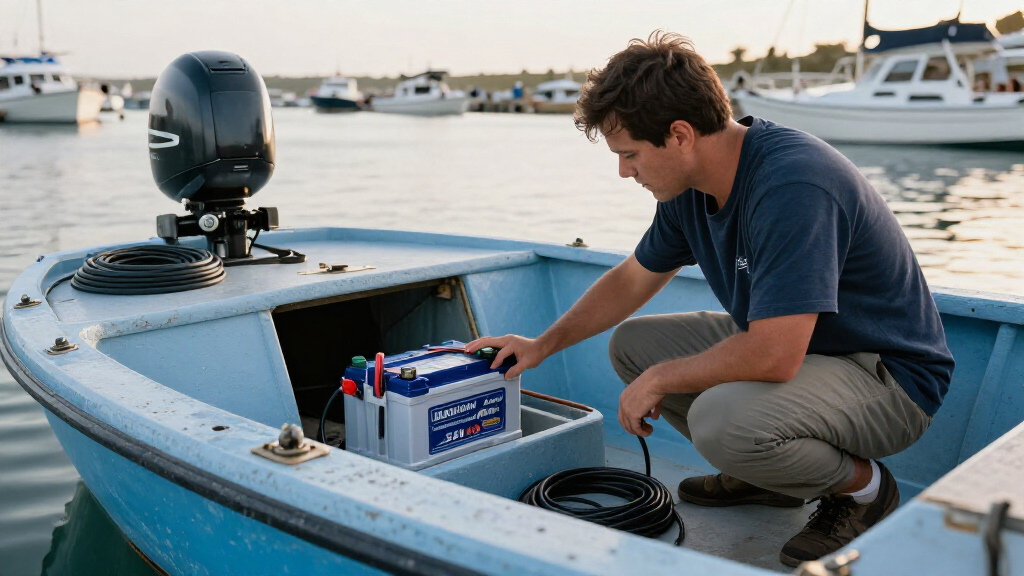
I compared the supplied product specifications through the needs of a 24V marine buyer: matching system voltage, usable 100Ah capacity, physical fit, protection features, temperature limits, monitoring, expansion, and stated service life. I gave particular weight to details that can change a boat installation decision. Bluetooth monitoring, for example, helps a buyer check battery status without relying solely on an external meter, while a low-temperature cutoff matters when charging in cold conditions.
The ranking favors options with more useful, clearly stated marine-relevant information and a distinct practical advantage. That puts the LiTime Group 31+ Mini first for its footprint and app monitoring, and Dyness high for its 100A smart BMS, cold protection, and documented expansion. The other picks serve different priorities: SUPER EMPOWER spells out temperature thresholds and listed weight; standard LiTime offers a long stated cycle life and system expansion without Bluetooth; DUMFUME is a basic deep-cycle option with a temperature caveat that deserves attention.
I do not treat capacity, cycle-life claims, or protection descriptions as proof that a battery suits every boat. Installation space, charger settings, the trolling motor’s current demand, wiring, and the manufacturer’s complete instructions still matter. The supplied descriptions do not give a continuous discharge rating for every product, so I would verify that rating against the motor rather than assume 100Ah alone determines compatibility. I also excluded engine-starting suitability from the ranking because each listing warns against starting use or positions the product for deep-cycle storage.
| marine lithium battery 24v 100ah | Chemistry | Expansion |
|---|---|---|
| LiTime 24V 100Ah Group 31+ LiF | LiFePO4 | — |
| Dyness 24V 100Ah LiFePO4 Deep | LiFePO4 | Up to 4P2S, as specified |
| SUPER EMPOWER 25.6V 100Ah LiFe | LiFePO4 | — |
| LiTime 24V 100Ah LiFePO4 Batte | Lithium iron phosphate | Up to 48V with 4P2S connection |
| 24V 100Ah LiFePO4 Battery with | Lithium polymer, as listed | Series and parallel connections supported |
Factors to Consider When Choosing Marine Lithium Battery 24v 100ah
I would make the choice by matching the battery to the boat and its operating conditions, not by treating every 100Ah label as a complete compatibility check. These points separate the five options in ways that can affect a real installation.Confirm the 24V system match and energy need
All five products list a nominal voltage of 25.6V, which is the nominal figure associated with a 24V LiFePO4 system. Each also lists 100Ah, equivalent to about 2,560Wh at nominal voltage. That tells you the broad energy capacity, but not how long a particular motor will run: actual runtime depends on load, speed, conditions, usable capacity, and the battery’s discharge limits. Compare your trolling motor’s voltage and current requirements with the manufacturer’s continuous and peak discharge ratings. The supplied descriptions do not give a complete discharge rating for every model, so I would get that number before purchasing rather than assume a 100A BMS means every motor load is supported.
Measure the compartment before choosing a case
The LiTime Group 31+ Mini is the clear footprint outlier at 13.11 inches long, but its 9.45-inch height may keep it from fitting certain sealed Group 31 boxes. The other four are around 20.9 to 21 inches long and roughly 8.1 to 8.6 inches wide. Compare the full dimensions—not only the battery tray label—with access for terminals, wiring bends, restraints, and service. Weight also varies: SUPER EMPOWER lists 41.7 pounds, Dyness 44.3, standard LiTime 45.85, DUMFUME 48.06, and the Mini 20 kg. Check how the installed battery will be secured in a moving boat.
Treat temperature protection as an operating limit
Cold-weather charging is one of the clearest differences in these listings. SUPER EMPOWER specifies charging cutoff below 0°C and discharge protection to −20°C; standard LiTime lists a low-temperature cutoff, and Dyness names low-temperature protection without a specific threshold in the supplied details. DUMFUME lists 5°C or higher, making it the least appealing option here for cold charging without further manufacturer clarification. A protection cutoff can prevent charging under conditions that could harm the battery, but it does not make charging below the limit acceptable. Check the battery manual and charger behavior for the temperatures where the boat is stored and used.
Match the BMS and charger to the motor
A BMS helps protect a battery from specified electrical or temperature faults, but its presence alone does not prove compatibility with a trolling motor. Dyness and several other listings specify a 100A BMS; LiTime Mini describes a smart BMS with multiple protections but does not provide an amperage figure in the supplied details. Check continuous and surge draw, wiring, fusing, and the motor maker’s recommendations. Use a LiFePO4-compatible charger with suitable voltage settings. Never rely on a cranking-battery charger profile or assume an existing lead-acid charger is appropriate without checking its specifications.
Choose monitoring and expansion for your actual plan
Bluetooth monitoring is a distinct advantage of the LiTime Group 31+ Mini; the supplied product details for the other four do not list it. If you want app-based status checks, that may justify choosing the Mini even if the case-height limitation needs solving. For a future bank, standard LiTime lists up to 48V through 4P2S, Dyness specifies up to 4P2S, and SUPER EMPOWER describes up to two batteries in series and four parallel strings. DUMFUME says series and parallel configurations are supported but gives fewer details here. Use only combinations expressly allowed by the manufacturer, including matching battery models and installation requirements.
Keep deep-cycle storage separate from engine starting
These are deep-cycle energy-storage batteries, not substitutes for an engine cranking battery. The LiTime Mini, standard LiTime, DUMFUME, Dyness, and SUPER EMPOWER descriptions all warn against engine starting or position them for deep-cycle use. A trolling motor, house loads, electronics, and engine starter can have different demands. Keep a suitable starting battery for the engine unless a manufacturer explicitly approves a product for that role. For the marine battery in this guide, prioritize a correctly sized deep-cycle bank, compatible charging, secure mounting, and circuit protection.
Frequently Asked Questions
Will a 25.6V 100Ah battery work with a 24V trolling motor?
These listings describe 25.6V LiFePO4 batteries for 24V systems, and several specifically mention trolling-motor use. Still, voltage and capacity alone do not confirm compatibility. Check the motor’s voltage, continuous current draw, peak demand, and required protection against the battery’s manufacturer-stated discharge limits and BMS rating. The supplied information does not provide every model’s full discharge specifications, so I would verify those details before connecting the battery.
Can I use one of these batteries to start my boat engine?
No. The listed products are intended for deep-cycle storage, not engine cranking. Engine starting calls for a battery designed and approved to supply the required starting current. I would keep a dedicated marine starting battery for the engine and use one of these 24V batteries for compatible trolling-motor or house-power loads.
Which option is easiest to monitor?
The LiTime 24V 100Ah Group 31+ Mini is the only option in this comparison that explicitly lists Bluetooth 5.0 app monitoring. The supplied specifications for standard LiTime, DUMFUME, Dyness, and SUPER EMPOWER do not list Bluetooth. If app visibility matters, I would start with the Mini, then check whether its height fits the battery compartment and whether its discharge ratings suit the motor.
Which battery has the clearest cold-weather charging information?
SUPER EMPOWER gives the most explicit thresholds in the supplied details: charging cutoff at 0°C and discharge protection at −20°C. DUMFUME lists 5°C or higher, while standard LiTime and Dyness mention low-temperature protection without an exact threshold here. I would still consult the full manual for every model, since an automatic cutoff is not permission to charge outside the approved temperature range.
Can I connect these batteries in series or parallel?
Several listings describe expansion, but the permitted arrangements differ: Dyness and standard LiTime specify 4P2S, SUPER EMPOWER specifies up to two in series and four parallel strings, and DUMFUME says series and parallel connections are supported. The LiTime Mini lists a maximum configuration of 4P2S. Before combining batteries, check the exact manufacturer’s instructions for matching, wiring, charge state, fusing, and system voltage; do not assume one model’s limits apply to another.
Conclusion
My first choice for a buyer who wants compact dimensions and Bluetooth status checks is the LiTime Group 31+ Mini, provided its height works with the enclosure. For a buyer building a larger system and seeking a specified 100A smart BMS with documented expansion, I would look at the Dyness AR2.5. If cold-weather thresholds and a lighter full-size case are higher priorities, SUPER EMPOWER is the clearer fit. Standard LiTime suits a buyer who wants multi-use storage and a stated cycle-life claim but does not need Bluetooth. I would reserve DUMFUME for a warm, temperature-controlled installation unless the manufacturer confirms its cold-weather limits. Whichever you choose, verify motor current, charger compatibility, dimensions, and mounting—and use a separate battery for engine starting.