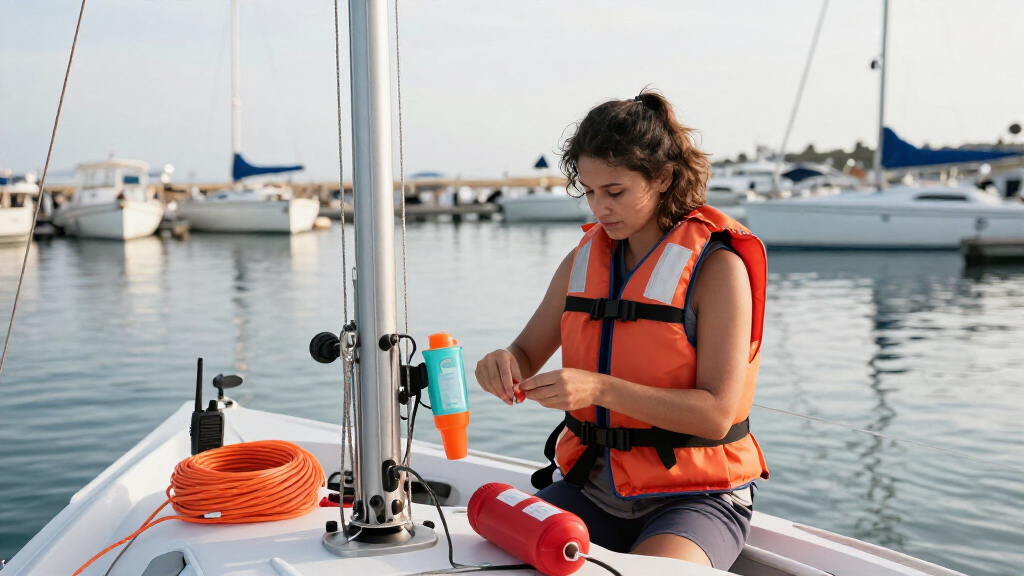
This checklist is for boaters who want to review emergency gear before heading out, whether they travel by powerboat, sailboat, kayak, or another craft. The product picks name specific items where provided; other sections offer general guidance without recommending a particular product.

Get sports gear delivered free with Prime
- Fast, free delivery on millions of items
- Prime Video, Amazon Music and more included
- Member-only deals all year
The sections follow key emergency-preparedness categories: first aid, distress signaling, communication, general safety supplies, fire response, and drinking water. Together, they help you consider what you may need to address an injury, call for help, or manage an unexpected situation aboard.
Use this as a starting point, then check each item against your boat, crew, route, and time on the water. Confirm that equipment is appropriate for your vessel, accessible when needed, and compatible with any required onboard systems. Review instructions and check condition before departure.
Marine First Aid Kit
A first aid kit gives you a place to start when someone aboard is injured or feels unwell. The Adventure Medical Kits Marine Series 1500 First Aid Kit is the named pick for this slot. Before choosing any kit, consider the number of people aboard, how long you may be away from shore, and whether anyone has particular medical needs. The product name alone does not establish which supplies are included, so check the contents and instructions directly.
A common mistake is treating a kit as ready simply because it is onboard. Check that its contents suit your planned trips, that items are in usable condition, and that you know where the kit is stored. Keep it accessible without blocking other safety equipment. For a small craft, consider where it can be secured and reached while underway; for a larger boat, think about whether crew can locate it quickly from different areas.
Review the kit after use and before a new season, and replace anything missing or no longer usable. Make sure the storage location protects it from conditions aboard, and that crew members know where it is. Pairing a kit with basic familiarity about its contents makes it easier to respond calmly when time matters.
What to look for:
- Contents suited to your crew and trip length
- A storage location that is accessible aboard
- Packaging that fits the space available
- Clear instructions for included supplies
- A routine for checking and replenishing contents
Adventure Medical Kits Marine Series 1500 First Aid Kit

A marine first aid kit for small crews, stored in an impact-resistant, waterproof case with an O-ring seal. It includes supplies organized by injury, tools for treating serious emergencies, and a guide to boating injuries and marine conditions.
Pros:
- Waterproof, impact-resistant case with an O-ring seal
- Supplies organized by injury for quick access
- Includes a guide to boating injuries and marine emergencies
- Equipped with tools for severe bleeding, fractures, and hypothermia
Cons:
- Designed for small crews and may not suit larger groups
- The 6-pound kit may take up space aboard smaller vessels
Best for: Boaters assembling a dedicated first aid kit
Not ideal for: Buyers who have not checked the kit’s contents
Bottom line: Review the contents and storage needs before making this first aid kit part of your onboard setup.
Emergency Position Beacon
An emergency position beacon can be part of a plan for signaling distress when ordinary communication is unavailable or insufficient. The named pick is the ResQLink View GPS PLB & ResQFlare USCG Approved Electronic Distress Fl. The supplied product name does not specify its full features or operating requirements, so verify those details with the manufacturer and applicable authorities before relying on it.
One common mistake is assuming that owning a beacon automatically makes it ready for an emergency. Read its instructions, learn how it is activated, and check any registration, service, or maintenance requirements that apply. Confirm that the product is suitable for your intended use and your boating area. Consider who aboard might need to operate it and whether they can reach it quickly without searching through packed gear.
Fit and placement matter in practice: choose a secure, reachable storage location that works with your vessel and does not interfere with other equipment. Make sure the crew knows where it is and understands the steps described in its instructions. Check its condition and readiness at the intervals specified by the manufacturer, and include it in your pre-departure safety review.
What to look for:
- Suitability for your boating area and intended use
- Operating instructions that crew can learn in advance
- Applicable registration and service requirements
- Secure, reachable onboard storage
- Manufacturer guidance for readiness checks
ResQLink View GPS PLB & ResQFlare USCG Approved Electronic Distress Flare Premiu
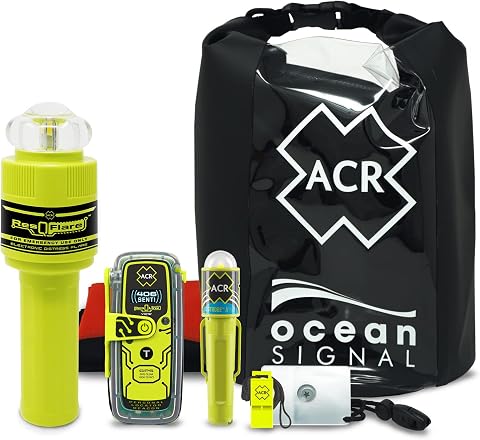
This safety kit includes the ResQLink View Personal Locator Beacon, ResQFlare Electronic Distress Flare, and additional safety tools such as a C-Strobe, rescue light, signal mirror, whistle, dry bag, and distress flag. It is designed for outdoor activities like hiking, hunting, boating, and fishing to alert search and rescue teams in emergencies.
Pros:
- Comprehensive safety kit with multiple emergency tools
- USCG approved for reliable distress signaling
- Ideal for various outdoor activities
Cons:
- No specific technical specifications provided
- Potentially expensive for casual users
Best for: Boaters evaluating a personal distress beacon
Not ideal for: Anyone who has not reviewed operating requirements
Bottom line: Verify suitability, readiness requirements, and crew familiarity before depending on this beacon.
Marine Handheld Radio
A handheld marine radio can support communication aboard, especially when you want a portable option available to crew. Since no specific product is named here, choose by compatibility with your boating area, your vessel’s communication setup, and the guidance that applies to your trips. Check which channels and operating practices are relevant where you boat, and learn how the radio fits into your broader communication plan.
A frequent mistake is buying a radio without checking how it will be powered, stored, and used. Review the manufacturer’s instructions for charging or batteries, operation, and care. Consider whether the controls are manageable for the people who may need to use it, and whether its size works with the storage space aboard. Confirm any licensing or operating requirements that apply to you rather than assuming the same rules apply everywhere.
Choose a location where the radio can be reached when needed and protected according to its instructions. Keep it charged or supplied with the required power source, and make sure crew members know how to turn it on and follow your communication plan. Before departure, check its condition and confirm that it is ready for the kind of trip you have planned.
What to look for:
- Compatibility with local communication practices
- Clear manufacturer instructions and controls
- A power plan suited to your trips
- Storage that is accessible and follows care guidance
- Relevant operating or licensing requirements
Waterproof Emergency Kit
A general emergency kit can keep useful supplies together and easier to locate when plans change. The named pick is Boat Safety Kit for Boating, Sailing, Kayaking and Fishing – Marine Sa. The product name does not describe the full contents or storage details, so inspect the item information before deciding whether it fits your needs. Think about the emergencies you want to prepare for and what other equipment is already aboard.
A common buying mistake is assuming that a kit’s label tells you everything it contains or that one kit suits every vessel. Compare its listed contents with your route, crew, and available storage. Check whether the kit itself and its components are appropriate for the conditions you expect, and whether anything needs to be added for your particular setup. Avoid duplicating supplies without first taking inventory of existing gear.
Consider how the kit will be secured and accessed while underway. Its storage spot should work with the layout of your boat and leave safety equipment easy to reach. Review the contents before each trip or season, as appropriate, and make sure crew members know where the kit is. A kit is most useful when its contents are understood and kept in usable condition.
What to look for:
- A contents list that matches your intended use
- Supplies that complement gear already aboard
- Storage dimensions suited to your boat
- A secure and reachable onboard location
- Instructions for checking and maintaining contents
Boat Safety Kit for Boating, Sailing, Kayaking and Fishing – Marine Safety Requi
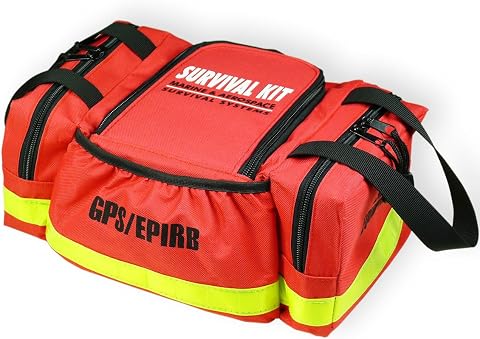
The Goglove Boat Safety Kit bundles all mandatory Coast Guard safety equipment into a single high‑visibility red bag that floats. It includes a 60‑ft throw rope, multi‑tool, water‑resistant flashlight, whistle, first‑aid supplies and organized compartments for easy access on the water.
Pros:
- All required Coast Guard safety items are included in one convenient package.
- High‑visibility red bag with reflective tape floats and keeps the rope tangle‑free.
- Multiple compartments organize tools, flashlight, whistle, and first‑aid supplies.
- Durable multi‑tool, heavy‑duty throw rope, and water‑resistant LED flashlight enhance survival capability.
Cons:
- The kit does not include larger safety gear such as life jackets or personal flotation devices.
- Item weight listed as 2.09 g seems unrealistic and may indicate a typo.
Best for: Boaters who want supplies organized together
Not ideal for: Anyone relying on a kit without checking its contents
Bottom line: Compare the listed contents with your existing gear and onboard storage before choosing this kit.
Boat Fire Extinguisher
A fire extinguisher is a core topic to address in an onboard emergency plan. No particular product is named here, so start with the requirements and recommendations that apply to your vessel and where you operate. Check the extinguisher’s intended use and suitability against the potential hazards aboard, and follow guidance from the relevant boating authority and manufacturer.
A common mistake is selecting an extinguisher based only on its size or assuming that any unit is appropriate for every boat. Confirm the type and number required for your vessel, and read the label and instructions. Think about where it can be mounted so it is reachable in an emergency, while still secured for movement underway. Do not let storage placement make access difficult or obstruct other equipment.
Check the unit according to its instructions and applicable requirements, and make sure the crew knows its location and how to use it. Include the extinguisher in routine boat checks, paying attention to the condition and readiness indicators specified by its manufacturer. If you are unsure what your boat requires, consult the applicable boating authority or a qualified marine professional.
What to look for:
- Requirements for your vessel and operating area
- Extinguisher type suited to onboard hazards
- Mounting that is secure and easy to reach
- Clear instructions for use and inspection
- Crew familiarity with its location and operation
Emergency Water Rations
Emergency drinking water is worth considering when planning for delays or other situations that keep you aboard longer than expected. No product is named for this section. Assess your crew size and trip duration, then consult applicable guidance for how much water to carry and how it should be stored. Your route, conditions, and access to resupply can shape what is practical.
A common mistake is treating stored water as a set-and-forget supply. Check the packaging instructions for storage conditions and any dates or inspection guidance, and keep the water protected in a location that works aboard. Consider how the container fits your available space and how the crew could reach it if other gear shifts or the boat is moving. Avoid choosing a quantity without considering everyone expected onboard.
Include water in your departure checks and review stored supplies at intervals appropriate to the product guidance. Make sure crew members know where it is and how to access it. If your trip plan changes, revisit the amount and storage arrangement before leaving. For specific requirements or recommendations, use current guidance from the relevant boating authority.
What to look for:
- Quantity suited to crew size and trip plan
- Storage guidance appropriate to conditions aboard
- Packaging that fits available space
- Clear manufacturer instructions for checking supplies
- A location crew can reach when needed
Build your checklist in a practical order: first identify any vessel-specific requirements, then prioritize the safety equipment and communication tools that fit your planned trips. Next, compare first aid and general kit contents with what you already carry, and account for emergency water and accessible storage. Check instructions and readiness guidance for each item before setting out.
Preparedness is a routine, not a one-time purchase. Keep the checklist with your trip planning, review gear with your crew, and update your setup when the boat, route, or people aboard change. A few deliberate checks can help everyone leave the dock with a clearer plan.