To make certain safe trailering, you need to understand your tongue weight—the load on your hitch. Proper tongue weight, typically 10-15% of your trailer’s total weight, keeps your vehicle balanced and reduces sway. You can test it with simple tools like a trailer tongue scale or a bathroom scale and follow easy steps to measure accurately. Learning how to check and adjust your load will keep your trips safer and smoother, and if you’re curious, you’ll discover some simple testing tips next.
Open a free Amazon Business account
Business pricing, bulk buying and tax-exempt orders.
As an affiliate, we earn on qualifying purchases.
Key Takeaways
- Proper tongue weight is typically 10-15% of the trailer’s total weight for safe towing.
- Use a portable or digital tongue weight scale for accurate measurement.
- To test at home, support the trailer tongue with a jack or bathroom scale on a level surface.
- Adjust cargo distribution to ensure the tongue weight falls within the recommended range.
- Regularly check and maintain proper tongue weight to prevent sway, improve safety, and ensure stable handling.
As an affiliate, we earn on qualifying purchases.
What Is Tongue Weight and Why Does It Matter?

Have you ever wondered why proper tongue weight is so vital when towing a trailer? It all comes down to weight distribution, which directly impacts trailer sway. When the tongue weight is too light, the trailer can become unstable, causing dangerous sway that makes steering difficult. Conversely, if the tongue weight is too heavy, it can overload your vehicle’s rear suspension and reduce control. Proper tongue weight ensures balanced weight distribution between your vehicle and the trailer, leading to smoother towing. When this balance is maintained, you minimize trailer sway and improve overall safety. Achieving the right tongue weight helps your setup handle better, reduces fatigue, and keeps you in control on the road. That’s why understanding and maintaining correct tongue weight is essential for safe, confident trailering. Proper weight distribution is a key principle in ensuring trailer stability and safety during towing. Additionally, monitoring your tongue weight with a simple tongue weight test can help prevent accidents and extend the life of your towing equipment. Regularly checking your trailer setup can also identify issues before they become hazards, enhancing safety during every trip. Maintaining awareness of weight balance can further improve your confidence and comfort while trailering. Implementing proper load placement techniques is also crucial to maintaining optimal tongue weight and overall trailer stability.
As an affiliate, we earn on qualifying purchases.
The Tools You Need to Check Your Trailer’s Tongue Weight
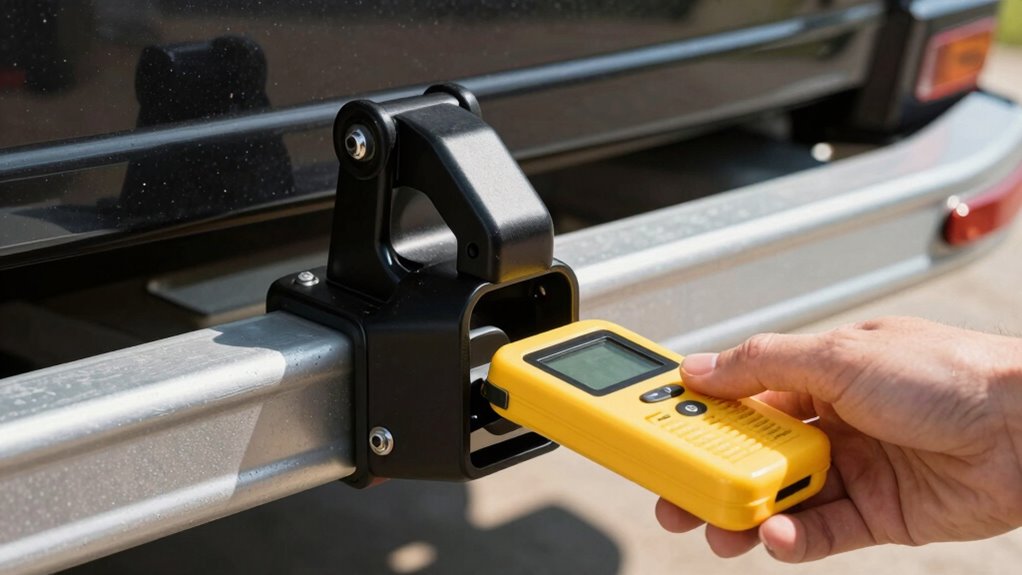
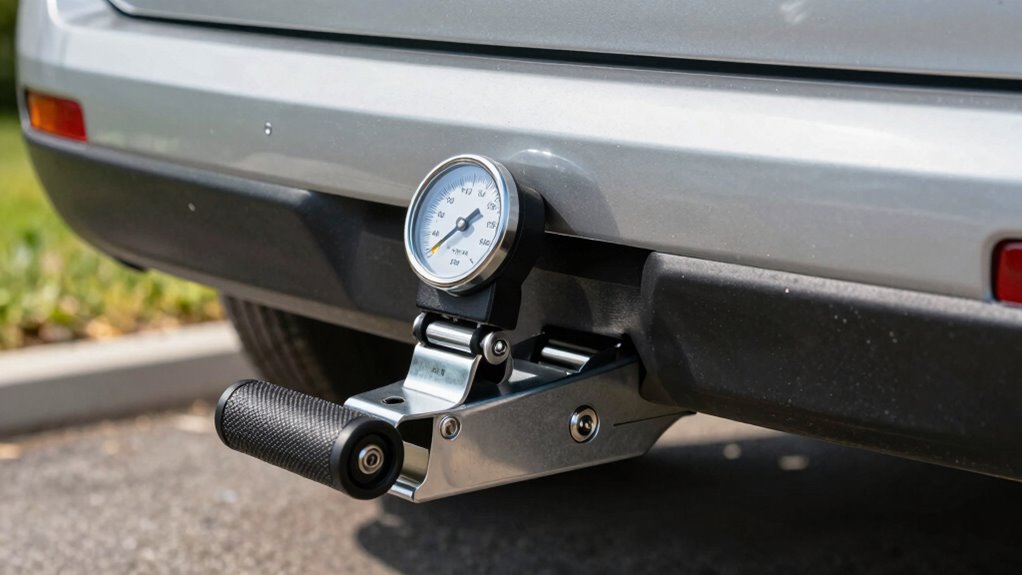
To guarantee your trailer rides smoothly and safely, you need the right tools to accurately check its tongue weight. A reliable tongue weight scale is essential for proper trailer maintenance and ensuring hitch compatibility. Portable, digital or mechanical scales allow you to measure the downward force on your hitch precisely, helping you avoid issues like improper weight distribution or sway. Some scales are designed specifically for trailers, making them easy to use and read. Additionally, a basic set of tools like a level and measuring tape can assist in preliminary checks. Investing in quality equipment ensures your trailer’s load is properly balanced, minimizes wear on your vehicle and hitch, and keeps your trailering experience safe and hassle-free. Regularly monitoring measurement accuracy with proper tools enhances safety and prolongs your trailer’s lifespan. Properly assessing tongue weight is critical for achieving optimal handling and preventing potential accidents during travel. Understanding the importance of proper weight distribution can further improve your towing safety and efficiency. Being aware of the impact of uneven weight helps you make adjustments that can prevent dangerous sway and improve overall stability. Regularly checking your trailer’s hitch setup ensures consistent safety and better performance on the road.
trailer weight distribution tool
As an affiliate, we earn on qualifying purchases.
As an affiliate, we earn on qualifying purchases.
How to Test Your Trailer’s Tongue Weight at Home in Easy Steps
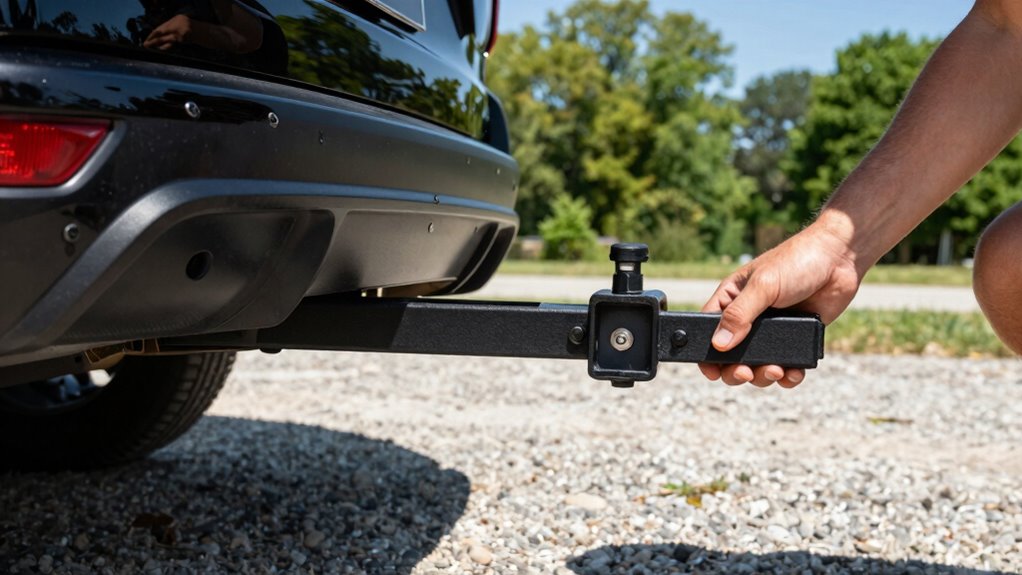
Testing your trailer’s tongue weight at home is straightforward if you follow a few simple steps. First, park your vehicle and trailer on a level surface. Attach the trailer hitch securely and position a jack or a bathroom scale directly under the tongue. To measure weight distribution, you can use a basic scale or a sturdy piece of wood with a scale. Slowly raise or lower the jack until the trailer’s tongue is supported without lifting the vehicle. Record the weight displayed on the scale. Repeat the process a few times for accuracy. This simple test helps you verify if your trailer hitch is correctly balanced and your trailer’s tongue weight is within safe limits for proper weight distribution during trailering. Proper tongue weight ensures stability and reduces sway on the road. Being aware of your trailer’s capacity limits can prevent overloading and enhance safety. Additionally, understanding proper trailering safety practices can further protect you and other road users during your trips. Remember, regularly checking your load balance can help maintain safe and secure trailering conditions.
As an affiliate, we earn on qualifying purchases.
What’s the Right Tongue Weight Range for Safe Towing?
Maintaining the correct tongue weight guarantees your trailer stays stable and safe on the road. Generally, aim for about 10-15% of your trailer’s total weight as tongue weight. This range ensures you won’t overload your vehicle’s cargo capacity or compromise brake performance. Too little tongue weight can cause trailer sway, while too much can strain your vehicle’s suspension and reduce braking efficiency. Always check your vehicle and trailer specifications for maximum allowable tongue weight. Properly balanced tongue weight improves handling, safety, and braking, preventing dangerous situations. Remember, the right range varies depending on your trailer’s size and cargo, so always refer to manufacturer guidelines and adjust your load accordingly to keep your trailering experience safe and smooth. Additionally, understanding tongue weight distribution is essential for achieving optimal stability and control during towing. Being aware of proper load placement can also help prevent uneven weight distribution that might affect your trailer’s handling. Ensuring correct weight distribution helps maintain the trailer’s alignment and reduces stress on the towing vehicle. Regularly inspecting your load and adjusting it as needed can also help maintain consistent tongue weight throughout your trip, which is vital for safety.
Recognizing Signs of Too Little or Too Much Tongue Weight While Driving
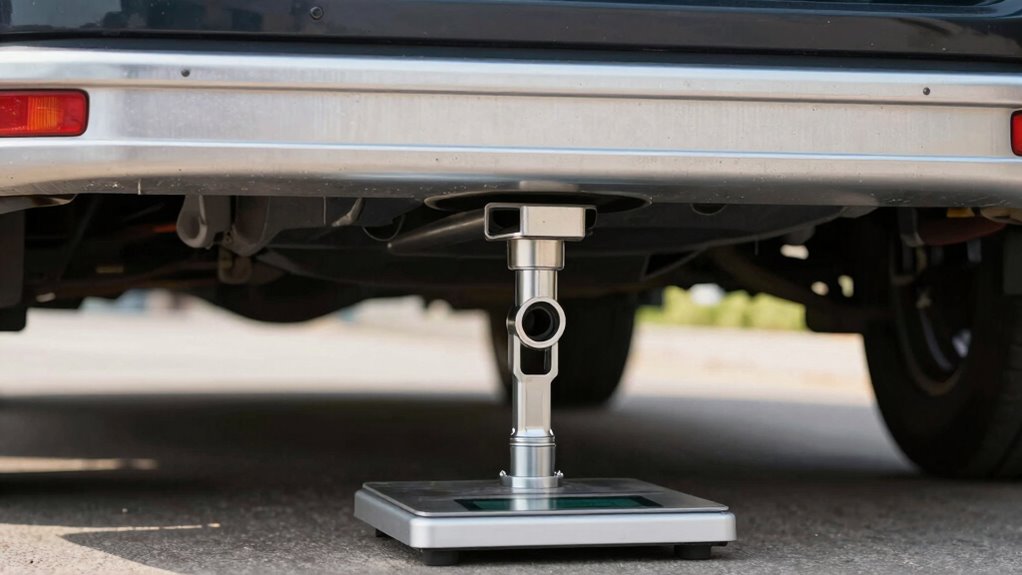
When your vehicle feels unstable or sways unexpectedly, it’s a sign your tongue weight might be off. Excessive wear on suspension components or tires can also point to improper weight distribution. Recognizing these signs helps you adjust your setup for safer, more controlled towing. Additionally, maintaining proper weight distribution can significantly reduce stress on your vehicle and improve overall safety. Ensuring correct tongue weight can also prevent dangerous sway and improve handling during transit. Understanding the comparative advantage of proper weight management supports efficient and safe trailering practices. Regularly checking your load balance can further enhance your towing safety and prevent uneven wear.
Handling Instability Signs
If your trailer feels unstable or sways excessively while you’re driving, it’s a strong sign that your tongue weight might be off. Trailer sway often indicates poor weight distribution, with too little tongue weight failing to stabilize the trailer. Conversely, if the vehicle feels overly stiff or you notice a harsh ride, you might have too much tongue weight. These handling instability signs can make steering feel unresponsive or cause the trailer to fishtail. Pay attention to how your vehicle responds—excessive sway suggests insufficient weight on the hitch, while a rigid, harsh ride hints at too much. Ensuring proper tongue weight helps improve trailer control, reduces sway, and makes your drive safer and more comfortable. Proper weight distribution is key to handling stability on the road.
Excessive Wear Indicators
Excessive wear on your vehicle’s tires, brakes, or suspension components can be a clear sign that your tongue weight is either too low or too high. Look for excessive wear indicators such as uneven tire tread, brake pad deterioration, or suspension sag, which suggest uneven load distribution. These signs often point to improper tongue weight, leading to handling issues and increased safety risks. Additionally, persistent trailer frame damage may occur if the tongue weight is excessive, putting undue stress on the trailer structure. Recognizing these wear indicators early helps prevent further damage and ensures safer trailering. Regular inspections of your vehicle and trailer can identify these issues before they become serious, maintaining excellent load balance and vehicle longevity.
How to Adjust Your Load for Proper Tongue Weight
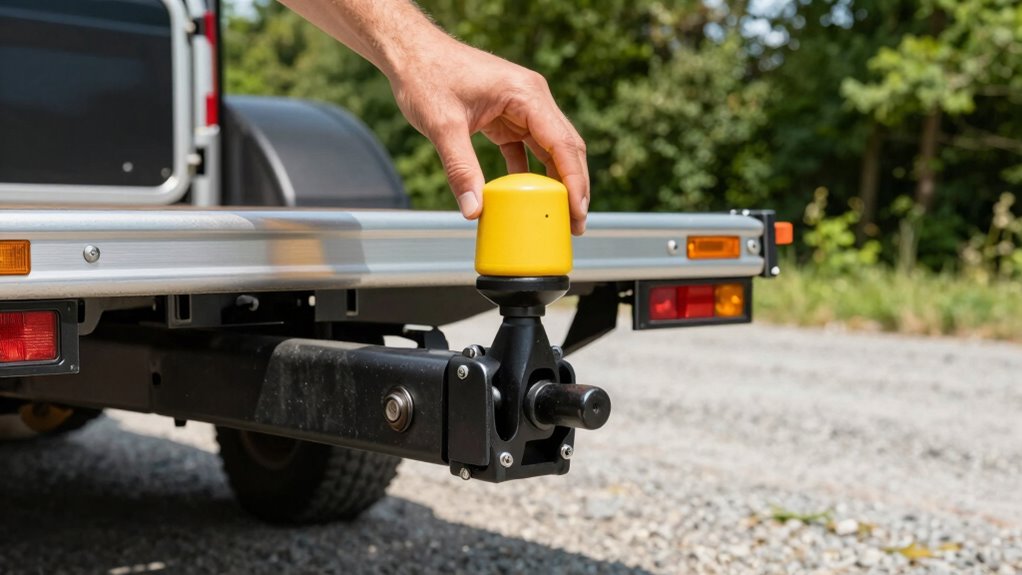
To guarantee safe towing, you need to properly distribute your load for the right tongue weight. Adjusting your cargo and trailer setup helps maintain balance and stability on the road. By doing so, you’re prioritizing safety and preventing potential handling issues.
Proper Load Distribution
Proper load distribution is vital for maintaining the right tongue weight, guaranteeing your trailer remains stable and safe on the road. To achieve this, focus on an effective weight distribution setup that balances your cargo between the front and rear of your trailer. Proper hitch setup plays a key role; ensure your hitch is rated correctly and adjusted properly to distribute weight evenly. Shift heavier items toward the front of the trailer to help maintain proper tongue weight and prevent sway. Keep in mind that overloading the rear can reduce steering control, while too much front weight can affect braking. Regularly check your load during trips and make adjustments as needed to keep your weight distribution optimized. A well-balanced load enhances safety and improves overall trailering performance.
Adjusting for Safety
Ensuring your trailer has the correct tongue weight is essential for safe and stable towing. To achieve this, you need to adjust your load properly. First, check your trailer hitch and add or remove cargo to hit the ideal tongue weight. Second, use a weight distribution system if your load is uneven or heavy, helping distribute the weight more evenly across your vehicle and trailer. Third, test again with a simple tongue weight measurement, making precise adjustments until the load feels balanced. Proper weight distribution not only improves safety but also enhances handling and braking. Remember, small changes can make a big difference—so stay attentive and adjust as needed to keep your tow safe and secure.
Common Mistakes to Avoid When Checking and Setting Tongue Weight
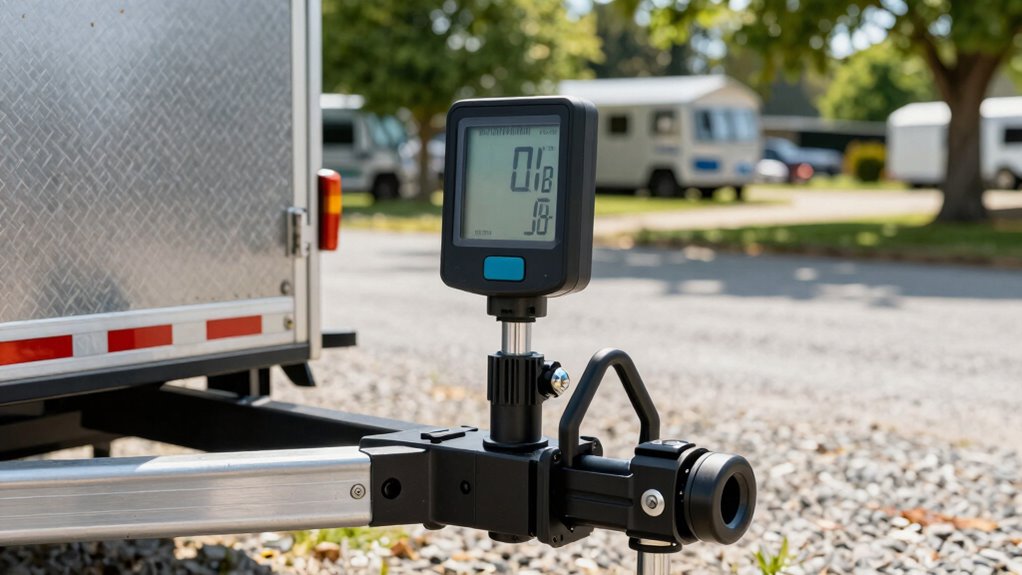
One common mistake when checking and setting tongue weight is relying on incorrect or outdated tools, which can lead to inaccurate readings and poor trailer handling. Overloading weight distribution is another mistake that can compromise safety; too much weight on the tongue causes instability, while too little can lead to trailer sway. Be sure to use a proper, calibrated scale designed for tongue weight measurement. Avoid guessing or relying solely on visual cues, as they’re unreliable. When adjusting, ensure you’re not exceeding the recommended tongue weight, typically 10-15% of the trailer’s total weight. Properly checking and setting your tongue weight minimizes the risk of overloading weight distribution and ensures safe, stable trailering.
Frequently Asked Questions
Can Improper Tongue Weight Damage My Trailer or Vehicle?
Yes, improper tongue weight can cause trailer damage and increase vehicle wear. If your tongue weight is too light or too heavy, it puts stress on your trailer’s frame and hitch, risking structural damage. It also affects your vehicle’s suspension and steering, leading to premature wear. To prevent this, make certain your tongue weight is properly balanced, usually around 10-15% of your trailer’s total weight, for safe towing.
How Often Should I Recheck My Tongue Weight During Trips?
Think of your trailer as a ship on the sea—steady load distribution keeps it balanced. You should recheck your tongue weight whenever you add or remove cargo, or every few hours during long trips. Regularly inspect hitch adjustments and load distribution to prevent imbalance, ensuring safe trailering. Keeping a close eye on your setup helps avoid dangerous sway, making your journey smooth and secure.
Does Tongue Weight Affect Fuel Efficiency?
Yes, tongue weight affects your fuel economy. When your trailer’s tongue weight is properly distributed, your vehicle maintains better balance and reduces drag, leading to improved fuel efficiency. If the weight is uneven or too heavy on the tongue, your vehicle works harder, increasing fuel consumption. To maximize fuel economy, guarantee proper weight distribution and keep your tongue weight within recommended limits for safer, more efficient trailering.
Are There Different Methods for Measuring Tongue Weight?
Sure, there are several methods to measure tongue weight, even if you think the hitch setup is enough. You can use a specialized tongue weight scale, a bathroom scale with a lever, or even a DIY method with a regular scale and some creativity. Each method helps prevent trailer sway and guarantees your hitch is properly balanced, making your trip safer and smoother. Who knew measuring could be so versatile?
What Are the Penalties for Unsafe Trailering Practices?
If you engage in unsafe trailering practices, you risk penalties like fines or license suspension. Incorrect load distribution can cause trailer sway, leading to dangerous driving conditions. Authorities take these violations seriously because they compromise safety. Always confirm proper tongue weight and balanced load distribution to prevent penalties and ensure a safe towing experience. Remember, maintaining proper trailer setup helps you avoid legal issues and keeps everyone on the road secure.
Conclusion
So, now you’re practically a tongue weight expert—ready to avoid that awkward sway or dangerous sway-back road drama. Just remember, messing with load distribution isn’t rocket science, but it’s definitely more important. Keep your trailer happy, your driving smooth, and your stress levels low. After all, nobody wants to turn a simple trip into a slapstick comedy of trailer woes. Happy trailering—may your tongue weight always stay just right!
NFL season / tailgating Picks
team gear
As an affiliate, we earn on qualifying purchases.