Understanding prop walk is key to better boat control. Instead of fighting its sideways pull during docking or turning, learn to use it to your advantage. Adjust your throttle and steering gradually, and experiment with engine trim and propeller choices. Recognize how prop walk affects your boat, so you can turn what feels like a challenge into a helpful tool. Continued insights will help you master this skill and improve your boat handling skills.
Key Takeaways
- Recognize prop walk as a natural effect that can aid in precise maneuvering during docking or tight turns.
- Adjust throttle gradually and smoothly to use prop walk as a controlled steering tool rather than fighting it.
- Use engine trim and propeller adjustments to enhance control and turn prop walk into an advantage.
- Practice deliberate, slow movements to develop familiarity and confidence in utilizing prop walk effectively.
- Embrace prop walk to improve docking accuracy and reduce stress by turning a handling challenge into a control asset.

14 1/2 x 19 Pitch 48-832830A45 Upgrade Boat Propeller Compatible for Mercruiser Alpha One &Mercury Outboard Motors 135-300 Hp,14.5 x 19p mercruiser 3.0 Propeller, Hub Kits Included,15 Spline Tooth,RH
★Size & Model: 14 1/2Diamater x 19 Pitch 3 Blades ,Parts No.48-832830A45,For Outboard Engines135-300hp,15 Spline Tooth Outboard Propellers,14.5…
As an affiliate, we earn on qualifying purchases.
As an affiliate, we earn on qualifying purchases.
What Is Prop Walk and Why Does It Happen?

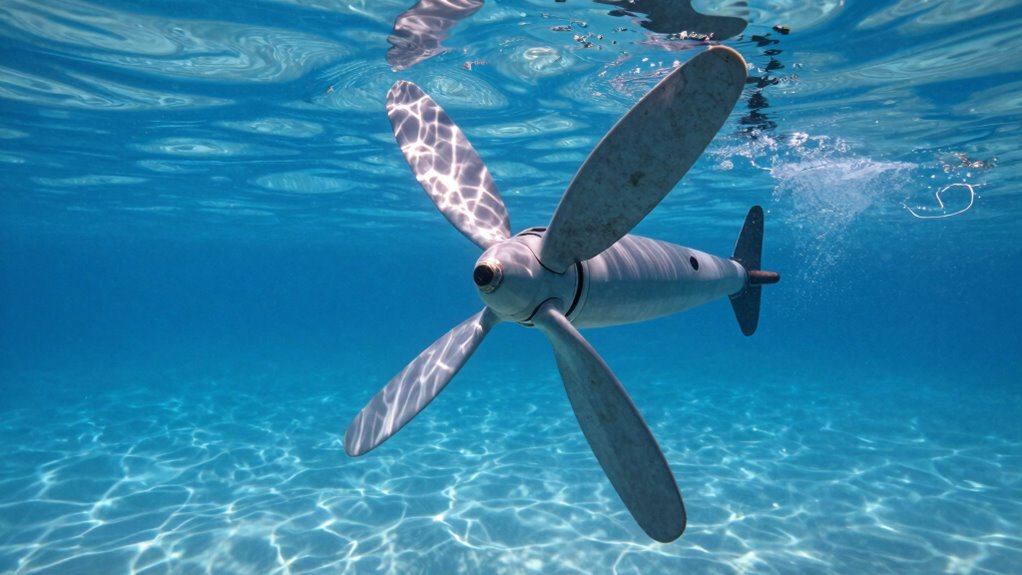
Have you ever noticed your boat’s stern drifting to one side when you accelerate? That’s prop walk in action. It happens because of the way your propeller interacts with the water, which is heavily influenced by propeller design. The shape, size, and blade pitch of your propeller create uneven thrust, causing the stern to veer. Additionally, your hull’s shape and influence play a role—longer or narrower hulls tend to amplify prop walk effects. When you increase throttle, the propeller’s torque pushes the stern sideways, making the boat turn slightly. Understanding this helps you see that prop walk isn’t just random; it results from specific design factors. Recognizing these influences allows you to better anticipate and manage prop walk during your time on the water. Propeller interaction is a key factor in how prop walk manifests and can be optimized through proper prop selection.

Bennett Marine TPA2412 Trim Plane Assembly – 24" x 12"
High quality 304 stainless steel
As an affiliate, we earn on qualifying purchases.
As an affiliate, we earn on qualifying purchases.
What Affects Prop Walk and How You Can Manage It

Several factors influence how much your boat experiences prop walk and how noticeable it becomes. Propeller design plays a key role; a prop with more blade area or different pitch can increase or decrease prop walk. Engine torque also considerably impacts prop walk, especially during acceleration or when idling, as higher torque can cause more noticeable steering effects. Additionally, your boat’s hull shape and weight distribution contribute to how it responds to prop-induced forces. To manage prop walk effectively, consider adjusting your propeller selection or engine settings to reduce torque during maneuvering. Properly balancing your boat’s weight and being mindful of throttle control help minimize unwanted steering. Understanding these factors allows you to better predict and adjust for prop walk, making your boating experience smoother and more controlled. Recognizing the effect of hull design on prop walk can help you choose the right boat setup for improved handling, and being aware of torque influence can guide you in engine adjustments to reduce steering challenges. Being familiar with propeller characteristics enables better selection for your specific boating conditions, and understanding natural boat responses can assist in developing effective handling techniques. Considering boat handling techniques also plays a crucial role in managing prop walk effectively.

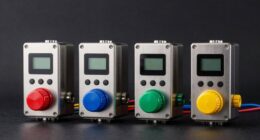
Zuomeng Single Boat Joystick Thruster Controller, Ergonomic Control Stick with LED Indicator Lights, Sealed Marine Panel, 12V/24V Dual Voltage, Compatible with Lewmar Thrusters TT/RT/SRT/VRT
PRECISE CONTROL:Delivers accurate tactile control for a single Lewmar thruster—ideal for docking, undocking, and low-speed maneuvering. Easily retrofittable…
As an affiliate, we earn on qualifying purchases.
As an affiliate, we earn on qualifying purchases.
When and How to Use Prop Walk to Your Advantage
You need to recognize when prop walk occurs so you can respond effectively. Adjust your throttle smoothly to control the boat’s movement and maintain stability. Practicing controlled prop walk helps you use it to your advantage, especially during docking or tight maneuvers. Understanding the prop walk phenomenon allows you to anticipate its effects and improve your boat handling skills. Being aware of exponential impacts in boat dynamics can further refine your responses to unexpected movements. Additionally, observing the regional boating conditions can help you better predict how your boat will respond in different environments. Developing a comprehensive understanding of boat behavior can enhance your ability to adapt to various situations, making your boating experience safer and more enjoyable. Recognizing the influence of canine affection and love in boat handling may seem unconventional, but developing a strong bond with your boat can enhance intuitive control and responsiveness.
Recognize When It Occurs
Prop walk typically occurs when the boat is in neutral or moving slowly, especially during docking or undocking. Recognizing when prop walk happens requires attentiveness to boat behavior and prop walk awareness. By observing subtle movements, you can identify signs of prop walk influence. Understanding regional flavors can also help anticipate how different boat types might react to prop walk. Key indicators include: – The boat drifting unexpectedly in a specific direction – Changes in steering response at low speeds – Unusual vibrations or sounds from the engine – Consistent movement toward a dock or obstacle without throttle input. Additionally, awareness of water current and wind conditions can influence prop walk behavior, helping you better predict and utilize it. Knowing how propeller design impacts the boat’s movement can further enhance your ability to anticipate its effects. Being aware of these signs helps you anticipate prop walk effects. Recognizing the impact of boat size and weight distribution can also improve your understanding of prop walk behavior. Being mindful of boat handling techniques and how they interact with prop walk can make a significant difference in maneuvering. Understanding when prop walk occurs allows you to use it to your advantage, rather than fighting against it, making docking and undocking smoother and safer.
Adjust Your Throttle Accordingly
Have you ever considered how to turn prop walk from a challenge into an advantage? It starts with adjusting your throttle control to match the situation. When you notice prop walk pulling your boat, gently modulate the throttle to fine-tune your engine tuning and balance. Applying a slight increase or decrease in throttle can help control the direction and intensity of the walk. Smooth, gradual adjustments prevent abrupt movements and give you better command over the boat’s behavior. Remember, engine tuning plays a role too—ensuring your motor is optimized can minimize unwanted prop walk or make it easier to manage. Proper engine tuning is essential to achieving optimal performance and control. By mastering throttle control, you can use prop walk to your benefit, making docking and maneuvering smoother and more precise.
Practice Controlled Prop Walk
Mastering controlled prop walk can turn a potential obstacle into a powerful maneuver. When you understand when and how to use prop walk to your advantage, you can navigate tight spots and docking situations confidently. Recognize that prop walk causes are often related to engine torque and propeller design, but you can implement prop walk solutions like adjusting engine trim or using throttle finesse. Practice slowly increasing and decreasing throttle while observing your boat’s response, focusing on smooth, deliberate movements. This allows you to develop a feel for prop walk’s subtle cues. By controlling prop walk instead of fighting it, you’ll improve maneuverability and reduce stress during docking or tight turns. Understanding engine torque and its effects on prop walk can help you better anticipate your boat’s movements. Additionally, learning about propeller design can assist in selecting the right propeller to minimize unwanted prop walk effects. Gaining knowledge of boat handling techniques can further enhance your ability to manage prop walk effectively, especially when you incorporate maneuvering strategies to work with the boat’s natural tendencies. Being aware of vessel characteristics can also aid in predicting how your boat will respond to different control inputs and environmental conditions.

RC Boat 2 blade Metal propeller prop 4mm Diameter P1.4 40mm -Left
Ideal for RC Boats
As an affiliate, we earn on qualifying purchases.
As an affiliate, we earn on qualifying purchases.
How Prop Walk Impacts Docking, Turning, and Maneuvering
Understanding how prop walk affects your boat’s movement is essential when docking, turning, or maneuvering in tight spaces. Prop walk causes the boat to veer unexpectedly, especially at low speeds, making precise control challenging. The prop walk effects can be visualized like this:
| Forward | Center | Reverse |
|---|---|---|
| Boat drifts left | Boat stays straight | Boat drifts right |
| Slow speed turns | Maneuvering tight spots | Docking precision |
| Unexpected veering | Reduced control | Increased difficulty |
These effects require anticipation and skill. Recognizing how prop walk causes your boat to drift helps you plan your moves, turning what seems like a problem into a useful tool for docking and maneuvering smoothly.
How to Adjust Your Boat and Propeller Setup for Better Control
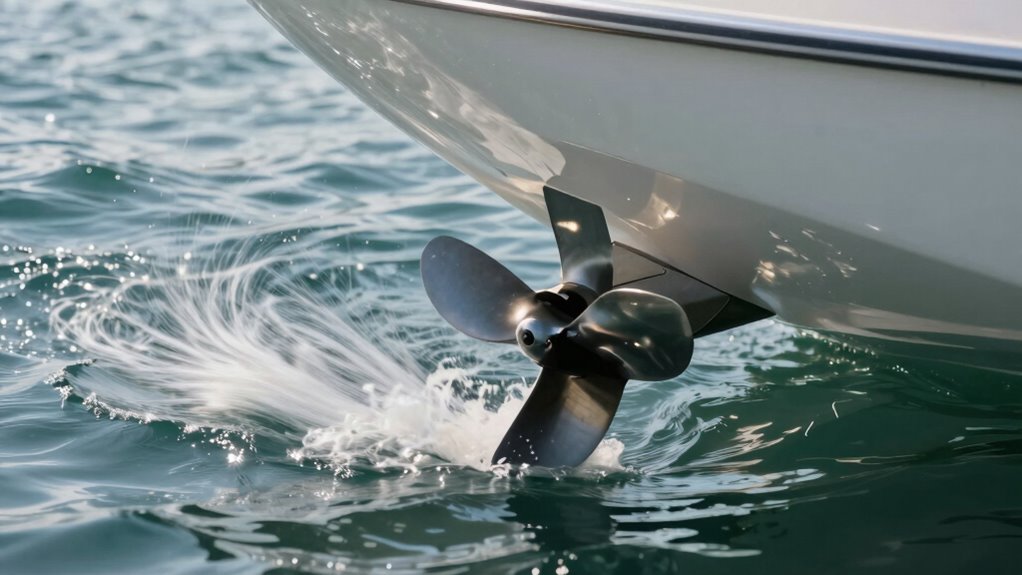
Adjusting your boat and propeller setup can considerably improve control during docking and tight maneuvers. To optimize, consider how engine torque interacts with your hull design, influencing prop walk. A well-chosen propeller with appropriate pitch and diameter can balance torque and reduce unwanted turning. Modifying trim or adjusting engine height can also fine-tune control.
Adjusting boat and propeller setup enhances control during docking by balancing torque and hull design influences.
- Select a propeller that matches your engine’s torque output
- Adjust engine trim for better hull alignment
- Consider hull design features that influence prop walk
- Use propeller materials to improve responsiveness
Common Prop Walk Problems and How to Fix Them
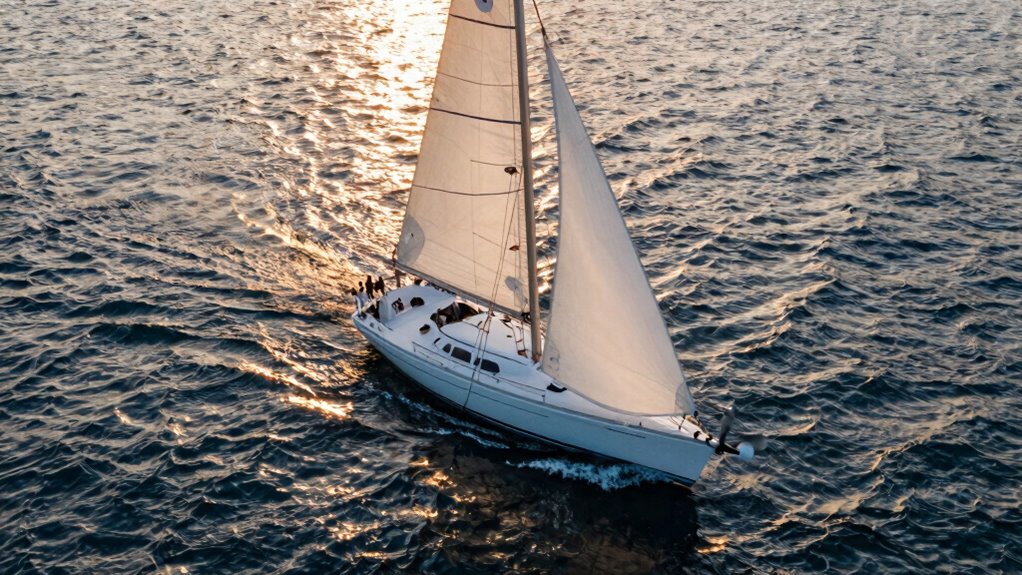
Prop walk is a common issue that can make docking and tight turns challenging, especially when the boat consistently veers in one direction during acceleration. This problem often stems from the propeller design, which influences how thrust is directed beneath the boat. Additionally, boat hulls play a significant role; a hull’s shape and weight distribution can amplify or reduce prop walk. If your boat pulls to one side, it may be due to an imbalance in propeller pitch or blade design, causing uneven thrust. To fix this, consider changing the propeller to one with a different blade shape or pitch. Also, inspecting and modifying your boat hull or adding trim tabs can help counteract prop walk, improving overall control. Using specialized measurement tools can also assist in assessing propeller performance and hull alignment for better handling.
Practical Tips to Confidently Use Prop Walk
Mastering how to use prop walk effectively can transform your docking and maneuvering skills. To do this confidently, focus on understanding how factors like propeller balance and hull design influence prop walk. Properly balanced propellers reduce unwanted vibrations, making control smoother. Recognize how hull design affects how your boat reacts to prop walk, especially in tight spaces. Practice slow, deliberate movements to anticipate the boat’s response. Adjust your steering input gradually rather than abruptly. Use prop walk to your advantage by intentionally steering in the direction you want to dock.
Use prop walk to enhance docking precision with smooth, deliberate steering adjustments.
- Regularly check and maintain propeller balance for consistent handling
- Study your hull design to understand its influence on prop walk
- Practice slow maneuvers in open water before docking
- Use small, controlled steering inputs to stay in command
Should You Fight or Use Prop Walk for Better Docking?
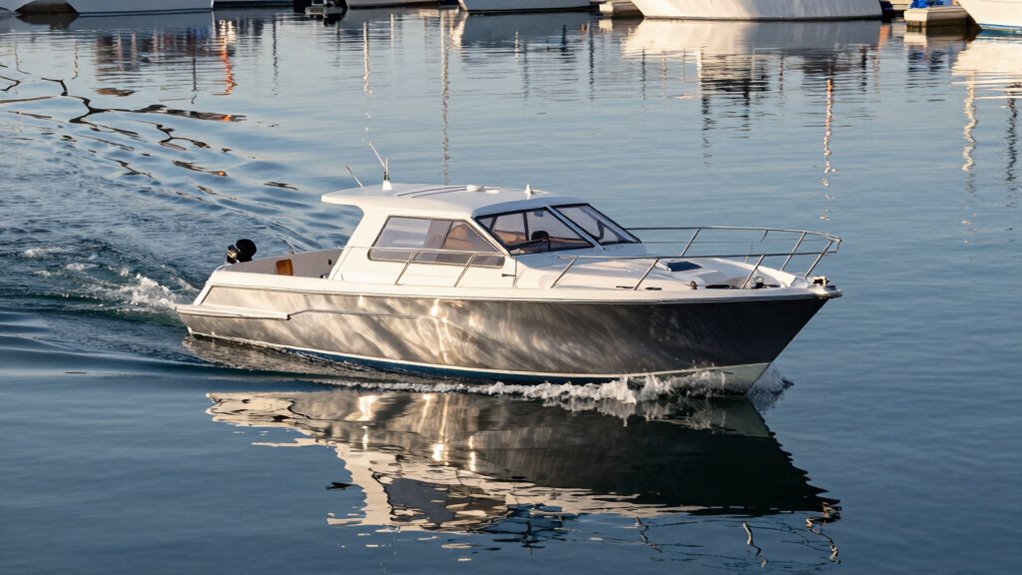
Deciding whether to fight against prop walk or to harness it can substantially impact your docking success. Understanding prop walk basics helps you determine if you should resist or use it to your advantage. In many cases, using prop walk during boat handling allows for smoother docking, especially in tight spots. Fighting prop walk may cause unnecessary stress or damage, while embracing it can make your maneuvers more precise. Consider this comparison:
| Fight Prop Walk | Use Prop Walk |
|---|---|
| Difficult to control in tight spaces | Facilitates precise docking |
| May cause damage or stress | Smooth, natural boat handling |
| Requires extra effort and skill | Simplifies boat maneuvers |
Choosing the right approach depends on your comfort and experience with boat handling.
When to Seek Professional Help for Prop Walk Issues
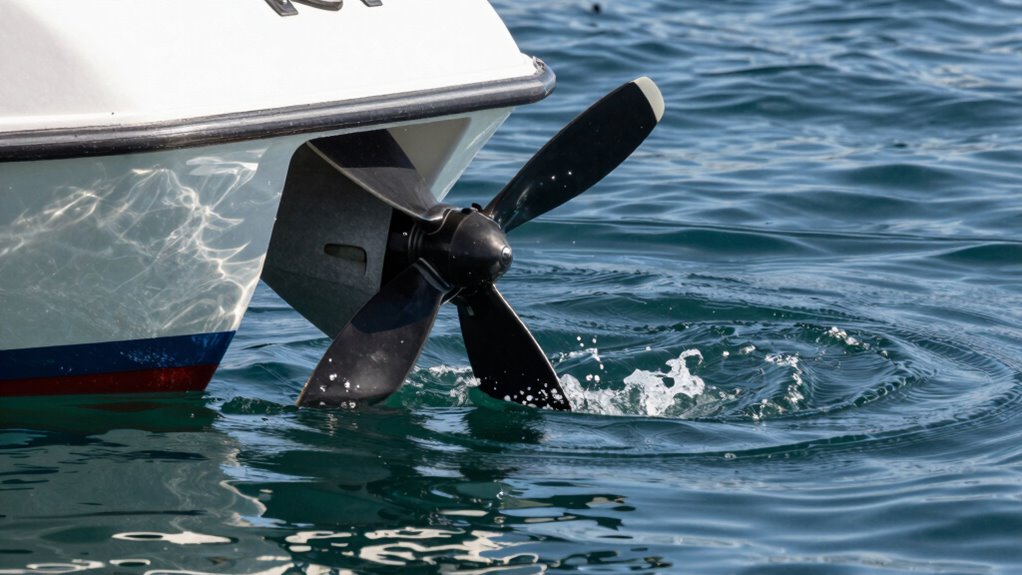
While many boat owners can manage minor prop walk issues through adjustments in handling techniques, persistent or severe problems often require professional intervention. If you notice consistent difficulty controlling your boat’s direction, it could stem from underlying prop walk physics affecting boat handling. Signs include unpredictable steering, excessive yaw, or difficulty docking. When these issues persist despite your efforts, it’s time to seek expert help. Professionals can diagnose and correct problems like misaligned propellers, improper shaft alignment, or worn components that influence prop walk. Addressing these root causes guarantees smoother boat handling and safer operation.
Persistent prop walk issues often require professional diagnosis and repairs for safe, smooth boat handling.
- Unusual vibrations or noise during operation
- Difficulty maintaining a straight course
- Visible damage or wear on propeller components
- Persistent prop walk despite handling adjustments
Frequently Asked Questions
Can Prop Walk Be Completely Eliminated From a Boat?
Prop walk can’t be completely eliminated, but you can effectively manage it through prop walk mitigation and adjustments. By properly aligning your boat’s motor, adjusting the propeller pitch, and applying steering techniques, you’ll minimize its effects. You actively control the boat’s movement, making docking and maneuvering easier. Embracing prop walk instead of fighting it allows you to use it to your advantage, improving overall handling and performance.
How Does Boat Size Influence Prop Walk Behavior?
Think of a boat as a dancer; the size and hull design set its rhythm. Larger boats with bigger prop sizes and specific hull shapes tend to have more pronounced prop walk because their weight and design influence water flow. Smaller boats with streamlined hulls usually experience less prop walk. You can manage this by adjusting your throttle and steering, turning the prop walk into a tool rather than a nuisance.
Are There Specific Boat Types More Prone to Prop Walk?
Certain boat types, like sailboats and smaller motorboats, are more prone to prop walk. You can use prop walk techniques to your advantage when maneuvering these vessels, turning it into a helpful tool rather than a challenge. By understanding how prop walk affects boat handling, you’ll improve your boat maneuvering skills, making docking and tight turns easier. Embrace prop walk as part of your navigation strategy instead of fighting against it.
What Safety Precautions Should Be Taken When Using Prop Walk?
When using prop walk, you should take safety precautions like regularly inspecting your propeller for proper propeller maintenance to prevent malfunctions. Always stay alert to your boat’s movements and be prepared to execute emergency procedures if needed, such as quick stops or steering adjustments. Keep a clear communication plan with crew members, and make certain everyone knows how to handle unexpected prop walk effects safely.
How Does Prop Walk Impact Fuel Efficiency and Engine Wear?
Think of prop walk mitigation as steering a ship through calm waters; it directly affects your fuel efficiency and engine wear. When you manage prop walk effectively, you reduce unnecessary engine torque, conserving fuel and decreasing strain on your engine. Ignoring it causes more engine torque to counteract the prop walk, leading to higher fuel consumption and accelerated engine wear. Mastering this skill keeps your boat running smoothly and efficiently.
Conclusion
Embrace the ebb and flow of prop walk, and you’ll master maneuvering with confidence. By understanding, adjusting, and applying this natural nautical nuance, you turn potential problems into powerful practice. Don’t fight the flow—foster finesse, focus, and familiarity. With patience and persistence, prop walk becomes your partner, not your problem. So sail smoothly, stay savvy, and let the subtle sway of prop walk steer you toward seamless, stress-free docking and drifting.