To size battery cables for your inverters and windlasses, start by calculating the total current draw based on their wattage and voltage, and factor in the cable length to account for voltage drops. Use this information to select the appropriate gauge, ensuring it can handle the load safely while preventing overheating. Consider marine-grade materials and insulation for durability. To make sure your setup is safe and efficient, there’s more important details to uncover as you continue.

Get sports gear delivered free with Prime
- Fast, free delivery on millions of items
- Prime Video, Amazon Music and more included
- Member-only deals all year
Key Takeaways
- Calculate the total current draw by dividing the inverter or windlass wattage by system voltage.
- Choose cable gauge based on manufacturer’s load charts, ensuring it supports the calculated current with minimal voltage drop.
- Use thicker cables for longer runs or higher current loads to prevent overheating and voltage drops.
- Select cables with appropriate insulation ratings for the environment, such as marine-grade insulation for wet conditions.
- Regularly inspect and tighten connections, and use dielectric grease to prevent corrosion and maintain reliable performance.
As an affiliate, we earn on qualifying purchases.
Why Proper Battery Cable Sizing Is Critical for Marine Safety
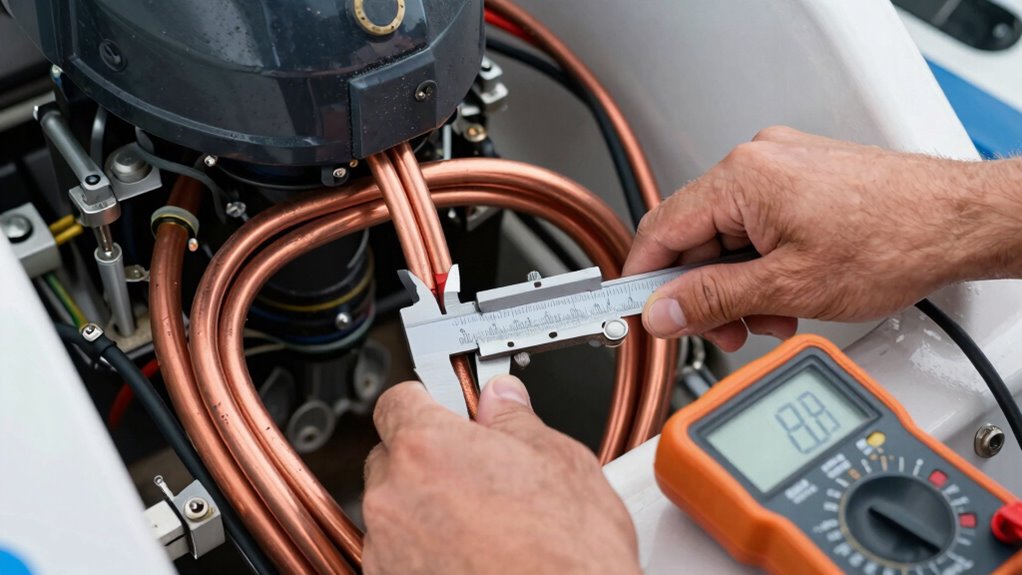
Properly sizing your battery cables is essential because undersized cables can cause excessive voltage drops and generate dangerous heat, risking equipment failure or fires. When cables aren’t thick enough, increased resistance leads to battery corrosion at connection points, reducing efficiency and lifespan. Properly sized cables also maintain flexibility, making installation easier and reducing strain on connectors. Flexible cables resist cracking or breaking over time, especially in harsh marine environments, ensuring reliable power delivery. Additionally, early warning signs of cable overheating can help prevent catastrophic failures and improve overall safety. Understanding the electrical current requirements and how they impact cable performance is crucial to preventing overheating and ensuring safety. Proper cable sizing accounts for voltage drop, which, if not managed properly, can lead to inefficient power transfer and equipment issues. To further safeguard your system, consider corrosion prevention measures that protect connections in a marine environment. Using marine-grade cables designed for harsh conditions can significantly extend system reliability. Avoiding improper sizing minimizes the risk of overheating, which can cause fires or damage to your inverter or windlass. Investing in the correct cable size enhances safety, prolongs equipment life, and ensures your marine system operates smoothly under demanding conditions. Proper sizing is a critical safety measure every boat owner must prioritize.
As an affiliate, we earn on qualifying purchases.
How to Calculate the Current Draw for Your Marine Inverter and Windlass
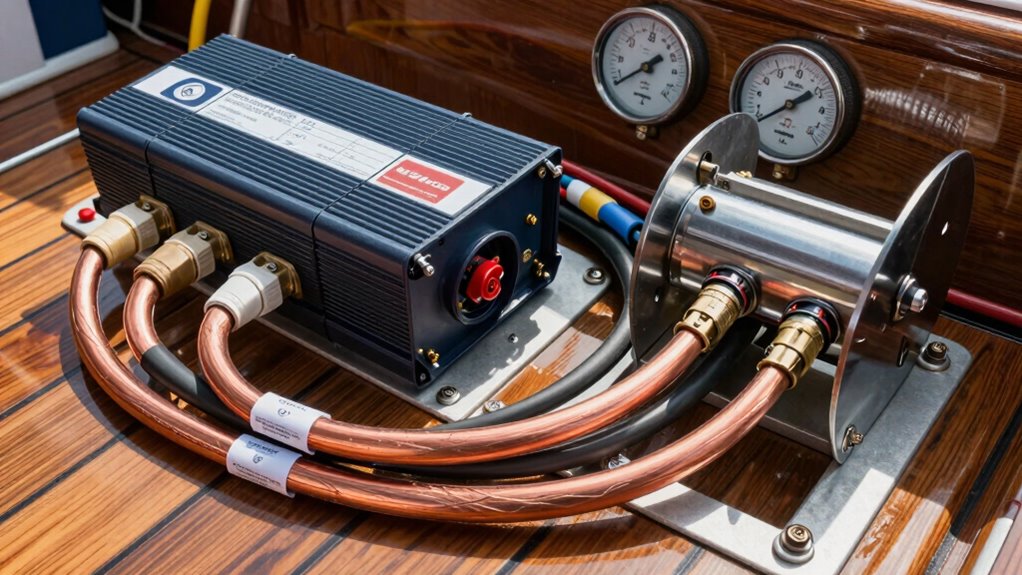
To size your battery cables correctly, you need to know how much current your inverter and windlass will draw during operation. Start by checking the manufacturer’s specifications for each device; they typically list the power consumption in watts. Divide that wattage by your system voltage to find the current draw. Keep in mind that higher battery capacity can support larger currents safely, but efficiency matters too—more power-efficient equipment draws less current, reducing cable size requirements. Accurate calculations prevent overloading cables and ensure safe operation. Remember, the actual current may vary based on load conditions and equipment efficiency. Knowing these details helps you select the right cables, preventing voltage drops and potential safety hazards on your marine vessel. Additionally, understanding the current draw of your components allows for better system performance and longevity. Properly sizing cables based on load calculations is essential for maintaining electrical safety and efficiency in your setup. It’s also important to consider cable insulation ratings to ensure durability in marine environments.
inverter and windlass wiring kit
As an affiliate, we earn on qualifying purchases.
As an affiliate, we earn on qualifying purchases.
What Battery Cable Gauge Do You Need Based on Load and Distance
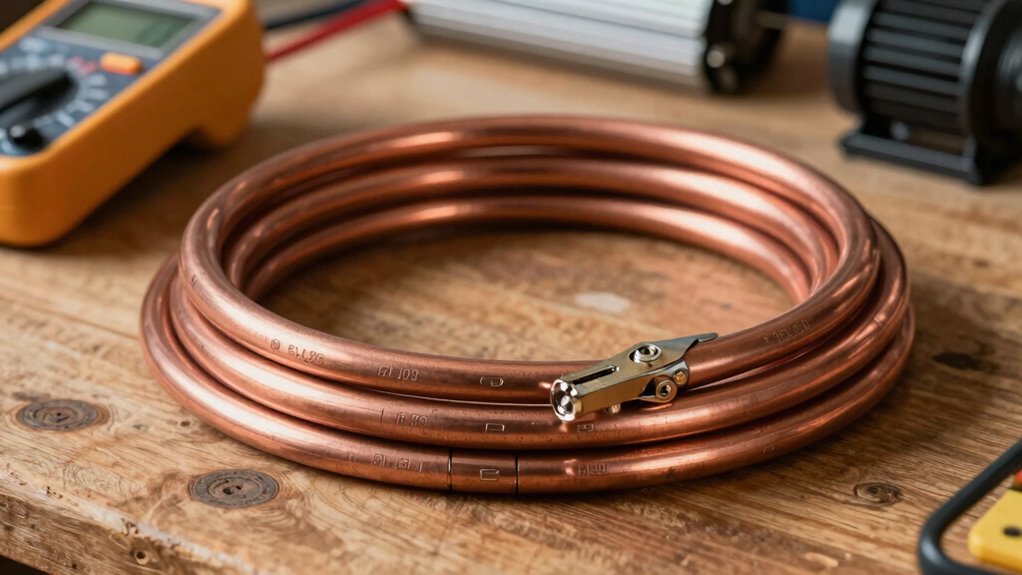
To choose the right battery cable gauge, you need to take into account both your load current and the length of your cable run. Longer distances and higher currents require thicker cables to minimize voltage drops and ensure safety. By understanding these factors, you can select the appropriate gauge for reliable performance.
Load Current Requirements
Determining the correct battery cable gauge depends on both the load current your inverter or windlass draws and the distance the cable must cover. Your load current directly impacts cable size, as higher currents require thicker gauges to prevent overheating and voltage drops. Consider your battery capacity; a larger capacity can handle higher loads more efficiently, reducing stress on cables. Voltage regulation also plays a role, since excessive voltage drops can impair device performance. To maintain proper voltage levels and ensure safety, choose a cable gauge that can handle the maximum load current over your specific distance. Always consult a cable sizing chart or calculator to match your load current and cable length, ensuring suitable performance and longevity for your system. Proper cable sizing is essential for system safety and efficiency. Additionally, understanding cable resistance helps in selecting the most appropriate gauge for your setup.
Cable Run Length
The length of your cable run considerably influences the gauge you need, as longer distances cause greater voltage drops and increased resistance. To maintain proper performance, choose a thicker gauge cable for longer runs. Also, consider cable shielding to protect against electromagnetic interference, especially in noisy electrical environments. Proper shielding can help ensure stable power delivery. Additionally, longer cables are more vulnerable to corrosion, so selecting cables with corrosion prevention features, like protective coatings or corrosion-resistant terminals, is essential. Keep in mind that increased run length not only impacts gauge requirements but also demands careful attention to cable quality and insulation. Cable insulation quality plays a crucial role in maintaining system integrity over longer distances. Ensuring you select the right cable gauge can help optimize efficiency and safety in your setup. By accounting for run length, shielding, and corrosion prevention, you’ll ensure your system stays efficient, reliable, and safe over time.
As an affiliate, we earn on qualifying purchases.
Material, Insulation, and Temperature Ratings to Consider for Marine Cables
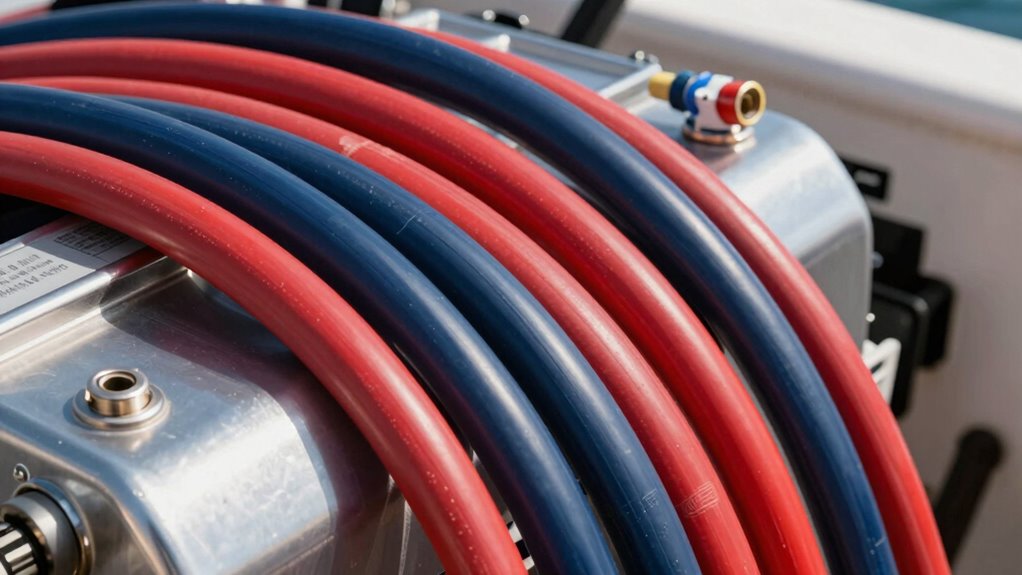
Selecting the right marine cable involves paying close attention to the material, insulation, and temperature ratings, as these factors directly impact durability and safety. The cable material determines strength and corrosion resistance, while insulation ratings ensure protection against moisture and chemicals. Marine environments demand cables with high insulation ratings, often rated for wet conditions, to prevent failures. Proper cable selection also requires understanding the environmental conditions in which the cable will operate, ensuring the chosen specifications meet those demands. Additionally, considering the cable installation methods can influence the overall performance and longevity of the system. The compatibility of cable components with other electrical equipment is equally important to ensure system integrity. Temperature ratings indicate the maximum operating temperature, vital in avoiding insulation breakdown. Being aware of marine-specific standards helps in selecting cables that withstand harsh conditions and extend system durability. Use the table below to compare key cable features: proper cable selection.
How to Install and Secure Marine Battery Cables for Safety and Efficiency
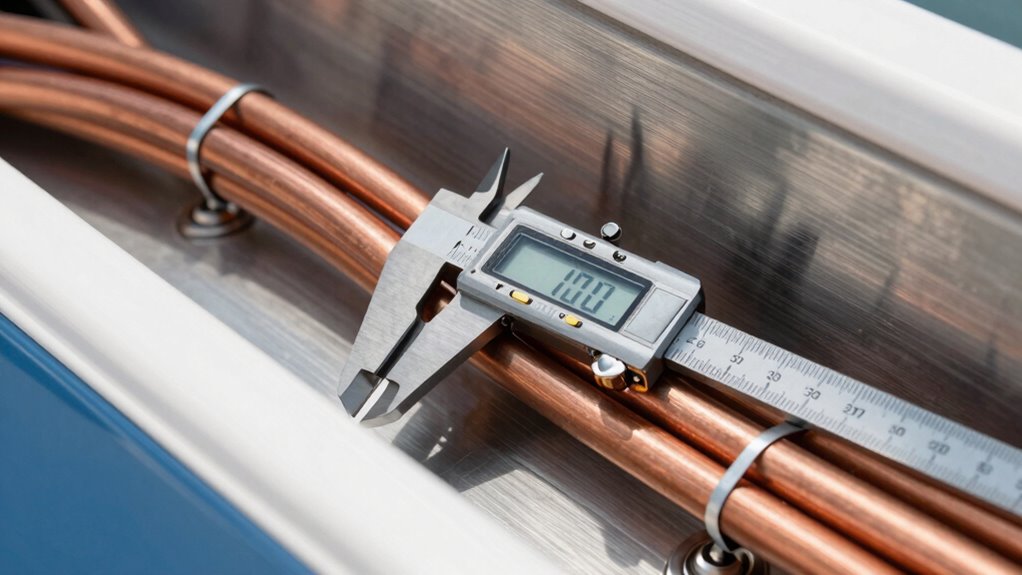
Proper installation and securement of marine battery cables are essential for ensuring safety and optimizing performance on your vessel. To achieve this, follow these steps:
- Use high-quality marine cable connectors to ensure solid, reliable connections that resist corrosion.
- Route cables away from heat sources, sharp edges, and moving parts to prevent damage.
- Secure cables with appropriate clamps or ties, keeping them taut and avoiding chafing.
- Apply corrosion prevention measures such as dielectric grease on connectors and terminals to extend cable life.
- Regularly inspect cable connections for signs of wear or corrosion to maintain safety and efficiency. Proper cable sizing is also crucial to prevent voltage drops and overheating, ensuring your system operates safely and effectively. Additionally, selecting the correct wire gauge based on current load helps prevent overheating and prolongs cable lifespan. Ensuring proper cable routing reduces the risk of electrical issues and enhances overall system reliability. Furthermore, understanding the importance of proper grounding can significantly improve safety and reduce electrical noise in your system.
Common Troubleshooting Tips for Battery Cable Sizing and Installation
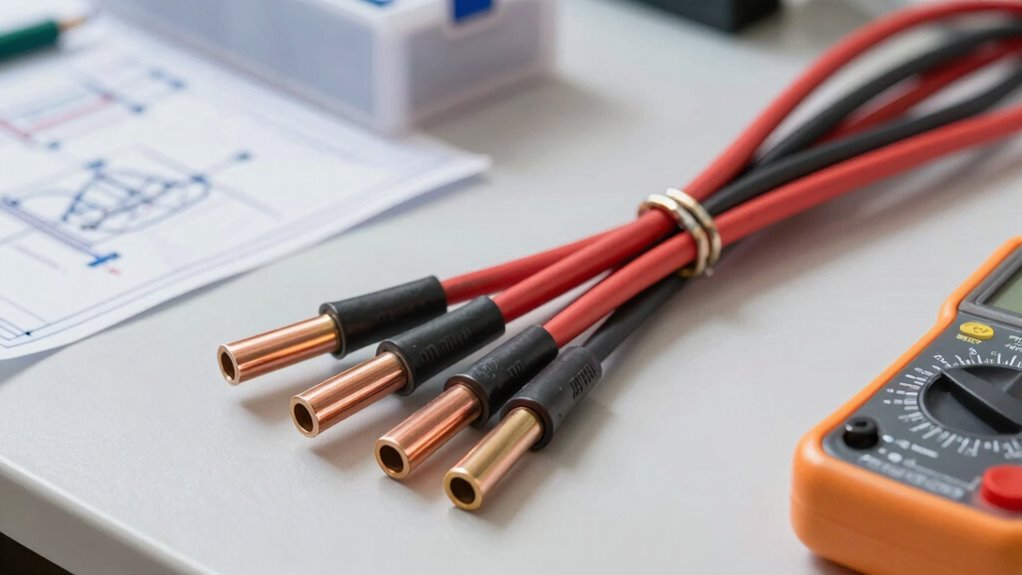
Even with careful installation, issues can arise that affect the performance and safety of your marine battery system. One common problem is battery corrosion, which can increase resistance and reduce power flow. Regularly inspect your cable connections and terminals, cleaning corrosion with a wire brush and applying dielectric grease to prevent future buildup. Additionally, faulty or damaged cable insulation can lead to shorts or electrical leaks, compromising safety. Ensure your cables are properly insulated, with no cracks or fraying, and replace any damaged sections immediately. Loose connections or undersized cables can also cause voltage drops and overheating. Double-check your cable sizing, secure all connections tightly, and keep an eye out for any signs of wear or corrosion to maintain excellent system performance. Proper cable insulation is essential to prevent electrical failures and ensure long-term durability of your system. To further enhance safety, always verify your wiring practices follow the recommended standards to prevent hazards. Also, consider the correct cable size for your specific load requirements to optimize safety and efficiency. Additionally, using proper installation techniques can significantly reduce the risk of electrical issues and extend the lifespan of your system.
Frequently Asked Questions
How Does Cable Length Affect Voltage Drop in Marine Setups?
Longer cable runs increase voltage drop in your marine setup, which can reduce efficiency and cause equipment issues. To mitigate this, choose cables with thicker insulation for durability and corrosion prevention in harsh environments. Keep cable lengths as short as possible, and use appropriate gauge sizes to maintain voltage stability. Proper insulation not only protects against corrosion but also ensures consistent power delivery across your inverter and windlass systems.
What Are the Signs of Undersized Battery Cables?
You’ll notice your system struggles with power, cables feel warm, or connections become loose when your battery cables are undersized. Poor cable insulation can lead to increased corrosion, reducing lifespan and efficiency. You might also see voltage drops or flickering lights. These signs indicate your cables can’t handle the current, so upgrading to thicker, well-insulated cables with corrosion prevention measures keeps your setup reliable and safe.
Can Flexible Cables Be Used for Marine Applications?
Did you know that flexible cables are widely used in marine applications because they can withstand harsh conditions? Yes, flexible cables are suitable for marine use because of their marine cable flexibility and durable cable material selection. They resist vibration, movement, and moisture. Just guarantee you choose marine-grade, corrosion-resistant materials like tinned copper conductors and UV-resistant insulation. This way, your cables stay reliable and safe in demanding marine environments.
How Often Should Marine Battery Cables Be Inspected or Replaced?
You should inspect your marine battery cables at least once a year for corrosion prevention and connector compatibility. Look for corrosion, frayed wires, or loose connections, and replace cables if you notice any damage or corrosion that can’t be cleaned thoroughly. Regular inspections guarantee peak performance and safety, especially in harsh marine environments. Properly maintained cables reduce the risk of electrical failures and extend your system’s lifespan.
Are There Specific Certifications to Look for in Marine Cable Products?
You should look for marine cable certifications that meet recognized electrical safety standards, like ABYC or UL certifications. These ensure the cables are designed to withstand harsh marine environments and provide reliable power. Always verify the certifications on the product label or documentation, as they confirm the cable’s compliance with safety and durability standards. Choosing certified cables helps protect your vessel and ensures peak electrical performance.
Conclusion
Get your battery cables right, and you’ll release the true power of your marine setup—turning your boat into a unstoppable floating fortress! Proper sizing isn’t just a detail; it’s the secret weapon against electrical disasters and performance nightmares. When you choose the right gauge, secure every connection, and consider all the factors, you’re not just sailing—you’re commanding the seas with confidence. So, gear up correctly, and let your boat conquer the waves like a true marine legend!
NFL season / tailgating Picks
team gear
As an affiliate, we earn on qualifying purchases.