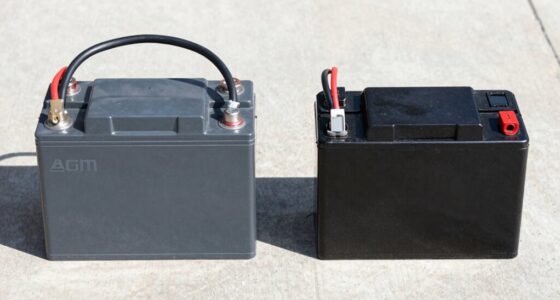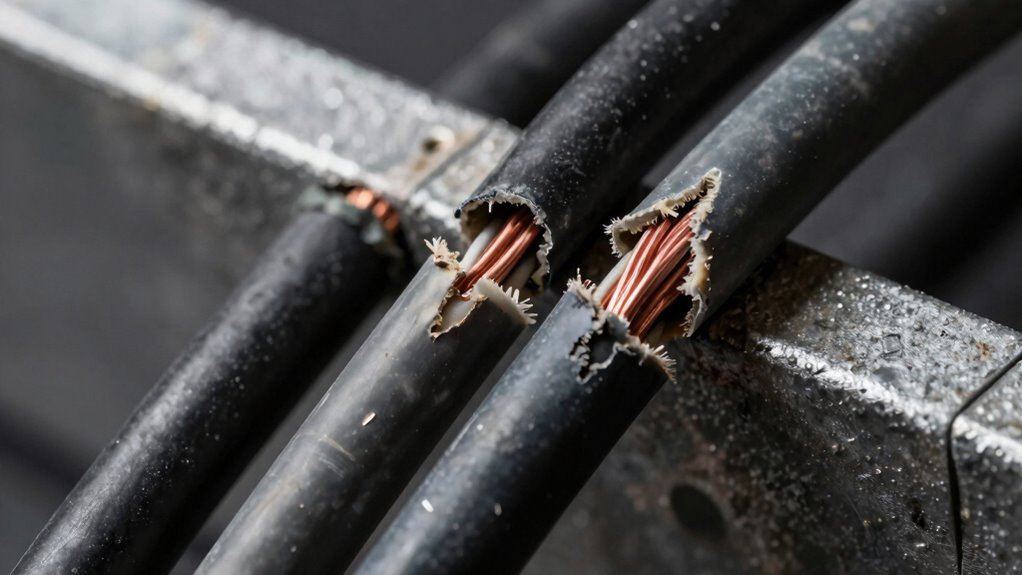

To prevent wiring failures, watch out for common chafe points in your cable routing. Sharp edges, rough surfaces, and tight bends can quickly damage insulation. Make sure to support and secure cables with clips and grommets, avoiding excessive bends or pressure points. Regular inspections help catch early signs of wear. Properly routed cables and protective measures extend wiring life, so keep an eye on these areas to avoid costly repairs later on. Up next, learn how to identify and fix chafe problems effectively.
Key Takeaways
- Sharp edges and rough surfaces are primary chafe points that can cut or wear insulation, leading to wiring failure.
- Excessive bending or tight routing causes stress and abrasion on cables, increasing risk of damage over time.
- Cables pressed firmly against edges or junctions without protection are vulnerable to insulation wear and cuts.
- Lack of proper securing methods, like loose clips or inadequate grommets, allows movement that can cause friction and chafe.
- Regular inspections and early identification of wear points help prevent cable damage and ensure safe routing practices.

AAM Essentials 55Pcs Double-Sided Rubber Grommets kit in 6 Assorted Sizes 5/8",13/16",7/8",1",1-3/16",1-1/2"- Round & Waterproof Rubber Grommet – Ideal Solution for Wire Protection
Top Quality Material: Well-made rubber hole plugs offer durability & shield to the wire by turning rough and…
As an affiliate, we earn on qualifying purchases.
As an affiliate, we earn on qualifying purchases.
How to Recognize Common Cable Chafe Points

To spot common cable chafe points, start by inspecting areas where cables bend sharply or are pressed against rough surfaces. These spots are prone to wear, especially if cable insulation is compromised. Look for signs of fraying, cracking, or thinning in the insulation, which indicate potential damage. Protective sleeves can help prevent chafe by providing a buffer between the cable and abrasive surfaces. Check if cables are snug or tightly pressed against edges, as this increases risk. Also, examine junctions, connectors, and points where cables cross or run along sharp corners. Regularly inspecting these areas allows you to catch early signs of wear before they cause failures. Proper use of protective sleeves and careful routing can considerably extend your cables’ lifespan. Understanding the testing accuracy of your measurement tools can help ensure your inspection methods are reliable and effective. Additionally, knowing the common chafe points specific to your setup can help you proactively address potential issues. Performing routine visual inspections and documenting any signs of damage will further enhance your maintenance routine. Identifying these potential damage sites early is essential to maintaining a safe and reliable wiring system. Being aware of cable insulation vulnerabilities can further enhance your preventative measures.

120 Pcs XHF Adhesive Cable Wire Clips White, Cable Staples Outdoor Cable Management Wire Organizer Cord Holder for Under Desk, Car, Wall, TV PC Ethernet Cable
High quality material:XHF Adhesive Cable Clips are manufactured from Strong Adhesive and PA66 nylon
As an affiliate, we earn on qualifying purchases.
As an affiliate, we earn on qualifying purchases.
Why Sharp Edges Damage Wires and How to Spot Them
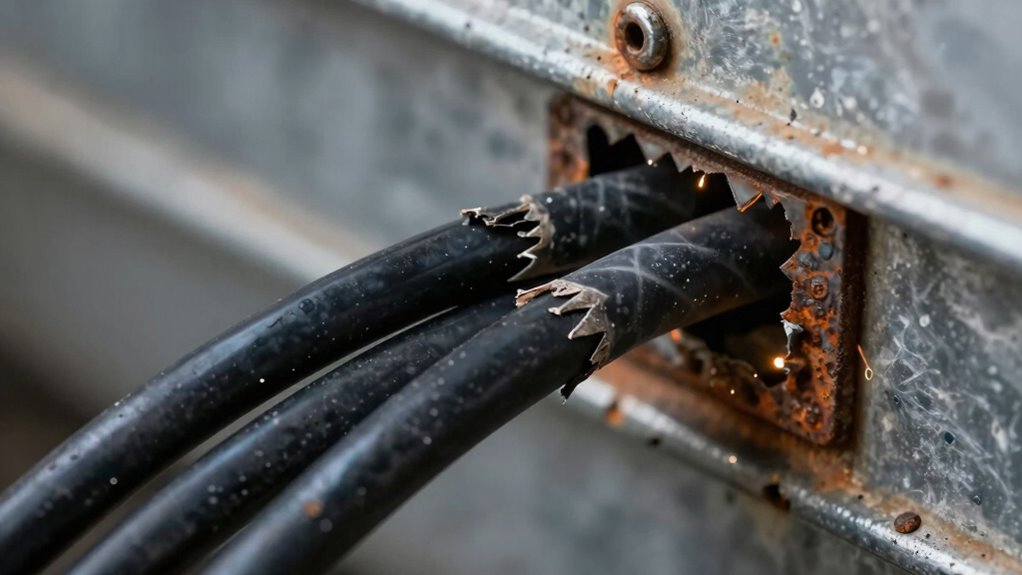
Sharp edges pose a significant threat to cables because they can cut through insulation quickly, leading to exposed wires and potential failures. These abrasive surfaces can gradually wear down insulation, causing shorts or complete cable failure. To prevent this, always look for signs of damage or wear near sharp edges. Proper edge protection, like grommets or rubberized sleeves, reduces the risk of damage. Recognizing these signs early helps you avoid costly repairs and ensures your wiring stays intact longer. Proper cable routing minimizes exposure to abrasive surfaces, securing your system’s reliability. Additionally, understanding the types of damage caused by sharp edges can help you prioritize preventative measures effectively. Being aware of common wear patterns can further assist in early detection and maintenance, especially in environments with frequent mechanical stress. Using protective hardware can also significantly extend the lifespan of your cables in challenging setups, especially when combined with robust cable management techniques.

Alex Tech 25ft – 1/2 inch Cord Protector Wire Loom Tubing Cable Sleeve Split Sleeving For USB Cable Power Cord Audio Video Cable – Protect Cat From Chewing Cords – Black
Size: Diameter: 1/2"| Length: 25 Feet | Color: Black. Our wire loom is split and easy to load…
As an affiliate, we earn on qualifying purchases.
As an affiliate, we earn on qualifying purchases.
How to Support and Secure Your Cables to Prevent Chafe
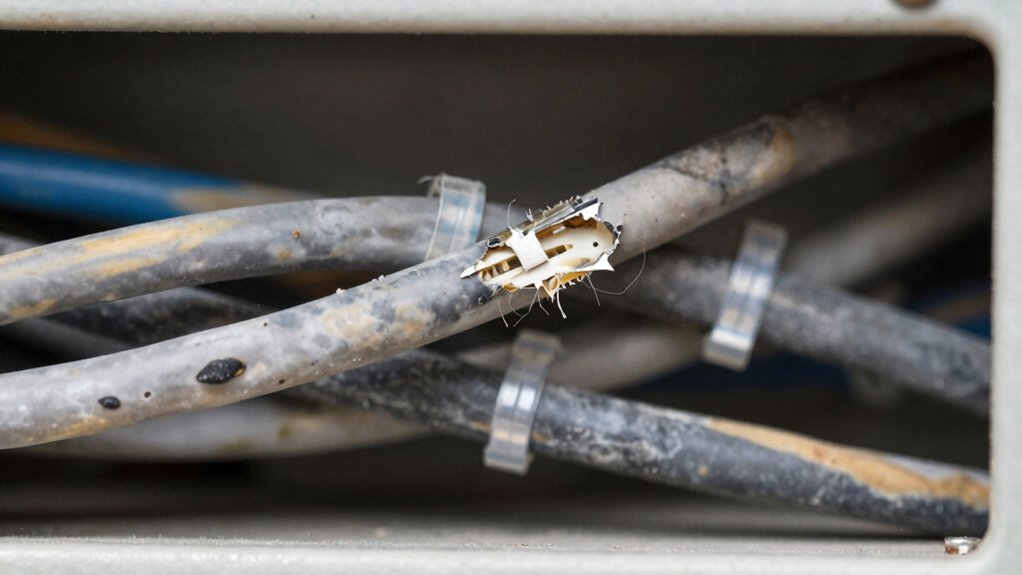
Supporting and securing your cables properly is essential to prevent chafing and damage over time. Use cable clips to hold wires firmly against surfaces, reducing movement that can cause abrasion. Space the clips appropriately so cables don’t sag or bend excessively, which can lead to wear. For areas where cables pass near sharp edges or potential chafe points, add protective sleeves or grommets. These sleeves cushion the wire and prevent direct contact with rough surfaces, *considerably* lowering the risk of damage. Avoid over-tightening clips, as this can pinch or stress the cable. Regularly check the secured cables for signs of wear or movement, adjusting and replacing protective accessories as needed. Proper support and securement extend cable life and maintain safe, reliable wiring. Additionally, understanding common chafe points helps in identifying critical areas that require extra protection. Being aware of heat buildup zones is also crucial, as excessive heat can accelerate cable deterioration and pose safety hazards. Recognizing potential stress areas can help prevent future failures and improve overall cable longevity. To further safeguard your wiring, consider using cable management solutions that organize and distribute cables more effectively. Incorporating flexible routing techniques can also help accommodate movement and reduce strain on vulnerable sections of wiring.

Wire Piercing Probe, Insulation Piercing Clip Set for Multimeter Voltage Testing Detect Automobile Electrical Circuit (4mm Long- Short)
CAT SAFETY RATED – PIERCING NEEDLES ARE SHARP- The test probes have a high safety rating of 30VAC/60VDC…
As an affiliate, we earn on qualifying purchases.
As an affiliate, we earn on qualifying purchases.
Best Practices for Preventing Cable Chafe and Extending Wiring Life
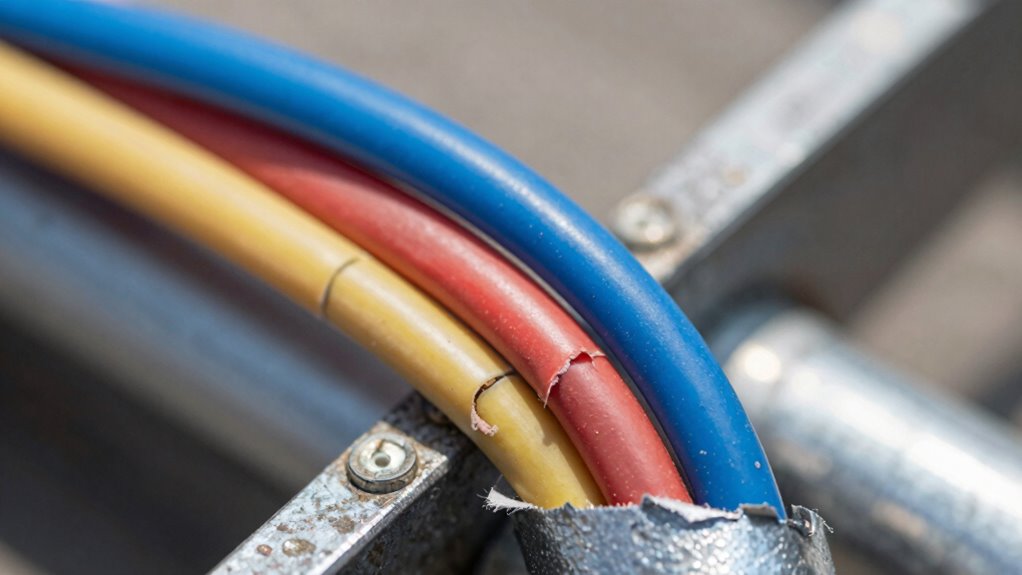
Implementing best practices for preventing cable chafe is essential to extend the lifespan of your wiring. Properly choosing cable insulation with high abrasion resistance helps withstand wear over time. Additionally, avoiding sharp edges and rough surfaces reduces the risk of damage. Securing cables using appropriate clips and grommets prevents unnecessary movement and friction. Regularly inspecting your wiring for signs of wear allows you to catch issues early. To maximize protection:
- Use flexible conduits or sleeves that shield cables from abrasion
- Install grommets or rubber padding at points where cables pass through metal or sharp edges
- Avoid tight bends that can stress insulation and cause cracking
- Incorporate indoor air quality considerations to reduce dust and debris that can accelerate wear on cables over time
Troubleshooting and Replacing Damaged Wires Caused by Chafe

When you notice signs of cable wear or damage, it’s essential to troubleshoot promptly to prevent further issues. Start by inspecting the affected wiring for wire insulation failure, which often results from chafe points. Carefully remove damaged sections and determine if the break is caused by abrasion or corrosion. Replacing the compromised wire ensures proper insulation and prevents short circuits. While replacing, consider implementing corrosion prevention measures, such as applying dielectric grease or sealing connectors, to extend the lifespan of your wiring. Always use the correct gauge wire and secure connections to avoid future chafe problems. Regular inspections help catch damage early, reducing the risk of electrical failures and maintaining safe, reliable operation of your system. Additionally, understanding chafe points can help you identify areas where wiring is most vulnerable and prevent damage before it occurs. Being aware of cable management techniques can further minimize the risk of chafe and prolong the life of your wiring. Incorporating protective tubing around vulnerable sections can provide an extra layer of defense against abrasion and environmental damage. Proper lighting control can also reduce unnecessary strain on cables, decreasing the chance of wear over time. Moreover, using strain relief methods can help absorb mechanical stress and prevent movement that leads to chafing.
Frequently Asked Questions
What Materials Are Most Resistant to Cable Chafe?
You should use abrasion resistant materials like braided nylon or PTFE for cable protection, as they withstand chafe better. Protective sleeving, such as split loom or spiral wrap, also offers excellent resistance by shielding cables from sharp edges and friction. These materials reduce wear and tear, prolonging wiring lifespan. Always choose high-quality, durable options suited to your environment to prevent cable damage caused by chafe points.
How Often Should Cable Inspections Be Performed for Chafe Prevention?
Just like a seasoned pilot checks their gauges regularly, you should inspect your cables every three to six months. An inspection schedule is essential for early chafe detection. Use inspection techniques such as visual inspections for wear marks, fraying, or cuts, and gently feeling for rough spots. Regular checks help catch issues early, preventing costly wiring failures and ensuring safety in your setup.
Are There Specific Tools Recommended for Inspecting Wiring Chafe?
You should use a flashlight and a magnifying glass for visual inspection to detect early chafe signs. A borescope or inspection camera can be highly recommended for hard-to-reach areas, providing detailed views without dismantling components. These tools help you spot frayed wires, worn insulation, or abrasions quickly, ensuring you catch chafe issues early and prevent wiring failures. Regular inspections with these tools keep your wiring safe and reliable.
Can Cable Chafe Cause Electrical Fires?
Could cable abrasion and insulation damage spark an electrical fire? Absolutely. When wires rub against rough surfaces or sharp edges, they suffer insulation damage, exposing the conductive core. This increases the risk of short circuits and sparks, which can ignite nearby flammable materials. Regularly inspecting for chafe points and addressing cable abrasion helps prevent potential fires, keeping your electrical system safe and reliable. Don’t wait until it’s too late—stay vigilant.
How Does Environmental Humidity Influence Cable Chafe Risks?
Environmental humidity increases cable chafe risks because it accelerates corrosion and weakens insulation over time. Higher humidity effects can cause moisture to seep into cable joints and chafe points, leading to deterioration. This corrosion risk makes wires more susceptible to damage from movement or friction, which can eventually cause electrical failures or fires. To minimize these dangers, guarantee proper sealing and routing to protect cables from excessive moisture exposure.
Conclusion
By paying attention to chafe points and safeguarding your cables, you can prevent damage that’s as sneaky as a fox in the henhouse. Regular inspections and proper support make your wiring last longer and perform better. Think of your cables like delicate vines; if you don’t protect them from sharp edges and excessive movement, they’ll eventually break. Keep your wiring secure and well-maintained, and you’ll avoid costly repairs and frustrating failures down the line.