Prop ventilation happens when air enters the propeller, causing loss of thrust, vibrations, and handling issues, often signaled by spray irregularities or whistling sounds. Cavitation occurs when vapor bubbles form and collapse on the blades, leading to damage, noise, and reduced efficiency. Recognizing signs like spray patterns versus noise helps differentiate them. Understanding these differences and how to address each can improve performance, and if problems persist, expert help can guarantee your boat runs smoothly.
Key Takeaways
- Prop ventilation involves air bubbles entering the propeller, reducing water contact, while cavitation involves vapor bubble formation and collapse on blades.
- Ventilation causes irregular spray and whistling sounds; cavitation produces knocking noises and blade erosion.
- Ventilation typically results in power loss and handling instability; cavitation damages blades, decreasing efficiency and increasing engine strain.
- Visual signs of ventilation include excessive spray; cavitation shows surface pitting and turbulence around blades.
- Proper prop and hull design, maintenance, and speed management help prevent both issues and ensure optimal performance.
Top picks for "prop ventilation cavitation"
Open Amazon search results for this keyword.
As an affiliate, we earn on qualifying purchases.
What Are Prop Ventilation and Cavitation, and Why Do They Happen?
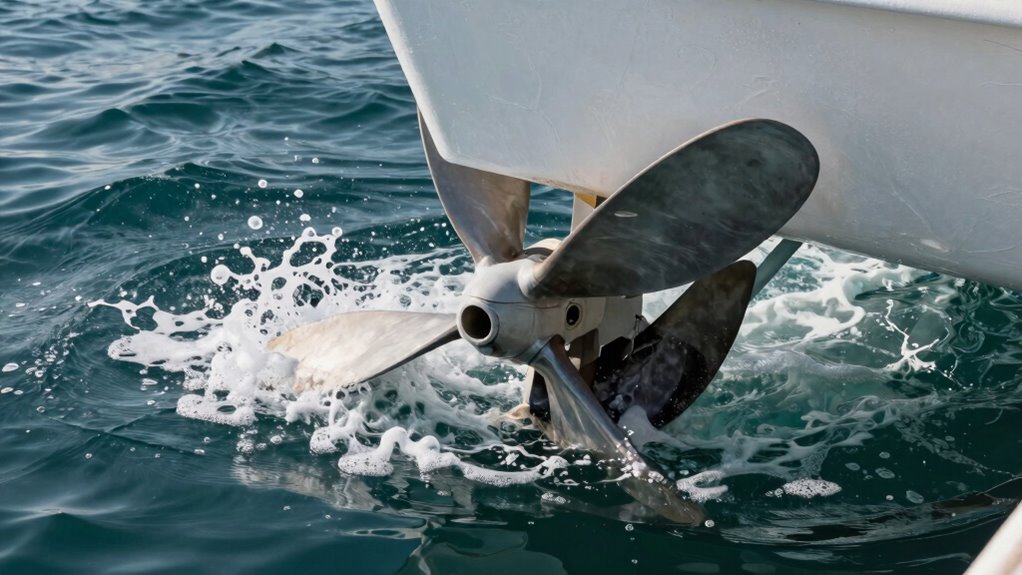
Prop ventilation and cavitation are two common issues that occur with marine propellers, often causing performance problems. Propeller design influences how water pressure interacts with the blades, which can lead to these issues. Ventilation happens when air bubbles enter the propeller, disrupting water flow and reducing thrust. It typically occurs when the propeller is too close to the surface or in turbulent water, allowing air to mix with water. Cavitation, on the other hand, results from low water pressure on the blades, causing vapor bubbles to form and collapse rapidly. Both problems are linked to how water pressure varies around the propeller, affecting its efficiency. Understanding these mechanisms helps you recognize why your boat might lose power or become harder to steer under certain conditions.
How Does Prop Ventilation Impact Boat Performance and Handling?
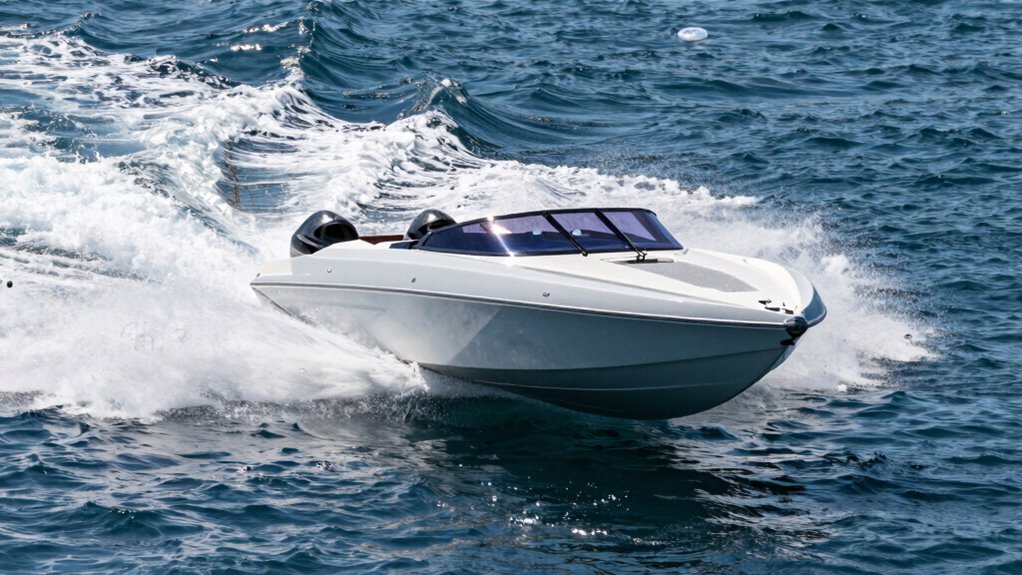
When ventilation occurs, it can substantially affect a boat’s performance and handling by disrupting the flow of water over the propeller blades. This interruption reduces thrust, causes instability, and hampers maneuverability. Prop ventilation mainly results from poor hull design or improper prop placement, impacting marine aerodynamics. To understand its effects better, consider this table:
| Effect on Performance | Handling Impact | Contributing Factors |
|---|---|---|
| Loss of power | Difficulty turning | Hull shape, prop height, ventilation zone |
| Reduced speed | Unpredictable behavior | Water flow disruption, aerodynamics |
| Increased vibration | Handling instability | Prop cavitation, ventilation patterns |
Proper hull design minimizes ventilation, maintaining ideal marine aerodynamics, and ensuring smooth handling. Additionally, optimizing prop placement can significantly reduce ventilation issues and improve overall boat performance. Recognizing how prop ventilation influences boat behavior is crucial for effective troubleshooting and maintenance. Improving propeller design can also help mitigate ventilation problems, leading to more reliable performance and better boat stability.
What Causes Cavitation and How Does It Affect Your Engine and Propeller?
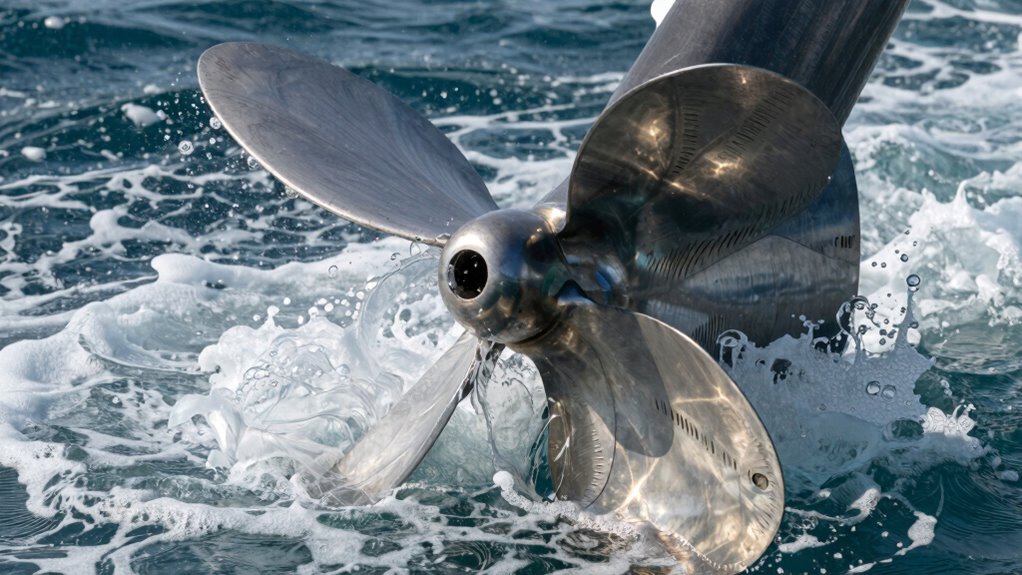
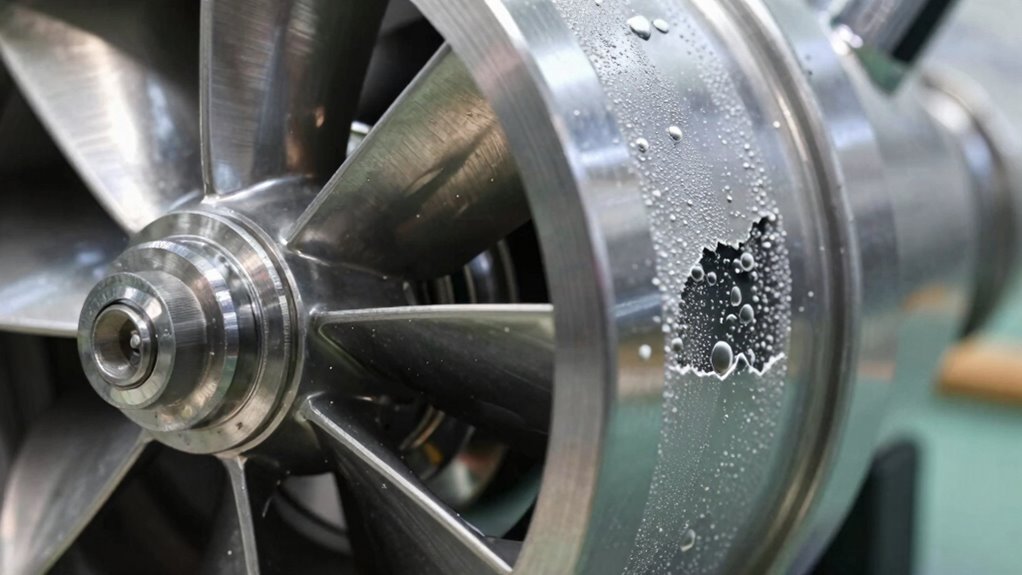
Cavitation occurs when the pressure around your boat’s propeller drops below the vapor pressure of water, causing bubbles to form and collapse rapidly. This process creates shock waves that can damage your propeller’s blades and reduce their efficiency. When cavitation happens, your engine has to work harder, which strains the engine lubrication system and increases wear. Additionally, cavitation diminishes fuel efficiency because your engine consumes more power to maintain speed. The repeated bubble collapse also causes surface pitting on the propeller, leading to imbalance and further performance issues. To prevent cavitation, it’s essential to guarantee proper propeller installation, avoid running at high speeds in shallow water, and keep your engine well-maintained for ideal lubrication. Understanding cavitation is crucial for optimizing propeller performance and prolonging engine life. Proper propeller design can also significantly reduce the risk of cavitation by ensuring better flow and pressure distribution. Moreover, maintaining correct engine settings helps sustain optimal pressure levels and prevents conditions conducive to cavitation. Regularly inspecting your propeller condition can help identify early signs of cavitation damage, allowing for timely maintenance and repairs. Additionally, utilizing advanced materials in propeller construction can help resist the erosive effects caused by cavitation bubbles.
How Can You Tell the Difference Between Prop Ventilation and Cavitation?

You can usually spot the difference through visual signs and sounds—cavitation often produces knocking or banging noises, while ventilation may cause a whistling sound. Pay attention to performance changes; cavitation typically reduces thrust and fuel efficiency, whereas ventilation might cause the boat to feel sluggish or unstable. Additionally, observe how the propeller behaves; cavitation can cause pitting or erosion, while ventilation may result in uneven blade rotation. Recognizing propeller performance issues and their effects on the boat’s operation can also help in diagnosing and preventing these issues. Being aware of hydrodynamic effects can aid in understanding how these problems develop and impact boat handling. Moreover, understanding flow dynamics around the propeller can provide insight into the causes of ventilation and cavitation, helping you to implement effective solutions.
Visual Signs and Sounds
Distinguishing between prop ventilation and cavitation through visual signs and sounds requires careful observation. You’ll notice specific cues that can help identify the issue:
- Excessive water spray around the propeller suggests ventilation, especially if debris or bubbles are visible. Free Floating can often exacerbate these conditions by allowing debris to enter the water flow.
- Sharp, crackling sounds often indicate cavitation, accompanied by a distinct noise from collapsing vapor bubbles.
- Propeller debris may be visible if ventilation causes loose material to be thrown off, unlike cavitation, which mainly produces a buzzing or knocking sound.
- Persistent spray patterns or spray that suddenly stops can signal ventilation, while cavitation typically produces irregular, sporadic noise without much water disturbance.
- Understanding the contrast ratio can help you better interpret the visual clarity and depth of the images, which might be affected if the propeller issues impact the vessel’s operation.
Pay close attention to both visual cues and sounds to accurately diagnose your propeller’s condition.
Performance Changes Noted
When prop ventilation or cavitation occurs, noticeable changes in boat performance can help you tell them apart. Prop ventilation often causes a sudden loss of thrust, leading to sluggish acceleration and difficulty maintaining speed. You might also notice increased vibration or noise, especially if the propeller materials are prone to wear from exposure. Marine coatings can influence how quickly these issues develop by reducing propeller fouling or corrosion, which can mask performance signs. Monitoring how your boat handles under different conditions and paying attention to vibrations or speed drops can help you distinguish between ventilation and cavitation. Additionally, understanding the performance changes associated with each issue is crucial for proper diagnosis and maintenance. Proper propeller maintenance can prevent or minimize these problems, ensuring optimal performance and safety.
Propeller Behavior Differences
Prop ventilation and cavitation can cause similar symptoms, but their behaviors at the propeller differ noticeably. You’ll observe distinct propeller behaviors based on factors like blade design and hull interference.
- Ventilation typically causes a steady loss of thrust, with the blades producing a distinctive whining noise due to air ingestion.
- Cavitation appears as localized bubbles forming and collapsing near the blade surfaces, often creating a crackling or popping sound.
- Changes in hull interference, such as shallow depths or irregular hull shapes, influence ventilation, making it more predictable.
- Cavitation is more sensitive to propeller blade design, especially when the blade’s shape or angle promotes bubble formation. Recognizing these behaviors helps you identify the root cause.
- Proper metal detecting etiquette and understanding of marine environments can help prevent issues related to cavitation and ventilation during boat operation.
- Being aware of propeller blade shapes and their influence on bubble formation is essential for diagnosing and addressing these issues effectively.
Signs and Quick Checks for Prop Ventilation and Cavitation

You can often spot prop ventilation or cavitation by observing water spray patterns around the propeller; irregular or excessive spray may indicate issues. Listen carefully for unusual engine noises, such as knocking or rattling, which can signal cavitation or ventilation problems. Also, watch for sudden drops in speed, as these are common signs that airflow or pressure issues are affecting your vessel’s performance. Recognizing marine propulsion signs can help prevent further damage and maintain optimal operation. Additionally, paying attention to turbulence patterns around the propeller can provide early clues to developing cavitation or ventilation problems, especially when flow dynamics are disrupted. Regular inspection and maintenance, including checking filtration and pump protection systems, can also help mitigate these issues before they worsen.
Visual Water Spray Patterns
Visual water spray patterns offer a quick and effective way to identify signs of prop ventilation and cavitation. You can observe the spray to assess whether issues stem from propeller design or water turbulence. Look for these clues:
- Irregular, frothy spray indicates cavitation caused by high water turbulence around the blades.
- Consistent, white spray at the propeller tips suggests ventilation, often linked to propeller design flaws.
- Vortices or air bubbles mixed with water spray point to cavitation, especially at high speeds.
- Excessive spray height or turbulence near the hull signals ventilation, typically due to inadequate propeller placement or design.
Unusual Engine Noises
Unusual engine noises can be a clear indicator of ventilation or cavitation issues affecting your boat’s performance. If your engine suddenly makes loud, inconsistent noises or sputters, it may signal prop issues caused by ventilation or cavitation. Ventilation often produces a high-pitched whine or scream, indicating air getting into the propeller, while cavitation can cause knocking or banging sounds as vapor bubbles collapse. To check, listen carefully when increasing throttle or steering sharply—these noises typically intensify under load. Also, observe if the engine struggles or if the noise persists at different speeds. Addressing these signs early helps prevent further damage. Regularly inspect your propeller for damage or misalignment, as these can contribute to abnormal engine noises linked to ventilation or cavitation.
Sudden Speed Loss
Sudden drops in speed can be a clear sign that your boat’s propeller is experiencing ventilation or cavitation issues. You might notice the engine revving higher without a corresponding increase in speed. To diagnose quickly, consider these checks:
- Observe if the propeller design causes excessive water aeration, leading to ventilation.
- Check if the propeller is drawing in air due to proximity to the hull or shallow water.
- Listen for unusual engine noises, indicating cavitation bubbles collapsing.
- Test for inconsistent acceleration, often caused by cavitation bubbles collapsing near the blades.
Addressing these signs involves inspecting the propeller’s design and its position relative to water flow. Recognizing sudden speed loss early helps prevent damage and ensures efficient performance.
Practical Ways to Prevent and Fix Prop Ventilation and Cavitation

To effectively prevent and fix prop ventilation and cavitation, you need to understand the key strategies that address their root causes. Focus on optimizing propeller design to reduce airflow disruptions and adjusting boat hulls for better water flow. Proper maintenance, like checking for damage and ensuring correct alignment, also helps. Keep your boat’s speed and load balanced to prevent excessive cavitation.
| Strategy | Benefit |
|---|---|
| Improve propeller design | Boosts efficiency, reduces airflow issues |
| Optimize boat hulls | Enhances water flow, minimizes cavitation |
| Regular maintenance | Prevents damage, maintains performance |
| Speed and load management | Avoids excessive stress on propellers |
When Should You Call a Professional for Propeller or Engine Troubles?

While implementing preventive strategies can especially reduce issues like prop ventilation and cavitation, some problems require professional attention. If you notice persistent engine overheating, strange vibrations, or unusual noises, it’s time to call an expert. Also, consider professional help if:
Some issues, like overheating or strange vibrations, need expert diagnosis and repair.
- Your propeller materials show signs of significant damage or corrosion.
- Engine cooling systems aren’t restoring proper temperature levels.
- You experience inconsistent engine performance despite routine maintenance.
- Troubles with propeller alignment or pitch affect boat handling.
These issues often stem from underlying problems that demand specialized tools and knowledge. Addressing engine cooling concerns or replacing damaged propeller materials without proper expertise can worsen the problem. Consulting a professional ensures safe, effective repairs and prolongs your vessel’s lifespan.
Frequently Asked Questions
Can Prop Ventilation or Cavitation Damage My Boat’s Long-Term Structure?
Prop ventilation and cavitation can indeed damage your boat’s long-term structure. Cavitation causes intense shockwaves that wear down the propeller and may lead to engine overheating, reducing fuel efficiency. Prop ventilation introduces air into the propeller, decreasing thrust and potentially causing vibrations that strain the engine. Over time, these issues can compromise the hull and drivetrain, ultimately affecting your boat’s durability, engine performance, and fuel economy.
Are Certain Boat Designs More Prone to Prop Ventilation or Cavitation?
Think of your boat like a race car; design considerations like hull shape and propeller geometry greatly influence whether you face prop ventilation or cavitation. Sleek, well-balanced designs with optimized propellers are less prone to these issues. For example, boats with high-performance propellers often encounter cavitation if the geometry isn’t carefully chosen. So, choose a design that balances speed and stability to prevent long-term damage.
How Do Water Conditions Influence the Likelihood of Ventilation Versus Cavitation?
Water conditions greatly influence whether you experience ventilation or cavitation. Higher water density, like in cold or freshwater, reduces cavitation risk, while lower density increases it. Air entrainment, caused by turbulence or waves, promotes ventilation by introducing air into the propeller, which can cause airflow issues. Conversely, calm, dense water minimizes air entrainment, lowering ventilation chances and helping your prop operate smoothly without cavitation damage.
What Safety Risks Are Associated With Prop Ventilation and Cavitation?
You face safety risks like engine failure and fire hazards with prop ventilation and cavitation. Ventilation can cause engine overheating or failure if not managed properly, while cavitation may lead to damage of the propeller or engine components. Both issues increase the risk of fires due to excessive heat or mechanical failure. Stay vigilant, maintain your propeller and engine, and monitor water conditions to reduce these hazards effectively.
Do Different Propeller Materials Affect the Incidence of Ventilation or Cavitation?
You might notice that different propeller alloys impact ventilation and cavitation rates. Stronger material durability in alloys, like bronze or stainless steel, resists erosion and reduces cavitation. Conversely, softer materials may be more prone to damage, increasing risks of ventilation. The choice of propeller material directly influences how well it withstands these phenomena, helping you maintain efficiency and safety on the water.
Conclusion
Understanding the difference between prop ventilation and cavitation is like knowing the language of your boat’s heart. When you recognize their signs, you’re better equipped to keep your vessel running smoothly. Think of proper maintenance as a lighthouse guiding you through foggy waters—preventing damage before it strikes. By staying vigilant and addressing issues early, you ensure your boat’s spirit remains unbroken, allowing you to sail confidently into every adventure.