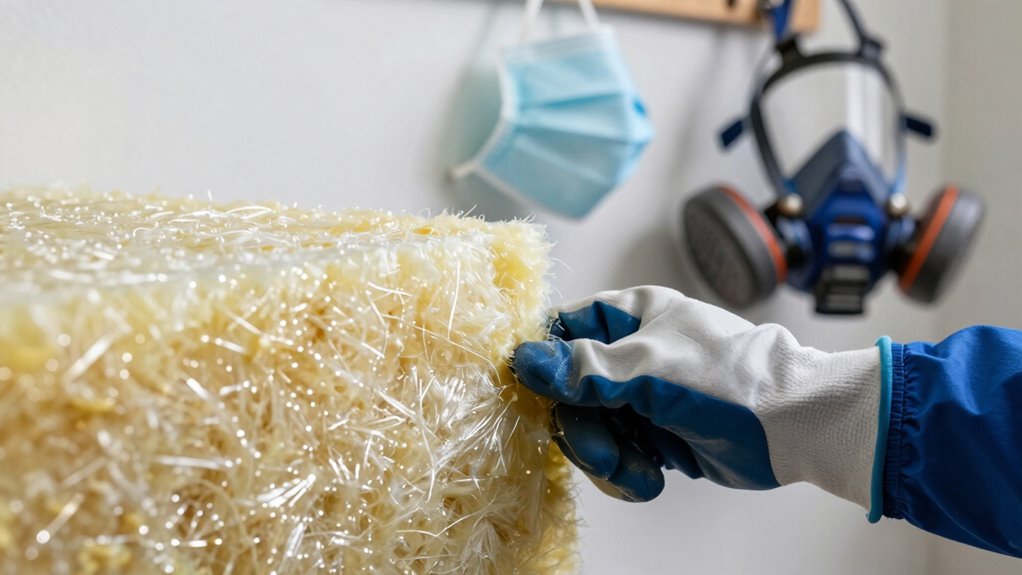

Fiberglass dust can cause skin, eye, and respiratory irritation if you don’t take proper safety steps. Always wear a respirator, gloves, and eye protection, and work in well-ventilated areas. Use dust collection systems and avoid dry sweeping to minimize airborne fibers. Proper cleanup and disposal are critical to prevent long-term health issues. Keep hazards in check and develop safe routines—stay informed to avoid learning these lessons the hard way.

Get sports gear delivered free with Prime
- Fast, free delivery on millions of items
- Prime Video, Amazon Music and more included
- Member-only deals all year
Key Takeaways
- Always wear appropriate PPE, including respirators, gloves, and eye protection, to prevent skin and respiratory irritation from fiberglass dust.
- Use proper ventilation and dust collection systems to control airborne fibers and minimize workspace contamination.
- Seal and dispose of fiberglass debris in heavy-duty bags following local hazardous waste guidelines to prevent dust resettling.
- Avoid dry sweeping; instead, use wet cleaning methods or HEPA vacuums to reduce fiber stir-up and airborne dust.
- Maintain long-term safety habits like regular cleaning, proper PPE fitting, and good hygiene to protect respiratory health over time.
As an affiliate, we earn on qualifying purchases.
Why Fiberglass Dust Is Dangerous and What You Should Know

Fiberglass dust is dangerous because it can irritate your skin, eyes, and respiratory system. The tiny airborne particles easily become inhaled or come into contact with your skin, posing serious health hazards. Breathing in these airborne particles can lead to coughing, wheezing, and shortness of breath. Over time, exposure may cause more severe respiratory issues or skin irritation. The health hazards aren’t limited to immediate symptoms; prolonged exposure increases the risk of chronic lung conditions. Because fiberglass dust consists of fine particles that suspend in the air, it’s easy to forget how easily they can enter your body during routine work. Understanding these dangers helps you realize why proper precautions are vital to protect yourself from the harmful effects of fiberglass dust. Proper protective equipment can significantly reduce the risk of inhalation and skin contact. Additionally, awareness of air filtration techniques can help minimize airborne fiber levels in your workspace. Implementing effective ventilation systems can further enhance safety by reducing overall dust concentration and protecting your respiratory health. Recognizing exposure symptoms early can also help prevent long-term health issues related to fiberglass dust inhalation, especially when combined with adequate training on safe handling practices.
As an affiliate, we earn on qualifying purchases.
What Safety Gear Do You Need to Protect Yourself
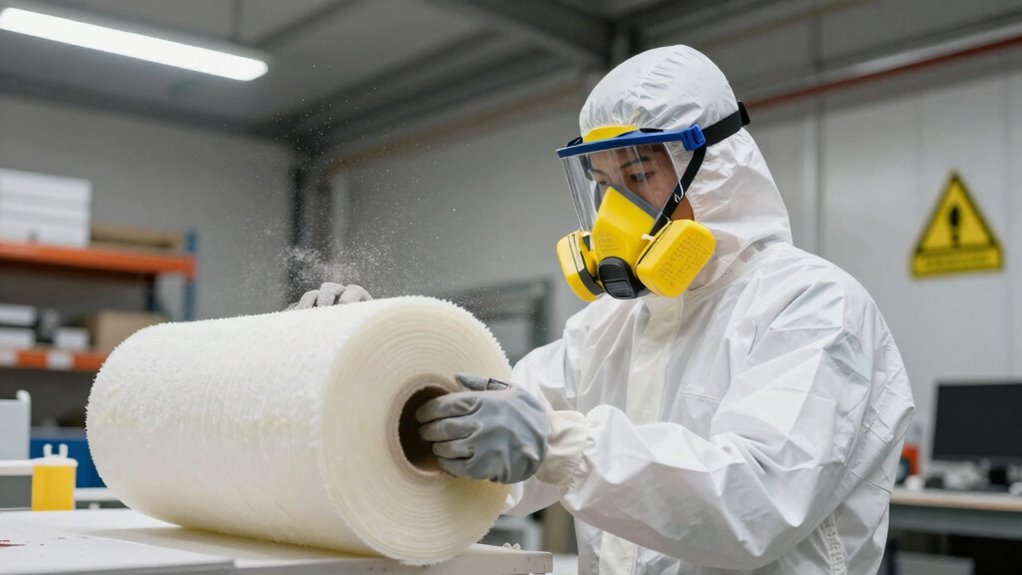
Protecting yourself from fiberglass dust starts with choosing the right safety gear. A properly fitted respirator is essential; confirm the respirator fit is secure to prevent dust leaks. Next, select gloves made from durable material like nitrile or latex to protect your skin. Here are four key safety items:
- Respirator with a good fit to filter airborne particles effectively
- Gloves that provide a barrier against fiberglass fibers
- Safety goggles to shield your eyes from dust and fibers
- A long-sleeved shirt and pants to minimize skin exposure
Always verify respirator fit before use, adjusting straps for comfort and seal. Proper glove selection helps prevent skin irritation, while the right protective gear keeps you safe during fiberglass work.
dust collection system for workshop
As an affiliate, we earn on qualifying purchases.
As an affiliate, we earn on qualifying purchases.
How to Ventilate and Control Dust During Your Project
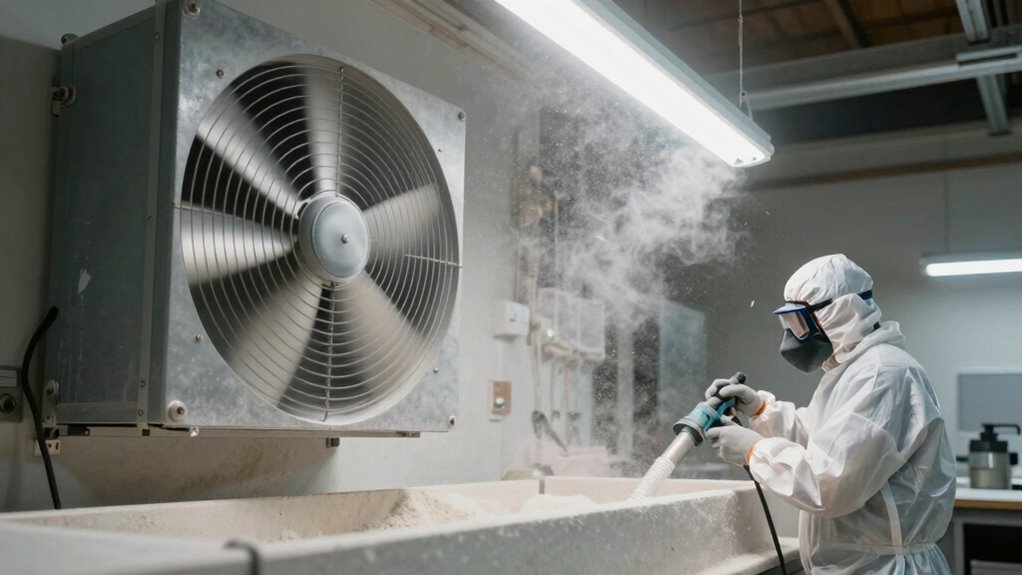
To keep fiberglass dust under control, you need to use proper ventilation methods and dust collection systems. These tools help reduce airborne particles and keep your workspace safer. Don’t forget to wear protective equipment to shield yourself from any residual dust. Additionally, understanding the comogenic ratings of skincare products can help prevent skin irritation caused by dust contact. Implementing air filtration systems can further improve air quality and minimize health risks during your project. Proper ventilation techniques, such as airflow management, are essential for effective dust control and maintaining a safe environment. Ensuring that your ventilation system is properly maintained also helps in continuously removing hazardous dust particles from the air.
Use Proper Ventilation Methods
Effective ventilation is essential for controlling fiberglass dust during your project. Proper air exchange and airflow optimization help remove airborne particles and reduce health risks. To achieve this:
- Use exhaust fans positioned near the work area to draw dust away.
- Open windows and doors to increase natural airflow and improve ventilation.
- Install temporary vents to direct contaminated air outside.
- Keep airflow moving steadily to prevent dust from settling or recirculating.
- Regularly inspect and maintain ventilation equipment to ensure optimal performance air quality monitoring.
- Understanding ventilation techniques can significantly improve dust control and ensure a safer working environment. Additionally, being aware of airflow dynamics can help optimize your setup for maximum efficiency, especially when considering ventilation system design. Properly designing your ventilation layout can further enhance dust removal efficiency and improve overall safety during fiberglass projects.
Employ Dust Collection Systems
Using dust collection systems is one of the most efficient ways to control fiberglass dust during your project. These systems quickly capture airborne particles at their source, minimizing contamination in your workspace. Guarantee your setup includes proper air filtration units to remove fine dust from the air, preventing inhalation and spreading. Installing dust barriers around your work area helps contain dust, making cleanup easier and reducing exposure risks. Regularly check and maintain your dust collection equipment to keep it functioning effectively. Incorporating visual alerts and signage can also remind you to wear protective gear and stay vigilant about dust hazards. Proper air filtration is essential for removing microscopic particles and maintaining a safe environment. Combining air filtration with dust barriers creates a safer environment, especially in enclosed spaces. Proper ventilation is crucial to dispersing dust and maintaining air quality during your project. Controlling fiberglass dust at the source and ensuring adequate airflow are essential for a healthier workspace. By controlling dust at the source and filtering the air, you’ll protect your health and keep your workspace cleaner throughout your project. Additionally, understanding the importance of workplace safety protocols can further reduce health risks associated with fiberglass dust exposure.
Wear Protective Equipment
Wearing the right protective equipment is key to minimizing your exposure to fiberglass dust during your project. Proper clothing considerations help prevent skin irritation; opt for long sleeves, gloves, and coveralls. For eyewear options, choose safety goggles or a full-face shield to protect your eyes from dust particles. Here’s what you should do:
- Wear a fitted respirator or mask to filter airborne fibers.
- Use disposable coveralls to keep dust off your clothes.
- Select eyewear that offers a snug seal around your eyes.
- Always wash exposed skin and change clothes after finishing your work.
- Ensure proper ventilation to reduce airborne dust levels during and after your project. Proper dust control measures can significantly decrease health risks associated with fiberglass exposure. Additionally, using air filtration systems can further improve indoor air quality during and after work.
heavy-duty hazardous waste disposal bags
As an affiliate, we earn on qualifying purchases.
As an affiliate, we earn on qualifying purchases.
How to Clean Up Fiberglass Dust Safely
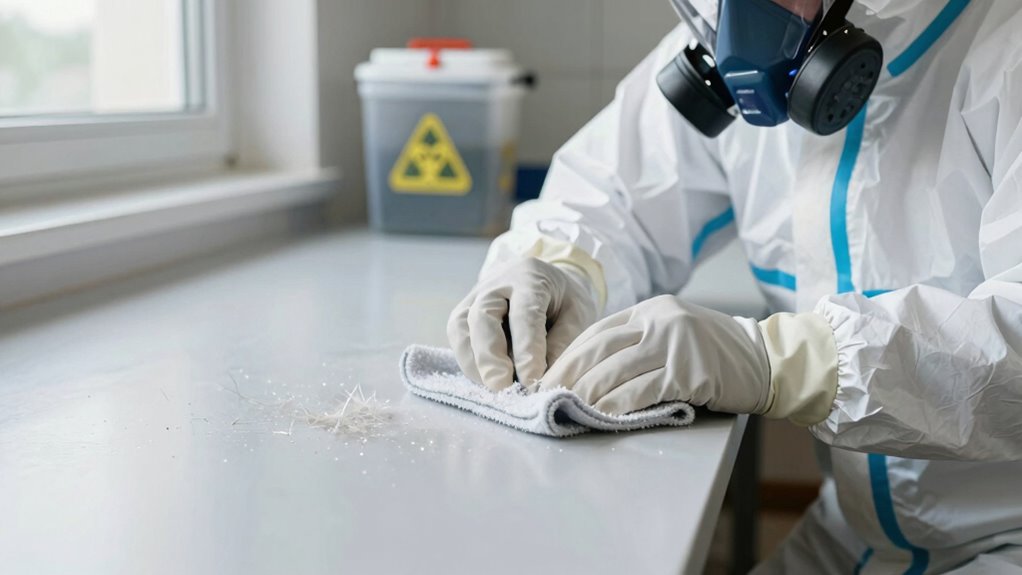
When cleaning up fiberglass dust, make sure you wear the right protective gear like a mask, gloves, and goggles to prevent skin and respiratory irritation. Use proper disposal methods by sealing dust in heavy-duty bags and avoiding sweeping, which can release fibers into the air. Taking these precautions helps keep you safe and guarantees the dust is disposed of responsibly.
Protective Gear Essentials
To clean up fiberglass dust safely, you need the right protective gear to prevent skin irritation and inhalation of harmful particles. First, wear a well-fitting respirator to ensure a proper respirator fit, blocking fine dust from entering your lungs. Second, don protective clothing, such as coveralls, to shield your skin from irritation. Third, don sturdy gloves to prevent fiberglass fibers from contacting your hands. Fourth, use safety goggles to protect your eyes from airborne particles. Proper gear minimizes health risks and keeps fiberglass dust off your skin and in check. Always double-check your respirator fit and ensure your protective clothing is intact before beginning cleanup. Staying protected helps you avoid unnecessary exposure and health issues down the line.
Proper Disposal Methods
After you’ve completed your cleanup with the proper protective gear, the next step is to dispose of the fiberglass dust safely. Follow disposal regulations to prevent contaminating your environment and harming others. Place dust and debris in sealed, heavy-duty plastic bags to contain fibers and prevent leaks. Do not toss fiberglass waste in regular trash; instead, consult local waste management guidelines for designated disposal sites or special collection events. Check if your area requires labeling the waste as hazardous or fibrous material. Proper disposal helps reduce airborne fibers and minimizes health risks. Always wash your hands and exposed skin after disposal. By adhering to disposal regulations, you ensure safe, responsible waste management that protects both your health and the environment.
Common Mistakes That Increase Dust Risks: and How to Avoid Them

One common mistake that increases dust risks during fiberglass work is neglecting proper containment and cleanup procedures. Poor control allows dust to spread, raising exposure levels. To avoid this, make sure you:
Neglecting containment and cleanup increases fiberglass dust exposure risks.
- Use sealed containment areas to prevent dust from escaping.
- Regularly check and maintain your respirator, especially respirator maintenance and dust mask fit, to ensure effective protection.
- Clean up dust immediately with wet methods or HEPA vacuums, not dry sweeping.
- Dispose of contaminated materials properly to prevent dust from resettling.
Failing to follow these steps can lead to increased inhalation risks. Proper containment, well-maintained respiratory protection, and prompt cleanup are key to reducing fiberglass dust hazards and safeguarding your health.
Long-Term Health Tips for Working Safely With Fiberglass Dust

Protecting your long-term health when working with fiberglass dust requires consistent habits and precautions. To prevent a fiberglass allergy or respiratory issues, always wear proper PPE, including masks and gloves, and work in well-ventilated areas. Regularly clean your workspace to minimize dust buildup, and avoid dry sweeping, which can stir up fibers. Incorporate respiratory protection even during short tasks to reduce inhalation risks. Be aware of early signs of sensitivity, such as skin irritation or breathing difficulties, and address them immediately. Maintaining good hygiene, like washing exposed skin and changing clothes after work, helps prevent fibers from lingering. Prioritizing these habits safeguards your respiratory health and minimizes long-term health risks associated with fiberglass dust exposure.
Frequently Asked Questions
Can Fiberglass Dust Cause Allergies or Respiratory Issues?
Yes, fiberglass dust can cause allergies and respiratory issues. When you breathe in the tiny fibers, they may trigger a fiber allergy, leading to symptoms like sneezing, coughing, or irritation. Over time, inhaling this dust can also cause respiratory damage, especially if you’re exposed frequently or without proper protection. Wearing masks and working in well-ventilated areas helps prevent these health risks and keeps your lungs safe.
Are There Specific Clothing Materials Recommended for Fiberglass Dust Protection?
Think of your protective clothing as a shield against fiberglass dust. You should choose material recommendations like Tyvek or polypropylene, which act as barriers to airborne particles. These materials are lightweight, durable, and resistant to fibers, ensuring your skin stays protected. Always opt for long sleeves and pants made from these protective fabrics to minimize exposure, because staying safe is the best way to keep fiberglass dust from becoming a health hazard.
How Often Should Safety Equipment Be Inspected or Replaced?
You should inspect your safety equipment before each use to guarantee it’s in good condition. Follow a regular inspection schedule, like weekly or monthly, depending on usage frequency. Perform routine equipment maintenance to replace worn or damaged parts promptly, maintaining ideal protection against fiberglass dust. By staying proactive with inspections and maintenance, you reduce health risks and ensure your safety gear functions effectively whenever you need it.
What Are the Signs of Fiberglass Dust Exposure Health Effects?
Fiberglass dust exposure can act like a warning bell, signaling trouble ahead. You might notice symptoms like coughing, wheezing, or skin irritation, especially if you have a fiberglass allergy. Respiratory symptoms are common, including shortness of breath or throat irritation. If these signs appear, it’s vital to seek fresh air and medical advice. Ignoring them can lead to more serious health issues over time.
Is Professional Help Necessary for Large Fiberglass Dust Cleanup?
Yes, you should seek professional help for large fiberglass dust cleanup. DIY cleanup with equipment rentals might seem convenient, but fiberglass dust can be hazardous if not handled properly. Professionals have specialized gear and training to safely contain and remove the dust, minimizing health risks. Attempting a large cleanup without proper precautions can lead to inhalation of fibers and long-term health issues, so don’t risk it—call in experts.
Conclusion
Protecting yourself from fiberglass dust isn’t optional—it’s essential. By wearing the right gear, controlling dust, and cleaning carefully, you reduce serious health risks. Are you prepared to keep harmful fibers out of your lungs and skin? Think of it as building a shield against invisible dangers that could haunt you long after your project’s done. Stay vigilant, follow safety tips, and work confidently, knowing you’re guarding your health with every step you take.
Fall Picks
fall essentials
As an affiliate, we earn on qualifying purchases.