Tide tables offer general predictions based on gravitational models, but real water levels often fluctuate due to weather, currents, and local conditions. To adjust on the fly, observe shoreline cues, debris movement, and water behavior while monitoring tide heights and times. Trust your eyes when conditions differ from forecasts, and be flexible with your plans. Understanding this balance helps you stay safe and make better decisions—discover more ways to adapt effectively as you go.
Key Takeaways
- Always verify tide predictions with real-time water level observations and environmental cues on-site.
- Use visual indicators like debris movement, ripples, and shoreline changes to assess current water conditions.
- Adjust your plans proactively by recalculating timing based on actual water levels rather than solely relying on tide tables.
- Monitor weather and local conditions, such as wind and storms, which can cause significant deviations from predicted tides.
- Incorporate both tide table data and immediate environmental signs for safer, more accurate decision-making on the water.

Weytoll Weather Station Indoor Outdoor Thermometer with Remote Sensors and Touch Color Screen Weather Thermometer Forecast Station with Sunrise Sunset Time and Tide Level
【Color Display Multifunctional Weather Forecaster】Touch color large screen display with rich display can clearly read time, date, alarm,…
As an affiliate, we earn on qualifying purchases.
As an affiliate, we earn on qualifying purchases.
How Tide Tables Predict Water Levels
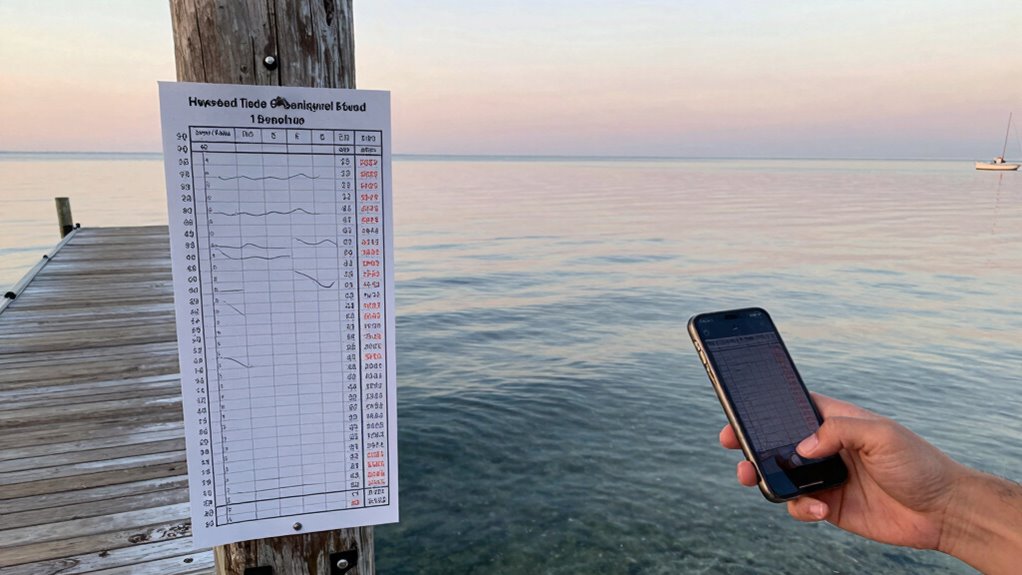
Tide tables predict water levels by calculating the gravitational pull of the moon and the sun on Earth’s oceans. These calculations help determine the timing and height of tides, but tide prediction accuracy can vary depending on several factors. While they provide a reliable forecast, water level variability caused by local conditions or weather can influence actual measurements. You should understand that tide tables are based on historical data and mathematical models, which generally predict tides well but aren’t perfect. Changes in atmospheric pressure, wind, or other environmental influences can alter water levels unexpectedly. Additionally, local topography and shoreline features can significantly impact water levels, making real-time observation crucial. Variations in weather patterns can also cause deviations from predicted tide levels, highlighting the importance of monitoring current conditions. Moreover, environmental factors such as heat buildup, toxic fumes, and wiring practices can impact safety in related environments, emphasizing the need for ongoing vigilance. For example, climate change can lead to sea level rise, further complicating tide predictions and safety considerations. Consequently, while tide tables are invaluable tools for planning, it’s essential to stay aware of real-time conditions that might cause deviations from predicted water levels, especially considering factors like heat buildup, toxic fumes, and wiring practices that can impact safety in related environments.
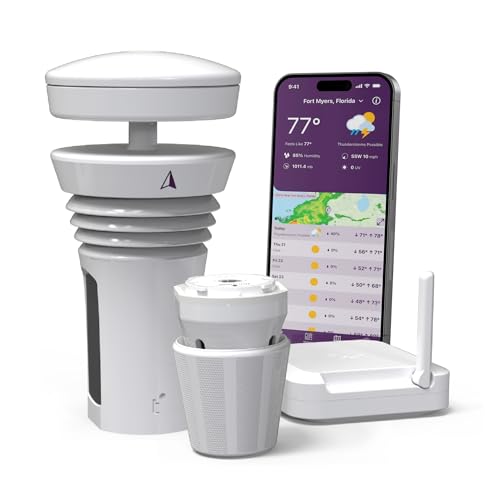
Tempest Weather Station with Built-in Wind Meter, Rain Gauge, and Accurate Weather Forecasts, Wireless, App and Alexa Enabled
Featured in Better Homes & Gardens, Popular Mechanics, The Spruce and Wired, the Tempest Weather Station is trusted…
As an affiliate, we earn on qualifying purchases.
As an affiliate, we earn on qualifying purchases.
Why Water Levels Can Deviate From Tide Predictions
Water levels can differ from tide predictions because local weather conditions, like wind and storms, influence water movement. Additionally, currents and changes in measurement timing can cause deviations. These factors make real water levels more unpredictable than tide tables suggest. For example, precious metal investments can serve as a hedge against market volatility, much like how real water levels can fluctuate unexpectedly. Understanding water dynamics helps in making more accurate on-the-fly adjustments to water level expectations, especially when considering environmental variability that impacts water behavior. Recognizing the importance of measurement accuracy allows for better real-time decision-making in changing conditions.
Local Weather Influences
Even when tide tables provide accurate predictions, local weather conditions can cause actual water levels to differ substantially. Changes in local weather, such as heavy rainfall or drought, directly impact water levels by adding or removing water from the system. Seasonal patterns, like spring melt or dry spells, also influence water height, often causing deviations from predicted tides. Cloud cover and atmospheric pressure shifts can further alter water levels temporarily. For example, a storm system passing through may push water inland, elevating levels beyond predictions, while a high-pressure system can cause water to recede faster. Additionally, local weather variations can create short-term fluctuations that make water behavior unpredictable, emphasizing the importance of monitoring current conditions. Recognizing the dynamic nature of water levels helps you anticipate how water might behave differently from tide tables, especially during unpredictable weather or seasonal shifts. Incorporating real-time weather data into planning can improve accuracy and safety when navigating or managing coastal areas. Staying aware of atmospheric influences allows for better decision-making during changing conditions.
Wind and Current Effects
Have you ever wondered why water levels sometimes don’t match tide predictions? Wind effects and current variability are major factors. These influences can cause water levels to deviate unexpectedly. Specifically:
- Strong winds push water toward or away from coastlines, raising or lowering levels quickly.
- Variable wind directions create unpredictable changes, disrupting steady tide patterns.
- Currents driven by local geography or weather systems can amplify or counteract tide predictions.
- Vetted floating water on the surface can also influence local water levels temporarily, especially in calm conditions or sheltered areas.
- Tide prediction models often do not account for short-term wind and current effects, which can lead to discrepancies between forecasts and actual conditions.
- Real-time measurements are essential for understanding current water levels and making accurate on-the-spot adjustments.
- Understanding these local wind conditions can help you better anticipate and respond to unexpected water level changes.
- Short-term fluctuations caused by wind and current effects highlight the importance of continuous monitoring for precise water level management.
These elements can cause water levels to rise or fall beyond what tide tables forecast. Wind effects generate additional force, while current variability shifts water movement in unexpected ways. As a result, understanding these factors helps you better anticipate real water conditions and adjust your plans on the fly.
Measurement Timing Variations
Measurement timing plays a significant role in why observed water levels often differ from tide predictions. Small measurement discrepancies can occur due to timing uncertainties, meaning your observations might not align exactly with predicted tide heights. Tidal cycles are complex, influenced by gravitational forces, local geography, and atmospheric conditions, which all introduce slight variations in timing. If you record water levels a few minutes early or late, you may see deviations from the forecasted data. These timing uncertainties can cause noticeable differences, especially during transitional periods like low or high tides. To improve accuracy, aim to synchronize your measurements as closely as possible to predicted tide times and be aware of potential discrepancies caused by timing variations. This understanding helps you adjust more effectively in real-time. Additionally, measurement accuracy can be enhanced by using precise timing tools and understanding local tide patterns.

100TECH Water Level Gauge RV Truck Water Tank Gauge Marine for Boat RV 0-190ohm 240-33ohm 240-30ohm 0-180ohm 10-180ohm Black
[Easy to install and Calibrate]100TECH Boat Water Gauge is Designed for the One Who is Looking For a…
As an affiliate, we earn on qualifying purchases.
As an affiliate, we earn on qualifying purchases.
How to Read and Interpret Tide Tables Quickly
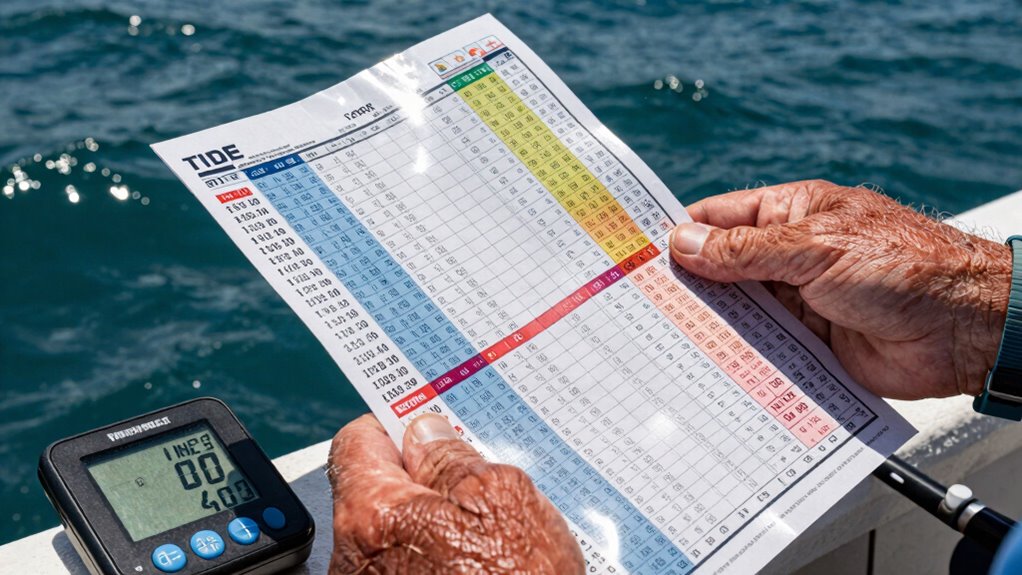
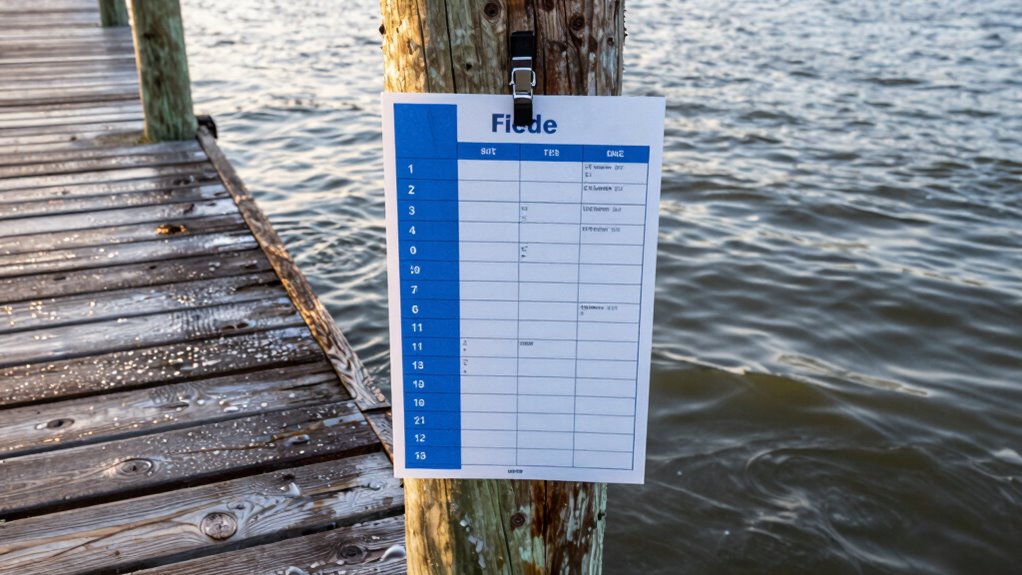
To read tide tables quickly, start by recognizing key symbols that indicate tide types or special conditions. Then, focus on the columns showing the time and height of each tide to get a clear picture of upcoming water levels. With practice, you’ll effortlessly interpret these details to plan your activities more effectively. Additionally, understanding how tide tables are organized can help you identify patterns and anticipate changes in water levels more accurately. Being familiar with support breakfast options available at coastal accommodations can enhance your overall experience when planning water-related activities. Recognizing the tidal cycle can further improve your ability to predict water movements and optimize your schedule.
Spotting Key Symbols
Understanding tide tables quickly starts with recognizing their key symbols. Marine symbols and tide chart icons convey essential information at a glance. To interpret them efficiently, focus on these three main points:
- High and Low Tide Icons: Usually marked with “H” or “L,” these symbols tell you when the water reaches its highest or lowest point.
- Time Indicators: Look for specific times next to symbols, which show when tides occur, helping you plan activities.
- Amplitude Marks: Some tide charts include icons or numbers indicating the height of the tide, vital for understanding water levels.
Mastering these symbols allows you to read tide tables swiftly, ensuring you’re always prepared to adjust on the fly. Recognizing marine symbols and tide chart icons is your quick key to sailing smarter.
Reading Time and Height
Reading tide tables quickly relies on grasping how to interpret the listed times and height indicators. You should focus on height awareness to understand whether the tide is rising or falling, which helps you plan your activities efficiently. Pay attention to the specific times listed; often, they are in a 24-hour format, so convert if needed for clarity. To improve reading speed, familiarize yourself with the table’s layout and common symbols, so you can scan for key information faster. Recognize that elevation numbers indicate water height relative to a baseline, giving you a clear picture of current conditions. With practice, you’ll become more confident in quickly evaluating tide heights and timings, enabling you to adjust your plans on the fly with precision and ease.
Tides Near Me – Free
Get tides near you.
As an affiliate, we earn on qualifying purchases.
As an affiliate, we earn on qualifying purchases.
How to Spot Water Level Changes in Real Time
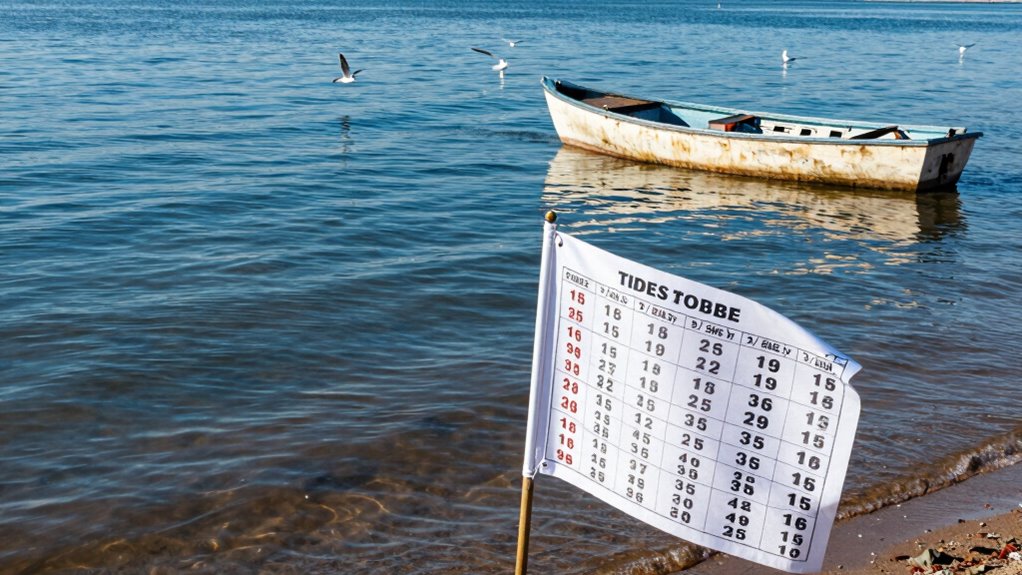
Watching water levels in real time requires paying close attention to changes as they happen. To do this effectively, focus on three key things:
- Use water level indicators, such as gauges or markers, to observe shifts instantly.
- Look for visual cues like ripples, foam lines, or debris movement that signal rising or falling water.
- Notice the speed of water movement—rapid changes often mean sudden weather shifts or tidal influences.
Tools and Tips for Observing Water Conditions on the Spot
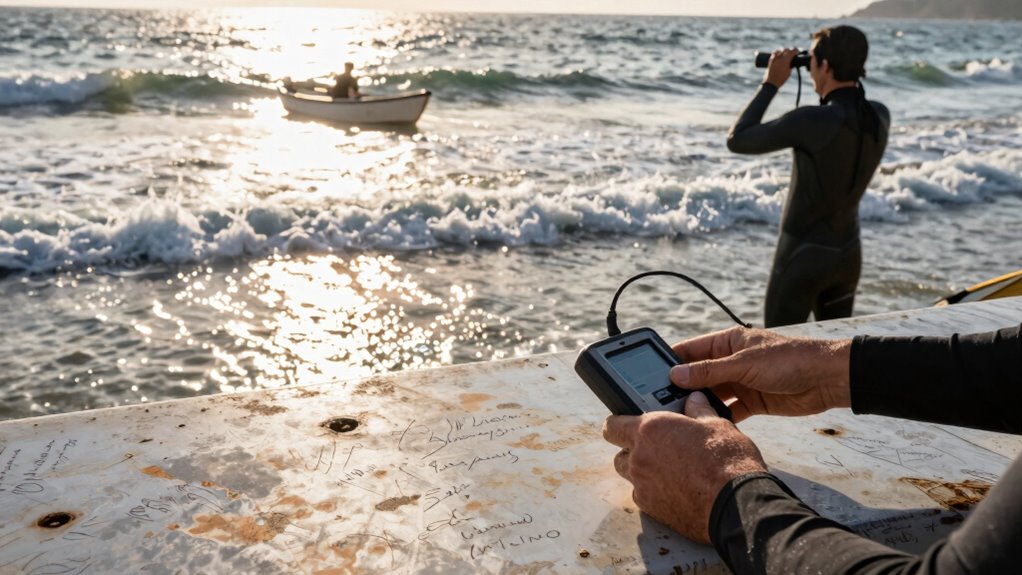
To effectively observe water conditions on the spot, equip yourself with practical tools and follow simple tips for accuracy. Use a reliable water level sensor and ensure it’s properly calibrated; sensor calibration is vital for trustworthy readings. Regularly check and adjust the sensor to maintain tide prediction accuracy, especially if you notice inconsistent data. Bring a calibrated tide gauge or a handheld water level meter for quick comparisons. Pay attention to environmental factors like wind and current, which can affect water levels. Take multiple measurements at different times to confirm trends. Trust your observations, but also cross-reference with tide predictions to refine your on-the-fly adjustments. Accurate tools and attentive observation help you respond effectively to real-time water changes.
How to Adjust Your Plans When Water Levels Surprise You
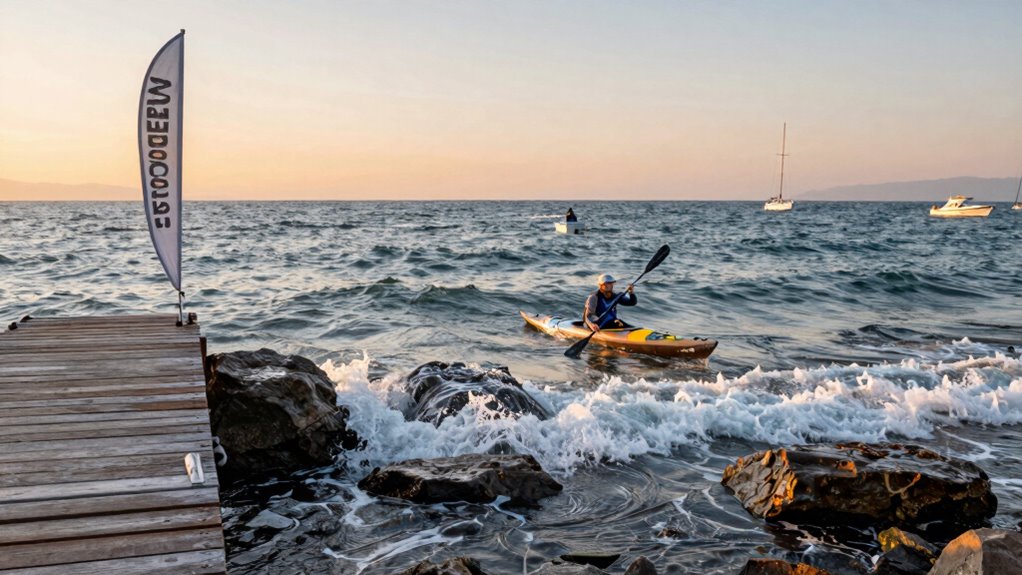
When water levels turn out to be different from what you expected, quick adjustments can save your plans from disruption. Unexpected water changes can impact marine ecology and tidal energy projects, so staying flexible is key. To adapt efficiently:
Quickly adapt to unexpected water level changes to keep your plans on track and ensure safety.
- Assess the new water level quickly, noting how it affects access or safety.
- Recalculate your timing based on real-time observations, not just tide tables.
- Adjust your activities—whether shifting routes, delaying launches, or seeking alternative spots—to stay in sync with current conditions.
When Should You Trust What Your Eyes Are Telling You?
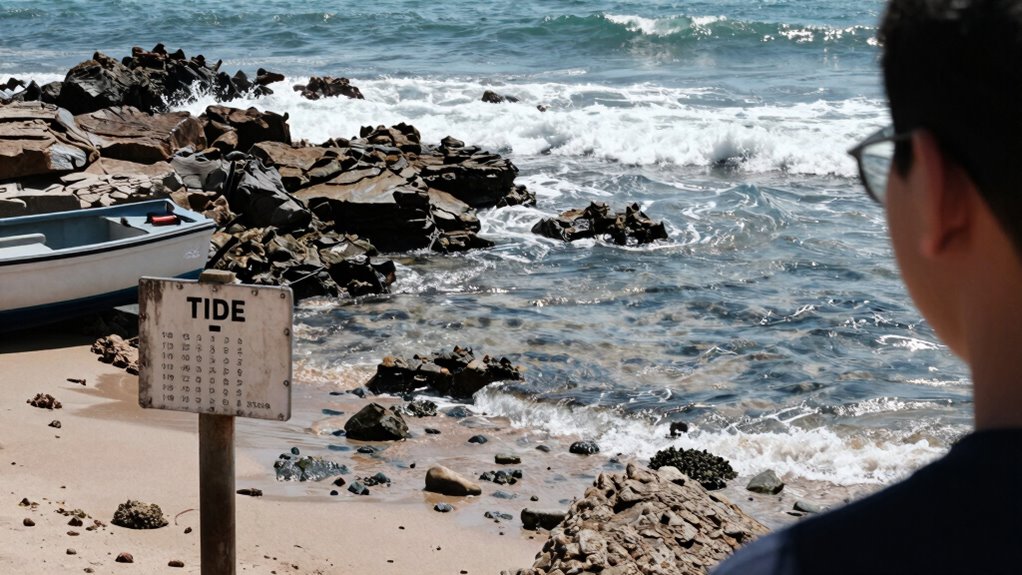
While tide tables provide valuable forecasts, your eyes can often offer the most immediate and accurate information about current water conditions. Observing how the water interacts with the environment reveals real-time details about sediment transport and marine biology activity. If water levels seem higher or lower than predicted, or if sediment shifts unexpectedly, trust what you’re seeing. Changes in water clarity, movement, or the way shoreline features respond can signal deviations in tide or weather effects. These visual cues are especially useful when marine biology indicates unusual activity, suggesting alterations in local conditions. Relying on your observations helps you make better decisions, especially when tide tables lag behind actual shifts. Your eyes are your most reliable tools for immediate, on-the-spot assessment of water conditions.
Common Mistakes to Avoid When Relying Only on Tide Charts
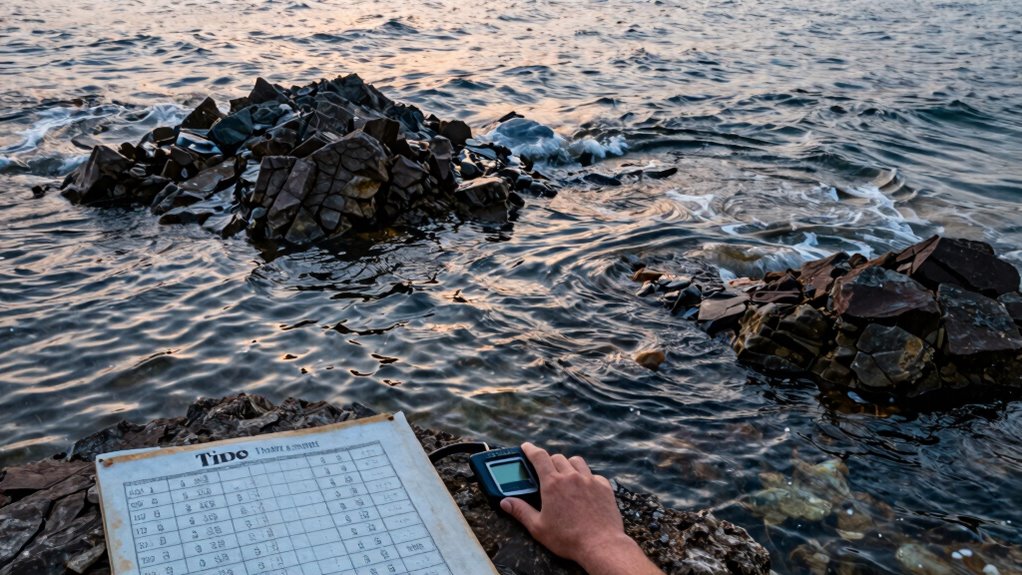
Relying solely on tide charts can lead you astray if you’re not aware of their limitations. One common mistake is tide chart misinterpretation, which happens when you misunderstand the timing or height predictions. Overconfidence in predictions can cause you to ignore local conditions or recent weather changes that affect water levels. To avoid these pitfalls, keep in mind:
Relying only on tide charts can mislead you; always consider local conditions and recent weather changes.
- Trust tide charts as a guide, not gospel—use them alongside real-time observations.
- Don’t assume predictions are exact; always check for updates or anomalies.
- Recognize that tide charts don’t account for weather, wind, or recent water level shifts.
Combining Tide Tables and Water Observation for Safe Water Activities
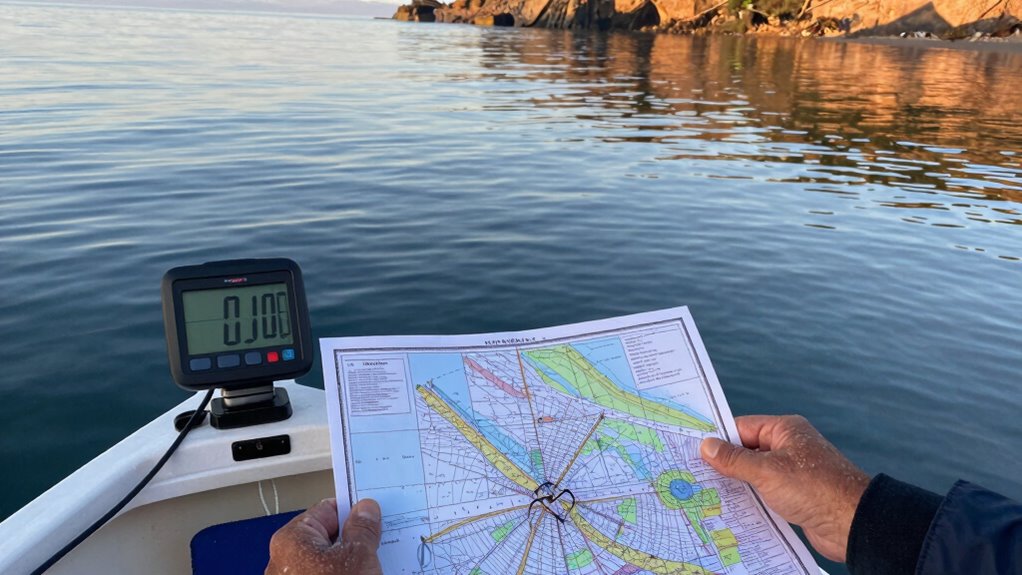
To guarantee safe water activities, it’s essential to combine tide tables with real-time water observations. Watching water levels, currents, and marine ecology cues helps you adapt quickly to changing conditions, especially when tidal energy fluctuates unexpectedly. Use tide tables as a baseline, but always verify with on-site observations. This approach ensures you avoid hazards like strong currents or submerged dangers. Consider this quick reference:
| Water Observation | Action |
|---|---|
| Rising water level | Prepare for incoming tide and stronger currents |
| Falling water level | Check for exposed hazards or shallow areas |
| Murky water | Be cautious of submerged obstacles |
| Strong currents | Reconsider water activity timing |
| Marine activity (birds, fish) | Indicates healthy marine ecology and ideal conditions |
Blending data helps you stay safe and enjoy water activities while respecting tidal energy’s influence.
Frequently Asked Questions
How Accurate Are Tide Tables for Specific Locations?
Tide tables can be fairly accurate but often have some inaccuracies due to local tide variation and shifting weather conditions. You might notice tide table inaccuracies because they don’t account for every local factor influencing water levels. To get a more precise idea, check recent local tide reports and observe the water in real-time. Adjust your expectations accordingly, especially if you’re planning activities like fishing or boating.
Can Weather Events Affect Tide Predictions?
Weather influence can substantially affect tide predictions, causing tidal anomalies that make actual water levels differ from tables. Storms, high winds, and atmospheric pressure changes push water in unexpected ways, so you should stay alert. When weather events occur, adjust your expectations and observe actual water levels closely. This real-time awareness helps you navigate safely, especially during unpredictable conditions where tide tables might not reflect current water behavior.
How Often Should I Update Tide Information Before an Activity?
You should update your tide information at least once a day before your activity to guarantee accuracy. Tide chart reliability can vary due to weather events, so use manual adjustment techniques, like observing real water levels, to fine-tune predictions. Checking updated tide data regularly helps you stay on top of changing conditions, ensuring safer and more enjoyable experiences on the water.
What Equipment Helps Measure Real-Time Water Levels?
You can use satellite buoys and portable sensors to measure real-time water levels accurately. Satellite buoys relay data from ocean buoys to your device, giving you instant updates on water height. Portable sensors are easy to carry and can be placed directly in the water to monitor levels continuously. Both options help you adjust your plans on the fly, ensuring safety and precision during your activities.
Are There Seasonal Variations That Impact Tide Predictions?
Remember, “Forewarned is forearmed.” Seasonal shifts and lunar influence definitely impact tide predictions, causing variations that can surprise you. These factors alter water levels, making tides less predictable based solely on tables. To stay ahead, monitor lunar cycles and seasonal changes, and use real-time water level measurements. Adjust your plans accordingly, because understanding these influences helps you navigate tides more accurately on the fly.
Conclusion
Remember, tide tables are like a map, guiding you through predictable waters, but real water is the unpredictable friend who keeps you on your toes. Always stay alert and trust your eyes, adjusting your plans as needed. By blending tide info with real-time observation, you stay safe and confident—navigating water conditions like a skilled sailor steering through changing seas. Stay sharp, stay flexible, and enjoy your water adventures with confidence.