To improve your boat’s Wi-Fi and cellular signals, focus on antenna placement, aiming for high, unobstructed spots toward signal sources. Keep equipment updated and use directional antennas for focused reception. Reducing interference from electronics and metal objects also helps. Remember, weather and distance from towers play big roles too. If you’re curious about more effective strategies and how to optimize your setup, there’s plenty of useful insights ahead.

Get sports gear delivered free with Prime
- Fast, free delivery on millions of items
- Prime Video, Amazon Music and more included
- Member-only deals all year
Key Takeaways
- Proper antenna placement and orientation toward signal sources significantly enhance booster effectiveness.
- Boosters improve signal strength but cannot overcome severe weather or very distant cell towers.
- Using directional antennas focuses signals for better reception compared to omnidirectional types.
- Minimizing obstructions and interference from electronics or metal structures boosts overall signal quality.
- Compatibility with vessel’s devices and correct installation are essential for optimal booster performance.
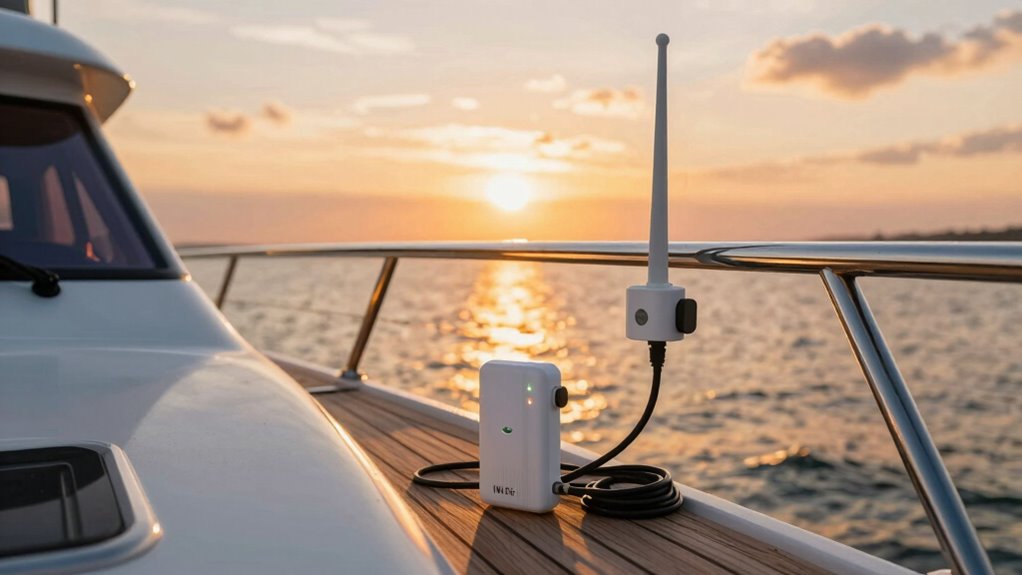
marine Wi-Fi booster with directional antenna
As an affiliate, we earn on qualifying purchases.
As an affiliate, we earn on qualifying purchases.
What Really Affects Signal Quality at Sea?
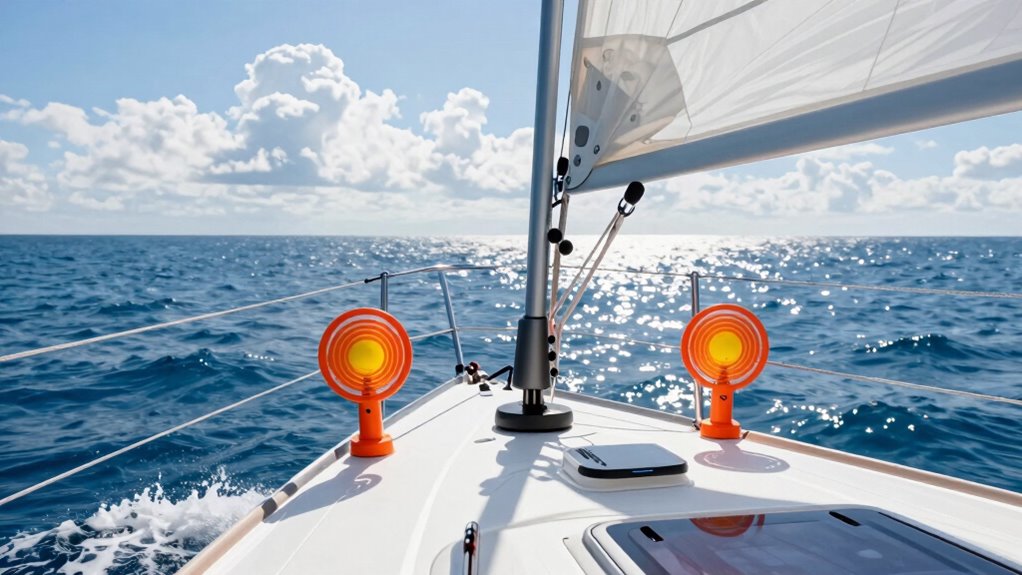
Signal quality at sea is primarily influenced by the distance between your boat and cellular towers or Wi-Fi sources. When you’re far from shore, signals weaken, making marine weather conditions even more critical. Storms, heavy rain, or fog can interfere with signal strength, reducing your ability to connect reliably. Navigation charts can help you identify areas with better coverage or known signal gaps, so you can plan your route accordingly. As you move through different regions, the signal fluctuates based on proximity to signal sources and environmental factors. Understanding these elements helps you anticipate connectivity issues and take proactive steps, like adjusting your position or using signal boosters, to maintain better communication while at sea. Additionally, wireless technology advancements, such as cell boosters and Wi-Fi extenders, can significantly improve your signal strength in challenging conditions. Recognizing the importance of signal optimization techniques can make a substantial difference in maintaining reliable connectivity on your vessel, especially in areas with challenging coverage gaps. Being aware of environmental interference and how it impacts signal quality can help you develop effective strategies to stay connected.
As an affiliate, we earn on qualifying purchases.
Common Myths About Marine Wi-Fi and Cell Boosters Debunked
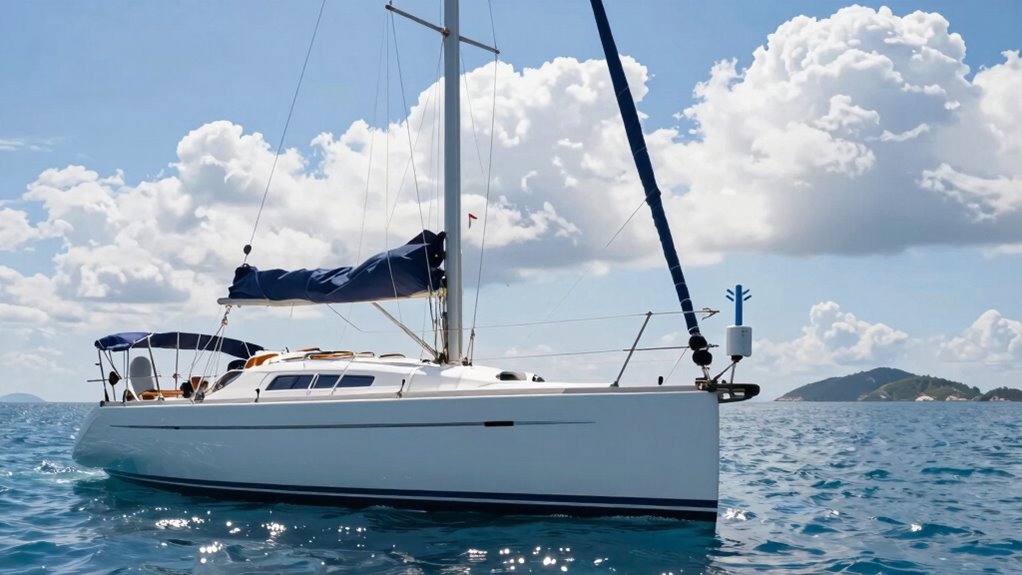
Many people believe that installing a marine Wi-Fi or cell booster will instantly fix all connectivity problems at sea, but this isn’t always true. Boosters can improve signal strength, but they don’t magically eliminate issues caused by poor marine weather or distant cell towers. Weather conditions like storms or heavy rain can disrupt signals regardless of equipment quality. Additionally, relying solely on a booster won’t help if your navigation charts or marine weather updates are outdated or incomplete. Signal improvements depend on factors like tower proximity and antenna placement, not just hardware. Understanding these limitations prevents false expectations and helps you make smarter choices about enhancing connectivity. Remember, a booster is part of a broader solution, not a cure-all for every marine communication challenge. Proper antenna placement significantly influences the effectiveness of signal boosters. External factors like marine weather can interfere with signal transmission even when equipment is optimal. Moreover, signal quality is also affected by the quality of your device’s receiver and the network infrastructure, which are beyond the booster’s control. For example, understanding cell tower locations can help you optimize your antenna setup for better reception. Additionally, being aware of network coverage maps can assist in planning your routes for better connection points.
As an affiliate, we earn on qualifying purchases.
How Marine Wi-Fi Systems and Cell Boosters Work
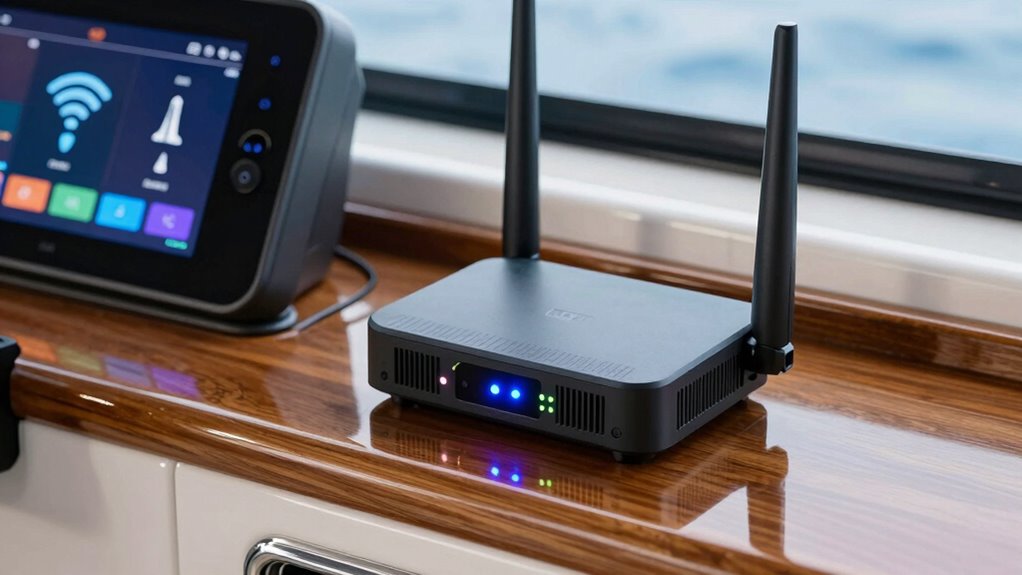
Understanding how marine Wi-Fi systems and cell boosters work helps you get the best signal on the water. They use different transmission methods, and device compatibility plays a big role in performance. Proper installation and placement are key to maximizing their effectiveness. Additionally, selecting the right equipment involves considering digital concepts and innovative content formats to ensure reliable connectivity. Recognizing how communication signals are transmitted can further optimize your setup and improve overall performance. Being aware of signal propagation principles can help you position your devices more effectively for optimal reception. Moreover, understanding antenna orientation can significantly enhance signal strength and stability in various marine environments. Knowing how interference sources affect signal quality allows for better troubleshooting and improved connectivity.
Signal Transmission Methods
Marine Wi-Fi systems and cell boosters transmit data through radio frequency signals that travel wirelessly between your boat and external networks. The effectiveness of this transmission depends on antenna types, which determine signal strength and coverage area. Some antennas are omnidirectional, spreading signals in all directions, while directional antennas focus signals toward specific sources, improving reception. Bandwidth allocation also plays a vital role, as it controls how much data can be transmitted at once, affecting speed and reliability. Efficient signal transmission relies on choosing the right antenna type for your setup and managing bandwidth to guarantee smooth data flow. Proper antenna placement and orientation are crucial for maximizing signal quality in marine environments. These methods help maximize connectivity, especially in challenging marine environments where signal obstacles and distance can weaken signals. Selecting the appropriate antenna type and ensuring optimal placement are essential for reliable connectivity in marine settings.
Device Compatibility Factors
To guarantee your marine Wi-Fi system or cell booster functions properly, it’s essential to consider device compatibility. Not all devices work seamlessly with certain boosters or Wi-Fi setups, due to varying hardware limitations. Check if your device supports the required frequency bands and network standards, such as LTE or 5G. Some older smartphones or tablets may lack the hardware necessary to connect to newer networks, limiting performance. Additionally, ensure your device’s antenna capabilities align with the booster’s output. If your device isn’t compatible, you won’t experience the full benefits of improved signal strength. Understanding hardware limitations helps you select compatible equipment, avoiding frustration and ensuring your marine communication system functions efficiently. Compatibility is key to maximizing your investment and staying connected on the water. device compatibility is a critical factor in optimizing signal improvements with marine Wi-Fi and cell boosters. Properly assessing your device’s network compatibility can prevent connectivity issues and enhance overall performance. Being aware of hardware limitations also allows you to choose the right equipment for your specific devices.
Installation and Placement
Proper installation and strategic placement are crucial for your marine Wi-Fi system or cell booster to perform at its best. Focus on antenna placement to guarantee ideal signal reception; placing antennas high and unobstructed minimizes interference. Keep the device orientation correct—point antennas toward the signal source for maximum efficiency. Avoid clutter or metal objects that can block or reflect signals, reducing performance. Secure all connections tightly to prevent disruptions caused by movement or vibrations. Regularly check and adjust antenna angles if you notice a drop in signal strength. Remember, the way you position your equipment directly impacts its ability to boost signals effectively. Thoughtful placement and proper device orientation help you get the most from your marine connectivity system. Additionally, understanding how marine Wi-Fi systems and cell boosters work can guide you in optimizing their setup for better connectivity.
external boat antenna for cellular signals
As an affiliate, we earn on qualifying purchases.
As an affiliate, we earn on qualifying purchases.
Tips for Choosing the Right Marine Internet Equipment
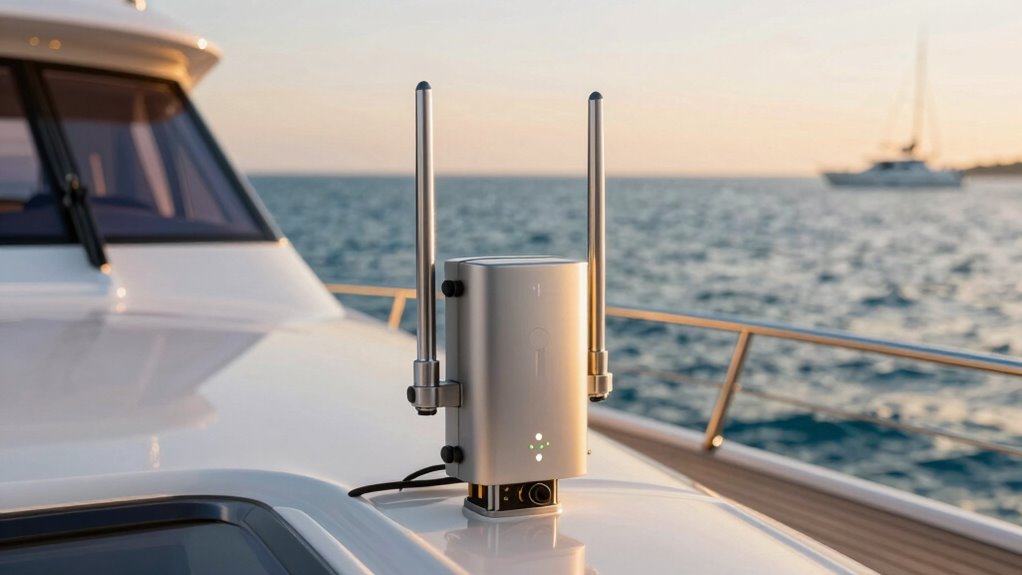
When selecting marine internet equipment, you need to consider if it’s compatible with your vessel’s systems. Make sure it offers the signal range and strength you require for your typical routes and activities. Choosing the right gear ensures reliable connectivity and avoids unnecessary frustration on the water. Additionally, selecting equipment that supports work-life harmony can help you maintain a healthy balance between your digital connectivity and personal well-being.
Compatibility With Vessel
Ensuring your marine internet equipment is compatible with your vessel is essential for reliable connectivity on the water. Start by checking antenna compatibility, making sure the antennas you choose fit your vessel’s mounting options and are designed for marine environments. Device interoperability is equally important; confirm that your modem, router, or booster can seamlessly connect with your existing devices and networks. Different vessels have unique configurations, so verify compatibility with your boat’s power supply and available space. Compatibility issues can lead to poor performance or equipment failure, so review manufacturer specifications carefully. Additionally, understanding marine environment considerations can help you select equipment that withstands harsh conditions. Being aware of indoor air quality factors can also influence the longevity and performance of your equipment in enclosed spaces on your vessel. Considering marine durability in your selection process ensures your equipment remains functional despite exposure to saltwater, humidity, and vibration. Paying attention to equipment installation requirements can further prevent potential issues during setup. Furthermore, choosing equipment with proven reliability in marine conditions can provide added peace of mind during long voyages. By choosing equipment that aligns with your vessel’s setup, you ensure a smoother installation process and more reliable signal performance while on the water.
Signal Range and Strength
Choosing the right marine internet equipment depends heavily on signal range and strength, which directly impact your connectivity quality on the water. Proper antenna positioning is essential; place antennas where they have the clearest line of sight and minimal obstruction. This positioning is similar to how selecting the proper battery inverter generator capacity can ensure your power needs are met efficiently. Be aware of interference sources like other electronics, metal structures, or nearby vessels, which can weaken signals and reduce range. Selecting equipment with strong, adjustable antennas can improve performance amid these challenges. Additionally, consider the power of the booster or router—stronger devices can extend your signal reach, but only if antenna positioning is refined and interference sources are minimized. Optimizing signal interference sources can significantly enhance your connection stability and overall performance. Achieving ideal signal range and strength ensures reliable, high-quality internet onboard.
How to Improve Your Signal Without Spending a Fortune
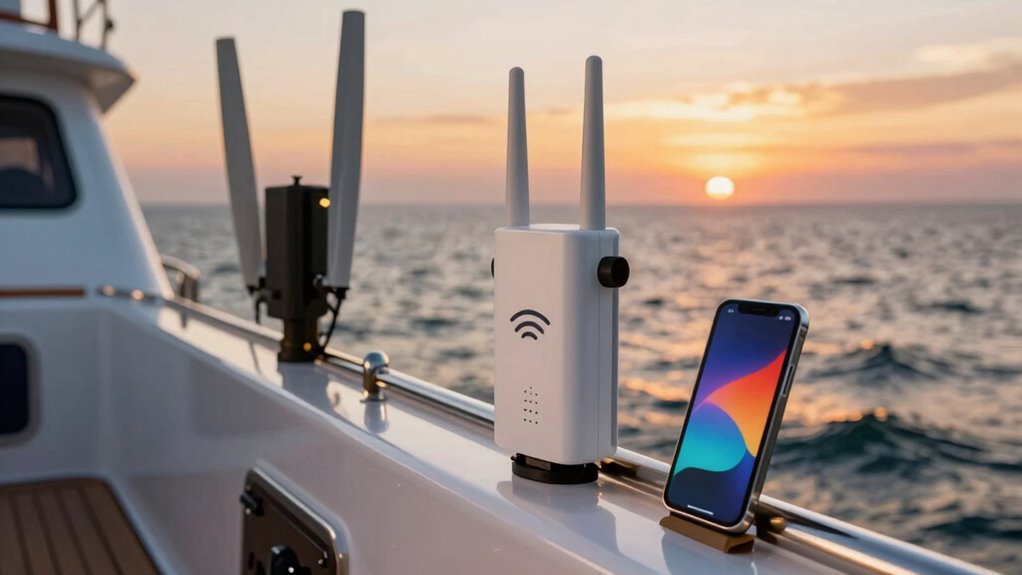
If your boat’s Wi-Fi and cell signals are weak, there are simple, budget-friendly ways to boost them without breaking the bank. Start by checking your boat electronics setup; updating firmware or repositioning antennas can markedly improve signal strength. Using free or low-cost apps that provide marine weather updates can help you identify areas with better coverage, so you can plan routes accordingly. Keep your devices close to windows or high points on the boat to maximize reception. Avoid obstructions and interference from other electronics. Sometimes, a basic external antenna or signal booster can be affordable and effective. These small tweaks don’t require big investments but can make a noticeable difference in keeping you connected on the water.
When Is Satellite Internet a Better Option?
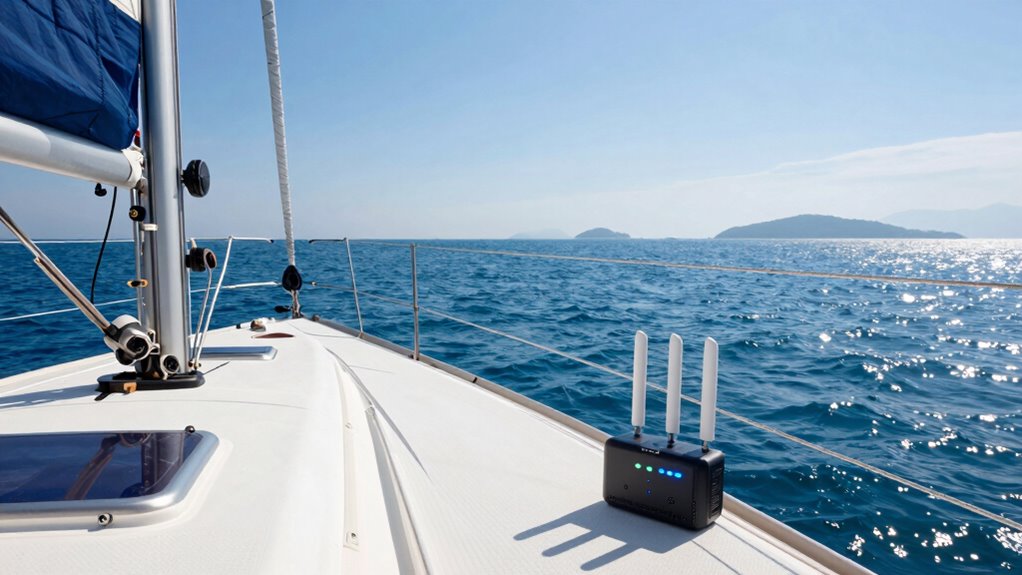
Satellite internet becomes the best choice when your boat operates in remote areas where cellular signals are weak or nonexistent. In these locations, cellular boosters won’t provide reliable connectivity, and satellite internet can fill the gap. However, keep in mind satellite latency, which can cause delays in communication and streaming, especially for real-time activities. Additionally, many satellite plans come with data caps, limiting how much you can use before facing extra charges or throttling. If you need consistent connectivity for navigation, emails, or essential communication in off-grid locations, satellite internet offers a viable solution. Just be prepared for potential delays and usage restrictions, and choose a plan that fits your data needs to avoid surprises while on the water.
Practical Solutions for Reliable Marine Connectivity
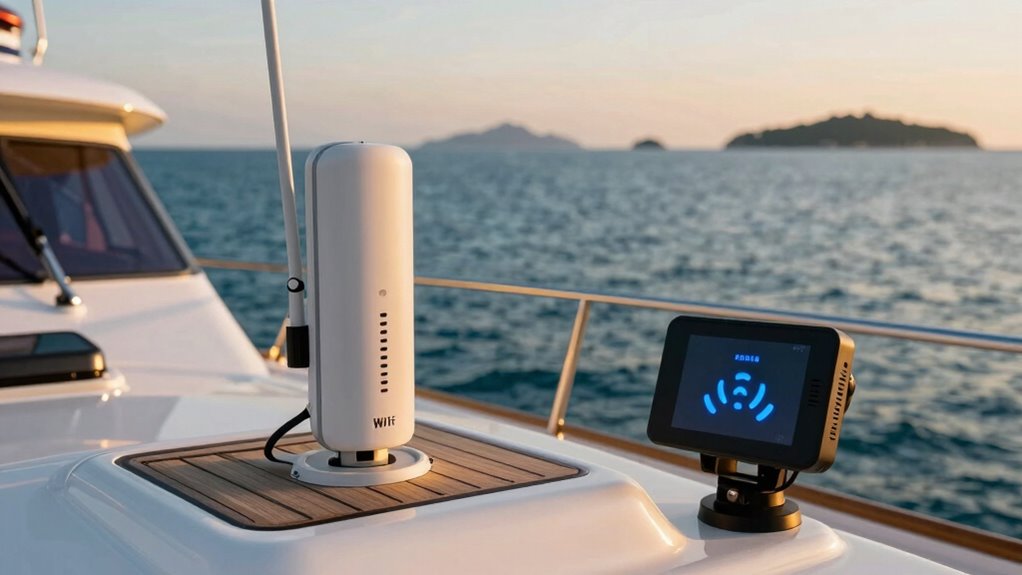
To guarantee reliable marine connectivity, you need practical solutions that adapt to the unique challenges of being on the water. Investing in a high-quality marine Wi-Fi booster or cellular signal amplifier can substantially improve your connection, especially in remote areas. These tools help maintain steady communication essential for marine safety, allowing you to respond quickly to emergencies. Combining signal boosters with a satellite or cellular data plan ensures better coverage and reduces dead zones. Additionally, integrating weather forecasting tools into your onboard systems keeps you informed about changing conditions, helping you plan routes and avoid storms. Overall, these solutions enhance safety and connectivity, making your time on the water safer, more enjoyable, and better prepared for any weather or emergency situation.
Frequently Asked Questions
Can Boat Wi-Fi Work Effectively in Remote Areas With No Cell Coverage?
Yes, boat Wi-Fi can work effectively in remote areas with no cell coverage if you use satellite internet. Satellite internet provides a reliable connection where cellular signals fail, ensuring you stay connected. Additionally, having signal redundancy through multiple communication options improves your chances of maintaining a stable connection, even in the most isolated locations. This setup keeps you online, no matter how far from shore or cell towers you venture.
Do Larger Antennas Always Mean Better Signal Reception on Boats?
Larger antennas don’t always guarantee better signal reception. In fact, research shows that antenna size increases signal strength only up to a point, after which gains plateau. Your boat’s signal depends more on antenna quality, placement, and the frequency used. So, instead of just opting for bigger antennas, focus on choosing high-quality, properly installed antennas that match your needs, ensuring reliable connectivity regardless of size.
How Do Weather Conditions Impact Marine Internet Performance?
Weather conditions can markedly impact your marine internet performance. Heavy rain, storms, or fog can cause signal interference, especially with satellite connectivity, leading to slower speeds or dropped connections. Wind and rough seas might also shake antennas, reducing signal strength. To stay connected, consider weather-resistant equipment and plan for potential disruptions during bad weather. Staying aware of weather forecasts helps you anticipate and manage these connectivity challenges effectively.
Are There Legal Restrictions on Boosting Cell Signals Offshore?
You should know that boosting cell signals offshore can be subject to cell tower regulations and offshore signal laws. While personal signal boosters are generally legal on private vessels, commercial operations may face restrictions. Always check local regulations before installing or using signal boosters, as unauthorized use could lead to fines or service disruptions. Staying informed guarantees you enhance your signal legally and safely while offshore.
What Maintenance Is Required for Marine Wi-Fi and Booster Systems?
You need to regularly inspect and clean your marine Wi-Fi and booster antennas to guarantee peak performance. Calibrate the antennas periodically to maintain signal strength, especially after system upgrades or repairs. Keep firmware updated and check connections for corrosion. Upgrading your system components as needed can improve reliability. By performing these maintenance tasks, you’ll keep your connectivity strong and avoid unexpected disruptions while at sea.
Conclusion
Ultimately, improving your marine signal isn’t about chasing the latest gadgets or believing every myth out there. Instead, focus on understanding what truly influences your connection and choosing the right solutions for your needs. Are you willing to settle for unreliable internet, or will you invest in practical, effective options that keep you connected when it matters most? Remember, smart choices make all the difference on the water.
Fall Picks
fall essentials
As an affiliate, we earn on qualifying purchases.