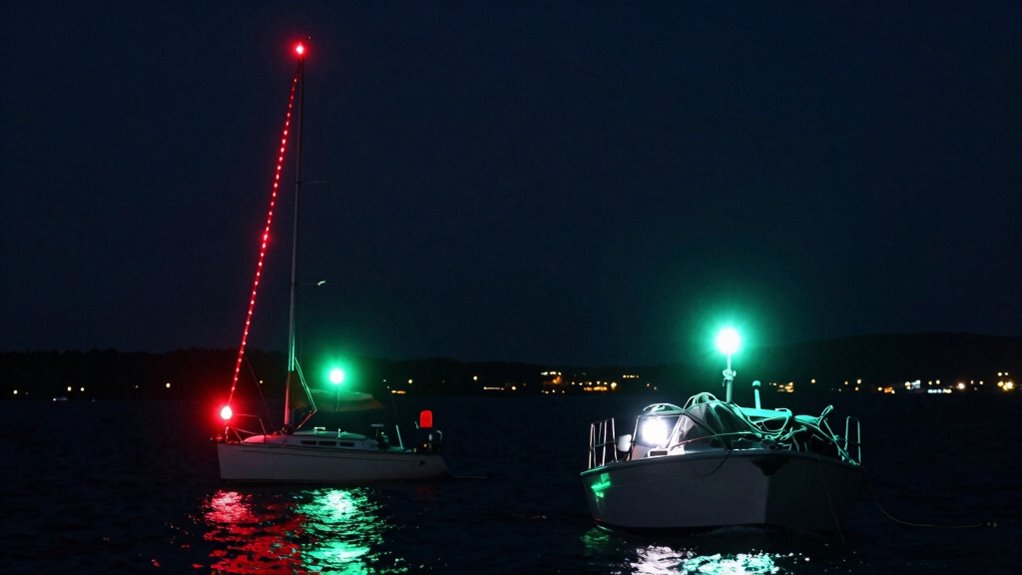

The most common navigation light violations happen when lights aren’t positioned correctly, left off during critical times, or aren’t maintained properly. You might overlook regular inspections, forget to turn them on at sunset, or neglect replacing damaged bulbs, putting you at risk of violations. Ensuring proper placement, operating lights on time, and keeping them in good condition are simple steps to stay compliant. Keep going to learn how to fix these issues and stay safe on the water.
Key Takeaways
- Regularly inspect and maintain navigation lights to prevent burnout, damage, and obstructions that hinder visibility.
- Ensure lights are correctly positioned at proper heights and angles to maximize their visibility in all conditions.
- Activate navigation lights before sunset and in poor visibility, and turn them off when conditions improve to avoid violations.
- Check power sources like batteries for corrosion, proper charge, and secure connections to ensure consistent operation.
- Stay updated on regulations, conduct pre-voyage checks, and communicate effectively to prevent violations and enhance safety.

Seaperk LED Navigation Light, Red and Green Marine Lights for Boats, Bow Lights for Night Fishing and Boating
【NO DRILLING INSTALL】 The strong Double-sided adhesive on the back of the strip lights and flexible body design…
As an affiliate, we earn on qualifying purchases.
As an affiliate, we earn on qualifying purchases.
Why Navigation Lights Are Essential for Safe Boating
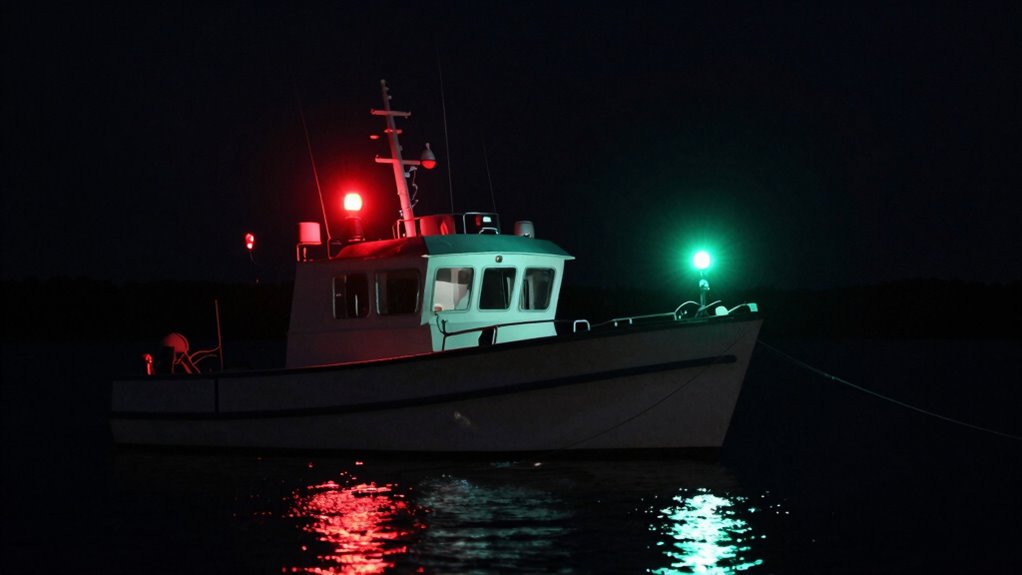
Navigation lights are essential because they help you see and be seen by other boaters, especially at night or in poor visibility conditions. They play a critical role in maritime signaling, allowing you to communicate your vessel’s size, type, and direction to others. Proper navigation lights ensure your vessel is identifiable from a distance, reducing the risk of collisions. By clearly displaying the correct lights, you help others determine your vessel’s course and status, enhancing safety for everyone on the water. These lights also support vessel identification, making it easier for mariners and authorities to recognize and respond to your vessel if needed. Without functioning navigation lights, your vessel becomes less visible, increasing the chances of accidents and misunderstandings in the busy, often unpredictable marine environment. Ensuring your navigation lights are compliant helps promote safe boating practices and reduces liability in case of incidents. Additionally, maintaining proper lights contributes to compliance with maritime regulations, which is essential for legal and safety reasons.

Xyanmc 31mm Marine Led Festoon Bulb Replacement 1.5W 200LM Boat Navigation Lights, Super Bright DC12-24V 6500k Daylight for Marine Navigation Boat Bow Stern Kayak Pontoon Mast Masthead Light 2pack
New upgrade: Brand new design, compared with the models on the market, our 31mm marine LED festoon bulb…
As an affiliate, we earn on qualifying purchases.
As an affiliate, we earn on qualifying purchases.
How to Use Navigation Lights Correctly and Consistently
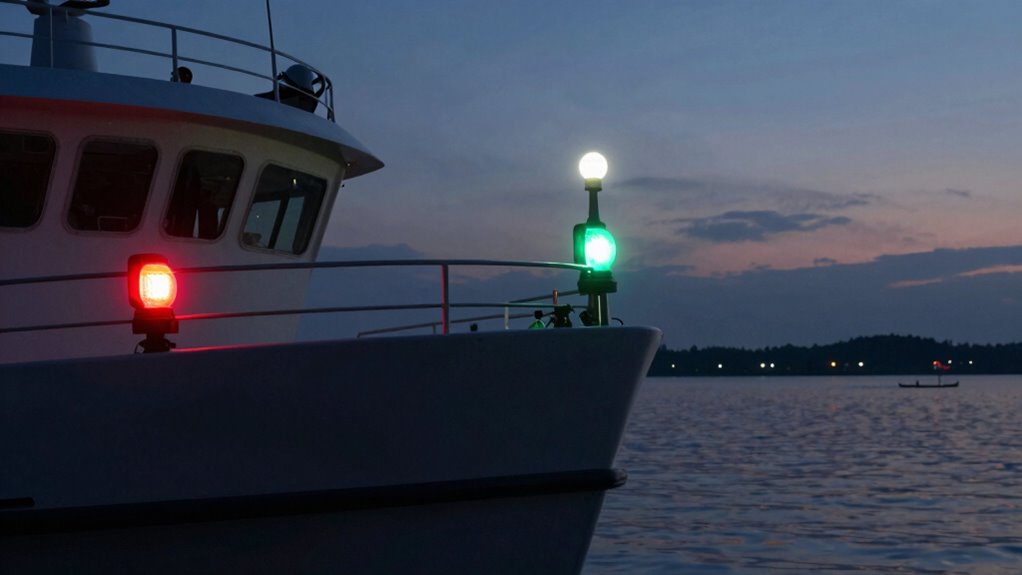
To guarantee your vessel is visible and correctly communicates its intentions, you must use navigation lights consistently and according to maritime rules. Proper color coding is essential—you should know which lights indicate your vessel’s type and status, such as red on the port side and green on the starboard. Light positioning is equally important; ensure lights are placed where they can be seen clearly, without obstruction, and at the correct heights. Always activate your navigation lights before sunset and keep them on until sunrise or in poor visibility conditions. Regularly check that all lights function properly and replace any burnt-out bulbs immediately. Ensuring proper light placement and visibility helps prevent accidents and maintains safe navigation. Additionally, understanding how navigation light performance can be optimized ensures your system operates efficiently and reliably in all conditions. Proper maintenance and lighting system checks contribute to the overall effectiveness of your navigation lights and safety at sea. Maintaining a consistent lighting schedule ensures compliance with maritime regulations and enhances vessel safety.

Partsam 3" Waterproof Boat Marine White LED Lights, Courtesy Light, Transom Stern Cabin Lighting for Pontoon Kayak Sailboat, Surface Mount 12V (Pack of 2)
3 inch Diameter; 12 V DC; 6-2835-SMD; Mount directly to a surface and stand out about 1/2";Come with…
As an affiliate, we earn on qualifying purchases.
As an affiliate, we earn on qualifying purchases.
Common Light Placement Mistakes and How to Fix Them
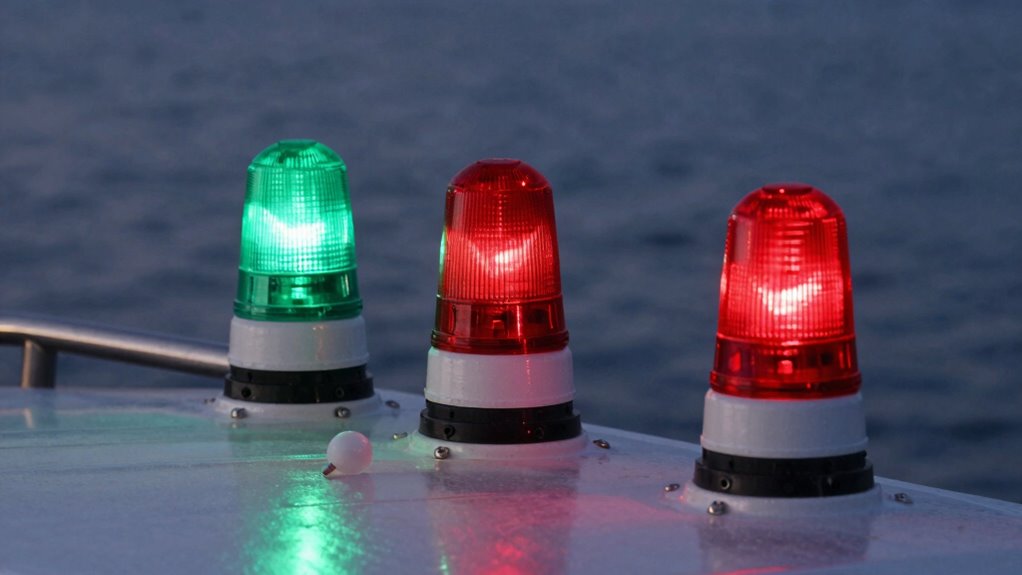
One common mistake boaters make is placing navigation lights in spots where they can’t be easily seen or are easily obstructed. Proper light placement is vital for visibility and compliance, so avoid fixture positioning that puts lights behind masts, rigging, or other obstructions. Make certain your navigation lights are mounted at the correct heights and angles, following regulatory guidelines. Misplaced lights can lead to misinterpretation by other vessels or violations during inspections. To fix this, reposition fixtures so they’re unobstructed and clearly visible from all necessary angles. Regularly check that lights are mounted securely and aligned correctly. Proper fixture positioning not only keeps you compliant but also enhances safety by ensuring your vessel’s signals are visible in all conditions.

AUTODECO Boat Wash Cleaning Kit with Wet Dry Mop Collapsible Bucket Boat Scrubbing Brush Glove Boat Scuff Sponge Microfiber Towel Complete Interior Exterior Fiberglass Boat Hull Cleaning Set for Boat
Boat Cleaning Wash Kit: 1 Wet & Dry mop with extending handle, 1 scrub pad, 1 collapsible bucket(3…
As an affiliate, we earn on qualifying purchases.
As an affiliate, we earn on qualifying purchases.
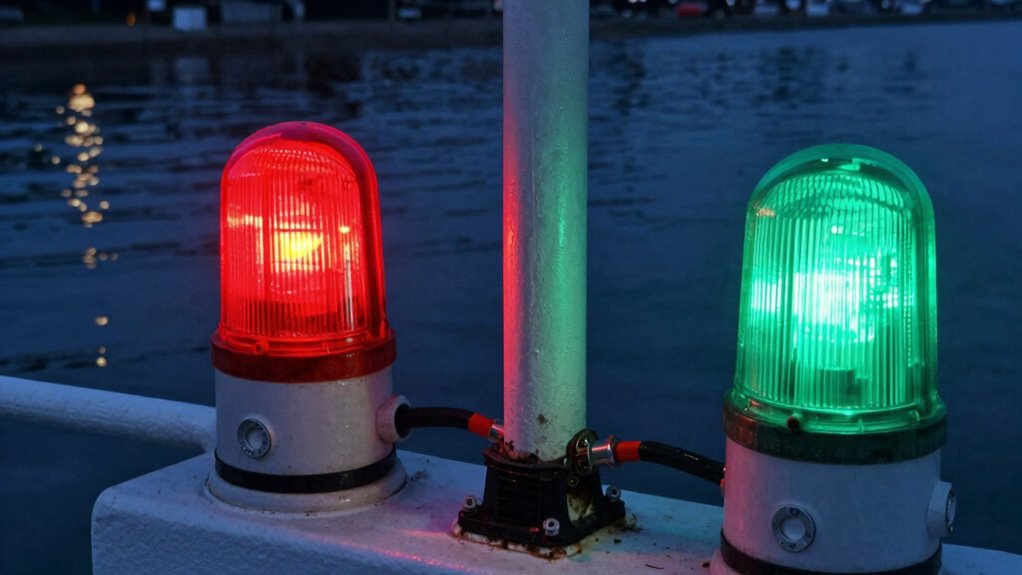
To guarantee your navigation lights stay bright and reliable, you need to regularly check your power sources and batteries. Proper maintenance can prevent unexpected failures and improve visibility in low-light conditions. Let’s explore simple tips to keep your lights functioning at their best. Incorporating Power management techniques can also help in maintaining an even distribution of light, especially in natural settings. Additionally, understanding battery longevity and how environmental factors affect it can further enhance your light’s performance and safety. Regularly inspecting your lighting system and keeping it clean can also contribute to optimal operation and safety on the water. Being aware of power consumption is essential to prevent draining your batteries prematurely and ensuring consistent illumination.
Power Source Checks
Have you checked that your navigation lights are receiving reliable power? Ensuring a steady power source is vital for visibility and safety. Start with a thorough battery check to confirm your batteries are charged and in good condition. Sometimes, weak or dead batteries cause flickering or complete loss of lights, leading to violations. Use the table below to verify your power setup:
| Power Source | Common Issue |
|---|---|
| Marine batteries | Low charge, corrosion |
| Alternator or generator | Not charging properly |
| Wiring connections | Loose or damaged wiring |
Regularly inspect these components to prevent outages. Proper maintenance keeps your navigation lights functioning reliably and helps you avoid violations. Additionally, power source maintenance is essential for ensuring continuous operation and compliance. Incorporating regular inspections can help identify issues early before they result in violations or safety concerns. Staying informed about electrical system checks can further enhance your safety and adherence to navigation rules.
Battery Maintenance Tips
Regularly inspecting and maintaining your boat’s batteries guarantees your navigation lights stay bright and reliable. To guarantee ideal battery health, follow proper charging protocols and check connections regularly. Here are four key tips:
- Keep batteries clean and free of corrosion to maintain good contact.
- Regularly test voltage levels to spot potential issues early.
- Follow manufacturer-recommended charging protocols to prevent overcharging or undercharging.
- Store batteries in a cool, dry place when not in use to prolong their lifespan.
- Understand the importance of proper battery maintenance practices to ensure consistent performance of your navigation lights. Additionally, employing preventive maintenance techniques can help identify issues before they lead to failure. Incorporating regular inspections into your routine can further enhance battery longevity and reliability. Adopting a battery monitoring system can provide real-time insights into battery health and performance. Maintaining optimal battery performance is essential for safe and effective navigation.
Visibility Enhancement
Ensuring your navigation lights are visible in all conditions depends on more than just maintaining good batteries; it also requires paying attention to their power source and overall visibility. To improve visual clarity, regularly clean lenses and ensure they’re free of dirt and salt buildup. Check that the lights provide strong, consistent illumination, especially during low-light or foggy conditions. Enhancing color contrast is vital—make sure your lights display clear, distinct colors that stand out against the surroundings. Properly functioning power sources prevent dim or flickering lights, which can lead to violations. Keep your lights properly maintained and positioned for maximum visibility. Additionally, inspecting the lighting system components regularly can help identify potential issues before they cause failure. Regular maintenance checks can extend the lifespan of your navigation lights and ensure compliance with regulations. Ensuring your power sources are reliable and well-maintained is crucial for consistent operation, especially in adverse conditions. Incorporating proper installation techniques can further improve overall visibility and reduce the likelihood of violations. Doing so ensures other vessels can easily identify your navigation signals, reducing the risk of accidents and ensuring compliance with regulations.
When and How to Turn On Your Navigation Lights Properly

Knowing exactly when to turn on your navigation lights guarantees you’re visible to others and compliant with regulations. You should activate them at sunset, during poor visibility, or when entering restricted areas. Make sure you use the proper lighting techniques to avoid blinding others and to stay safe on the water.
When to Activate Lights
You should activate your navigation lights as soon as visibility begins to diminish, such as at dusk, dawn, or during foggy conditions. Proper light activation is essential for marine signaling and safety. Delaying activation can lead to violations and increase collision risks. To ensure correct timing:
- Turn on your navigation lights before darkness falls or fog appears.
- Use your boat’s light controls to activate all required lights simultaneously.
- Confirm that all lights are visible and functioning properly.
- Switch lights off only when visibility improves to clear conditions.
Timely activation ensures other vessels see you clearly, preventing accidents and violations. Remember, proper light activation is a fundamental part of safe navigation and marine signaling. Always stay alert to changing conditions to activate lights at the right moment.
Proper Lighting Techniques
To turn on your navigation lights properly, start by evaluating current visibility conditions and act promptly to activate all required lights before darkness or fog set in. Use marine signaling principles to ensure your lights are visible from a safe distance. Follow proper light color coding: red on the port side, green on the starboard side, and white for stern or masthead lights. Turn on lights at the appropriate times, such as at sunset or when visibility diminishes. Make sure your navigation lights are functioning correctly and are clean and unobstructed. Proper lighting techniques help other vessels interpret your vessel’s position and movement accurately, reducing the risk of collisions. Consistent, correct use of marine signaling and light color coding keeps everyone safer on the water.
Choosing the Right Light Intensity for Your Vessel
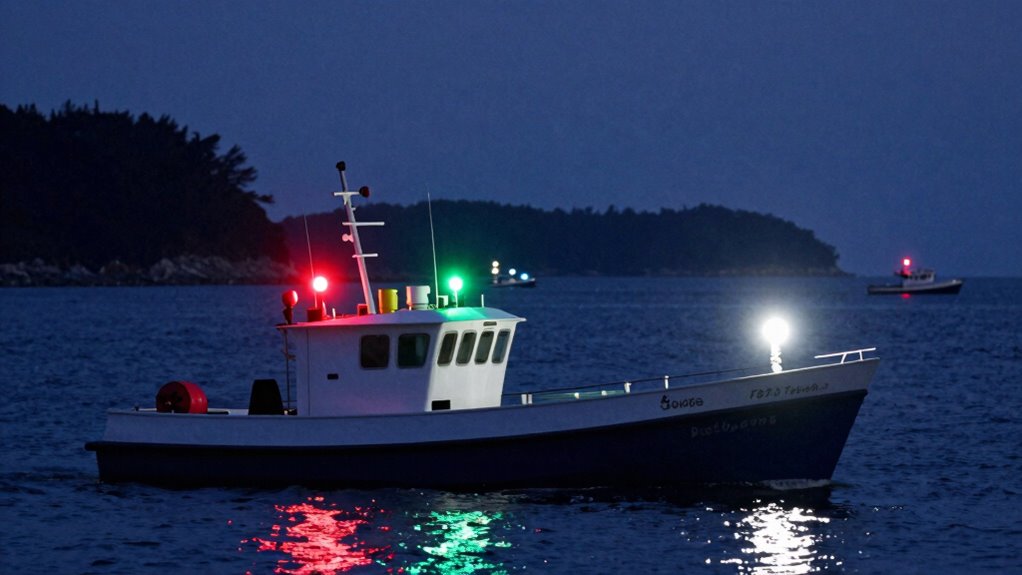
Selecting the appropriate light intensity for your vessel is crucial to guarantee visibility without causing glare or confusion for nearby boats. Proper light intensity selection ensures other vessels can see your navigation lights clearly, especially in various weather conditions. To achieve this, focus on accurate brightness calibration based on your vessel’s size and location. Here are key points to consider:
- Match light intensity to vessel size for optimal visibility.
- Adjust brightness based on ambient lighting conditions.
- Use calibrated light sources to prevent over-illumination.
- Regularly verify that your lights meet regulation standards.
How to Inspect and Maintain Your Navigation Lights for Safety
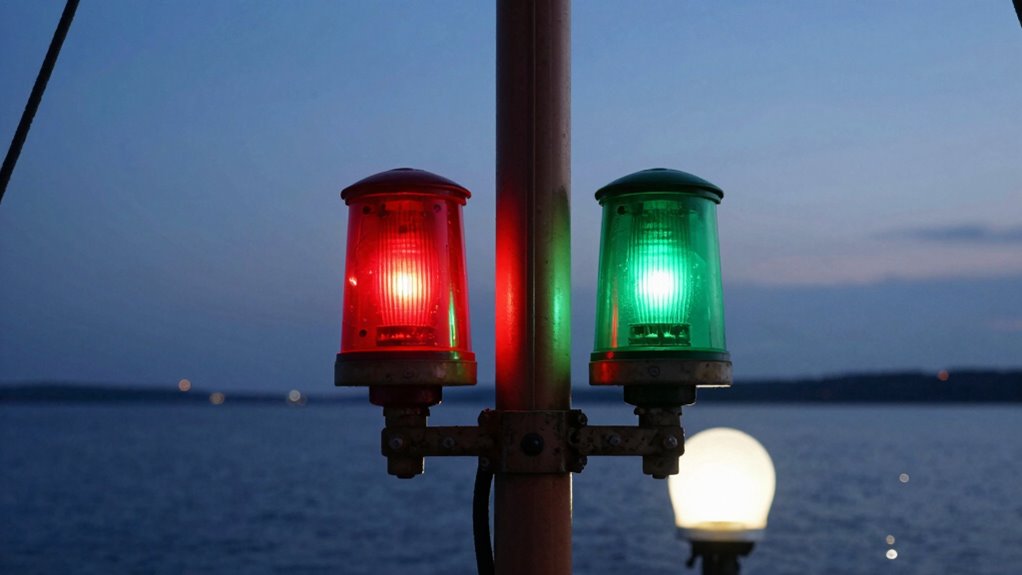
Regularly inspecting and maintaining your navigation lights is essential to guarantee they function correctly and keep your vessel compliant with safety standards. Start by conducting a thorough light bulb inspection to ensure all bulbs are working and replace any that are burnt out or dim. Next, clean the lenses to remove dirt, salt, and grime that can obscure the light and reduce visibility. Use a soft cloth and mild soap to avoid scratching the lens surface. Check that all fixtures are securely mounted and free of corrosion or damage. Regular maintenance prevents failure during critical moments and ensures your navigation lights are visible to other vessels. Keeping these components in top condition helps you navigate safely and avoid violations related to malfunctioning lights.
Rules for Navigation Lights in Different Water Zones and Conditions
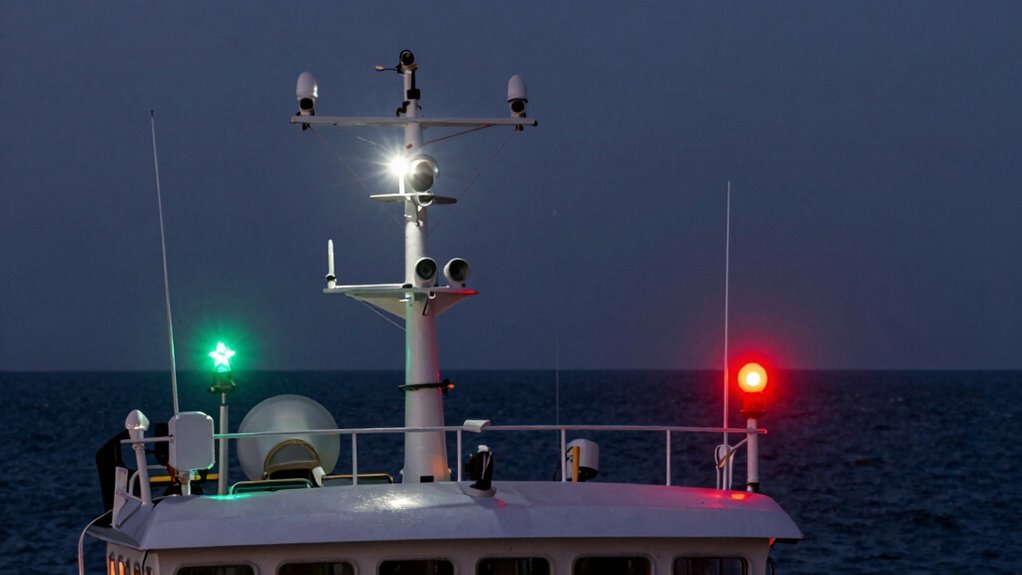
Understanding the lighting requirements for different water zones guarantees your vessel stays compliant and visible. You’ll need to know which lights are necessary during various navigational conditions and in specific zones. Staying informed helps you avoid violations and navigate safely at all times.
Lighting Requirements by Zone
Have you ever wondered how the lighting requirements for navigation lights change depending on where you are? Marine signaling and lighting regulations vary by zone to guarantee safety. Different water zones, such as inland, harbor, or international waters, have specific rules. Here’s what you need to remember:
- Inland waters often require less intense lighting but still need clear signals.
- International waters demand strict compliance with global standards.
- Near ports, bright lights help prevent collisions during busy hours.
- In restricted or narrow channels, specific lighting helps guide vessels safely.
Navigational Conditions and Lights
Navigational conditions markedly influence the type and placement of lights required for safe vessel operation. In low visibility or foggy conditions, high luminous efficiency lights are essential to guarantee your vessel remains visible at a distance. Different water zones and environmental factors also dictate specific lighting standards; for example, restricted visibility areas may require additional or brighter lighting. It’s vital that your navigation lights maintain color accuracy, so other vessels can correctly interpret your signals. Properly functioning lights, optimized for various conditions, help prevent collisions and ensure compliance with regulations. Always check that your navigation lights are suitable for current conditions, clean, and operating correctly to maximize luminous efficiency and maintain accurate color representation, regardless of water zone or environmental challenges.
How to Verify Your Lights Are Working Before Every Voyage

Before setting out on your voyage, it’s essential to quickly verify that all your navigation lights are functioning properly. Check that the lighting color matches standards—red on the port side, green on the starboard, and white at the stern. Ensure the light spacing is correct so each light is visible from the appropriate distance, preventing violations. To confirm your lights are working:
Always verify navigation lights’ color and spacing before departure to ensure compliance and safety.
- Turn on all navigation lights before departure.
- Walk around your vessel to check light visibility from all angles.
- Observe the lighting color to verify accuracy.
- Use a flashlight or camera if needed, especially in low-light conditions.
Perform this quick check every time you prepare for a trip to avoid violations and ensure your vessel’s lights are compliant and effective.
Tips to Stay Compliant and Avoid Navigation Light Violations
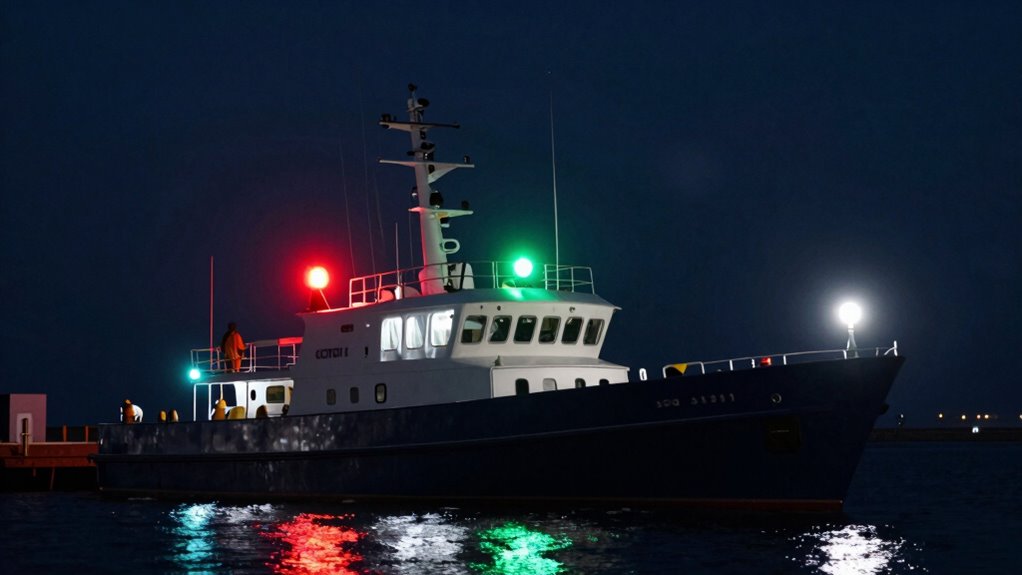
Staying compliant with navigation light regulations requires regular attention and proactive measures. To avoid violations, familiarize yourself with the specific lighting requirements for your vessel’s size and type, ensuring proper vessel signaling at all times. Regularly check that all navigation lights are functioning correctly, especially before each voyage, to prevent accidental violations. Keep communication channels open with maritime authorities to stay updated on any regulation changes. Use clear and effective marine communication when maneuvering, especially in congested waters or during low visibility, to supplement your vessel signaling. Maintaining a routine inspection and understanding the importance of proper lighting helps you communicate your vessel’s movements clearly, reducing the risk of violations and enhancing safety for everyone on the water.
Frequently Asked Questions
What Are the Most Common Reasons for Navigation Light Violations?
You often face navigation light violations because you neglect proper boat light inspections and maintenance. Failing to regularly check that all lights are functioning correctly, clean, and properly mounted leads to violations. Additionally, using damaged or outdated navigation lights can cause issues. Staying consistent with boat light inspections and routine navigation light maintenance helps prevent these violations, ensuring your vessel remains compliant and safe on the water.
How Can I Quickly Identify if My Navigation Lights Are Malfunctioning?
You can quickly identify if your navigation lights are malfunctioning by performing regular light testing before setting out. Check each light individually, ensuring they turn on and stay bright. Conduct a thorough bulb inspection for any signs of damage, corrosion, or burnout. If any lights flicker, appear dim, or don’t activate during testing, it indicates a malfunction that needs fixing before you sail. Regular maintenance prevents violations and keeps you safe.
Are There Specific Regulations for Different Types of Boats Regarding Lights?
Think of your boat as a lighthouse guiding others safely; vessel regulations for boat lighting vary depending on your vessel type. Small boats often require only basic navigation lights, while larger vessels need more detailed lighting systems to guarantee visibility. Knowing these rules helps you avoid violations and keep everyone safe on the water. Always check specific vessel regulations to confirm your boat’s lighting meets legal standards, just like a lighthouse adhering to its guiding purpose.
What Penalties Can I Face for Navigation Light Violations?
If you violate navigation light rules, you could face penalty fines and legal consequences, including citations or even court appearances. Authorities may impose fines ranging from hundreds to thousands of dollars, depending on the severity of the violation. Repeated offenses can lead to increased penalties or license suspension. To avoid these issues, verify you comply with all lighting regulations, maintain your lights properly, and stay informed about current maritime laws.
Can LED Lights Be Used as a Legal Replacement for Traditional Navigation Lights?
You might wonder if LED lights can legally replace traditional navigation lights. The answer is yes, but only if your LED upgrades meet strict legal compliance standards. You need to confirm they’re approved by the relevant authorities, providing the same visibility, color, and brightness as traditional lights. Don’t risk violations—verify your LED replacements are compliant before installation, or you could face penalties or safety hazards on the water.
Conclusion
Maintaining proper navigation lights is essential for safe boating and avoiding costly violations. Did you know that nearly 90% of boating accidents involve some form of lighting error? Regularly check, maintain, and operate your lights correctly to stay compliant and guarantee safety on the water. By staying vigilant and following these tips, you’ll help prevent accidents and enjoy worry-free adventures, knowing your vessel is visible and compliant at all times.