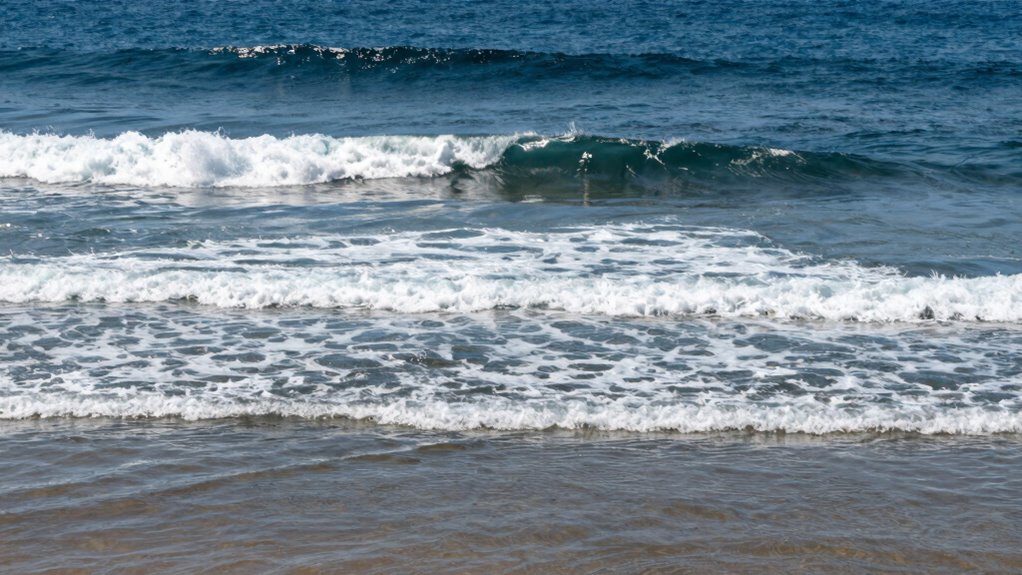

To assess wave sets before crossing a bar, watch for groups of waves that grow larger, more regular, and aligned, signaling an approaching set. Observe their size, spacing, and pattern – steady, well-formed waves are safer than choppy or irregular ones. Pay attention to environmental clues like cloud formations, water color, and horizon patterns that hint at changing conditions. Continuing to explore these cues helps you make smarter decisions and avoid surprises out on the water.
Prime for Young Adults — start your free trial
Fast free delivery, streaming and member deals for eligible 18–24 year olds.
As an affiliate, we earn on qualifying purchases.
Key Takeaways
- Observe wave height, shape, and consistency to identify approaching wave sets and assess their energy levels.
- Monitor wave spacing and frequency to recognize predictable patterns and determine safe crossing windows.
- Watch for subtle surface cues like foam, debris, and changes in water texture indicating incoming larger sets.
- Use horizon patterns and cloud formations to anticipate rougher waters or storm conditions that produce bigger waves.
- Stay alert to tide and swell direction, as shifts can signal the formation and arrival of wave sets approaching the bar.
marine binoculars for wave observation
As an affiliate, we earn on qualifying purchases.
As an affiliate, we earn on qualifying purchases.
What Are Wave Sets and Why Do They Matter?
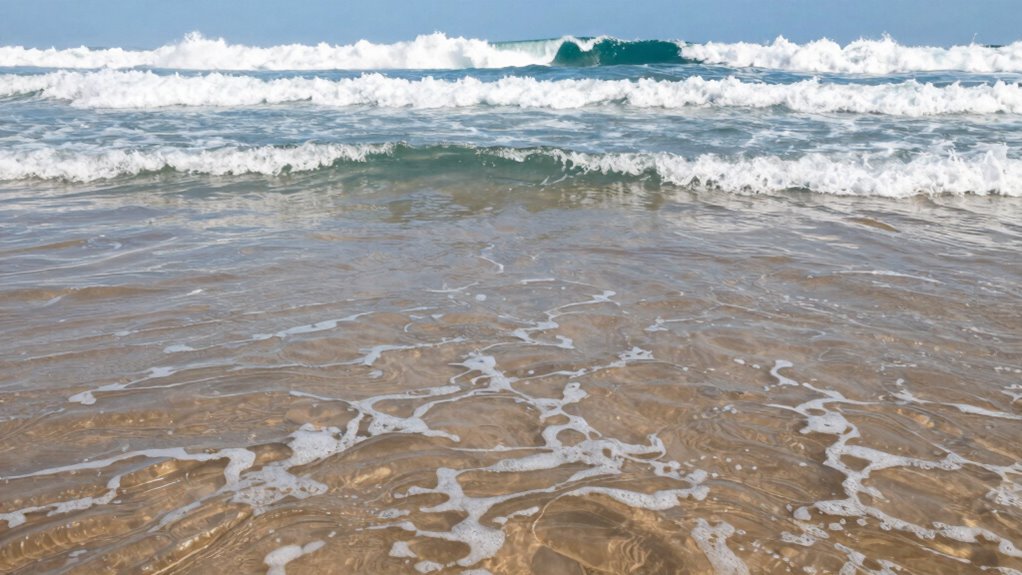
Wave sets are groups of waves that arrive at the shore with similar characteristics, such as size, shape, and direction. They play a vital role in understanding wave energy, as each set carries a concentrated burst of energy that can impact your crossing. The tide influence also affects how these sets form and arrive, with high or low tides altering the spacing and size of the waves. Recognizing wave sets helps you anticipate how the sea will behave, giving you a better idea of when to wait or proceed. By observing the pattern and timing of these sets, you gain valuable insight into the sea’s rhythm. This knowledge is essential for safe navigation, especially when crossing a bar where wave energy and tide influence can change quickly. Understanding wave behavior can further improve your ability to read and respond to changing conditions at sea, including the effects of swell patterns and their impact on wave set formation. Being familiar with current flow can also help you gauge the movement of water and make more informed decisions during your crossing. Additionally, paying attention to wave direction can provide clues about incoming weather systems and long-term wave trends. Recognizing the influence of wind conditions can also help you better predict how wave sets will evolve over time.
waterproof boat navigation compass
As an affiliate, we earn on qualifying purchases.
As an affiliate, we earn on qualifying purchases.
How to Spot Incoming Wave Sets Early?

To spot incoming wave sets early, start by observing the ocean’s surface for subtle changes in the pattern. Notice shifts in the tide levels, as rising or falling tides can signal larger wave sets approaching. Pay attention to the wind influence; steady or increasing wind can generate swell that signals upcoming waves. Look for a change in the water’s texture—floats or foam might cluster, indicating incoming sets. Also, watch for an increase in wave frequency or height, which often precedes a larger set. By combining awareness of tide levels and wind influence, you can anticipate wave sets sooner, giving you more time to prepare for safe crossing. Recognizing these signs helps you respond promptly and avoid surprises at the bar. Paying attention to wave formation and how it develops can give you an even better indication of incoming sets, especially when considering the ocean’s surface patterns. Additionally, understanding how wave energy propagates through the water can enhance your ability to predict larger sets before they arrive. Observing ocean currents can also provide valuable clues about the movement and timing of incoming wave groups.
marine weather radio with storm alerts
As an affiliate, we earn on qualifying purchases.
As an affiliate, we earn on qualifying purchases.
Analyzing Wave Size, Pattern, and Frequency for Safe Crossing

Understanding the size, pattern, and frequency of waves is essential for safe crossing. First, observe the wave height; larger waves indicate stronger currents and more challenging conditions. Pay attention to wave timing—note how often waves arrive; consistent timing suggests predictable movement, making crossing safer. Sudden increases in wave height may signal an approaching set, so stay alert. Recognize the pattern of wave sets—if you notice a sequence of smaller waves followed by larger ones, prepare for the next set. By analyzing these factors, you can gauge the overall danger level and decide whether to proceed or wait. Additionally, observing wave reflection and interference can provide further insights into the water’s behavior and potential hazards. Understanding water dynamics can enhance your ability to interpret complex wave patterns and make safer crossing decisions, especially when considering current strength and its impact on wave movement. Developing a comprehensive understanding of wave behavior can further improve your safety and decision-making in challenging water conditions, and paying attention to environmental cues can help anticipate sudden changes.
marine safety whistle with lanyard
As an affiliate, we earn on qualifying purchases.
As an affiliate, we earn on qualifying purchases.
Understanding Swell Direction and Its Effect on Waves
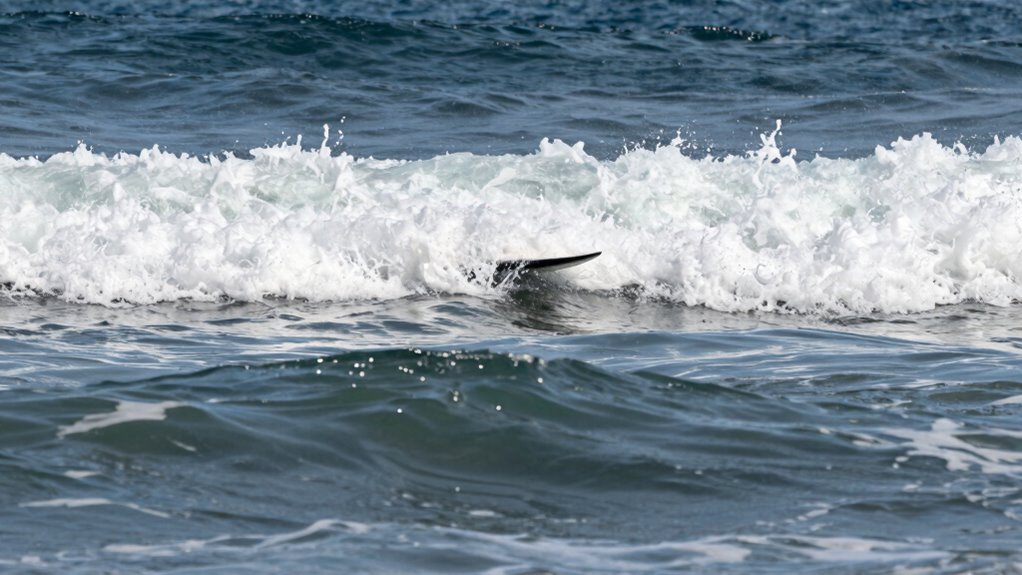
Swell direction markedly influences how waves form and break, affecting your surf experience. The angle at which swell hits the coast determines the size and shape of the waves you see. By understanding swell consistency, you can better anticipate wave patterns and plan your timing in the water. Additionally, being aware of regional geography can help you identify the best spots to catch favorable waves and avoid hazards. Recognizing wave formation processes can further enhance your ability to read and respond to changing conditions effectively. A clear grasp of wave energy transfer can also improve your overall surfing strategy and safety. Gaining insight into wave refraction can help you predict how waves will bend around underwater features, optimizing your approach.
Swell Direction and Wave Formation
The direction from which swells originate plays a crucial role in shaping the waves you see at the shoreline. When swell comes from a specific direction, it influences wave energy and swell height, impacting how waves form. A consistent swell angle produces cleaner, more powerful waves, while variable directions create choppier conditions. Understanding this helps you anticipate wave behavior before crossing. Consider this table:
| Swell Direction | Effect on Waves |
|---|---|
| Offshore | Creates well-formed, clean waves |
| Onshore | Causes choppy, less predictable waves |
| Oblique | Produces uneven, mixed waves |
| Direct | Results in larger, more impactful waves |
| Cross-shore | Leads to irregular, unpredictable waves |
Knowing these patterns helps you read wave sets more accurately, ensuring safer crossing and better surf conditions. Additionally, recognizing how wave formation varies with swell direction can improve your overall surf strategy. Incorporating traditional indigenous knowledge about local wind and wave patterns can further enhance your understanding of surf conditions and safety. Recognizing the impact of swell direction on wave behavior is essential for predicting surf quality and safety in different environments. Being aware of local wind patterns can also provide valuable insights into short-term changes in wave conditions.
Impact of Swell Angle
Have you ever wondered how the angle of incoming swell impacts the waves you see? The swell angle influences the wave direction and shape, affecting how waves break near the shore. When the swell hits at a steep angle, waves tend to be taller and more powerful, often breaking more abruptly. Conversely, a shallow swell angle produces longer, more rolling waves that break gradually. Understanding swell angle helps you anticipate wave behavior before crossing a bar.
- Larger swell angles create steeper, more aggressive wave faces
- Smaller angles produce longer, more gentle waves
- Wave direction shifts based on the swell angle, affecting how waves approach the shoreline
Knowing this helps you read the ocean’s signals and make safer crossing decisions.
Reading Swell Consistency
Understanding how swell moves through the water helps you predict wave patterns more accurately. When observing swell consistency, look for steady, uniform wave formations; consistent swell indicates good swell stability. Stable swells produce predictable wave sets, making it easier to judge the best time to cross a bar. If the wave pattern fluctuates or appears irregular, the swell may be unstable, leading to unpredictable wave behavior. Recognizing consistent swell helps you anticipate wave size and timing, reducing surprises and increasing safety. Pay attention to how long the swell has been steady—longer periods of consistency usually mean more reliable wave sets. By mastering swell consistency, you can better read the ocean’s rhythm and make smarter decisions before crossing a bar.
Using Visual Clues and Environment to Predict Wave Behavior
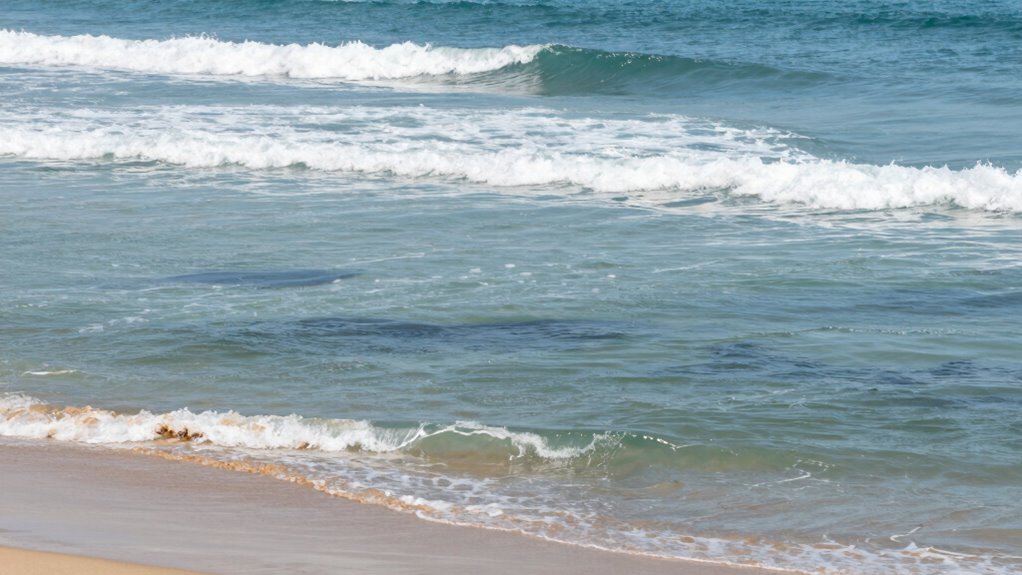
You can often predict wave behavior by paying attention to their color and shape, which reveal details about their energy and freshness. Scanning the horizon helps you spot recurring patterns that indicate upcoming sets. By combining these visual clues, you gain a better sense of how the waves will develop.
Observe Color and Shape
- Color cues: Brightness, clarity, and hue reveal wave energy.
- Shape recognition: Sharp peaks vs. rounded, flat surfaces.
- Wave formation: Consistent, well-formed shapes hint at reliable sets.
Scan Horizon for Patterns
Scanning the horizon for patterns helps you anticipate how waves will behave before they reach you. Look for horizon patterns that hint at upcoming wave activity. Smooth, consistent lines suggest calmer waters, while irregular or choppy patterns indicate approaching rougher seas. Cloud formations also provide clues; towering, dark clouds often signal stormy conditions that can generate larger, more unpredictable waves. Pay attention to how the clouds move and shift—rapidly changing formations can mean sudden wave increases. By observing these visual cues, you gain valuable foresight, allowing you to prepare and adjust your crossing strategy. Recognizing these subtle signs early helps you stay safe, avoid surprises, and better read the environment to handle incoming wave sets confidently.
Top Tips for Crossing a Bar Safely Based on Wave Reading
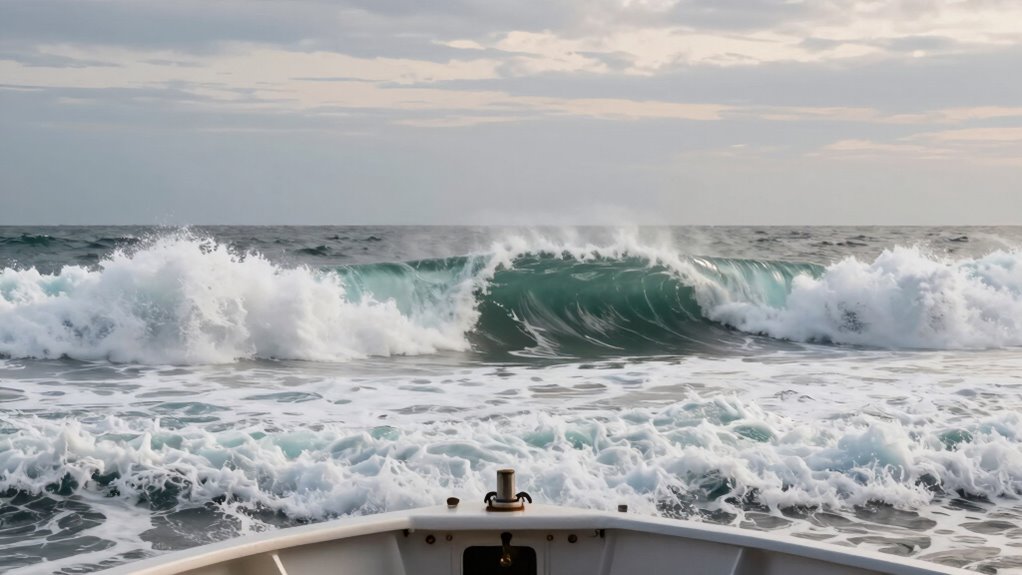
Crossing a bar safely depends heavily on accurately reading wave patterns. To do this effectively, you must identify the wave height, frequency, and direction. These elements tell you if the waves are manageable or dangerous. Always check marine navigation charts and current weather forecasting before crossing. If the waves are breaking consistently, it’s a sign to wait. Look for signs of lull waves or calmer areas, indicating safer crossing points. Use these tips:
- Observe the wave height and how they break
- Note the wave direction and consistency
- Monitor weather updates for changing conditions
Frequently Asked Questions
How Accurately Can Wave Sets Be Predicted Days in Advance?
Wave sets can be predicted with moderate accuracy days in advance, but there’s still some uncertainty. You should focus on wave height prediction and swell direction, which are key factors. Weather models and swell forecasts give you a good idea of upcoming conditions, but local factors like tides and wind can change things unexpectedly. So, while forecasts are helpful, always stay alert and check updated reports before crossing a bar.
What Equipment Can Help Improve Wave Set Reading Skills?
You can improve wave set reading skills with equipment like a surf forecast app, which provides real-time wave prediction and tide influence data. A handheld anemometer helps measure wind speed, affecting wave conditions, while a tide chart or tidal current meter allows you to understand tide influence on wave patterns. Combining these tools gives you a clearer picture of upcoming waves, helping you make safer, more informed crossing decisions.
How Do Weather Changes Influence Wave Set Behavior?
Weather changes, like tidal fluctuations and wind influence, directly impact wave set behavior. Tidal fluctuations alter water depth and wave energy, making sets larger or smaller. Wind influence affects wave height and direction, creating more chaotic or predictable patterns. You’ll notice that strong winds generate choppier waves, while calm conditions produce smoother sets. Monitoring weather forecasts helps you anticipate these shifts, ensuring safer crossings and better understanding of wave set dynamics.
Are There Specific Signs of Dangerous Wave Set Formations?
Like warning signs flashing in the distance, dangerous wave sets often show signs of turbulence—choppy, irregular patterns that scream trouble. Look for rip current indicators such as a narrow, dark channel of churning water flowing away from the shoreline. If waves suddenly grow larger and more aggressive, with unpredictable breaks, it’s time to exercise caution. Recognizing these cues helps you avoid peril and stay safe in turbulent surf conditions.
Can Wave Set Patterns Vary Significantly Between Different Coastal Locations?
Yes, wave set patterns can vary considerably between different coastal locations due to wave pattern variability and coastal topography. You’ll notice that some beaches have more consistent, smaller sets, while others experience larger, unpredictable swells. Understanding these differences helps you anticipate wave behavior, making your crossing safer. Always observe local wave patterns, consider the shape of the coastline, and adjust your approach based on the specific conditions of each area.
Conclusion
Mastering wave sets is like reading a river’s current—you learn to anticipate its next move. I once watched a seasoned surfer spot a promising set just in time, riding smoothly past a tricky bar. With practice, you’ll develop an intuitive sense for wave patterns, turning uncertainty into confidence. Remember, understanding wave behavior isn’t just about safety; it’s about riding the ocean’s rhythm with respect and skill, ensuring each crossing feels like a dance rather than a gamble.
Fall yard work Picks
leaf blowers
As an affiliate, we earn on qualifying purchases.