

To spot weather signs while boating, observe cloud types and movements. Low, dark, thick clouds like nimbostratus or rapidly growing, dark clouds signal approaching storms or rough seas. Thin, wispy cirrus clouds may mean fair weather, but their quick movement can warn of changing conditions. Monitoring cloud altitude, speed, and changes in color helps you anticipate weather shifts. Keep paying attention, and you’ll gain the know-how to stay safe on the water even in unpredictable weather.

Get sports gear delivered free — and shop member deals
- Fast, free delivery on millions of items
- Access to Prime Big Deal Days deals on October 6–7
- Prime Video, Amazon Music and more included
Key Takeaways
- Recognize low, dark clouds like nimbostratus signaling approaching storms or rain.
- Observe high, wispy cirrus clouds as early indicators of changing weather within 24 hours.
- Monitor cloud movement; fast-moving clouds often signal strong winds and storm development.
- Note cloud color and density; dark, towering clouds suggest increasing storm severity.
- Use satellite imagery and sky observations together to detect cloud patterns indicating weather shifts.
As an affiliate, we earn on qualifying purchases.
How Clouds Form and What They Reveal About Weather
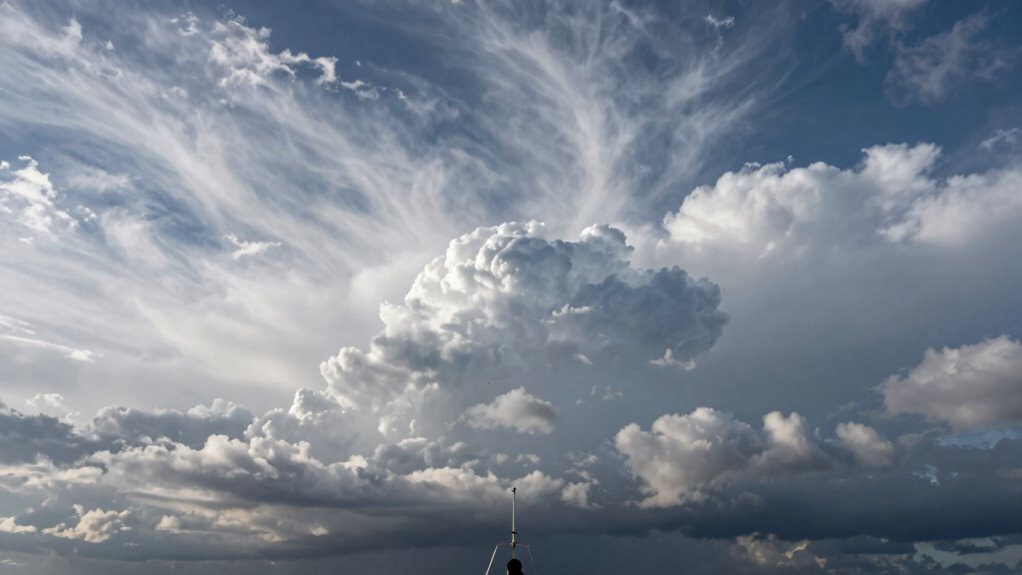
Have you ever wondered what clouds tell us about upcoming weather? Cloud formation occurs when moist air rises and cools, causing water vapor to condense into tiny droplets or ice crystals. The type and altitude of clouds can reveal a lot about future weather conditions. For example, low, thick clouds often signal rain, while high, wispy clouds might indicate fair weather. By observing how clouds develop and change, you can improve your weather prediction skills. Recognizing patterns in cloud formation helps you anticipate storms, wind shifts, or calm periods. Understanding these visual cues is essential for boaters, as they provide vital insights into weather trends, helping you make safer decisions on the water. Additionally, being aware of water vapor condensation can deepen your understanding of cloud development and weather forecasting, enabling more accurate predictions. A solid grasp of cloud types and altitudes further enhances your ability to interpret weather signs effectively. Monitoring changes in cloud movement and density can also give you early warning signs of shifting weather patterns, which is especially useful for maintaining safety while boating. Recognizing the formation of cumulonimbus clouds can alert you to potential thunderstorms and severe weather, crucial for safe boating practices.
marine weather satellite imagery
As an affiliate, we earn on qualifying purchases.
As an affiliate, we earn on qualifying purchases.
Cloud Types That Signal Approaching Storms
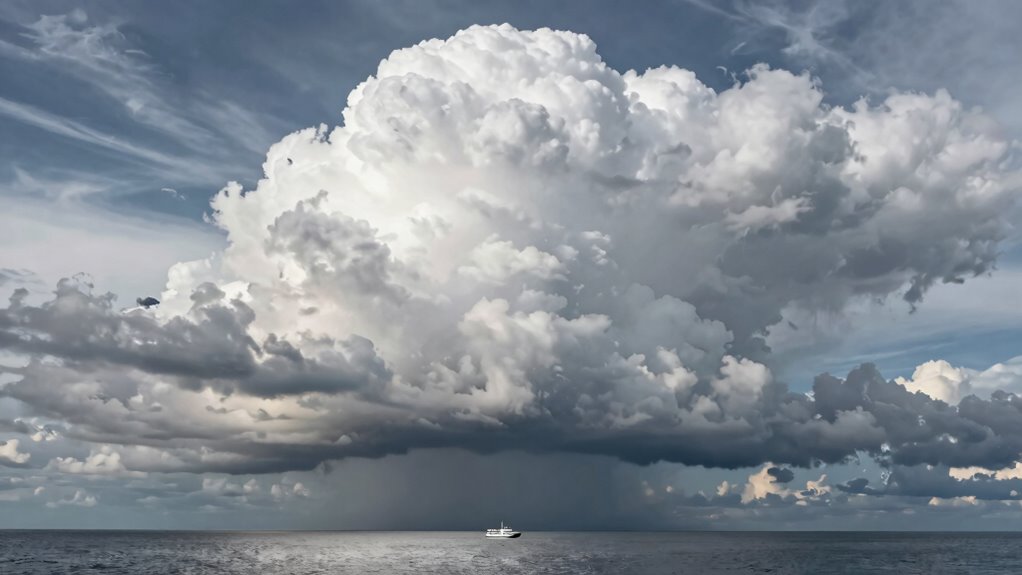
Certain cloud types serve as clear signals that a storm is approaching. Look for altostratus formations, which appear as gray or bluish sheets covering the sky evenly. These clouds often precede a storm, indicating that a warm front is moving in and rain is likely on the way. Additionally, pay attention to cirrus patterns—thin, wispy clouds high in the sky that stretch into long streaks. When you notice cirrus clouds becoming more extensive and forming a veil, it’s a sign that a weather system, possibly bringing storms, is approaching within the next 24 hours. Recognizing these cloud types helps you prepare early, giving you time to seek shelter or adjust your plans to stay safe on the water.
boating safety weather signs book
As an affiliate, we earn on qualifying purchases.
As an affiliate, we earn on qualifying purchases.
Reading Cloud Movements and Patterns for Weather Clues

By observing how clouds move across the sky, you can gather important clues about upcoming weather changes. Notice the sky coloration—bright, clear skies suggest stable weather, while dull or grayish tones often hint at approaching storms. Pay attention to wind patterns: steady, gentle breezes usually indicate fair weather, but shifting or increasing winds can signal changing conditions. Clouds that drift quickly across the sky may suggest strong winds ahead, while slow-moving clouds often mean calmer weather. Look for clouds that appear to be rising or moving in a consistent direction; this can reveal the approach of weather fronts. Recognizing cloud movement patterns is essential for accurate weather prediction while on the water. Combining observations of sky coloration with wind movements helps you anticipate shifts in weather, enabling better decision-making while out on the water. Understanding contrast ratio can also help you assess how well you’ll see these weather signs in varying light conditions. Additionally, observing atmospheric pressure changes can provide further insight into upcoming weather developments. Keeping an eye on cloud formation types can also enhance your ability to interpret weather signs accurately.
cloud pattern identification guide
As an affiliate, we earn on qualifying purchases.
As an affiliate, we earn on qualifying purchases.
Using Cloud Signs to Forecast Storms and Rough Seas
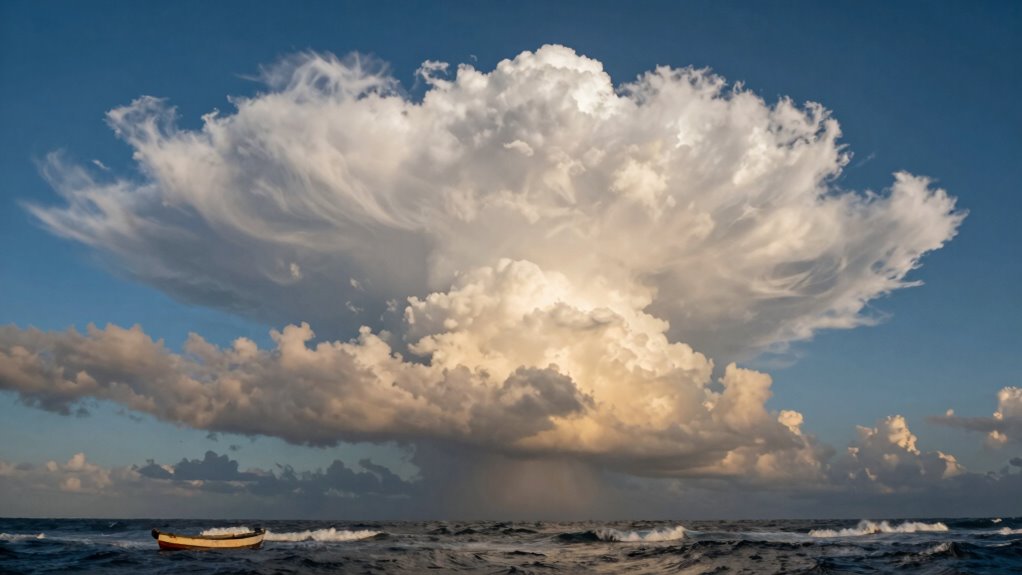
Cloud formations and movements can serve as reliable warnings of looming storms and rough seas. By observing cloud signs, you can anticipate dangerous weather changes. Additionally, understanding cycling gear maintenance can help you prepare and respond effectively to sudden weather shifts while on the water. Recognizing weather forecasting through cloud patterns can further improve your safety and decision-making. For example, noticing persistent, low-hanging clouds may indicate changing weather patterns, prompting earlier action to avoid hazardous conditions. Paying attention to the cloud altitude—lower clouds usually mean unstable air and potential storms, whereas high, wispy clouds typically indicate calmer weather. Monitoring cloud movement speed can also provide clues about approaching storms, as rapid cloud movement often signals increasing wind speeds and storm development. If you see rapidly growing, dark clouds with heavy, dense textures, prepare for rough seas. Changes in cloud altitude and color are key indicators that a storm may be near, helping you make timely decisions to stay safe.
How to Monitor Cloud Changes and Stay Safe While Boating
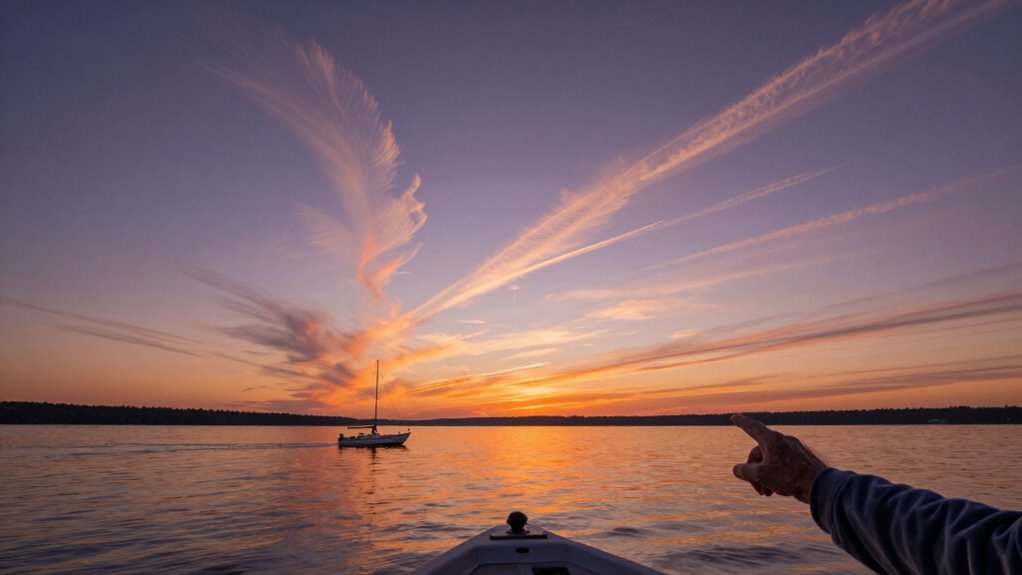
Monitoring cloud changes while boating is vital for your safety, as quick shifts in cloud formations can signal impending storms or dangerous conditions. Keep an eye on satellite imagery, which provides real-time views of cloud patterns and movement. Notice if clouds are rapidly darkening or towering, indicating storm development. Track barometric pressure readings; falling pressure often precedes bad weather, while rising pressure suggests stability. Use these signs together to anticipate weather changes and make timely decisions. Staying aware of power consumption insights, such as energy use during stormy weather, can also be helpful in preparing your vessel. Additionally, understanding the role of media in shaping public perception of cryptids can be useful if you encounter unusual sights that may seem paranormal but are explained by natural phenomena. Being familiar with crochet styles for locs can also serve as a calming activity during long or stressful periods on the water. Staying informed about personality assessments like the 16PF and MBTI can help crew members understand each other’s responses under stress, enhancing teamwork. Recognizing the importance of security zone info in safeguarding vessels and crew during emergencies can also contribute to overall safety. Stay alert to the sky and weather data, adjusting your course or seeking shelter if clouds become threatening. Combining visual cloud observations with technological tools like satellite imagery and barometric pressure monitors helps you stay proactive and safe on the water.
Frequently Asked Questions
How Can I Distinguish Between Different Cloud Altitudes at a Glance?
You can distinguish cloud height by observing visual cues like shape, color, and texture. High clouds, such as cirrus, are wispy and thin, often white and delicate. Middle clouds like altostratus are grayish and more uniform, while low clouds, such as stratus or cumulus, are darker, thicker, and closer to the ground. Pay attention to these visual cues to assess cloud height quickly, helping you anticipate weather changes while boating.
Are There Specific Clouds That Indicate Safe Boating Conditions?
Imagine clear skies as a calm, welcoming sea of blue, signaling safe boating. Light, steady cloud movement and soft cloud color variations often indicate stable weather, making conditions safe for sailing. White, fluffy cumulus clouds usually mean good weather, while the absence of dark, towering clouds suggests calmness. Keep an eye on cloud patterns and color shifts—these gentle signs can guide you safely across peaceful waters.
How Do Temperature and Humidity Affect Cloud Formation and Weather Signs?
Temperature influence and humidity effects play a key role in cloud formation and weather signs. When the temperature rises, warm air rises, causing clouds to develop, while high humidity provides the moisture needed for cloud growth. If humidity levels are low, clouds stay sparse and less likely to bring rain. By understanding how temperature influence and humidity effects interact, you can better predict upcoming weather conditions while boating.
Can Cloud Patterns Predict Sudden Weather Changes on the Water?
You can often predict sudden weather changes on the water by observing cloud pattern variability and atmospheric pressure indicators. When clouds quickly shift or darken, it signals a shift in pressure, hinting at an approaching storm. Imagine the sky suddenly darkening, clouds swirling rapidly—these are your cues that weather can change swiftly. Stay alert to these signs, and you’ll navigate safely through unpredictable conditions.
What Tools or Apps Help Identify Cloud Types and Forecast Weather Accurately?
You can use weather apps like Windy, AccuWeather, or NOAA Weather Radar to identify cloud types and get accurate forecasts. These apps leverage satellite imagery to provide real-time visuals of cloud formations and weather patterns. By checking these tools before heading out, you’ll stay informed about potential weather changes, helping you make safer decisions on the water and recognize cloud clues that signal upcoming weather shifts.
Conclusion
By paying close attention to cloud formations and movements, you gain the incredible power to predict storms before they hit. Mastering these sky signs keeps you safe and afloat amid nature’s chaos—it’s like having a secret weather superpower. Don’t ignore those cloud clues; they’re your best friends on the water. With sharp eyes and quick judgment, you can steer clear of disaster and enjoy your boating adventures with confidence and calm.
NFL season / tailgating Picks
team gear
As an affiliate, we earn on qualifying purchases.