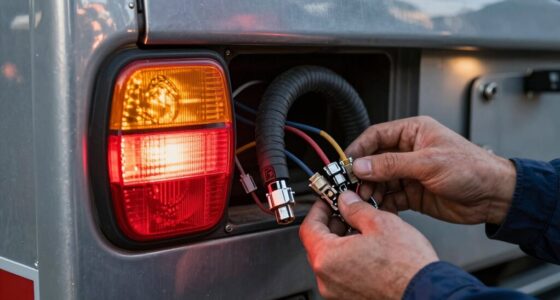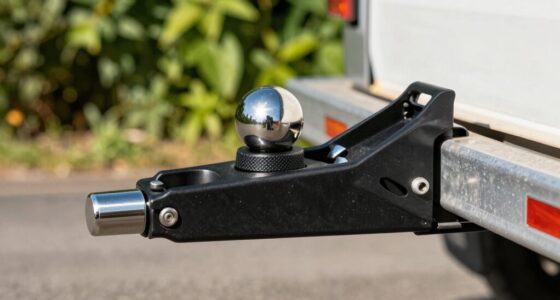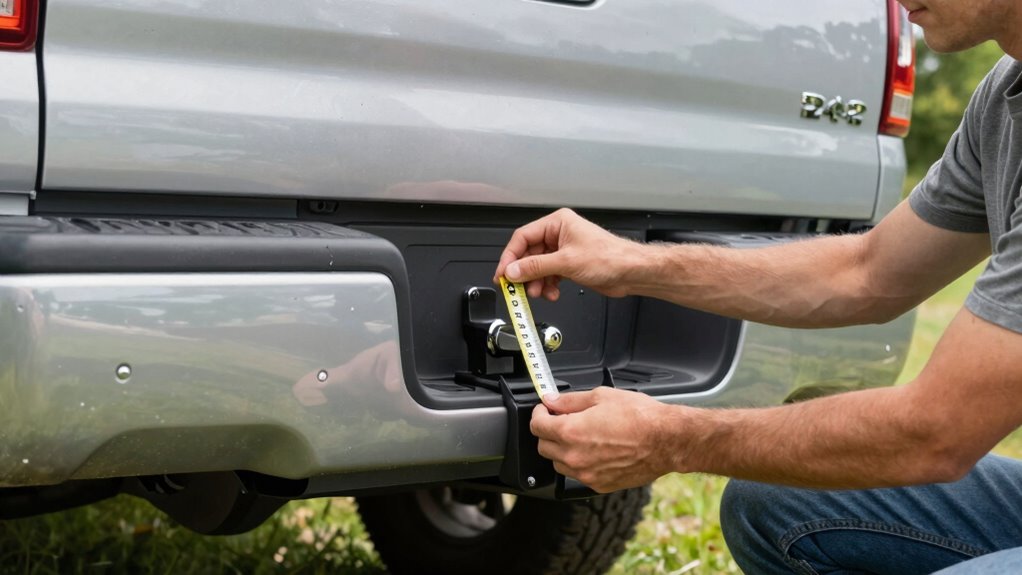

To measure for proper hitch drop without guessing, start by parking your vehicle and trailer on a flat, level surface. Use a tape measure or a level to check the height from the ground to the hitch receiver for your vehicle and the trailer’s coupler or hitch point. Record these measurements and subtract the trailer height from the vehicle’s hitch height. Adjust the hitch ball accordingly until both are level; continue exploring for more detailed guidance.

Get sports gear delivered free with Prime
- Fast, free delivery on millions of items
- Prime Video, Amazon Music and more included
- Member-only deals all year
Key Takeaways
- Measure both the vehicle hitch height and trailer hitch height on a flat, level surface before attaching the trailer.
- Use a level, bubble gauge, or digital level to ensure accurate and consistent measurements.
- Record the heights from the ground to the center of the hitch receiver or coupler for precision.
- Attach the trailer, then re-measure to account for load and suspension sag, adjusting the hitch ball as needed.
- Recheck measurements after adjustments to confirm the trailer sits level, ensuring safe and proper hitch drop.
As an affiliate, we earn on qualifying purchases.
Why Accurate Hitch Drop Matters for Safe Towing
Ensuring the correct hitch drop is essential because it directly affects the stability and safety of your towing setup. When your trailer is level, it helps prevent sway and reduces the risk of accidents. Accurate hitch drop also ensures you comply with safety protocols and legal requirements, which are designed to protect everyone on the road. An improperly adjusted hitch can lead to uneven weight distribution, causing trailer sway or detachment, both of which are dangerous. By paying attention to your hitch drop, you not only safeguard your cargo and vehicle but also avoid potential fines or penalties for non-compliance with towing regulations. Proper measurement and adjustment are critical steps in ensuring safe, legal, and efficient towing. Additionally, understanding hitch drop measurements and how to calculate them can greatly improve your towing safety. Knowing how to properly measure for hitch height can help you make quick adjustments and maintain safe towing conditions. Familiarizing yourself with towing safety guidelines and proper hitch setup can further enhance your safety practices during transport. Being aware of the importance of accurate measurements can help prevent common mistakes that compromise safety.
As an affiliate, we earn on qualifying purchases.
What Tools Do You Need to Measure Your Hitch Drop?
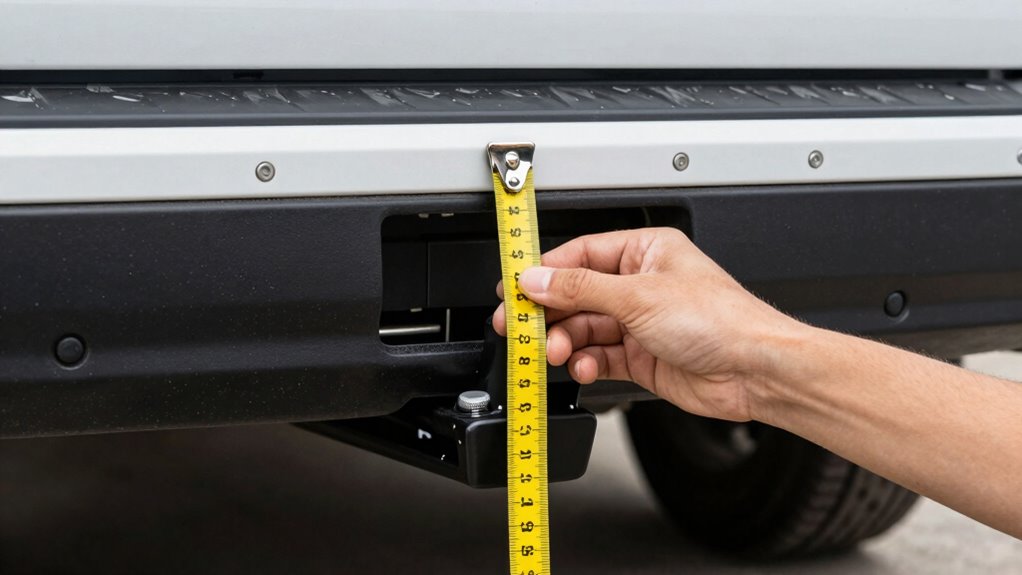
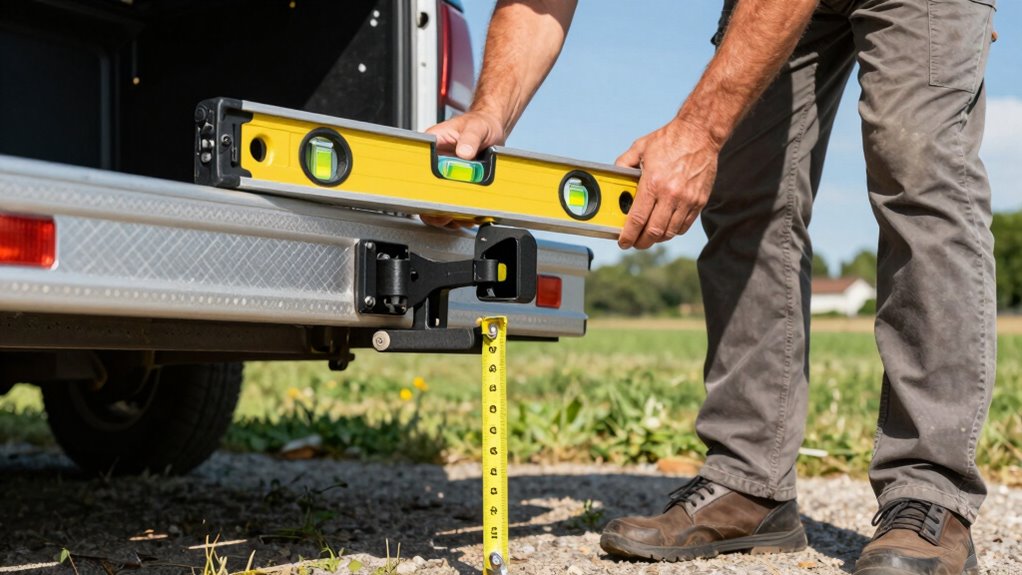
To accurately measure your hitch drop, you’ll need a few specific tools. First, a level or bubble gauge guarantees you can check the alignment between your vehicle and trailer, which is vital for hitch compatibility. A tape measure helps you determine the exact drop from the hitch to the ground. Additionally, a measuring stick or straight edge can be useful for verifying consistent measurements. A calculator or smartphone app can assist in calculating the correct drop based on your vehicle’s towing capacity and trailer type. These tools help you avoid guesswork, making sure your setup maintains proper hitch compatibility and adheres to safe towing limits. Proper gear for every prepper, like a reliable level and measuring tools, ensures your measurements are accurate and safe. Also, understanding towing capacity and how it impacts your measurements can prevent overloading and potential accidents. Using measurement tools correctly can help you achieve the ideal hitch drop and improve towing safety. To further enhance safety, consulting your vehicle’s manual for specific recommendations can prevent improper setups. With the right tools, you can confidently measure and achieve ideal hitch drop for safe, efficient towing.
As an affiliate, we earn on qualifying purchases.
How Do You Check Your Vehicle’s Hitch Height When It’s Not Loaded?
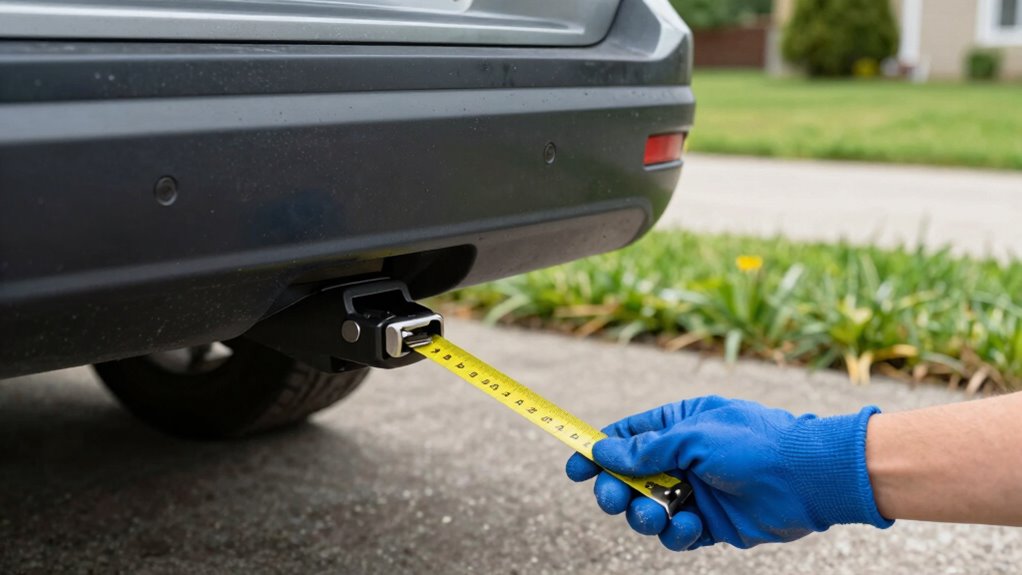
To check your vehicle’s hitch height when it’s not loaded, start by using leveling tools to get an accurate reading. Measure from the ground up to the hitch receiver, ensuring your measurements are consistent. This simple step helps you determine if your hitch is properly aligned before towing.
Use Leveling Tools
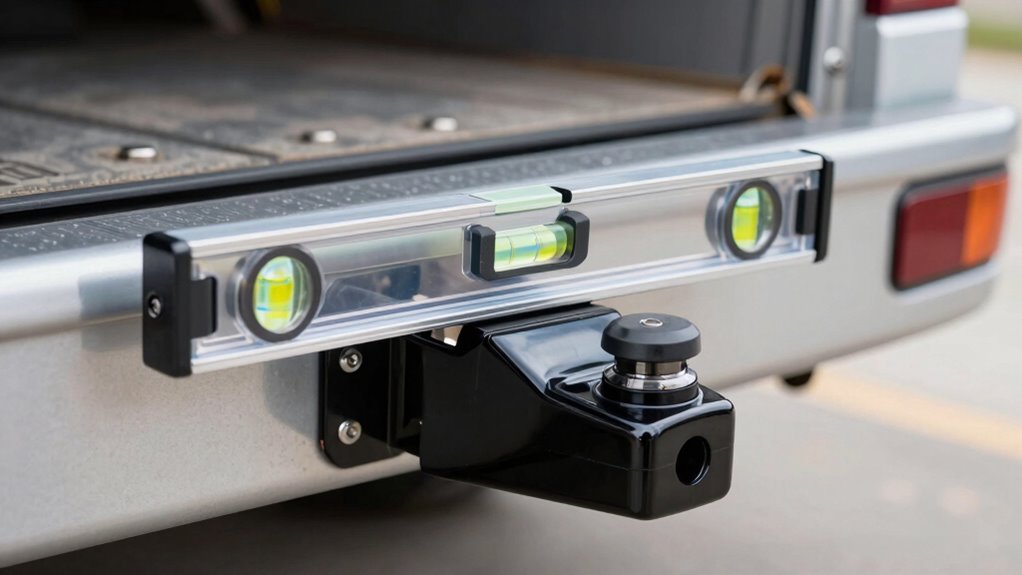
When your vehicle is unloaded, checking the hitch height with leveling tools is straightforward. You’ll need a bubble level or digital level designed for automotive use. Place the leveling tool on the hitch ball or the trailer hitch receiver to get an accurate reading. Confirm the vehicle is on a flat, level surface for precise results. Properly measuring with leveling tools helps maintain hitch safety by preventing excessive drop or rise, which can compromise towing stability. If the level indicates the hitch is too high or low, you’ll know adjustments are needed before loading your trailer. Using these tools makes it easy to verify the correct hitch height, ultimately ensuring a safer, more stable towing experience. It’s a simple step that makes a significant difference in hitch setup. Accurate measurement techniques are essential for ensuring safe towing conditions.
Measure From Ground
Measuring your vehicle’s hitch height from the ground is a straightforward process that provides an accurate baseline when the vehicle is unloaded. To do this effectively, follow these steps:
- Park your vehicle on a level surface and ensure it’s unloaded, with tires at normal tire height.
- Measure from the ground directly up to the hitch receiver, noting the ground clearance at this point.
- Record this measurement for reference, as it reflects your vehicle’s natural stance without load or trailer weight.
This method guarantees your measurements are precise and consistent. Knowing your vehicle’s unloaded ground clearance helps determine the proper hitch drop needed for level towing, especially when considering variations in tire height or suspension.
hitch ball height adjustment kit
As an affiliate, we earn on qualifying purchases.
As an affiliate, we earn on qualifying purchases.
How to Measure Your Trailer’s Hitch Height When Attached
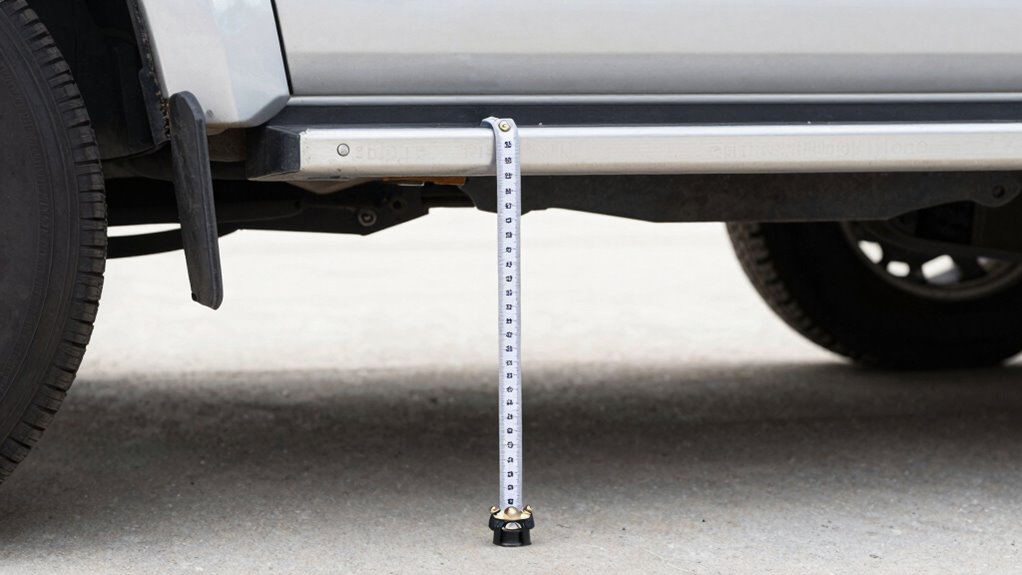
Ensuring your trailer is properly hitched starts with accurately measuring its height once it’s attached to your vehicle. This step helps verify hitch compatibility and ensures safe towing, especially considering trailer weight. To do this, measure from the ground to the top of the hitch receiver or coupler while the trailer is level. Keep a consistent point for measurement to avoid errors. Here’s a visual guide:
| Vehicle Height | Trailer Height | Notes |
|---|---|---|
| Measure at hitch | Measure at coupler | Ensure level trailer |
| Use a tape measure | Use a level | Confirm consistent points |
| Record measurements | Compare with recommended hitch height | Adjust if needed |
| Check hitch compatibility | Verify trailer weight limits | Maintain safe towing |
Additionally, consulting the hitch specifications ensures your measurements align with manufacturer recommendations for safe towing. Understanding the trailer weight and how it affects your towing setup can prevent accidents and improve overall safety. Regularly verifying your hitch setup, including weight distribution, can help identify issues early and maintain safe towing conditions. Properly aligning your trailer’s hitch height also helps prevent sway and ensures a smoother ride.
How to Calculate Your Hitch Drop for a Level Tow
After measuring your trailer’s hitch height when attached, the next step is to determine the hitch drop needed to level your tow. First, identify your hitch type—ball, gooseneck, or fifth wheel—as each affects the drop calculation. Second, consider the weight distribution system you’re using, since it influences how much drop is necessary for a level setup. Third, subtract the measured trailer height from the vehicle’s hitch height to find the required drop. For example, if your truck’s hitch is 20 inches high and the trailer’s hitch is 18 inches, you’ll need a 2-inch drop. Proper hitch setup ensures safe towing and optimal alignment. Additionally, understanding the correct hitch drop helps prevent trailer sway and enhances overall towing safety. Knowing how to accurately measure your hitch ensures proper alignment, improves stability, and reduces strain on your hitch and vehicle components. Being aware of hitch drop requirements can help you select the appropriate equipment and avoid potential towing issues.
How to Choose the Right Hitch Drop for Different Towing Scenarios
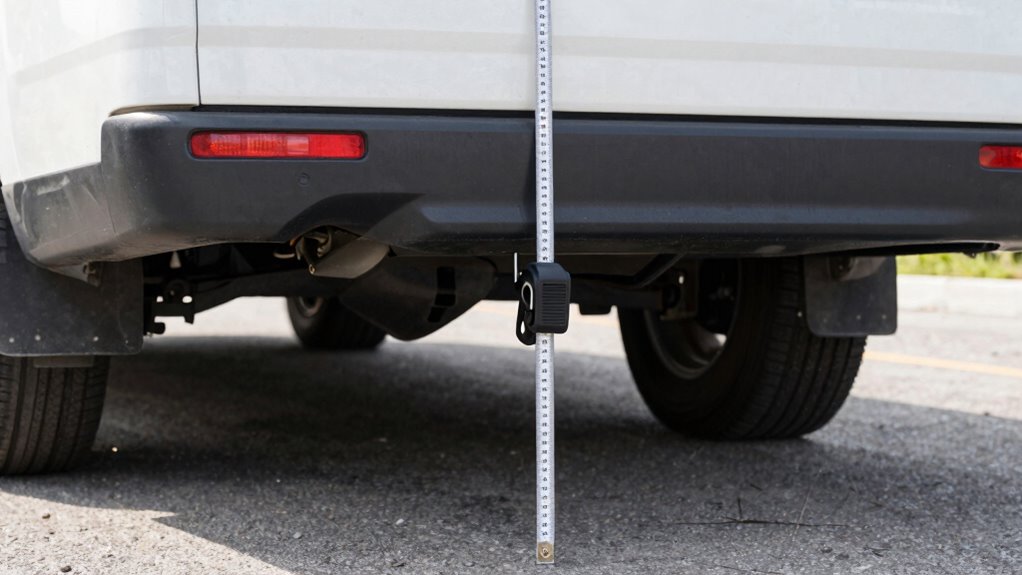
Choosing the right hitch drop depends on your specific towing scenario, including the type of trailer, vehicle, and driving conditions. To guarantee hitch compatibility, you need a drop that aligns your trailer and tow vehicle for a level stance. A properly matched hitch minimizes trailer sway, improving stability and safety. For lighter loads or short trips, a minimal drop may suffice, but for larger trailers or uneven terrain, a more significant drop might be necessary. Remember, the goal is to keep the trailer level and balanced, reducing sway and strain on your vehicle. Always measure accurately and choose a hitch drop that maintains proper alignment, preventing instability or damage during your tow. Proper selection ensures a safer, smoother towing experience.
Common Mistakes That Can Throw Off Your Hitch Drop Measurements
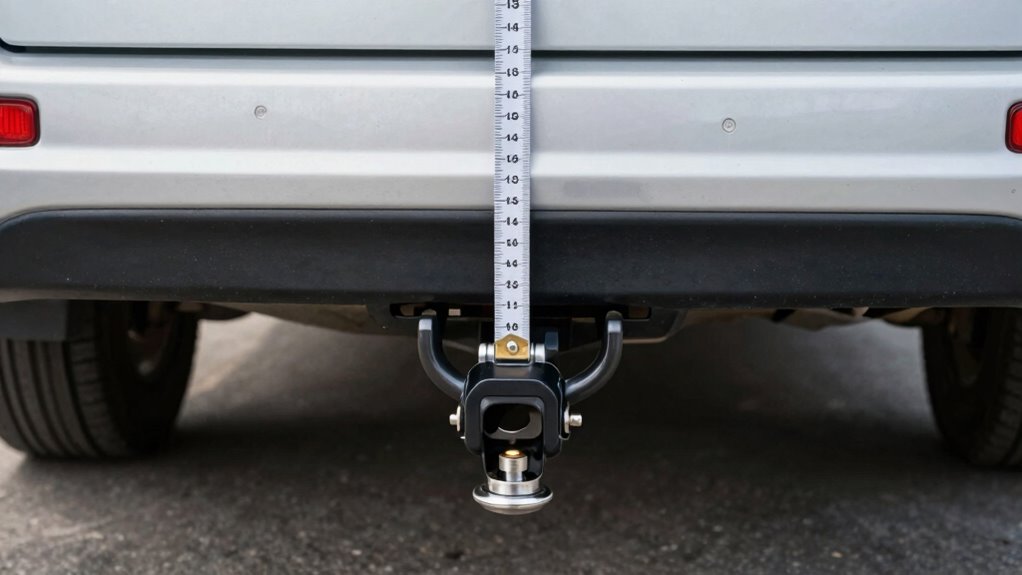
One common mistake that can throw off your hitch drop measurements is not double-checking your trailer and vehicle heights before making any adjustments. Incorrect initial measurements affect hitch alignment and can lead to uneven weight distribution. To avoid this, confirm that you:
- Measure both the trailer and vehicle heights at the same points each time.
- Confirm that your trailer is level and parked on a flat surface before measuring.
- Recheck measurements after any adjustments to verify accuracy.
- Use proper measuring tools like a level or tape measure to ensure precision.
- Remember that proper setup is essential for safe and effective towing.
- Always consider hitch weight distribution to ensure the load is balanced correctly.
Skipping these steps causes inaccurate hitch drop readings, making it harder to achieve proper weight distribution and hitch alignment. Rushing through measurements or assuming initial readings are correct can lead to an improperly balanced setup. Precision in measuring ensures safe, level towing without guesswork.
How to Adjust Your Hitch to Achieve a Level Towing Setup
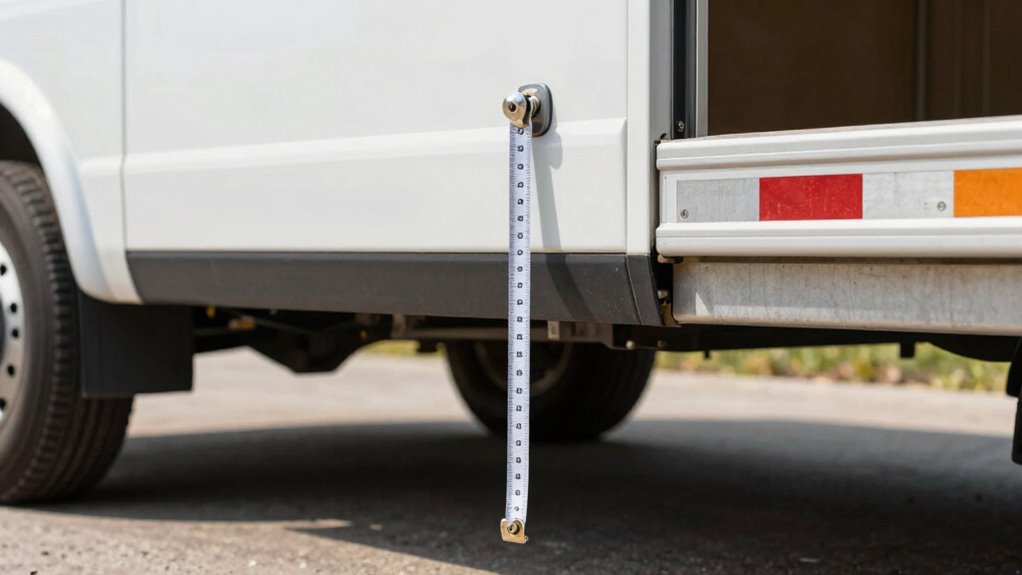
To get your towing setup level, start by measuring the vertical height difference between your trailer and hitch. If the front sits higher or lower, you can adjust the hitch ball’s position to correct it. Small changes in the ball height can make a big difference in ensuring a safe, level tow.
Measure Vertical Height Difference
Before you start adjusting your hitch, it’s essential to measure the vertical height difference between the front and rear of your trailer. First, verify your tires are properly inflated, as low tire pressure can affect measurements. Next, check for suspension sag by observing how much the trailer’s frame dips when loaded. To measure accurately:
- Use a level or measuring tape to mark a reference point on the trailer’s front and rear edges.
- Record the height difference between these points when the trailer is hitched but not yet adjusted.
- Consider suspension sag, which can influence the measurement, and make adjustments if needed to compensate. This process helps you determine the proper hitch drop needed to level the trailer and avoid uneven tire wear or sway during towing.
Adjust Hitch Ball Position
Adjusting the hitch ball position is key to achieving a level trailer when towing. Proper hitch alignment guarantees the trailer rides smoothly and reduces strain on your vehicle. To do this, you need to modify the ball height so the trailer sits level. Use the following table to determine the necessary adjustments:
| Current Ball Height | Adjustment Needed |
|---|---|
| Too Low | Raise the hitch ball |
| Too High | Lower the hitch ball |
| Slightly Low | Slightly raise the ball |
| Slightly High | Slightly lower the ball |
| Level | No adjustment needed |
Troubleshooting Tips: Fixing Common Hitch Leveling Problems
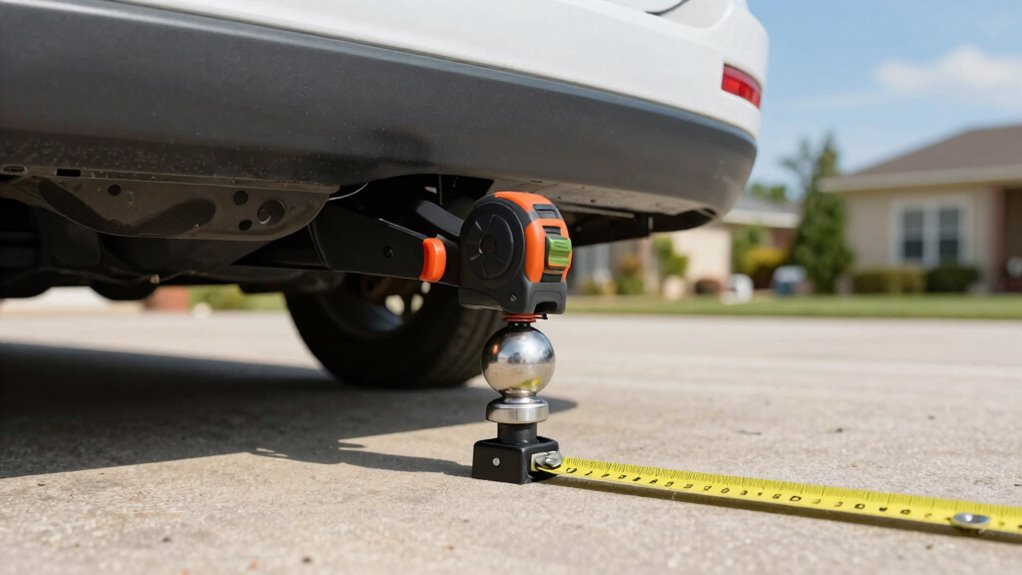
When your hitch isn’t level, it can cause uneven tire wear, poor handling, and safety concerns. To troubleshoot common hitch leveling issues, start by inspecting your trailer and vehicle connections. Next, check the hitch height and adjust as needed to ensure proper alignment. Finally, consider these steps:
- Verify that the trailer’s load is evenly distributed to prevent sagging.
- Use reliable tools like a level or smartphone app for accurate measurements.
- Tighten or replace worn components to maintain hitch safety and improve towing tips.
Addressing these issues promptly ensures safer towing, better vehicle control, and prevents damage. Proper hitch leveling enhances overall safety, making your towing experience smoother and more secure.
Frequently Asked Questions
Can Hitch Drop Vary With Different Trailer Weights?
Yes, hitch drop can vary with different trailer weights. Heavier trailers may require more drop to maintain hitch compatibility and prevent trailer sway, while lighter loads need less drop. Adjusting your hitch guarantees a level ride, improves stability, and minimizes sway. Always measure and adjust based on your specific trailer weight to keep towing safe and smooth, avoiding unnecessary wear or accidents.
How Often Should I Re-Measure My Hitch Drop?
You should re-measure your hitch drop every 1,000 miles or after any trailer maintenance, especially if you change loads or add accessories. Did you know that improper hitch setup can lead to a 20% increase in tire wear? Regularly checking your trailer’s hitch drop guarantees safe towing and protects your equipment. Always verify your hitch accessories are secure and properly adjusted to avoid unexpected issues.
Is There a Recommended Maximum Hitch Drop?
Yes, there’s a recommended maximum hitch drop, typically around 4 to 6 inches, depending on your vehicle and trailer. You should match the hitch height to your trailer’s coupler height, ensuring the load stays level and within your hitch’s weight capacity. Exceeding this limit can compromise stability and safety, so always stay within these guidelines to prevent issues during towing. Properly measuring helps maintain safe, efficient towing conditions.
What’s the Best Way to Store Measurement Tools?
Imagine losing your tools in chaos; proper storage saves you time and effort. Store measurement tools in a designated, clean, dry container or toolbox, avoiding moisture and extreme temperatures. Use storage tips like label compartments and keep tools upright to prevent damage. Regularly inspect and clean them to maintain accuracy, ensuring tool maintenance is a priority. This organized approach keeps your measurement tools precise and ready whenever you need them.
Do Hitch Drop Measurements Change Over Time?
Hitch drop measurements can change over time due to wear and tear on your trailer tongue, suspension settling, or uneven load distribution. Regularly check your hitch alignment to make certain of proper handling and safety. If you notice a shift in your trailer’s level, it’s time to re-measure and adjust the hitch drop accordingly. Keeping an eye on these changes helps maintain safe towing and prevents unnecessary stress on your trailer and vehicle.
Conclusion
Getting your hitch drop just right means your trailer stays level, like a perfectly balanced scale. Imagine cruising down the road, knowing everything’s secure and smooth beneath you. With the right measurements and adjustments, you’ll avoid swaying or strain on your vehicle. Trust your tools, double-check your figures, and enjoy the journey ahead—smooth, safe, and hassle-free, just like a perfectly aligned horizon stretching out before you.
NFL season / tailgating Picks
team gear
As an affiliate, we earn on qualifying purchases.