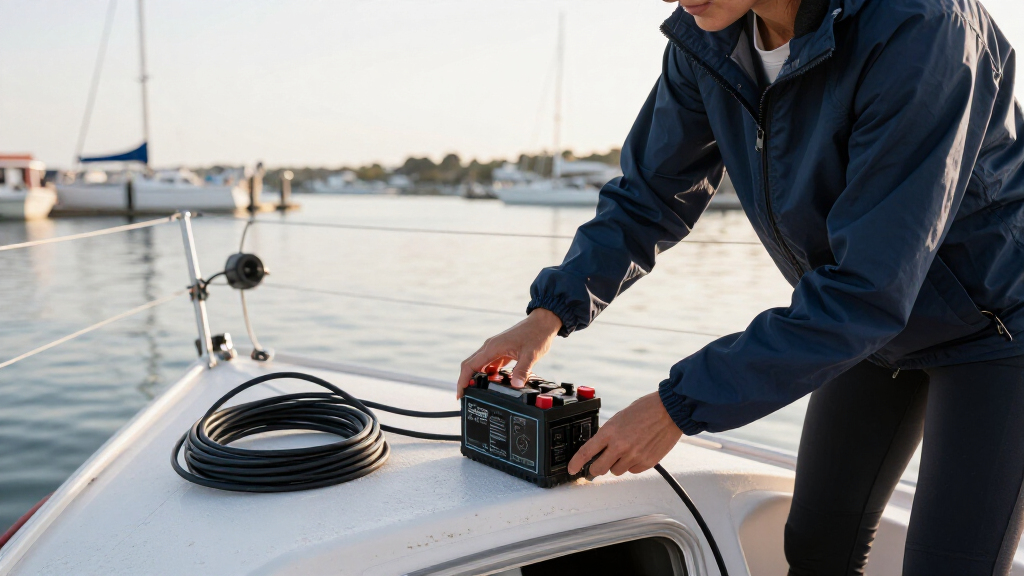

Marine battery chargers come down to one core tradeoff: how fast you can recharge versus how safely and quietly you can maintain batteries over a long season. For most boaters, the NOCO GENPRO10X2 is the best overall pick, thanks to its precise charging logic, thermal compensation, and trusted build. If you run a multi-battery setup with a trolling motor, the CXRCY 3-Bank 30A delivers the fastest turnaround in this lineup, while the NOCO GEN5X2 makes the most sense for smaller boats that need a compact, set-and-forget maintainer. Budget buyers face a real decision between dirt-cheap IP68 units with thinner wiring and premium brands with better long-term battery protection. Read on for the full breakdown of all 13 chargers, including who each one is actually for.
Complete the kit


Key Takeaways
- The NOCO GENPRO10X2 earned the top spot because it pairs 20A of output with thermal compensation and battery-repair modes — features the generic 2-bank 20A chargers in this lineup simply don’t match.
- The CXRCY 3-Bank 30A is the clear choice for trolling motor rigs, but its higher amperage demands solid mounting and heavier gauge wiring than the lighter 5A-per-bank three-bank units.
- Several of the budget IP68 chargers in this roundup share nearly identical housings and specs — the differences came down to cable length, connector quality, and warranty support rather than raw performance.
- The NOCO GENIUS2D fills a niche the others ignore: single-battery maintenance during storage, not active recharging. Anyone expecting it to revive a deeply drained cranking battery will be disappointed.
- ProMariner‘s ProSport HD models justify their premium price with proven marine durability, but both are 20A units — boaters wanting faster 3-bank recovery get more output per dollar from the CXRCY or the 30A 3-bank generic options.
| CXRCY 3-Bank 12V 30A Marine Battery Charger |  | Best for Mixed Battery Types | Input voltage: 120 V | Banks: 3 | Supported batteries: 12V SLA/AGM, lithium, and calcium | VIEW LATEST PRICE | See Our Full Breakdown |
| 10A 2-Bank Marine Battery Charger, 5A per Bank |  | Best for Temperature-Aware Maintenance | Output voltage: 12 V | Input: 120 V AC | Total current: 10 A | VIEW LATEST PRICE | See Our Full Breakdown |
| 2-Bank 12V Marine Battery Charger, 20A (10A per Bank), IP68 Waterproof |  | Best for Two-Battery Charging Speed | Voltage: 12 V | Banks: 2, independently operated | Total output: 20 A (240 W) | VIEW LATEST PRICE | See Our Full Breakdown |
| MVMOD 3-Bank 12V Marine Battery Charger, 15A Total (5A per Bank) |  | Best for Three-Battery Upkeep | Banks: 3 | Voltage: 12 V | Total output: 15 A | VIEW LATEST PRICE | See Our Full Breakdown |
| 12V 3-Bank Waterproof Marine Battery Charger, 30A (10A per Bank) |  | Best for Feature-Rich Three-Bank Charging | Output voltage: 12 V DC | Input voltage: 120 V | Total current: 30 A | VIEW LATEST PRICE | See Our Full Breakdown |
| 12V 3-Bank Marine Battery Charger, 5A per Bank, IP68 Waterproof |  | Best for Multi-Battery Lithium House Systems | Banks: 3 independent banks | Output: Up to 5A per bank; 180W total | Charging modes: SLA/AGM, lithium, calcium, and repair | VIEW LATEST PRICE | See Our Full Breakdown |
| NOCO GENPRO10X2 12V 20A 2-Bank Onboard Marine Battery Charger and Maintainer |  | Best Overall | Total output: 20A | Banks: 2 (10A per bank) | Battery voltage: 12V | VIEW LATEST PRICE | See Our Full Breakdown |
| ProMariner ProSport HD 20A 3-Bank Waterproof Marine Battery Charger |  | Best for Smart Amp Distribution | Part number: 44021 | Charger type: Onboard marine battery charger | Charging current: 20A | VIEW LATEST PRICE | See Our Full Breakdown |
| ProMariner ProSport HD 20A 2-Bank Waterproof Onboard Battery Charger |  | Best Documented Workhorse | Part number: 44020 | Output / Input voltage: 12V DC / 120V AC | Amperage: 20A | VIEW LATEST PRICE | See Our Full Breakdown |
| 12V 10A Two-Bank Marine Battery Charger |  | Best Budget Diagnostics Pick | Voltage: 12V | Total output: 10A (5A per bank) | Banks: 2 | VIEW LATEST PRICE | See Our Full Breakdown |
| NOCO GENIUS2D 2A 12V Onboard Battery Charger and Maintainer |  | Best for Single-Battery Maintenance | Model: GENIUS2D | Battery voltage: 12V | Charging current: 2A | VIEW LATEST PRICE | See Our Full Breakdown |
| 12V 2-Bank IP68 Waterproof Marine Battery Charger, 10A |  | Best Compact Two-Bank Value | Output voltage: 12V | Input voltage: 12V | Total current: 10A | VIEW LATEST PRICE | See Our Full Breakdown |
| NOCO GEN5X2 12V 10A 2-Bank Onboard Marine Battery Charger and Maintainer |  | Best for Mixed-Chemistry Two-Battery Setups | Model: GEN5X2 | Voltage: 12V | Total output: 10A | VIEW LATEST PRICE | See Our Full Breakdown |
| marine battery charger | Banks |
|---|---|
| CXRCY 3-Bank 12V 30A Marine Ba | 3 |
| 10A 2-Bank Marine Battery Char | 2 |
| 2-Bank 12V Marine Battery Char | 2, independently operated |
| MVMOD 3-Bank 12V Marine Batter | 3 |
| 12V 3-Bank Waterproof Marine B | 3 |
| 12V 3-Bank Marine Battery Char | 3 independent banks |
| NOCO GENPRO10X2 12V 20A 2-Bank | 2 (10A per bank) |
| ProMariner ProSport HD 20A 3-B | 3 |
| ProMariner ProSport HD 20A 2-B | 2 |
| 12V 10A Two-Bank Marine Batter | 2 |
| NOCO GENIUS2D 2A 12V Onboard B | — |
| 12V 2-Bank IP68 Waterproof Mar | 2 independent outputs |
| NOCO GEN5X2 12V 10A 2-Bank Onb | 2 independently operated |
More Details on Our Top Picks
CXRCY 3-Bank 12V 30A Marine Battery Charger
The CXRCY 3-Bank suits a boat with three 12V batteries that may use different chemistries: it supports SLA/AGM, lithium, and calcium, with charging banks that operate independently. Its 10A per bank gives it more output per battery than the MVMOD 3-Bank 12V Marine Battery Charger, which provides 5A per bank. The nine-stage process, diagnostics, repair, and forced charging add options for battery maintenance, while the IP68 rating fits onboard installation. The tradeoff is that this is still a 12V charger, and its output is divided among three batteries rather than concentrated on one. I’d check each battery’s requirements against the selected charging mode before relying on the repair or forced-charging functions.
Pros:- Three independent banks can charge separate batteries at once
- Supports SLA/AGM, lithium, and calcium 12V batteries
- Includes diagnostics, repair, and forced-charging modes
- IP68 waterproof design for onboard use
Cons:- Output is limited to 10A per bank
- Battery compatibility should be checked before using specialized charging modes
Best for: Boat owners running three 12V batteries with a mix of SLA/AGM, lithium, or calcium chemistries
Not ideal for: Owners of 24V or other non-12V systems, or anyone who needs more than 10A for an individual battery
- Input voltage:120 V
- Banks:3
- Supported batteries:12V SLA/AGM, lithium, and calcium
- Charging process:9-stage smart charging
- Dimensions:11 × 9 × 2 in
- Weight:10 lb
- Warranty:1-year limited
Our verdict“Choose the CXRCY if you need three independent 12V banks and broad chemistry support, and can work within its 10A-per-bank limit.”
10A 2-Bank Marine Battery Charger, 5A per Bank
This two-bank charger is aimed at owners who want to maintain a starter and house battery with separate chemistry settings. Temperature compensation adjusts charging for changing conditions, a useful distinction from the 2-Bank 12V Marine Battery Charger, 20A (10A per Bank), whose supplied details list temperature monitoring rather than compensation. The smaller output here—5A per bank—is better suited to maintaining batteries than quickly replenishing them after heavy use. Independent selection for lead-acid, lithium, or calcium helps when the two batteries differ, and IP68 protection supports onboard mounting. I’d favor it for steady upkeep and its stated three-year warranty; boaters with larger batteries or short turnaround windows should look to a higher-output option.
Pros:- Independent mode selection for each of two banks
- Temperature compensation helps adapt charging to conditions
- IP68 waterproof design for onboard use
- Supports lead-acid, lithium, and calcium battery types
Cons:- Only 5A is available per bank, limiting recharge speed
- Requires use in a well-ventilated area
Best for: Owners maintaining two 12V marine batteries in changing temperatures, especially when the batteries need different charging modes
Not ideal for: Boaters who routinely discharge large batteries and need faster recovery than 5A per bank can provide
- Output voltage:12 V
- Input:120 V AC
- Total current:10 A
- Current per bank:5 A
- Banks:2
- Compatible batteries:12V SLA/AGM, LiFePO4 lithium, calcium, deep-cycle, marine, boat, and starter
- Dimensions:2.16 × 6.49 × 7.55 in
- Weight:4.5 lb
- Warranty:3 years
Our verdict“Pick this model for temperature-aware maintenance of two batteries, but choose a higher-output charger if recharge speed matters.”
2-Bank 12V Marine Battery Charger, 20A (10A per Bank), IP68 Waterproof
With 10A available to each of two independent banks, this model suits owners who want to charge a house battery and starter battery at the same time without stepping up to a three-bank layout. Its 20A total output is twice that of the 10A 2-Bank Marine Battery Charger, 5A per Bank, so it offers a better fit when batteries need more than slow maintenance charging. It supports several lead-acid types plus lithium and adds a nine-stage process, temperature monitoring, repair mode, and protections against common electrical faults. The limitation is chemistry and voltage scope: it is specified for 12V batteries, and each bank still tops out at 10A. A five-grid display gives a rough charge indication, not a detailed battery readout.
Pros:- Two independently operated banks provide 10A each
- Supports SLA/AGM, lithium, and calcium modes
- Includes nine-stage charging, repair mode, and temperature monitoring
- IP68 rating and multiple electrical protections suit onboard installation
Cons:- Limited to 12V batteries
- The 10A-per-bank ceiling may be slow for larger or heavily discharged batteries
- Five-grid display provides only a broad charge estimate
Best for: Boat owners charging two 12V batteries who want 10A per bank and support for lead-acid and lithium types
Not ideal for: Owners needing three or more charging banks, a non-12V system, or faster output for an individual battery
- Voltage:12 V
- Banks:2, independently operated
- Total output:20 A (240 W)
- Current per bank:10 A
- Charging modes:SLA/AGM, lithium, calcium, and repair
- Charging process:9-stage
- Battery display:5-grid, 20% to 100%
- Included accessories:Charging lines, alligator clips, screws, ring terminals, fuses, and user manual
Our verdict“Choose this two-bank model when you want more charging current than the 5A-per-bank alternative and do not need a third bank.”
MVMOD 3-Bank 12V Marine Battery Charger, 15A Total (5A per Bank)
The MVMOD gives owners three independent banks for maintaining a starter battery and two additional onboard batteries, with selectable modes for lead-acid, AGM, calcium, and lithium. Its 5A-per-bank output favors upkeep over fast recovery; the CXRCY 3-Bank 12V 30A Marine Battery Charger supplies twice as much current to each bank. That lower output can suit batteries that spend long periods on shore power, but it is a poor match for quick turnaround after substantial discharge. The LED charge indicators make it easy to check each bank at a glance, and temperature sensing and IP68 protection support onboard use. Repair mode must be activated manually, so this is not the most hands-off choice for diagnosing or reviving a depleted battery.
Pros:- Three independent banks charge separate batteries simultaneously
- Supports lead-acid, AGM, calcium, and lithium batteries
- LED indicators show charge status for each bank
- IP68 waterproofing and temperature sensing suit onboard use
Cons:- 5A per bank limits charging speed
- Repair mode must be activated manually
Best for: Owners who keep three 12V batteries on maintenance charge and value separate bank indicators
Not ideal for: Boaters who need to recharge depleted batteries quickly or want repair mode to run automatically
- Banks:3
- Voltage:12 V
- Total output:15 A
- Current per bank:5 A
- Compatible batteries:Lead-acid (SLA/AGM/calcium) and lithium-ion
- Charging stages:Up to 9-stage
- Charge indicators:5-grid LED indicators, 20%–100%
- Included accessories:Alligator clips, screws, battery connectors, spare fuses, and user manual
Our verdict“Choose the MVMOD for maintaining three batteries with at-a-glance status, provided 5A per bank is enough for your charging routine.”
12V 3-Bank Waterproof Marine Battery Charger, 30A (10A per Bank)
This three-bank charger combines 10A per battery with automatic battery recognition and temperature compensation, making it a more hands-off alternative to the MVMOD 3-Bank 12V Marine Battery Charger, 15A Total. Both handle three 12V batteries, but the MVMOD provides only 5A per bank and requires manual activation of repair mode. Here, nine-stage charging, diagnostic protections, repair, and forced charging add flexibility for mixed onboard batteries, including LiFePO4. The IP68 design and stated operating range from -40°C to 60°C suit exposed marine environments. The tradeoffs are its 10A ceiling for each battery and a manual button press for forced charging. I’d verify the battery maker’s guidance before using specialized modes.
Pros:- Three independent 10A outputs
- Supports SLA/AGM, LiFePO4, calcium, and deep-cycle batteries
- Automatic battery recognition and temperature compensation
- IP68 rating with diagnostic protections, repair, and forced-charging modes
Cons:- Forced charging requires a manual button press
- Output is capped at 10A per bank
Best for: Boat owners maintaining three 12V SLA/AGM, LiFePO4, calcium, or deep-cycle batteries who want automatic recognition and temperature compensation
Not ideal for: Owners who need more than 10A for one battery or prefer forced charging to engage without manual input
- Output voltage:12 V DC
- Input voltage:120 V
- Total current:30 A
- Current per bank:10 A
- Banks:3
- Supported batteries:SLA/AGM, LiFePO4 lithium, calcium, and deep-cycle
- Operating temperature:-40°C to 60°C
- Dimensions:11 × 9 × 2 in
- Weight:10 lb
Our verdict“Pick this model for three-bank charging with automatic recognition and temperature compensation, as long as 10A per bank meets your needs.”
12V 3-Bank Marine Battery Charger, 5A per Bank, IP68 Waterproof
For boaters running a three-battery setup with mixed chemistry, this charger’s broad compatibility is its strongest card. It handles SLA, AGM, GEL, EFB, and LiFePO4 lithium banks independently, which is more chemistry flexibility than the ProMariner ProSport HD 3-bank offers. The 9-stage process and temperature compensation translate to gentler, more accurate charging as cabin temps swing — a real benefit for batteries living in a hot engine bay.
The tradeoff is speed. At 5A per bank, it charges roughly half as fast per bank as the NOCO GENPRO10X2, so heavily drained group 31 batteries will take a long night to recover. Also, deeply discharged batteries may need manual repair-mode activation rather than automatic recovery.
Pros:- Independent charging across three banks with selectable chemistry per bank
- Very broad battery compatibility including LiFePO4 and calcium
- IP68 waterproof housing suitable for permanent mounting
- Temperature compensation adjusts charging for engine-bay heat
Cons:- Only 5A per bank, so large batteries recharge slowly
- Repair mode may require manual activation for deeply discharged batteries
Best for: Boaters with three separate 12V banks, especially mixing lithium house batteries with lead-acid starting batteries
Not ideal for: Anyone needing fast recovery of large, deeply drained batteries — 5A per bank is slow for big amp-hour capacity
- Banks:3 independent banks
- Output:Up to 5A per bank; 180W total
- Charging modes:SLA/AGM, lithium, calcium, and repair
- Charging process:9-stage smart charging
- Supported batteries:SLA, AGM, GEL, EFB, LiFePO4, and other 12V lead-acid and lithium
- Protection:Overheating, short circuit, over-current, over-voltage, reverse polarity
- Included accessories:3 charging lines, alligator clips, ring terminals, fuses, screws, manual
Our verdict“A smart pick if you manage three mixed-chemistry banks and can live with slower overnight charging.”
NOCO GENPRO10X2 12V 20A 2-Bank Onboard Marine Battery Charger and Maintainer
This is the pick I’d point most dual-battery boaters toward, and the reason is simple: 10A of real charging current per bank plus a polished recovery workflow. The GENPRO10X2’s Force Mode revives batteries discharged as low as 1V without fuss, something the generic 12V 3-Bank charger can only match by manually triggering repair mode. Chemistry support covers both lead-acid and lithium, and 72-inch AC and DC cables make routing to port and starboard batteries far less awkward than the shorter leads common on budget units.
Compared with the ProMariner ProSport HD 2-bank, the NOCO gives you explicit lithium compatibility and a 3-year warranty, though both share IP68 protection. The limitation to understand: that 20A total is split across banks, never combined into one — so it isn’t a fast single-battery charger.
Pros:- 10A per bank charges group 27–31 batteries at a practical overnight pace
- Force Mode recovers batteries discharged down to 1V automatically
- Long 72-inch AC and DC cables simplify onboard routing
- Backed by a 3-year warranty with strong brand support
Cons:- Cannot combine both banks into 20A for a single battery
- Only two banks, so three-battery boats need a different unit
Best for: Boaters with a two-battery 12V system (typically starting plus house) who want fast, automatic charging and long-term maintenance
Not ideal for: Single-battery setups or three-bank systems — the output is fixed at 10A per bank with no third output
- Total output:20A
- Banks:2 (10A per bank)
- Battery voltage:12V
- Compatibility:Lead-acid and lithium-ion
- Charging modes:12V, 12V AGM, 12V Lithium, 12V Repair
- Ingress protection:IP68
- Cable lengths:72 in AC, 72 in DC
- Warranty:3 years
Our verdict“The most balanced choice for a standard two-battery boat: fast enough, smart enough, and well supported.”
ProMariner ProSport HD 20A 3-Bank Waterproof Marine Battery Charger
The standout feature here is Distributed-On-Demand charging: instead of splitting 20A into fixed slices the way the 12V 3-Bank 5A-per-bank charger does, this ProMariner unit sends available amps where they’re needed most. If your starting battery is full but the house bank is drained, most of the 20A flows to the hungry battery — meaningfully faster recovery on unbalanced systems. The tri-surface heat sink keeps it cool without a fan, a nice reliability trait for salt-air environments.
The honest weakness is transparency: the product documentation is thin on supported battery chemistries, and there’s no confirmed lithium mode, which puts it behind the NOCO GENPRO10X2 for mixed-chemistry boats. The LED status display is helpful but basic compared with units offering battery diagnostics.
Pros:- Distributed-On-Demand directs amps to the batteries that need them
- Fanless tri-surface heat sink cooling suits salt-air engine compartments
- Multi-color LED display shows charging status and system checks
- Microprocessor-controlled multi-stage charging helps battery longevity
Cons:- Supported battery chemistries are not clearly specified, and lithium support is unconfirmed
- No dimensions or weight published, complicating install planning
Best for: Boaters with three lead-acid banks that drain unevenly and want charging amps routed automatically to the emptiest battery
Not ideal for: Lithium battery owners — chemistry support isn’t clearly documented, and safer options exist for LiFePO4 banks
- Part number:44021
- Charger type:Onboard marine battery charger
- Charging current:20A
- Banks:3
- Waterproof:Yes
- Charging technology:Microprocessor and software controlled with Distributed-On-Demand
- Cooling design:Tri-surface extruded heat sink
- Status display:Multi-color LED with completion gauge
Our verdict“A strong three-bank choice for lead-acid boats that drain unevenly — just verify chemistry fit before buying.”
ProMariner ProSport HD 20A 2-Bank Waterproof Onboard Battery Charger
Functionally, this is the two-bank sibling of the ProSport HD 3-bank, sharing the same Distributed-On-Demand logic and heat-sink cooling, but it’s the better-documented of the two. Published dimensions (8.7 x 16.4 inches), weight, and UL and FCC certifications make it far easier to plan a bulkhead install and trust the electrical safety story — details the 3-bank version leaves vague. With 20A across two banks, it can push nearly all available current to one depleted battery when the other is full, giving it an effective recovery edge over fixed 10A-per-bank units like the NOCO GENPRO10X2 in some situations.
What you give up is modern chemistry flexibility: there’s no advertised lithium mode, and it’s heavier and bulkier than the compact NOCO. It’s a traditional lead-acid workhorse, not a mixed-chemistry solution.
Pros:- UL and FCC certified with fully published dimensions and weight
- Distributed-On-Demand allocates charging current intelligently between banks
- Fanless heat-sink cooling suits continuous onboard operation
- LED indicators show charging progress and battery status at a glance
Cons:- No advertised lithium or calcium charging mode
- Bulkier and heavier (8.6 lb) than compact competitors like the NOCO GENPRO10X2
Best for: Owners of dual lead-acid battery boats who value certified safety, published specs, and prioritized amp distribution over lithium support
Not ideal for: Boaters with lithium house banks — no advertised lithium charging mode
- Part number:44020
- Output / Input voltage:12V DC / 120V AC
- Amperage:20A
- Banks:2
- Dimensions:8.7 x 16.4 x 6.3 inches
- Weight:8.6 pounds
- Certifications:UL, FCC
Our verdict“A certifiable, well-documented lead-acid charger for two-battery boats that prioritize proven hardware over chemistry versatility.”
12V 10A Two-Bank Marine Battery Charger
This two-bank unit takes the feature set of the 12V 3-Bank 5A-per-bank charger — nine-stage charging, temperature compensation, multi-chemistry modes — and packages it for simpler two-battery boats at a friendlier complexity level. Its differentiator is built-in diagnostics with automatic repair mode plus a five-level power display, so you can gauge state of charge without a separate battery monitor. The 79-inch output cables are longer than most, easing runs across a wider hull.
Speed is the honest compromise: 5A per bank means overnight charging for anything beyond mid-size batteries, and like the 3-bank version, batteries below 1V need a manual override to start charging — the NOCO GENPRO10X2 handles that recovery automatically at twice the amperage. You’re trading charging speed and automation for diagnostics and a lower price point.
Pros:- Built-in battery diagnostics and automatic repair mode
- Selectable SLA/AGM, lithium, and calcium modes per bank
- IP68 waterproof design with extra-long 79-inch output cables
- Five-level power display shows charge state without extra equipment
Cons:- Only 5A per bank — slow for group 27 and larger batteries
- Manual override required for batteries below 1V
Best for: Budget-conscious owners of small to mid-size boats with two batteries who want diagnostics and chemistry flexibility without premium pricing
Not ideal for: Boaters with large house banks or frequently deeply discharged batteries — slow output and manual recovery make it frustrating
- Voltage:12V
- Total output:10A (5A per bank)
- Banks:2
- Charging modes:SLA/AGM, lithium, calcium
- Charging stages:9-stage with temperature compensation
- Cables:72-inch input; two 79-inch outputs
- Warranty:3 years
Our verdict“A sensible value choice for light two-battery duty where diagnostics matter more than charging speed.”
NOCO GENIUS2D 2A 12V Onboard Battery Charger and Maintainer
The GENIUS2D suits boat owners who want a permanently mounted charger to maintain one 12V lead-acid battery between outings. Its 2A output is geared toward upkeep and smaller batteries, so it is a slower fit for restoring a large, depleted bank than the 5A-per-bank NOCO GEN5X2. Temperature sensing adjusts charging as conditions change, while Force Mode can help revive a deeply discharged battery. The snap-fit bracket and eyelet cables make it a straightforward onboard installation, but the charger needs to sit near the battery and supports lead-acid chemistries only. Choose it for simple single-battery maintenance; owners with two batteries or lithium systems should look to the GEN5X2 instead.
Pros:- Supports several 12V lead-acid types, including AGM, gel, flooded, and deep-cycle
- Thermal sensing adjusts charging to ambient conditions
- Force Mode can help charge deeply discharged batteries
- Indefinite monitoring supports ongoing battery maintenance
Cons:- 2A output is slow for charging larger or heavily depleted batteries
- Works only with 12V lead-acid batteries
- Requires mounting close to the battery
Best for: Boat owners maintaining one 12V lead-acid starting or deep-cycle battery between trips
Not ideal for: Owners with lithium batteries, multiple banks, or large batteries that need faster charging
- Model:GENIUS2D
- Battery voltage:12V
- Charging current:2A
- Compatible batteries:Lead-acid, AGM, gel, SLA, VRLA, flooded, maintenance-free, deep-cycle, marine, and RV
- Mounting:Direct mount with snap-fit bracket and self-tapping screws
- Charging features:Thermal sensing, Force Mode, pulse charging, and indefinite maintenance monitoring
- Included cable lengths:24-inch AC cable and 24-inch DC cable
- Warranty:3 years
Our verdict“Choose the GENIUS2D for mounted maintenance of one 12V lead-acid battery when charging speed and multi-bank support are secondary.”
12V 2-Bank IP68 Waterproof Marine Battery Charger, 10A
This compact charger gives boat owners two independent 5A outputs for maintaining separate 12V batteries, such as a starting battery and a house battery. Its support for SLA/AGM, lithium, and calcium chemistries offers more flexibility than the lead-acid-only GENIUS2D. Six-stage charging, repair and forced charging modes, and multiple electrical protections add useful functions in a small package. The main tradeoff is the modest 5A per bank: it can maintain two batteries, but larger or deeply depleted batteries will take longer to charge than they would with the 10A-per-bank NOCO GENPRO10X2. The listed dimensions are exceptionally compact, though buyers should confirm the mounting and cable details fit their boat before planning an installation.
Pros:- Two independent 5A outputs can serve separate batteries
- Supports SLA/AGM, lithium, and calcium batteries
- Six-stage charging plus repair and forced charging modes
- IP68 waterproofing and multiple fault protections
Cons:- 5A per bank means slower charging than higher-output two-bank models
- Two banks may not cover boats with three or more batteries
- Product details provide limited information about cable lengths and mounting hardware
Best for: Owners of compact boats who need independent charging for two 12V batteries with mixed supported chemistries
Not ideal for: Boaters seeking faster recovery for large battery banks or who need more than two banks
- Output voltage:12V
- Input voltage:12V
- Total current:10A
- Banks:2 independent outputs
- Current per bank:5A
- Supported battery modes:SLA/AGM, lithium, and calcium
- Charging features:Six-stage charging, battery repair, and forced charging
- Dimensions:1 × 3 × 2 in
Our verdict“Pick this compact two-bank model when broad battery compatibility and waterproofing matter more than high charging current.”
NOCO GEN5X2 12V 10A 2-Bank Onboard Marine Battery Charger and Maintainer
The GEN5X2 is a stronger fit than the GENIUS2D for boats with two batteries that need separate charging profiles, including a lead-acid house battery and a lithium battery. It delivers 5A to each bank, with selectable modes and thermal sensing to adapt charging to battery type and temperature. Its IP68-rated build and flexible mounting orientations suit onboard installation, while Force Mode can start charging a battery discharged to zero volts. The limitation is output: 5A per bank is useful for maintenance and routine charging, but it will take longer to refill large batteries than the NOCO GENPRO10X2, which supplies 10A per bank. This model makes sense when chemistry flexibility and independent banks matter more than charging speed.
Pros:- Charges and maintains two batteries with independent bank operation
- Supports lead-acid and lithium-ion batteries, including LiFePO₄
- Thermal sensing adjusts charging for temperature
- IP68 rating and flexible mounting orientations suit onboard use
Cons:- 5A per bank charges more slowly than the GENPRO10X2
- Limited to 12V battery systems
- Two banks may be insufficient for boats with larger multi-battery setups
Best for: Boat owners with two 12V batteries, especially setups that mix lead-acid and lithium
Not ideal for: Owners with large batteries who prioritize rapid charging or need a charger for systems above 12V
- Model:GEN5X2
- Voltage:12V
- Total output:10A
- Banks:2 independently operated
- Output per bank:5A
- Battery compatibility:Lead-acid and lithium-ion, including flooded, AGM, gel, and LiFePO₄
- Charging modes:12V, AGM, Lithium, and Repair Mode
- Cable lengths:72-inch DC and AC cables
- Warranty:3 years
Our verdict“Choose the GEN5X2 for two independent 12V banks when lithium support and onboard protection matter more than charging speed.”
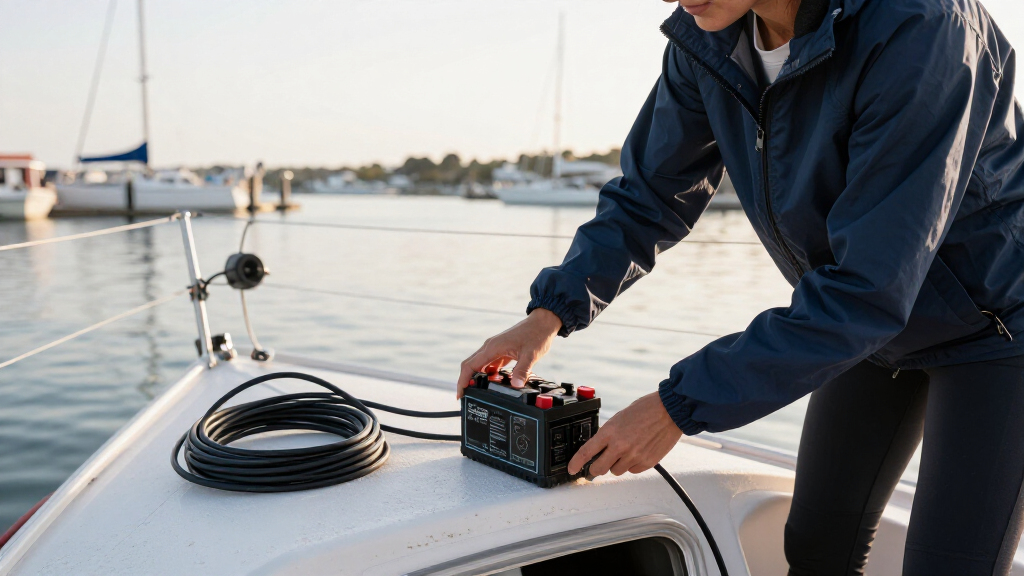
How We Picked
I evaluated these chargers on four factors that actually determine satisfaction on the water. First, charging output and bank configuration: a charger that can’t recover your batteries overnight between fishing days is a liability, so I matched amperage to realistic boat setups. Second, waterproofing and build quality — every pick here was judged on its ingress rating, housing construction, cable gauge, and how well the connections resist corrosion in a bilge environment. Third, charging intelligence: multi-stage profiles, desulfation modes, and the ability to safely maintain batteries for months matter more than peak amps for long-term battery health. Fourth, value and support: what you get for the price, including warranty coverage and how responsive the manufacturer is when a unit fails mid-season.
The ranking logic follows a simple hierarchy. Full-featured units from established marine brands sit at the top because battery replacement costs dwarf charger price differences. High-output multi-bank generics fill the middle tier where output per dollar dominates. Compact maintainers and the most basic budget units round out the list — useful, but only for specific situations I call out in each review.
Factors to Consider When Choosing Marine Battery Chargers
Before settling on any single charger, it helps to understand the bigger picture — bank count, amperage, and waterproofing interact in ways that catch first-time buyers off guard. These are the factors that shaped this ranking, and the ones most likely to cause regret if skipped.Bank Count: Match It to Your Battery Layout, Not Your Ambitions
The most common mistake I see is buying a charger with fewer banks than batteries and assuming you can jumper them together. Each bank is an independently regulated output — combining batteries on one bank means the charger reads a blended voltage and can overcharge one while undercharging the other. A typical bass boat with a cranking battery plus a 24V trolling motor pair needs a 3-bank charger, full stop. Boaters running a single cranking battery plus house battery can live happily with a 2-bank unit. If you plan to add a trolling motor later, buy the extra bank now — swapping chargers later costs far more than the difference up front.
Amperage: How Fast Is Fast Enough?
Amperage per bank, not total amperage, determines recovery speed. A 5A-per-bank charger needs a full day or more to recover a deeply drained group-size trolling battery, while a 10A-per-bank unit can do it overnight. This is why the CXRCY 30A and the generic 30A 3-bank units rank highly for heavy use despite mid-tier pricing. Weekend boaters who rarely discharge below 80% can save money with 5A banks and never notice the difference. Tournament anglers and overnight cruisers should treat 10A per bank as the floor. One caution: higher amperage generates more heat, so budget units sometimes dial back output in warm bilges — a weakness that doesn’t show up in spec sheets.
Waterproof Ratings: IP68, IP67, and Marketing Math
True IP68 rating means the charger tolerates submersion; IP67 handles splashing and brief immersion; “water-resistant” means almost nothing legally. That distinction matters because onboard chargers live in the dampest part of the boat. Nearly every generic charger in this roundup advertises IP68, but housing quality varies underneath — gasket design, potting compound, and stainless fasteners separate units that survive five seasons from ones that corrode in one. Established brands like NOCO and ProMariner build to marine standards even when their exact rating language differs. My advice: verify the rating, then inspect (or read up on) the connector strain reliefs, because that’s where water actually gets in.
Charging Profiles and Battery Chemistry Support
Modern boats run flooded lead-acid, AGM, and increasingly lithium (LiFePO4) batteries — and a charger designed for only one chemistry can quietly destroy the others. Lithium batteries in particular require a distinct profile with no float-trickle stage; charging them with a legacy lead-acid mode can trigger protection circuits or worse. The NOCO units in this roundup handle all chemistries with selectable modes, which is part of why they lead the rankings. Generic chargers vary: some support lithium, some don’t, and a few claim support without proper absorption behavior. Check your battery type before you shop, not after the charger arrives.
Maintenance Mode and Off-Season Storage
A charger that maintains batteries as well as it recharges them doubles as insurance against the number-one killer of marine batteries: sitting discharged all winter. Look for a true float/maintenance mode that monitors and corrects charge without overcooking plates. This is where the NOCO GENIUS2D earns its place despite modest 2A output — it’s designed to stay connected for months. If your boat sits in a driveway for half the year, prioritize maintenance intelligence over peak amps. If it’s on the water weekly, raw recovery speed matters more. Boaters who trailer and store can genuinely run both: a big onboard charger for the season, a small maintainer for winter.
Warranty, Support, and the True Cost of Cheap
Marine chargers fail more often than their automotive cousins — vibration, humidity, and voltage spikes from the alternator all take a toll. A no-name charger with a vague 12-month warranty can leave you dead at the ramp with no recourse, while NOCO and ProMariner back their units with multi-year coverage and real support channels. This doesn’t mean every generic pick here is a bad buy — several offer strong value — but it explains why identically specced units rank differently. When comparing price, mentally add the cost of one prematurely killed battery ($150–$300) to any charger with questionable longevity. That math usually justifies the premium brands for boats that see regular hard use.
Frequently Asked Questions
Can I use a 2-bank charger on a boat with three batteries?
Not without compromise. Each bank regulates voltage independently, so if you wire two batteries in parallel onto one bank, the charger sees them as a single blended load — one battery gets overcharged while the other stays undercharged, and both age faster. The exception is a true 12V parallel pair of identical batteries of the same age and capacity, but even then recovery is slow because you’re splitting one bank’s amperage. If a third battery is in your future, a 3-bank charger like the CXRCY or the ProSport HD 3-bank costs only modestly more and eliminates the problem entirely. Trying to save money on bank count is one of the most expensive shortcuts in this category.
Is 10 amps per bank enough, or should I pay more for higher output?
For most weekend boaters, 10A per bank is the sweet spot. It recovers a typical group 27 or group 31 battery overnight, which covers the gap between Saturday and Sunday on the water. Higher output matters mainly when you’re pulling serious amp-hours — big trolling motor setups, house banks on cruisers, or back-to-back tournament days — where a 5A-per-bank charger literally cannot keep up with your usage rate. Heat is the counterargument: budget chargers pushing 10A continuously in a hot bilge sometimes throttle back, so a well-built 20A charger from NOCO or ProMariner can outperform a cheap 30A unit in real conditions. Match amperage to your discharge pattern rather than chasing the biggest number on the box.
Will these chargers work with lithium (LiFePO4) marine batteries?
Some will, some won’t — and this is the single easiest way to ruin an expensive battery bank. Lithium requires a different charging profile with no continuous float stage and a specific absorption voltage; charging LiFePO4 with a standard flooded/AGM mode can trip the battery’s protection circuit or, in unprotected cells, cause real damage. The NOCO GENPRO10X2, GEN5X2, and GENIUS2D all include a dedicated lithium mode, which is a big part of their rankings. Several of the generic IP68 chargers here also claim lithium support, but claims vary in credibility — check for a stated lithium-specific profile, not just the word on the listing. If you’ve already committed to lithium, treat chemistry support as a non-negotiable filter before anything else.
Do I need an onboard charger, or can I just use a portable one?
Onboard chargers win for any boat with multiple batteries or a regular usage rhythm. You permanently mount them, hardwire them to each battery, and just plug in a shore cord when you return — no clamping, no removing battery lids, no forgetting. A portable charger makes sense for a single-battery boat stored away from power, or as a backup diagnostic tool. The catch with onboard units is installation: you need a dry-ish mounting location near the batteries, adequate ventilation, and correctly gauged wire runs, and a sloppy install can defeat even an IP68 rating. If you’re not comfortable with basic wiring and sealant work, budget for professional installation — it’s usually under an hour of labor.
Can I leave a marine battery charger connected all the time?
Yes, if the charger has a genuine maintenance/float mode — which most modern multi-stage units do. A proper maintainer drops to a monitoring state once batteries reach full charge and only tops them off as self-discharge occurs, so staying plugged in through the season (or the winter) is actually good for battery life. The units to be careful with are older or ultra-basic chargers that push a fixed voltage indefinitely; those will boil off electrolyte over months of connection. The NOCO models in this roundup are explicitly designed for permanent connection, and the ProMariner units behave similarly. If your charger’s manual doesn’t clearly describe a float or maintenance stage, unplug it once batteries are full.
Conclusion
The right choice here depends entirely on your boat and how hard you use it. For the best overall pick, I’d point most boaters to the NOCO GENPRO10X2 — its 20A of smart, chemistry-flexible charging with thermal compensation protects the expensive batteries behind it. Anglers running trolling motor banks get the best value for high output from the CXRCY 3-Bank 30A, which delivers recovery speed the premium brands can’t match at its price. The best premium choice is the ProMariner ProSport HD lineup — either the 2-bank or 3-bank — for boaters who want proven marine durability and factory support. Beginners and small-boat owners should start with the NOCO GEN5X2: compact, forgiving, and nearly impossible to install wrong. And for a specific need — off-season storage maintenance — the NOCO GENIUS2D is the purpose-built tool. Whatever you choose, buy the bank count that matches your batteries today and the chemistry support you’ll run tomorrow; everything else is negotiable.