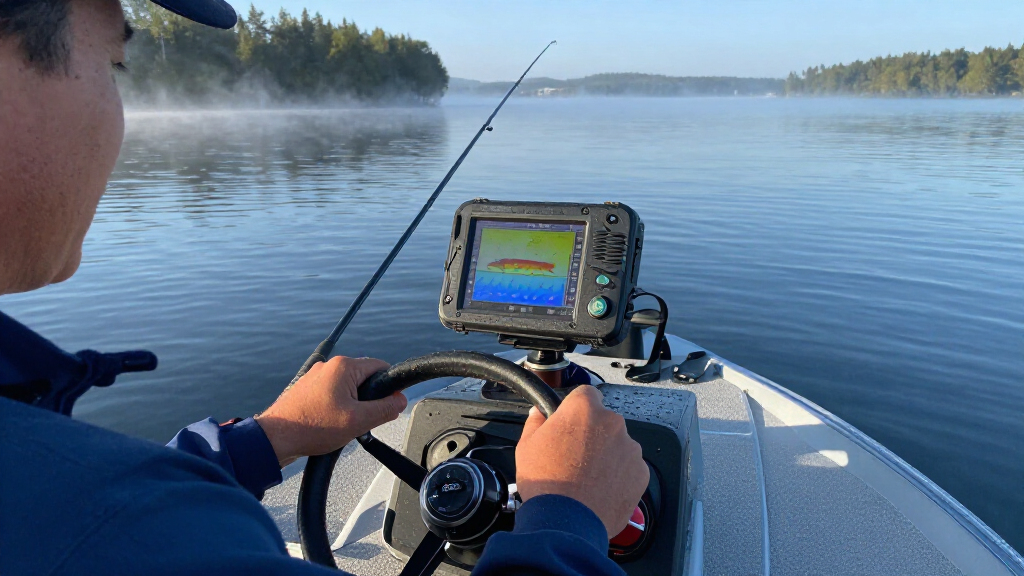

Marine boat depth finders range from simple in-dash readouts to fish finders with GPS, charts, and richer sonar displays. My best overall pick is the Humminbird HELIX 5 CHIRP GPS G3 for buyers who want depth readings alongside mapping and fish-finding tools; the HawkEye DepthTrax Edge stands out for a dedicated depth-finder setup, while the Garmin Striker Vivid 7cv suits anglers who want a larger sonar display. The main tradeoff is whether you want a focused instrument that fits an existing dash or a multifunction unit that takes more space and setup. Read on for the full comparison, buying criteria, and recommendations by boat and use.

Get sports gear delivered free with Prime
- Fast, free delivery on millions of items
- Prime Video, Amazon Music and more included
- Member-only deals all year
Complete the kit


Key Takeaways
- Multifunction units lead when versatility matters: the HELIX 5 CHIRP GPS G3 pairs depth information with GPS and fish-finding features, while dedicated sounders focus on at-a-glance depth.
- Dedicated in-dash sounders suit existing helm layouts: the Humminbird HDR 650 and HawkEye in-dash models avoid the larger screen-and-sonar approach, but offer fewer tools beyond depth and related readings.
- Transducer placement changes installation choices: the Faria Chesapeake includes an in-hull transducer, while several other listed units use transom-mount transducers; hull type and mounting access can decide the fit.
- Screen size and capability come with space tradeoffs: the Garmin Striker Vivid 7cv offers a larger viewing area, while compact four- and five-inch units may fit smaller consoles more readily.
- Similar model names do not mean identical installations: the HawkEye DT2BX-TM and DT2BX-TH differ by transducer configuration, so buyers should check the exact package and mounting method before choosing.
| Humminbird HELIX 5 CHIRP GPS G3 Fish Finder |  | Best for Mapping and Fish-Finding | Display: 5-inch color TFT | Sonar: Dual Spectrum CHIRP | Mapping: Humminbird Basemap and AutoChart Live | VIEW LATEST PRICE | See Our Full Breakdown |
| Humminbird HDR 650 In-Dash Digital Depth Sounder |  | Best Simple In-Dash Depth Gauge | Display: 1.25-inch LCD | Maximum measuring depth: 600 feet | Mounting: Panel mount | VIEW LATEST PRICE | See Our Full Breakdown |
| EIMSOAH Digital Marine Depth Finder with White Backlight |  | Best Compact Gauge for Smaller Boats | Gauge size: 52 mm (2 inches) | Maximum depth: 100 m (110 yd) | Display lighting: White backlight | VIEW LATEST PRICE | See Our Full Breakdown |
| HawkEye DT2BX-TM In-Dash Depth Sounder with Air and Water Temperature |  | Best for Depth and Temperature Monitoring | Depth range: 2.5–600 feet | Maximum operating speed: 60 mph | Display: 2-inch LCD | VIEW LATEST PRICE | See Our Full Breakdown |
| HawkEye DepthTrax 2B In-Dash Digital Depth Finder |  | Best for Flexible Transducer Installation | Depth range: 2.5–600 feet | Transducer frequency: 200 kHz | Display: Polarized LCD icon display | VIEW LATEST PRICE | See Our Full Breakdown |
| Garmin Striker Vivid 7cv Fishfinder with GT20-TM Transducer |  | Best Overall for Onboard Sonar and Mapping | Display: 7-inch LCD | Sonar: Garmin CHIRP traditional sonar and CHIRP ClearVü scanning sonar | Transducer: GT20-TM | VIEW LATEST PRICE | See Our Full Breakdown |
| HawkEye DT2BX-TH In-Dash Depth Sounder with Air and Water Temperature | | Best for In-Dash Depth and Temperature | Display: 1-inch LCD | Maximum measuring depth: 600 feet | Mounting: Thru-hull | VIEW LATEST PRICE | See Our Full Breakdown |
| Faria 13751 Chesapeake Black Depth Sounder with In-Hull Transducer |  | Best Compact In-Hull Gauge | Display: 2.4-inch LCD | Maximum measuring depth: 199 feet (61 m) | Mounting: Flush mount | VIEW LATEST PRICE | See Our Full Breakdown |
| Lowrance Eagle 4X Bullet Fish Finder |  | Best Compact Fishfinder for Bright-Day Viewing | Display: 4-inch IPS LCD | Sonar frequency: 200 kHz | Sonar beam angle: 44 degrees | VIEW LATEST PRICE | See Our Full Breakdown |
| Garmin STRIKER Vivid 4cv 4-Inch Color Fishfinder with GT20 Transducer |  | Best Compact Fishfinder with GPS Mapping | Display: 4-inch LCD | Sonar: Garmin CHIRP traditional sonar and CHIRP ClearVü scanning sonar | Transducer: GT20-TM | VIEW LATEST PRICE | See Our Full Breakdown |
| HawkEye DepthTrax Edge Depth Finder with HD Color Display and Transom Mount Transducer |  | Best for Depth Monitoring with App Connectivity | Transducer frequency: 200 kHz | Beam angle: 14 degrees | Depth range: 2.5–600 feet | VIEW LATEST PRICE | See Our Full Breakdown |
| Humminbird PiranhaMAX 4 Fish Finder |  | Best for Simple, Broad-View Sonar | Display: 4.3-inch color LCD | Sonar: Dual beam | Maximum measuring depth: 600 feet | VIEW LATEST PRICE | See Our Full Breakdown |
| Garmin Striker 4 GPS Fishfinder with Transducer and CHIRP Sonar |  | Best Compact Pick for GPS Waypoints | Display: 3.5 inches | Display resolution: 480 × 320 pixels | Maximum depth: 1,600 feet freshwater; 750 feet saltwater | VIEW LATEST PRICE | See Our Full Breakdown |
| Lowrance Eagle 5 SplitShot HD Fish Finder with C-MAP U.S. Inland Charts |  | Best for Inland Structure and Charting | Display: 5-inch IPS LCD | Sonar: CHIRP and DownScan Imaging with FishReveal | Maximum measuring depth: 500 feet | VIEW LATEST PRICE | See Our Full Breakdown |
| Humminbird HDR 650 Digital Depth Finder |  | Best In-Dash Depth-Only Gauge | Maximum measuring depth: 600 feet | Display: 1.25-inch LCD | Mounting: Transom mount | VIEW LATEST PRICE | See Our Full Breakdown |
| marine boat depth finder | Display | Mounting | Weight |
|---|---|---|---|
| Humminbird HELIX 5 CHIRP GPS G | 5-inch color TFT | Transom-mount transducer | 2.1 pounds |
| Humminbird HDR 650 In-Dash Dig | 1.25-inch LCD | Panel mount | — |
| EIMSOAH Digital Marine Depth F | — | — | — |
| HawkEye DT2BX-TM In-Dash Depth | 2-inch LCD | In-dash display with transom-mount transducer | — |
| HawkEye DepthTrax 2B In-Dash D | Polarized LCD icon display | — | — |
| Garmin Striker Vivid 7cv Fishf | 7-inch LCD | Surface mount | 4.4 pounds |
| HawkEye DT2BX-TH In-Dash Depth | 1-inch LCD | Thru-hull | 2 pounds |
| Faria 13751 Chesapeake Black D | 2.4-inch LCD | Flush mount | — |
| Lowrance Eagle 4X Bullet Fish | 4-inch IPS LCD | Surface, panel, or flush mount | 2.8 pounds |
| Garmin STRIKER Vivid 4cv 4-Inc | 4-inch LCD | Bail mount | 11.2 ounces |
| HawkEye DepthTrax Edge Depth F | HD color LCD, 360 nits | Transom mount; optional thru-hull transducer | — |
| Humminbird PiranhaMAX 4 Fish F | 4.3-inch color LCD | Tilt-and-swivel mount | 2 pounds |
| Garmin Striker 4 GPS Fishfinde | 3.5 inches | — | 8 ounces |
| Lowrance Eagle 5 SplitShot HD | 5-inch IPS LCD | Surface, panel, or flush mount | 16 ounces |
| Humminbird HDR 650 Digital Dep | 1.25-inch LCD | Transom mount | 12.8 ounces |
More Details on Our Top Picks
Humminbird HELIX 5 CHIRP GPS G3 Fish Finder
The HELIX 5 is the strongest choice here for anglers who want depth readings as part of a broader fish-finding and navigation setup. Its Dual Spectrum CHIRP sonar offers wide and narrow views, helping you switch between surveying an area and inspecting fish or structure more closely. Unlike the Humminbird HDR 650, which is focused on displaying depth, this unit adds GPS basemaps and AutoChart Live recording for building local maps of depth, bottom hardness, and vegetation. The tradeoff is a more involved installation and a 5-inch screen that takes more dashboard space than a dedicated gauge. AutoChart Live is limited to eight hours of built-in recording, and expanded mapping may require compatible charts or an SD card. Choose it for fishing and mapping; skip it if you only need a simple depth display.
Pros:- Dual Spectrum CHIRP offers wide and narrow sonar views
- Basemap coverage includes more than 10,000 lakes and U.S. coastlines
- AutoChart Live records depth, bottom hardness, and vegetation
- Includes a transom-mount transducer and mounting hardware
Cons:- AutoChart Live provides only eight hours of built-in recording
- Expanded mapping requires compatible chart products or SD cards
- Larger and more feature-heavy than a dedicated depth sounder
Best for: Anglers who want sonar, GPS basemaps, and local depth mapping in one compact unit
Not ideal for: Boaters who need only a simple, always-visible depth gauge or want a small flush-mounted dashboard display
- Display:5-inch color TFT
- Sonar:Dual Spectrum CHIRP
- Mapping:Humminbird Basemap and AutoChart Live
- AutoChart Live recording:Up to 8 hours
- Mounting:Transom-mount transducer
- Power:Corded electric
- Weight:2.1 pounds
- Warranty:1 year
Our verdict“Choose the HELIX 5 if you want depth information alongside fish-finding and GPS mapping, rather than a gauge devoted only to depth.”
Humminbird HDR 650 In-Dash Digital Depth Sounder
The HDR 650 suits boaters who want a dedicated depth reading without the added sonar, mapping, and navigation functions of the Humminbird HELIX 5. Its stated measuring range reaches 600 feet, and the sealed design is made for marine dashboard use. The small 1.25-inch LCD keeps the display footprint modest, while interchangeable faceplates and bezels give you some flexibility to match the dash. That compactness comes with a clear compromise: the screen shows less information at once and is not as easy to read from a distance as a larger display. It also needs a panel installation, so it is not a portable option. Compared with the HawkEye DT2BX-TM, the HDR 650 is the more straightforward depth-only choice, but it lacks that model’s temperature readings and multi-format alarms.
Pros:- Measures depth up to 600 feet
- Sealed design is intended for marine use
- Includes transducer and mounting hardware
- Interchangeable faceplates and bezels offer several color combinations
Cons:- The 1.25-inch LCD is small and limits at-a-glance readability
- Requires panel mounting rather than portable placement
- Does not add temperature readings or the broader sonar features of the HELIX 5
Best for: Boat owners seeking a compact, permanent depth gauge with a transom-mount transducer
Not ideal for: Anglers who want fish-finding sonar, GPS, temperature data, or a larger screen
- Display:1.25-inch LCD
- Maximum measuring depth:600 feet
- Mounting:Panel mount
- Faceplate diameter with bezel:2.5 inches
- Included components:Depth sounder, transducer, and mounting hardware
- Faceplate colors:White and black
- Bezel colors:White, black, and chrome
- Warranty:1 year
Our verdict“Pick the HDR 650 if a compact, depth-only dash gauge matters more than a larger display or extra boat data.”
EIMSOAH Digital Marine Depth Finder with White Backlight
The EIMSOAH is a compact gauge for boaters who want a straightforward, real-time depth display in a small helm space. Its 52 mm (2-inch) format is less demanding of dashboard room than the larger-screen Humminbird HELIX 5, though it does not offer that unit’s fish-finding sonar or GPS mapping. The stated range reaches 100 m (110 yd), which fits many small- and medium-boat uses, and the white backlight supports visibility in lower light. A 316L stainless-steel bezel and anti-fog glass address common marine exposure concerns, but the listed back-cover protection is only IP5, while the dial is rated IP67. The 90-day warranty is also short beside the one-year coverage listed for the Humminbird options. This is a fit-first depth gauge, not a multifunction navigation system.
Pros:- Compact 52 mm gauge fits smaller dashboard spaces
- Displays real-time depth up to 100 m (110 yd)
- 316L stainless-steel bezel and anti-fog glass suit marine settings
- White backlight supports reading in dim conditions
Cons:- 90-day warranty is shorter than the one-year coverage listed for the Humminbird models
- Back-cover protection is rated IP5, below the dial’s IP67 rating
- Does not provide sonar fish-finding or GPS mapping
Best for: Owners of small or medium boats who need a compact, dedicated depth gauge and have limited dash space
Not ideal for: Boaters wanting fish-finding sonar, GPS charts, a stated 600-foot range, or longer warranty coverage
- Gauge size:52 mm (2 inches)
- Maximum depth:100 m (110 yd)
- Display lighting:White backlight
- Bezel:316L stainless steel
- Glass:Anti-fog
- Dial protection:IP67
- Back-cover protection:IP5
- Warranty:90 days
Our verdict“Choose the EIMSOAH for a compact, dedicated depth gauge, but look to the HELIX 5 if you also need sonar and mapping.”
HawkEye DT2BX-TM In-Dash Depth Sounder with Air and Water Temperature
The DT2BX-TM is a practical pick for boaters who want depth plus temperature data without moving up to a fish-finding chartplotter such as the Humminbird HELIX 5. It measures from 2.5 to 600 feet and is specified to operate at speeds up to 60 mph, making it suited to boats that need readings underway as well as at rest. The display can show air or water temperature in Fahrenheit or Celsius, while audible, LED, and on-screen alarms give several ways to notice shallow water. Its polarized backlit LCD is designed to remain viewable with or without sunglasses. The cost of that in-dash setup is a required 2-inch mounting hole, and the face measures 2.5 inches across. Compared with the depth-only Humminbird HDR 650, it offers more useful data but requires more dashboard space.
Pros:- Measures depths from 2.5 to 600 feet
- Specified for operation at speeds up to 60 mph
- Displays air or water temperature in Fahrenheit or Celsius
- Depth warnings use audible, LED, and on-screen indicators
Cons:- Flush mounting requires a 2-inch hole in the dashboard
- The display face measures 2.5 inches across and needs suitable dash space
- Does not provide GPS mapping or fish-finding sonar like the HELIX 5
Best for: Boaters who want depth alarms and air or water temperature readings from a permanent dash-mounted unit
Not ideal for: Owners avoiding dashboard cutouts or anglers who need GPS charts and fish-finding sonar
- Depth range:2.5–600 feet
- Maximum operating speed:60 mph
- Display:2-inch LCD
- Mounting:In-dash display with transom-mount transducer
- Transducer cable:30 feet
- Temperature readings:Air or water; Fahrenheit or Celsius
- Power:Battery powered
- Warranty:2-year limited manufacturer warranty
Our verdict“Choose the DT2BX-TM if temperature data and multiple depth alarms matter more than mapping or a minimal dash footprint.”
HawkEye DepthTrax 2B In-Dash Digital Depth Finder
The DepthTrax 2B stands out for its choice of transducer installation: it can be transom mounted or glued inside a compatible hull, a useful option when an exterior transducer is inconvenient. That glue-in route is limited to non-cored fiberglass or aluminum hulls thinner than 1/8 inch, so hull construction needs to be checked before choosing it. The unit reads from 2.5 to 600 feet, updates four times per second, and uses a three-stage audible and visual alarm to flag changing depth. Compared with the HawkEye DT2BX-TM, it trades temperature readings for more mounting flexibility. It also lacks the HELIX 5’s sonar imaging and mapping features. The supplied description contains conflicting depth and speed specifications for different models, so confirm the exact model’s operating details before purchase.
Pros:- Reads depths from 2.5 to 600 feet
- Transducer supports transom mounting or glue-in installation on compatible hulls
- Depth readings update four times per second
- Three-stage alarm provides audible and visual warnings
Cons:- Glue-in installation is limited to specified hull materials and thicknesses
- Product information contains conflicting depth and speed specifications for different models
- Does not provide the temperature readings offered by the HawkEye DT2BX-TM
Best for: Boat owners with compatible hulls who want the option of an internal glue-in or transom-mounted transducer
Not ideal for: Owners of cored or otherwise incompatible hulls, or buyers who need temperature data and verified speed specifications
- Depth range:2.5–600 feet
- Transducer frequency:200 kHz
- Display:Polarized LCD icon display
- Depth update rate:4 times per second
- Transducer mounting:Transom mount or glue-in for compatible hulls
- Glue-in hull compatibility:Non-cored fiberglass or aluminum thinner than 1/8 inch
- Alarm system:Three-stage audible and visual warning
- Included accessories:White and black faceplates and trim rings; storage sun cover
Our verdict“Choose the DepthTrax 2B if its transducer mounting options suit your hull, but verify model specifications before ordering.”
Garmin Striker Vivid 7cv Fishfinder with GT20-TM Transducer
I’d choose the Striker Vivid 7cv when depth readings are only part of the job and I also want a larger screen for finding fish and marking useful locations. Its CHIRP traditional sonar and ClearVü pair depth information with views of fish and underwater structure, while built-in GPS and Quickdraw Contours let me save waypoints and create maps with 1-foot contours. Compared with the compact Garmin STRIKER Vivid 4cv, the 7-inch display gives more room to read sonar and mapping together; it’s also a more feature-rich choice than the dedicated HawkEye DT2BX-TH depth sounder. The tradeoff is a larger, heavier surface-mount unit, and ActiveCaptain features require a compatible smartphone. I’d skip it if I only need a simple numeric depth display.
Pros:- 7-inch color display offers more viewing room than the 4-inch Garmin STRIKER Vivid 4cv.
- CHIRP traditional sonar and ClearVü provide both depth readings and scanning views of structure.
- Built-in GPS and Quickdraw Contours support waypoint marking and custom 1-foot contour maps.
- GT20-TM transducer and mounting hardware are included.
Cons:- Larger surface-mount footprint may not suit a crowded helm.
- ActiveCaptain app features require a compatible smartphone.
- More sonar and mapping capability than buyers seeking only a basic depth gauge need.
Best for: Boat owners who want a readable 7-inch fishfinder with GPS, custom depth mapping, and sonar for both fish and structure.
Not ideal for: Buyers who need only basic depth and temperature readings, or who want a small in-dash gauge without phone-dependent app features.
- Display:7-inch LCD
- Sonar:Garmin CHIRP traditional sonar and CHIRP ClearVü scanning sonar
- Transducer:GT20-TM
- Mapping:Quickdraw Contours with 1-foot contours
- Connectivity:Wi-Fi
- Mounting:Surface mount
- Weight:4.4 pounds
- Warranty:2-year limited warranty
Our verdict“I’d pick this for a boat owner who wants depth finding, fishfinding, and GPS mapping in one larger display.”
HawkEye DT2BX-TH In-Dash Depth Sounder with Air and Water Temperature
I’d put the HawkEye DT2BX-TH on the shortlist for boaters who want a dedicated in-dash instrument rather than a fishfinder screen. It reports depth up to 600 feet and adds air and water temperature, giving it a more focused helm role than the sonar-and-GPS-equipped Garmin Striker Vivid 7cv. The small gauge and interchangeable black and white trim pieces can suit a clean instrument panel, but the installation is a bigger commitment: the thru-hull transducer requires drilling a 2-inch hole. By comparison, the Faria 13751 uses an in-hull transducer and reads to 199 feet, so the HawkEye is the stronger fit for buyers prioritizing greater stated depth range. It’s not the pick for anglers who want sonar images, mapping, or a large display.
Pros:- Maximum stated measuring depth of 600 feet exceeds the Faria 13751’s 199-foot range.
- Displays both air and water temperature alongside depth.
- Includes a thru-hull transducer.
- Interchangeable black and white bezels and face plates allow a choice of panel appearance.
Cons:- Installation requires drilling a 2-inch hole in the hull.
- One-inch LCD is a compact readout, not a fishfinder display for viewing sonar images.
- Does not offer the GPS, mapping, or scanning sonar found on the Garmin Striker Vivid 7cv.
Best for: Owners fitting out an instrument panel who want a dedicated depth reading, air temperature, and water temperature, including for deeper-water use.
Not ideal for: Anglers who want fish and structure imaging, GPS, or a transducer installation that avoids drilling a 2-inch hull opening.
- Display:1-inch LCD
- Maximum measuring depth:600 feet
- Mounting:Thru-hull
- Transducer:Thru-hull transducer included
- Temperature:Air and water temperature
- Power:DC power supply
- Dimensions:2 inches diameter x 1-3/4 inches deep
- Weight:2 pounds
Our verdict“I’d choose this dedicated gauge for in-dash depth and temperature readings when its thru-hull installation suits the boat.”
Faria 13751 Chesapeake Black Depth Sounder with In-Hull Transducer
The Faria 13751 Chesapeake suits a boat owner who wants a flush-mounted depth readout without making a fishfinder the centerpiece of the helm. Its included in-hull transducer and 2.4-inch LCD make it a more straightforward depth-focused alternative to the Lowrance Eagle 4X Bullet, which adds fish identification and sonar zoom on a 4-inch screen. The Faria’s stated range reaches 199 feet, enough for buyers whose needs fit within that limit, but well short of the HawkEye DT2BX-TH’s 600-foot maximum. Its main fit constraint is physical: it needs a standard 2-1/16-inch gauge hole, so I’d verify the panel opening before ordering. This is a focused instrument, not a choice for fish imaging, GPS, or mapping.
Pros:- Flush-mount layout keeps the gauge profile compact at the helm.
- Includes an in-hull transducer.
- 2.4-inch LCD provides a dedicated depth display.
- Battery-powered design is specified with a maximum current draw of 90 mA using the supplied transducer.
Cons:- Maximum measuring depth is 199 feet, below the HawkEye DT2BX-TH’s stated 600-foot range.
- Requires a standard 2-1/16-inch gauge hole, so existing panel fit must be checked.
- Does not provide fish identification, GPS, or mapping like the Lowrance Eagle 4X Bullet or Garmin Striker Vivid 7cv.
Best for: Boaters with a compatible 2-1/16-inch panel opening who want a compact flush-mount depth gauge with an in-hull transducer.
Not ideal for: Buyers who need depth readings beyond 199 feet, a fishfinder display, or a gauge that fits without checking the existing panel hole.
- Display:2.4-inch LCD
- Maximum measuring depth:199 feet (61 m)
- Mounting:Flush mount
- Gauge hole size:Standard 2-1/16 inches
- Transducer:In-hull transducer included
- Current drain:90 mA maximum with supplied transducer
- Power:Battery powered
Our verdict“I’d choose this for a compatible helm where a compact, depth-only flush-mount gauge matters more than deeper range or fishfinding features.”
Lowrance Eagle 4X Bullet Fish Finder
I’d favor the Lowrance Eagle 4X Bullet when a compact fishfinder needs to stay readable in strong daylight. Its 4-inch IPS portrait display is designed for sunlight and polarized sunglasses, and auto-tuning sonar can reduce the need to adjust settings while underway. The 200 kHz Bullet Skimmer transducer uses a broad 44-degree beam and supports stated depth readings to 500 feet. Compared with the Garmin STRIKER Vivid 4cv, the Lowrance emphasizes a daylight-oriented screen and easy removal through its twist-lock connector, while Garmin adds GPS, Quickdraw mapping, and CHIRP ClearVü. The tradeoff is fewer navigation and sonar features, plus the small screen may feel cramped for detailed viewing. It also lacks an audible fish alarm.
Pros:- IPS display is designed for visibility in bright sunlight and with polarized sunglasses.
- Auto-tuning sonar helps limit manual setting changes.
- 44-degree beam offers broad coverage beneath the boat.
- Twist-lock connector supports easier installation and removal.
Cons:- Four-inch display may be cramped for buyers who want a larger sonar view.
- No audible fish alarm.
- Compared with the Garmin STRIKER Vivid 4cv, it lacks built-in GPS and Quickdraw Contours mapping.
Best for: Boaters who want a compact fishfinder that is designed for bright-sun viewing, with automatic sonar tuning and a removable connection.
Not ideal for: Buyers who want GPS waypoints and mapping, a larger display for detailed sonar views, or an audible fish alarm.
- Display:4-inch IPS LCD
- Sonar frequency:200 kHz
- Sonar beam angle:44 degrees
- Maximum measuring depth:500 feet
- Transducer:200 kHz Bullet Skimmer included
- Mounting:Surface, panel, or flush mount
- Weight:2.8 pounds
- Warranty:1 year
Our verdict“I’d pick the Eagle 4X Bullet for compact, daylight-oriented fishfinding when GPS mapping and a larger screen are not priorities.”
Garmin STRIKER Vivid 4cv 4-Inch Color Fishfinder with GT20 Transducer
I’d choose the STRIKER Vivid 4cv when a small helm needs more than a numeric depth gauge. It combines CHIRP traditional sonar and ClearVü with built-in GPS, waypoint and route support, and Quickdraw Contours mapping with 1-foot contours. That gives it a broader role than the Faria 13751, which is a compact depth-only gauge, and adds mapping the Lowrance Eagle 4X Bullet does not list. Its main compromise is screen size: the 4-inch display leaves less room for sonar and map details than the 7-inch Striker Vivid 7cv. I’d treat it as a space-saving fishfinder for smaller boats, not as a large-screen helm system. The included GT20-TM transducer and mount make the package ready for a more feature-rich installation.
Pros:- CHIRP traditional sonar and ClearVü provide more fishfinding detail than a depth-only gauge such as the Faria 13751.
- Built-in GPS supports waypoints, routes, and boat-speed viewing.
- Quickdraw Contours creates and saves maps with 1-foot contours.
- GT20-TM transducer, power/data cable, and mounting hardware are included.
Cons:- Four-inch display may limit readability and space for simultaneous sonar and map details.
- Compared with the 7-inch Striker Vivid 7cv, it offers less viewing area at the helm.
- More features and installation needs than buyers seeking only a basic depth reading.
Best for: Owners of smaller boats who want sonar, GPS waypoints, and custom depth mapping in a compact color fishfinder.
Not ideal for: Buyers who need a large display for viewing sonar and maps together, or who only want a simple in-dash depth gauge.
- Display:4-inch LCD
- Sonar:Garmin CHIRP traditional sonar and CHIRP ClearVü scanning sonar
- Transducer:GT20-TM
- GPS:High-sensitivity GPS
- Mapping:Quickdraw Contours with 1-foot contours
- Mounting:Bail mount
- Weight:11.2 ounces
- Warranty:2-year limited warranty
Our verdict“I’d pick this compact Garmin when GPS and custom depth mapping matter but helm space rules out a larger screen.”
HawkEye DepthTrax Edge Depth Finder with HD Color Display and Transom Mount Transducer
The DepthTrax Edge is a depth-first choice for boaters who want readings at a glance plus a way to mirror data on a phone or smartwatch. Its 2.5–600-foot range and automatic range and sensitivity adjustments reduce the need to tune settings as depth changes, while water and air temperature and voltage readings add useful boat and condition checks. Compared with the Humminbird HDR 650, it offers more environmental information and app connectivity, but its viewing area is compact and it is not a chartplotter or full fish-finding display. Dual depth alarms and keel offset help keep readings relevant to a specific hull and preferred warning depth. I’d choose it for monitored depth and extra data, not for a large, easy-to-read screen.
Pros:- Measures from 2.5 to 600 feet with automatic range and sensitivity adjustment.
- Shows water temperature, air temperature, and voltage alongside depth.
- App and smartwatch compatibility can mirror depth information.
- Dual depth alarms and keel offset support tailored warnings and readings.
Cons:- The 1.65 × 0.87-inch viewing area is small for reading from a distance.
- Its depth-monitoring focus lacks the fish-finding and charting features of models such as the Lowrance Eagle 5 SplitShot HD.
Best for: Boaters who want depth alarms, temperature and voltage data, and phone or smartwatch mirroring from a transom-mounted unit.
Not ideal for: Buyers who need a large display for quick viewing from across the helm or want charting and detailed fish-finding sonar.
- Transducer frequency:200 kHz
- Beam angle:14 degrees
- Depth range:2.5–600 feet
- Display:HD color LCD, 360 nits
- Viewing area:1.65 × 0.87 inches
- Transducer cable:30 feet
- Mounting:Transom mount; optional thru-hull transducer
- Connectivity:DepthTrax PLUS app and smartwatch compatibility
Our verdict“Choose the DepthTrax Edge if you value connected depth and environmental readings more than a large screen or chartplotter functions.”
Humminbird PiranhaMAX 4 Fish Finder
The PiranhaMAX 4 suits anglers who want a straightforward fish finder that still offers a choice between sonar coverage and detail. Its dual-beam sonar, Fish ID+, zoom, and fish and depth alarms make it more fishing-oriented than a dedicated depth gauge such as the Humminbird HDR 650. The 4.3-inch color screen also gives it a more usable viewing area than the HDR 650’s 1.25-inch LCD, though it remains modest beside the Lowrance Eagle 5 SplitShot HD’s 5-inch display. The included transducer and tilt-and-swivel mount simplify a basic installation, but battery power means buyers should plan around their boat’s power setup and use. I’d pick it for uncomplicated sonar and depth checks, not for advanced imaging or navigation charts.
Pros:- Dual-beam sonar lets anglers choose wider coverage or more focused detail.
- Fish ID+, zoom, and separate fish and depth alarms support basic fishing use.
- Included transom transducer and adjustable tilt-and-swivel mount simplify setup.
- Its 4.3-inch color display is larger than the Humminbird HDR 650’s gauge-style screen.
Cons:- Battery-powered operation may be less convenient for boats with a fixed 12-volt setup.
- The 4.3-inch display is smaller than the Lowrance Eagle 5 SplitShot HD’s 5-inch screen.
- It does not offer the charting and DownScan imaging found on more feature-rich fish finders.
Best for: Small-boat anglers seeking an accessible dual-beam fish finder with depth alarms, fish identification, and an included transom transducer.
Not ideal for: Boaters who want chartplotting, advanced structure imaging, or a unit intended for a permanently powered helm installation.
- Display:4.3-inch color LCD
- Sonar:Dual beam
- Maximum measuring depth:600 feet
- Power source:Battery powered
- Mounting:Tilt-and-swivel mount
- Included transducer:XNT 9 28 T transom-mount transducer
- Weight:2 pounds
- Dimensions:3.6 × 3.9 × 6.8 inches
Our verdict“Choose the PiranhaMAX 4 for simple dual-beam fishing sonar and depth alarms without stepping up to charting-focused equipment.”
Garmin Striker 4 GPS Fishfinder with Transducer and CHIRP Sonar
The Garmin Striker 4 is the compact choice here for anglers who want depth readings tied to fishing locations. Its built-in GPS waypoint mapping lets you mark and return to productive spots, while CHIRP and ClearVü sonar add fish separation and structure views that the depth-focused HawkEye DepthTrax Edge does not provide. It also reaches a stated maximum of 750 feet in saltwater and 1,600 feet in freshwater, though actual use depends on conditions and setup. The tradeoff is a 3.5-inch screen, smaller than the PiranhaMAX 4 and Lowrance Eagle 5 SplitShot HD, so detailed views require closer attention. Its flasher mode adds flexibility for vertical jigging or ice fishing, but buyers seeking a larger helm display should look elsewhere.
Pros:- GPS waypoint mapping helps mark and return to fishing locations.
- CHIRP and ClearVü provide fish-target separation and structure views.
- Built-in flasher supports vertical jigging and ice fishing.
- Specified maximum depth reaches 750 feet in saltwater and 1,600 feet in freshwater.
Cons:- The 3.5-inch display is smaller than the PiranhaMAX 4 and Lowrance Eagle 5 SplitShot HD screens.
- Maximum depth differs by water type, with a lower stated limit in saltwater than freshwater.
- Its fishing and GPS feature set is more involved than a dedicated depth-only instrument.
Best for: Anglers with limited helm space who want GPS waypoint marking, CHIRP sonar, and a unit usable for freshwater, saltwater, and vertical fishing.
Not ideal for: Boaters who prioritize a large display or need a dedicated depth gauge with a bigger, simpler numeric readout.
- Display:3.5 inches
- Display resolution:480 × 320 pixels
- Maximum depth:1,600 feet freshwater; 750 feet saltwater
- Sonar:CHIRP and ClearVü, with built-in flasher
- Current draw:0.23 A at 12 V
- Weight:8 ounces
- Dimensions:3.6 × 1.6 × 5.9 inches
- Included mounting:Tilt/swivel mount, transom mount, and motor mount
Our verdict“Choose the Striker 4 if compact size and waypoint navigation matter more than screen space or a dedicated depth-only interface.”
Lowrance Eagle 5 SplitShot HD Fish Finder with C-MAP U.S. Inland Charts
The Lowrance Eagle 5 SplitShot HD is the strongest fit in this group for inland anglers who want depth information paired with charts and a clear look at underwater structure. Its CHIRP and DownScan Imaging work together through FishReveal, helping distinguish fish around weeds and structure rather than leaving the buyer with depth alone. C-MAP charts cover more than 17,000 U.S. lakes, a substantial advantage over the Garmin Striker 4, which offers waypoint marking but not this included inland chart coverage. The 5-inch sunlight-viewable IPS display is also larger than the Garmin’s 3.5-inch screen, though it may still feel small on a wide helm. Its stated maximum depth is 500 feet, below several 600-foot options, and its charting focus is less useful for buyers mainly seeking a simple depth readout.
Pros:- CHIRP and DownScan Imaging combine fish-finding sonar with structure views.
- FishReveal overlays fish targets on DownScan views to help interpret structure.
- Includes C-MAP inland charts covering more than 17,000 U.S. lakes.
- Sunlight-viewable 5-inch IPS display and auto-tuning sonar support straightforward viewing and setup.
Cons:- The stated maximum measuring depth is 500 feet, less than the 600-foot range of the PiranhaMAX 4 and DepthTrax Edge.
- The 5-inch screen may still feel small on boats with a wide helm or long viewing distance.
- Its inland-chart emphasis is a poor match for buyers who mainly want a simple marine depth gauge.
Best for: Freshwater anglers who want inland lake charts, structure imaging, and fish targets on a single display.
Not ideal for: Boaters who need depth readings beyond the stated 500-foot limit, saltwater chart coverage, or a compact gauge-style instrument.
- Display:5-inch IPS LCD
- Sonar:CHIRP and DownScan Imaging with FishReveal
- Maximum measuring depth:500 feet
- Charts:C-MAP inland charts covering more than 17,000 U.S. lakes
- Power source:Battery powered
- Mounting:Surface, panel, or flush mount
- Weight:16 ounces
- Dimensions:7.17 × 4.35 × 5.03 inches
Our verdict“Choose the Eagle 5 SplitShot HD if inland charts and structure detail matter more than maximum depth range or a dedicated depth-only display.”
Humminbird HDR 650 Digital Depth Finder
The Humminbird HDR 650 is the straightforward choice for a helm that needs a dedicated digital depth reading rather than a fish-finding display. Its in-dash format and included transom-mount transducer make it a natural alternative to the larger, feature-rich Lowrance Eagle 5 SplitShot HD, which adds charts and imaging but takes up more display space and attention. The HDR 650 measures to 600 feet and offers interchangeable bezel and faceplate colors, giving buyers a way to coordinate it with existing gauges. That simplicity comes with a clear compromise: the 1.25-inch LCD is far smaller than the screens on the Garmin Striker 4 or Humminbird PiranhaMAX 4, and the unit does not provide fish targets, GPS, or charting. I’d select it when a clean, dedicated depth instrument is the goal.
Pros:- Dedicated digital depth display keeps the main reading direct and uncluttered.
- Measures to a stated maximum depth of 600 feet.
- Includes a transom-mount transducer.
- Interchangeable bezel and faceplate colors can coordinate with existing gauges.
Cons:- The 1.25-inch LCD is much smaller than the PiranhaMAX 4 and Garmin Striker 4 displays.
- It lacks fish-finding sonar views, GPS, and charting available on multifunction alternatives.
- Its depth-only design offers less flexibility if the buyer later wants an all-in-one fish finder.
Best for: Boat owners adding a compact in-dash depth gauge to a helm that already has separate navigation or fish-finding equipment.
Not ideal for: Anglers who want sonar imaging, GPS waypoints, charts, or a larger screen with more than a numeric depth focus.
- Maximum measuring depth:600 feet
- Display:1.25-inch LCD
- Mounting:Transom mount
- Transducer:Transom-mount transducer included
- Bezel colors:White, black, and chrome
- Faceplate colors:White and black
- Faceplate diameter with bezel:2.5 inches
- Weight:12.8 ounces
Our verdict“Choose the HDR 650 when you want a compact, gauge-style depth reading and do not need fishing sonar or navigation features.”
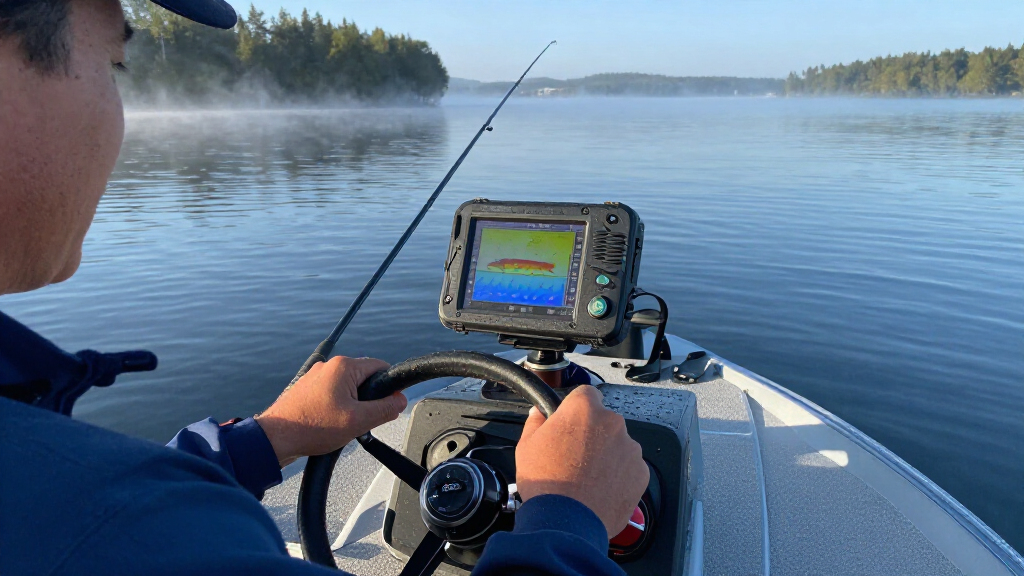
How We Picked
I ranked these marine boat depth finders by how well each product fits a distinct boating need, rather than treating every sonar-equipped display as interchangeable. My criteria include depth-reading focus, display readability, sonar and GPS features, transducer type and placement, installation demands, and how much flexibility a buyer gets beyond basic depth information. A dedicated sounder can be the better choice for a helm that already has navigation electronics; a fish finder with GPS can make more sense when one screen needs to serve several jobs.
The ordering gives priority to useful capability without unnecessary complexity, then recognizes specialist strengths such as compact fit, in-dash integration, or temperature readings. I also account for practical drawbacks: a larger multifunction display takes more dash room and setup, while a simple depth gauge offers less information for fishing or route planning. Products with similar names are judged separately because the listed transducer configurations and feature sets can affect installation and use.
Factors to Consider When Choosing Marine Boat Depth Finders
Before choosing a unit, decide whether you need depth alone or want a sonar display that also supports fishing and navigation. The right answer depends on your boat’s helm, hull, usual water, and existing electronics—not just screen size. These factors help narrow the field without paying for features your setup cannot use.
Depth Readout or Multifunction Sonar?
A dedicated sounder is designed to put depth information front and center, which can be useful when you already have a chartplotter or want a clean helm. A fish finder adds sonar views that help locate fish and interpret what lies below the boat, while some models add GPS or chart support. Those extra tools can reduce the number of separate screens, but they also bring more menus and setup decisions. A common mistake is buying a multifunction display for a boat that only needs a dependable depth readout. The reverse mistake is choosing a basic gauge when you expect it to support fishing or navigation tasks. Start by listing the jobs the display must do on a typical outing, then pay for additional functions only when they answer a real need.
Transducer Mounting Must Match the Hull
Transducer type and placement affect both installation effort and whether a unit suits your boat. Transom-mount models need an accessible mounting area at the stern, while an in-hull arrangement can avoid an exterior transducer on compatible hulls. In-hull installation is not a universal fit, so check the product instructions and hull material before assuming it will work. On some boats, an awkward mounting location or turbulent water near the transom can undermine readings even when the display itself is capable. Confirm what transducer is included rather than relying on a model-family name, especially when comparing closely named variants. If you are unsure about placement, resolve that question before choosing a screen or buying extra mounting parts.
Match the Display to Your Helm
A larger screen can make sonar views and menus easier to read, but it needs room on the console and may compete with existing instruments. Compact units are easier to fit in a crowded helm, though small text and split-screen views can be less comfortable to use at a glance. Think about where the display will sit, how far away you will read it, and whether glare or a covered helm changes visibility. Measure the available opening and mounting surface before ordering, including space for cables behind the panel. Do not choose by diagonal size alone: the screen layout and the information you want visible together matter just as much. If your main task is checking depth quickly, a smaller focused display may be more practical than a larger unit you cannot position well.
Check GPS and Chart Needs Separately
GPS capability and chart support are not interchangeable with depth measurement. A unit may show position or support navigation features without providing the chart coverage you expect for your waters. Before buying, check what mapping is included, whether charts cover your area, and whether you need additional chart data. Inland and coastal users may have different coverage needs, so a chart label alone does not prove a unit fits your usual routes. If you already rely on a separate chartplotter, paying for overlapping navigation functions may bring little benefit. If you want one display to support both depth checks and route awareness, confirm the mapping details rather than inferring them from the presence of GPS.
Decide Which Extra Readings Matter
Some sounders add air or water temperature, while fish-finder models may provide broader sonar views or other tools. These extras are useful only if they inform decisions you make on the water; otherwise, they can add complexity without changing how you use the boat. Temperature information can help anglers compare conditions, but a basic depth-focused boater may prefer a simpler display. Compare the exact feature list and included components, since products with similar names can differ in what they measure or how they connect. Also think about whether the added information remains readable alongside the depth reading you care about most. Choose a feature set that improves your routine, not one that merely makes the specification list longer.
Budget for Installation and Existing Electronics
The purchase is only part of the decision: mounting hardware, cable routing, dash modifications, and professional installation can affect the total effort. A straightforward transom mount may suit a boat with clear stern access, while an in-dash sounder can require space and wiring behind the panel. Check whether the unit can work alongside your existing electronics and whether you need a standalone display or a system that shares data. Buyers sometimes select a feature-rich screen first and discover that the dash, power supply, or transducer location does not suit it. Paying more can make sense when the added functions replace equipment you would otherwise buy separately. If the new unit duplicates tools already onboard, a focused depth sounder may be the more sensible choice.
Frequently Asked Questions
Should I buy a dedicated depth sounder or a fish finder?
Choose a dedicated sounder if your main need is a quick depth reading and you already have separate navigation or fishing electronics. A fish finder makes more sense when you want to interpret sonar views or combine depth with other tasks on one display. Multifunction models can take more dash space and require more menu setup than a focused gauge. Think about who uses the boat and whether extra sonar information will change your decisions. If depth is the only job, avoid paying for functions you will rarely use.
Can I install a transom-mount transducer on any boat?
No; the stern needs a suitable mounting location where the transducer can sit in clean water and avoid interference from hull features or turbulence. Some hulls have limited access, unusual shapes, or existing equipment that makes a transom mount impractical. Check the manufacturer’s placement instructions and confirm the transducer supplied with the unit before purchasing. An in-hull option may suit some boats, but it has its own hull-compatibility requirements. If mounting is uncertain, ask a qualified installer to review the boat before you commit to a model.
Does a GPS fish finder automatically include useful charts?
No; GPS functions can provide position information without including the detailed chart coverage you need. Check the listed mapping, coverage area, and any chart requirements for the waters where you boat. This matters especially if you expect the screen to replace a separate chartplotter. If you already have navigation equipment, GPS may be a helpful addition but not a reason by itself to replace it. Confirm the exact chart package rather than assuming every GPS-equipped fish finder has the same maps.
Which transducer configuration should I choose if I want fewer exterior fittings?
An in-hull transducer can reduce exterior fittings on boats with a compatible hull and a suitable installation location. It is not automatically the right choice for every boat, and the product’s instructions should confirm compatibility before you buy. Transom-mount units need an exterior installation but can be easier to inspect or access on boats with a clear stern mounting area. Compare the exact included transducer, since similarly named products may be sold with different configurations. When minimizing exterior hardware is a priority, weigh that preference against hull compatibility and installation access.
Is a larger display worth choosing over a compact depth finder?
A larger display can make sonar views and multiple information panels easier to read, particularly if you use the unit for more than depth. It also needs more console space and may be harder to fit into an existing dash. A compact model can be the better match for a small helm or a dedicated depth-reading role. Consider viewing distance, sunlight, mounting position, and whether you need split-screen information before choosing. The best size is the one that keeps the readings you rely on legible without crowding the helm.
Conclusion
For the broadest mix of depth, sonar, and navigation functions, I recommend the Humminbird HELIX 5 CHIRP GPS G3 as best overall. Buyers seeking a dedicated display should compare the HawkEye DepthTrax Edge with the in-dash sounders and choose based on fit and mounting needs; that focused approach can also make the Humminbird HDR 650 a value-minded pick when basic depth information is the priority. For a beginner who wants a compact fish finder with GPS, the Garmin Striker 4 is a straightforward place to start, while the larger Garmin Striker Vivid 7cv is my premium choice for buyers who want more screen area and broader sonar use. For specific installation needs, compare the Faria Chesapeake’s in-hull transducer and HawkEye’s transducer variants against your hull before ordering. Choose by the job, available dash space, and mounting compatibility—not by feature count alone.