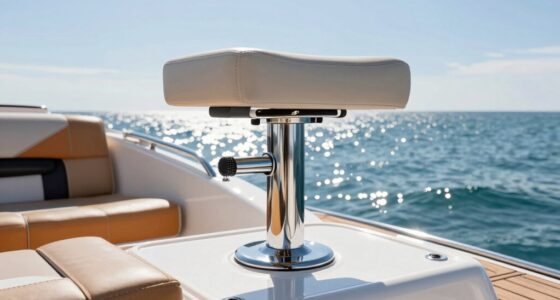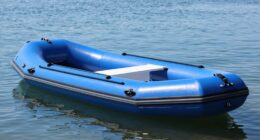
Searching for a dinghy outboard motor electric high power means balancing thrust, runtime, and weight. After comparing 14 models, the ZLLIEZQU 1000W 48V jet drive takes the best overall spot for its strong push and ability to run in weedy or shallow water where propellers struggle. The Newport NT300 36V offers the highest thrust-to-weight ratio for heavier dinghies, while the Bixpy K-1 delivers a compact, portable option for kayak-style dinghies. The main tradeoffs come down to battery voltage, shaft length, and whether you need a jet drive for debris-filled waters. Read on for the full breakdown of each model and which one fits your boating style.

Get sports gear delivered free with Prime
- Fast, free delivery on millions of items
- Prime Video, Amazon Music and more included
- Member-only deals all year
Complete the kit



Key Takeaways
- The 48V 1000W class dominates this lineup with five models sharing that spec — the real differentiators are jet vs. propeller design and build quality.
- Jet drive motors like the ZLLIEZQU and IOENC excel in shallow or weedy water but consume noticeably more battery at full throttle than comparable prop models.
- Shaft length is a bigger deciding factor than most buyers expect: short shafts suit transoms under 15 inches, while 40-inch shafts are required for high transoms or pontoon-style dinghies.
- The Bixpy K-1 and Angler Pro are the only truly portable options in this roundup, but they trade raw thrust for convenience and are best for kayaks and light tenders.
- Newport‘s saltwater-focused models (NT300, L-Series, NV-Series) feature superior corrosion protection, making them the clear choice for coastal use over freshwater-only budget motors.


| dinghy outboard motor electric high power | Voltage | Thrust | Power | Weight |
|---|---|---|---|---|
| ZLLIEZQU 1000W 48V Brushless E | 48V | 2204.62 lbs | 1000W | 24.25 lbs |
| Newport NT300 36V Electric Out | 36V | 110 lb | 1300W | 23.8 lb |
| Tiozuiu 1000W 48V Electric Out | 48V | 551.16 lbs | 1000W | — |
| MUSESPANI 12V Electric Trollin | 12V | 66 lb | 660W | 21 lb |
| 48V 1000W Electric Outboard Mo | 48V | 551.16 lb | 1000W | — |
| Newport L-Series 86lb Thrust T | 24V (Two 12V batteries) | 86 lbs | — | 24 lbs |
| 1500W 12–24V Brushless Electri | 12–24V | — | 800–1500W | 26.01 lbs |
| IOENC 48V 1000W Brushless Elec | 48V | — | 1000W | 24.3 lbs |
| Bixpy K-1 Outboard Motor Kit w | 25.2V | 33 lbs | 400W | 10 lbs |
| Bixpy K-1 Angler Pro Outboard | 25.6V | 38 lbs | 450W | 25 lbs |
| Hangkai 48V 1200W Brushless El | — | 1500 kg / 3307 lbs | 1200 W | — |
| Newport NV-Series 62lb Thrust | 12V | 62 lbs | — | 23 lbs |
| eaizybuk 48V 1000W Electric Ou | 48 volts | 551.2 pounds | 1000 watts (1.0 HP) | — |
| 12V Electric Trolling Motor wi | 12V | 56 lb | — | — |
More Details on Our Top Picks
ZLLIEZQU 1000W 48V Brushless Electric Outboard Motor with Jet Drive
This unit stands out for its jet drive propulsion, a rare feature in this price bracket that allows it to operate safely in shallow waters where traditional propellers might strike the bottom. With 2204 lbs of thrust, it is significantly more powerful than the MUSESPANI 12V, which tops out at 66 lbs. This makes the ZLLIEZQU suitable for larger dinghies or boats up to 2200 lbs, whereas the MuseSpani is strictly for small tenders. However, the tradeoff is complexity: it requires a specific 48V 100A battery to function correctly, adding considerable weight and cost to your setup compared to simpler 12V or 36V systems.
Pros:- Jet drive eliminates propeller entanglement and bottom strikes
- Massive 2204 lbs thrust capacity supports larger hulls
- Brushless motor ensures long-term efficiency and low maintenance
- Lightweight aluminum construction for its power class
Cons:- Requires a specific high-capacity 48V 100A battery system
- Jet drives can be less efficient than props in open, deep water
- No battery or charger included, increasing total system cost
Best for: Boaters who frequently navigate shallow rivers, marshes, or rocky areas where propeller damage is a risk.
Not ideal for: Users seeking a simple, plug-and-play solution; the jet drive and high-voltage requirements add complexity.
- Power:1000W
- Voltage:48V
- Thrust:2204.62 lbs
- Propulsion:Jet Drive
- Weight:24.25 lbs
- Max Boat Weight:2204 lbs
- Mounting:Transom Mount
Our verdict“Choose this if you need high power and shallow-water safety, but be prepared to invest in a robust battery system.”
Newport NT300 36V Electric Outboard Motor, 110 lb Thrust
The Newport NT300 hits a sweet spot for those who find the MUSESPANI 12V too weak but don’t need the heavy-duty complexity of the ZLLIEZQU. At 110 lbs of thrust, it offers roughly double the power of the 12V model while remaining manageable for most dinghy users. Its 36V system is more efficient than 12V setups, allowing for longer runtimes with smaller batteries than the 48V competitors require. While it lacks the jet drive of the ZLLIEZQU, the standard propeller design is more efficient for open-water cruising. It is a versatile choice for freshwater and saltwater use, though you must supply your own deep-cycle battery.
Pros:- Balanced 110 lb thrust suits a wide range of small boats
- 36V system offers better efficiency than standard 12V motors
- Brushless direct drive minimizes maintenance needs
- Compatible with both freshwater and saltwater environments
Cons:- Requires a separate 36V battery (not included)
- Standard propeller is vulnerable to shallow-water strikes
- Thrust is lower than the 48V high-power alternatives
Best for: General-purpose dinghy owners who need more power than a trolling motor but want simpler maintenance than a jet drive.
Not ideal for: Users operating in extremely shallow, debris-filled water where a standard propeller might snag.
- Power:1300W
- Voltage:36V
- Thrust:110 lb
- Weight:23.8 lb
- Shaft:Standard
- Battery Req:36V Deep-Cycle (Min 30Ah)
- Warranty:2-Year Limited
Our verdict“A reliable middle-ground option that upgrades power without overwhelming your battery setup.”
Tiozuiu 1000W 48V Electric Outboard Motor with 551 lb Thrust
Where this motor distinguishes itself is in its swivel joystick and 180° rotatable stand, offering precise control that the fixed-tiller 48V Short Shaft model lacks. This makes it exceptionally easy to dock or navigate tight spaces in a dinghy. With 551 lbs of thrust, it matches the power output of the other 48V short-shaft unit but adds ergonomic advantages. However, buyers should note the discrepancy in marketing: while titled as high-power, the effective rating is closer to 1 hp, similar to the Tiozuiu’s direct competitor. It is built for saltwater resistance, but the need for a 48V battery means you cannot swap it easily with 12V or 36V gear.
Pros:- Swivel joystick enables superior maneuvering and docking
- 180° rotation allows for flexible mounting positions
- Step-less speed control provides smooth acceleration
- Corrosion-resistant build suitable for saltwater use
Cons:- Effective power is modest at roughly 1 hp
- Requires a dedicated 48V battery system
- Joystick mechanism adds complexity compared to simple tillers
Best for: Anglers and boaters who prioritize precise steering and easy docking in confined marinas or lakes.
Not ideal for: Those looking for the highest possible raw horsepower per dollar; the joystick adds cost over basic tiller models.
- Power:1000W
- Voltage:48V
- Thrust:551.16 lbs
- Control:Swivel Joystick
- Rotation:180 Degrees
- Mounting:Transom Mount
- Warranty:1 Year
Our verdict“Ideal for users who value control and comfort over raw, unrefined thrust.”
MUSESPANI 12V Electric Trolling Motor, 66 lb Thrust
This motor is the most accessible option in the lineup, operating on a standard 12V battery that many boaters already own. Unlike the Newport NT300 or the 48V units, the MUSESPANI does not require specialized deep-cycle batteries, making it a cost-effective upgrade from manual paddling. However, its 66 lbs of thrust is significantly lower than the 110 lb Newport, limiting it to boats under 13.1 feet and lighter loads. It is strictly a trolling motor, not a planing outboard. If you need to move a heavy dinghy against strong currents, this unit will struggle where the Newport would succeed. It shines in calm, protected waters for small tenders.
Pros:- Uses common 12V batteries, reducing setup costs
- Includes cruise control and multiple speed settings
- Very quiet operation at 50 dB
- Adjustable tilt and retractable handle for easy storage
Cons:- Low 66 lb thrust limits boat size and speed
- Not suitable for planing or rough water conditions
- Plastic construction may feel less durable than aluminum rivals
Best for: Owners of small inflatables or tenders who want a quiet, simple motor and already own 12V batteries.
Not ideal for: Boaters needing to plane their dinghy or operate in strong winds/currents; the thrust is insufficient.
- Power:660W
- Voltage:12V
- Thrust:66 lb
- Max Boat Weight:1,322 lb
- Speeds:5 Forward, 2 Reverse
- Noise Level:50 dB
- Weight:21 lb
Our verdict“The best choice for casual users who prioritize simplicity and battery compatibility over power.”
48V 1000W Electric Outboard Motor with Short Shaft
This motor offers 551 lbs of thrust in a compact short-shaft design, matching the power of the Tiozuiu but using a traditional tiller instead of a joystick. This simplicity can be a pro or a con; while the tiller is robust and easy to repair, it lacks the fine-tuned maneuvering of the Tiozuiu’s swivel stand. The short shaft is ideal for small dinghies with low transoms, preventing cavitation issues that longer shafts might face in these boats. A notable drawback is the lack of a reverse gear, which makes docking more challenging than the Tiozuiu or the Newport NT300. It requires a 48V battery, so like the other 48V units, it is not compatible with standard 12V marine batteries.
Pros:- High 551 lb thrust in a compact short-shaft package
- Tiller control is simple, durable, and easy to service
- Quiet operation with zero emissions
- Suitable for boats under 4m (13.12 ft)
Cons:- No reverse gear function
- Requires a 48V battery (not included)
- Motor housing is not waterproof for out-of-water running
Best for: Owners of small, low-transom dinghies who want high thrust and simple mechanical reliability.
Not ideal for: Boaters who need reverse gear for easy docking or those with limited space for a 48V battery system.
- Power:1000W
- Voltage:48V
- Thrust:551.16 lb
- Shaft Length:42cm (Short)
- Control:Tiller
- Reverse Gear:None
- Max Speed:15 km/h
Our verdict“A powerful, simple option for small dinghies, provided you can manage without reverse gear.”
Newport L-Series 86lb Thrust Transom Mounted Saltwater Electric Trolling Motor (40″ Shaft)
This motor stands out for its 86lb thrust and dedicated saltwater construction, making it a reliable choice for anglers who need consistent low-speed power. Unlike the 1500W Brushless Electric Outboard Motor, which focuses on higher speeds and variable RPMs, the Newport L-Series prioritizes quiet, steady trolling. Its composite and fiberglass materials resist corrosion better than many budget alternatives, though you must remember to source two 12V deep-cycle batteries separately. The LED battery indicator is a practical touch for long days on the water, preventing unexpected power loss. While it lacks the high-speed punch of brushless competitors, its durability and specialized saltwater rating make it ideal for traditional fishing applications where silence is more valuable than velocity.Pros:- Corrosion-resistant composite build designed specifically for saltwater environments.
- 86lb thrust provides strong holding power in currents and wind.
- Includes an LED battery indicator to monitor remaining charge.
- Adjustable mount allows for flexible positioning on various transoms.
Cons:- Requires two 12V batteries, increasing initial cost and weight.
- 4.5 mph top speed is too slow for covering large distances quickly.
- Batteries are not included, which adds a significant hidden expense.
Best for: Anglers with deep-transom saltwater boats who prioritize quiet trolling over high-speed transit.
Not ideal for: Boaters seeking rapid planing speeds or those who want to avoid the hassle of managing a dual-battery setup.
- Thrust:86 lbs
- Voltage:24V (Two 12V batteries)
- Shaft Length:40 inches
- Speeds:8 (5 forward, 3 reverse)
- Material:Composite, Fiberglass
- Weight:24 lbs
Our verdict“Choose this if you need a durable, quiet trolling motor for saltwater fishing and have space for a dual-battery system.”
1500W 12–24V Brushless Electric Outboard Motor
This motor differentiates itself with a brushless design and infinitely variable speed control, offering a smoother ride than the stepped speeds found on the Newport L-Series. It delivers up to 1500W of power, capable of pushing small boats up to 14.8 feet with significantly more agility than traditional trolling motors. The aluminum alloy and stainless steel construction promises longevity, though it requires diligent rinsing after saltwater exposure, unlike some fully sealed units. While it lacks the integrated battery indicator of higher-end kits, its LED display provides real-time feedback. It is a strong contender for those who want outboard-like performance without the fuel costs, provided they are comfortable sourcing and managing their own external battery pack.Pros:- Brushless motor offers higher efficiency and less maintenance than brushed competitors.
- Infinitely variable speed allows for precise throttle control.
- Corrosion-resistant metals suitable for both fresh and saltwater.
- Includes assembly accessories for easier installation.
Cons:- Battery is not included, requiring a separate investment.
- Requires regular rinsing after saltwater use to prevent corrosion.
- Power cable is only 6.6 feet long, limiting battery placement options.
Best for: Owners of small freshwater or saltwater boats who want variable speed control and higher RPMs than standard trolling motors.
Not ideal for: Users who prefer a plug-and-play experience with included batteries or those unwilling to perform post-saltwater maintenance.
- Power:800–1500W
- Voltage:12–24V
- Max Boat Length:14.8 ft
- Speed Control:Infinitely Variable
- Weight:26.01 lbs
- Materials:Aluminum Alloy, Stainless Steel
Our verdict“Ideal for tech-savvy boaters who want brushless efficiency and variable speed control for small dinghies.”
IOENC 48V 1000W Brushless Electric Outboard Motor with Jet Pump
The IOENC 48V distinguishes itself with a jet pump design, which eliminates the risk of propeller damage from rocks or debris—a common issue with the 1500W Brushless Electric Outboard Motor. This makes it exceptionally suitable for inflatable boats and kayaks operating in shallow or weed-choked waters. The tool-free installation and omni-directional joystick simplify maneuvering, offering a user-friendly experience for beginners. While its 1000W power is robust, the 3-month warranty is shorter than industry standards, raising concerns about long-term support. It offers a balanced mix of power and safety, particularly for users who value the ability to pivot the motor 90 degrees for tight turns without exposing a propeller.Pros:- Jet pump design prevents propeller damage and entanglement.
- Tool-free installation allows for quick setup and removal.
- 90° rotatable bracket enhances maneuverability in tight spaces.
- 48V system provides efficient power delivery for extended runtime.
Cons:- Short 3-month warranty compared to competitors.
- Runtime is limited to 3-4 hours depending on battery capacity.
- Battery is sold separately, adding to the total cost of ownership.
Best for: Inflatable boat and kayak owners who operate in shallow, rocky, or weed-filled waters where propellers are vulnerable.
Not ideal for: Buyers seeking long-term warranty coverage or those with hard-shell boats requiring deep-water propeller thrust.
- Power:1000W
- Voltage:48V
- Max Boat Weight:2204.62 lbs
- Runtime:3-4 hours
- Weight:24.3 lbs
- Material:Aluminum and Plastic
Our verdict“Perfect for inflatable boat owners who need a safe, propeller-free motor for shallow and obstacle-rich environments.”
Bixpy K-1 Outboard Motor Kit with K1 Kayak Motor and Wireless Remote
Weighing just 10 lbs, the Bixpy K-1 is far more portable than the IOENC 48V or the Newport L-Series, making it the superior choice for kayakers who need to carry their motor from car to launch site. Its 400W motor and 33lb thrust are sufficient for calm waters but lack the raw power needed for heavy dinghies or rough conditions. The wireless Bluetooth remote offers convenient control, though the 80-minute runtime at top speed is a significant limitation for long-distance travel. This kit excels in convenience and ease of use, with a quick-attach mounting system that requires no tools, but it is not designed for high-power applications or extended offshore trips.Pros:- Extremely lightweight at 10 lbs for easy carrying.
- Wireless Bluetooth remote provides hands-free speed adjustment.
- Quick-attach mounting requires no tools for installation.
- Compact design fits easily into small storage spaces.
Cons:- Limited runtime of 80 minutes at maximum speed.
- 33lb thrust is underpowered for larger inflatables.
- Requires compatible adapters for certain boat models.
Best for: Kayak and paddleboard users who prioritize extreme lightness and easy portability over high speed or long range.
Not ideal for: Dinghy owners needing high thrust for heavy loads or those planning trips longer than an hour at full power.
- Power:400W
- Thrust:33 lbs
- Weight:10 lbs
- Voltage:25.2V
- Battery Capacity:378 Wh
- Material:Aluminum
Our verdict“The best option for kayakers who value portability and simplicity above all else.”
Bixpy K-1 Angler Pro Outboard Kit with Motor & Remote Control
The Bixpy K-1 Angler Pro builds on the standard K-1 by increasing thrust to 38 lbs and boosting battery capacity to 768 Wh, offering significantly more range than the standard model. However, this power comes with a weight penalty; at 25 lbs, it is heavier than the standard K-1 and less portable than the IOENC 48V. Its impact-resistant design makes it a robust choice for rugged coastal environments, whereas the Newport L-Series might require more careful handling in choppy waters. The universal plug-and-play setup simplifies integration, but the added weight may be a deterrent for those with limited upper body strength or small storage compartments.Pros:- 768 Wh battery provides extended runtime compared to the standard K-1.
- 38 lbs thrust offers better performance in wind and current.
- Impact-resistant and waterproof construction for harsh conditions.
- Universal mounting options facilitate easy installation on various hulls.
Cons:- Heavier at 25 lbs, reducing portability.
- Specific to small boats, unsuitable for larger vessels.
- Limited to electric operation with no backup fuel option.
Best for: Anglers in small boats who need higher thrust and longer runtime than the standard K-1, but still want a compact footprint.
Not ideal for: Users who need the absolute lightest motor possible or those operating large dinghies requiring over 50 lbs of thrust.
- Power:450W
- Thrust:38 lbs
- Weight:25 lbs
- Battery Capacity:768 Wh
- Voltage:25.6V
- Material:Aluminum
Our verdict“A durable, higher-power option for anglers who need more thrust and range than the standard K-1 but still want a compact kit.”
Hangkai 48V 1200W Brushless Electric Outboard Motor, Short Shaft
The Hangkai 48V 1200W stands out for its massive 3,307 lbs of stated thrust, which is far beyond what the eaizybuk 1000W offers with its 551 lbs. That raw power makes it a strong candidate for pushing a small dinghy against a stiff current or wind. The brushless motor runs quietly and needs less maintenance than a brushed unit, and the aluminum alloy housing is built to handle both fresh and salt water. However, that thrust comes with tradeoffs: the practical speed is only 5–8 km/h, so you won’t be planing anywhere, and you’ll need a separate 48V battery with at least 40Ah capacity to get around two hours of use. The short shaft (42 cm tail plate height) also limits it to boats under 5 meters. If you prioritize pulling power over speed and have a suitable battery, this is the pick.
Pros:- Brushless motor is efficient, quiet, and low maintenance
- Stepless speed control with forward and reverse gears
- Aluminum alloy construction suits fresh and saltwater
- Anti-tangle propeller and rotatable stand aid maneuverability
Cons:- Requires a separate 48V battery (not included) with at least 40Ah for reasonable runtime
- Practical speed of 5–8 km/h limits it to displacement hulls, not planing
- Short shaft restricts it to boats with low transoms under 5 meters
Best for: Owners of small dinghies under 16 feet who need maximum thrust for fighting currents or wind and already have a 48V battery system.
Not ideal for: Anyone expecting planing speeds or who wants a turnkey setup without sourcing a separate 48V battery—this motor is a powerhead, not a complete package.
- Model:DD-48V-1200W
- Power:1200 W
- Motor type:Pure copper brushless motor
- Thrust:1500 kg / 3307 lbs
- Practical speed:5–8 km/h
- Recommended battery:48 V, 40 Ah for ~2 hours
- Propeller:7-1/4 × 5 in, three-blade
- Net weight:12 kg / 26.45 lbs
Our verdict“Choose the Hangkai if you need brute-force thrust for a small dinghy and already have a 48V battery, not if you want speed or an all-inclusive kit.”
Newport NV-Series 62lb Thrust Saltwater Transom Mounted Trolling Motor with LED Battery Indicator
The Newport NV-Series 62lb thrust trolling motor is my choice for saltwater anglers who need reliable control in wind and current. Compared with the 12V 56 lb trolling motor, this one delivers noticeably more push—62 lbs of thrust—and its corrosion-resistant construction is specifically built for marine environments. The integrated LED battery indicator is a practical touch, letting you monitor power without pulling out a multimeter. The large 3-blade propeller provides solid bite in open water. That said, the 23 lb weight is a burden on smaller vessels, and the transom mount demands a compatible hull shape. It’s also a 12V system, so you’re limited to 8 speed settings rather than the stepless control of the 48V outboards. For a dedicated saltwater trolling setup, this is the most durable option here.
Pros:- High 62 lb thrust provides strong control in wind and current
- Corrosion-resistant construction for saltwater and freshwater
- Integrated LED battery indicator for real-time power monitoring
- Large 3-blade propeller offers improved handling and push
Cons:- Heavy 23 lb weight is cumbersome for smaller vessels
- Transom mount design may require specific hull compatibility
- Only 8 speed settings, no stepless control like 48V outboards
Best for: Saltwater anglers with transom-mounted boats from 14 to 20 feet who need dependable thrust in wind and current and want a corrosion-resistant motor with a battery gauge.
Not ideal for: Kayak or small dinghy users who need a lightweight, easily portable motor—the 23 lb weight and transom mount are too heavy and restrictive.
- Thrust:62 lbs
- Voltage:12V
- Speed Settings:8
- Material:Aluminum, Fiberglass, Plastic
- Weight:23 lbs
- Dimensions:18″D x 5″W x 42″H
- Warranty:2 year warranty
- Mounting Type:Transom Mount
Our verdict“Pick the Newport if you fish saltwater from a mid-size transom boat and need a rugged, high-thrust trolling motor with a battery gauge, but skip it for lightweight portable setups.”
eaizybuk 48V 1000W Electric Outboard Motor
The eaizybuk 48V 1000W offers a well-rounded balance of power and practicality for small boats up to 13.1 feet. Unlike the Hangkai 1200W, which pushes huge thrust but requires a hefty battery, this motor’s 551 lbs of thrust is more than enough for a 10–12 foot dinghy at moderate speeds. The brushless motor eliminates carbon brush replacements, and the stepless speed control with a cruise function makes long runs less tiring. The rotatable stand with an omnidirectional joystick adds maneuverability that the fixed transom mounts on the Newport lack. However, the product description doesn’t specify battery capacity or runtime, so you’ll need to plan your own 48V pack. It’s also not designed for heavy loads—stick to boats under 13 feet and you’ll be satisfied.
Pros:- Brushless motor requires no carbon brush replacements
- Corrosion-resistant construction for saltwater use
- Stepless speed control and cruise function
- Quiet operation with no exhaust fumes
Cons:- Requires a 48V battery, but no capacity or runtime is specified
- Limited to boats under 13.1 feet for effective performance
- Lower thrust than the Hangkai 1200W, so not for heavy loads
Best for: Small boat owners (up to 13 feet) who want a quiet, low-maintenance electric outboard with stepless control and cruise, and are willing to source their own 48V battery.
Not ideal for: Those needing high thrust for heavy loads or strong currents—the 551 lb thrust is modest compared to the Hangkai’s 3,307 lb rating, and there’s no battery guidance.
- Power:1000 watts (1.0 HP)
- Voltage:48 volts
- Thrust:551.2 pounds
- Motor speed:3700 rpm
- Material:Aluminum alloy
- Mounting type:Transom mount
- Recommended boat length:Up to 13.1 feet
- Warranty:1 year
Our verdict“Choose the eaizybuk if you have a small dinghy and want a balanced, feature-rich 48V outboard without the extreme thrust of the Hangkai, but be ready to build your own battery setup.”
12V Electric Trolling Motor with 56 lb Thrust
The 12V electric trolling motor with 56 lb thrust is the best choice for weedy, shallow lakes where vegetation can snag a standard prop. Its anti-tangle propeller is designed to push through submerged weeds without wrapping, and the telescoping handle lets you adjust the tiller to your exact position—something the fixed-handle Newport 62lb doesn’t offer. The built-in protections against overheating, low voltage, reverse polarity, and stalling make it forgiving for less experienced users. Five forward and three reverse speeds, plus cruise control, give you flexibility. The tradeoff is lower thrust than the Newport, so it’s not ideal for heavy winds or strong currents. Also, the 28-inch shaft is short, so it’s best for transoms with a low freeboard. If you fish in weedy water, this is the one.
Pros:- Anti-tangle propeller designed for weeds and submerged vegetation
- Telescoping handle adjusts to the operator’s position
- Variable speed and cruise control
- Built-in protections against overheating, low voltage, reverse polarity, stalling, and starting errors
Cons:- Lower thrust (56 lb) struggles in strong wind or current
- 28-inch shaft is short, limiting transom compatibility
- Requires a compatible 12V battery, not included
Best for: Anglers who fish shallow, weed-choked lakes and want a trolling motor with an anti-tangle prop, a telescoping handle, and built-in safety protections for worry-free operation.
Not ideal for: Boaters in open, windy conditions who need high thrust—the 56 lb rating is weaker than the Newport’s 62 lb, and the short shaft limits it to low transoms.
- Voltage:12V
- Thrust:56 lb
- Mounting type:Transom mount
- Shaft length:28 inches
- Forward speeds:5
- Reverse speeds:3
- Shaft material:Nanocomposite
- Engine type:Electric
Our verdict“Pick this 12V trolling motor if you fish weedy shallows and want a safe, adjustable, anti-tangle setup, but look elsewhere for open-water power.”

How We Picked
To rank these 14 electric outboards, I evaluated each on five criteria: usable thrust (not just peak wattage), voltage and battery compatibility, shaft length and mount flexibility, build quality and corrosion resistance, and overall value for the power delivered. I prioritized models that could actually push a typical 8- to 12-foot dinghy at planing speeds, not just crawl along.
The ranking logic started by grouping motors into power classes — 12V trolling motors, 36V mid-range, and 48V high-power units. Within each class, I favored models with brushless motors (for efficiency and lifespan), reinforced composite or aluminum housings, and features like jet drives or variable-speed controls that solve real boating problems. Saltwater-rated models earned a bump because corrosion is the most common failure point. Budget options were ranked lower when they lacked thrust or durability, even if the price was appealing.
Factors to Consider When Choosing Dinghy Outboard Motor Electric High Power
Beyond the product reviews, there are several broader factors that determine whether a high-power electric outboard will actually work for your dinghy. Here are the tradeoffs to weigh before you buy.
Power and Thrust: What Do the Numbers Really Mean?
Thrust is measured in pounds (lb) and tells you how much push the motor generates, but it’s only meaningful when matched to your boat’s weight and hull shape. A 55 lb thrust motor can move a 10-foot aluminum dinghy with two people at a brisk 4-5 mph, but the same motor will struggle on a heavy fiberglass tender. The 48V 1000W models in this roundup typically produce 80-120 lb of thrust, which is the sweet spot for most dinghies. Higher voltage (48V) allows more efficient power delivery at sustained speeds, but it also requires a heavier, more expensive battery. Don’t just chase the highest wattage — calculate your dinghy’s loaded weight and aim for at least 5 lb of thrust per 100 lb of boat weight for comfortable cruising.
Jet Drive vs. Propeller: Which Suits Your Water?
Jet drives (found on the ZLLIEZQU and IOENC) draw water through an impeller and expel it as a jet, with no exposed propeller. This makes them immune to tangling in weeds, fishing line, or shallow debris — a huge advantage if you navigate marshy creeks or rocky shorelines. The tradeoff is efficiency: jet drives lose about 20-30% of their thrust to water turbulence, so they draw more battery at the same speed compared to a prop motor. For open, clean water, a conventional propeller is lighter, quieter, and more energy-efficient. Choose a jet drive only if you routinely encounter submerged obstacles; otherwise, a prop motor gives you more runtime and lower operating cost.
Shaft Length and Transom Height: Measure Before You Buy
The most common mistake in this category is buying a motor with the wrong shaft length. Short shafts (15-20 inches) are designed for transoms that sit 12-15 inches above the waterline — typical for inflatable dinghies and small aluminum tenders. Long shafts (25-30 inches) are for sailboat dinghies or high-sided RIBs. The Newport L-Series offers a 40-inch shaft for pontoon-style boats or high transoms. If the shaft is too short, the prop cavitates and loses thrust; too long, and it drags in the water, increasing drag and battery drain. Measure your transom height from the top of the transom to the waterline and add 3-4 inches for the motor’s mounting bracket. This one measurement prevents most buyer’s remorse.
Battery Voltage and Runtime: Planning Your Power Source
High-power electric outboards demand serious batteries. A 48V 1000W motor at full throttle draws roughly 20-25 amps, meaning a 20Ah 48V battery gives you less than an hour of continuous running. Most buyers need at least a 40-60Ah lithium battery for a half-day of use, which adds 15-25 pounds and $300-600 to the total cost. The 12V trolling motors in this roundup (like the MUSESPANI and the 56 lb thrust model) are far more forgiving — they can run on a standard deep-cycle marine battery. When comparing motors, factor in the battery weight and cost, not just the motor price. If you already own a 12V battery, a 12V motor may be the smartest economic choice, even if it lacks top-end speed.
Saltwater vs. Freshwater: Corrosion Protection Matters
Saltwater is brutal on electric motors — it attacks aluminum housings, steel shafts, and electrical connectors. Newport’s L-Series and NV-Series are explicitly designed for saltwater with sealed bearings, stainless steel hardware, and sacrificial anodes. The budget 12V motors have painted steel components that will show rust within a season of coastal use. If you boat exclusively in freshwater lakes or rivers, you can save money with a freshwater-rated motor, but if there’s any chance of salt exposure, invest in a saltwater-rated model. Also consider rinsing the motor with fresh water after every saltwater trip — this simple habit extends the life of any electric outboard.
Portability and Mounting: Weight and Bracket Design
High-power electric outboards are heavy — the 48V models in this roundup weigh between 25 and 40 pounds, plus the battery. If you need to lift the motor on and off your dinghy every trip, weight becomes a critical factor. The Bixpy K-1 weighs under 6 pounds and is designed for quick attachment to kayaks or small dinghies, but it only produces 7.5 lb of thrust — enough for a kayak, not a heavy tender. For transom-mounted motors, check the bracket design: a clamp-style bracket should have adjustable tightening screws and a rubber pad to protect the transom. Some models (like the Newport NT300) feature a reinforced composite bracket that resists flexing at full throttle. Consider how you’ll transport the motor and battery — a rolling cart or a dedicated mount in your vehicle can make a 40-pound unit far more manageable.
Frequently Asked Questions
What size electric outboard do I need for a 12-foot dinghy?
For a typical 12-foot aluminum or fiberglass dinghy weighing 200-400 pounds loaded, you’ll want at least 80-100 lb of thrust. That puts you in the 48V 1000W class — models like the ZLLIEZQU, Tiozuiu, or eaizybuk — which can push the boat at 4-6 mph. A 12V motor with 55-66 lb thrust will work for a small 8-10 foot tender but will feel sluggish on a 12-footer. The Newport NT300 with 110 lb thrust is the strongest option if you need to plane the boat with two passengers. Always err on the side of more thrust if you regularly carry gear or face wind and current.
Is a jet drive electric outboard worth the extra cost?
Jet drives cost more and consume more battery, but they’re worth it if you boat in shallow, weedy, or debris-filled water. The ZLLIEZQU and IOENC jet models let you run in 6 inches of water without worrying about a bent prop or tangled line. If you stick to open, deep water, a propeller motor is more efficient and cheaper to maintain. Consider your typical boating environment: if you’ve ever had to cut weeds off a prop mid-trip, the jet drive’s peace of mind justifies the premium. For open-water cruisers, save the money and buy a prop model with a longer runtime.
How long will a 48V battery last at full throttle?
At full throttle, a 48V 1000W motor draws about 20-25 amps. A 20Ah battery will last roughly 45-60 minutes, while a 40Ah battery gives you 1.5-2 hours. Running at 50-70% throttle extends runtime significantly — most users get 3-4 hours from a 40Ah battery when cruising at moderate speed. Lithium batteries are lighter and hold voltage better than lead-acid, so they’re worth the investment for high-power motors. Plan for at least one spare battery if you’re on the water for a full day. Also note that jet drives drain batteries faster than props at the same speed.
Can I use a 12V trolling motor for saltwater dinghy use?
Yes, but only if it’s rated for saltwater. The Newport NV-Series and L-Series are explicitly designed for saltwater with sealed components and corrosion-resistant materials. The budget 12V motors like the MUSESPANI and the 56 lb thrust model have painted steel parts that will corrode quickly in salt air and water. If you must use a freshwater motor in saltwater, rinse it thoroughly with fresh water after every trip and apply anti-corrosion spray to the shaft and connections. However, for regular coastal use, the extra cost of a saltwater-rated model is justified by longer lifespan and reliability.
What’s the difference between a trolling motor and an electric outboard motor?
Traditional trolling motors are designed for slow-speed maneuvering and positioning, typically 12V or 24V with thrust up to 80 lb. Electric outboard motors, especially high-power 48V models, are built to propel a boat at planing speeds and handle longer distances. They have larger propellers, higher RPMs, and more efficient brushless motors. In this roundup, the 12V models (MUSESPANI, 56 lb thrust) are trolling motors, while the 48V 1000W units are true outboards. If you need to get somewhere quickly or fight a current, choose a high-power outboard. If you only need to move a small tender at slow speed, a trolling motor is lighter and cheaper.
Conclusion
After comparing all 14 models, the best overall is the ZLLIEZQU 1000W 48V jet drive — it combines high thrust, jet-drive versatility, and a solid build for most dinghy owners. For best value, the Newport NT300 36V delivers 110 lb of thrust at a price that undercuts the 48V models while still handling heavier boats. If you want premium performance with maximum portability, the Bixpy K-1 Angler Pro is the pick for kayak-style dinghies, though it can’t match the raw power of larger units. Beginners should start with the 12V MUSESPANI 66 lb thrust — it’s simple, forgiving, and doesn’t require a specialized battery. For saltwater boaters, the Newport L-Series 86lb thrust offers the best corrosion protection. Match your choice to your boat size, water conditions, and how much weight you’re willing to lift — that’s the real key to satisfaction.