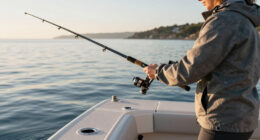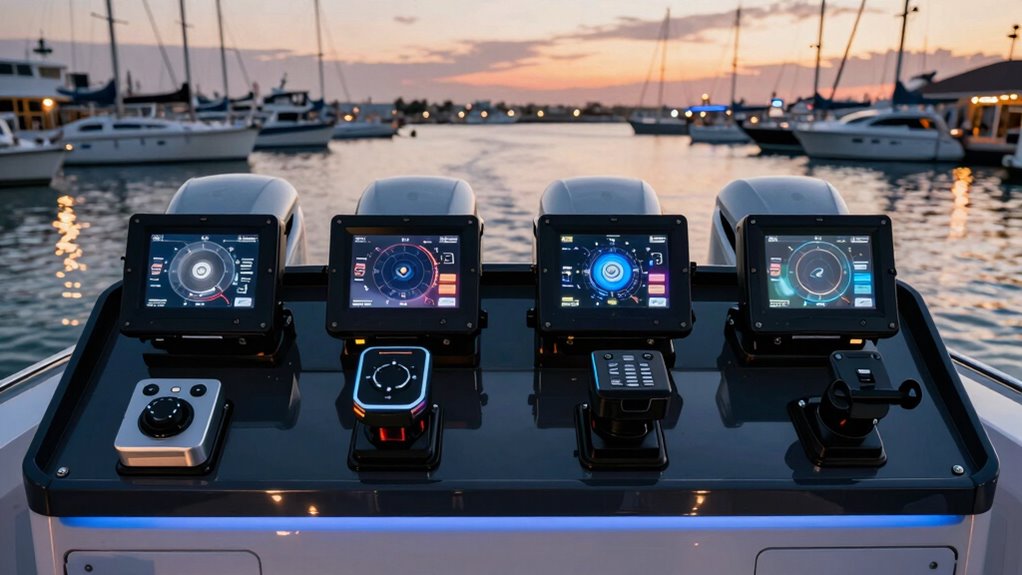
Adding an autopilot to an outboard boat used to mean a bulkhead full of gear and a marine electrician on speed dial, but the current generation of compact corepacks has changed that equation. The catch is that steering type dictates everything: a hydraulic-steered bay boat, a cable-steered skiff, and a tiller-kicker fishing rig each need completely different hardware, and buying the wrong pack is an expensive mistake. In this roundup I compare five systems built specifically for outboards, and two stand out early. The Garmin Compact Reactor 40 with GHC 50 earns my top spot for hydraulic-steered boats under 25 feet thanks to its flexible solid-state heading sensor and quick commissioning, while the Simrad NAC-1 hydraulic package with PUMP-1 MkII and Precision-9 is the stronger pick for anglers who want route following and automatic turn patterns. If your boat steers by cable rather than hydraulics, the Lowrance cable-steer system is one of the few purpose-built answers left on the market. The main tradeoffs you will weigh throughout this guide are hydraulic versus cable steering compatibility, single-engine size limits, and whether a display or control head is actually included in the box.

Get sports gear delivered free with Prime
- Fast, free delivery on millions of items
- Prime Video, Amazon Music and more included
- Member-only deals all year
Complete the kit


Key Takeaways
- Steering type is the deciding factor: the Garmin Compact Reactor 40, Simrad NAC-1 packs, and Lowrance system each serve different steering setups, and none of them cross over.
- The Garmin Compact Reactor 40 is capped at single-engine outboard boats under 25 feet with hydraulic steering — bigger boats need a larger pump class.
- The Simrad NAC-1 package with PUMP-1 MkII and Precision-9 adds route steering and automatic turn patterns the baseline Simrad pack does not spell out.
- The Garmin Reactor 40 Kicker requires a separately purchased GHC 20 or compatible MFD to operate — the corepack alone is not functional.
- The Lowrance system is one of the rare autopilots designed for cable-steered single-outboard boats, a category most brands have abandoned.
| Garmin Compact Reactor 40 Hydraulic Autopilot with GHC 50 and Shadow Drive Technology Pack |  | Best Overall for Hydraulic Outboards | System type: Hydraulic autopilot corepack | AHRS: Solid-state 9-axis | Recommended boat: Single-engine outboard boats under 25 ft | VIEW ON AMAZON | See Our Full Breakdown |
| Simrad NAC-1 Outboard Pilot Hydraulic Autopilot Package with PUMP-1 MkII and Precision-9 |  | Best for anglers who fish routes and patterns | Steering type: Outboard hydraulic steering | Pump: PUMP-1 MkII, 0.8 L reversible gear pump | Heading sensor: Precision-9 compass | VIEW ON AMAZON | See Our Full Breakdown |
| Lowrance Outboard Autopilot System for Cable-Steered Vessels |  | Best for Cable-Steered Boats | Vessel compatibility: Single outboard vessels | Steering type: Cable-steered | Computer: NAC-1 autopilot computer | VIEW ON AMAZON | See Our Full Breakdown |
| Garmin Reactor 40 Kicker Autopilot (Without GHC 20 Control/Display) |  | Best for Kicker Motor Fishing | Compatible motor: Small gasoline outboards up to 20 hp | Remote: Floating handheld with sunlight-readable display | Connectivity: ANT, NMEA 2000 | VIEW ON AMAZON | See Our Full Breakdown |
| Simrad NAC-1 Outboard Pilot Hydraulic Pack with PUMP-1 and POINT-1 |  | Best Value Entry Into Hydraulic Autopilot | Brand: Simrad | Model: NAC-1 Outboard Pilot Hydraulic Pack | Included components: NAC-1 computer, PUMP-1 pump, POINT-1 GPS/compass | VIEW ON AMAZON | See Our Full Breakdown |
| marine autopilot for outboard | Connectivity |
|---|---|
| Garmin Compact Reactor 40 Hydr | — |
| Simrad NAC-1 Outboard Pilot Hy | NMEA 2000, Micro-C |
| Lowrance Outboard Autopilot Sy | — |
| Garmin Reactor 40 Kicker Autop | ANT, NMEA 2000 |
| Simrad NAC-1 Outboard Pilot Hy | NMEA 2000 |
More Details on Our Top Picks
Garmin Compact Reactor 40 Hydraulic Autopilot with GHC 50 and Shadow Drive Technology Pack
This corepack hits a sweet spot that most outboard owners actually live in: a single-engine hydraulic boat under 25 feet that needs clean, reliable course holding without a five-figure installer project. What separates it from the Simrad packs in this lineup is the solid-state 9-axis AHRS, which can be mounted in almost any orientation and actively compensates for pitching and rolling — meaning fewer course corrections in a choppy chopline and less frustration during setup. The inclusion of Shadow Drive Technology is a genuine safety feature for anglers: it detects when you grab the wheel and disengages the pilot automatically, then re-engages when you settle back on heading. Compared with the Simrad NAC-1 package, this Garmin makes a stronger case for boats that double as family cruisers, because the included GHC 50 instrument gives you a dedicated control surface right at the helm rather than relying solely on a chartplotter menu.
The tradeoffs are real, though. This pack is capped at single-engine outboards under 25 feet, so twin-engine rigs and larger offshore hulls need a bigger Reactor 40 variant with a larger pump. You also need a compatible hydraulic steering system, and it will not work at all on a cable-steered boat — that buyer belongs with the Lowrance system instead. Commissioning and calibration are required before the first outing, which is straightforward but not optional.
Pros:- Solid-state 9-axis AHRS mounts in nearly any orientation and reacts to pitching and rolling
- Shadow Drive automatically disengages when you take the wheel
- Includes the GHC 50 dedicated autopilot display
- Fast calibration and commissioning process
- Integrates with Garmin chartplotters for control anywhere aboard
Cons:- Limited to single-engine outboard boats under 25 feet
- Requires a compatible hydraulic steering system
- Commissioning and calibration required before first use
Best for: Owners of single-engine, hydraulically steered outboard boats under 25 feet who want a complete, quick-to-calibrate system
Not ideal for: Cable-steered boats, twin-engine rigs, or hulls over 25 feet
- System type:Hydraulic autopilot corepack
- AHRS:Solid-state 9-axis
- Recommended boat:Single-engine outboard boats under 25 ft
- Display:GHC 50 autopilot instrument included
- Included technology:Shadow Drive Technology
- Part number:010-02794-08
Our verdict“The most complete and easiest-to-live-with package here, provided your boat is a hydraulic-steered single outboard under 25 feet.”
Simrad NAC-1 Outboard Pilot Hydraulic Autopilot Package with PUMP-1 MkII and Precision-9
Where the Garmin Compact Reactor 40 focuses on holding a heading cleanly, this Simrad package leans into navigation as a fishing tool. It supports heading, course, and route steering plus automatic turn patterns, which matters if you work contour lines, repeat trolling passes, or run search patterns over structure — the pilot does the zigzag while you work the rods. The PUMP-1 MkII reversible 0.8 L pump is notably quiet, a small thing you will appreciate on early mornings when every mechanical groan carries across the water. Its Precision-9 compass feeds heading and motion data over NMEA 2000, and honestly it is also useful to the rest of your network — radar overlay and chart stabilization benefit from a solid heading source, which is an advantage over closed Garmin ecosystems if your electronics are mixed-brand.
Compared with the other Simrad pack in this guide, this one is the clearer buy: you get the MkII pump, the better sensor, a Standby-Auto button, and full Micro-C networking rather than a thin parts list. Against the Garmin, the deciding factors are your electronics brand and your use case — Simrad owners and route-fishing anglers get more here, while Garmin owners get faster commissioning and the Shadow Drive safety net. The honest drawbacks: it assumes hydraulic steering with compatible ORB fittings, and it is a components package, so you should budget for professional installation and integration unless you are comfortable running NMEA 2000 backbone wiring yourself.
Pros:- Route steering and automatic turn patterns built in
- Quiet 0.8 L reversible PUMP-1 MkII
- Precision-9 heading sensor benefits the entire NMEA 2000 network
- One-touch Auto/Standby control
- Complete component set including Micro-C network parts
Cons:- Requires hydraulic steering with compatible ORB fittings
- Installation and integration work is more involved than the Garmin
- No dedicated color display in the package, only the Standby-Auto button
Best for: Simrad or mixed-network boat owners who want route following and turn patterns for fishing
Not ideal for: Boaters wanting a plug-and-play experience or non-hydraulic steering setups
- Steering type:Outboard hydraulic steering
- Pump:PUMP-1 MkII, 0.8 L reversible gear pump
- Heading sensor:Precision-9 compass
- Connectivity:NMEA 2000, Micro-C
- Navigation modes:Heading, course, and route steering
- Additional features:Automatic turn patterns, one-touch Auto/Standby
- Control method:Push button
Our verdict“The richest feature set for fishing-specific autopilot work, and the better Simrad buy, at the cost of a more hands-on install.”
Lowrance Outboard Autopilot System for Cable-Steered Vessels
Most autopilot manufacturers have quietly given up on cable-steered outboards, which is exactly why this Lowrance system earns its place despite being the least glamorous entry here. It is one of the few packages built around a helm drive that works with mechanical cable steering on a single outboard, and it arrives complete: NAC-1 computer, helm drive, Point-1 GPS/compass, and an Auto/Standby switch. That completeness mirrors the Simrad NAC-1 packages — no surprise given the shared parent company — and the Point-1 GPS/compass gives it accurate heading data over NMEA 2000, so it plugs into a Lowrance or Simrad chartplotter network with no extra boxes. For the enormous population of skiffs, jon boats, and mid-size fish-and-ski hulls that never converted to hydraulic steering, this is realistically the purpose-built answer.
The limitations follow from the design. A helm-drive system steers through your existing cable, so it will not match the response or smoothness of a hydraulic pump like the PUMP-1 MkII on larger boats, and it is rated for single-outboard vessels only. There is no display in the box — you control it through a compatible Lowrance or Simrad display or the included Auto/Standby switch — and buyers should confirm their helm and cable configuration is compatible before ordering, since mechanical steering layouts vary widely between boat builders.
Pros:- Purpose-built for cable-steered single-outboard vessels
- Complete package: NAC-1, helm drive, Point-1 GPS/compass, switch
- NMEA 2000 interface for easy network integration
- Fills a category most brands have abandoned
Cons:- Helm drive is less smooth and responsive than hydraulic pump systems
- No display included — needs a compatible networked chartplotter
- Compatibility with your specific helm and cable setup must be verified
Best for: Owners of cable-steered single-outboard boats who have no hydraulic option
Not ideal for: Hydraulically steered boats or anyone wanting advanced route and pattern features
- Vessel compatibility:Single outboard vessels
- Steering type:Cable-steered
- Computer:NAC-1 autopilot computer
- Heading/GPS:Point-1 GPS/compass
- Controls:Auto/Standby switch
- Interface:NMEA 2000
Our verdict“If your outboard steers by cable rather than hydraulics, this is essentially your only complete off-the-shelf option, and it is a competent one.”
Garmin Reactor 40 Kicker Autopilot (Without GHC 20 Control/Display)
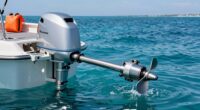
This one solves a problem the other four cannot touch: steering a small auxiliary outboard up to 20 horsepower while the main engine sits idle. That is the classic Great Lakes and Pacific Northwest trolling setup, and Garmin built this pilot specifically for it — it holds heading and routes through wind, waves, and heavy current, which is exactly when trolling gets tedious. Two details show how fishing-focused the design is: the floating handheld remote with a sunlight-readable screen lets you steer from the back deck while you fight a fish, and a one-button throttle drop to idle means you can slow the kicker instantly when a net goes over the side. Integration is painless if you already run a Garmin chartplotter, with ANT connectivity and NMEA 2000 both supported.
The fine print matters more here than with any other pick: the corepack does not include the GHC 20 display, and the system will not operate without one or a compatible ANT-enabled Garmin MFD. If you already own a Garmin plotter, that is a non-issue and the total cost stays reasonable; if you are starting from scratch, you are really buying a two-piece system and should compare the all-in cost against the Compact Reactor 40, which includes its GHC 50 out of the box. And of course the 20 hp ceiling is firm — this is a kicker pilot, not a primary-engine solution.
Pros:- Holds heading and routes in wind, waves, and strong current
- Floating handheld remote with sunlight-readable display
- One-button throttle fine-tuning drops to idle instantly
- Straightforward install with Garmin chartplotters and NMEA 2000
Cons:- Requires a separately purchased GHC 20 or ANT-enabled Garmin MFD to operate
- Hard 20 hp motor limit
- Kicker-specific — not a primary outboard steering solution
Best for: Anglers who troll with a small kicker motor and already own Garmin electronics
Not ideal for: Boaters without a compatible Garmin MFD or GHC 20, or motors over 20 hp
- Compatible motor:Small gasoline outboards up to 20 hp
- Remote:Floating handheld with sunlight-readable display
- Connectivity:ANT, NMEA 2000
- GHC 20 display included:No
- Model:010-00705-95
- Special feature:One-button throttle fine-tuning to idle
Our verdict“A purpose-built trolling tool that rewards Garmin owners with remote course control from anywhere on deck — as long as you account for the missing display.”
Simrad NAC-1 Outboard Pilot Hydraulic Pack with PUMP-1 and POINT-1
This package is the stripped-down sibling of the MkII Simrad kit, and its role here is simple: it is the lowest-friction entry point into hydraulic outboard autopilot for someone already invested in a Simrad or Lowrance NMEA 2000 network. You get the essentials — the NAC-1 computer, a PUMP-1 hydraulic pump, and the POINT-1 GPS/compass — which is genuinely everything the core function requires. Held against the pricier MkII package, the differences are incremental rather than fundamental: the MkII adds a quieter revised pump, the higher-precision Precision-9 sensor, automatic turn patterns, and the convenience Standby-Auto button. If your needs stop at holding a heading while you rig lines or grab a sandwich, this pack covers it.
My hesitation is transparency. The listing provides almost no technical specification beyond the component list, which forces buyers to do their own homework on pump capacity, cylinder compatibility, and boat-size ratings before committing — a real risk when hydraulic mismatches mean returned parts and wasted install time. Compared with the Garmin Compact Reactor 40, which documents its commissioning process and boat limits clearly, this pack demands a more confident, research-driven buyer. It earns its value slot on price of entry into the Simrad ecosystem, not on information or included extras.
Pros:- Lowest-cost complete entry into hydraulic outboard autopilot
- Includes the core trio: NAC-1, PUMP-1, POINT-1
- Runs on NMEA 2000 alongside Simrad and Lowrance displays
Cons:- Listing provides few technical specifications
- Lacks the MkII pump, Precision-9 sensor, and turn-pattern features of the sibling package
- Pump and cylinder compatibility research falls on the buyer
Best for: Budget-conscious Simrad or Lowrance network owners who just need basic heading hold
Not ideal for: Buyers who want clear specs and turn patterns up front, or first-time installers
- Brand:Simrad
- Model:NAC-1 Outboard Pilot Hydraulic Pack
- Included components:NAC-1 computer, PUMP-1 pump, POINT-1 GPS/compass
- Connectivity:NMEA 2000
- Manufacturer part number:DSI-163
Our verdict“A reasonable budget gateway if you know exactly what you are buying — but the MkII package is worth the step up for most buyers.”

How We Picked
Because an outboard autopilot is only as good as its fit with your steering system, I started my selection by sorting these five products into the three real-world categories buyers fall into: hydraulic steering, cable steering, and auxiliary kicker motors. From there, I judged each package on the completeness of what ships in the box — a computer, pump or drive, heading sensor, and some form of control — because hidden requirements like a missing display can quietly double the real cost of an install. I also weighed sensor quality, since a solid-state 9-axis AHRS or a Precision-9 compass affects how well a pilot holds course in chop, and I favored systems with documented calibration and commissioning procedures over listings that leave technical detail out. Finally, I considered the ecosystem around each product: compatibility with Garmin chartplotters, Simrad and Lowrance NMEA 2000 networks, and the availability of remotes and displays all shape long-term ownership. Where a product has a hard ceiling — boat length, horsepower, or steering type — I treated that as a defining trait rather than a footnote, because it is usually the first reason a buyer should walk away.
| marine autopilot for outboard | Connectivity |
|---|---|
| Garmin Compact Reactor 40 Hydr | — |
| Simrad NAC-1 Outboard Pilot Hy | NMEA 2000, Micro-C |
| Lowrance Outboard Autopilot Sy | — |
| Garmin Reactor 40 Kicker Autop | ANT, NMEA 2000 |
| Simrad NAC-1 Outboard Pilot Hy | NMEA 2000 |
Factors to Consider When Choosing Marine Autopilot For Outboard
Choosing an outboard autopilot is less about comparing feature lists and more about correctly identifying your boat. Before you click buy on anything in this roundup, work through these four questions — they eliminate most wrong purchases instantly.Steering Type Comes First
Every autopilot in this guide is married to one steering architecture. Hydraulic steering (the two Simrad packs and the Garmin Compact Reactor 40) uses a reversible pump to move fluid in the steering cylinder — smooth, powerful, and the standard on most modern bay and offshore boats. Cable steering (the Lowrance system) uses a motor drive bolted to your helm, and it only works if your helm is compatible. Kicker motors need a dedicated pilot like the Garmin Reactor 40 Kicker, which steers the auxiliary engine itself. Check what is behind your console before anything else, because no adapter converts between these categories.
Boat Size and Engine Count
Pump capacity and computer capability are rated against boat length, displacement, and engine count. The Garmin Compact Reactor 40 is explicitly limited to single-engine outboards under 25 feet; the Simrad NAC-1 platform carries its own ratings you should confirm against your hull. Overshooting a pump’s capacity means sluggish or failed course corrections in following seas — a safety issue, not just an annoyance. Twin-engine and larger boats should move up to bigger Reactor 40 or NAC-2/3 class systems outside this list.
What Is Actually in the Box
The biggest hidden cost in autopilot buying is the missing control head. The Garmin Compact Reactor 40 includes its GHC 50 display; the Reactor 40 Kicker requires a GHC 20 or ANT-enabled Garmin MFD you must supply. The Simrad MkII package includes a Standby-Auto button but no display, relying on your networked chartplotter. Add up the true system cost — including pumps, sensors, cables, fittings, and displays — before comparing prices between brands.
Your Electronics Ecosystem
Autopilots reward brand loyalty because they talk to their own chartplotters most fluently. Garmin pilots shine with Garmin plotters and share remotes and data cleanly; Simrad and Lowrance equipment interoperates over NMEA 2000, which makes those two brands more flexible in mixed networks. The Precision-9 and Point-1 sensors also feed heading data to radar overlays and charts, adding value beyond steering itself.
Frequently Asked Questions
Can I install an outboard autopilot myself, or do I need a professional?
It depends on the system and your comfort with wiring. Hydraulic packs like the Garmin Compact Reactor 40 are designed with fast, documented commissioning and calibration, so a competent DIY boater with basic tools can usually complete the install and self-commission in a single day. The Simrad NAC-1 packages demand more planning — you are splicing into hydraulic lines with ORB fittings, building out an NMEA 2000 backbone, and matching the pump to your steering cylinder — so many owners hand at least the hydraulic portion to a dealer. If the idea of bleeding a steering system or crimping network connectors gives you pause, budget for professional installation from the start.
Will a hydraulic autopilot work on my cable-steered outboard boat?
No. A hydraulic autopilot like the Garmin Compact Reactor 40 or the Simrad NAC-1 packs works by pumping fluid through a hydraulic steering cylinder, and a cable-steered helm has no cylinder to pressurize. If your wheel turns a push-pull cable that physically moves the outboard, the Lowrance system in this guide — with its motorized helm drive — is the option built for that configuration. Alternatively, some owners convert their boat to hydraulic steering first and then fit a hydraulic pilot, but that is a separate project with its own costs and labor.
What does the heading sensor actually do, and does sensor quality matter?
The heading sensor is the brain of the entire system: it tells the autopilot which way the boat is pointed and how it is moving, and the computer uses that data thousands of times a minute to make steering corrections. Sensor quality directly translates to course-holding quality. The solid-state 9-axis AHRS in the Garmin Compact Reactor 40 compensates for the pitching and rolling of a small boat in chop, and Simrad’s Precision-9 provides similar precision while also supplying heading data to the rest of your NMEA 2000 network for radar overlay and chart stabilization. A better sensor means fewer sawtooth corrections, less rudder wear, and a drier, less tiring ride.
Do I need a chartplotter or display to use these autopilots?
In almost every case, yes, at minimum for setup — but the degree varies. The Garmin Compact Reactor 40 includes its own GHC 50 display, so it is fully controllable out of the box. The Garmin Reactor 40 Kicker is the strictest: it will not operate at all without a compatible ANT-enabled Garmin MFD or the separately purchased GHC 20. The Simrad and Lowrance packages rely on a compatible networked Simrad or Lowrance chartplotter for full route and pattern control, with a simple Auto/Standby button for everyday use. Check your helm electronics before buying, because the display requirement can swing the total cost of ownership considerably.
Can an autopilot steer a small kicker motor instead of the main outboard?
Yes, and that is exactly what the Garmin Reactor 40 Kicker is designed to do. Rather than driving the main steering system, it steers the auxiliary outboard itself — up to 20 horsepower — which is the standard setup for trolling on walleye and salmon waters. It holds heading and routes even in wind and current, includes a floating handheld remote so you can make corrections from the cockpit, and has a one-button throttle drop to idle for netting fish. Note that it is a dedicated trolling solution, not a substitute for a primary-engine autopilot, and it assumes you already have or will buy a Garmin display.
Conclusion
After comparing all five, my recommendations break cleanly along buyer type. If you own a hydraulic-steered single outboard under 25 feet, the Garmin Compact Reactor 40 with GHC 50 is the best overall package — complete, quick to commission, and backed by Shadow Drive for hands-on safety. Route-fishing anglers and Simrad network owners should step up to the NAC-1 package with PUMP-1 MkII and Precision-9 for its turn patterns and quieter pump. If your boat steers by cable, the Lowrance system is your realistic only option and does the job well. Kicker-motor trollers running Garmin electronics get tremendous value from the Reactor 40 Kicker, provided they add the display. And the budget-minded Simrad owner content with basic heading hold can save money with the base NAC-1 PUMP-1 pack — though most buyers will be happier one tier up.
Halloween Picks
halloween
As an affiliate, we earn on qualifying purchases.