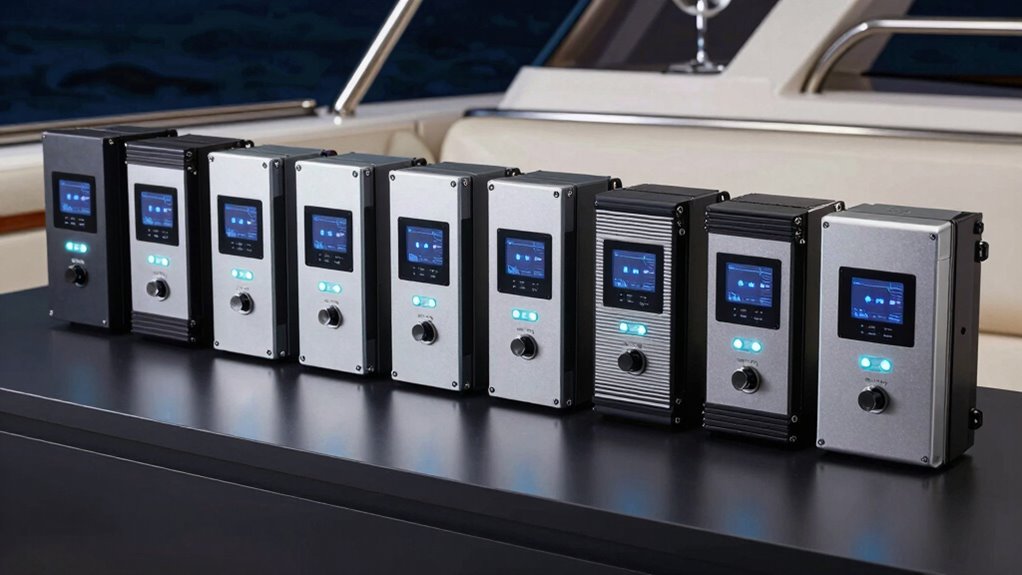
A 3000-watt marine inverter charger can run substantial AC loads while charging your battery bank from shore power or a generator, but the right choice depends on system voltage, charging capacity, and installation needs. My best overall pick is the Victron Energy MultiPlus-II 12V 3000VA, which pairs a recognized inverter-charger platform with a 120A charger; the Xantrex Freedom XC Pro 3000W stands out for its 150A charging specification, while the Renogy REGO 3000W offers an LCD-led setup for buyers who value visible controls. These options differ in integration, battery compatibility, and how much support the installation may require. A 3000-watt label alone does not tell you whether your battery bank, cabling, and AC system can support the load. Read on for the full comparison and advice on matching a unit to your boat.

Get sports gear delivered free with Prime
- Fast, free delivery on millions of items
- Prime Video, Amazon Music and more included
- Member-only deals all year
Complete the kit



Key Takeaways
- VA and watts are not interchangeable: the Victron MultiPlus models are rated at 3000VA, so check their continuous watt output and operating conditions against your actual appliance loads.
- Charging capacity separates the better-documented contenders: the Xantrex Freedom XC Pro and Freedom SW 3012 list 150A charging, while the Victron MultiPlus-II 12V models list 120A and the Redodo lists 45A.
- Voltage is a system decision, not a feature upgrade: the 24V Victron MultiPlus-II only suits a compatible 24V battery bank; most other listed models are 12V units.
- Marine installation deserves more scrutiny than headline power: verify environmental protection, wiring requirements, neutral-ground arrangements, and marine installation guidance before choosing any model.
- Product naming can hide meaningful differences: the lineup includes several similar Victron MultiPlus-II 12V listings, so compare exact model numbers and specifications rather than assuming each listing represents a distinct configuration.
| 3000W Pure Sine Wave Inverter Charger with Automatic Transfer Switch |  | Best for Straightforward Shore-Power Backup | Continuous output: 3000W | Peak output: 6000W | DC input: 12V | VIEW ON AMAZON | See Our Full Breakdown |
| 3000W Pure Sine Wave Inverter 12V DC to 120V AC 6000W Peak for RV |  | Best Lightweight Inverter for Basic AC Power | Continuous output: 3000W | Peak output: 6000W | DC input: 12V | VIEW ON AMAZON | See Our Full Breakdown |
| Victron Energy MultiPlus-II 3000VA 24V Inverter/Charger |  | Best for 24V Marine Electrical Systems | Inverter capacity: 3000VA | Output power: 3000W | Peak output: 5500W | VIEW ON AMAZON | See Our Full Breakdown |
| Victron Energy MultiPlus 3000VA 12V Inverter/Charger |  | Best for 12V Shore-Power Integration | Inverter capacity: 3000VA | Output power: 3000W | Peak output: 6000W | VIEW ON AMAZON | See Our Full Breakdown |
| Renogy REGO 3000W Pure Sine Wave Inverter Charger with LCD Display |  | Best for Lithium Flexibility and Remote Monitoring | Continuous output: 3000W | Peak output: 9000W | DC input: 12V | VIEW ON AMAZON | See Our Full Breakdown |
| AMPINVT 3000W Pure Sine Wave Inverter Charger, 12V DC to 120V AC |  | Best for Flexible Battery Compatibility | Continuous output: 3000W | Peak output: 9000W | DC input: 12V | VIEW ON AMAZON | See Our Full Breakdown |
| Redodo 3000W 12V Pure Sine Wave Inverter Charger with 45A Battery Charger and LCD |  | Best for Straightforward Monitoring | Continuous output: 3000W | Surge output: 9000W | DC input: 12V | VIEW ON AMAZON | See Our Full Breakdown |
| Xantrex Freedom XC Pro 3000W Inverter/Charger, 150A |  | Best for High-Rate Battery Charging | Inverter output: 3000W | Battery charger: 150A | DC input: 12V | VIEW ON AMAZON | See Our Full Breakdown |
| Victron Energy MultiPlus-II 12V 3000VA Inverter/Charger, 120VAC, 120A |  | Best for Limited Shore-Power Connections | Inverter capacity: 3000VA | Peak output power: 5500W | DC input: 12V | VIEW ON AMAZON | See Our Full Breakdown |
| ExpertPower 3000W Pure Sine Wave Inverter Charger | Peak 9000W | DC 12V – AC 110V | LifePO4/ Lithium Battery Compatible | Auto Transfer Switch | LCD Display |  | Best for Adjustable Charging Profiles | Continuous output: 3000W | Peak output: 9000W | DC input: 12V | VIEW ON AMAZON | See Our Full Breakdown |
| VEVOR 3000W Pure Sine Wave Inverter Charger, 12V DC to 120V AC |  | Best for Flexible Installations | Continuous output: 3000W | Peak output: 9000W | DC input / AC output: 12V DC / 120V AC | VIEW ON AMAZON | See Our Full Breakdown |
| LiTime 3000W Pure Sine Wave Inverter Charger, 12V DC to 120V AC |  | Best for Fast Backup Switching | Continuous output: 3000W | Surge output: 9000W for up to 10 seconds | DC input / AC output: 12V DC / 120V AC | VIEW ON AMAZON | See Our Full Breakdown |
| Victron Energy MultiPlus-II Inverter/Charger 3000VA 12V 120A |  | Best for Expandable Marine Systems | Inverter capacity: 3000VA | Battery voltage: 12V | AC output voltage: 120V | VIEW ON AMAZON | See Our Full Breakdown |
| Xantrex Freedom SW 3012 150 Amp Inverter/Charger |  | Best for Marine-Ready Certification | Continuous output: 3000W at 40°C | Peak output: 11,520W | DC input / AC output: 12V / 120V | VIEW ON AMAZON | See Our Full Breakdown |
| marine inverter charger 3000 watt | Peak output | DC input | AC output | Continuous output |
|---|---|---|---|---|
| 3000W Pure Sine Wave Inverter | 6000W | 12V | 120V | 3000W |
| 3000W Pure Sine Wave Inverter | 6000W | 12V | 120V | 3000W |
| Victron Energy MultiPlus-II 30 | 5500W | 24V | 120V | — |
| Victron Energy MultiPlus 3000V | 6000W | 12V | 120V | — |
| Renogy REGO 3000W Pure Sine Wa | 9000W | 12V | 120V | 3000W |
| AMPINVT 3000W Pure Sine Wave I | 9000W | 12V | 120V | 3000W |
| Redodo 3000W 12V Pure Sine Wav | — | 12V | 110–120V | 3000W |
| Xantrex Freedom XC Pro 3000W I | — | 12V | 120V | — |
| Victron Energy MultiPlus-II 12 | — | 12V | 120V | — |
| ExpertPower 3000W Pure Sine Wa | 9000W | 12V | 110V | 3000W |
| VEVOR 3000W Pure Sine Wave Inv | 9000W | — | — | 3000W |
| LiTime 3000W Pure Sine Wave In | — | — | — | 3000W |
| Victron Energy MultiPlus-II In | 5500W | — | — | — |
| Xantrex Freedom SW 3012 150 Am | 11,520W | — | — | 3000W at 40°C |
More Details on Our Top Picks
3000W Pure Sine Wave Inverter Charger with Automatic Transfer Switch
For a 12V boat needing a basic 3000W inverter-charger, this model combines pure sine wave output with an automatic transfer switch, so AC loads can shift to battery power when incoming supply is lost. Its LCD and included remote make battery and charging status easier to check from a convenient location; the 15-foot control cord gives more placement flexibility than a control panel alone. Compared with the Renogy REGO, it offers less battery flexibility and no listed Bluetooth monitoring, but its stated features cover common lead-acid battery types and routine backup needs. The main limitation is battery compatibility: some lithium batteries are not supported, and the 12V input suits only boats built around that system. I would shortlist it for a conventional 12V installation, not a lithium setup without confirmed compatibility.
Pros:- 3000W continuous pure sine wave output for compatible AC equipment.
- Automatic transfer switch supports backup when incoming AC power is interrupted.
- LCD, built-in controls, and remote provide several ways to monitor and operate the unit.
- 15-foot control cord allows the remote control to be positioned away from the inverter.
Cons:- Some lithium batteries are incompatible, limiting battery-bank choices.
- 12V input excludes boats designed around 24V systems.
- No charger-current rating is provided in the supplied specifications, making charge-time comparisons difficult.
Best for: Owners of 12V boats with compatible gel, AGM, SLA, or calcium batteries who want automatic AC-to-inverter switching and remote monitoring.
Not ideal for: Boaters with lithium batteries that have not been confirmed compatible, or vessels using a 24V battery bank.
- Continuous output:3000W
- Peak output:6000W
- DC input:12V
- AC output:120V
- Waveform:Pure sine wave
- Battery compatibility:Gel, AGM, SLA, calcium, and other types; some lithium batteries are not compatible
- Controls:LCD display, built-in control panel, and remote
- Transfer and protection:Automatic transfer switch; overload, short-circuit, overheating, and over-voltage protection
Our verdict“Choose this for a compatible 12V lead-acid boat setup where automatic transfer and a remote control matter more than lithium support or app monitoring.”
3000W Pure Sine Wave Inverter 12V DC to 120V AC 6000W Peak for RV
This is the lightest specified option in the group at 7.5 pounds, which can help where mounting space and installation weight matter aboard a smaller vessel. Its 3000W continuous, 6000W peak pure sine wave output is intended for sensitive electronics and appliances, while multiple outlets and fast-charging ports provide convenient access to power. Compared with the Victron MultiPlus 12V, it is much lighter and simpler on paper, but the supplied description does not identify a built-in battery charger or automatic transfer switch. That makes it a weaker fit for a true marine inverter-charger role if shore-power charging and seamless backup are priorities. The 12V-only input also rules it out for 24V banks, and installation still calls for suitable wiring and electrical knowledge.
Pros:- Specified weight of 7.5 pounds is lower than the listed Victron inverter-chargers.
- 3000W continuous and 6000W peak output can accommodate substantial loads and startup surges within system limits.
- Pure sine wave output is suited to sensitive electronics.
- Multiple outlets, fast-charging ports, and a remote monitor add connection and monitoring options.
Cons:- The supplied product data does not specify a built-in battery charger or transfer switch.
- 12V DC input limits use to 12V battery systems.
- Proper installation and wiring knowledge are required.
Best for: Owners of smaller 12V boats seeking a relatively light pure sine wave inverter for AC loads, with charging and transfer handled separately.
Not ideal for: Boaters who need a complete inverter-charger with a documented onboard charger and automatic shore-power transfer, or who have a 24V bank.
- Continuous output:3000W
- Peak output:6000W
- DC input:12V
- AC output:120V
- Waveform:Pure sine wave
- Efficiency:>91%
- Frequency:60Hz
- Dimensions and weight:13.77 × 7.04 × 3.34 in; 7.5 lb
Our verdict“Pick this when low weight and inverter output matter more than having a fully specified charger-and-transfer package in one unit.”
Victron Energy MultiPlus-II 3000VA 24V Inverter/Charger
Among these picks, this is the clearest match for a boat already wired around 24V batteries. The MultiPlus-II pairs pure sine wave inversion with a 120A charger, while PowerAssist can supplement a limited shore or generator supply to help manage demanding loads. Its transfer to inverter power is specified at 20ms, and parallel capability supports more involved system designs. Compared with the 12V Victron MultiPlus, this model fits a higher-voltage battery bank rather than a 12V one, so the right choice depends on the vessel’s existing electrical architecture—not a simple performance ranking. The tradeoffs are substantial physical size and weight, plus only one listed outlet. I would favor it for a planned or established 24V installation, not a compact 12V refit.
Pros:- 24V input matches boats designed around a 24V battery bank.
- 120A charger and PowerAssist support charging and limited-source AC use.
- Specified 20ms transfer to inverter power helps maintain supply when incoming AC is lost.
- Supports up to six units in parallel and three units for three-phase output.
Cons:- Not suitable for a 12V battery system.
- At 22.23 kg and 22.5 inches long, it needs substantial mounting space and support.
- Only one outlet is listed, so the AC distribution plan may need separate equipment.
Best for: Owners of 24V boats who need an integrated inverter and 120A charger, shore-power support, and room to expand a system with parallel units.
Not ideal for: Owners of 12V vessels or installations where the 22.23 kg weight, 22.5-inch length, or single listed outlet is a poor fit.
- Inverter capacity:3000VA
- Output power:3000W
- Peak output:5500W
- DC input:24V
- AC output:120V
- Charger current:120A
- Waveform and transfer:Pure sine wave; transfer within 20ms
- Dimensions and weight:5.8 × 10.9 × 22.5 in; 22.23 kg
Our verdict“Choose this Victron when your boat has a 24V bank and you value system expansion and PowerAssist over compact size.”
Victron Energy MultiPlus 3000VA 12V Inverter/Charger
The MultiPlus is the stronger fit than the 24V MultiPlus-II for boats that must stay on a 12V battery bank while gaining an integrated 120A charger. Its PowerAssist feature can help when shore or generator capacity is limited, and the specified 20ms transfer provides a quick switch to inverter power after AC drops out. It also supports parallel operation, which gives system designers room to scale beyond a single unit. Compared with the Renogy REGO, the Victron emphasizes AC-source management and system integration; the Renogy instead lists broader battery compatibility, Bluetooth monitoring, and a higher stated peak output. This MultiPlus is heavy, has one listed outlet, and its installation can be hazardous without qualified help. It makes most sense as part of a professionally planned marine electrical system.
Pros:- 120A battery charger is integrated with the 3000W inverter.
- PowerAssist helps manage loads when shore or generator AC capacity is limited.
- Specified 20ms transfer supports a quick change to inverter power.
- Supports up to six units in parallel and three units for three-phase output.
Cons:- Installation can be hazardous and is specified as requiring a licensed professional.
- 12V input and 120V output limit compatibility with other system voltages.
- Weighs 17.9 kg and lists only one outlet.
Best for: Owners of 12V boats who want a professionally installed inverter-charger with PowerAssist, fast transfer, and parallel-system capability.
Not ideal for: DIY installers without marine electrical experience, 24V-system owners, or buyers prioritizing lightweight equipment and built-in app monitoring.
- Inverter capacity:3000VA
- Output power:3000W
- Peak output:6000W
- DC input:12V
- AC output:120V
- Battery charger current:120A
- Waveform and transfer:Pure sine wave; transfer within 20ms
- Dimensions and weight:10.2 × 8.6 × 14.3 in; 17.9 kg
Our verdict“Choose this for a professionally designed 12V boat system that needs integrated charging and shore-power support rather than app-based monitoring.”
Renogy REGO 3000W Pure Sine Wave Inverter Charger with LCD Display
The REGO stands apart for buyers who want lithium support alongside lead-acid compatibility, plus Bluetooth status checks through the Renogy app. It supplies 3000W continuous output and lists a 9000W peak, higher than the 6000W peak stated for the two 12V Victron options. Four-stage charging and user-configurable battery settings give owners more control over charging behavior, while adjustable 50/60Hz output can suit different installation needs. Compared with the 3000W Pure Sine Wave Inverter Charger with Automatic Transfer Switch, the REGO offers clearer lithium support and app connectivity, but its large 20.1-inch length demands more mounting room. It remains a 12V-only unit, so it cannot serve a 24V bank. I would choose it when battery flexibility and monitoring outweigh compact installation.
Pros:- Supports lithium iron phosphate as well as several lead-acid battery types.
- 3000W continuous output with a stated 9000W peak.
- Bluetooth monitoring works with the Renogy app and compatible Renogy system products.
- Four-stage charging, user mode, and listed electrical protections provide charging and fault-management options.
Cons:- 12V input excludes boats built around 24V battery banks.
- Large dimensions can complicate installation in a crowded machinery or electrical space.
- The supplied specifications do not state charger current or transfer-switch timing.
Best for: 12V boat owners using compatible lithium iron phosphate or lead-acid batteries who want app monitoring and configurable charging.
Not ideal for: Owners of 24V systems or boats with limited equipment space who cannot accommodate a 20.1 × 11.2 × 7.6-inch unit.
- Continuous output:3000W
- Peak output:9000W
- DC input:12V
- AC output:120V
- Waveform and frequency:Pure sine wave; adjustable 50/60Hz
- Conversion efficiency:>90%
- Charging and battery compatibility:Four-stage charging; gel, AGM, sealed lead acid, flooded, calcium, and lithium iron phosphate
- Connectivity and dimensions:Built-in Bluetooth; 20.1 × 11.2 × 7.6 in
Our verdict“Pick the REGO for a 12V boat where lithium compatibility and app monitoring matter more than compact dimensions or clearly specified transfer performance.”
AMPINVT 3000W Pure Sine Wave Inverter Charger, 12V DC to 120V AC
I’d shortlist the AMPINVT FT-30212 for a boat owner who wants an all-in-one 12V unit and needs flexibility across battery chemistries. Its pure sine wave inverter, charger, and AC transfer switch reduce the number of separate components to source, while support for lead-acid types and lithium-ion or LiFePO4 gives it broader battery options than some simpler setups. Compared with the Redodo 3000W, it offers a wider stated battery-chemistry list, but Redodo has the stronger 45A charger and an LCD. AMPINVT’s charger tops out at 35A, so replenishing a large house bank from shore power may take longer. The 12V input also calls for substantial DC cabling at this power level, and its one-year warranty is a modest assurance for a permanent marine installation.
Pros:- Combines inverter, battery charger, and AC transfer switch in one unit
- Supports several lead-acid and lithium battery chemistries
- Pure sine wave output suits sensitive onboard electronics
- Includes low- and high-voltage, overheating, overload, and short-circuit protections
Cons:- 35A maximum charging current is lower than the Redodo’s 45A and the Xantrex’s 150A
- 12V input requires careful planning for high-current cabling and battery capacity
- One-year warranty offers limited coverage for a long-term marine installation
Best for: 12V boat owners who want one inverter, charger, and transfer switch and may change between supported lead-acid and lithium battery types.
Not ideal for: Owners with large battery banks who need faster shore-power charging, or boats designed around a 24V battery system.
- Continuous output:3000W
- Peak output:9000W
- DC input:12V
- AC output:120V
- Waveform:Pure sine wave
- Maximum charging current:35A
- Supported batteries:SLA, AGM, GEL, lithium-ion, LiFePO4, and flooded
- Dimensions and weight:6.7 × 10.2 × 16.7 in; 20 lb
Our verdict“Choose the AMPINVT if battery-chemistry flexibility matters more than fast charging or a built-in LCD.”
Redodo 3000W 12V Pure Sine Wave Inverter Charger with 45A Battery Charger and LCD
The Redodo 3000W makes the most sense for a 12V boat owner who wants visible system information without adding a separate monitor. Its LCD and remote control provide a more direct way to check operation than the AMPINVT’s LED display, and automatic switching can hand connected loads between shore power and battery during an outage. The 45A charger also exceeds the AMPINVT’s 35A limit, which can shorten charging time, though it remains well below the Xantrex Freedom XC Pro’s 150A. Redodo supports several common lead-acid batteries and LiFePO4, but its stated compatibility list is narrower than AMPINVT’s. The 12V architecture means high current on the battery side, and the 3000W rating does not mean every large appliance can run without checking its sustained and startup demands.
Pros:- 45A charger is faster than the AMPINVT’s stated 35A maximum
- LCD and remote control make operating information easier to access
- Automatically switches between grid power and battery
- Supports LiFePO4 and several common lead-acid battery types
Cons:- 12V input calls for substantial battery-side current and suitable cabling
- 45A charging is modest beside the Xantrex Freedom XC Pro’s 150A charger
- Large appliance operation depends on load and startup power staying within limits
Best for: Owners of 12V boats or campers who want an onboard LCD, remote control, automatic source switching, and a mid-range charging rate.
Not ideal for: Boaters with high-capacity banks who want very fast charging, or anyone needing a 24V inverter charger.
- Continuous output:3000W
- Surge output:9000W
- DC input:12V
- AC output:110–120V
- Waveform:Pure sine wave
- Battery charger:45A
- Display:LCD
- Compatible batteries:Gel, AGM, sealed lead-acid, calcium, and LiFePO4
Our verdict“Pick the Redodo if a readable display and remote control matter more than maximum charging speed.”
Xantrex Freedom XC Pro 3000W Inverter/Charger, 150A
For a boat with a substantial house bank and limited time on shore power, I’d put the Xantrex Freedom XC Pro ahead of the lower-current chargers here. Its 150A charger is far stronger than the Redodo’s 45A or the AMPINVT’s 35A, while a 50A transfer relay and pure sine wave output suit a more demanding onboard AC setup. Bluetooth monitoring and RV-C/J1939 communications can also help it fit into a connected vehicle or vessel system without relying only on a basic panel. This is not a universal upgrade, though: it still uses a 12V battery input, and that means serious attention to battery capacity, cable sizing, overcurrent protection, and installation. Its listed peak output is 3000W, so buyers should not assume the surge headroom claimed by some competing models.
Pros:- 150A charger substantially exceeds the Redodo and AMPINVT charging currents
- 50A transfer relay supports switching between shore or generator power and inverter power
- Bluetooth monitoring plus RV-C and J1939 communications
- UL and ETL certifications are listed
Cons:- 12V input requires careful high-current wiring and battery-system design
- Listed peak output is 3000W, below the 9000W surge figures stated for Redodo and AMPINVT
- The 16 × 12 × 4.9-inch case may not fit especially confined installation spaces
Best for: Boat owners with a compatible 12V system and large battery bank who want rapid charging and communications integration.
Not ideal for: Owners of 24V systems, tight installations that cannot accommodate its footprint, or buyers seeking a higher stated surge rating.
- Inverter output:3000W
- Battery charger:150A
- DC input:12V
- AC output:120V
- Waveform:Pure sine wave
- Transfer relay:50A
- Monitoring and communications:Bluetooth app; RV-C and J1939
- Dimensions and weight:16 × 12 × 4.9 in; 18.6 lb
Our verdict“Choose the Xantrex when fast charging and system integration outweigh the demands of a high-current 12V installation.”
Victron Energy MultiPlus-II 12V 3000VA Inverter/Charger, 120VAC, 120A
The Victron Energy MultiPlus-II is the strongest fit here for a boat that regularly plugs into a constrained shore-power or generator supply. Its Power Assist can supplement a limited AC source to help handle short peaks, while a transfer to inverter power within 20ms helps keep connected loads running when shore or generator power disappears. Those are more specific marine-use advantages than the Redodo’s display-focused feature set. The key rating distinction is easy to miss: this is a 3000VA unit rated for 2500W output, not a continuous 3000W inverter. Its 120A charger is stronger than Redodo’s 45A but below Xantrex’s 150A. Parallel operation can support larger installations, though that adds system planning rather than making this the simplest one-box choice.
Pros:- Power Assist can help manage loads against a limited AC source
- Transfers connected loads to inverter power within 20ms after AC input loss
- 120A charger outpaces the Redodo’s 45A charging rate
- Supports parallel operation of up to six units and three-phase configurations with three
Cons:- Rated output is 2500W, below the 3000W continuous target implied by the roundup
- 12V battery input requires substantial current and installation planning
- Parallel expansion adds complexity compared with a standalone unit
Best for: Marine owners using limited shore power or a generator who value Power Assist, quick transfer, and the option to expand with parallel units.
Not ideal for: Buyers who need a full 3000W continuous output from one unit or who want a simple, display-led setup without expansion planning.
- Inverter capacity:3000VA
- Peak output power:5500W
- DC input:12V
- AC output:120V
- Charger current:120A
- Transfer behavior:Inverter transfer within 20ms after AC input loss
- Certification:UL 458
Our verdict“Choose the MultiPlus-II for shore-power support and system expansion, but skip it if you need 3000W continuous from a single inverter.”
ExpertPower 3000W Pure Sine Wave Inverter Charger | Peak 9000W | DC 12V – AC 110V | LifePO4/ Lithium Battery Compatible | Auto Transfer Switch | LCD Display
The ExpertPower 3000W stands out for battery setup flexibility: its 80A adjustable charger and eight charging profiles offer more room to match charging behavior to different battery systems than the AMPINVT’s 35A charger. It also lists an automatic transfer switch with UPS functionality and a 5ms switch time, plus a 26-foot smart controller that can place basic controls away from the inverter. That combination is useful in a boat where the equipment compartment and living area are separated. The tradeoff is scale: at a listed 55 pounds, it is much heavier than the Xantrex Freedom XC Pro’s 18.6 pounds. Its 12V input also demands careful high-current installation, and the supplied information does not establish marine-specific certification or environmental protection.
Pros:- 80A adjustable charger with eight battery charging profiles
- Supports AGM, wet, gel, and LiFePO4 batteries
- Listed 5ms automatic transfer switching with UPS functionality
- Includes a 26-foot smart controller and LCD status display
Cons:- At 55 lb, it is much heavier than the Xantrex Freedom XC Pro
- 12V input requires suitable high-current cabling and protection
- Provided product details do not establish marine-specific certification or environmental protection
Best for: 12V boat owners who want several battery charging profiles, an 80A adjustable charger, and remote control placement.
Not ideal for: Weight-sensitive installations or buyers who need confirmed marine-specific certification and environmental protection.
- Continuous output:3000W
- Peak output:9000W
- DC input:12V
- AC output:110V
- Waveform:Pure sine wave
- Battery charger:80A adjustable
- Charging profiles:8
- Transfer switch:30A; listed 5ms switching
- Dimensions and weight:18.38 × 7.63 × 7.8 in; 55 lb
Our verdict“Choose ExpertPower if charging-profile flexibility and a long-reach controller matter more than low weight or documented marine suitability.”
VEVOR 3000W Pure Sine Wave Inverter Charger, 12V DC to 120V AC
The VEVOR PS3000IIW suits a boat or RV setup where operating flexibility and remote access matter more than compact size. Its five operating modes let owners choose between AC priority, battery priority, ECO, generator, and unattended operation, while the 32.8-foot remote cable gives more placement options than the LiTime’s 23-foot cable. Pure sine wave output and support for several battery chemistries broaden its fit across different 12V systems.
The tradeoff is physical and electrical: at 46.3 pounds, it still needs a secure mounting spot, and the stated recommended load per outlet is under 1200W, which may complicate use of high-draw appliances despite the 3000W unit rating. I’d choose the Victron MultiPlus-II for PowerAssist and parallel expansion, but the VEVOR is a more straightforward pick when multiple modes and a long remote lead are the priority.
Pros:- Five modes support different shore-power, generator, and battery priorities
- 32.8-foot detachable remote cable allows flexible control-panel placement
- Pure sine wave output and broad stated battery compatibility
- Two AC outlets provide more connection points than LiTime’s single outlet
Cons:- Recommended load per outlet is under 1200W, limiting how the 3000W rating can be used
- Restricted to 12V battery systems
- 46.3-pound weight calls for a sturdy mounting location
Best for: 12V boat or RV owners who want several operating modes and need to mount the control panel well away from the inverter
Not ideal for: Boaters with high-draw equipment that must run from one outlet, or anyone seeking a lighter unit or a higher-voltage battery system
- Continuous output:3000W
- Peak output:9000W
- DC input / AC output:12V DC / 120V AC
- Waveform and frequency:Pure sine wave, 60Hz
- Battery compatibility:LiFePO4, lithium-ion, Gel, AGM, SLA, FLD
- Operating modes:Unattended, AC Priority, Battery Priority, ECO, Generator
- Outlets:2
- Remote cable:32.8ft (10m)
- Dimensions and weight:19.49 × 9.45 × 7.48in; 46.3lb
Our verdict“Choose the VEVOR if your 12V installation benefits from multiple operating modes and a long remote cable, but check the per-outlet load limit before planning appliance use.”
LiTime 3000W Pure Sine Wave Inverter Charger, 12V DC to 120V AC
The LiTime is the clearest fit here for a 12V boat or backup system where a brief loss of incoming AC should cause little interruption. Its 10ms UPS transfer switches supported loads to battery power, and the charger’s adjustable 5A–45A output gives owners more control over charging than the fixed charger details provided for the VEVOR. A 9000W surge rating for up to 10 seconds also gives short-starting loads more headroom than the Victron MultiPlus-II’s listed 5500W peak.
There are practical limits: this model has one outlet, weighs 52 pounds, and accepts only 12V batteries. That single connection point can mean extra distribution hardware in a multi-load installation. I’d favor the VEVOR for more onboard outlets and a longer remote cable; the LiTime makes more sense when fast transfer and adjustable charging take precedence.
Pros:- 10ms UPS transfer supports quick changeover when incoming AC fails
- Adjustable 5A–45A charging current offers charging flexibility
- 9000W surge rating is specified for up to 10 seconds
- LCD remote panel includes a 23-foot cable
Cons:- Only one AC outlet is provided
- 52-pound weight may make installation and service harder
- Designed for 12V battery systems only
Best for: Owners of 12V boats, RVs, or backup systems who need quick AC-to-battery transfer and adjustable charging current
Not ideal for: Installations that need multiple direct AC outlets, lighter equipment, or compatibility with battery banks above 12V
- Continuous output:3000W
- Surge output:9000W for up to 10 seconds
- DC input / AC output:12V DC / 120V AC
- Waveform:Pure sine wave
- Charging current:Adjustable, 5A–45A
- UPS transfer time:10ms
- Battery compatibility:LiFePO4, AGM, GEL, SLA, CA
- Outlets and remote:1 outlet; LCD remote panel with 23ft cable
- Dimensions and weight:16.54 × 7.28 × 7.09in; 52lb
Our verdict“Pick the LiTime for a 12V installation that prioritizes fast transfer and adjustable charging, and plan for external AC distribution if one outlet is not enough.”
Victron Energy MultiPlus-II Inverter/Charger 3000VA 12V 120A
The Victron MultiPlus-II stands apart when a marine electrical system may grow or needs to work with a constrained shore-power or generator supply. Its PowerAssist feature helps prevent overload of a limited AC source, while parallel operation supports up to six units. That expansion path is a stronger system-level advantage than the VEVOR’s five operating modes or the LiTime’s single-unit UPS focus. The listed 120A charger and pure sine wave output also suit a substantial 12V installation.
This is not the simplest choice for every boat: its rating is 3000VA, not a direct 3000W specification, and the provided listing gives conflicting frequency information—50Hz in the specs and 60Hz in the description. I’d confirm the exact model’s output details and installation requirements before buying. Compared with the Xantrex Freedom SW 3012, it offers explicit parallel expansion, but less clearly documented marine certifications in the supplied information.
Pros:- PowerAssist helps manage limited shore-power or generator capacity
- Up to six units can operate in parallel for a larger system
- Listed 120A battery charger
- Fast transfer is specified at up to 20ms when incoming AC is lost
Cons:- Listed capacity is 3000VA, so it should not be treated as an assured 3000W continuous rating
- Supplied information conflicts on 50Hz versus 60Hz output frequency
- Marine certification details are not provided in the supplied product information
Best for: Marine and off-grid system builders who want PowerAssist and a defined path to parallel inverter expansion
Not ideal for: Buyers who need an unequivocal 3000W continuous rating or confirmed frequency and marine certification details before selecting equipment
- Inverter capacity:3000VA
- Battery voltage:12V
- AC output voltage:120V
- Waveform:Pure sine wave
- Peak output:5500W
- Transfer time:Within 20ms
- Parallel operation:Up to 6 units
- Outlets:2
Our verdict“Choose the MultiPlus-II for an expandable marine system with limited AC input, but verify output frequency, watt capacity, and certification for the exact unit before purchase.”
Xantrex Freedom SW 3012 150 Amp Inverter/Charger
For a boat owner who puts documented marine suitability ahead of low weight, the Xantrex Freedom SW 3012 has the strongest stated credentials in this group: UL 458 with marine supplement, CSA, and ABYC. It delivers 3000W continuous output at 40°C, supports several battery types including LiFePO4, and includes a temperature sensor for temperature-compensated charging. Its transfer switch moves loads to battery power in under 10ms, a faster stated changeover than the Victron MultiPlus-II’s 20ms.
The cost in installation effort is substantial: at roughly 74–77 pounds, it is much heavier than the VEVOR and LiTime, so mounting and service access deserve careful planning. The 12V-only design also rules out higher-voltage banks. I’d choose this over the LiTime when marine certification and temperature-aware charging matter more than weight or a documented adjustable charging range.
Pros:- UL 458 with marine supplement and ABYC certification are listed
- 3000W continuous output is specified at 40°C
- Transfer switch changes to battery power in less than 10ms
- Battery temperature sensor supports temperature-compensated charging
Cons:- At approximately 74–77 pounds, it is the heaviest option in this batch
- Limited to 12V battery systems
- Supplied information gives conflicting product weights
Best for: Boat owners selecting a 12V inverter/charger who need stated marine-related certifications and temperature-compensated charging
Not ideal for: Weight-sensitive installations, owners with battery banks above 12V, or buyers who need a clearly stated adjustable charger-current range
- Continuous output:3000W at 40°C
- Peak output:11,520W
- DC input / AC output:12V / 120V
- Waveform and frequency:Pure sine wave, 60Hz
- Battery compatibility:LiFePO4, flooded, gel, AGM
- Transfer time:Less than 10ms
- AC connections:Split phase in / dual out; dual in / dual out
- Dimensions:15.25 × 13.5 × 7.75in
- Certifications:UL 458 with marine supplement, CSA, ABYC, FCC Class B
Our verdict“Choose the Xantrex when marine-related certification and temperature-compensated charging outweigh the substantial weight and 12V-only limitation.”
How We Picked
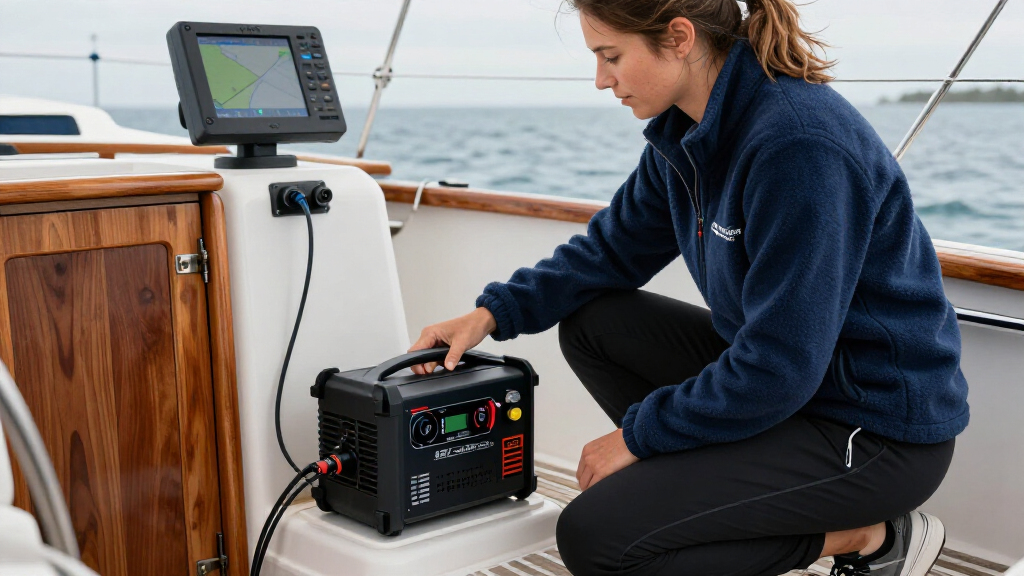
I ranked these 14 products around the needs behind a marine 3000-watt inverter-charger purchase: usable continuous output, charging capability, system-voltage fit, transfer-switch operation, controls, battery compatibility, and the clarity of available specifications. I gave more weight to products with clearly stated ratings and useful integration details than to listings that emphasize peak output without explaining continuous performance. A marine buyer also needs reliable installation information, so environmental suitability and AC wiring considerations affect the ranking even when a product’s headline specifications look strong.
The order reflects how readily each unit can be matched to a boat system, not a claim that every product is marine-certified or equivalent in capability. The Victron and Xantrex models rank well for their established inverter-charger product families and more specific charging details; the Renogy, Redodo, and other 12V options address different priorities such as controls or simpler system matching. I treat the three similarly named Victron MultiPlus-II 12V listings as a specification-verification task, not as proof of separate performance levels. Before purchase, buyers should confirm the exact model, current manual, installation approvals, and compatibility with their battery and vessel.
Factors to Consider When Choosing Marine Inverter Charger 3000 Watt
Choosing a 3000-watt unit starts with the boat’s electrical system, not the product headline. These broader checks can help prevent a mismatch that no feature list or review ranking can fix.
Match the inverter to the battery-bank voltage
Confirm whether the vessel has a 12V or 24V house bank before comparing models. A 24V inverter-charger cannot be connected to a 12V bank as a simple upgrade; changing system voltage affects batteries, charging sources, wiring, and sometimes other onboard equipment. A 12V unit drawing several hundred amps under heavy load needs substantial battery capacity and carefully sized conductors. Do not select a model just because its voltage matches one battery: the full bank and charging system must use the same architecture. If you are planning a broader refit, compare the total cost and complexity of staying at 12V against moving to 24V. Ask a marine electrician to review the design if the vessel’s existing DC system is mixed or unclear.
Separate continuous power from surge and VA ratings
A device labeled 3000W may not deliver that output continuously under every temperature or voltage condition. Check the manual’s continuous watt rating, surge duration, and derating guidance, then compare those figures with the loads you intend to run at the same time. Motors, compressors, and pumps can draw a brief starting surge well above their running demand. The Victron models in this roundup use a 3000VA designation, which should not be read as identical to 3000 watts without checking the product’s power-factor specifications. Add up realistic simultaneous loads rather than relying on a single appliance’s nameplate. Leave headroom so ordinary voltage drop or warm operating conditions do not push the unit to its limit.
Size the battery bank and cables for real current
At 12V, delivering a few thousand watts requires very high DC current, especially after inverter losses and battery-voltage sag. That makes battery discharge limits, cable gauge, cable length, fuse or breaker selection, and connection quality part of the inverter decision. A large inverter connected to a small battery bank may shut down under load even when the appliance wattage appears acceptable. Lithium batteries can support high current, but the battery management system still sets a limit that the inverter must not exceed. Ask the installer to calculate current using low battery voltage and expected efficiency rather than ideal conditions. Short, properly sized DC runs and sound terminations matter as much as the inverter’s advertised output.
Compare charger output with shore-power limits
A high-amp charger can restore a battery bank faster, but it can also consume a large share of a marina circuit’s available input. Compare the charger rating with the bank’s recommended charge rate, shore-power supply, generator capacity, and the inverter-charger’s input-current controls. The Xantrex models listed at 150A and the Victron MultiPlus-II 12V listings at 120A may suit different charging priorities than the Redodo’s stated 45A charger. Faster charging is not automatically better if the batteries cannot accept that rate or other onboard loads share the same AC source. Check whether the model lets you limit incoming AC current to avoid nuisance breaker trips. Confirm charge profiles for the exact battery chemistry and battery manufacturer.
Treat marine suitability as an installation question
The word marine should prompt checks of the actual manual and approvals, not assumptions based on a product title. Boats expose electrical gear to vibration, moisture, salt air, heat, and restricted ventilation, while many inverter-chargers are intended for protected, dry installations. Verify the allowed mounting orientation, ventilation clearances, temperature range, corrosion precautions, and any required protective enclosure. AC wiring also needs a suitable transfer arrangement, correct neutral-ground behavior, and compliance with vessel regulations and shore-power requirements. An automatic transfer switch is useful only when installed and configured correctly with the boat’s AC sources. Get qualified marine-electrical help if the installation changes bonding, grounding, or shore-power connections.
Choose controls and support for the way you maintain the boat
An LCD can make operating status and fault checks easier, but a display alone does not provide good system monitoring or remote access. Consider whether you need battery-temperature sensing, remote controls, network integration, fault history, or coordination with solar and other charging sources. More integrated systems can offer better visibility but may require compatible accessories and more setup knowledge. A simpler unit may be easier to operate, yet leave less room for advanced monitoring or system expansion. Check warranty terms, manuals, service access, and parts availability before buying, particularly if the vessel travels far from a dealer. Pick the level of complexity your crew can manage safely, not just the feature set with the longest list.
Frequently Asked Questions
Is a 3000-watt inverter charger enough to run air conditioning on a boat?
It depends on the air conditioner’s running draw, startup surge, and whether other AC loads will operate at the same time. Some units need a soft-start device or a larger inverter capacity to handle compressor startup, but that does not remove the need for adequate battery power. Check both the inverter’s continuous output and its surge rating in the manual, then compare them with the air conditioner manufacturer’s electrical data. Also confirm the battery bank can supply the required current for the planned runtime. A 3000-watt rating by itself cannot confirm that a specific marine air conditioner will run reliably.
Should I choose a 12V or 24V inverter charger for my boat?
For an existing vessel, the safest starting point is usually the voltage of its house bank and charging equipment. A 24V system can reduce DC current for the same power, which may help on larger systems, but changing voltage can require replacing or reconfiguring batteries, chargers, alternators, and DC loads. A 12V model is not a fit for a 24V bank, and the 24V Victron listing in this roundup is not a direct substitute for the 12V options. Compare the full system cost and wiring plan before changing voltage. Have a marine electrician verify compatibility if the boat has multiple battery banks or mixed-voltage equipment.
Can I connect one of these inverter chargers to lithium batteries?
Some listings state lithium compatibility, but that phrase does not prove compatibility with every lithium battery or battery management system. Check the inverter-charger’s supported charge profile, absorption and float settings, temperature behavior, and any required communications or sensors against the battery maker’s instructions. The battery’s continuous discharge limit must also cover the inverter’s DC current at heavy loads. A battery management system that trips at the wrong threshold can shut down AC power even if the inverter itself is adequately rated. Confirm the exact combination with both manufacturers before installation.
Can I install a 3000-watt inverter charger myself on a boat?
These systems involve high DC currents and AC connections to shore power or a generator, so an incorrect installation can create fire, shock, or equipment-damage risks. Installation may require correctly sized conductors and overcurrent protection, secure mounting, ventilation, and proper neutral-ground and transfer-switch configuration. Marine electrical rules and vessel-specific wiring can add requirements beyond those for a land-based RV. Follow the exact manual and local regulations, and use a qualified marine electrician when you are not trained to verify the complete installation. Do not assume an included automatic transfer switch makes the AC wiring plug-and-play.
How do I choose between the Victron MultiPlus-II 12V listings and the 24V version?
Start by matching the unit’s nominal voltage to the boat’s battery bank; the 24V version is only for a compatible 24V system. The 12V MultiPlus-II listings identify 120A charging, while the 24V listing is a separate electrical configuration and should be checked against its own manual. Several 12V product names in this roundup are very similar, so compare exact model numbers, AC input and output details, charger specifications, and included accessories before ordering. Do not assume repeated or slightly varied titles indicate different hardware. If a listing lacks a clear model identifier, request confirmation from the seller or manufacturer.
Conclusion
For most buyers with a compatible 12V system, my best overall recommendation is the Victron Energy MultiPlus-II 12V 3000VA, provided its watt rating and installation requirements fit the planned loads. The best value direction is the Redodo 3000W for buyers who can work within its stated 45A charging capacity and want an LCD; check battery and marine-installation compatibility before choosing it. For a best premium fit, compare the Xantrex Freedom XC Pro and Freedom SW 3012, both listed with 150A charging, against the boat’s input-power limits and support needs. The best option for beginners is the model whose manual, controls, and installer support are clearest for their exact battery system—not necessarily the one with the simplest-sounding title. For a 24V bank, consider the Victron MultiPlus-II 24V; for buyers prioritizing a straightforward display and 12V setup, the Renogy REGO merits a closer look. Before ordering any model, verify exact ratings, approvals, battery compatibility, and marine installation details.