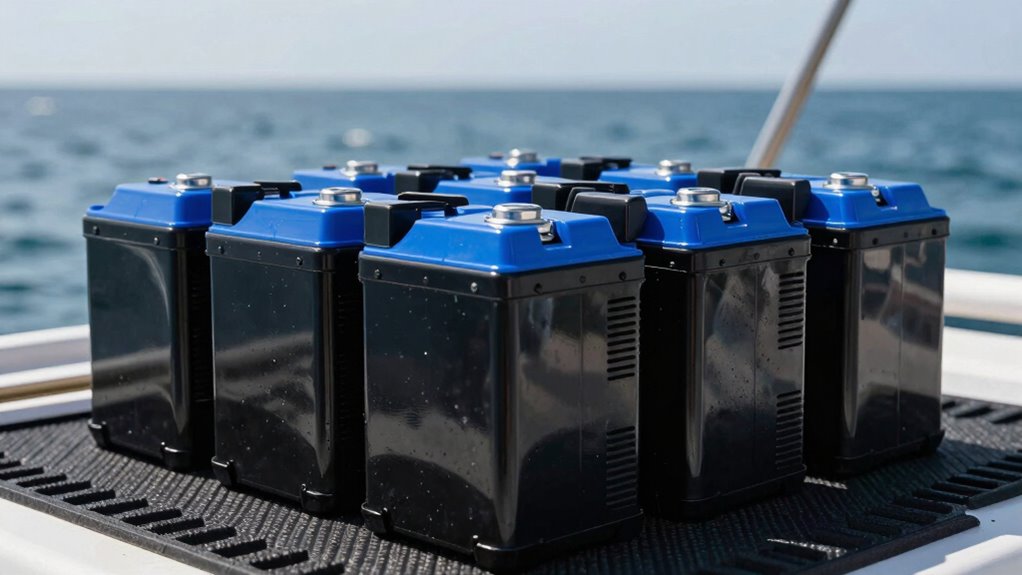
For a 12V 300Ah marine lithium battery, my best overall pick is the HumsiENK 12V 300Ah (314Ah) model, which stands out on paper for its stated extra capacity and Bluetooth monitoring. The Rvpozwer and PUPVWMHB options are strong alternatives for shoppers prioritizing a 200A BMS, while the battery claiming 15,000+ deep cycles draws attention for its longevity specification. The main tradeoffs are how much confidence to place in advertised capacity and cycle life, whether app monitoring is useful aboard your boat, and whether the battery’s output suits your loads. Continue reading for a closer comparison, buying criteria, and guidance on matching a battery to your electrical system.

Get sports gear delivered free with Prime
- Fast, free delivery on millions of items
- Prime Video, Amazon Music and more included
- Member-only deals all year
Complete the kit



Key Takeaways
- HumsiENK is the standout on stated capacity: its 314Ah claim exceeds the 300Ah target, though buyers should verify usable capacity and test conditions rather than assume the full amount is available.
- Two models explicitly list a 200A BMS: Rvpozwer and PUPVWMHB make that current rating easy to identify, but it still needs to match the draw of the boat’s inverter and other loads.
- Monitoring is a point of separation: HumsiENK and the app-monitoring model offer a way to check battery information, while the listed SUPER EMPOWER name and specifications do not establish the same feature.
- The 15,000+ cycle claim is a longevity signal, not a guarantee: cycle life depends on test conditions, depth of discharge, temperature, and charging practice, which buyers should verify with the seller.
- Product titles leave important marine-fit details unresolved: dimensions, terminal style, cold-weather charging protection, warranty terms, and explicit marine-use guidance should be checked before choosing any of these six.


| marine lithium battery 12v 300ah | Voltage | Capacity | BMS | Weight |
|---|---|---|---|---|
| HumsiENK 12V 300Ah | 12V | 314Ah | 200A | 59.5 lbs |
| Rvpozwer 12.8V 300Ah LiFePO4 B | 12.8V | 300Ah | 200A | 25.54kg |
| 12V 300Ah LiFePO4 Lithium Batt | 12.8V | 300Ah | 200A | 55.2 lbs |
| PUPVWMHB 12V 300Ah LiFePO4 Bat | 12.8V | 300Ah | 200A | 59 lbs |
| 12V 300Ah LiFePO4 Lithium Batt | 12V | 300Ah | 200A | — |
| SUPER EMPOWER 12.8V 300Ah LiFe | 12.8V | 300Ah | — | 58.4 lbs |
More Details on Our Top Picks
HumsiENK 12V 300Ah (314Ah) LiFePO4 Lithium Battery with Bluetooth
The HumsiENK is the strongest fit here for boat owners who want more than a standard 300Ah bank without adding another battery: its 314Ah capacity yields 4.19kWh, above the 3.84kWh offered by the Rvpozwer and PUPVWMHB. Bluetooth monitoring helps track battery status, while the 200A BMS and stated expansion support give it room to grow into a larger energy system. At 59.5 pounds, it is not a light lift, though its footprint is compact for the capacity. The listed 15,000+ cycles at 60% depth of discharge is a notable claim, but it is tied to partial discharge rather than full-cycle use. Buyers should also account for the limited 15-meter Bluetooth range and confirm that their expansion setup is compatible.
Pros:- 314Ah capacity and 4.19kWh energy exceed the standard 300Ah options here
- Bluetooth app provides real-time monitoring
- Supports up to four batteries in series and four in parallel
- Compact dimensions for its stated capacity
Cons:- Bluetooth range is limited to 15 meters
- Expansion requires a compatible system setup
- 15,000+ cycle claim applies at 60% depth of discharge
Best for: Boat owners seeking a compact single-battery house bank with more than 300Ah and app-based monitoring.
Not ideal for: Buyers who need a light battery to move often, or who expect Bluetooth monitoring from far across a large vessel.
- Voltage:12V
- Capacity:314Ah
- Energy:4.19kWh
- BMS:200A
- Weight:59.5 lbs
- Dimensions:15.1 × 9.7 × 7.6 inches
- Cycle life:15,000+ cycles at 60% depth of discharge
- Maximum series/parallel connection:4 in series, 4 in parallel
Our verdict“Choose the HumsiENK if you want extra capacity and monitoring in one battery and can accommodate its weight and expansion requirements.”
Rvpozwer 12.8V 300Ah LiFePO4 Battery with 200A BMS
Rvpozwer is the clearest choice for buyers who want cycle-life figures at several discharge levels rather than a single headline number. It lists 4,000 cycles at 100% depth of discharge, 6,000 at 80%, and up to 15,000 at 60%, giving boat owners a better basis for matching battery use to expected service life. Its 3,840Wh capacity and 200A BMS with multiple electrical protections suit a substantial house bank, and it can be expanded in parallel to 1,200Ah. Compared with the HumsiENK, it has less capacity in one battery and is much longer at 20.47 inches, so installation space matters. The listing gives a 25.54kg weight but does not state a warranty length; its 15-year spare-part availability and lifetime technical support are not the same as a warranty.
Pros:- Cycle-life figures are provided at 100%, 80%, and 60% depth of discharge
- 200A BMS lists several electrical protection functions
- Supports up to 1,200Ah in parallel
- 3,840Wh capacity suits a large 12.8V house bank
Cons:- 20.47-inch length may restrict installation options
- At 25.54kg, it is heavy to handle
- Warranty length is not specified in the product data
Best for: Boat owners who regularly use deep discharge and want cycle-life figures across multiple discharge levels.
Not ideal for: Vessel owners with short battery compartments or buyers who require a clearly stated warranty term before purchase.
- Chemistry:LiFePO4
- Voltage:12.8V
- Capacity:300Ah
- Energy:3,840Wh
- BMS:200A
- Cycle life:4,000 cycles at 100% DOD; 6,000 at 80%; up to 15,000 at 60%
- Dimensions:20.47 × 8.7 × 9.32 inches
- Weight:25.54kg
- Expansion:Up to 4 in series or 1,200Ah in parallel
Our verdict“Pick Rvpozwer if clearly stated cycle-life levels matter more to you than a compact footprint or a published warranty term.”
12V 300Ah LiFePO4 Lithium Battery with App Monitoring
This model is the most distinctive option for boaters who want one battery to support deep-cycle loads and high-current starting: the listing specifies a 1,500A instantaneous current alongside a 200A BMS. That makes it a different proposition from the PUPVWMHB, whose supplied data focuses on monitoring and standard system expansion rather than starting capability. The app reports voltage, current, power, state of charge, and cycle count, and the battery accepts solar, generator, or a compatible 14.6V 70A charger. Its 55.2-pound weight is still substantial, and the supplied details do not state nominal energy or a continuous current rating. Buyers should verify that the starting demand and charging equipment match their vessel rather than treating the instantaneous-current figure as a continuous rating.
Pros:- 1,500A instantaneous-current figure distinguishes it from the other listed 300Ah options
- App displays voltage, current, power, state of charge, and cycle count
- Supports solar, generator, and compatible LiFePO4 charger input
- Expandable up to 61.44kWh with 16 batteries
Cons:- At 55.2 pounds, it is heavy to install or reposition
- Requires compatible LiFePO4 charging equipment
- Product data does not specify nominal energy or continuous current
Best for: Boat owners looking for a battery that combines house-bank storage with a stated high-current starting capability.
Not ideal for: Buyers who need a documented continuous current rating, or who want to use existing lead-acid charging equipment without checking compatibility.
- Chemistry:LiFePO4
- Voltage:12.8V
- Capacity:300Ah
- BMS:200A
- Instantaneous current:1,500A
- Cycle life:Over 5,000 cycles
- Weight:55.2 lbs
- Dimensions:15.12 × 7.64 × 9.76 inches
- Maximum solar setup:850W panel with MPPT
Our verdict“Consider this model if you want stated high-current starting capability alongside deep-cycle storage and can verify the vessel’s current requirements.”
PUPVWMHB 12V 300Ah LiFePO4 Battery with Bluetooth and 200A BMS
PUPVWMHB makes the most sense for a boat owner who wants app status checks and a plainly stated warranty term. Its Bluetooth monitoring covers current, voltage, temperature, and cycle information, while the 200A BMS and low-temperature cutoff add useful protections for a marine installation exposed to changing conditions. The listing also states a five-year warranty, a clearer term than the Rvpozwer data provides. Its 13.58-inch length is shorter than the Rvpozwer’s, which may ease placement, but the battery still weighs 59 pounds. The stated capacity-above-80% figure after 2,000 cycles is less ambitious than the cycle-life claims attached to the HumsiENK and Rvpozwer, so buyers prioritizing long-cycle specifications may prefer those alternatives.
Pros:- Bluetooth app reports current, voltage, temperature, and cycle information
- 200A BMS includes a low-temperature cutoff
- Five-year warranty is stated in the product data
- Shorter listed length than the Rvpozwer battery
Cons:- Weighs 59 pounds
- Cycle-life information is limited to capacity above 80% after 2,000 cycles
- App monitoring requires downloading an app
Best for: Boat owners who want Bluetooth battery status, a low-temperature cutoff, and a stated five-year warranty.
Not ideal for: Buyers prioritizing the highest stated cycle-life claims or a lightweight battery for frequent removal.
- Chemistry:LiFePO4
- Voltage:12.8V
- Capacity:300Ah
- Energy:3,840Wh
- BMS:200A
- Cycle life:Capacity above 80% after 2,000 cycles
- Weight:59 lbs
- Dimensions:13.58 × 7.48 × 9.64 inches
- Warranty:5 years
Our verdict“Choose PUPVWMHB if app monitoring and a stated warranty matter more than a lighter build or longer published cycle-life figures.”
12V 300Ah LiFePO4 Lithium Battery with 200A BMS and 15,000+ Deep Cycles
This battery is a more focused choice than the app-equipped PUPVWMHB: its listing emphasizes deep-cycle energy storage, a 200A BMS, and a 15,000+ cycle claim, but supplies few installation or monitoring details. The stated restriction against gasoline-engine starting makes its role clear for a boat: it is aimed at house loads, not a starter battery. That may suit an owner who wants a dedicated bank for lights, refrigeration, and other onboard equipment, provided the electrical system is sized around its limits. Compared with the HumsiENK, it lacks stated capacity above 300Ah, dimensions, weight, and Bluetooth details, so fit and system planning are harder from the supplied data. Its claim of waterproof features also comes without a stated rating; confirm enclosure protection before placing it where spray exposure is expected.
Pros:- Listed for marine and other energy-storage applications
- 200A BMS is specified
- Product data claims more than 15,000 deep cycles
- Listing describes waterproof and safety features
Cons:- Not suitable for gasoline-engine starting
- Dimensions and weight are not provided
- Waterproof features are listed without a specific protection rating
Best for: Boat owners seeking a dedicated deep-cycle bank for onboard energy storage rather than engine starting.
Not ideal for: Buyers who need a starter battery, detailed fit measurements, app monitoring, or a specified waterproof rating.
- Voltage:12V
- Capacity:300Ah
- Cycle life:15,000+ deep cycles
- BMS:200A
- Applications:RV, solar storage, marine, off-grid
- Engine starting:Not suitable for starting gasoline engines
- Waterproof features:Described as waterproof; no specific rating provided
Our verdict“Choose this as a dedicated house-bank option only if its fit, charging needs, and water protection can be confirmed for your vessel.”
SUPER EMPOWER 12.8V 300Ah LiFePO4 Deep Cycle Battery
The SUPER EMPOWER 12.8V 300Ah makes a strong case for boaters who need substantial storage and defined temperature safeguards. Its 3,840Wh capacity matches the stated 300Ah class, while a 200A BMS covers charging, discharging, current, and temperature protection. The low-temperature charging cutoff at 0°C helps guard against charging in freezing conditions; discharge is rated down to -20°C. That cold-weather detail gives it a clearer use case than the HumsiENK 12V 300Ah, whose listed differentiator is Bluetooth monitoring rather than temperature cutoffs. The tradeoff is a 58.4-pound weight and a 200A BMS, which buyers must match to their loads and charging setup. Check the 15.35 × 7.59 × 9.84-inch footprint and M8 terminals against the boat’s battery space and cabling before choosing it.
Pros:- 3,840Wh stated energy capacity for substantial onboard storage
- 200A BMS includes charging, discharging, current, and temperature protections
- Charging cutoff at 0°C and discharge cutoff at -20°C
- Five-year warranty
Cons:- At 58.4 pounds, it may be awkward to move or install in a confined boat compartment
- The 200A BMS may not suit systems with higher current demands
- No Bluetooth or app monitoring is listed
Best for: Boat owners in cold climates seeking a 300Ah LiFePO4 battery with stated low-temperature charging and discharge cutoffs.
Not ideal for: Buyers who need app or Bluetooth monitoring, a lighter battery for frequent handling, or a battery whose dimensions and 200A BMS do not fit their installation or loads.
- Chemistry:LiFePO4
- Voltage:12.8V
- Capacity:300Ah
- Energy capacity:3,840Wh
- Temperature cutoffs:Charging: 0°C (32°F); discharge: -20°C (-4°F)
- Dimensions:15.35 × 7.59 × 9.84 inches
- Weight:58.4 lbs
- Terminals and warranty:M8 terminals; 5-year warranty
Our verdict“Choose this battery for 300Ah-class marine storage with explicit cold-temperature cutoffs, provided its weight, size, and 200A BMS suit your installation.”
How We Picked
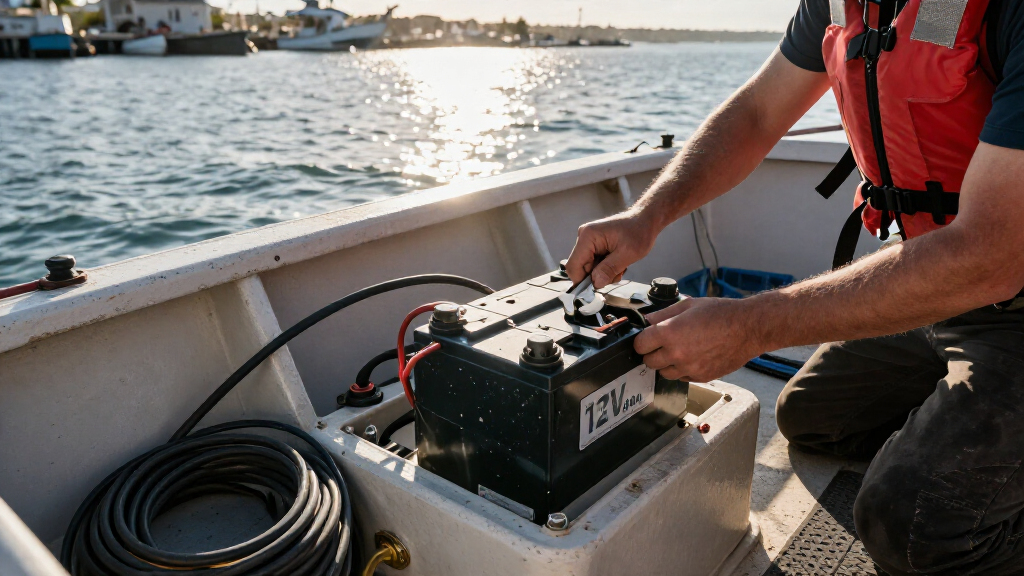
I compared the six listed batteries around the needs implied by a 12V, 300Ah marine setup: capacity, stated BMS current, monitoring, longevity claims, and the amount of decision-useful information in each product description. Those factors affect how much energy a buyer can plan around, whether a battery can support expected loads, and how easily its status can be checked. I also treated marine fit as a verification point: a product title alone does not confirm dimensions, terminal compatibility, environmental protection, or charging behavior at low temperatures.
The ranking favors options with clearly stated, useful differentiators rather than treating every 300Ah label as equivalent. HumsiENK leads for its stated 314Ah capacity and Bluetooth; Rvpozwer and PUPVWMHB follow as clear choices for buyers focused on a named 200A BMS, with PUPVWMHB adding Bluetooth. The app-monitoring and 15,000+ cycle-life models may suit buyers drawn to those specific claims, but the available names do not supply enough detail to treat them as proven advantages. SUPER EMPOWER remains a straightforward 300Ah candidate, though its listing title provides fewer differentiators. I would confirm complete specifications and warranty support before making a final purchase.
Factors to Consider When Choosing Marine Lithium Battery 12v 300ah
A 300Ah label gives a useful starting point, but it does not answer whether a battery fits your boat or can supply every load you plan to run. I would compare the complete electrical system, installation space, charging sources, and support terms before deciding which features deserve priority.
Match BMS Current to Your Actual Loads
A 200A BMS rating describes a current limit, not a promise that every device can run at full power without interruption. Add up simultaneous DC loads and check the inverter’s surge draw, since startup demand from some equipment can briefly exceed its running requirement. At 12V, high-power inverters can draw substantial current, especially as voltage falls under load. If your system may approach the battery’s limit, ask for both continuous and peak discharge ratings and the duration allowed for any peak. A higher-capacity BMS can add headroom, but it does not replace correctly sized cables, fuses, and switches. Avoid choosing from amp-hours alone when the boat’s main concern is power delivery.
Check Usable Energy, Not Just the Ah Label
Nominal amp-hours are useful for comparing batteries, yet the energy available to your appliances depends on voltage, discharge limits, temperature, and the battery’s protection settings. Estimate daily consumption in watt-hours by multiplying each device’s power by its expected run time, then include a reserve for changing weather or longer trips. Compare that estimate with the manufacturer’s usable-capacity information instead of assuming every advertised amp-hour is available in practice. A stated 314Ah model may offer more nominal capacity than a 300Ah model, but the difference matters only if the figure is documented under comparable conditions. If the seller cannot explain its capacity test method, size your system conservatively.
Confirm Charging Compatibility Across Every Source
Boats often charge from an alternator, shore-power charger, solar controller, or a mix of all three, and each source must support the battery’s chemistry and voltage limits. Check whether your charger has a LiFePO4 profile and whether its settings can be adjusted to the battery maker’s specifications. Alternator charging deserves special attention: a lithium battery can accept current differently from lead-acid batteries, so an appropriate DC-to-DC charger may be needed to protect the alternator and manage charging. Do not rely on a generic claim that a battery is suitable for 12V systems as proof that it works with your existing equipment. Ask for charge-current limits and low-temperature charging behavior before connecting it.
Treat Cycle-Life Claims as Conditional
Cycle-life figures, including a 15,000+ claim, depend on how a cycle is defined and the conditions used in testing. Depth of discharge, charge voltage, temperature, and current can all affect how long a battery lasts in service. Ask what remaining-capacity threshold ends the cycle-life test and whether the claim comes with a written warranty. A large cycle figure may be attractive for a boat used frequently, but it should not outweigh unclear warranty coverage or missing operating limits. For occasional use, practical support and correct system fit may matter more than the biggest advertised number. Compare like-for-like test details whenever a seller provides them.
Measure the Installation Space and Check the Terminals
A 300Ah battery can be large and heavy enough to make installation a real constraint, particularly in a tight cabin locker or under a berth. Measure the available space, including clearance for cables, ventilation, access, and safe removal, then compare it with the exact product dimensions. Confirm terminal type, polarity, and the cable-lug sizes your installation requires; a mismatch can add adapters or complicate a secure connection. Marine vibration also makes a stable mounting plan important, so check the manufacturer’s mounting guidance rather than assuming a battery can sit loose in any compartment. Verify enclosure protection and any stated limits on moisture or salt exposure. A matching voltage and capacity do not by themselves establish marine suitability.
Decide Whether Monitoring and Support Are Worth Prioritizing
Bluetooth or app monitoring can make it easier to check state of charge and battery status without relying only on voltage readings. It is most useful when the battery is hard to access or when you regularly manage loads away from shore power. Before paying extra attention to that feature, check which readings the app provides, whether the connection works reliably at the intended distance, and what happens if the app or phone is unavailable. A monitor also cannot correct a poorly sized system or replace a suitable battery monitor when your setup needs more detailed energy accounting. Compare warranty length, claim process, and access to technical support alongside app features. For a first marine lithium installation, clear documentation may be more valuable than an additional monitoring feature.
Frequently Asked Questions
Can one 12V 300Ah battery run my boat’s inverter?
It depends on the inverter’s continuous and surge demand, the battery’s BMS limits, and the size of the wiring and overcurrent protection. A 200A BMS rating is a useful specification, but it does not by itself confirm compatibility with a particular inverter. Check the battery’s continuous discharge rating and peak-current duration against the inverter manual, then account for other loads operating at the same time. Large inverter loads can pull substantial current from a 12V bank and may call for a different system design. If your planned demand is near the stated limit, get the battery and inverter manufacturers’ guidance before installation.
Is the HumsiENK battery’s 314Ah claim worth choosing over a standard 300Ah model?
The extra stated capacity may provide more energy reserve, but I would not treat the label alone as proof of a meaningful advantage. Ask how usable capacity was measured, at what discharge rate, and under what temperature and voltage conditions. Compare those details with the other battery’s documented capacity and protection limits. A clear warranty and reliable support can matter more than a small difference in nominal amp-hours. If the seller cannot provide test information, plan around the conservative figure rather than counting on the additional capacity.
Do I need a 200A BMS for a 300Ah marine battery?
Not every 300Ah system needs a 200A BMS; the right limit depends on the loads you expect to run at once. List your DC equipment and inverter demand, including motor or appliance startup surges, and compare the total with the battery’s continuous and peak discharge specifications. A 200A rating can offer useful headroom for heavier loads, but it does not make an undersized cable or fuse safe. Buyers with modest loads may not gain much from a higher current rating. Check the manufacturer’s complete BMS limits before selecting a battery based on one number in its title.
Can I connect one of these batteries to my existing boat charger and alternator?
Do not assume compatibility from the 12V label. Check whether the shore charger and solar controller have settings suitable for LiFePO4, and compare their voltage and current limits with the battery documentation. Alternator charging may call for a DC-to-DC charger, particularly when the existing system was designed for lead-acid batteries. Confirm how the battery handles charging at low temperatures, since charging limits can differ from discharge limits. If your system uses multiple charging sources, have their settings reviewed together before connecting the battery.
Which specifications should I verify before ordering for a boat installation?
Confirm the battery’s exact dimensions, weight, terminal type, polarity, continuous and peak current limits, charging limits, and low-temperature protections. Ask whether the manufacturer describes the model as suitable for the intended marine environment and check any enclosure or moisture-protection information. Read the warranty terms for cycle-life conditions, installation requirements, and the process for handling a fault. Make sure the mounting location allows secure restraint and cable access without exposing the battery to conditions outside its limits. These checks can reveal a poor fit even when the voltage and amp-hour label match your plan.
Conclusion
For the best overall balance in this lineup, I would start with HumsiENK, provided its 314Ah capacity and Bluetooth details are supported by the full specification sheet. Best for a clearly stated 200A BMS is Rvpozwer; choose PUPVWMHB instead if Bluetooth monitoring is also a priority. The best value candidate is the option whose verified capacity, warranty, and support match your system without paying for features you will not use, since the supplied product details do not establish a price-based winner. For beginners, I would favor whichever seller provides the clearest wiring, charging, and warranty guidance rather than choosing by app features alone. The battery advertising 15,000+ deep cycles is the specific-use pick for longevity-focused buyers, but only after confirming its test conditions and warranty. SUPER EMPOWER may suit shoppers seeking a straightforward 300Ah model, though I would request fuller specifications before choosing it for a demanding marine installation.