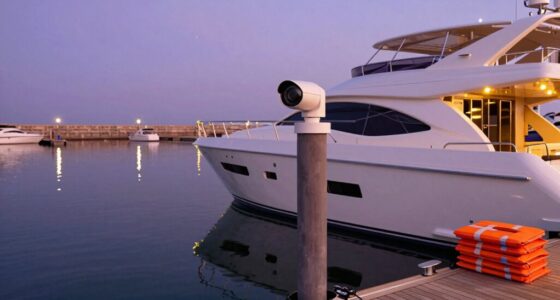
A marine shore power smart charger system combines a safe connection to dockside power with equipment that charges and maintains onboard batteries. I’d pick the Blue Sea Systems P12 as the best overall charger here for boaters who need substantial three-bank charging, while the 3 Bank Marine Battery Charger offers a simpler, lower-output onboard option. The SmartPlug 50 Amp cord stands out for boats that need a higher-capacity shore connection, but a cord alone does not charge batteries. These products fill different parts of a boat’s electrical setup, so the right choice depends on your battery banks, shore-power rating, and whether you need a connection, a charger, or both. Read on for how each option fits.

Get sports gear delivered free with Prime
- Fast, free delivery on millions of items
- Prime Video, Amazon Music and more included
- Member-only deals all year
Complete the kit



Key Takeaways
- Blue Sea Systems P12 is the most capable dedicated shore-powered charger in this group, with 40A output across three banks; check that its capacity fits your battery system and installation.
- The SmartPlug 50 Amp cord and Marinco 30A cordset provide dockside power connections, not battery charging, so either needs compatible charging equipment for battery maintenance.
- The 3 Bank 5A-per-bank charger prioritizes straightforward, lower-output charging across three banks rather than the faster recovery offered by the P12.
- Power-Pole Charge and Victron Orion-Tr Smart address battery charging outside the usual shore-charger role; verify their charging source and wiring requirements before treating them as shore-power replacements.
- The lineup reveals that there is no single all-in-one winner: the best setup depends on matching shore-power capacity, charger output, battery-bank count, and charging source.
| Marinco 30A 125V Marine Shore Power Cordset, Yellow, 50 Ft |  | Best Shore-Power Cord | Amperage: 30A | Voltage: 125V | Length: 50 ft | VIEW ON AMAZON | See Our Full Breakdown |
| SmartPlug 50 Amp Shore Power Cord – 50FT, Waterproof Marine and RV Power Cable |  | Best for Higher-Capacity Shore Connections | Amperage: 50A | Voltage: 125V/250V | Length: 50 ft | VIEW ON AMAZON | See Our Full Breakdown |
| Power-Pole Charge Marine Smart Charger |  | Best for High-Current Marine Battery Charging | Power: 500 watts | Cranking battery charging: Up to 40A | Trolling battery charging: Up to 25A | VIEW ON AMAZON | See Our Full Breakdown |
| 3 Bank Marine Battery Charger, 12V 5A/Bank, Waterproof LCD Onboard Charger with Overcharge Protection & Temperature Compensation |  | Best for Lower-Draw Three-Battery Setups | Battery banks: 3 | Battery voltage: 12V | Maximum output per bank: 5A | VIEW ON AMAZON | See Our Full Breakdown |
| Blue Sea Systems P12 12V 40A 3-Bank Smart Battery Charger |  | Best Overall Shore-Power Battery Charger | Output voltage: 12V DC | Input voltage: 120V listed; description also specifies 115–230V AC | Battery banks: 3 | VIEW ON AMAZON | See Our Full Breakdown |
| Victron Energy Orion-Tr Smart DC to DC Charger (Bluetooth) 12/12V 18A 220W |  | Best for a Dual-Battery System | Charger type: DC-to-DC charger | Input/output voltage: 12/12V | Charging current: 18A | VIEW ON AMAZON | See Our Full Breakdown |
More Details on Our Top Picks
Marinco 30A 125V Marine Shore Power Cordset, Yellow, 50 Ft
I’d choose the Marinco 30A cordset when the boat’s shore connection is the weak link, not its battery charger. Its 50-foot, 10-gauge marine cable gives you reach for dock hookups, while the quarter-turn locking system helps keep the connection secure and the LED indicator confirms power is present. Weatherproof construction and nickel-plated contacts suit regular exposure to damp, corrosive conditions. Unlike the Blue Sea Systems P12, this cord does not charge or manage battery banks; it delivers shore power to compatible onboard equipment. The tradeoff is its 30A, 125V limit, which rules it out for higher-capacity shore connections, and its heavy cable can be awkward to coil or route in tight spaces. I’d pair it with a separately selected charger.
Pros:- 50-foot cable provides useful reach from dock pedestal to boat
- Weatherproof design and corrosion-resistant nickel-plated contacts suit marine exposure
- Quarter-turn locking connection helps resist accidental separation
- LED indicator shows when power is present
Cons:- Limited to 30A, 125V connections
- Heavy cable can be cumbersome to handle and store
- Does not charge batteries or provide charging controls
Best for: Boat owners with a compatible 30A, 125V shore inlet who need a long, weather-resistant dockside power connection.
Not ideal for: Owners with 50A or 125/250V shore connections, or anyone looking for a battery charger rather than a power cord.
- Amperage:30A
- Voltage:125V
- Length:50 ft
- Cable gauge:10 gauge
- Cable material:Marine-grade cable
- Connector:Watertight molded plug and connector
- Connection feature:Quarter-turn locking system
- Power indicator:LED
Our verdict“Choose this cordset for a compatible 30A shore connection; choose the Blue Sea Systems P12 if your priority is charging onboard battery banks.”
SmartPlug 50 Amp Shore Power Cord – 50FT, Waterproof Marine and RV Power Cable
For a boat wired for 50A shore power, this SmartPlug cord offers more capacity than the Marinco 30A cordset and supports 125V/250V connections. Its 50-foot length, waterproof locking plug, silicone gaskets, and tinned wire are aimed at dependable use in wet, corrosive conditions. The LED indicator gives a quick check that power is flowing, but this remains a connection cable—not a charger or battery-management system like the Power-Pole Charge or Blue Sea Systems P12. That distinction matters if your main need is battery charging. The heavier-duty build brings a handling cost: the cord may resist tight bends, and the locking mechanism calls for careful use. I’d match it to the vessel’s shore inlet and electrical requirements rather than choosing it for its name alone.
Pros:- 50A capacity and 125V/250V support suit compatible higher-capacity shore systems
- Waterproof locking plug helps maintain a secure connection
- Tinned wire and silicone gaskets are suited to harsh outdoor exposure
- LED indicator confirms active power flow
Cons:- Heavy-duty cord can be difficult to route in tight spaces
- Locking mechanism requires careful handling to avoid damage
- Does not charge or manage onboard batteries
Best for: Owners of boats with a compatible 50A, 125V/250V shore inlet who need a long waterproof cord for dock power.
Not ideal for: Owners with 30A-only connections, cramped storage or routing space, or a need for an onboard battery charger.
- Amperage:50A
- Voltage:125V/250V
- Length:50 ft
- Wire:Tinned wire
- Gaskets:Silicone
- Plug:Waterproof locking plug
- Power indicator:LED
Our verdict“Pick this over the Marinco cord when your compatible shore inlet needs 50A and 125V/250V support, not when you need a smart battery charger.”
Power-Pole Charge Marine Smart Charger
The Power-Pole Charge is the most charging-focused pick here for buyers who need substantial current for separate cranking and trolling batteries: the listed output reaches 40A for cranking batteries and 25A for trolling batteries, with a 500-watt rating. That makes it a different proposition from the Blue Sea Systems P12, which is specified as a 40A, three-bank shore charger, and from the low-output 3-bank 5A charger. The tradeoff is limited product detail: the supplied information does not identify its input requirements, supported battery chemistries, bank configuration, or charging stages. I would not assume it is a shore-power charger or that it connects directly to dock AC. It makes the list for marine battery charging capacity, but buyers should confirm system compatibility before treating it as part of a shore-power setup.
Pros:- Up to 40A output is specified for cranking batteries
- Up to 25A output is specified for trolling batteries
- 500-watt rating indicates a higher-output focus than the 5A-per-bank charger
- Designed for marine battery use
Cons:- Available product information does not specify shore AC input requirements
- Battery chemistry support and charging stages are not detailed
- Bank configuration and installation requirements are not provided
Best for: Anglers or boat owners prioritizing higher-current charging for cranking and trolling batteries who can verify compatibility with their existing electrical system.
Not ideal for: Buyers seeking a clearly specified, direct shore-power charger with documented AC input, battery chemistry support, and charging stages.
- Power:500 watts
- Cranking battery charging:Up to 40A
- Trolling battery charging:Up to 25A
- Product type:Marine smart charger
Our verdict“Choose this for its stated cranking- and trolling-battery output only after confirming it matches your battery and shore-power system.”
3 Bank Marine Battery Charger, 12V 5A/Bank, Waterproof LCD Onboard Charger with Overcharge Protection & Temperature Compensation
This charger’s clearest advantage is independent charging across three 12V banks, useful when a boat has separate batteries that need their own charging attention. Its 5A-per-bank output is modest beside the Blue Sea Systems P12 at 40A total, so I’d favor this model for maintenance or lighter charging needs rather than rapid recovery of depleted batteries. The stated nine-stage charging, temperature compensation, and support for SLA/AGM, lithium, calcium, and repair modes offer more charging options than the product details supplied for the Power-Pole Charge. Waterproof construction also suits onboard installation. However, the setup may challenge first-time installers, and the product information does not describe the LCD interface in detail. It is restricted to 12V batteries, so it will not serve a different-voltage bank.
Pros:- Charges up to three 12V batteries independently
- Nine-stage charging and temperature compensation support managed charging
- Waterproof design is suited to onboard environments
- Listed modes cover SLA/AGM, lithium, calcium, and repair
Cons:- 5A maximum per bank is limited for quickly recharging depleted batteries
- Setup may be challenging for beginners
- LCD operation and interface details are not specified
Best for: Boat owners with up to three 12V batteries who want separate, lower-current charging and broad listed chemistry modes.
Not ideal for: Owners who need fast charging, a charger for battery systems other than 12V, or a simple installation with clearly documented display controls.
- Battery banks:3
- Battery voltage:12V
- Maximum output per bank:5A
- Total power:180W
- Charging modes:SLA/AGM, lithium, calcium, repair
- Charging stages:9-stage
- Included accessories:Alligator clips, screws, ring terminals, fuses, manual
Our verdict“Choose this for three 12V batteries and modest charging demands; the Blue Sea Systems P12 is better suited to buyers needing substantially more output.”
Blue Sea Systems P12 12V 40A 3-Bank Smart Battery Charger
For a buyer who wants a shore-powered charger for a multi-battery 12V boat, the Blue Sea Systems P12 has the strongest balance of documented output and battery support in this group. It supplies 40A across three independent banks, with profiles for AGM, flooded lead-acid, gel, and TPPL batteries. Compared with the 3-bank 5A charger, it is the more suitable choice for higher charging demand; compared with the Marinco and SmartPlug cords, it actually manages battery charging rather than simply carrying dock power. Its temperature compensation, protective safeguards, display, and rugged aluminum housing suit a permanent marine installation. The tradeoffs are a 12V-only output and a substantial 17 × 6 × 10-inch, 12-pound form. Input information also conflicts: one spec says 120V, while another lists 115–230V AC, so I’d verify compatibility before purchase.
Pros:- 40A charging output serves higher-demand battery systems better than the 5A-per-bank option
- Three independent banks can charge separate battery groups
- Supports AGM, flooded lead-acid, gel, and TPPL batteries
- Temperature compensation, protective safeguards, and finned aluminum housing suit marine installation
Cons:- Output is designed for 12V battery systems only
- Large dimensions and 12-pound weight require suitable mounting space
- Input voltage is listed inconsistently as 120V and 115–230V AC
Best for: Boat owners with up to three 12V battery banks who want a higher-output shore-powered charger and use one of its listed battery chemistries.
Not ideal for: Owners with non-12V battery systems, limited installation space, or shore input requirements that cannot be confirmed against the conflicting input-voltage details.
- Output voltage:12V DC
- Input voltage:120V listed; description also specifies 115–230V AC
- Battery banks:3
- Charging output:40A
- Charging stages:Bulk, Absorption, PreFloat, Float
- Compatible battery types:AGM, flooded lead-acid, gel, TPPL
- Dimensions:17 × 6 × 10 in
- Weight:12 lb
- Housing:Finned aluminum
Our verdict“Choose the P12 for a documented 40A-class, three-bank 12V shore-power charging setup, after confirming its AC input range fits your vessel.”
Victron Energy Orion-Tr Smart DC to DC Charger (Bluetooth) 12/12V 18A 220W
The Victron Energy Orion-Tr Smart suits boat owners who need to charge a secondary battery from a 12V source, rather than replace a shore-powered onboard charger. Its 18A, three-stage charging supports lead-acid and lithium batteries, while Bluetooth monitoring lets you check or adjust charging from a compatible phone or tablet. Compared with the Blue Sea Systems P12 12V 40A 3-Bank Smart Battery Charger, this is a lower-current, single 12V-to-12V solution—not a multi-bank charger for managing several batteries from shore power. That distinction makes the Orion useful for a dedicated house battery charged while underway, but a poor fit as the only shore-power charging system. Its main tradeoffs are the 12V-only limit and reliance on a compatible device for Bluetooth functions; installation uses screw terminals rather than a plug-in setup.
Pros:- Three-stage charging supports controlled charging for compatible batteries.
- Works with both lead-acid and lithium batteries.
- Bluetooth enables smartphone monitoring and control.
- Screw terminals support a fixed installation in a dual-battery system.
Cons:- Not a shore-power AC charger, so it does not replace an onboard shore charger.
- Limited to 12V systems and an 18A output.
- Bluetooth features require a compatible smartphone or tablet.
Best for: Boat owners adding a 12V house battery who want to charge compatible lead-acid or lithium batteries from another 12V battery system and monitor charging by phone.
Not ideal for: Owners seeking a shore-power-connected, multi-bank onboard charger, or anyone with a system voltage other than 12V.
- Charger type:DC-to-DC charger
- Input/output voltage:12/12V
- Charging current:18A
- Power:220W
- Bluetooth:Yes
- Supported battery types:Lead-acid and lithium
- Charging process:Three-stage
- Connection type:Screw terminals
Our verdict“Choose the Orion-Tr Smart for Bluetooth-monitored 12V dual-battery charging, but pick a dedicated onboard charger such as the Blue Sea P12 for shore-power multi-bank charging.”
How We Picked
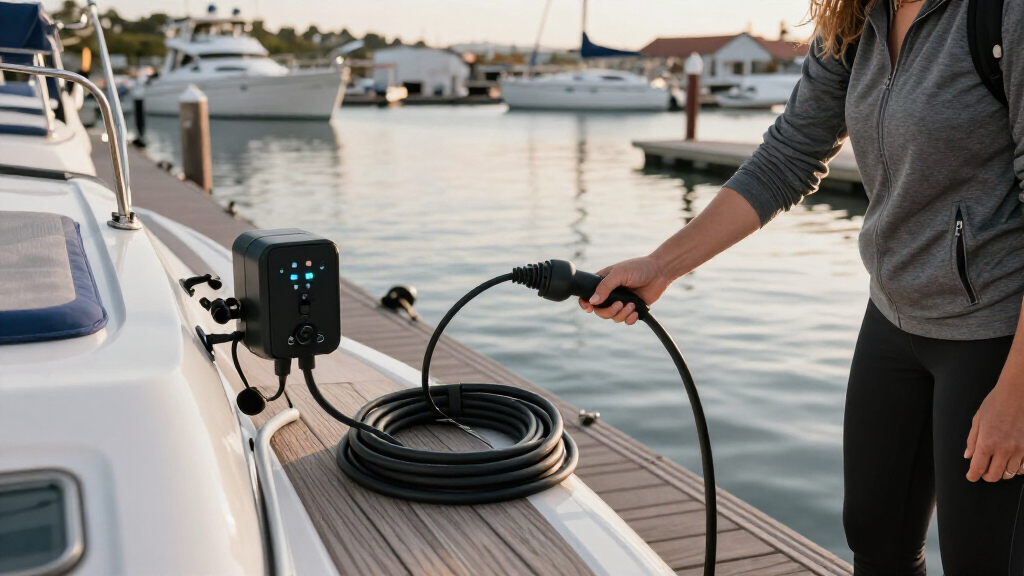
I ranked these products by how directly they support a practical marine shore-power and battery-charging setup, then compared their useful roles rather than treating cords and chargers as interchangeable. For chargers, I weighed output, number of supported banks, monitoring or protection features, and how well the product fits a boat with more than one battery. For cords, I focused on the shore connection’s stated amperage and length, since those determine compatibility and reach but do not indicate charging performance.
That distinction puts the Blue Sea Systems P12 first as the strongest dedicated multi-bank shore charger in this lineup. The 3 Bank 5A-per-bank model ranks as a simpler lower-output alternative, while the cords are useful connection components rather than complete charger systems. The Power-Pole and Victron models serve more specialized charging roles, so their placement reflects source and installation fit, not a claim that they replace a shore-powered charger. I also account for what a buyer must verify before installation, including battery chemistry, bank layout, shore supply, and wiring compatibility.
Factors to Consider When Choosing Marine Shore Power Smart Charger System
Before choosing a product, map the whole charging path: dock outlet, shore cord, onboard charger, battery banks, and any alternate charging source. A mismatch anywhere in that chain can leave you with equipment that connects but does not charge as expected. I’d use these factors to decide which part of the system needs attention first.
Separate the shore connection from the battery charger
A shore-power cord carries electricity from the dock to the boat; it does not by itself regulate charging into a battery. A charger converts suitable AC power into controlled DC charging, while a DC-to-DC charger works from a DC source. Buying a cord because it has a higher amp rating will not increase a charger’s output. First identify whether you need a dockside connection, an onboard charger, or both. Check that the inlet, cord, breaker, and charger input are compatible as a system. This avoids the common mistake of treating a shore cord and a smart charger as alternative versions of the same product.
Match the cord rating to the boat’s shore-power system
Use the boat’s inlet and electrical documentation to confirm the required voltage, amperage, connector style, and cord configuration. A 30A cord and a 50A cord are not interchangeable just because both reach the dock. A longer cord can make slip access easier, but extra length adds bulk and may complicate storage and handling. Do not adapt a connector or choose a cord solely by appearance; the entire connection path must be rated for the intended supply. Also check the cord’s condition regularly, since damaged insulation or contacts can create heat and electrical hazards. When the boat’s rating is uncertain, confirm it with a qualified marine electrician before connecting a new setup.
Size charger output for battery capacity and use
Charger output affects how quickly a battery bank can recover, but a larger number is not automatically the right choice. Compare the charger’s output with the battery maker’s recommended charge current and the bank’s capacity. Think about how long the boat usually stays connected to shore power and how quickly batteries need to be ready for the next trip. A lower-output charger may suit modest banks or long stays at the dock, while frequent use of power-hungry equipment can make faster charging more useful. Avoid selecting by total output alone: output shared across several banks may behave differently from output available to one bank. Confirm how the charger distributes current and whether that fits your battery layout.
Count banks and identify battery chemistry
List each battery bank and its purpose before choosing a multi-bank charger: starting, house, or other dedicated loads may have different needs. Then check that the charger supports the battery chemistry and charging profile specified by the battery manufacturer. A three-bank label does not mean every bank receives the same current, or that every battery type is supported. If banks have different chemistries or sizes, confirm the product’s settings and output allocation rather than assuming one profile fits all. Mixing incompatible charging requirements can reduce battery life or leave a bank undercharged. For unusual bank arrangements, get the wiring plan reviewed before installation.
Choose monitoring and protection that fit your routine
Monitoring can help you spot a charging fault or understand battery status without opening compartments, but the usefulness depends on what the display or connected app actually reports. Protection features such as temperature compensation can adjust charging behavior as conditions change, yet they do not replace correct battery settings or safe installation. Consider whether you will check the system frequently, leave the boat unattended, or need visible status at the charger. A simpler unit may be easier to operate, while a more feature-rich model can offer better insight for a multi-bank setup. Read the manual for alarm behavior, sensor requirements, and any limits on remote monitoring. Do not assume Bluetooth monitoring means the charger can be controlled from anywhere or functions as a shore-power connection.
Pay for capacity and features your boat can use
Spending more makes sense when you need higher charging output, multiple independently managed banks, or a shore connection rated for your vessel. It adds less value if the boat has a small battery bank, rarely needs rapid recovery, or already has a suitable shore cord. Likewise, a DC-to-DC charger can be useful for charging from an alternator or another DC source, but it is not a direct substitute for an AC shore charger. Budget for installation parts and professional help where required, not just the main unit. Before buying, compare the product’s input source, output, bank support, and installation requirements against your actual use. This keeps a specialized feature from becoming unused complexity.
Frequently Asked Questions
Can I use the SmartPlug or Marinco shore cord to charge my boat batteries?
No. Both are shore-power cords that connect the boat to dockside AC power; battery charging requires a compatible onboard charger in the electrical path. Confirm that the cord matches the boat’s inlet and the dock supply before use. The cord’s amperage rating does not describe the charger’s battery output. If your boat already has a charger, check its input requirements and the inlet configuration. If not, you will need to choose a charger separately.
Is the Blue Sea Systems P12 a better choice than the 3-bank 5A charger for every boat?
No. The P12’s 40A output across three banks suits buyers who need more charging capacity, but a smaller bank or a boat with long dock stays may not need that level of output. The 5A-per-bank model offers a lower-output route for maintaining several banks, provided its charging performance and battery support match your needs. Check each battery maker’s recommended charge current and the charger’s supported chemistry. Also compare installation requirements and how the charger allocates output among banks. The best fit is the one that matches the battery system, not simply the one with the larger output figure.
Can the Victron Orion-Tr Smart replace an AC shore-power charger?
The Orion-Tr Smart is a DC-to-DC charger, so it charges from a DC source rather than directly from dockside AC power. It can suit a setup that needs controlled charging from an alternator or another compatible DC supply. A boat that needs charging while plugged into shore power still needs an appropriate AC charger unless its electrical system includes another compatible conversion path. Check the input voltage, installation wiring, and battery charging profile before choosing it. Treat it as a solution for a particular charging source, not as a universal shore charger.
How do I choose between a 30A and 50A shore-power cord?
Start with the boat’s shore-power inlet and electrical rating, then confirm the dock outlet and cord connector match. A 50A cord is not an upgrade if the boat is designed for a 30A connection, and an incompatible connection should not be forced with an unverified adapter. Cord length is a separate decision: choose enough reach for the slip while accounting for storage and handling. Inspect the cord and plug condition, and follow the vessel and cord manufacturer’s instructions. If the inlet rating or wiring is unclear, ask a marine electrician to verify it.
What should I verify before installing a multi-bank smart charger?
Confirm the number of battery banks, each bank’s chemistry and capacity, and the charger’s output allocation. Check that its charge profile matches the battery manufacturer’s guidance and that the charger’s AC input suits the boat’s shore supply. Review required ventilation, mounting location, temperature-sensor needs, and cable sizing in the installation instructions. A charger with multiple outputs may still have limits on which batteries can be connected or how output is divided. Have a qualified marine electrician review uncertain wiring or mixed-chemistry systems before connecting the unit.
Conclusion
For a dedicated shore-powered charger serving several battery banks, I’d choose the Blue Sea Systems P12 as the best overall option in this lineup. The 3 Bank 5A-per-bank charger is the value-oriented pick for buyers whose batteries can be served by lower output, while the P12 is the premium choice for those who need more charging capacity. For beginners, I’d start by confirming the boat’s inlet, shore supply, and battery layout, then choose the simplest compatible charger rather than buying a cord and assuming it charges batteries. The SmartPlug 50 Amp or Marinco 30A makes sense when the missing piece is the correctly rated shore connection, not a charger. Choose the Power-Pole Charge or Victron Orion-Tr Smart for a specific charging-source setup after checking compatibility; neither should be treated as a direct replacement for an AC shore charger without confirming the full system design.