
TL;DR

Get sports gear delivered free — and shop member deals
- Fast, free delivery on millions of items
- Access to Prime Big Deal Days deals on October 6–7
- Prime Video, Amazon Music and more included
A marine waterproof LED flashlight needs at least an IPX7 rating (1m submersion for 30 minutes), ideally IPX8 for continuous immersion. Saltwater, not water depth, is what actually destroys most lights — so rinse with fresh water after every trip and look for Type III anodized aluminum or corrosion-sealed designs. For boats with gasoline engines, only intrinsically safe lights (UL/ATEX certified) belong in the engine compartment. [1]
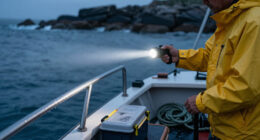
Your flashlight dies three miles from the ramp, in the dark, with a bilge pump acting up. That’s the moment you find out your “water-resistant” light was never built for the water at all. Splashes, maybe. A dropped-overboard moment or a week of salt spray? No.
Here’s the uncomfortable truth from every blog research overview on this topic: many lights marketed as “marine” only handle splashes. The label means almost nothing. What matters is the IPX rating, the housing material, and whether the maker thought about salt — not just water. [1]
In this guide, you’ll learn how to read waterproof ratings like a pro, how many lumens you actually need, which battery setup fits your trips, and the one safety rating most boaters have never heard of but absolutely need.
Buy IPX7 minimum (1m/30 min submersion); choose IPX8 if the light might go overboard with you. "Water-resistant" packaging language is not a rating.
Saltwater corrosion, not flooding, kills most marine flashlights — fresh-water rinse the entire light after every saltwater trip and grease the O-rings regular…
300–1,000 lumens covers recreational night boating; prioritize a strobe/SOS mode since the USCG recognizes a strobe as a distress signal.
Use disposables (AA/CR123A) for offshore trips and USB-C rechargeables for day trips; never buy a light without a low-battery indicator.
Carry an intrinsically safe (UL/ATEX-rated) light for engine compartment and fuel system checks on gasoline-powered boats.
Waterproof Ratings Decoded: Why “Water-Resistant” Is a Trap
Waterproof ratings for flashlights come down to two numbers: IPX7, which means the light survives submersion in 1 meter of water for 30 minutes, and IPX8, which covers continuous immersion to specified depths, usually 2 meters or deeper. [1] Anything below IPX7 — like IPX4 “splash resistance” — is not a marine light, no matter what the box says.
Here’s a scenario every angler knows: you lean over the gunwale to land a fish, and your light goes off the rail into the drink. An IPX4 light floods instantly. An IPX7 light sitting in 4 feet of water for ten minutes while you grab the net? It comes up still burning.
Submersion depth ratings also matter for pressure. Kayakers and small-boat boaters are fine at IPX7. If you might go overboard with the light on your wrist, or you want it for diving-adjacent tasks like retrieving props, you need IPX8 with a stated depth.
| Rating | What It Survives | Best For |
|---|---|---|
| IPX4 | Splashes and rain | Walking the dog. Not your boat. |
| IPX7 | 1m submersion, 30 minutes | Boating, kayaking, fishing |
| IPX8 | Continuous submersion, 2m+ | Watersports, shallow-water retrieval |
| Dive-rated | Pressure-tested to 20–100m+ | Scuba and snorkeling only |
“Water-resistant” on packaging is marketing language, not a spec. If the box doesn’t name an IPX rating, assume it can’t handle submersion at all.
How Many Lumens You Actually Need on the Water
For recreational night boating, 300 to 1,000 lumens covers nearly every real-world job — reading channel markers, lighting a deck, or signaling another vessel. Below 300, you’ll squint at unlit buoys. Above 1,000, you mostly pay for battery you’ll drain in an hour. [1]
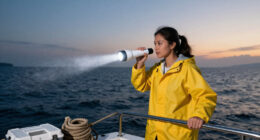
But raw brightness is only half the story. Beam shape decides what those lumens actually do. A tight throw beam (a focused hotspot) cuts 100+ meters to pick out a channel marker or a moored boat’s stern light. A flood beam paints a wide, even pool of light across your deck or cockpit — better for working lines, rigging rods, or finding a dropped plier.
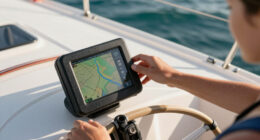
The best marine lights do both, either with an adjustable focus or with separate high/flood modes. Picture this: you’re entering an unfamiliar harbor at night. You throw the beam out to confirm the red-right-returning marker, then drop to flood to check your chartplotter and fenders without blinding yourself.
Also look for SOS and strobe modes. The U.S. Coast Guard recognizes a strobe as a distress signal, and a 1,000-lumen strobe is visible for miles on flat water. It’s the cheapest safety equipment on your boat.
Rechargeable vs. Disposable Batteries: The Honest Tradeoff
Rechargeable lithium-ion lights with USB-C charging are now the standard on premium models from brands like Olight, Fenix, and Nitecore — they’re cheaper to run and better for the environment. [1] But for offshore trips where you can’t charge for days, disposable AA or CR123A lights still win because you can carry a fistful of batteries and swap them in seconds, in the dark, with wet hands.
Run time is where budget lights embarrass themselves. A 1,000-lumen light might last 60–90 minutes on high but 20+ hours on low. That matters in an emergency. If your engine dies at 9 p.m., you don’t run high beam all night — you run low mode to conserve and save high for signaling.
Skip any light without a low-battery indicator. Modern battery management systems include overcharge and discharge protection plus battery level readouts, and the good ones tell you remaining charge in 25% steps. [1] Finding out your light is dead is bad. Finding out it’s at 15% while you still have a five-mile run home is worse.
- Day trips and near-shore: rechargeable USB-C, always topped off at the dock
- Overnighters and offshore: AA/CR123A disposables, plus spares in a dry bag
- Best of both: hybrid lights that accept both a rechargeable cell and disposables
Saltwater Corrosion: The Killer Nobody Warns You About
Saltwater is harder on flashlights than freshwater by an order of magnitude — it creeps into threads, eats contact springs, and fuses O-rings to their grooves. The IPX rating tells you nothing about this. A perfectly waterproof light can still corrode into a paperweight in one season if the housing can’t take salt.
Type III hard-anodized aluminum is the gold standard for housings — it shrugs off salt spray far better than bare or Type II finishes. Polymer and composite housings (think Pelican and Underwater Kinetics) never corrode at all, trading a little rigidity for total chemical indifference. Either works. Cheap, thinly coated aluminum does not.
Check impact resistance too: 1–2 meter drop ratings mean the light survives slipping off a leaning post onto a wet deck. On a boat, everything gets dropped eventually.
The 60-Second After-Trip Routine That Doubles Your Light’s Life
- Rinse the entire light in fresh water immediately after saltwater exposure — threads, switch, charging port, everything.
- Unscrew the tail cap slightly and rinse the threads again, then dry.
- Wipe O-rings clean and apply a thin film of silicone grease every few months.
- Store the light with the battery at roughly half charge, out of a hot bilge or glovebox.
The Safety Rating Most Boaters Don’t Know They Need
If your boat has a gasoline engine, any flashlight you carry into the engine compartment or near fuel should be intrinsically safe — certified to UL or ATEX standards for use in flammable gas environments. [1] A single spark from a non-rated light’s switch or motor contact near gas fumes can ignite them. This isn’t theoretical; it’s why commercial marine and industrial crews carry certified lights only.
Brands like Streamlight and Pelican make purpose-built intrinsically safe models. They cost more and are dimmer than your everyday light — usually 100–200 lumens — because certification limits internal energy. Keep one on the boat for fuel system checks and bilge inspection, and use your brighter everyday light everywhere else.
Also worth knowing: the U.S. Coast Guard requires night boaters to carry night signaling devices. A waterproof light with an SOS mode is recognized for recreational vessels, but check current USCG requirements for your boat size — electric distress lights satisfy the rule for vessels under 16 meters in most cases. When in doubt, defer to the USCG’s official navigation rules.
What to Look For Before You Buy: A 5-Point Checklist
A good marine waterproof LED flashlight comes down to five checks, in this order of priority: IPX7 minimum, salt-corrosion-resistant housing, honest lumen output with multiple modes, a battery strategy that matches your trips, and hands-free mounting options.
- Waterproof rating: IPX7 minimum, IPX8 if submersion is likely. No stated rating, no sale.
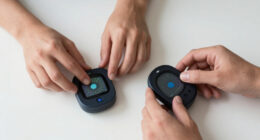
- Housing: Type III anodized aluminum or polymer. Check for sealed magnetic charging ports, which keep water out during charging. [1]
- Output and modes: 300–1,000 lumens with high/low/strobe/SOS. Adjustable focus is a bonus, not a requirement.
- Power: USB-C rechargeable for day use; disposables for offshore. Low-battery indicator is non-negotiable.
- Mounting and retention: a lanyard hole at minimum; magnetic bases and clips let you stick the light to a tower or rail for hands-free work.
On budget: solid IPX7 lights from Fenix, Olight, and Streamlight start around $40–60, and dependable AA-powered options run under $30. Premium models with USB-C fast charging and smart battery readouts sit in the $80–150 range. Model lineups change fast, so verify current specs before buying. [1]
Frequently Asked Questions
Can I use a regular IPX8 flashlight for diving?
Usually no. IPX8 covers continuous submersion to specified depths, typically 2 meters or so — but scuba diving adds pressure far beyond that rating. Diving requires a purpose-built, pressure-rated dive light tested to 20–100+ meters. Using a standard marine light below a few meters can implode seals or flood the housing.Will saltwater corrode an aluminum flashlight?
Bare or cheaply coated aluminum, yes — quickly. Type III hard-anodized aluminum resists salt spray well, and polymer housings don’t corrode at all. Regardless of material, rinse the light in fresh water after every saltwater exposure and keep the O-rings lightly greased with silicone.Is a 300-lumen flashlight bright enough for night boating?
Yes, for most recreational tasks — deck work, close-range navigation, and reading markers within about 50 meters. For picking out distant channel markers or signaling, 600–1,000 lumens performs better. More important than peak lumens is having multiple modes so you can run low (20+ hours of runtime) and save high beam for when it counts.Do I need an intrinsically safe flashlight on my boat?
If your boat has a gasoline engine, yes — for any light used in the engine compartment or near fuel and fumes. Intrinsically safe lights certified to UL or ATEX standards can’t produce sparks hot enough to ignite gas vapors. Diesel boats have far lower risk, but certified lights are still standard practice for commercial crews.How long should a marine flashlight’s battery last in an emergency?
Plan for at least 8–12 hours of usable light on low mode, plus short bursts of high for signaling. A 1,000-lumen high mode may only run 60–90 minutes, which is why low-mode efficiency matters most in emergencies. Carry spare batteries or a charged backup light in a dry bag for offshore trips.Conclusion
Here’s the whole guide in one sentence: an IPX7-or-better rating, a salt-resistant housing, and a post-trip fresh-water rinse are what separate a marine flashlight from a flashlight that merely visited a boat once. Add the SOS mode and the intrinsically safe light for fuel checks, and you’re covered from routine night runs to genuine emergencies.
Before your next trip, do one thing: grab your current light, find its IPX rating, and rinse it now. If the rating isn’t printed anywhere, you’ve found your answer — and your next purchase.
NFL season / tailgating Picks
team gear
As an affiliate, we earn on qualifying purchases.