To clean mold and mildew from boat fabrics without damage, use gentle, eco-friendly solutions like a vinegar and water mix or baking soda paste. Avoid harsh chemicals that can weaken fibers. Regularly ventilate and dry surfaces after use, and consider applying mold-resistant sprays. Soft brushes and microfiber cloths help lift stains safely. If mold persists or areas are hard to reach, professional help may be needed. Keep going for detailed steps and tips to keep your boat spotless.
Key Takeaways
- Use gentle, natural cleaning solutions like vinegar-water mixtures and baking soda pastes to remove mold without damaging fabrics.
- Always test cleaning agents on a small, hidden area before full application to prevent discoloration or fiber damage.
- Employ soft brushes, microfiber cloths, and sponges to clean surfaces delicately and avoid tearing or abrasion.
- Ensure thorough ventilation during and after cleaning to accelerate drying and prevent mold regrowth.
- Consider professional help for persistent or hard-to-reach mold spots to protect fabric integrity and ensure complete removal.

VEVOR Sand Anchor, 36" Length Auger to The Beach and Sandbar, 316 Stainless Steel Screw Anchor w/Removable Handle, Bungee Line & Carry Bag, for Jet Ski PWC Pontoon Kayak
Never Drift Away: Our sand anchor is 36" in length. It can go into shallow water, deep water,...
As an affiliate, we earn on qualifying purchases.
Why Do Mold & Mildew Grow on Boats, and How Can You Prevent Them?
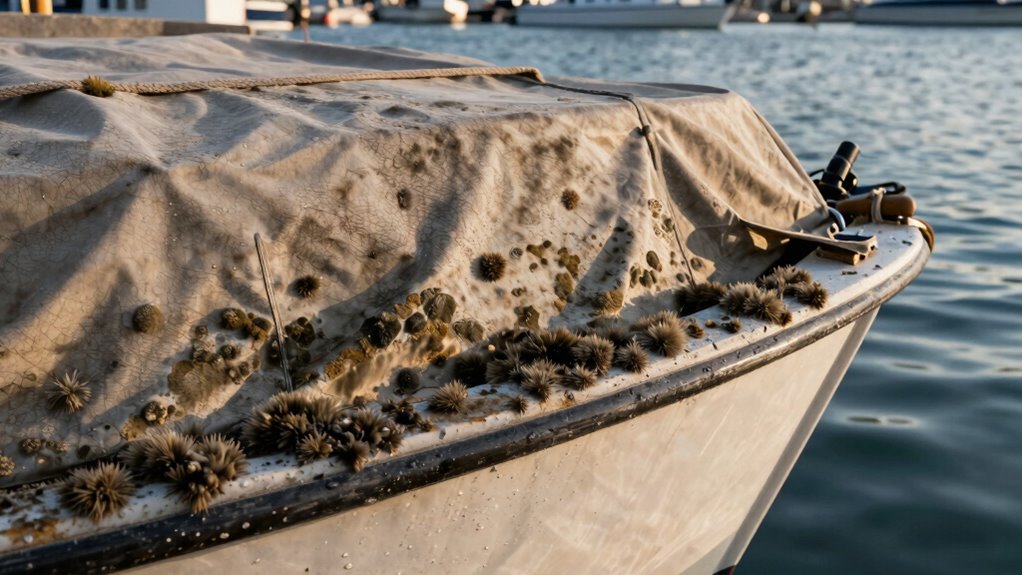
Mold and mildew thrive on boats mainly because of the constant presence of moisture and humidity, which create ideal conditions for growth. Marine environments are naturally humid, making boats especially vulnerable if not properly maintained. Poor boat maintenance, such as leaving damp fabrics or neglected cleaning routines, allows mold spores to settle and proliferate. To prevent this, you should regularly ventilate your boat and control humidity levels with dehumidifiers if possible. Keep surfaces dry, especially after use or rain, and clean problem areas promptly. Using protective coatings or mold-resistant sprays can also help. Consistent maintenance not only protects your boat’s surfaces but also reduces the risk of mold and mildew, keeping your vessel cleaner, safer, and more enjoyable. Additionally, understanding indoor air quality and humidity management can significantly reduce mold growth. Proper ventilation, including air circulation, is crucial in maintaining a dry environment and preventing mold from taking hold. Incorporating biosensors for humidity detection can provide real-time data to help monitor and maintain optimal moisture levels inside your boat. Furthermore, implementing moisture monitoring technology can enable more precise control over indoor conditions, preventing mold before it becomes a problem.

STAYPUT Anchor Bow Mount for Shallow Water Anchoring – Premium Marine-Grade Aluminum Deck Mount (Black)
Heavy-Duty Bow Mount for Shallow Water Anchoring – Designed to keep your bow secure and reduce swing in...
As an affiliate, we earn on qualifying purchases.
How to Spot Mold & Mildew Signs Without Damaging Your Boat’s Fabrics
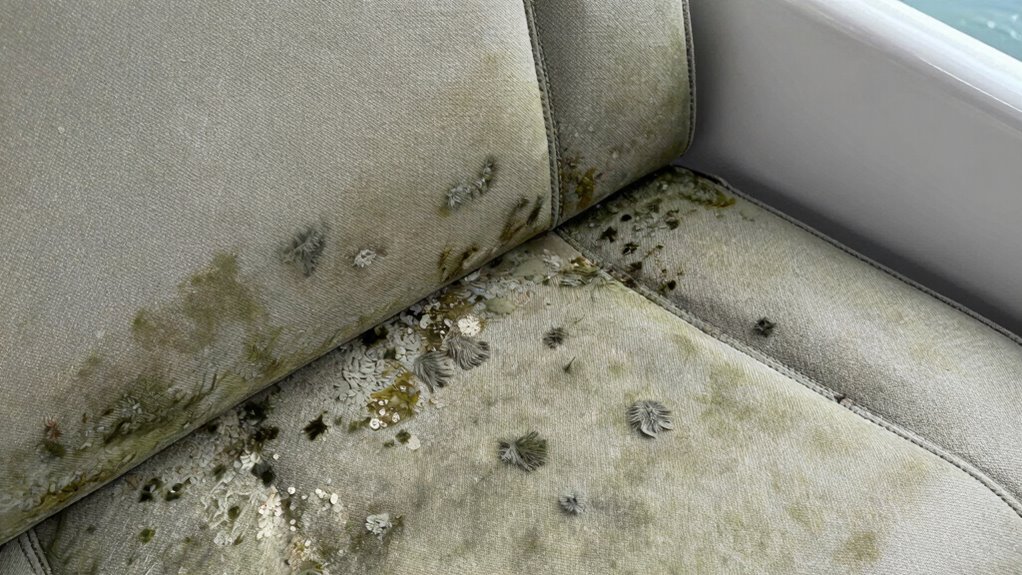
To identify mold and mildew signs on your boat’s fabrics without causing damage, you need to pay close attention to subtle visual and tactile cues. Look for fabric discoloration, which often appears as dark or fuzzy patches, and feel for texture changes—mildew may cause fabrics to feel damp or slimy. Be wary of odor masking; mold and mildew can produce a musty smell that’s faint or hidden behind other scents, so don’t rely solely on smell. Carefully inspect seams, creases, and hidden corners, as these are common spots for growth. Using gentle touch and visual checks helps prevent accidental damage while ensuring you catch early signs of mold and mildew before they worsen. Additionally, understanding how to prevent mold growth through proper ventilation and moisture control can help maintain your boat’s fabric integrity. Regular cleaning and drying of fabrics can also reduce mold risk, while proper storage practices further safeguard against mold development, preserving the fabric’s lifespan and appearance. Maintaining good airflow and controlling humidity levels are crucial in moisture management to prevent future mold issues. Moreover, paying attention to early warning signs can enable prompt action to stop mold from spreading further.

BeneLabel 36" Sand Anchor for Boat with 32ft Ropes, 100% Stainless Steel, Shallow Water, Beach, Sandbar, Jet Ski, Kayak, Pontoon Boat Anchor
Portable Size: The boat anchor pole 36 inches (915 mm) in length, this solid stainless steel anchor pole...
As an affiliate, we earn on qualifying purchases.
How to Prepare Your Boat for Safe Mold & Mildew Cleaning
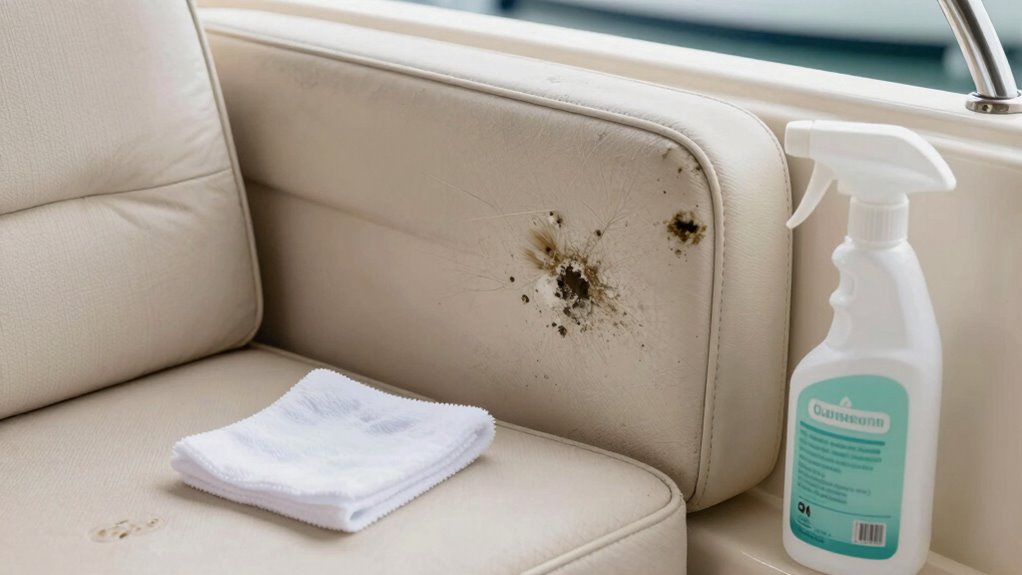
Before you start cleaning, carefully inspect the affected areas to identify all mold and mildew spots. Gather the necessary supplies, such as gloves, masks, and cleaning agents, to guarantee safety and effectiveness. Proper preparation helps you clean thoroughly without risking damage to your boat. Additionally, understanding digital content formats can help you access helpful cleaning tutorials and resources online. Recognizing proper safety precautions is essential to prevent health risks during the cleaning process. Being aware of protective gear options can further enhance your safety during this task. Incorporating free-floating cleaning methods can also make the process easier and more effective. Utilizing appropriate cleaning tools can improve your efficiency and ensure thorough removal of mold and mildew.
Inspect Affected Areas
Inspecting affected areas thoroughly is a crucial first step in preparing your boat for safe mold and mildew cleaning. You need to identify all spots where mold or mildew may be hiding, especially on different boat surfaces. Pay close attention to areas with fabric texture, as mold can embed deep into fibers. Look for discoloration, musty odors, or soft spots indicating damage. Examine:
- Upholstered seats and cushions for visible growth or stains
- Vinyl or fabric-covered panels for signs of mold
- Hidden crevices and seams where moisture can accumulate
- Be aware that large numbers, such as crores, can be converted into millions or billions using an online conversion tool, which is useful for understanding large-scale measurements. Additionally, inspecting for moisture intrusion helps prevent future mold issues by addressing underlying causes. Proper ventilation during cleaning can significantly reduce residual moisture and inhibit mold growth. Regularly checking for airflow problems can also reduce moisture buildup and inhibit mold growth. Understanding moisture management strategies can further enhance your boat’s resistance to mold development.
Gather Proper Supplies
Gathering the right supplies sets the foundation for a safe and effective mold and mildew cleaning process. Start by collecting gentle cleaning solutions specifically formulated for marine upholstery to protect fabric. You’ll need soft brushes or sponges to avoid damaging delicate surfaces, along with microfiber cloths for gentle wiping. Use fabric protection sprays designed to repel future mold and mildew growth, ensuring long-lasting results. Consider gloves and masks to safeguard your skin and respiratory system, especially in enclosed areas. Having these supplies on hand helps you clean thoroughly without risking fabric damage or lingering odors. Proper preparation guarantees you can address mold and mildew effectively while preserving the integrity and appearance of your boat’s marine upholstery. Additionally, selecting appropriate cleaning products helps prevent chemical damage and promotes safer handling during the cleaning process. Being aware of environmentally friendly disposal options ensures you manage waste responsibly and minimize environmental impact. Incorporating proper ventilation during cleaning also helps disperse any airborne spores, reducing health risks. Ensuring proper ventilation not only improves air quality but also helps prevent the spread of mold spores to other areas of your boat.

Island Anchor - 1" x 8' - Shallow Water anchor Pole (White)
The sturdy 1" x 8' Island Anchor Pole is the strongest anchor pin on the market. Built for...
As an affiliate, we earn on qualifying purchases.
What Are Gentle Cleaning Methods for Mold & Mildew on Boat Fabrics?
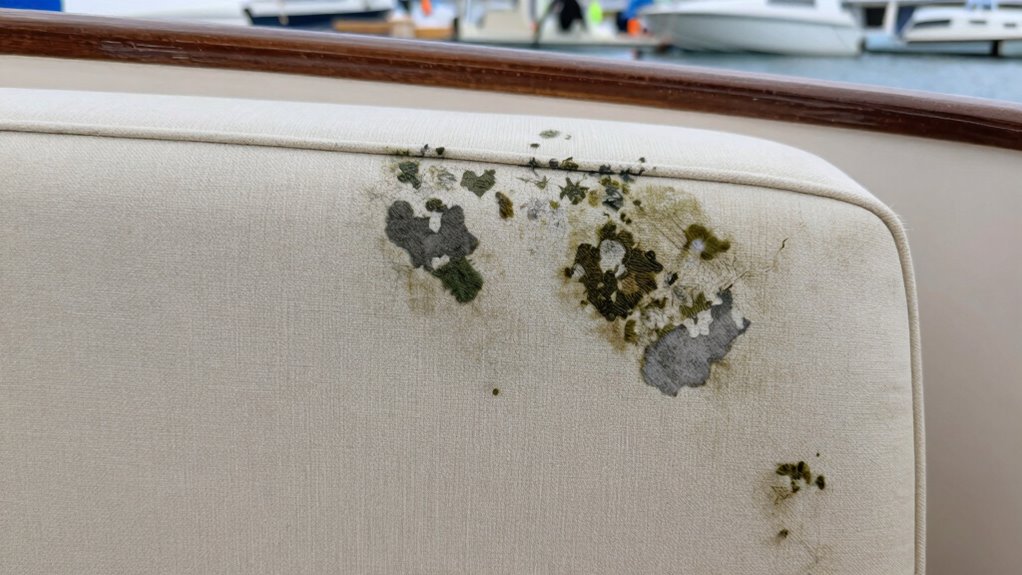
When dealing with mold and mildew on boat fabrics, gentle cleaning methods are essential to prevent damage and effectively remove stains. You want to protect the fabric while eliminating mold, so opt for methods that prioritize fabric protection. Natural remedies are a great choice, as they’re effective and gentle. For example, you can:
- Use a mixture of white vinegar and water to disinfect and inhibit mold growth.
- Apply baking soda paste to lift stains and deodorize.
- Rinse with mild soap and cold water, avoiding harsh chemicals that can weaken fibers.
These methods help maintain the integrity of your fabrics while safely addressing mold and mildew. Always test any solution on a small, hidden area first to ensure it won’t cause discoloration or damage.
How to Remove Mold & Mildew From Your Boat Fabrics : a Step-By-Step Guide
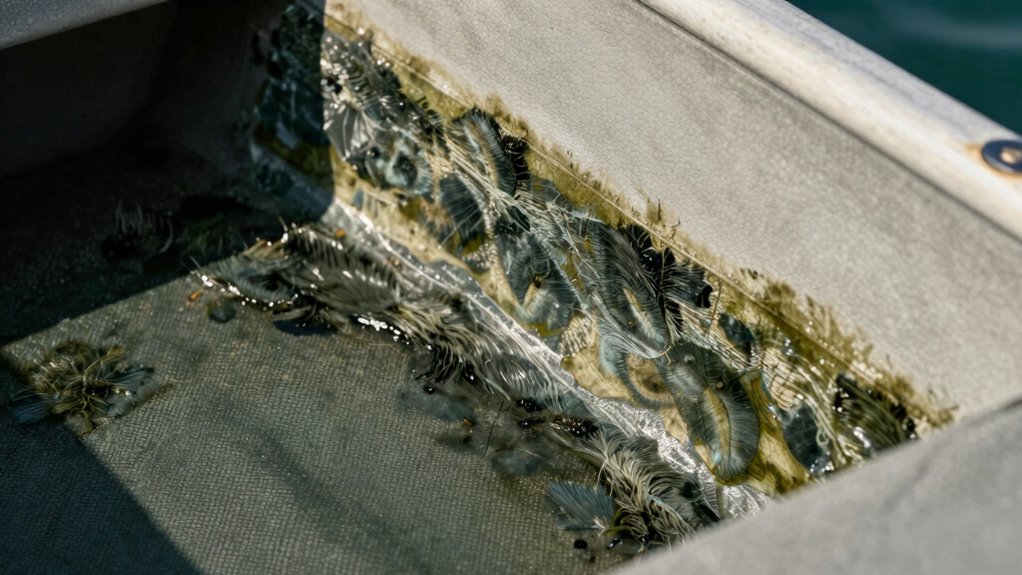
First, you need to identify whether you’re dealing with mold or mildew, as they require different cleaning approaches. Next, use proven cleaning techniques to eliminate the growth effectively without damaging your fabrics. Following these steps guarantees your boat fabrics are clean, fresh, and protected from future issues. Additionally, consider using smart locks or other secure office gear to keep your boat and belongings safe when you’re away.
Identifying Mold & Mildew
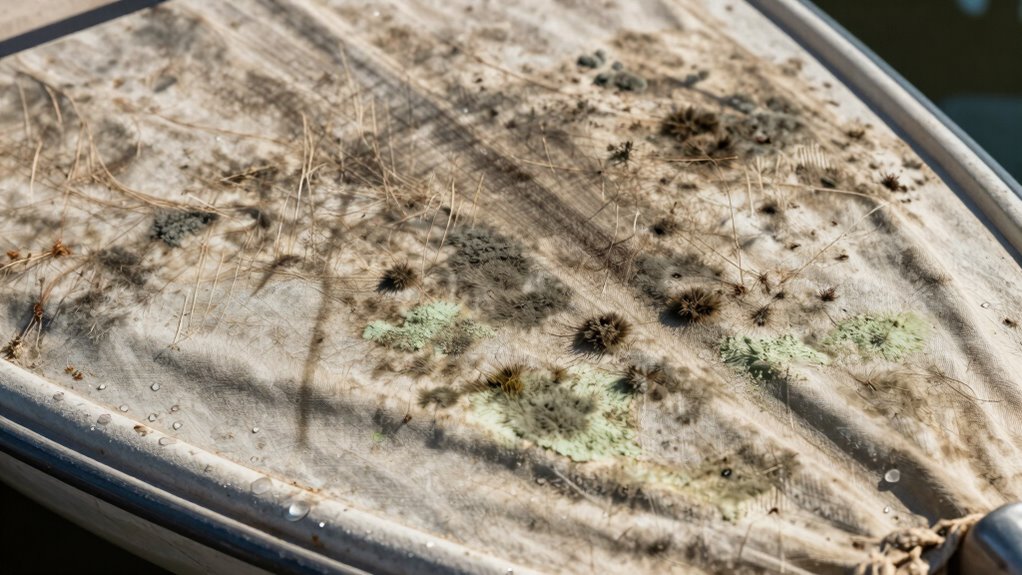
Wondering how to spot mold and mildew on your boat fabrics? Look closely at the fabric fibers for signs of discoloration or fuzzy patches. Mold spores often appear as black, green, or gray spots that can spread quickly. Mildew may show up as a musty odor combined with a powdery or slimy texture. To identify the problem, check for these common indicators:
- Dark or discolored patches on fabric fibers
- Fuzzy or velvety growths
- A persistent musty smell
Effective Cleaning Techniques
To effectively remove mold and mildew from your boat fabrics, start by gathering the right cleaning supplies, including a mild detergent, white vinegar, baking soda, a soft-bristled brush, and clean cloths. Begin by ventilating your boat thoroughly; open windows and hatches to promote airflow. Use a mixture of vinegar and water to treat affected areas, scrubbing gently with a soft brush. Afterward, sprinkle baking soda on the fabric to absorb odors and moisture. Rinse with clean water and blot dry with cloths. To prevent future mold growth, ensure proper boat ventilation and consider using a dehumidifier to reduce humidity levels. Consistent airflow and moisture control are key to maintaining mold-free fabrics and prolonging the life of your boat’s interior.
Tips to Keep Your Boat Mold-Free and Prevent Future Growth
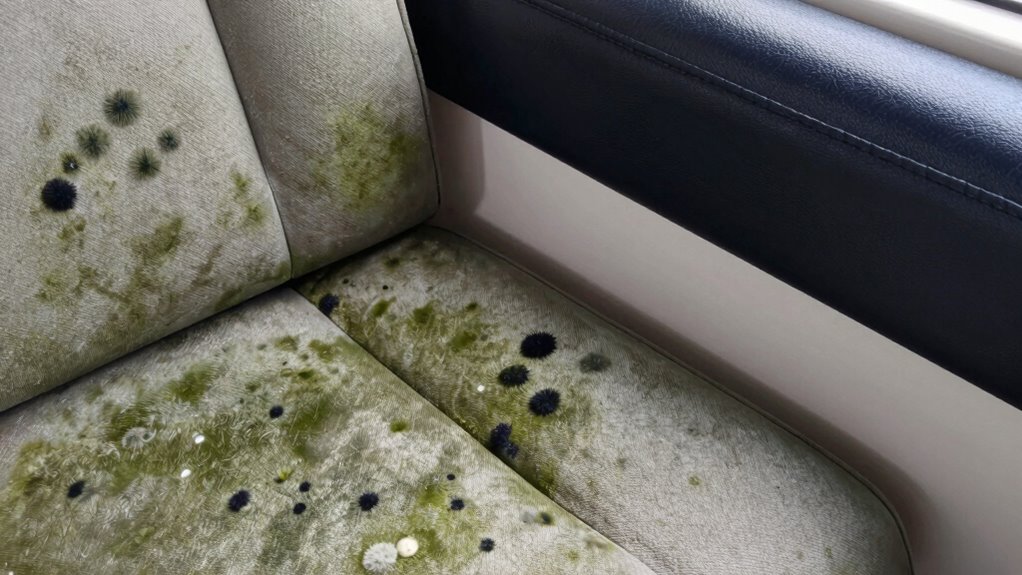
Keeping your boat mold-free requires consistent maintenance and attention to detail. Regular boat maintenance helps prevent moisture buildup, which fuels mold growth. Incorporate antifungal treatments into your routine to inhibit spores from taking hold. To maintain a mold-free environment, consider these tips:
- Keep surfaces dry by wiping down after use and ensuring proper ventilation.
- Use dehumidifiers or fans to reduce humidity levels inside the boat.
- Apply antifungal treatments to fabrics, cushions, and storage areas regularly.
These practices create an inhospitable environment for mold and mildew, saving you time and effort in future cleanings. Staying proactive with boat maintenance and treatment ensures your boat stays fresh, clean, and protected from mold growth down the line.
Which Products and Tools Are Best for Cleaning Mold Safely?
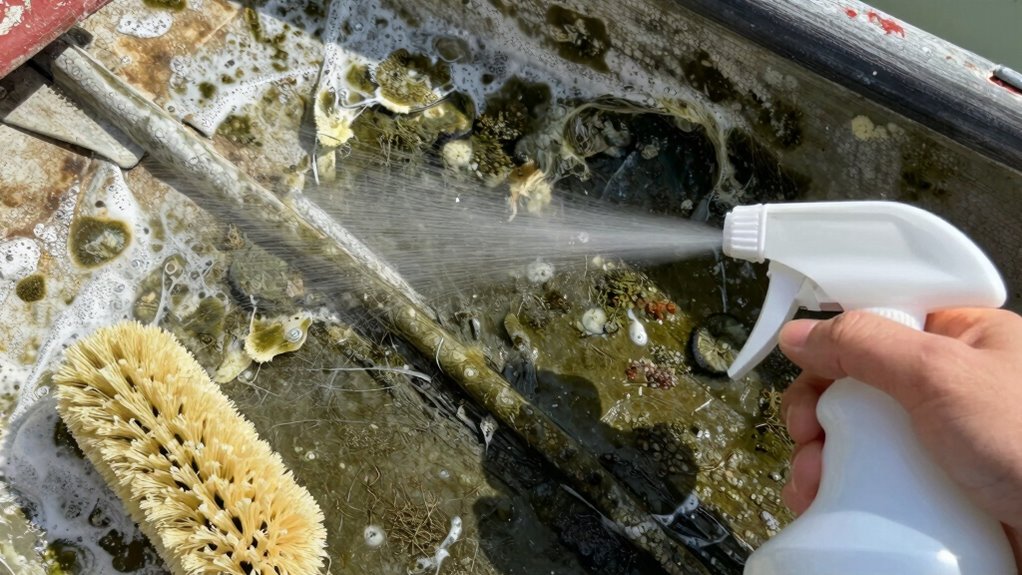
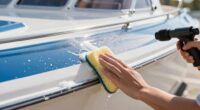
Choosing the right products and tools is essential for safely removing mold from your boat. Start with eco friendly cleaners that are gentle yet effective, reducing chemical exposure while protecting your boat’s surfaces. Look for mold resistant fabrics, which are designed to resist mold growth and make cleaning easier. Soft brushes or microfiber cloths are ideal for scrubbing without damaging delicate fabrics or upholstery. Avoid harsh chemicals like bleach, which can weaken fabrics and cause discoloration. Instead, opt for natural solutions such as vinegar or baking soda-based cleaners that are safe for your boat’s materials. Using these products and tools helps you clean thoroughly without risking damage to your boat’s fabric or environment, ensuring a safe, mold-free space.
What to Do If Mold Persists : When to Call a Professional
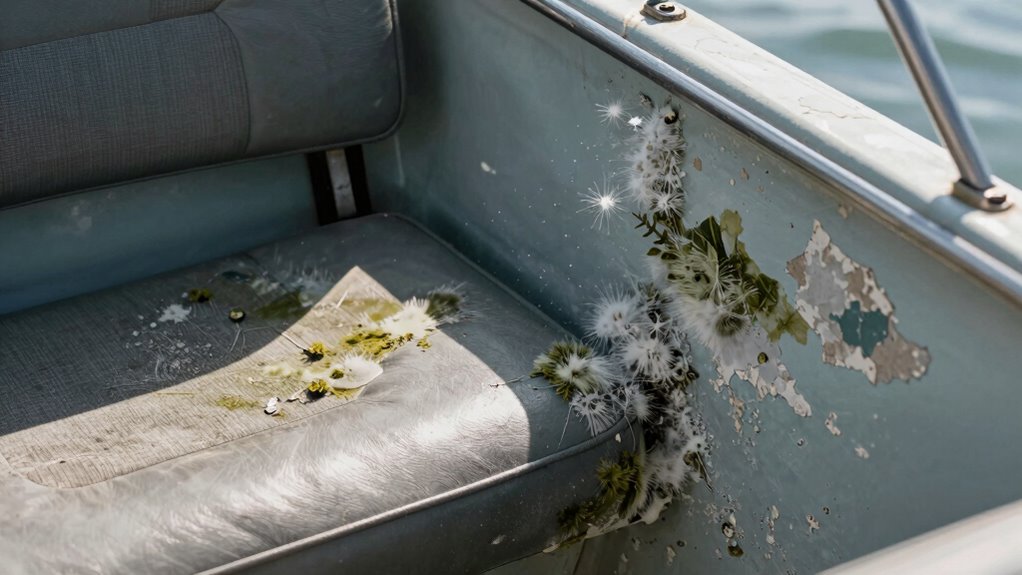
If mold keeps coming back despite your cleaning efforts, it’s a clear sign that professional help might be necessary. A professional assessment can identify hidden mold sources and structural issues that DIY methods can’t address. When you call in experts for mold remediation, they’ll thoroughly evaluate your boat’s environment and use specialized equipment to eliminate stubborn mold.
Consider reaching out if you notice:
- Persistent mold patches that reappear quickly
- A musty odor that won’t go away
- Visible mold in hard-to-reach areas or behind panels
Professional remediation ensures all mold is safely removed and reduces health risks. Don’t delay seeking help if mold persists—timely intervention saves your boat’s integrity and your well-being.
How to Maintain a Mold-Free Boat Environment Long-Term
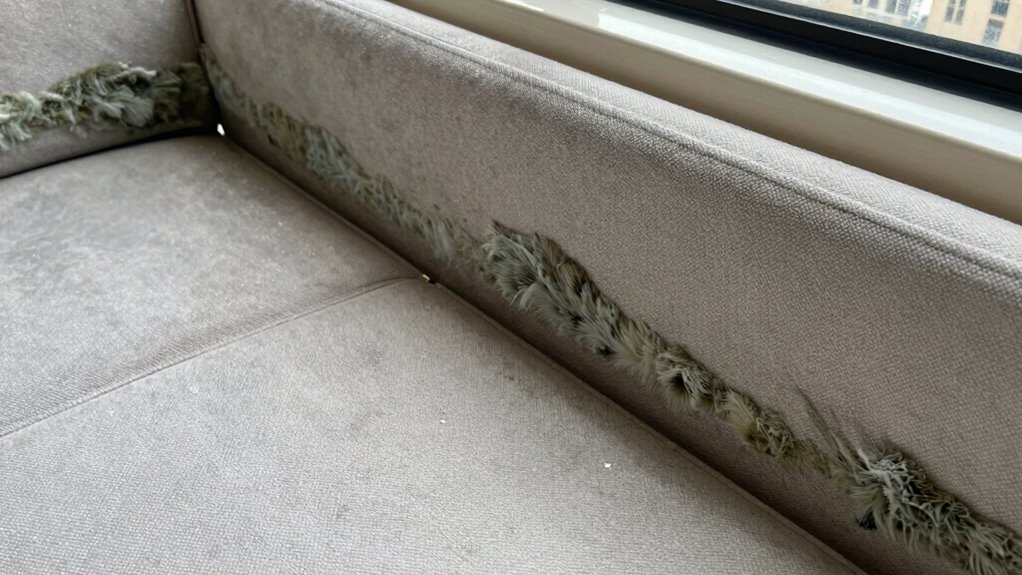
Even after professional mold removal, maintaining a clean environment is key to preventing mold from returning. Ensure your boat has proper ventilation systems in place to promote airflow and reduce moisture buildup. Using marine air circulation helps keep humidity levels in check, making it harder for mold to thrive. Regularly run fans or ventilation to dry out damp areas, especially after trips or rain. Keep windows and hatches open when possible to increase airflow. Use dehumidifiers designed for marine use to control moisture indoors. Clean surfaces routinely with mold-inhibiting solutions, paying special attention to hidden spots. By maintaining good air circulation and moisture control, you create an environment that’s less inviting to mold, ensuring your boat stays fresh and mold-free in the long run.
Frequently Asked Questions
Can Mold and Mildew on Boats Cause Health Issues?
Yes, mold and mildew on your boat can cause health hazards. They release spores and allergens that may trigger respiratory issues, allergies, or asthma attacks. Poor marine hygiene increases these risks, especially if you’re exposed frequently. To protect yourself, clean mold and mildew thoroughly using safe methods. Maintaining good ventilation and regular cleaning helps reduce health hazards, ensuring your boat remains safe and comfortable for everyone onboard.
Are DIY Cleaning Solutions Safe for All Boat Fabrics?
If you’re worried about fabric safety, DIY cleaning solutions can be safe when you choose natural remedies like vinegar or baking soda, which are gentle and effective. For example, a boat owner used vinegar to clean mold on fabric cushions and saw no damage. Always consider chemical safety by avoiding harsh chemicals that might degrade delicate fabrics. Test any solution on a small area first to verify it won’t harm your boat’s materials.
How Often Should I Inspect My Boat for Mold?
You should inspect your boat for mold at least once every season, especially after heavy rain or high humidity. Use seasonal inspections and moisture monitoring to catch issues early. Regularly checking hidden areas like under seats or cushions helps prevent mold buildup. When you stay vigilant, you can address mold problems promptly, protecting your boat’s fabric and ensuring a clean, safe environment for every trip.
What Are the Environmental Impacts of Mold Cleaning Chemicals?
Think of mold cleaning chemicals as a double-edged sword—you want to eradicate mold without harming the environment. Many conventional cleaners contain harsh substances that can lead to chemical runoff, polluting water sources and harming marine life. Eco-friendly alternatives exist that effectively combat mold while minimizing environmental impacts, helping you keep your boat clean without turning the ocean into a chemical soup. Choose wisely to protect both your boat and the environment.
Is It Necessary to Replace Fabric After Mold Removal?
You don’t need to replace fabric after mold removal if you use proper mold removal techniques. Effective cleaning methods, like using vinegar or specialized mold cleaners, can eliminate mold without damaging the fabric. Inspect the fabric carefully; if it’s thoroughly cleaned and dried, replacement isn’t necessary. Regular maintenance and proper ventilation help prevent future mold growth, saving you time and money while keeping your boat’s fabrics in good condition.
Conclusion
Just like tending a garden requires careful attention, keeping mold and mildew at bay demands regular, gentle care. By staying vigilant and using the right methods, you can guarantee your boat remains a pristine sanctuary amidst the waves. Remember, with consistent effort, your boat can stay as fresh and inviting as a sunlit harbor, free from unwelcome guests. Keep your vessel’s beauty alive, and it will serve you well for many adventures ahead.