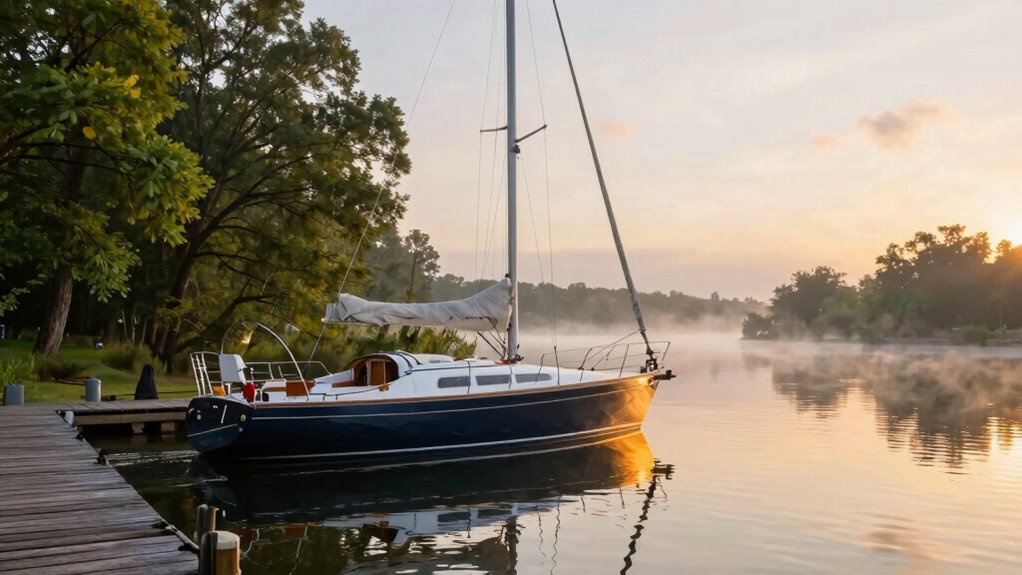

When docking in flowing water, you should aim slightly upstream of your target to counteract the current’s push. This ‘aim upstream’ rule helps keep your vessel on course by offsetting drift caused by tidal or river flows. By observing water cues like debris and ripples, and adjusting your heading accordingly, you maintain control during approach. If you want to master precise maneuvers and avoid common mistakes, explore how proper techniques can guarantee a smooth, safe dock.

Get sports gear delivered free with Prime
- Fast, free delivery on millions of items
- Prime Video, Amazon Music and more included
- Member-only deals all year
Key Takeaways
- Aim slightly upstream of the dock to counteract water flow and prevent being pushed past the target.
- Observe water cues like ripples, debris, and shoreline features to identify current direction and strength.
- Use controlled, small steering adjustments and steady throttle to maintain a precise approach against the flow.
- Constantly monitor vessel position relative to the dock, adjusting your heading to compensate for tidal and current effects.
- Proper equipment maintenance and clear communication ensure responsiveness and safety during upstream docking maneuvers.
Popular right now

Ninja DualZone Smart Air Fryer, 10 Qt, 6-in-1, DZ950

TCL 85 Designer Series QD-Mini LED TV (Model 85A400U) with Google Smart TV

Sony WH-1000XM6 Wireless Noise-Canceling Over-Ear Headphones, Blue, Bundle
As an affiliate, we earn on qualifying purchases.
What Is the ‘Aim Upstream’ Rule and Why It Matters
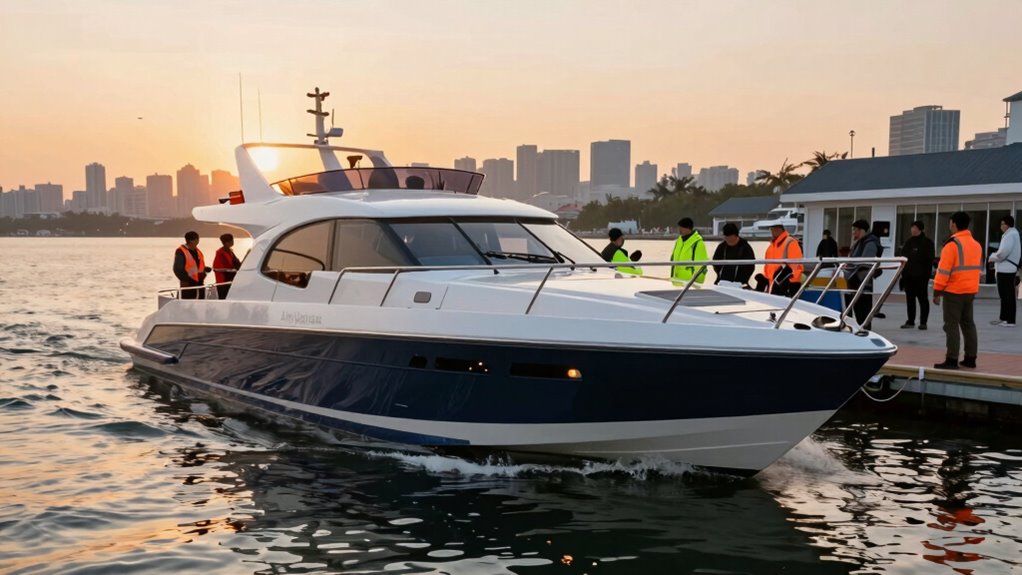
Have you ever wondered why certain navigation rules emphasize aiming upstream? This “aim upstream” rule is a key part of navigation planning, especially when approaching a dock or navigating in flowing water. By aiming your vessel slightly upstream, you counteract the current’s push, ensuring better control and more accurate positioning. This technique aligns with safety protocols, reducing the risk of collisions or running aground. When you follow this rule, you maintain a safer, more predictable approach, even in changing water conditions. It also helps you control your vessel more effectively, which is crucial in maintaining safety during docking. Understanding and applying the “aim upstream” principle keeps your navigation precise and enhances overall safety during docking or transit through currents, especially when considering water flow dynamics and vessel handling techniques. Recognizing how current strength varies can further improve your ability to adapt your approach in different environments. Additionally, understanding water flow patterns allows for more precise adjustments to your navigation strategy.
How Water Currents Influence Your Docking Approach
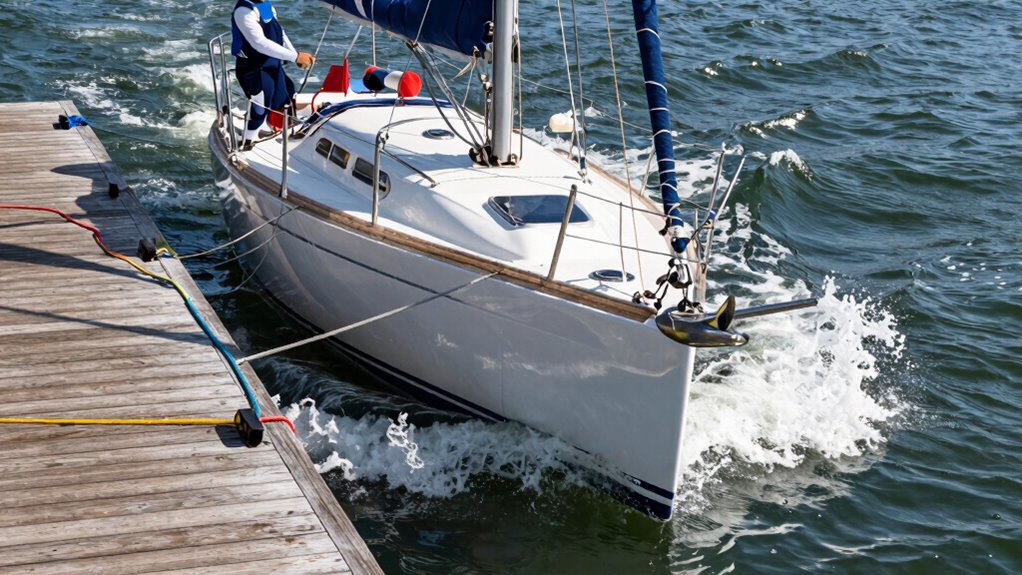
Water currents can markedly affect your docking approach, making it harder to stay on course. By understanding how these currents move, you can adjust your strategy to counteract their influence. This awareness helps you dock smoothly and safely, even in tricky conditions. Additionally, considering solar system safety considerations can ensure your equipment remains secure during adverse conditions. Recognizing the impact of water flow can further aid in anticipating changes and adapting your maneuvering accordingly. Being aware of navigation best practices can also improve your ability to respond effectively to changing water dynamics. Incorporating knowledge of essential oils for water-related health issues, such as their calming or antimicrobial properties, can help maintain well-being during challenging water conditions. Employing holistic SEO strategies in planning your approach can optimize your understanding of environmental factors influencing docking.
Understanding Water Currents
Understanding water currents is essential because they can considerably affect your docking approach. When boat navigation, recognizing how currents move helps you plan your maneuvers more effectively. Conducting current analysis allows you to identify the direction and strength of the flow, so you can adjust your approach accordingly. Strong currents can push your boat off course or make it harder to control your movements as you near the dock. By observing how the water behaves around your vessel, you gain valuable insights into the flow patterns. This knowledge enables you to anticipate changes and choose the best moment to make your move. Mastering current analysis ensures safer, smoother docking, especially in tricky conditions. Understanding cybersecurity vulnerabilities can help protect your vessel’s navigation systems from hacking attempts. Recognizing water flow patterns further enhances your ability to adapt to changing conditions and improve your docking precision.
Adjusting Docking Strategies
When maneuvering near a dock, adjusting your approach to account for water currents is essential for a safe and smooth landing. Marine navigation tools help you anticipate how currents will shift your vessel’s position, so you can plan your approach accordingly. Always consider the current’s direction and strength; aim upstream or into the flow to minimize drift. Keep your vessel well-maintained, ensuring steering and propulsion systems respond promptly. Use controlled, steady maneuvers to counteract current effects, reducing the risk of collision or damage. Regular vessel maintenance ensures your boat reacts predictably, making adjustments more effective. Incorporating capacity awareness into your docking plan helps you choose the right techniques based on your vessel’s power and maneuverability. Understanding how sound waves influence brainwave patterns can also help you stay calm and focused during challenging docking situations. Being aware of water current data enables you to make more precise adjustments during docking. Additionally, recognizing the impact of natural water flow can facilitate better planning and timing of your approach. Monitoring local tide information can give you additional insight into water movement and assist in safer docking. By understanding and adapting to water currents, you improve docking precision and safety, making your watercraft easier to control in challenging conditions.
Step-by-Step: How to Aim Upstream Effectively During Docking
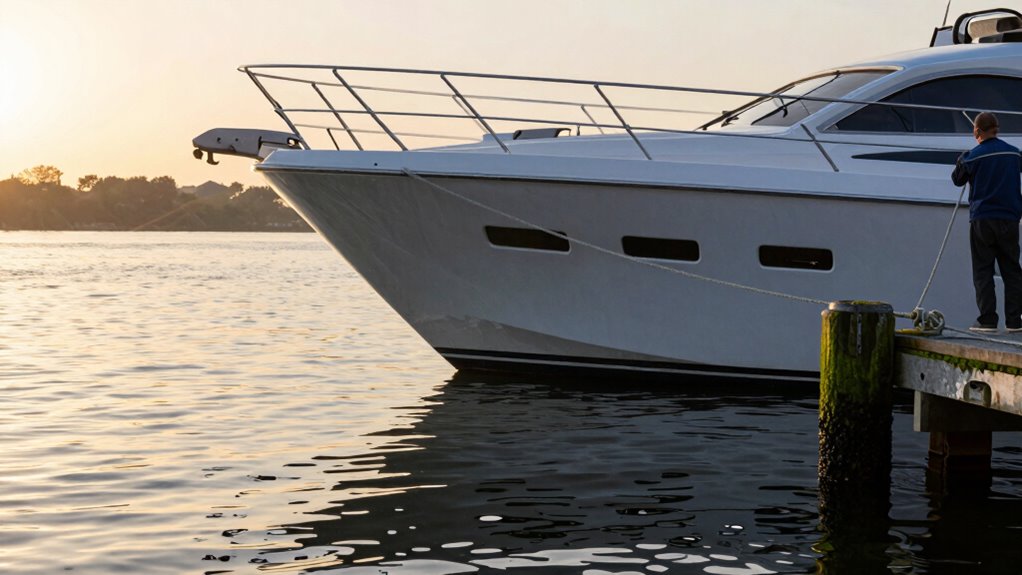
To aim upstream effectively during docking, start by identifying the current’s direction so you know which way it flows. Next, align your boat’s heading accordingly to counteract the drift caused by the current. You can also use visual cues such as floating debris or shoreline features to better judge the current’s strength and direction. To improve your accuracy, consider observing water movement patterns around your vessel, which can provide additional insights into the flow. Additionally, understanding the current’s speed helps you make more precise adjustments and maintain control. Recognizing flow variations at different times can also help you adapt your approach more effectively. Using drone bees as an analogy, understanding hive activity and the flow of resources can further inform your navigation strategies. Finally, make small adjustments as needed to stay on course and prevent unexpected movements.
Identify Current Direction
Have you ever wondered how to accurately identify the current’s direction before docking? The key is observing current patterns and performing flow analysis. Start by noting how water moves around your vessel and nearby structures. Look for ripples, foam, or debris drifting in a specific direction. Use visual cues like the wake trail or floating objects to gauge flow. Feel the water with your hand or a pole if possible, to sense the direction and strength of the flow. Pay attention to changes in speed or pattern, especially near obstacles or narrow channels. Additionally, understanding the role of growth mindset in adapting to changing conditions can help you stay flexible and responsive. By analyzing these signs, you can determine the main current direction accurately. Recognizing the importance of vessel maneuvering techniques can further enhance your ability to position your boat correctly, ensuring a safer and more controlled docking process.
Align Your Aim
Aligning your boat’s aim upstream is essential for a smooth docking experience, especially in strong currents. Proper alignment helps you maintain control and reduces the risk of collisions, ensuring marine safety for everyone on board. Before starting, check your boat’s maintenance to confirm steering and propulsion systems are responsive. With a steady aim upstream, you can counteract current effects and approach the dock accurately. This requires precise steering and a calm, focused approach. Keep your hands on the wheel, stay alert, and adjust your aim as needed to stay aligned. Effective boat maintenance ensures your equipment performs reliably, making your docking safer and more predictable. Remember, the key to successful docking in current is consistent, precise aiming upstream.
Adjust for Drift
When approaching a dock in a strong current, it’s important to account for drift caused by the water’s flow. In marine navigation, understanding tidal effects helps you predict how the current will influence your vessel’s path. To adjust for drift, aim slightly upstream of your target, considering the current’s strength and direction. Use your boat’s speed and the tide’s influence to calculate how much to offset your aim. Constantly monitor your position relative to the dock, making small adjustments as needed. By anticipating the drift caused by tidal effects, you prevent being pushed past or away from your target. This proactive approach ensures a smoother, safer docking process, especially in challenging water conditions.
Common Mistakes When Docking With Currents: and How to Avoid Them
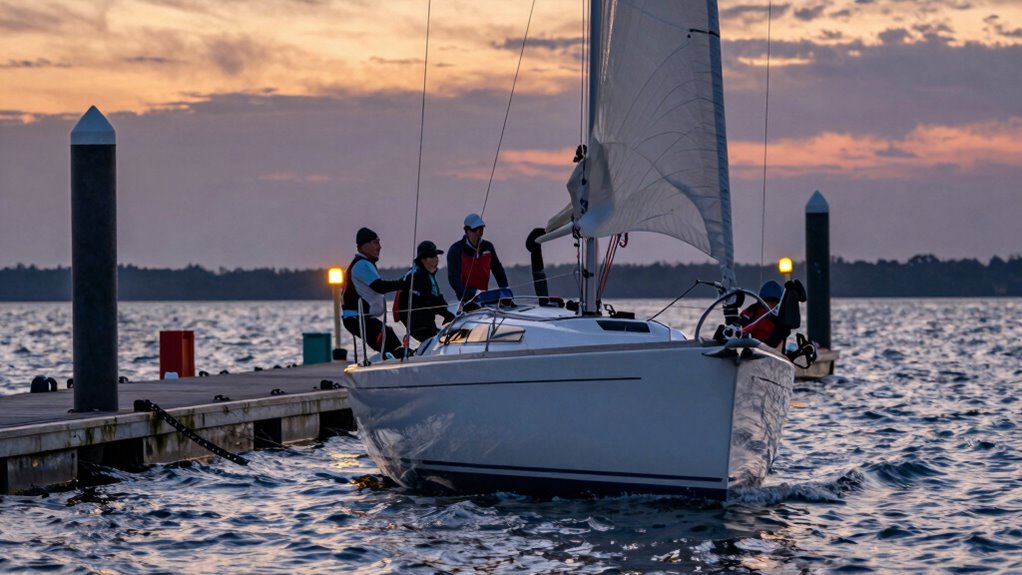
Docking with currents can be tricky, and even small mistakes can lead to delays or accidents. One common mistake is neglecting proper anchor techniques, which are vital if you need to hold position during tricky conditions. Failing to set anchors correctly can cause your vessel to drift unexpectedly, especially if the weather considerations change suddenly. Another mistake is misjudging the strength and direction of the current, leading you to approach the dock at the wrong angle. Always double-check your weather conditions and current forecasts before starting your approach. Avoid rushing or making sudden maneuvers, which can cause loss of control. Staying calm, planning your approach carefully, and using appropriate anchor techniques will help you avoid these common pitfalls and guarantee a safe, smooth docking process.
Essential Equipment and Maneuvering Tips for Upstream Docking
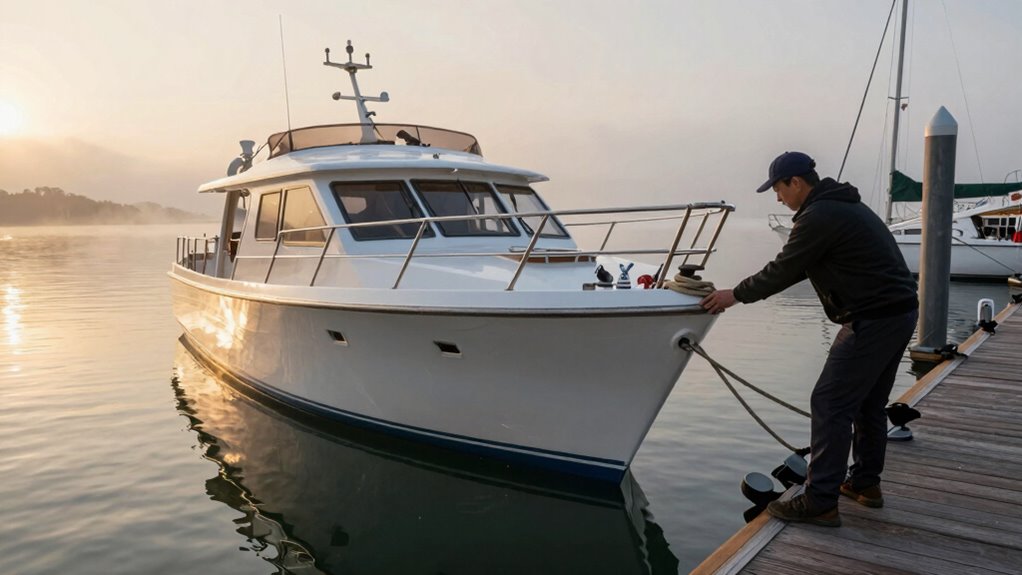
Preparing your vessel with the right equipment is key to successful upstream docking. Confirm your marine navigation systems are fully functional, providing accurate depth readings and current data. A reliable GPS and a compass help maintain proper course, especially when precise maneuvering is critical. Regular boat maintenance is essential; check lines, thrusters, and engines beforehand to prevent mechanical issues that could hinder control. Consider installing bow thrusters or side thrusters to improve maneuverability against the current. Use sturdy mooring lines and fenders to protect your vessel during docking. Practice precise steering and throttle control, adjusting your speed to match the current’s strength. With the right equipment and attention to maintenance, you’ll navigate upstream with confidence and ease.
Examples of ‘Aim Upstream’ in Real-World Docking Scenarios
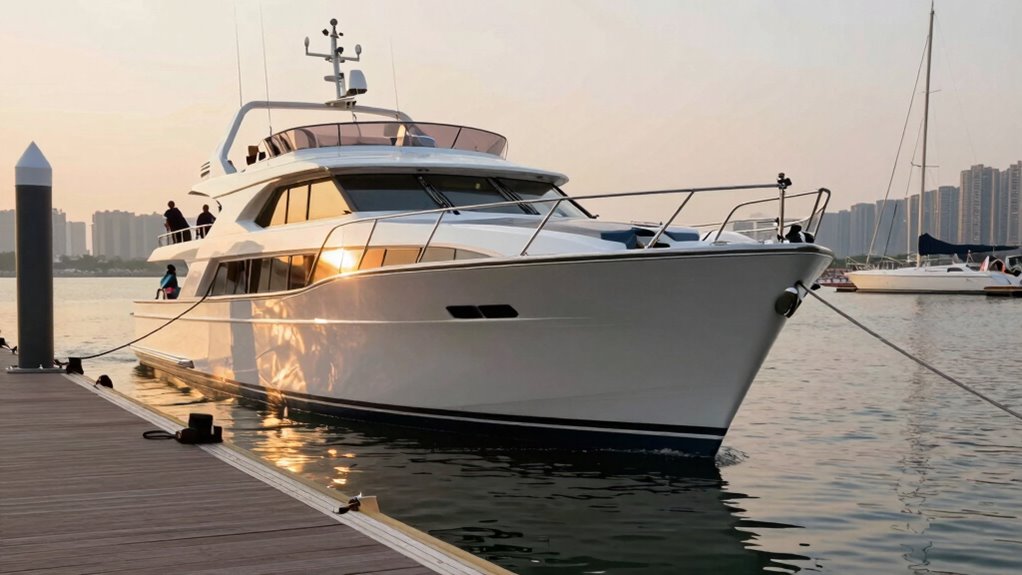
In real-world docking scenarios, aiming upstream is a strategic move to counteract currents and maintain control during the approach. Marine navigation often requires you to adjust your heading based on tidal influence, especially when currents push your vessel off course. For example, when approaching a marina during a rising tide with strong tidal currents, you’ll aim your bow slightly upstream to offset the flow. This guarantees you stay on your intended path and reduces the risk of drifting past the dock. Similarly, in narrow channels with predictable current patterns, sailors aim upstream to keep their vessel steady and avoid collision. By understanding local tidal influences, you can plan your approach more effectively, making upstream aiming an essential skill for safe, controlled docking in diverse marine conditions.
Handling Difficult Dockings in Strong Currents: Troubleshooting Tips
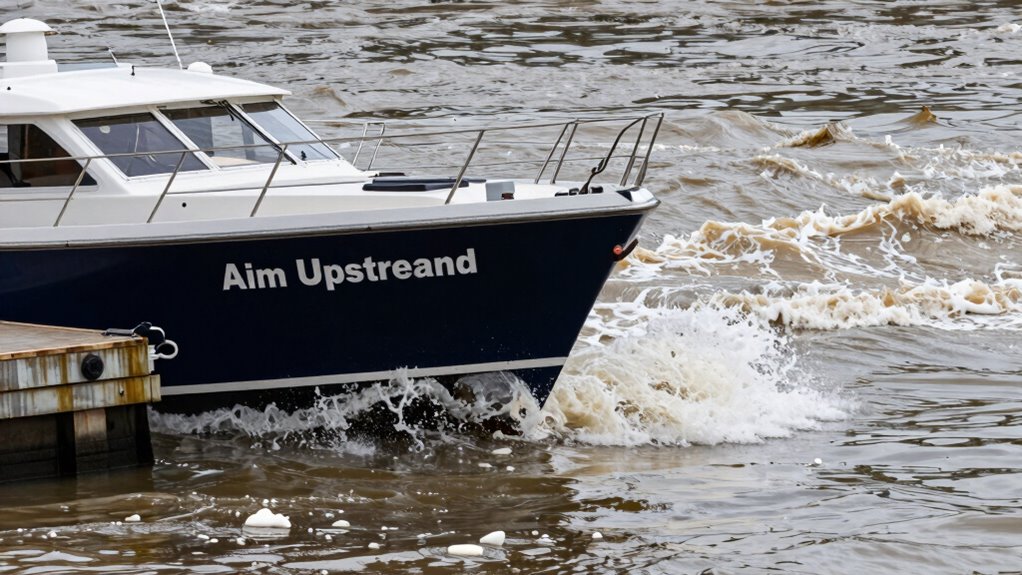
When strong currents challenge your ability to dock safely, staying calm and adjusting your approach quickly makes all the difference. Proper marine navigation and weather considerations are essential. Here are troubleshooting tips:
In strong currents, stay calm, adjust quickly, and prioritize navigation and weather awareness for safe docking.
- Assess the current and weather conditions to anticipate changes and plan your approach.
- Use a steady, controlled engine throttle to maintain your position and prevent sudden drift.
- Aim upstream and slightly into the current to counteract its force and keep control.
- Communicate clearly with crew and other vessels to coordinate maneuvers and avoid collisions.
Best Practices for Safe, Efficient Mooring With Water Currents
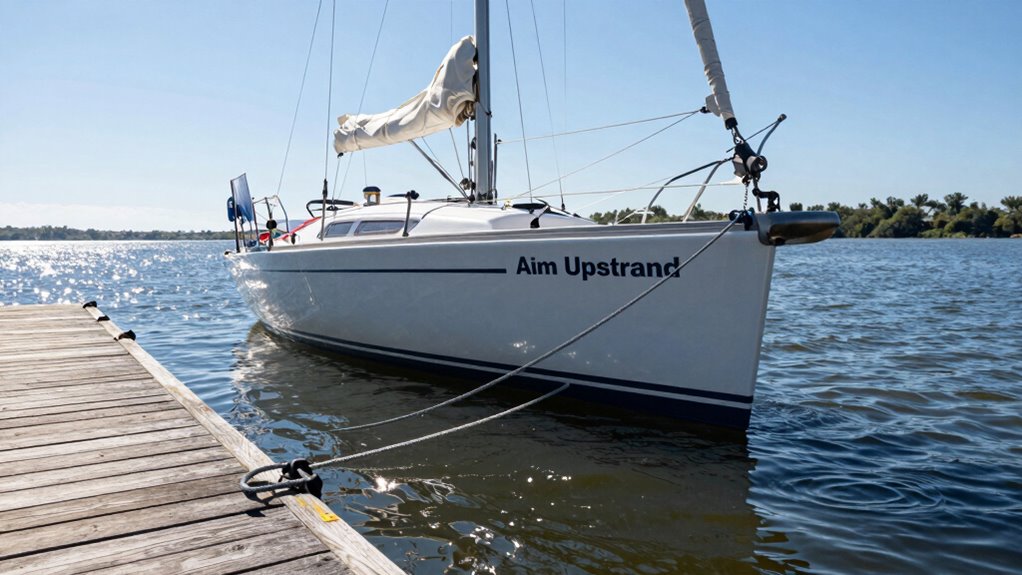
Guiding mooring procedures in water currents requires careful planning and precise execution to guarantee safety and efficiency. Before approaching, assess current strength and direction through marine navigation tools. Adjust your speed and angle to counteract drift, aiming upstream when necessary. Communicate clearly with crew to coordinate movements smoothly. Regular boat maintenance ensures all equipment, like lines and cleats, are in excellent condition, reducing failure risks. Use fenders appropriately to protect your vessel from shifting water forces. When mooring, take your time, making small, controlled adjustments instead of rushing. Always be prepared to adapt your approach if the current shifts unexpectedly. By combining good marine navigation practices with diligent boat maintenance, you ensure a safe, efficient mooring process even in challenging water currents.
Frequently Asked Questions
How Do Water Currents Vary Across Different Types of Docking Locations?
You’ll notice water currents vary depending on docking locations. At tidal-influenced sites, currents shift with the tide, creating stronger flows during high and low tides. In river flow areas, currents follow the river’s direction, often faster during flood stages. You need to take into account these variations to dock safely, aligning your vessel with the current’s flow and avoiding obstacles caused by changing tidal influences or river dynamics.
What Are the Signs Indicating an Incorrect ‘Aim Upstream’ Approach?
You’ll notice signs of misalignment, like your boat’s bow not pointing directly upstream or excessive drifting, indicating an ineffective docking approach. If the boat struggles to hold its position or keeps veering off course, it’s a clear sign you’re not aiming correctly. These signs show your ‘aim upstream’ method isn’t working properly, and adjusting your approach is necessary to make certain of safe, smooth docking.
How Can Boat Size Impact the Effectiveness of Aiming Upstream?
Think of your boat as a sail catching the wind; a larger boat length can be a double-edged sword when aiming upstream. It may glide smoothly, but maneuverability challenges increase, making precise alignment tougher. A bigger vessel resists quick turns, so your ability to adjust your aim diminishes. Smaller boats dance with the current more easily, while larger boats require patience and careful planning to master the same upstream approach.
Are There Specific Weather Conditions That Complicate Upstream Docking?
Yes, weather conditions like wind interference and foggy conditions can complicate upstream docking. Wind can push your boat off course, making it harder to aim upstream accurately, while fog reduces visibility, increasing the risk of misjudging distances and steering safely. You should slow down, use your navigation lights, and rely on your instruments to maintain control and ensure a safe docking process despite these challenging weather conditions.
When Should a Boater Consider Seeking Professional Assistance?
If you struggle with boat handling in challenging conditions, like strong currents or poor visibility, it’s time to seek professional help. For example, if you find yourself unsure during docking or feel overwhelmed, consulting experienced boaters or instructors enhances your emergency preparedness. Don’t risk accidents—getting expert guidance guarantees safe maneuvers and builds confidence, especially in unpredictable weather or tricky currents. Prioritize safety and know when to call in a professional.
Conclusion
Mastering the ‘aim upstream’ rule transforms your docking from chaos into a ballet of precision and control. When you align with the current, you harness nature’s power like a seasoned conductor, turning turbulent waters into your ally. With practice, you’ll glide into your berth smoother than silk, defying the strongest of currents. Ultimately, mastering this technique elevates your boating skills to an art form, ensuring safety and elegance even in the fiercest of water’s moods.