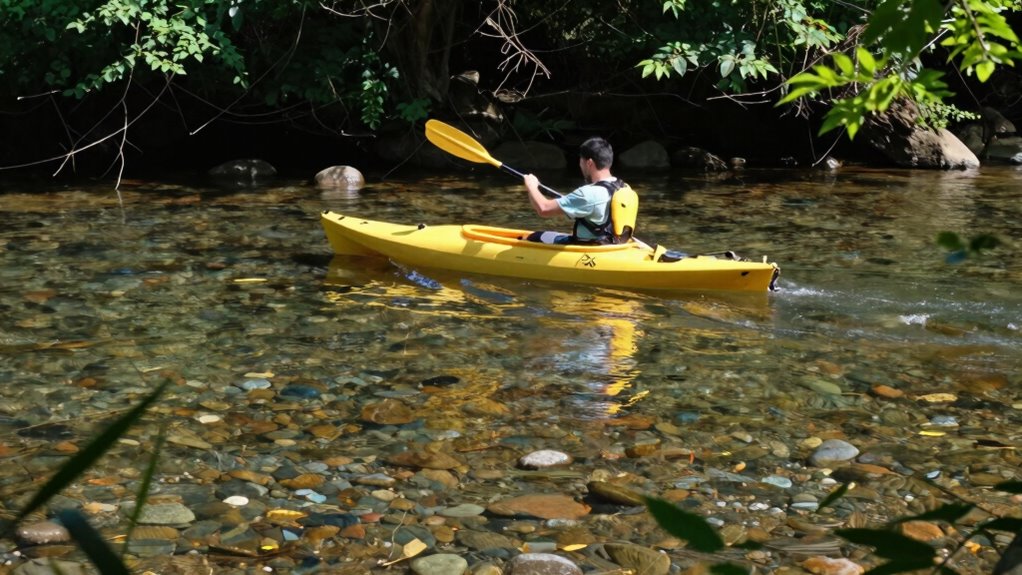

To navigate shallow water safely, rely on visual cues like lighter water shades and seabed features, and always verify up-to-date charts and depth data. Slow down gradually and steer gently to maintain control and avoid sudden impacts. Use reliable tools like depth finders and GPS to detect hazards ahead. Practice specific shallow water drills to build confidence, and explore advanced navigation tech for real-time updates. Keep learning to master safe passage through tricky areas.
Key Takeaways
- Regularly verify and update nautical charts and digital maps for accurate, current depth information.
- Use reliable depth finders and cross-check readings with visual cues like water color and surface disturbances.
- Plan routes around high tide and utilize tidal tables to account for water level fluctuations.
- Maintain steady throttle and light steering to prevent abrupt impacts in shallow areas.
- Practice shallow water navigation drills to improve maneuvering skills and build confidence.

IRONWALLS 8000LBS Heavy Duty Trailer Jack Stand, Drill Powered/Manual Side-Mount Trailer Tongue Jack Bolt on, Adjustable Drop Leg, 28.4" Vertical Travel, for Utility, Camper, Boat Trailers
【8000LBS Large Load Capacity for Multiple Trailers】Engineered for 8,000 lbs heavy duty trailers, IRONWALLS boat trailer jack stand...
As an affiliate, we earn on qualifying purchases.
Why Shallow Water Grounding Is a Risk You Should Know
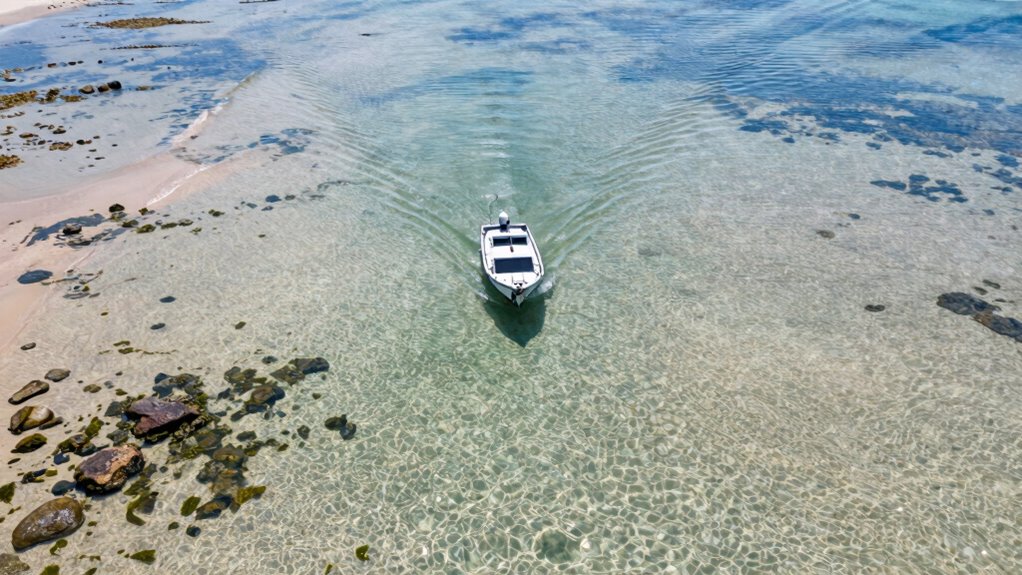
Shallow water grounding poses a serious risk because it can cause your vessel to become stuck or damaged, leading to costly repairs and dangerous situations. Beyond the immediate vessel damage, grounding can negatively affect marine wildlife by disturbing habitats and disrupting local ecosystems. For example, grounding near coral reefs or seagrass beds can crush delicate structures and harm species that rely on these environments. The environmental impact extends further as pollutants or debris from damaged vessels can contaminate water quality, threatening marine life and water ecosystems. Recognizing the risks helps you avoid these hazards, protecting both your vessel and the environment. Staying vigilant about shallow areas ensures safe navigation and preserves the health of the marine environment for future generations. Additionally, understanding how marine propulsion systems interact with water depths can enhance your awareness of safe navigation practices. Being aware of water depth indicators can further help prevent accidental grounding and protect sensitive underwater habitats, especially when considering water depth measurement techniques used for navigation. Properly interpreting depth soundings can be vital in avoiding shallow zones and safeguarding marine ecosystems, especially since navigation charts provide crucial information about underwater features.

IPX7 Waterproof Battery Monitor with Bracket 7-100V,12v 24v 36v 48v 60v 72v Digital Display Battery Capacity Remaining Capacity Percentage Tester with Buzzer Alarm and Temperature
APPLICATION --- The battery testers can be used for testing battery voltage and capacity for electric motorcycle, motorcycle,golf...
As an affiliate, we earn on qualifying purchases.
How to Spot Shallow Areas Using Visual Cues Like Color and Seabed Features

Recognizing visual cues is a practical way to identify shallow areas while traversing. Pay attention to color cues in the water; lighter shades often indicate shallower depths, while darker tones suggest deeper water. Look for variations in water color, such as pale turquoise or green, which typically signal the presence of sandbars, coral reefs, or rocky seabed features. Seabed features like submerged rocks, coral formations, or sandbanks can also be spotted from the surface, especially in clear water. These features often cause changes in water color or surface disturbance. Keep a keen eye on these visual signs, as they can help you avoid grounding and navigate safely through shallow zones. Utilizing marine navigation techniques and combining color cues and seabed features enhances your situational awareness on the water. Being familiar with depth perception and how it relates to visual cues can further improve your ability to judge water depths accurately. Developing visual acuity for underwater features also plays a vital role in early detection of shallow areas.

AiLi Battery Monitor Voltmeter Ammeter Voltage Current Meter 8-80V 0-100A Auto Car Motor Boat Caravan RV Motorhome
Read your battery bank like a fuel gauge. Battery Status At A Glance.
As an affiliate, we earn on qualifying purchases.
Checking Accurate Shallow Water Charts and Depth Data Before You Set Out
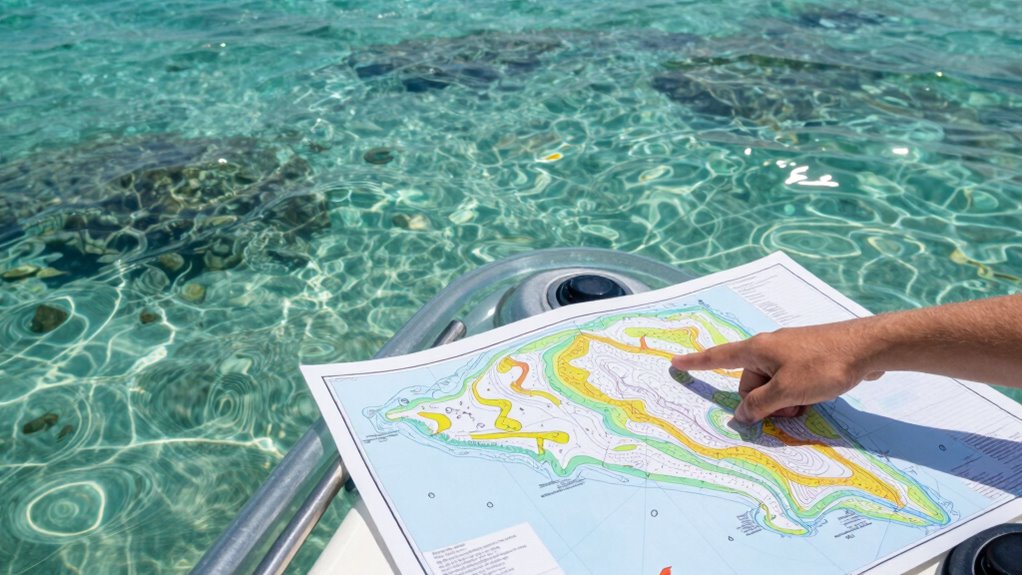
Before you head out, make sure you’re using reliable chart sources to get accurate depth information. Confirm tidal conditions to understand how water levels might change during your trip. Cross-check your depth data with multiple sources to guarantee you have the most precise information. Additionally, verify that your charts are up-to-date to account for any recent changes in the underwater terrain.
Use Reliable Chart Sources
Ensuring you have accurate information is essential for safe navigation through shallow waters. Reliable chart sources provide critical depth data and details about underwater hazards, helping you avoid grounding. Always verify that your charts are up-to-date and compliant with maritime regulations. Using outdated or inaccurate charts increases the risk of mishaps and can have serious environmental impacts. To guarantee you’re using trustworthy sources, check for official updates and digital chart databases. Keep in mind, good charting practices also support environmental protection by preventing accidental damage to sensitive habitats.
- Use charts from official maritime authorities
- Regularly update your digital and paper charts
- Cross-reference multiple sources for accuracy
- Stay informed about regulatory changes
Confirm Tidal Conditions
Confirming tidal conditions is essential because tides markedly influence water depth and safety in shallow areas. Understanding tidal flow and water level changes helps you plan your route effectively, avoiding grounding risks. Check reliable tidal charts and current predictions before setting out to ensure safe passage. Pay attention to the timing of high and low tides, as water levels can vary considerably. Use the following table to interpret tidal information:
| Tidal Event | Water Level Impact | Timing Advice |
|---|---|---|
| High Tide | Increased depth | Plan to pass shallow areas then |
| Low Tide | Reduced depth | Avoid crossing during low tide |
| Rising Tide | Water level rising | Start journey early in rising tide |
| Falling Tide | Water level falling | Be cautious during falling tide |
Accurate tidal data is your best tool to prevent grounding in shallow waters, especially when considering marine navigation techniques. Additionally, being aware of local tide schedules can help you anticipate changes and choose the safest time to traverse shallow zones. Recognizing tidal patterns can further improve your planning and safety. Being mindful of tidal currents can also assist in maintaining control and stability during navigation. Moreover, consulting current tide tables regularly ensures you are working with the most up-to-date information for safe passage.
Cross-Check Depth Data
To navigate shallow waters safely, you need to cross-check your depth data against accurate charts and real-time depth measurements. This process, called depth validation, ensures your readings match reliable sources. Always perform chart cross referencing before setting out to confirm potential hazards and depth variations. Keep in mind:
- Use up-to-date charts specific to the area
- Compare depth soundings with published data
- Watch for discrepancies and local anomalies
- Update your navigation plan accordingly
- Incorporate emerging trends in digital publishing to access real-time updates and interactive charts that enhance depth validation. Additionally, understanding effective cleaning and stain removal techniques can help maintain your vessel’s equipment and surfaces, ensuring accurate readings and safe navigation.
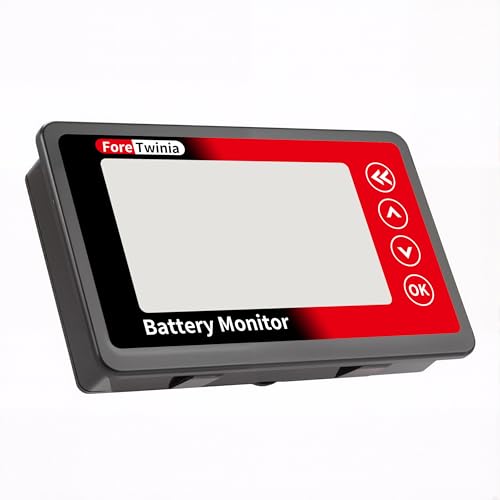
Foretwinia 500A Battery Monitor with Shunt, 8–120V Coulomb Meter, DC Power & Capacity Monitor for LiFePO4/Lithium/Lead Acid Batteries, for RV Solar Boat Golf Cart
【Real-Time Battery Monitoring】Displays voltage, current, power and accumulated amp-hours to help track battery status.
As an affiliate, we earn on qualifying purchases.
How to Slow Down and Steer Carefully in Shallow Water
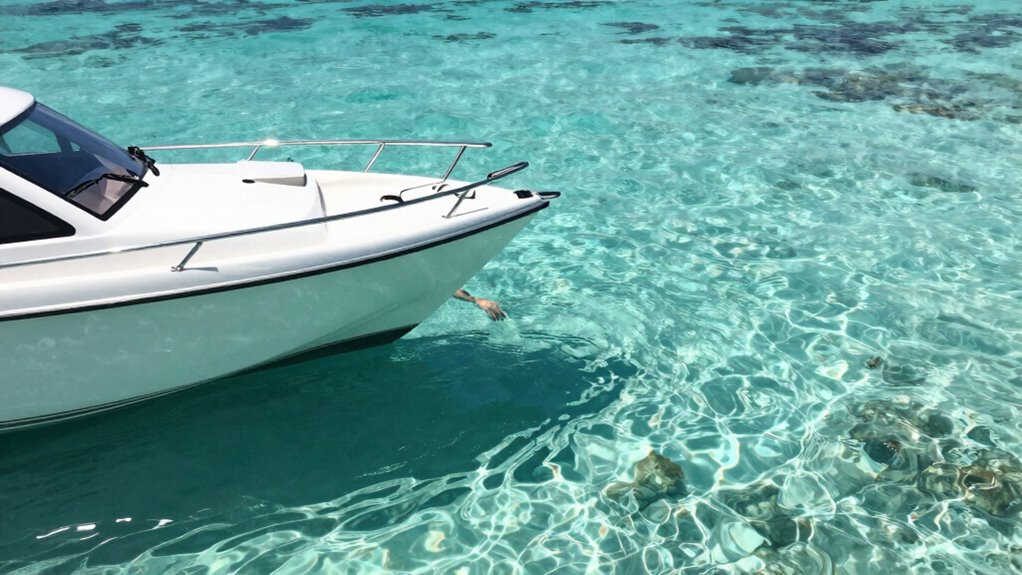
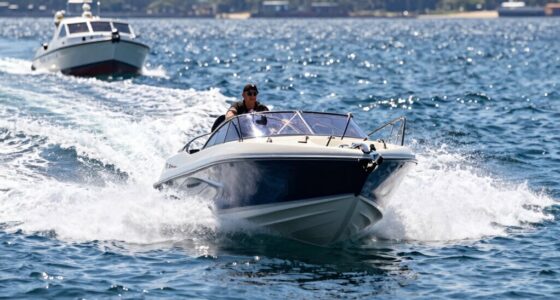
Have you ever wondered how to navigate shallow water without causing damage or losing control? The key is mastering throttle control and steering precision. Slow down gradually to avoid sudden shifts that could jar the boat or hit unseen obstacles. Keep your throttle steady and responsive, adjusting as needed to maintain a safe speed. Use light, deliberate steering inputs to stay on course, avoiding sharp turns that could lead to grounding. Focus on smooth, controlled movements to better feel the water’s depth and bottom contours. Remember, reducing speed gives you more control and reaction time, preventing surprises. Additionally, understanding navigation protocols can help you anticipate hazards and make smarter decisions on the water. By combining careful throttle management with precise steering, you can navigate shallow waters confidently and safely, protecting your boat and avoiding costly mishaps.
Choosing the Safest Route Based on Your Boat’s Capabilities
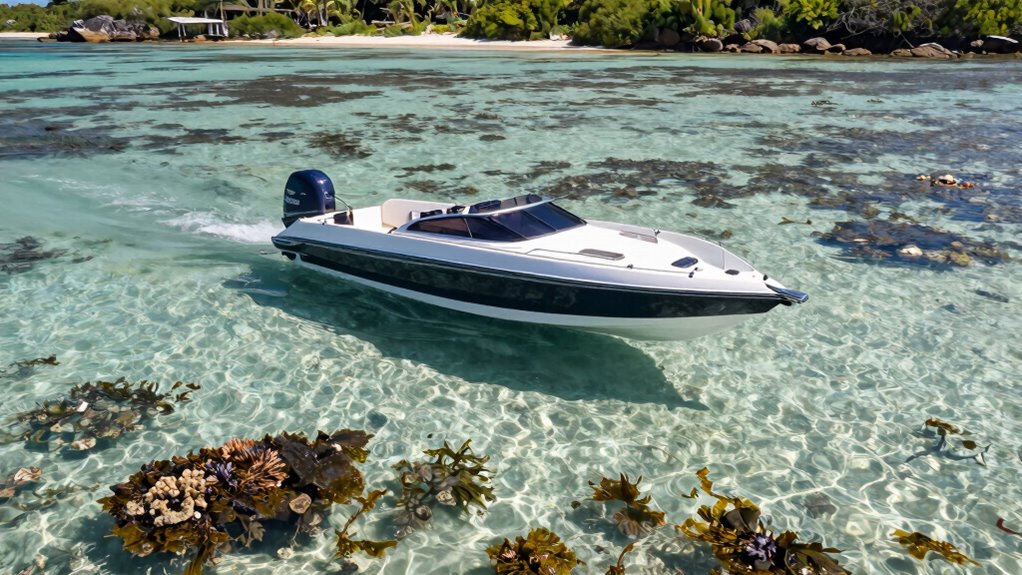
Choosing the safest route when steering through shallow water requires understanding your boat’s specific capabilities. Know your boat’s draft and maneuverability to avoid grounding. Regular boat maintenance guarantees your vessel is functioning properly, preventing surprises. Use weather forecasting to anticipate conditions that could affect water levels or currents, influencing safe navigation. Additionally, understanding neural interfaces and future tech innovations can enhance navigation systems, providing more precise and real-time data to assist with safe passage through challenging waters. Incorporating advanced navigation technology can further improve decision-making by offering detailed maps and real-time obstacle detection, increasing safety during shallow water navigation. Staying informed about innovative safety features can also help you adapt quickly to changing conditions, ensuring a safer voyage.
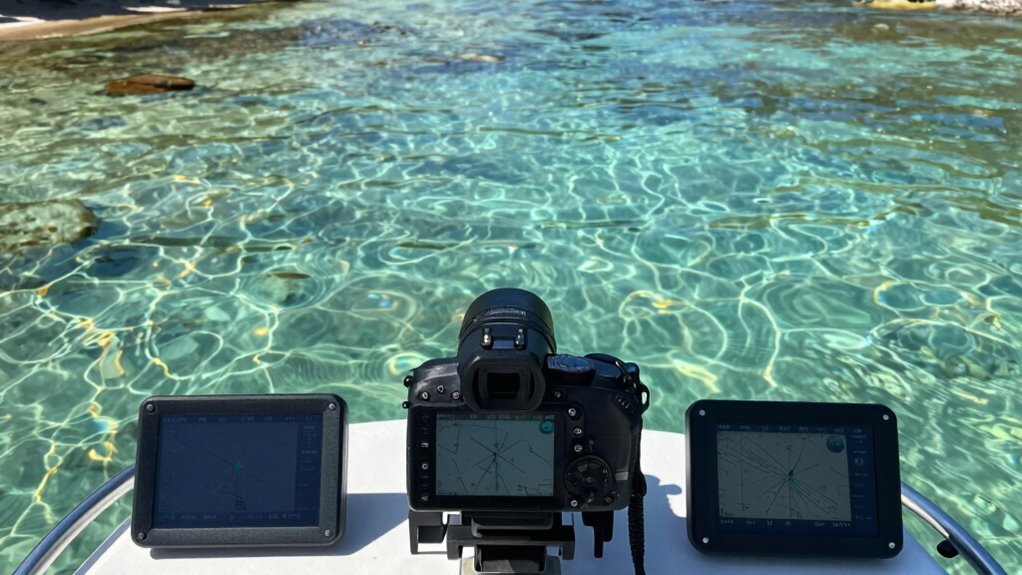
To navigate shallow water safely, you need reliable tools like depth finders and GPS units. Choosing the right depth finder helps you detect underwater hazards, while GPS guarantees you stay on course with precision. Combining these with other navigation aids gives you a complete picture of your surroundings and keeps your trip smooth. Incorporating top gaming gear can enhance your navigation experience by providing reliable displays and interfaces.
Choosing the Right Depth Finder
Ever wonder how to pick the best depth finder for shallow water navigation? The right device can make all the difference in avoiding groundings. Focus on a model with high-frequency sonar, which offers detailed readings in shallow areas. Make sure it’s easy to operate and read in bright sunlight. Regular sonar calibration is key to accuracy, so choose a unit that allows simple adjustments. Proper depth finder maintenance keeps your readings trustworthy and prolongs its lifespan.
Remember these points:
- Opt for a high-frequency sonar for shallow detail
- Prioritize user-friendly controls
- Regularly calibrate sonar for accuracy
- Keep the device well-maintained for reliable readings
Utilizing GPS for Accuracy
How can you guarantee your shallow water navigation is precise? Using GPS is key. It enhances chart accuracy by providing real-time position data, reducing the risk of grounding. Proper GPS integration allows you to cross-check your depth finder readings with your chart, ensuring your route stays clear of hazards. Always keep your GPS updated and calibrated for reliable signals, especially in shallow areas where accuracy is vital. Remember, GPS isn’t foolproof—be prepared to manually verify your position using visual cues or depth readings. Maintaining awareness of your surroundings and understanding essential navigation tools can further improve safety in shallow waters.
Complementary Navigation Tools
Complementary guidance tools are essential for safe and accurate passage through shallow waters. They help you identify hazards, understand water conditions, and avoid grounding. Depth finders reveal water depth and hidden obstacles, while GPS provides precise location data. Monitoring water temperature can alert you to changing conditions that affect marine life behavior and navigation safety. By combining these tools, you gain a thorough picture of your environment. Recognizing marine life patterns helps avoid disturbances and potential collisions. Staying aware of water temperature changes can signal shallow spots or submerged objects. Using these tools together ensures you adapt quickly to shifting conditions, making your journey safer and more efficient. Properly leveraging complementary tools minimizes risks and enhances your confidence navigating tricky shallow waters.
Practice and Gain Confidence With Shallow Water Navigation Drills
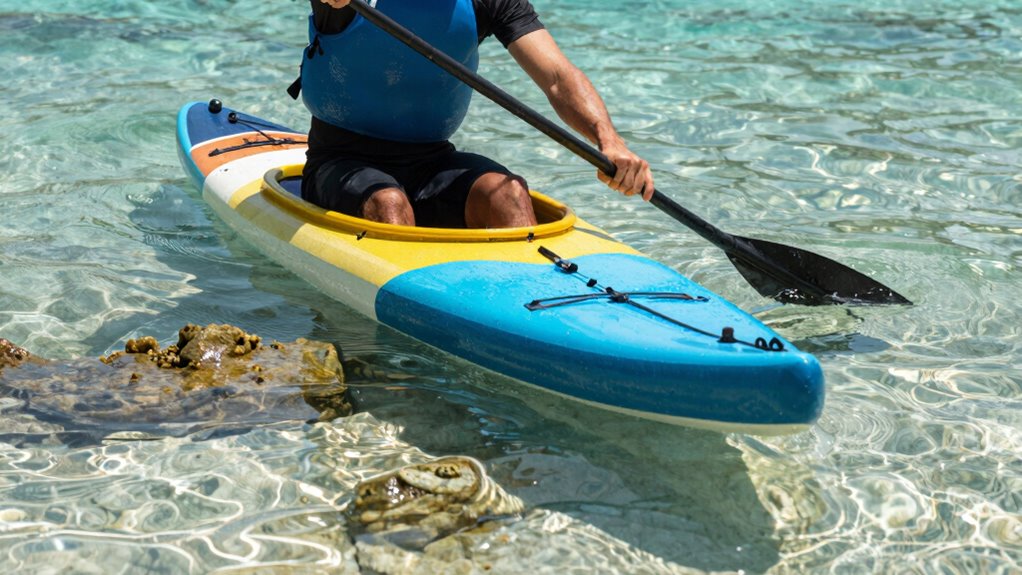
Practicing shallow water steering drills helps you build the confidence and skills needed to maneuver safely in low-depth conditions. Repeatedly practicing anchor techniques allows you to understand how your boat responds in shallow areas, helping you avoid grounding. Incorporate scenarios that consider weather considerations, such as changing tides and wind conditions, to prepare for real-world challenges. Use a variety of drills, like approaching shallow zones at different speeds and angles, to refine your control. These exercises also improve your ability to read water depths accurately and adjust your course proactively. Consistent practice makes you more comfortable navigating tricky shallow spots, ensuring you can handle unexpected situations with confidence and precision.
Frequently Asked Questions
What Are Common Mistakes to Avoid in Shallow Water Navigation?
You should avoid ignoring tidal influences, as they can considerably change water depth. Don’t rely solely on depth perception; it can be deceptive in shallow water. Keep a close watch on charts and soundings, and always account for tide conditions. Rushing through or making sudden turns can lead to grounding. Stay alert, plan your route carefully, and adjust your speed accordingly to prevent accidents.
How Do Weather Conditions Affect Shallow Water Navigation?
Imagine sailing through a narrow creek that suddenly turns choppy — that’s what weather conditions do to shallow water navigation. You must consider tide variations, which can expose or hide hazards, and wind effects that push your boat off course. Strong winds and changing tides can increase the risk of grounding, so stay alert, check weather forecasts, and adjust your route accordingly to stay safe and avoid surprises.
Can Shallow Water Navigation Vary Between Different Boat Types?
Yes, shallow water navigation varies between boat types. You need to take into account depth measurement tools suited to your vessel’s draft and size. For instance, smaller boats require precise depth readings to avoid grounding, while larger vessels may rely on buoy placement and navigational charts. Adjust your approach accordingly, keeping a close eye on depth and nearby buoys to ensure safe passage through shallow areas.
What Emergency Procedures Should I Know for Groundings?
In the blink of an eye, grounding can happen, so you must act swiftly. Start by activating emergency signaling devices like flares or radios to alert others. Check your boat’s position and attempt grounding prevention by easing off the throttle and shifting to reverse if safe. Keep calm, assess damage, and prepare for potential rescue. Knowing these procedures helps you respond effectively and ensure safety in unexpected grounding situations.
How Often Should I Update My Navigation Charts for Shallow Waters?
You should update your navigation charts at least annually or more often if you navigate frequently in shallow waters. Regular chart updates are essential to make certain your navigation frequency reflects current conditions, like new shoals or submerged hazards. Always check for official notices and updates before each trip, especially in shallow areas. Staying current with your charts helps you avoid grounding and ensures safe passage through tricky shallow waters.
Conclusion
By mastering these techniques, you’ll glide smoothly over shallow waters like a skilled dancer on a gentle shoreline. Picture yourself confidently steering past colorful seabed features and shimmering reflections, knowing you’re in control. With sharp eyes, careful planning, and the right tools, you’ll avoid grounding and keep your adventure safe and enjoyable. Trust your skills, stay alert, and enjoy the thrill of maneuvering shallow waters with ease—like a boat gliding effortlessly over a calm, sunlit sea.