Choosing the right power source defines your time on the water, and the LiTime 12V 100Ah LiFePO4 Trolling Motor Battery stands out as the best overall pick for most anglers due to its balance of capacity and weight savings. For those needing higher voltage for larger motors, the LiTime 36V 100Ah Lithium Battery offers extended runtimes without the bulk of traditional setups. The main tradeoff in this category is between upfront cost and long-term value, as lithium options cost more initially but last ten times longer than lead-acid alternatives. I have evaluated these fourteen models based on cycle life, weight efficiency, and charging compatibility. Continue reading to see which battery fits your specific boat setup and budget.

Get sports gear delivered free with Prime
- Fast, free delivery on millions of items
- Prime Video, Amazon Music and more included
- Member-only deals all year
Complete the kit



Key Takeaways
- LiFePO4 batteries dominate the high-end market due to their ability to discharge fully without damage, unlike lead-acid options.
- Weight reduction is the most immediate benefit of switching to lithium, often cutting battery bank weight by 70 percent.
- Bluetooth monitoring on models like the Hey Future and LiTime Bluetooth versions provides real-time state-of-charge data, reducing guesswork.
- Entry-level lead-acid batteries remain viable for occasional users who cannot justify the higher initial investment of lithium.
- Voltage compatibility is critical; 36V systems offer better efficiency for larger trolling motors compared to 12V setups.




| electric boat batterie | Capacity | Voltage | Weight | Dimensions |
|---|---|---|---|---|
| LiTime 12V 165Ah Dual-Purpose | 165Ah | 12.8V | 33.5 lb | — |
| OPTIMA D34M BlueTop Dual-Purpo | 55Ah (C20) | 12 volts | 43.5 pounds | 10.06 × 6.88 × 7.81 inches |
| NERMAK 2-Pack 12.8V 10Ah LiFeP | 10Ah each | 12.8V each | — | 5.94 × 2.56 × 3.91 inches each |
| VEMDIA 12V 100Ah LiFePO4 Group | 100Ah | 12.8V | 24 lb | 12.9 × 6.6 × 8.5 inches |
| Mighty Max Battery ML55-12 12V | 55Ah | 12V | — | 9.06 × 5.43 × 8.98 inches |
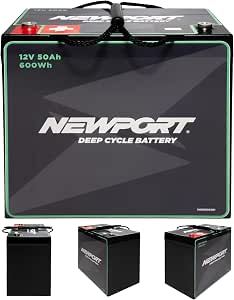
| Newport 12V 50Ah Deep Cycle AG | 50 Ah | 12 volts | 32 pounds | — |
| LiTime 12V 100Ah LiFePO4 Troll | 100 Ah | 12.8 V | 22.2 lb | 13 × 6.77 × 8.5 in |
| Litime 12V 200Ah LiFePO4 Lithi | 200 Ah | 12.8 V | 44.5 lb | 13.11 × 6.93 × 9.45 in |
| LiTime 36V 50Ah LiFePO4 Trolli | 50 Ah | 36 V | — | — |
| LiTime 36V 100Ah Lithium Batte | 100 Ah | 36 V | 63.1 lb | 20.47 × 10.55 × 8.66 in |
| WannaPow 12V 120Ah LiFePO4 Dee | 120Ah | — | 19 lb | 10.82 × 9.25 × 6.49 in |
| LiTime 12V 100Ah LiFePO4 Troll | 100Ah | 12.8V | 22.2 lb | 13 × 6.77 × 8.5 in |
| Hey Future 12V 100Ah Bluetooth | 100Ah | 12.8V | 21.5 lb | 6.61 × 10.24 × 8.3 in |
| SUPER EMPOWER 12.8V 100Ah LiFe | 100Ah | — | — | — |
More Details on Our Top Picks
LiTime 12V 165Ah Dual-Purpose LiFePO4 Marine Battery
Cranking power and substantial onboard capacity set this Group 31 LiFePO4 apart: its 1200 CCA rating is paired with 165Ah for marine devices, so buyers may be able to combine engine starting and house loads in one battery. The automatic low-temperature heating supports charging in cold conditions, while Bluetooth monitoring provides status and alerts. Compared with the VEMDIA 12V 100Ah battery, this LiTime offers more capacity and explicit starting ratings, but weighs more and costs you the simplicity of choosing a dedicated deep-cycle setup. Its 15% emergency reserve also means not all stated capacity is available before discharge cutoff. Compatibility needs careful checking: it is not suited to several listed engines and fish finder systems. Choose it for a compatible boat that needs both jobs covered; skip it if your motor or charger is on the exclusion list.
Pros:- Combines 1200 CCA starting capability with 165Ah of capacity for onboard loads.
- Automatic heating supports charging when the battery is cold.
- Bluetooth 5.0 app monitoring provides battery status and alerts.
- Group 31 format weighs 33.5 lb, less than the listed OPTIMA D34M.
Cons:- Not compatible with several specified engines and fish finder system chargers.
- Discharge cutoff preserves an approximately 15% state-of-charge reserve, limiting usable capacity.
- Battery discharge stops at approximately -4°F.
Best for: Boat owners with a compatible outboard who want one battery for engine starting and substantial marine-device loads, including cold-weather charging support.
Not ideal for: Owners of MerCruiser engines, inboard or unregulated outboard systems, or LiveScope fish finder system chargers; its listed exclusions make compatibility a limiting factor.
- Chemistry:LiFePO4
- Voltage:12.8V
- Capacity:165Ah
- Energy:2112Wh
- Starting power:1200 CCA at 14°F; 1300 MCA at 32°F
- Battery group:Group 31
- Weight:33.5 lb
- Cold-weather heating:Activates below 32°F and heats to 50°F
- Cycle life:5000+ cranking cycles; 4000+ deep cycles at 100% DOD
Our verdict“Pick this LiTime when a compatible boat needs one battery for strong starting and house power, but check every engine and charger restriction first.”
OPTIMA D34M BlueTop Dual-Purpose AGM Marine and RV Battery
The OPTIMA D34M is the choice here for buyers who prefer a sealed AGM battery that handles both starting and deep-cycle duties without a lithium setup. Its 750 CCA, 870 MCA, and 120-minute reserve capacity give a clearer starting-and-reserve profile than the Mighty Max ML55-12, whose supplied specs do not state cranking performance. The spillproof construction and vibration resistance suit boats exposed to movement, and dual SAE and stud terminals offer connection flexibility. The tradeoff is substantial weight: at 43.5 pounds, it is heavier than the LiTime 165Ah while offering only 55Ah. Choose this when AGM chemistry and dual-purpose use matter more than capacity per pound. Skip it if your priority is long-range accessory power or a lighter battery for a capacity-focused installation.
Pros:- Designed for both starting and deep-cycle use.
- Spillproof, maintenance-free AGM construction.
- Vibration-resistant design suits demanding marine use.
- Dual SAE and stainless-steel stud terminals provide connection options.
Cons:- At 43.5 lb, it is heavier than the LiTime 165Ah despite having much less capacity.
- 55Ah capacity is modest for boats with substantial continuous accessory loads.
- Lead-acid chemistry does not provide the LiFePO4 cycle-life figures listed for some alternatives.
Best for: Boat owners who want a maintenance-free AGM for both engine starting and moderate accessory loads, especially where vibration resistance and flexible terminals matter.
Not ideal for: Weight-conscious boaters or those running sustained high accessory loads who want more capacity per battery; it weighs 43.5 lb and provides 55Ah.
- Battery type:Lead-acid AGM
- Voltage:12 volts
- Capacity:55Ah (C20)
- Cold cranking amps:750 CCA
- Marine cranking amps:870 MCA
- Reserve capacity:120 minutes
- Dimensions:10.06 × 6.88 × 7.81 inches
- Weight:43.5 pounds
- Terminals:Dual SAE and 5/16-inch stainless steel stud posts
Our verdict“Choose the OPTIMA D34M for dual-purpose AGM starting and reserve power, not for maximizing capacity while minimizing weight.”
NERMAK 2-Pack 12.8V 10Ah LiFePO4 Deep-Cycle Batteries with 10A BMS
Rather than powering a trolling motor or serving as a main boat battery, this NERMAK two-pack makes sense for small, separate 12V loads such as fish finders and lighting. Each compact LiFePO4 battery supplies 10Ah and has a built-in 10A BMS, while series and parallel connections allow a modest system to be configured around compatible equipment. That makes it a different proposition from the VEMDIA 100Ah battery, which is built for much larger loads and longer run time. The limit is equally clear: 10A continuous discharge per battery rules out many high-demand marine devices, and this product is not a starting battery. It also requires a LiFePO4-specific charger; an automatic SLA charger may not fully charge it. Buy it for small electronics, not as a substitute for a full-size marine bank.
Pros:- Two compact LiFePO4 batteries can support separate small loads or compatible series and parallel setups.
- Built-in 10A BMS provides overcharge, over-discharge, over-current, and short-circuit protection.
- Each battery is rated for more than 2000 cycles.
- Light 1.2 kg weight per battery makes installation and handling easier.
Cons:- Only 10Ah and 10A continuous discharge per battery, unsuitable for many larger marine loads.
- A fully automatic SLA charger may not fully charge the batteries.
- Series connections are limited to four identical batteries.
Best for: Boaters powering a fish finder, lights, or other low-draw 12V electronics who want two compact batteries that can be connected in series or parallel.
Not ideal for: Trolling-motor users, engine starters, or boaters with high-current loads; each battery is limited to 10A continuous discharge and 10Ah capacity.
- Quantity:2 batteries
- Chemistry:LiFePO4
- Voltage:12.8V each
- Capacity:10Ah each
- BMS:Built-in 10A protection
- Continuous discharge:Up to 10A per battery
- Cycle life:2000+ cycles
- Dimensions:5.94 × 2.56 × 3.91 inches each
- Connections:Series or parallel; up to four identical batteries in series
Our verdict“Choose the NERMAK pair for small marine electronics that need compact LiFePO4 power, not for starting or motor duty.”
VEMDIA 12V 100Ah LiFePO4 Group 31 Battery with 100A BMS
For a boat needing dependable deep-cycle capacity without the added starting features of the LiTime 165Ah, the VEMDIA offers a straightforward 100Ah LiFePO4 setup. Its 1280Wh rating and 100A continuous discharge suit many moderate boat loads, while the smart BMS covers common electrical faults and low-temperature conditions. The series-or-parallel support leaves room to build a larger bank, and the 24-pound weight is easier to manage than the OPTIMA D34M’s 43.5 pounds. Its main limit is current: 100A may not suit higher-demand equipment, and the supplied information does not list engine-cranking ratings, so I would not choose it as a starting battery. The stated operating range is -20°C to 65°C. Compared with the NERMAK pair, it offers far more capacity for a main marine load, but is less suited to tiny electronics-only installations.
Pros:- 100Ah capacity and 1280Wh energy provide substantially more run time than the NERMAK 10Ah batteries.
- 100A smart BMS includes protection against several electrical faults and low temperatures.
- Supports series or parallel connections for compatible system expansion.
- At 24 lb, it is lighter than the OPTIMA D34M AGM.
Cons:- 100A maximum continuous discharge may limit higher-current equipment.
- No engine-cranking rating is supplied, so starting suitability is not established.
- Specified operating temperature range is -20°C to 65°C.
Best for: Boaters seeking a 100Ah LiFePO4 deep-cycle battery for moderate trolling-motor or onboard loads, with the option to expand a compatible battery bank.
Not ideal for: Owners needing documented engine-starting performance or equipment drawing more than 100A continuously.
- Chemistry:LiFePO4
- Voltage:12.8V
- Capacity:100Ah
- Maximum energy:1280Wh
- Maximum continuous discharge:100A
- BMS:100A smart BMS
- Cycle life:4000 cycles at 100% DOD; 6000 at 80% DOD; up to 15000 at 60% DOD
- Weight:24 lb
- Dimensions:12.9 × 6.6 × 8.5 inches
Our verdict“Choose the VEMDIA for a lighter 100Ah deep-cycle boat battery and bank expansion, but not when engine-starting ratings or higher current are required.”
Mighty Max Battery ML55-12 12V 55Ah Sealed Lead Acid Deep Cycle Battery
The Mighty Max ML55-12 is a simple 55Ah sealed AGM deep-cycle battery for buyers who want a maintenance-free option without the dual-purpose starting emphasis of the OPTIMA D34M. Its spill-proof construction, shock and vibration resistance, and ability to be mounted in any position can make installation more flexible in a compact boat. But the supplied data does not include cranking amps or reserve capacity, so I would treat it as an accessory-power battery rather than assume it can start an engine. Compared with the VEMDIA 100Ah LiFePO4, it offers less capacity and lacks listed BMS protections or cycle-life figures; its appeal is a familiar AGM format, not extended run time. The wiring harness and mounting accessories are not included, adding planning work before installation.
Pros:- Maintenance-free, spill-proof AGM construction.
- Can be mounted in any position.
- Designed to resist shocks and vibration.
- Compact dimensions of 9.06 × 5.43 × 8.98 inches.
Cons:- Wiring harness and mounting accessories are not included.
- No cranking-amp or reserve-capacity rating is provided in the listed specs.
- At 55Ah, it offers less capacity than the VEMDIA 100Ah LiFePO4.
Best for: Boaters who need a basic 55Ah AGM deep-cycle battery for accessories and prefer a sealed, maintenance-free design with flexible mounting.
Not ideal for: Owners seeking a documented engine-starting battery, long accessory run time, or a ready-to-install package with wiring and mounting hardware.
- Battery type:Sealed lead acid (SLA/AGM)
- Voltage:12V
- Capacity:55Ah
- Number of cells:6
- Terminal:F2
- Dimensions:9.06 × 5.43 × 8.98 inches
- Included components:Battery and screws
- Warranty:1 year
Our verdict“Choose the Mighty Max for basic sealed AGM accessory power when you can supply the mounting and wiring hardware yourself.”
Newport 12V 50Ah Deep Cycle AGM Marine Battery
I’d choose the Newport 12V 50Ah AGM for a small boat or kayak that needs straightforward 12V power without lithium-system changes. Its sealed, maintenance-free AGM construction keeps routine care simple, and the carrying handle helps when moving it between storage and the boat. At 32 pounds, though, it is substantially heavier than the 22.2-pound LiTime 12V 100Ah LiFePO4, which offers twice the stated capacity in a similar Group 31-style footprint. Newport’s advantage is its simple, familiar lead-acid setup; its tradeoff is less capacity for the weight and no stated cycle-life figure. I’d pick it for modest trolling-motor or electronics loads, not for long outings where extended runtime matters.
Pros:- Deep-cycle design supports repeated discharge and recharge.
- Sealed AGM construction requires little routine maintenance.
- Carrying handle makes transport easier.
- Suitable for compatible 12V trolling motors and marine electronics.
Cons:- At 32 pounds, it is heavy relative to its 50Ah capacity.
- 12V output limits compatibility with higher-voltage systems.
- No cycle-life figure is provided for comparison with lithium options.
Best for: Kayak and small-boat owners who need a simple 12V battery for modest trolling-motor use or compatible marine electronics.
Not ideal for: Boaters seeking long runtime with minimal weight, or anyone whose equipment requires a voltage other than 12V.
- Battery type:Sealed lead-acid AGM
- Voltage:12 volts
- Capacity:50 Ah
- Weight:32 pounds
- Terminal type:Marine terminal
- Maintenance:Maintenance-free
Our verdict“Choose this AGM battery for simple, modest 12V boat loads; pick the LiTime 12V 100Ah LiFePO4 instead if you need more capacity at less weight.”
LiTime 12V 100Ah LiFePO4 Trolling Motor Battery
The LiTime 12V 100Ah LiFePO4 is a strong fit for anglers who want substantial 12V capacity without hauling a lead-acid battery. At 22.2 pounds, it weighs less than the Newport 50Ah AGM while offering double the listed capacity, a useful combination for boats where carrying weight and space matter. Its built-in BMS adds protection against common electrical faults, while low-temperature cutoffs pause charging below 32°F and discharging below -4°F. That cold-weather behavior calls for planning if the battery will be used in freezing conditions. This model also lacks Bluetooth, unlike the LiTime 12V 200Ah model, so it is better for buyers who do not need app-based status checks. Its Group 31 form factor and 4P4S expansion support future system growth.
Pros:- 100Ah capacity in a relatively light 22.2-pound package.
- Built-in BMS protects against overcharge, overheating, and short circuits.
- Low-temperature protection includes separate charging and discharging cutoffs.
- Supports expansion up to 4P4S.
Cons:- Charging stops below 32°F, which can limit winter use.
- No Bluetooth monitoring is available.
- Not intended for engine starting, golf carts, or jacks.
Best for: Anglers with 12V trolling motors who want a lightweight Group 31 battery with built-in protection and room to expand.
Not ideal for: Buyers who need engine-starting power, Bluetooth monitoring, or charging in below-freezing conditions.
- Battery chemistry:LiFePO4
- Voltage:12.8 V
- Capacity:100 Ah
- Energy:1,280 Wh
- Weight:22.2 lb
- Dimensions:13 × 6.77 × 8.5 in
- Form factor:Group 31
- Cycle life:4,000+ cycles at 100% depth of discharge
- Water and dust protection:IP65
Our verdict“Choose this for a lightweight, protected 12V trolling-motor setup; choose the LiTime 12V 200Ah model if you need more capacity and app monitoring.”
Litime 12V 200Ah LiFePO4 Lithium Battery for RV and Trolling Motors
When a 12V boat setup needs longer stretches between charges, I’d look at the Litime 12V 200Ah before pairing smaller batteries. Its 200Ah capacity doubles the LiTime 12V 100Ah model’s listed capacity, while Bluetooth 5.0 provides app-based status and diagnostics. The product data also specifies 6,000 cycles at 100% depth of discharge and a 200A BMS, making this the more feature-rich choice for a larger deep-cycle system. The tradeoff is that it weighs 44.5 pounds—more than the smaller LiTime 100Ah battery—and its Bluetooth feature needs initial activation with a compatible lithium-activation or MPPT charger. Charging stops below 32°F, so cold-weather users need a plan for battery temperature. It is not for engine starting.
Pros:- 200Ah capacity supports longer use between charges than the 100Ah LiTime option.
- Bluetooth 5.0 allows app-based monitoring and diagnostics.
- Specified for 6,000 cycles at 100% depth of discharge.
- Intelligent low-temperature protection helps guard the battery in cold conditions.
Cons:- At 44.5 pounds, it is heavier than the LiTime 12V 100Ah model.
- Bluetooth requires initial activation with a compatible charger.
- Charging stops below 32°F, and the battery is not intended for starting applications.
Best for: Boat owners running higher-energy 12V trolling-motor and electronics loads who want extended capacity and app monitoring.
Not ideal for: Small-boat owners prioritizing the lightest battery, or buyers needing engine-starting capability or below-freezing charging.
- Battery chemistry:LiFePO4
- Voltage:12.8 V
- Capacity:200 Ah
- Weight:44.5 lb
- Dimensions:13.11 × 6.93 × 9.45 in
- Cycle life:6,000 cycles at 100% depth of discharge
- Connectivity:Bluetooth 5.0
- Terminals:M8
- Expansion capacity:Up to 40.96 kWh
Our verdict“Choose this for a capacity-heavy 12V deep-cycle system with app monitoring, but skip it if low weight or winter charging is your priority.”
LiTime 36V 50Ah LiFePO4 Trolling Motor Battery with 25A Charger
For a boat already fitted with a 36V trolling motor, this LiTime 36V 50Ah package avoids assembling a multi-battery bank and includes a 25A IP65-rated charger. The 60A BMS protects against overcharge, over-discharge, and extreme temperatures, while the battery is specified for more than 4,000 deep cycles. Compared with the 36V 100Ah LiTime model, this one has half the stated capacity and a lighter 39.4-pound battery, making it a more manageable choice when runtime demands are moderate. Its 50Ah capacity may still fall short for long days or high draw, so the larger model is the better fit for extended use. It is not designed for engine starting, and first-use charger activation adds a setup step.
Pros:- Includes a 25A IP65-rated charger with LED status monitoring.
- 60A BMS provides overcharge, over-discharge, and temperature protections.
- Specified for 4,000+ deep cycles.
- Supports expansion up to 36V 200Ah in a 4P configuration.
Cons:- 50Ah capacity may not provide enough runtime for long or high-load outings.
- Not designed for engine starting.
- Requires charger activation after first use.
Best for: Owners of 36V trolling motors up to 120 lb thrust who want a battery and compatible marine-rated charger in one package.
Not ideal for: Boaters needing long runtime from a 36V system, engine-starting power, or a plug-and-play setup without first-use activation.
- Battery chemistry:LiFePO4
- Voltage:36 V
- Capacity:50 Ah
- Battery weight:39.4 lb
- Battery management system:60 A
- Included charger:43.8 V, 25 A, IP65
- Cycle life:4,000+ deep cycles
- Expansion:Up to 4P; 36 V 200 Ah / 7.68 kWh
- Compatible trolling motor:Up to 120 lb thrust
Our verdict“Choose this as a compact 36V battery-and-charger package for moderate trolling-motor demands; choose the 36V 100Ah LiTime for more runtime.”
LiTime 36V 100Ah Lithium Battery with 25A Charger for Trolling Motors and Boats
Among these options, the LiTime 36V 100Ah is the more capable choice for boaters who need substantial energy in a single 36V battery. It doubles the LiTime 36V 50Ah model’s capacity and adds Bluetooth 5.0 monitoring, a 100A BMS, a 25A charger, and an IP65 rating. Its support for configurations up to 2S4P also gives builders room to plan higher-voltage or expanded systems. That capability comes with a substantial installation burden: at 63.1 pounds and 20.47 inches long, it needs a secure mounting location with adequate clearance. The 50Ah alternative is easier to handle but offers less runtime. First-use activation is required, so I’d factor that setup step into installation planning.
Pros:- 100Ah at 36V provides twice the stated capacity of the LiTime 36V 50Ah model.
- Bluetooth 5.0 enables real-time status monitoring.
- 100A BMS offers more than 20 protections and supports up to 500A surge current.
- Includes a 25A charger and has an IP65 rating.
Cons:- At 63.1 pounds, it is heavy to move and install.
- Large dimensions may not fit smaller boat compartments.
- Requires an initial activation charge with a lithium or MPPT charger.
Best for: Owners of 36V trolling motors or electric outboards who need 100Ah capacity, onboard status monitoring, and a large-system expansion path.
Not ideal for: Small-boat owners with limited battery space, buyers who need a lightweight battery, or those seeking a setup with no activation step.
- Battery chemistry:LiFePO4
- Voltage:36 V
- Capacity:100 Ah
- Weight:63.1 lb
- Dimensions:20.47 × 10.55 × 8.66 in
- Charger:25 A
- Battery management system:100 A; over 20 protections
- Surge current:Up to 500 A
- Water resistance:IP65
Our verdict“Choose this for a spacious boat and a 36V system where extra capacity and monitoring matter more than weight or compact installation.”
WannaPow 12V 120Ah LiFePO4 Deep Cycle Battery
For boaters who want more reserve than a standard 100Ah battery without stepping up to a much larger unit, the WannaPow 120Ah offers 1,536Wh in a 19-pound package. That capacity advantage over the LiTime 12V 100Ah Bluetooth can mean more time running a trolling motor between charges, while the lighter listed weight can ease carrying and installation. Its 100A BMS covers common electrical faults, and low self-discharge suits boats stored between outings. The tradeoff is a less feature-rich setup: unlike the LiTime, it has no Bluetooth monitoring or specified cold-weather cutoff protection. The included waterproof connector is rated for only 20A, so it should not be treated as a high-current motor connection. Check the listed 14.6V voltage against your charging system before buying.
Pros:- 120Ah capacity and 1,536Wh provide more reserve than the 100Ah options in this group.
- At 19 pounds, it is lighter than the listed 100Ah LiTime and Hey Future batteries.
- 100A BMS protects against overcharge, over-discharge, overcurrent, and short circuits.
- Low self-discharge supports storage between boating trips.
Cons:- The included waterproof connector is rated at 20A, limiting its suitability for higher-current connections.
- The listed 14.6V voltage calls for a compatibility check with the boat’s charging equipment.
- No Bluetooth monitoring or stated low-temperature cutoff is specified.
Best for: Trolling-motor boaters seeking more than 100Ah of capacity while keeping battery weight low.
Not ideal for: Buyers who want phone-based battery monitoring, cold-weather charging safeguards, or a connector rated above 20A.
- Chemistry:LiFePO4
- Capacity:120Ah
- Energy:1,536Wh
- Listed voltage:14.6V
- Battery management system:100A BMS
- Weight:19 lb
- Dimensions:10.82 × 9.25 × 6.49 in
- Included components:USB-C car charger and 20A waterproof connector
- Warranty:5 years
Our verdict“Choose the WannaPow if extra reserve and low weight matter more than Bluetooth monitoring or cold-weather safeguards.”
LiTime 12V 100Ah LiFePO4 Trolling Motor Battery with Bluetooth
The LiTime 100Ah Bluetooth is the clearest fit here for boaters who want to check battery status from a phone and need stated temperature safeguards. Its charging cutoff below 32°F and discharge cutoff below -4°F help protect the battery when conditions turn cold; that protection is more explicitly defined than on the Hey Future Group 24, which lists low-temperature BMS protection without cutoff temperatures. The LiTime also has an IP65-rated, salt-resistant design, a useful match for marine exposure. Its 100Ah capacity is less than the WannaPow’s 120Ah, so buyers prioritizing longer runtime may prefer that higher-capacity option. Bluetooth may require activation with a lithium-activation or MPPT charger, and this battery is not intended for engine starting, golf carts, or jacks.
Pros:- Bluetooth monitoring provides battery status and system checks from a phone.
- Charging cutoff below 32°F and discharge cutoff below -4°F provide stated temperature limits.
- IP65-rated, dustproof, and salt-resistant construction suits marine use.
- 100A maximum current and 1,280Wh capacity support deep-cycle applications.
Cons:- Its 100Ah capacity is lower than the WannaPow 120Ah.
- Bluetooth may need activation using a lithium-activation or MPPT charger.
- Not designed for engine starting, golf carts, or jacks.
Best for: Boaters who want app-based battery checks and defined cold-weather charging and discharging protections.
Not ideal for: Owners needing engine-starting power, a battery for golf carts or jacks, or more than 100Ah from one battery.
- Chemistry:LiFePO4
- Voltage:12.8V
- Capacity:100Ah
- Energy capacity:1,280Wh
- Maximum current:100A
- Weight:22.2 lb
- Dimensions:13 × 6.77 × 8.5 in
- Temperature cutoffs:Charging below 32°F; discharging below -4°F
- Warranty:5 years
Our verdict“Pick the LiTime if phone monitoring and clearly specified cold-weather protection matter more than maximum capacity.”
Hey Future 12V 100Ah Bluetooth LiFePO4 Deep Cycle Battery, Group 24
For a buyer planning a multi-battery system, the Hey Future Group 24 stands out for its stated expansion path: up to four batteries in series or parallel, reaching 48V and 400Ah. That gives it a different appeal from the LiTime 12V 100Ah Bluetooth, whose strongest distinction is phone monitoring paired with specified temperature cutoffs. Hey Future is the better match when system flexibility and a Group 24 form factor lead the decision, though its listing does not specify Bluetooth monitoring. The 21.5-pound weight keeps individual batteries manageable, and its BMS lists protection against electrical faults, overheating, and low-temperature operation. Older lead-acid charging systems may need an upgrade, and the maker recommends professional assembly for series or parallel configurations.
Pros:- Supports series or parallel configurations up to 48V and 400Ah.
- Group 24 format suits applications built around that battery size.
- 21.5-pound weight makes it lighter to handle than many lead-acid alternatives.
- BMS protection includes overcharge, over-discharge, overcurrent, overheating, and low temperature.
Cons:- Some older lead-acid charging systems may require an upgrade.
- Series or parallel banks are recommended for professional assembly.
- Unlike the LiTime 100Ah Bluetooth, Bluetooth monitoring and specific temperature cutoff values are not listed.
Best for: Boat owners building a Group 24-compatible battery bank who may later expand to a higher-voltage or higher-capacity setup.
Not ideal for: Buyers who need a simple drop-in replacement for an older lead-acid charging system or want specified Bluetooth monitoring and temperature cutoff values.
- Chemistry:LiFePO4
- Voltage:12.8V
- Capacity:100Ah
- Group size:Group 24
- Weight:21.5 lb
- Dimensions:6.61 × 10.24 × 8.3 in
- Maximum configuration:4S or 4P; up to 48V and 400Ah
- Terminals:M8
- Warranty support:5 years of customer service
Our verdict“Choose the Hey Future if Group 24 fit and future bank expansion outweigh easy compatibility with older charging systems.”
SUPER EMPOWER 12.8V 100Ah LiFePO4 Deep Cycle Battery, Group 24
The SUPER EMPOWER Group 24 is a straightforward choice for boaters whose priority is matching a battery to a compatible lithium charger: its specified charging range is 14.4–14.6V. That detail gives buyers a clearer starting point than the Hey Future Group 24, which warns about older lead-acid charging systems but does not list a charging-voltage range in the supplied specs. Both support expansion, though SUPER EMPOWER states a 4S4P maximum of 51.2V, 400Ah, and 20.48kWh. Its 100A BMS includes electrical and temperature protections, with charging paused below 32°F and discharge stopping below -4°F. The tradeoffs are familiar for a 100Ah option: it offers less capacity than the WannaPow, and it is not intended for engine starting. A lithium-compatible charger or controller is required.
Pros:- Specified 14.4–14.6V charging range helps buyers check charger compatibility.
- 100A BMS protects against electrical faults and temperature extremes.
- Group 24 dimensions and M8 terminals suit many standard battery boxes.
- Supports expansion up to 4S4P, with stated maximum capacity of 400Ah.
Cons:- Not suitable for engine starting or cranking.
- Requires a LiFePO4-compatible charger or controller.
- Charging pauses below 32°F and discharging stops below -4°F.
Best for: Boat owners with a lithium-compatible charger who want a Group 24 deep-cycle battery with stated voltage and temperature limits.
Not ideal for: Boaters seeking engine-starting power, operation in freezing conditions without charging pauses, or more capacity from a single battery.
- Chemistry:LiFePO4
- Nominal voltage:12.8V
- Capacity:100Ah
- Energy capacity:1,280Wh
- Group size:BCI Group 24
- BMS:100A
- Charging voltage:14.4–14.6V
- Temperature cutoffs:Charging below 32°F; discharging below -4°F
- Expansion:Up to 4S4P; 51.2V, 400Ah, 20.48kWh
Our verdict“Pick SUPER EMPOWER if you want a Group 24 deep-cycle battery with clearly stated charging requirements and expansion limits.”
How We Picked
I evaluated these batteries by prioritizing energy density and cycle life, the two factors that most impact the total cost of ownership for boaters. I compared the stated amp-hour capacities against the physical weight of each unit to determine efficiency, a key metric for small boats where every pound matters. I also assessed the quality of the internal Battery Management Systems (BMS), as a robust BMS is required to protect lithium cells from overcharging and freezing temperatures.
Ranking was driven by versatility and reliability. I favored models that offer clear advantages over standard lead-acid batteries, such as faster charging times and deeper discharge capabilities. Products with integrated Bluetooth were ranked higher for user convenience, provided the core battery performance was competitive. I excluded any models with poor thermal management specs, as heat and cold are significant risks in marine environments.
Factors to Consider When Choosing Best Electric Boat Batteries
Selecting a marine battery requires balancing technical specifications with your actual usage patterns. The following factors will help you narrow down the fourteen options reviewed above.
Chemistry Types: LiFePO4 vs. AGM vs. Lead-Acid
Lithium Iron Phosphate (LiFePO4) is the current standard for serious boaters because it maintains voltage under load and lasts for thousands of cycles. Absorbent Glass Mat (AGM) batteries offer a middle ground, providing vibration resistance and spill-proof safety without the high cost of lithium. Traditional flooded lead-acid batteries are the cheapest entry point but require regular maintenance and lose capacity quickly if left discharged. I recommend LiFePO4 for daily users, while AGM suits occasional boaters who want maintenance-free reliability without the premium price tag. Lead-acid is only worth considering for emergency backup power or very infrequent use.
Capacity and Voltage Matching
Your trolling motor’s thrust determines the voltage you need; a 24V or 36V system runs cooler and more efficiently than a 12V system for motors above 55 pounds of thrust. Amp-hour (Ah) capacity dictates how long you can run; a 100Ah battery provides roughly twice the runtime of a 50Ah battery at the same draw. I advise calculating your average daily amp draw and multiplying it by your typical hours on the water to determine the minimum capacity required. Undersizing a battery leads to frequent recharging interruptions and shortened battery life. Oversizing adds unnecessary weight and cost, so aim for a capacity that covers your longest expected trip with a 20 percent buffer.
Weight and Space Constraints
Weight affects boat stability, fuel efficiency, and ease of installation. A 100Ah lead-acid battery can weigh over 60 pounds, whereas a comparable LiFePO4 unit weighs around 25 pounds. This difference becomes critical on smaller jon boats or kayaks where weight distribution impacts handling. I recommend checking your boat’s weight capacity and the physical dimensions of your battery compartment before purchasing. Compact designs like the NERMAK 2-pack system allow for flexible installation in tight spaces, offering a modular approach that standard block batteries cannot match.
Charging Infrastructure and Compatibility
Lithium batteries require specific chargers that follow a constant current/constant voltage (CC/CV) profile, unlike the multi-stage charging used for lead-acid. Using an incorrect charger can damage the Battery Management System or fail to fully charge the cells. I recommend investing in a smart charger that automatically detects battery chemistry or manually selecting the correct lithium setting. Some models, like the LiTime 36V units, come with dedicated chargers, simplifying the setup. Always verify that your existing shore power or solar controller supports the voltage and chemistry of your new battery bank.
Battery Management System (BMS) Quality
The BMS is the brain of a lithium battery, protecting cells from over-discharge, over-charge, short circuits, and extreme temperatures. A weak BMS can lead to premature failure or safety hazards. I prioritized models with documented low-temperature charging protection, as charging lithium below freezing can cause permanent damage. Look for specifications that detail the continuous discharge current rating; a 100A rating is suitable for most trolling motors, while high-thrust motors may require higher amperage. A robust BMS extends the lifespan of the battery and ensures safe operation in variable marine conditions.
Frequently Asked Questions
Can I replace my old lead-acid battery with a lithium one without changing my wiring?
In most cases, yes, because lithium batteries of the same voltage have similar physical dimensions and terminal configurations. However, you must verify that your existing wiring gauge can handle the discharge current, as lithium can deliver power more rapidly than lead-acid. You will also need to replace your charger, as lead-acid chargers will not properly charge lithium cells and may trigger the BMS to shut down. Always check the manufacturer’s recommendations for specific wiring requirements, especially if you are upgrading to a higher capacity unit.How long do electric boat batteries typically last with proper care?
LiFePO4 batteries typically offer 2,000 to 4,000 charge cycles, which translates to 5 to 10 years of regular use. AGM batteries generally last 3 to 5 years with 500 to 1,000 cycles. Flooded lead-acid batteries have the shortest lifespan, often needing replacement every 2 to 3 years. Proper care, including avoiding deep discharges for lead-acid and preventing freezing for lithium, significantly extends these lifespans. Regular monitoring of state-of-charge helps prevent the degradation that leads to early failure.Is Bluetooth connectivity worth the extra cost on a marine battery?
Bluetooth connectivity adds convenience by allowing you to monitor voltage, temperature, and state-of-charge from your smartphone. This is particularly useful for troubleshooting or knowing exactly when to recharge without a separate voltmeter. However, it does not improve the battery’s performance or lifespan. If you already have a reliable voltmeter on your boat, the Bluetooth feature may be a luxury rather than a necessity. For tech-savvy users who want detailed data logs, it is a valuable addition.Can I charge my lithium boat battery with a solar panel setup?
Yes, but you need a solar charge controller that supports lithium chemistry, typically MPPT controllers with specific LiFePO4 profiles. Standard PWM controllers designed for lead-acid may not fully charge the lithium cells or may overcharge them if not configured correctly. I recommend checking your controller’s manual for lithium compatibility settings. If your current controller does not support lithium, you may need to replace it or use a specialized lithium-compatible charge controller to protect the battery’s BMS.What is the difference between a dual-purpose and a deep-cycle battery?
Deep-cycle batteries are designed to be discharged deeply and recharged repeatedly, making them ideal for trolling motors. Dual-purpose batteries attempt to provide both starting power (high cold-cranking amps) and deep-cycle capability, often resulting in a compromise in both areas. For dedicated trolling motors, I recommend a true deep-cycle battery like the LiTime or VEMDIA models. Dual-purpose batteries are better suited for smaller boats where one battery handles both starting the main engine and powering accessories.Conclusion
Choosing the right battery depends on your usage frequency and boat size. For the best balance of performance and value, the LiTime 12V 100Ah LiFePO4 is my top recommendation for most anglers. If you are on a tighter budget and do not need the longevity of lithium, the Newport 12V 50Ah Deep Cycle AGM provides reliable, maintenance-free power. For high-performance setups requiring extended runtime, the LiTime 36V 100Ah Lithium Battery is the superior choice. Beginners should start with the Mighty Max Battery ML55-12 to test the waters before investing in expensive lithium technology. Match the battery chemistry and voltage to your specific motor requirements to maximize your time on the water.