
Choosing marine electronics is less about picking a familiar logo than deciding which system will serve as the working hub of your boat. Garmin and Raymarine both offer chartplotters, sonar, radar, autopilot, and connected instruments, but their strengths can lead to different fits. Garmin is often the easier starting point for anglers, cruisers, and owners who want a broad range of compatible equipment. Raymarine deserves close attention from sailors and boaters already using its instruments or autopilot. The right choice depends on the tasks you do most, the electronics already aboard, and the cost of building out a complete system.

Get sports gear delivered free with Prime
- Fast, free delivery on millions of items
- Prime Video, Amazon Music and more included
- Member-only deals all year

Simrad GO9 XSE Chartplotter and Fish Finder with HDI Transducer and C-MAP Discover Charts
- ✔ Display: 9-inch multi-touch display
- ✔ Transducer: 83/200 kHz HDI
- ✔ Sonar: CHIRP sonar and DownScan Imaging

Garmin STRIKER Vivid 7cv Fishfinder with GT20-TM Transducer
- ✔ Display: 7-inch color LCD
- ✔ Sonar: Garmin CHIRP traditional sonar and CHIRP ClearVü scanning sonar
- ✔ Transducer: GT20-TM
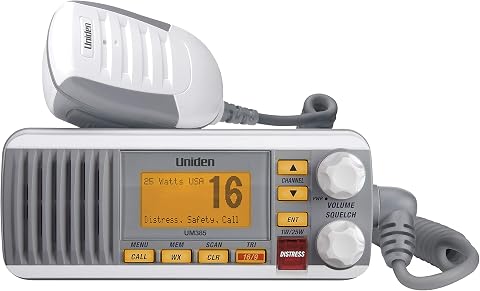
Uniden UM385 25-Watt Fixed-Mount Marine VHF Radio
- ✔ Radio type: Fixed-mount marine VHF
- ✔ Transmit power: 25 watts
- ✔ Channels: 40; USA, international, and Canadian marine channels
The comparison below focuses on practical buying criteria rather than treating either brand as a universal winner. Product capabilities vary by model, chart region, transducer, software version, and network setup, so check the specifications for the exact units you plan to connect.
At a Glance
| Criteria | Garmin | Raymarine | Winner |
|---|---|---|---|
| Product range and system building | Broad range across chartplotters, sonar, radar, autopilot, and marine accessories. | Wide range covering chartplotters, sonar, radar, autopilot, and instruments. | Tie |
| Chartplotter navigation | Strong chartplotter offering; features and chart compatibility vary by model and region. | Strong navigation offering, with chart availability and features varying by model and region. | Depends |
| Sonar and fishing features | Extensive fishing-focused sonar choices, with capability dependent on display and transducer. | Available sonar options suit fishing and general use; verify transducer and display support. | A |
| Sailing and instrument integration | Supports sailing and instrument functions, with fit depending on the selected products and network. | A notable choice for sailing functions and integration with compatible Raymarine instruments. | B |
| Radar and autopilot integration | Broad compatible lineup; confirm interfaces and compatibility across specific generations. | Strong system options, especially for owners building around compatible Raymarine equipment. | Tie |
| Ease of use and learning | Often a straightforward choice for owners seeking a cohesive system, though menus vary by model. | Interface and learning curve depend on model; existing Raymarine familiarity can make operation easier. | Depends |
| Value and upgrade costs | Good value when desired capabilities are available in a matched system; premium models and add-ons raise total cost. | Can be good value when it complements existing Raymarine gear; new system costs depend on components and interfaces. | Depends |
Simrad GO9 XSE Chartplotter and Fish Finder with HDI Transducer and C-MAP Discover Charts
For boaters who want a central display to handle more than fishfinding, the Simrad GO9 XSE is the most versatile choice in this lineup. Its 9-inch touchscreen combines chartplotting, a built-in 10 Hz GPS receiver, CHIRP sonar, and DownScan Imaging. The included C-MAP Discover card gives it a ready-made charting role for the stated US and Canada coverage, while the included HDI transducer supports the sonar functions without requiring a separate transducer purchase based on this listing.Compared with the Garmin STRIKER Vivid 7cv, the Simrad is more oriented toward navigation and a broader marine system: it has a larger display, chart card, NMEA 2000, and compatibility with specified Simrad radar systems. Garmin is the simpler fit if the priority is fishfinding with Quickdraw Contours rather than a chartplotter-and-network hub. The Simrad’s split-screen views can help keep chart and sonar information visible together, though a larger feature set also means more setup choices to manage.There is a meaningful regional caveat. Automatic routing requires compatible Navionics or C-MAP charts, and the provided information says routing is unavailable in the USA. We should also distinguish radar compatibility from included radar: the description lists support for compatible Simrad systems, but does not say a radar unit is included. Choose the GO9 XSE when we want one expandable display for navigation and sonar; skip it if a basic fishfinder or a radio is the missing piece on our boat.
Pros:
- Combines chartplotting, GPS, CHIRP sonar, and DownScan Imaging in one display.
- Includes an HDI transducer and a C-MAP Discover chart card with stated US and Canada coverage.
- 9-inch touchscreen supports customizable split-screen views and waypoint management.
- NMEA 2000 and compatibility with specified Simrad radar systems support a broader onboard setup.
Cons:
- Automatic routing is unavailable in the USA according to the supplied description.
- Routing elsewhere requires compatible Navionics or C-MAP charts.
- Radar compatibility does not mean a radar unit is included; none is listed as included.
Best for: Boaters who want chartplotting, GPS, sonar, included charts, and the option to integrate compatible Simrad radar and NMEA 2000 equipment.
Not ideal for: Owners who only need a dedicated fishfinder, need automatic routing in the USA, or are looking for a VHF communication radio.
Bottom line: Choose the GO9 XSE when we want the broadest navigation-and-sonar display in this comparison and can work within its chart and routing limits.
“Choose the GO9 XSE when we want the broadest navigation-and-sonar display in this comparison and can work within its chart and routing limits.”
Garmin STRIKER Vivid 7cv Fishfinder with GT20-TM Transducer
The Garmin STRIKER Vivid 7cv puts fishfinding first. Its 7-inch color display pairs Garmin CHIRP traditional sonar with CHIRP ClearVü scanning sonar, while the included GT20-TM transducer is the key hardware for those sonar views. High-contrast palettes are intended to make returns easier to distinguish on screen. Built-in GPS adds practical boat functions: we can mark waypoints, create routes, and view boat speed without needing the display to serve as a full chartplotter.Compared with the Simrad GO9 XSE, Garmin is the more focused choice. It offers Quickdraw Contours mapping with one-foot contours and Wi-Fi, but the supplied description does not list an included chart card or radar compatibility. The Simrad has a larger screen and clearer chartplotter-and-network role; Garmin makes more sense when sonar, contour mapping, and GPS marking are the main priorities. It is also distinct from the Uniden UM385, which provides VHF communication rather than sonar or mapping.Some connected features depend on a compatible smartphone: the listing ties ActiveCaptain app functions to one, and Wi-Fi also connects to the Quickdraw Community. That is a consideration if we want to use app-based features away from the display or do not routinely carry a compatible phone. This is a sensible pick for anglers who want a dedicated sonar screen with GPS and mapping tools, but it is not the best match if chart navigation, radar integration, or a marine radio is the core need.
Pros:
- Combines Garmin CHIRP traditional sonar with CHIRP ClearVü scanning sonar.
- Includes a GT20-TM transducer and mounting hardware.
- Built-in GPS supports waypoints, routes, and boat-speed display.
- Quickdraw Contours mapping and Wi-Fi add mapping and connected features.
Cons:
- ActiveCaptain app features require a compatible smartphone.
- The supplied listing does not specify an included chart card or radar compatibility.
- A fishfinder focus makes it less suited than the Simrad for a chartplotter-centered setup.
Best for: Anglers who want traditional and scanning sonar, built-in GPS, and contour mapping on a dedicated fishfinder display.
Not ideal for: Boaters who need the broad chartplotter and radar integration described for the Simrad, or a fixed-mount VHF radio like the Uniden.
Bottom line: Choose the STRIKER Vivid 7cv when we want a dedicated fishfinder with GPS and contour mapping, without needing the Simrad’s broader chartplotter role.
“Choose the STRIKER Vivid 7cv when we want a dedicated fishfinder with GPS and contour mapping, without needing the Simrad’s broader chartplotter role.”
Uniden UM385 25-Watt Fixed-Mount Marine VHF Radio
The Uniden UM385 addresses a different part of boat electronics: communication. This fixed-mount VHF radio offers 25-watt transmission, US, international, and Canadian marine channels, NOAA weather alerts, and Class D DSC functions that include a distress button and position send and request. Triple watch makes it possible to monitor multiple channels according to the product description. For a boat that already has a chartplotter or fishfinder, the UM385 can fill a separate communications role rather than duplicating those displays.That separation matters when comparing it with the Simrad and Garmin. Neither display’s supplied description identifies a VHF radio, while the Uniden’s information does not describe chartplotting or sonar. We should therefore choose it to add radio capability, not as an alternative screen for navigation or fishfinding. Its NMEA 0183 input/output can connect with compatible equipment, but the listing says GPS receiver compatibility rather than confirming an included receiver. Position-related DSC functions may therefore depend on an appropriate external GPS source.The UM385’s IPX4 rating is specified for rain and splashing, not submersion, so its stated protection should guide installation and use. Unlike the two displays, this is a backlit keypad-and-display radio rather than a touchscreen. That can be a straightforward fit for a dedicated helm radio, but it will not supply the visual chart and sonar views anglers may want. Choose it when a fixed VHF radio and weather alerts are the gap in our onboard setup; skip it if we need a chartplotter, fishfinder, or a clearly specified built-in GPS receiver.
Pros:
- 25-watt fixed-mount VHF transmission with US, international, and Canadian marine channels.
- Class D DSC includes a distress button and position send and request functions.
- Triple watch and NOAA weather alerts support radio monitoring and weather awareness.
- NMEA 0183 input/output is specified for compatible equipment connections.
Cons:
- IPX4 is specified for rain and splashes, not submersion.
- The listing does not describe a GPS receiver as included, though position functions are provided.
- It does not replace the chartplotter or sonar functions of the Simrad or Garmin.
Best for: Boat owners who need a fixed-mount VHF radio with DSC emergency functions, multiple marine channel sets, and NOAA weather alerts.
Not ideal for: Anglers seeking sonar, boaters seeking chartplotting, or buyers who need the listing to confirm an included GPS receiver.
Bottom line: Choose the UM385 when we need a dedicated VHF radio with DSC and weather alerts, and can provide a suitable GPS source for position functions if required.
“Choose the UM385 when we need a dedicated VHF radio with DSC and weather alerts, and can provide a suitable GPS source for position functions if required.”
As an Amazon Associate we earn from qualifying purchases.
Key Differences
The clearest practical split is in the kind of system you want to build. Garmin is a strong all-round starting point, especially when sonar and fishing features are central to the purchase. Raymarine stands out for sailors and owners who want to work within a compatible Raymarine instrument or autopilot setup. Those are tendencies across product lines, not guarantees for every model: a chartplotter, transducer, software version, and network connection all affect what the boat can actually do.
Compatibility may matter more than brand preference. Replacing one display can be simple, but adding radar, autopilot, sonar, and instruments can turn the purchase into a system project. Existing equipment, connection standards, chart costs, installation work, and future expansion all affect value. Before choosing, list the equipment you intend to keep and confirm compatibility with the exact models under consideration.
For many buyers, Garmin is the safer general-purpose pick when a new system needs strong fishing capability and broad options. Raymarine is the more natural choice when sailing functions or existing Raymarine equipment shape the decision. Compare complete configurations rather than display prices alone: the best buy is the one that meets your needs without forcing avoidable replacement or extra integration costs.
Detailed Comparison
Product range and system building (moderate difference)
Both manufacturers sell equipment for building a connected navigation system, including chartplotters, radar, sonar, autopilot, and supporting instruments. Garmin has broad appeal as an all-round ecosystem, while Raymarine can be a particularly natural fit for owners building around its instruments and compatible equipment. The difference is moderate at the brand level, but can become major when a specific model does not support a required accessory or network connection. Check exact model compatibility before treating either lineup as a complete package.
Garmin and Raymarine both offer chartplotters intended for navigation and route planning. Neither brand wins across all models and regions: chart coverage, updates, screen sizes, interface, and included features vary. For a boater, missing regional chart support matters more than a general brand reputation. Compare the charts supplied or sold for your cruising area, the display you can read from your helm, and the route tools on the specific unit. The gap is usually model-specific rather than a clear overall victory.
Sonar and fishing features (Garmin wins — major)
Garmin has a strong advantage for buyers who are selecting around fishing sonar, with a wide range of fishing-oriented display and transducer options. Raymarine also offers sonar products, so it may be entirely suitable for general depth finding or a particular installation; the relevant capabilities depend on the exact equipment. The difference is moderate to major for anglers comparing fish-finding features, but minor for boaters who mainly need navigation and basic depth information. Confirm transducer support and the sonar features actually included with the selected display.
Sailing and instrument integration (Raymarine wins — moderate)
Raymarine is a strong candidate when sailing instruments, autopilot, and related functions are central, particularly if compatible Raymarine equipment is already installed. Garmin also supports sailing and connected instruments, so the comparison should turn on the features and interfaces of the actual models. Raymarine has a moderate edge for sailors who want to extend an existing compatible setup; for a fresh purchase, check specific instrument data, network requirements, and autopilot compatibility before choosing.
Radar and autopilot integration (minor difference)
Both brands offer ways to connect radar and autopilot equipment to compatible displays. The practical winner is often the system that works cleanly with the boat’s installed hardware and the intended equipment generation. A mismatch can add interface hardware, installation time, or replacement costs, which can outweigh differences between display features. Treat the brand-level difference as minor until you map the boat’s existing equipment and confirm the connection requirements for each proposed configuration.
Ease of use and learning (moderate difference)
Ease of use depends on the particular display, software, menu layout, and the operator’s experience. A Garmin user may prefer Garmin’s controls; an owner already accustomed to Raymarine may find that system quicker and less disruptive. For a boat shared by several people, compare the actual screen layouts and common tasks such as marking a waypoint or changing a sonar view. This is a meaningful personal factor, but neither brand has a universal lead across its full range.
Value and upgrade costs (major difference)
Neither brand is automatically the cheaper complete system. The display price is only part of the cost: charts, radar, transducers, autopilot equipment, mounting, installation, and any interfaces can change the total. Raymarine may offer better value when it lets an owner keep compatible Raymarine equipment; Garmin may be better value when its available package meets the fishing and navigation needs without extra components. The gap depends on the boat and the configuration, so compare itemized system costs.
Garmin: Pros and Cons
Pros:
- Broad choice of marine electronics across navigation, sonar, radar, and autopilot.
- Strong option for fishing-focused sonar setups.
- Good all-round choice for buyers creating a new system around a range of compatible products.
Cons:
- Premium displays and additional equipment can push up the total system cost.
- Compatibility depends on the exact models, software, and network setup.
- The interface and chart offering may not suit every operator or cruising region.
Raymarine: Pros and Cons
Pros:
- Strong candidate for sailors and owners with compatible Raymarine instruments or autopilot equipment.
- Broad product range for building a connected system.
- Can reduce replacement costs when existing compatible equipment can remain in service.
Cons:
- A system centered on Raymarine may be less compelling for buyers whose main priority is comparing fishing sonar options.
- Compatibility and feature support still need checking model by model.
- A new system can require extra interfaces or replacement components, depending on the boat.
Who Should Choose What
Choose Garmin if:
- You fish regularly and want to compare a wide range of fishing-oriented sonar options.
- You are starting a new general-purpose electronics setup and Garmin’s specific displays and accessories fit your boat.
- You have checked chart coverage, transducer support, and network compatibility for the Garmin models you plan to buy.
Choose Raymarine if:
- You sail and want to build around compatible Raymarine instruments or autopilot equipment.
- Your boat already has Raymarine electronics that you can retain and connect to the new display.
- The specific Raymarine display, charts, and system connections suit your cruising and helm setup better.
Skip both if: Neither set of brand strengths settles the choice: compare other compatible systems if your existing equipment, required chart region, budget, or installation constraints rule out both proposed configurations.
Value for Money
Pay more only when the extra capability will be used or when it avoids replacing equipment that already works. For anglers, a Garmin configuration with the sonar and transducer features they need can justify a higher system price. For sailors with compatible Raymarine instruments or autopilot, extending that system may be the better value even if the display alone does not have the lowest price. If the boat needs only basic navigation and depth information, a premium display and a full accessory network may add little practical value. Compare the price of the complete, compatible installation, including charts and required interfaces.
Final Verdict
Choose Garmin for a new general-purpose system when fishing sonar is a leading priority and the models you want work with your boat. Choose Raymarine when you sail, value its compatible instrument ecosystem, or can keep useful Raymarine equipment already installed. For navigation alone, neither brand wins by name: compare chart coverage, screen readability, and route features for the exact models. The biggest deciding factor is the complete system’s fit with your boat, not the display price in isolation.
Frequently Asked Questions
Is Garmin or Raymarine better for fishing?
Garmin is the stronger starting point for many anglers because its lineup includes a broad range of fishing-oriented sonar options. Compare the exact display and transducer, since capability varies by model and setup.
Is Raymarine better for sailboats?
Raymarine is a strong choice for sailboats, especially when compatible Raymarine instruments or autopilot equipment are already aboard. Check the specific functions and connections you need; Garmin also offers sailing-related products.
Can Garmin and Raymarine equipment work together?
Some equipment may exchange data through supported network standards or interfaces, but compatibility varies by product and generation. Confirm the exact models, connection requirements, and supported functions before buying.
Which brand is better value?
It depends on the whole installation. Garmin can be better value for a fishing-focused setup that includes the required features, while Raymarine can save money when compatible equipment can stay on the boat. Include charts, transducers, installation, and interfaces in the comparison.