Marine battery chargers differ mainly in bank count, charging amperage, and waterproofing, and those three factors drive almost every buying decision in this category. My top overall pick is the NOCO GENPRO10X2, a 20A two-bank onboard charger that pairs genuine marine-grade construction with a smart charging profile that works on flooded, AGM, and lithium batteries. Anglers running trolling motors on multiple batteries should look at the ProMariner ProSport HD 20A 3-Bank, while the NOCO GENIUS2D is the low-cost way to keep a starter battery healthy between trips. The main tradeoff you’ll face is charging speed versus price: higher-amperage multi-bank units cost more and demand proper installation, while budget waterproof units charge slower but handle the marine environment fine. Read on for the full breakdown of all 14 chargers and who each one suits best.
Complete the kit


Key Takeaways
- True onboard units from NOCO and ProMariner justify their higher cost with sealed, IP68-rated housings and multi-stage charging that budget chargers only partially match.
- The biggest pattern in this lineup is amperage per bank: 10A-per-bank models (GENPRO10X2, ProSport HD 20A, CXRCY 30A) recharge trolling batteries in hours, while 5A-per-bank units are maintainer-grade and best for overnight or multi-day charging.
- Two-bank versus three-bank is the single most decision-shaping spec: if you run a 24V trolling motor, nothing else matters until you’ve matched the bank count to your battery layout.
- The TowerTop 25A stands apart as a portable clamp-on charger, not an onboard unit — it suits dockside and garage use rather than permanent installation under a console.
- Several generic listings (the 2-Bank 12V 20A IP68 and its 10A sibling) appear to share the same underlying hardware at different amperages, so warranty support and documentation quality are the real differentiators, not specs.


| marine battery charger | Banks | Charging modes |
|---|---|---|
| 2-Bank 12V Marine Battery Char | 2, independently operated | SLA/AGM, lithium, calcium, repair |
| 12V 3-Bank Waterproof Marine B | 3 | — |
| TowerTop 25A 12V Smart Car Bat | — | — |
| NOCO GENIUS2D 2A 12V Onboard B | — | — |
| 10A 2-Bank Marine Battery Char | 2 | 12V SLA/AGM, 12V lithium, 12V calcium |
| ProMariner ProSport HD 20A 2-B | 2 | — |
| 12V 2-Bank IP68 Waterproof Mar | 2 | SLA/AGM, lithium, calcium |
| CXRCY 3-Bank 12V 30A Marine Ba | 3 | — |
| ProMariner ProSport HD 20A 3-B | 3 | — |
| 12V 10A Two-Bank Marine Batter | 2 | SLA/AGM, lithium, calcium |
| 12V 3-Bank Marine Battery Char | 3 independent banks | SLA/AGM, lithium, calcium, and repair |
| MVMOD 3-Bank 12V Marine Batter | 3 | — |
| NOCO GEN5X2 12V 10A 2-Bank Onb | 2, independently operated | 12V, AGM, Lithium, Repair Mode |
| NOCO GENPRO10X2 12V 20A 2-Bank | 2, independent | 12V, 12V AGM, 12V Lithium, 12V Repair Mode |
More Details on Our Top Picks
2-Bank 12V Marine Battery Charger, 20A (10A per Bank), IP68 Waterproof
This option stands out for boats running two batteries that need real charging power — not just maintenance. With 10A per bank and independent operation, it splits 240W of total output across a starting battery and a house battery, which puts it ahead of the 10A 2-Bank charger (B0G2B9XRS3) whenever you need batteries topped off between weekend trips rather than over a full week at the dock. The chemistry flexibility is a genuine differentiator: selectable modes cover lead-acid, AGM, gel, calcium, and lithium, so a mixed battery setup doesn’t force compromises. The repair mode and the 9-stage process translate into batteries that last longer between replacements. The tradeoff is that 12V-only support and a 10A-per-bank ceiling mean larger 24V trolling motor systems or heavily drained banks will need something bigger.
Pros:- Two independently operated banks let starting and house batteries charge at their own pace
- Selectable modes for lead-acid, AGM, gel, calcium, and lithium batteries
- IP68 waterproofing suits permanent mounting in a bilge or engine compartment
- Repair mode can help recover sulfated batteries instead of replacing them
Cons:- Limited to 12V batteries only
- 10A per bank maximum output is modest for large or deeply discharged banks
Best for: Boat owners with a dual-battery 12V setup who want fast, independent charging of mixed lead-acid and lithium banks
Not ideal for: Owners of 24V trolling motor systems or very large house banks — the 12V, 10A-per-bank limits will slow them down
- Banks:2, independently operated
- Total output:20A (10A per bank, 240W total)
- Voltage:12V
- Charging modes:SLA/AGM, lithium, calcium, repair
- Charging process:9-stage
- Battery display:5-grid power display (20% to 100%)
- Included accessories:2 lines, 2 alligator clips, 4 screws, 2 ring terminals, 2 fuses, user manual
Our verdict“The most balanced pick for a typical two-battery 12V boat that needs genuine charging speed alongside set-and-forget maintenance.”
12V 3-Bank Waterproof Marine Battery Charger, 30A (10A per Bank)
Once a boat carries a starting battery plus a trolling motor pair, two banks stop being enough. This is where this 3-bank unit earns its slot: three independent 10A outputs mean every battery gets full charging current simultaneously, unlike the 3-Bank 15A MVMOD elsewhere in this roundup, which splits just 5A per bank and takes roughly twice as long. Automatic battery recognition and temperature compensation remove the guesswork from seasonal temperature swings, and the -40°C to 60°C operating range covers winter storage. Compared with the 2-Bank 20A pick above it, the extra bank justifies the bulk — 10 lb and an 11 × 9 in footprint. The one frustration is that forced charging requires a manual button press, which is awkward for a charger mounted out of reach in a compartment.
Pros:- Three truly independent banks charge a full battery set simultaneously at 10A each
- Automatic battery recognition and temperature compensation reduce misconfiguration risk
- Wide -40°C to 60°C operating range suits year-round and cold-climate use
- Repair and forced-charging modes extend the life of older banks
Cons:- Forced charging requires a manual button press, inconvenient for compartment-mounted units
- Heavy at 10 lb with a large 11 × 9 in mounting footprint
Best for: Anglers and cruisers running three 12V batteries — starter, house, and trolling motor — who want them all charged overnight
Not ideal for: Small boats with one or two batteries — the third bank, size, and weight are wasted capacity
- Banks:3
- Total current:30A (10A per bank)
- Output voltage:12V DC
- Input voltage:120V AC
- Charging stages:9
- Supported batteries:SLA/AGM, LiFePO4 lithium, calcium, deep-cycle
- Operating temperature:-40°C to 60°C
- Dimensions / weight:11 × 9 × 2 in, 10 lb
- Included accessories:3 dual-pin adapters, 3 battery clips, 6.56 ft DC cable, 4 mounting screws, manual
Our verdict“The right call for three-battery 12V setups where every bank needs real amperage overnight, not trickle-speed recovery.”
TowerTop 25A 12V Smart Car Battery Charger and Maintainer
Unlike the onboard units above it, this is a portable workshop tool — and that changes who it’s for. The 25A output beats every onboard charger in this lineup for raw single-battery speed, and the 100A engine start mode can jump a dead boat at the ramp, something no hardwired marine charger here can do. Four current settings (2A/10A/25A/AUTO) plus winter mode make it flexible across batteries and seasons, and the HD LCD gives more status detail than the grid displays on the IP68 onboard picks. The tradeoffs are real, though: it’s not waterproof, so it lives in the tow vehicle or garage rather than in the hull, and it can’t resurrect fully drained batteries — a limitation worth weighing against the Force Mode recovery on the NOCO GENIUS2D below.
Pros:- 25A maximum output charges large batteries faster than any onboard unit in this roundup
- 100A engine start mode doubles as an emergency jump starter
- Winter mode and 8-stage charging handle cold-weather and long-term maintenance scenarios
- HD LCD screen shows real-time charging status in more detail than simple grid indicators
Cons:- Cannot recover completely drained batteries
- Not waterproof, so it must be used and stored out of the elements
- Manual intervention needed for some repair and desulfation tasks
Best for: Trailer boaters and garage-based owners who want one fast charger for boat, car, and truck batteries plus emergency starting power
Not ideal for: Boaters wanting permanent onboard charging — no waterproofing and no multi-bank support make it a poor hull-mounted choice
- Output voltage:12V
- Max charging current:25A (2A/10A/25A/AUTO selectable)
- Engine start current:100A
- Charging stages:8-stage intelligent charging
- Compatible batteries:STD, AGM, GEL, Wet, MF, EFB, Calcium, Deep Cycle
- Certifications:ETL, FCC, BC
- Dimensions:7.68 × 10.04 × 4.92 in
- Connector:NEMA 1-15 plug and battery clamps
Our verdict“A versatile shore-side workhorse for owners who charge in the driveway rather than on the water.”
NOCO GENIUS2D 2A 12V Onboard Battery Charger and Maintainer
This pick makes the most sense for a different job than everything above it: long-term storage maintenance, not rapid recharging. At 2A, it will take far longer to refill a depleted house battery than the 20A 2-Bank charger that leads this list — but that’s not the point. The snap-fit bracket and short cabled design let it live permanently next to a single battery, quietly holding it at full charge through months of off-season storage, with thermal sensing adjusting output to ambient temperature so it never cooks a battery in a hot garage. Force Mode can recover batteries drained to near-zero, an edge over the TowerTop above, which gives up on fully dead batteries. The limitation is chemistry: lead-acid only, no lithium, so LiFePO4 owners need a different pick like the 10A 2-Bank unit.
Pros:- Compact direct-mount design with snap-fit bracket installs cleanly beside the battery
- Temperature-adjusted charging protects against seasonal over- and undercharging
- Force Mode recovers batteries discharged as low as zero volts
- Indefinite maintenance monitoring is safe for months-long storage
Cons:- 2A output is maintenance-speed only, far too slow for recharging after a day on the water
- Lead-acid chemistries only — no lithium battery support
- Must be mounted near the battery, limiting placement flexibility
Best for: Owners storing a boat, RV, or seasonal vehicle who want a fit-and-forget maintainer on one 12V lead-acid battery
Not ideal for: Anyone needing fast recharges or lithium support — 2A and lead-acid-only rules out both
- Model:NOCO GENIUS2D
- Charging current:2A
- Battery voltage:12V
- Compatible batteries:Lead-acid, AGM, gel, SLA, VRLA, flooded, maintenance-free, deep-cycle, marine, RV
- Mounting:Direct mount with snap-fit bracket and self-tapping screws
- Cables:24-inch AC cable, 24-inch DC cable with eyelet terminals
- Warranty:3 years
Our verdict“A storage-season specialist for one lead-acid battery, not a substitute for a true multi-bank marine charger.”
10A 2-Bank Marine Battery Charger, 5A per Bank
For smaller dual-battery rigs, this model hits a practical middle ground the bigger units overshoot. It delivers the core marine feature set — two banks with independent chemistry selection, IP68 waterproofing, temperature compensation, and automatic repair — at a scale and weight (4.5 lb) that suits compact boats. Compared with the 20A 2-Bank pick that takes top honors, the difference is simply pace: 5A per bank means an overnight recharge becomes a next-day recharge after heavy use. But set against the NOCO GENIUS2D, it’s far more capable, handling lithium alongside lead-acid and calcium and charging two banks instead of one. The 3-year warranty adds peace of mind for a permanent install. Just note the ventilation requirement — this needs breathing room, which constrains bilge mounting in tight hulls.
Pros:- Independent mode selection per bank supports mixed lead-acid and lithium setups
- IP68 waterproofing and compact 4.5 lb build suit small-hull permanent mounting
- Temperature compensation guards against over- and undercharging across seasons
- 3-year warranty backs a hardwired install
Cons:- 5A per bank doubles recharge times versus 10A-per-bank competitors
- Requires a well-ventilated mounting location, limiting tight bilge installations
Best for: Small-boat owners with two 12V batteries who charge between outings rather than overnight and don’t want to pay for amperage they won’t use
Not ideal for: Boaters who need batteries fully recharged overnight after heavy discharge days — 5A per bank is too slow
- Banks:2
- Total current:10A (5A per bank)
- Output voltage:12V
- Input voltage:120V AC
- Compatible batteries:12V SLA/AGM, LiFePO4 lithium, calcium, deep-cycle, marine, starter
- Charging modes:12V SLA/AGM, 12V lithium, 12V calcium
- Dimensions / weight:2.16 × 6.49 × 7.55 in, 4.5 lb
- Warranty:3 years
Our verdict“A sensible budget route to genuine two-bank marine charging if slower recovery times fit your usage pattern.”
ProMariner ProSport HD 20A 2-Bank Waterproof Onboard Battery Charger
For most boaters, this is the pick that makes the most sense: a 20A two-bank onboard charger from an established marine brand, with enough total amperage to restore two depleted batteries overnight rather than over a weekend. The standout feature is Distributed-On-Demand technology, which steers available current to whichever bank needs it most — a real advantage over fixed-output units like the CXRCY 3-Bank, where every bank is hard-capped at 10A regardless of demand. The tri-surface heat sink handles cooling without a fan, meaning one less mechanical part to corrode in a saltwater bilge. Tradeoffs exist, though: unlike the budget IP68 options in this lineup, ProMariner does not advertise lithium or calcium modes here, so chemistry flexibility is limited compared to the 12V 2-Bank IP68 charger.
Pros:- Distributed-On-Demand allocates full 20A where it’s needed most
- Waterproof onboard design built for bilge mounting
- Passive heat-sink cooling with no fan to fail
- LED display shows charging progress and system checks
Cons:- Supported battery chemistries are not clearly specified
- Only two banks — not enough for triple-battery rigs
Best for: Boaters with dual-battery trolling or house-bank setups who want fast, brand-backed overnight charging
Not ideal for: Owners running lithium batteries who need explicit chemistry selection modes this model doesn’t advertise
- Part Number:44020
- Output Voltage:12V
- Input Voltage:120V AC
- Total Amperage:20A
- Banks:2
- Dimensions:8.7 x 16.4 x 6.3 inches
- Weight:8.6 lbs
- Certifications:UL, FCC
Our verdict“The safest all-around choice for dual-battery boats that want fast, managed charging from a proven marine name.”
12V 2-Bank IP68 Waterproof Marine Battery Charger, 10A
This compact charger covers the basics that matter — two independent 5A outputs, six-stage charging, and true IP68 waterproofing — at a price point well below the ProMariner ProSport HD. The chemistry flexibility is its strongest card: SLA/AGM, lithium, and calcium support means it handles mixed or upgraded battery setups that the ProSport’s standard configuration may not, and the battery repair and forced charging modes can coax back sulfated or deeply drained batteries that cheaper maintainers like the NOCO GENIUS2D simply can’t touch at 2A. The obvious limitation is speed. At 5A per bank, a large group-size battery will take most of a day to charge, so this is a maintenance-and-overnight tool rather than a rapid-recovery unit.
Pros:- Supports SLA/AGM, lithium, and calcium chemistries
- Battery repair and forced charging modes for neglected batteries
- IP68 waterproofing plus reverse-connection and short-circuit protection
- Two fully independent outputs
Cons:- Each bank limited to 5A — slow for large batteries
- Compact size means less thermal mass for sustained high-heat environments
Best for: Cost-conscious boaters with smaller dual 12V batteries who prioritize chemistry flexibility and waterproofing over charging speed
Not ideal for: Anglers with large trolling motor batteries who need fast turnaround — 5A per bank is slow for big amp-hour banks
- Output Voltage:12V
- Total Current:10A
- Current Per Bank:5A
- Banks:2
- Charging Modes:SLA/AGM, lithium, calcium
- Dimensions:1 x 3 x 2 inches
Our verdict“A smart buy for small-battery boats that want multi-chemistry support and genuine waterproofing without the premium-brand price.”
CXRCY 3-Bank 12V 30A Marine Battery Charger
Boaters running a three-battery system — starting battery plus a 24V trolling motor pair — get real value here: three independent 10A banks, 9-stage smart charging, and a complete mounting and wiring kit in the box. Compared to the MVMOD 3-Bank, which supplies only 5A per bank, this model doubles recovery speed on every battery, which matters when you’re recharging between morning and afternoon trips. The repair, diagnostic, and forced charging modes match what the two-bank IP68 unit offers but applied across three banks. The tradeoffs are weight and specificity: at 10 pounds and 11 inches long, it’s a permanent installation rather than a portable backup, and you’ll want to verify your battery chemistry against the supported list before wiring it in, since the modes aren’t as clearly documented as NOCO’s.
Pros:- Three independent 10A banks for simultaneous charging
- 9-stage smart charging with battery repair and diagnostics
- Forced charging revives deeply depleted batteries
- IP68 waterproof build with full accessory kit included
Cons:- Banks are fixed at 10A — no current redistribution like ProMariner’s system
- Chemistry compatibility documentation is less clear than name-brand rivals
Best for: Bass boat and walleye boat owners with 36V-capable three-battery layouts who need all banks topped off on the same schedule
Not ideal for: Owners of single- or dual-battery boats — paying for a third bank they’ll never use adds cost and mounting bulk
- Input Voltage:120V AC
- Banks:3
- Amperage Per Bank:10A
- Total Output:30A
- Battery Types:12V SLA/AGM, lithium, calcium
- Charging Profile:9-stage smart charging
- Dimensions:11 x 9 x 2 inches
- Warranty:1-year limited
Our verdict“The most practical three-bank option here for anglers who need every battery recovered at 10A before the next launch.”
ProMariner ProSport HD 20A 3-Bank Waterproof Marine Battery Charger
This is the thinking boater’s three-bank option. Where the CXRCY 3-Bank rigidly splits its output at 10A per bank, the ProSport HD’s Distributed-On-Demand system can push the full 20A into a single deeply drained battery, then rebalance as banks fill — typically finishing a mixed-state system noticeably faster than a fixed-split charger of equal rating. The multi-color LED completion gauge gives at-a-glance status across all three banks, and the same fanless tri-surface heat-sink cooling as the 2-bank ProSport keeps it quiet and corrosion-free. The honest downside is transparency: ProMariner doesn’t publish supported chemistry types or dimensions in the product details, so lithium owners should verify compatibility before buying — a step NOCO makes unnecessary with its clearly documented GENPRO10X2.
Pros:- Distributed-On-Demand steers up to 20A to the bank that needs it
- Waterproof onboard construction for permanent bilge mounting
- Multi-color LED gauge with per-bank completion status
- Fanless heat-sink cooling suited to salt-air environments
Cons:- Supported battery chemistries not clearly documented
- No published dimensions or weight to plan mounting
- 20A total is modest for three large deep-cycle banks
Best for: Three-battery boat owners whose banks discharge unevenly and want current steered to wherever it’s needed
Not ideal for: Lithium battery owners who need confirmed chemistry support before wiring in an onboard unit
- Part Number:44021
- Charger Type:Onboard marine battery charger
- Total Charging Current:20A
- Banks:3
- Waterproof:Yes
- Charging Technology:Microprocessor and software controlled
- Cooling:Tri-surface extruded heat sink
- Display:Multi-color LED with completion gauge
Our verdict“Choose this over fixed-output 3-bank chargers when your batteries drain unevenly and you want the charger to manage the balancing for you.”
12V 10A Two-Bank Marine Battery Charger
What separates this two-bank unit from the nearly identical 12V 2-Bank IP68 charger is confidence: a 3-year warranty against the typical 1-year coverage in this category, plus temperature compensation that adjusts charge voltage with ambient conditions — genuinely useful for boats stored through freezing winters and blazing summers. The five-level power display and automatic repair mode make it friendlier to check at a glance than LED-only rivals, and each bank’s chemistry mode is selected independently, so an AGM starting battery and a lithium house battery can charge side by side correctly. Like other 5A-per-bank chargers here, speed is the compromise — and there’s one quirk to know: batteries discharged below 1V require a manual override to start, so badly neglected batteries need hands-on attention.
Pros:- 3-year warranty exceeds typical category coverage
- Temperature compensation protects batteries in extreme climates
- Independent chemistry selection per bank with 9-stage charging
- Five-level power display and automatic repair mode
Cons:- Only 5A per bank — slow for large deep-cycle batteries
- Manual override required for batteries below 1V
- No redistribution of current between banks
Best for: Seasonal boaters and cabin owners who leave chargers connected for months and value long-term warranty protection
Not ideal for: Anyone with heavily discharged batteries expecting plug-and-play recovery — sub-1V banks need manual intervention
- Voltage:12V
- Total Output:10A
- Output Per Bank:5A
- Banks:2
- Charging Modes:SLA/AGM, lithium, calcium
- Charging Stages:9
- Cables:72-inch input; two 79-inch outputs
- Warranty:3 years
Our verdict“The pick for set-it-and-forget-it seasonal storage charging, backed by the longest warranty in this batch.”
12V 3-Bank Marine Battery Charger, 5A per Bank, IP68 Waterproof
Boats running a starting battery plus a trolling motor pair need independent banks, and this charger delivers three of them without charging a premium-brand price. The standout feature is its 9-stage charging process with temperature compensation, which keeps lead-acid and lithium banks healthy through seasonal swings — something simpler chargers in this roundup skip entirely. Compared with the NOCO GEN5X2, you get a third bank for roughly the same per-bank output, though you give up the NOCO’s polished build reputation and 3-year warranty backing. The repair mode is a genuine rescue tool for sulfated batteries, but it requires manual activation, so deeply discharged banks won’t recover automatically. Its chemistry flexibility — GEL, EFB, calcium, and LiFePO4 all supported — is broader than most competitors here.
Pros:- Three fully independent banks with selectable chemistry per bank
- Unusually broad battery chemistry support including EFB and calcium
- Temperature compensation prevents overcharging in hot engine compartments
- Complete accessory kit including ring terminals, fuses, and clips for permanent installation
Cons:- 5A per bank output makes full recharges slow on larger batteries
- Repair mode requires manual activation rather than engaging automatically
Best for: Boat owners running three separate 12V batteries who want set-and-forget maintenance across mixed battery chemistries
Not ideal for: Anglers with large trolling motor batteries — 5A per bank is slow for recharging deeply drained group 31 or lithium trolling packs overnight
- Banks:3 independent banks
- Output:Up to 5A per bank; 180W total
- Voltage:12V
- Charging modes:SLA/AGM, lithium, calcium, and repair
- Charging process:9-stage smart charging
- Supported batteries:SLA, AGM, GEL, EFB, LiFePO4, and other 12V lead-acid and lithium
- Protection:Overheating, short circuit, over-current, over-voltage, reverse polarity
- Ingress protection:IP68 waterproof
Our verdict“This pick makes the most sense for boaters maintaining three mixed-chemistry batteries slowly and safely rather than fast-charging big trolling motor packs.”
MVMOD 3-Bank 12V Marine Battery Charger, 15A Total (5A per Bank)
If the idea is three banks at the lowest possible outlay, this MVMOD undercuts the field while keeping the features that matter on the water. It matches the first charger in this lineup bank-for-bank — same 5A output, same IP68 rating, same repair mode — but adds per-bank LED charge indicators showing 20%–100% progress, which the pricier CXRCY 3-Bank doesn’t make as easy to read at a glance. Where it trails the NOCO GENPRO10X2 is raw speed: you’re getting half the amps per bank, so a drained battery takes twice as long to come back. The multi-stage charging with temperature sensing is solid for the money, and the included spare fuses suggest the maker expects long-term ownership. Just don’t expect automatic recovery — like most budget units, the repair function needs a manual push.
Pros:- Three independent banks at a lower price than name-brand equivalents
- Per-bank LED indicators show real charge progress from 20% to 100%
- Handles both lead-acid (SLA/AGM/calcium) and lithium-ion chemistries
- IP68 waterproof housing with integrated safety protections
Cons:- Only 5A per bank, so overnight recovery of large batteries is unrealistic
- Repair mode must be activated manually
- LED display lacks the precision of a numeric readout
Best for: Budget-conscious boaters who need three independent banks for a starting battery and dual house or accessory batteries
Not ideal for: Anyone wanting a sealed, no-touch setup — manual repair mode activation means you’ll occasionally intervene with neglected batteries
- Banks:3
- Voltage:12V
- Output:15A total; 5A per bank
- Compatible batteries:Lead-acid (SLA/AGM/Calcium) and lithium-ion
- Charging stages:Up to 9-stage
- Display:5-grid LED charge indicators, 20%–100%
- Ingress protection:IP68 waterproof
- Included accessories:Alligator clips, screws, battery connectors, spare fuses, user manual
Our verdict“A sensible budget play for three-battery boats where slow, monitored charging beats paying extra for speed you don’t need.”
NOCO GEN5X2 12V 10A 2-Bank Onboard Marine Battery Charger and Maintainer
NOCO’s reputation in this category is earned through details like Force Mode, which pushes current into a battery discharged all the way to zero volts — something the MVMOD and generic 3-bank units in this roundup can’t do without a residual charge to detect. The GEN5X2 is the entry point into that ecosystem: two independent 5A banks, a thermal sensor that compensates for ambient temperature, and flexible mounting in any orientation, which matters in cramped bilge compartments where other chargers demand specific positioning. Compared with its bigger sibling, the GENPRO10X2, you’re getting half the charging speed at a lower cost — a fair trade for boats with a starting battery and a modest house battery. The 3-year warranty also outlasts what most budget brands offer, which counts for a permanently installed component you can’t easily inspect.
Pros:- Force Mode recovers batteries discharged to zero volts
- Thermal sensor prevents over- and under-charging in extreme climates
- 72-inch AC and DC cables simplify installation in larger boats
- 3-year warranty from an established brand
Cons:- Only 5A per bank, the slowest tier for two-bank charging
- Limited to 12V systems — no 24V or 36V series charging
Best for: Boaters who want a proven brand name, solid warranty support, and reliable maintenance for a starting battery plus small house battery
Not ideal for: Trolling motor anglers with big battery banks — 5A per bank won’t refill a heavily used 100Ah+ battery between outings
- Model:GEN5X2
- Voltage:12V
- Total output:10A
- Banks:2, independently operated
- Output per bank:5A
- Battery compatibility:Lead-acid and lithium-ion, including flooded, AGM, gel, and LiFePO4
- Charging modes:12V, AGM, Lithium, Repair Mode
- Cable lengths:72-inch DC and AC cables
- Warranty:3 years
Our verdict“The right choice when brand support and zero-volt recovery matter more than charging speed for a two-battery boat.”
NOCO GENPRO10X2 12V 20A 2-Bank Onboard Marine Battery Charger and Maintainer
Doubling the per-bank output of the GEN5X2 changes what this charger is for: 10A per bank means a heavily drained battery can genuinely recover overnight, not just trickle back over a weekend. That positions it closer to the 30A 3-bank units in this roundup in practical speed, while keeping NOCO’s zero-volt Force Mode recovery, temperature-adjusted charging, and the same 3-year warranty. The IP68 housing with any-orientation mounting gives installers freedom in tight transom compartments where fixed-mount competitors like the ProMariner ProSport HD demand more planning. The honest tradeoff is that its 20A is fixed at 10A per bank — unlike some 2-bank chargers that can combine output onto a single battery, this one can’t push all 20A into one bank. For dual-battery boats with serious amp-hour demands, though, it’s the most complete package here.
Pros:- 10A per bank delivers genuinely fast overnight recovery on large batteries
- Force Mode recovers deeply discharged batteries down to zero volts
- IP68 waterproofing with flexible mounting orientation
- 3-year warranty from an established marine brand
Cons:- Cannot combine both banks into a single 20A output for one battery
- Premium price compared with generic chargers offering similar raw specs
Best for: Boaters with a starting battery plus a large house or trolling battery who need real overnight recovery speed
Not ideal for: Single-battery setups — you’re paying for a second bank you can’t redirect, since output can’t be combined to 20A on one battery
- Model:GENPRO10X2
- Total output:20A
- Banks:2, independent
- Output per bank:10A
- Battery voltage:12V
- Battery compatibility:Lead-acid and lithium-ion
- Charging modes:12V, 12V AGM, 12V Lithium, 12V Repair Mode
- Ingress protection:IP68
- Warranty:3 years
Our verdict“The strongest two-bank choice for boats where charging speed and deep-discharge recovery justify paying over the odds.”

How We Picked
I evaluated these chargers on four buyer-relevant criteria. First, charging performance: total amperage, amperage per bank, and whether the unit runs a true multi-stage profile with desulfation and maintenance modes rather than a simple bulk charge. Second, marine suitability — an onboard charger lives in a bilge or under a console, so IP68 sealing, corrosion-resistant construction, and vibration tolerance carried real weight. Third, usability: installation complexity, cable length, battery-type compatibility (flooded, AGM, lithium), and whether the status indicators actually tell you something useful. Fourth, value: what you give up or gain at each price tier, including warranty support from established brands like NOCO and ProMariner versus generic importers.
The ranking logic follows a simple rule: get the charging architecture right first, then pay for durability and brand support. Established-brand multi-bank onboard chargers sit at the top because they get both right. Mid-tier generic waterproof units rank next — solid hardware with thinner documentation. Portable maintainer-style units rank lower for boat use, not because they’re bad products, but because they solve a narrower problem.
Factors to Consider When Choosing Marine Battery Chargers
Before you commit to a charger, match it to your boat’s actual battery layout and how you use it. Most buying mistakes in this category come from chasing total amperage while ignoring bank count, or installing a car-grade charger in a wet environment where it will fail within a season or two.Bank Count Comes Before Everything Else
Count your batteries before you look at a single amp rating. A boat with one cranking battery needs a single-bank charger or maintainer; a 24V trolling motor on two 12V batteries needs two banks; a 36V setup needs three. A common mistake is buying a high-amperage two-bank unit for a three-battery boat and planning to rotate — you won’t, and your trolling batteries will chronically sit undercharged, which is what actually kills them. Conversely, paying for a third bank you’ll never use is wasted money and extra wiring complexity. Also confirm whether the charger charges each bank independently; some budget multi-bank units share current unevenly when batteries are in different states of discharge.
Amperage Per Bank Determines Recharge Time
Total amperage is a marketing number; what matters is amps per bank. A group 31 deep-cycle battery drained by a day of trolling can take 10 or more hours to recover on 5A per bank, while a 10A-per-bank charger roughly halves that. If you fish back-to-back days, 10A per bank is the practical floor for trolling batteries. If your boat sits on a trailer or lift between weekend trips and charges overnight or over several days, 5A per bank is perfectly adequate and gentler on batteries. The mistake to avoid is buying for the rare marathon day instead of your typical usage pattern.
Waterproofing Ratings Aren’t Interchangeable
An IP68 rating means the housing survives submersion, which sounds like overkill until you remember where onboard chargers get mounted — low in the hull, near bilge water, exposed to spray and washdowns. Chargers that are merely “water resistant” or splash-rated often fail at the wire-entry grommets, not the case, so look at how cables are sealed where they enter the housing. Established marine brands engineer for vibration and salt-laden air, including conformal-coated boards and stainless hardware. A cheaper charger with a genuine IP68 housing beats an expensive one that’s only sealed against rain. Check the rating before the price tag.
Charging Chemistry Must Match Your Batteries
Flooded lead-acid, AGM, and lithium batteries all need different charge profiles, and feeding a lithium battery a lead-acid profile can damage it or fail to complete charging at all. Most newer marine chargers include a lithium mode, but plenty of budget units are flooded/AGM only — verify this before buying if you’ve switched to LiFePO4. AGM owners should also confirm the charger’s absorption voltage falls within the battery manufacturer’s spec, typically 14.4V to 14.7V. A desulfation or recovery mode is worth having for anyone running flooded batteries, since it can recover batteries left partially charged over winter.
Onboard Versus Portable Is a Lifestyle Decision
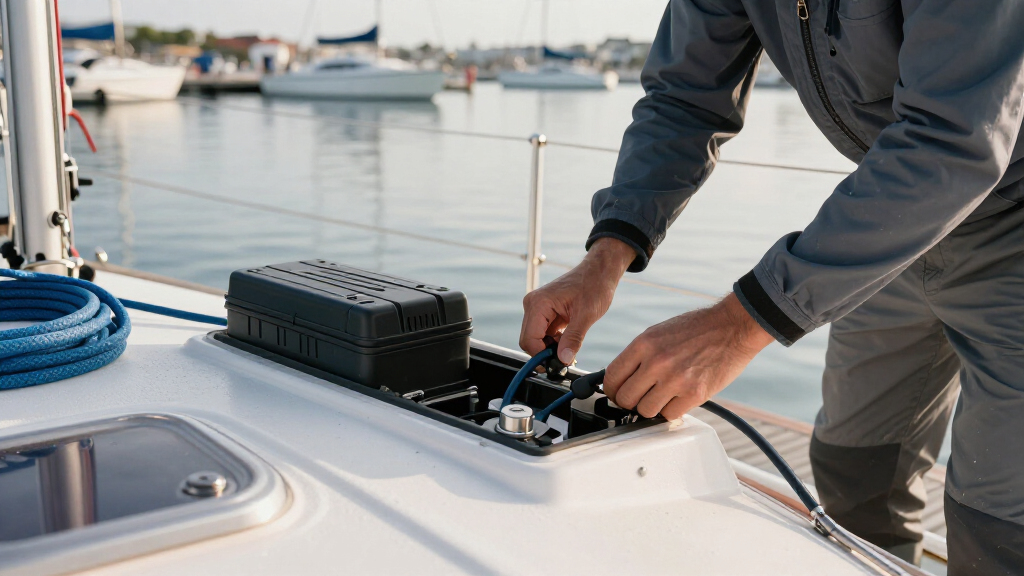
An onboard charger gets hard-wired to your batteries and plugged into shore power at the dock or your driveway — you never think about charging again, but installation takes an afternoon and some basic wiring comfort. A portable clamp-on charger lives in your garage or boat bag and requires connecting it each time, which is fine for occasional use but becomes a chore, and clamps left in a wet bilge are a corrosion problem. Many boat owners actually end up with both: an onboard multi-bank unit for the house batteries and a small maintainer for the cranking battery over winter. Decide honestly whether you’ll plug in every trip or only sometimes.
Brand Support and Warranty Matter More at Sea
A charger that dies mid-season is worse than no charger if the manufacturer doesn’t answer emails. Established brands like NOCO and ProMariner back their marine chargers with multi-year warranties and have actual support channels; generic importers often offer replacement only through the retailer within a short return window. That difference is part of what you’re paying for with name-brand units, and it’s why I weight support quality in the rankings. Keep your receipt and register the product where the brand offers it — warranty claims on marine electronics routinely require proof of purchase, and saltwater environments give manufacturers a reason to scrutinize claims.
Frequently Asked Questions
Can I use a regular car battery charger on my boat batteries?
You can, occasionally, and it will work — but it’s a poor long-term habit. Car chargers aren’t sealed for marine environments, so they must never live in the bilge or under a console where an onboard unit belongs. More importantly, most automotive chargers run single-stage profiles that don’t match deep-cycle batteries’ need for a long absorption phase, which can leave your trolling batteries undercharged even when the charger says full. If you only charge at home in a dry garage a few times a season, a quality car charger like the TowerTop is fine. For anything approaching regular use, a marine-specific multi-stage charger will keep your batteries alive years longer.
How many banks do I actually need for my boat?
Match banks to batteries, one-to-one. A basic bass boat or bay boat typically runs one cranking battery plus two 12V batteries in series for a 24V trolling motor — that’s a three-bank setup. Boats with a single 12V trolling motor need two banks, and trailer-only boats with one battery can get by with a single-bank maintainer. Don’t charge two batteries in series off one bank of a 12V charger; series pairs need either a 24V-capable charger or independent 12V banks. Buying one more bank than you need today is reasonable insurance if you plan to add a trolling motor later, but don’t go beyond that.
Is 5 amps per bank enough, or do I need 10?
It depends entirely on your turnaround time. Five amps per bank fully recharges a typical group 27 or 31 deep-cycle in roughly 10 to 14 hours after a heavy trolling day — fine if your boat charges overnight or sits between weekend trips. Ten amps per bank cuts that roughly in half, which matters if you fish consecutive days or drain your batteries deep. There’s also a longevity angle: slower charging is gentler and generates less heat, so 5A banks aren’t a compromise for batteries that only get used weekly. Choose 10A per bank when calendar time is your constraint, not because it’s inherently better.
Are the generic IP68 chargers on Amazon a safe bet compared to NOCO or ProMariner?
The hardware is often genuinely decent — many generic IP68 units share the same internal design and will charge your batteries correctly for years. What you give up is documentation, consistent quality control, and post-sale support. Wiring diagrams for generic units are frequently vague, the manuals are poorly translated, and if the unit fails at month seven, your recourse is usually nothing. Established brands cost more largely because of multi-year warranties and real support channels. My advice: use generics for simple, low-stakes setups, and pay for a name brand when the charger is hard to access or your batteries were expensive.
Can one onboard charger handle lithium and lead-acid batteries on the same boat?
Yes, if the charger lets you set the chemistry per bank or automatically detects it bank by bank. Several higher-end units, including NOCO’s GEN series, allow independent battery-type selection on each bank, so you can run a lead-acid cranking battery on one bank and a LiFePO4 house battery on another. What you cannot do is charge a lithium battery on a fixed lead-acid profile — the charger may shut down early or never reach full charge, since lithium accepts current differently. Before buying, confirm the specific model supports per-bank chemistry selection rather than a global setting, because that detail is often buried in the manual.
Conclusion
For most boaters, the NOCO GENPRO10X2 is the best overall choice — 20A across two banks, genuine marine construction, and per-bank chemistry selection cover the widest range of setups. If budget leads the decision, the generic 2-Bank 12V 20A IP68 unit delivers the best value, offering the same core charging capability with thinner support behind it. On the premium end, the ProMariner ProSport HD 20A 3-Bank is the pick for anglors running 36V trolling systems who want proven marine hardware with a real warranty. Beginners and owners of single-battery boats should start simple with the NOCO GENIUS2D, a no-wiring maintainer that keeps a cranking battery healthy without any installation work. For specific needs: the CXRCY 3-Bank 30A suits fast multi-battery turnaround, the TowerTop 25A fits dockside and garage charging without permanent installation, and the 5A-per-bank three-bank units make sense for boats that charge slowly between weekend trips. Match the bank count to your batteries first, then buy the amperage your schedule demands — everything else follows from those two decisions.